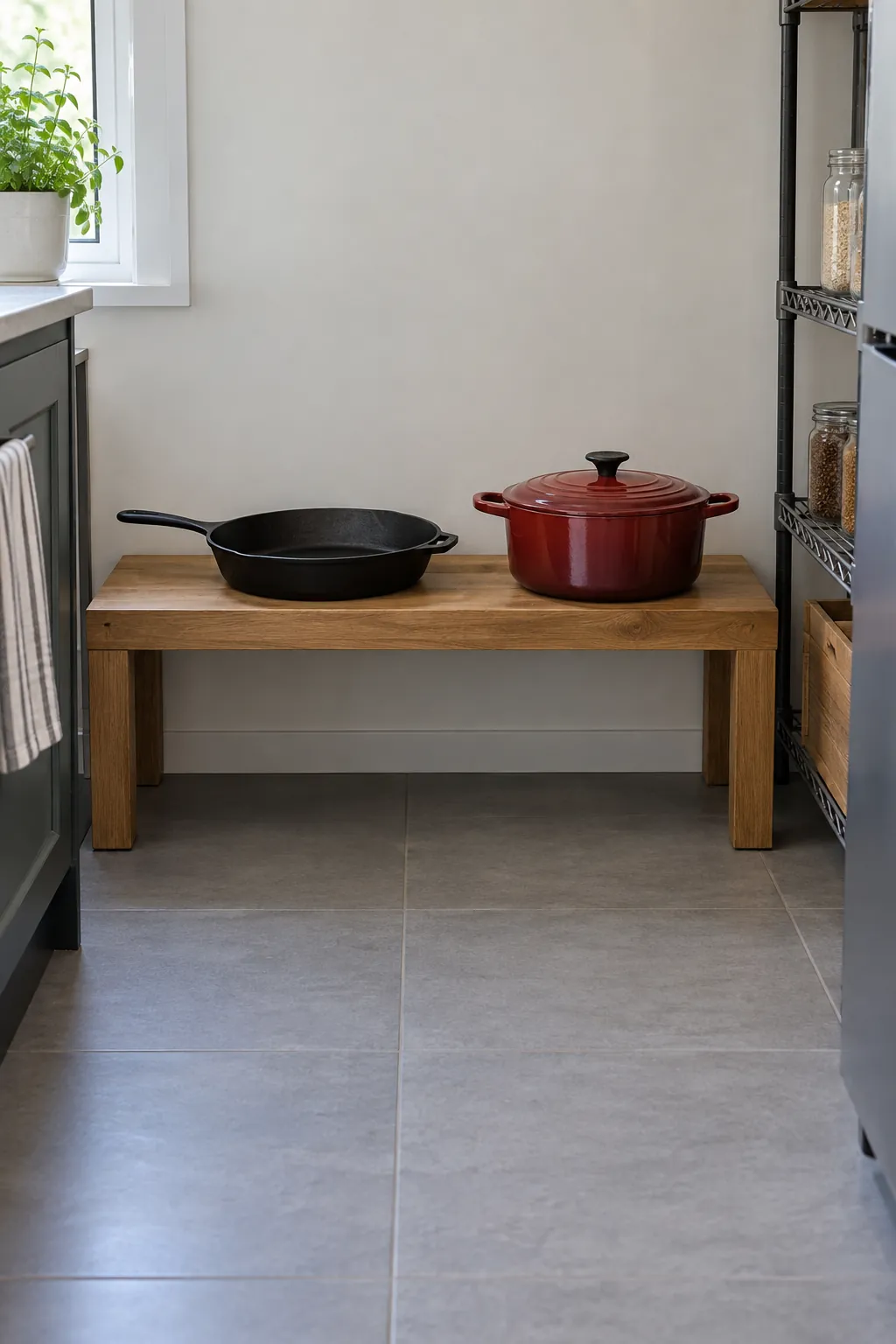
The pan you cook with every night should not sit underneath three heavier pieces. With cast iron, the best storage choice depends on what you can lift comfortably and what the cabinet can safely support. Start with those limits, then choose an organizer that reduces the number of things you move.
Start with the weight you actually own
Gather the pieces you regularly use and separate them from occasional cookware. Include lids and accessories when judging the load. A Dutch oven may be easy to store by itself but awkward to lift when another pot sits inside it. Give the heaviest frequently used piece a position you can reach with both hands.
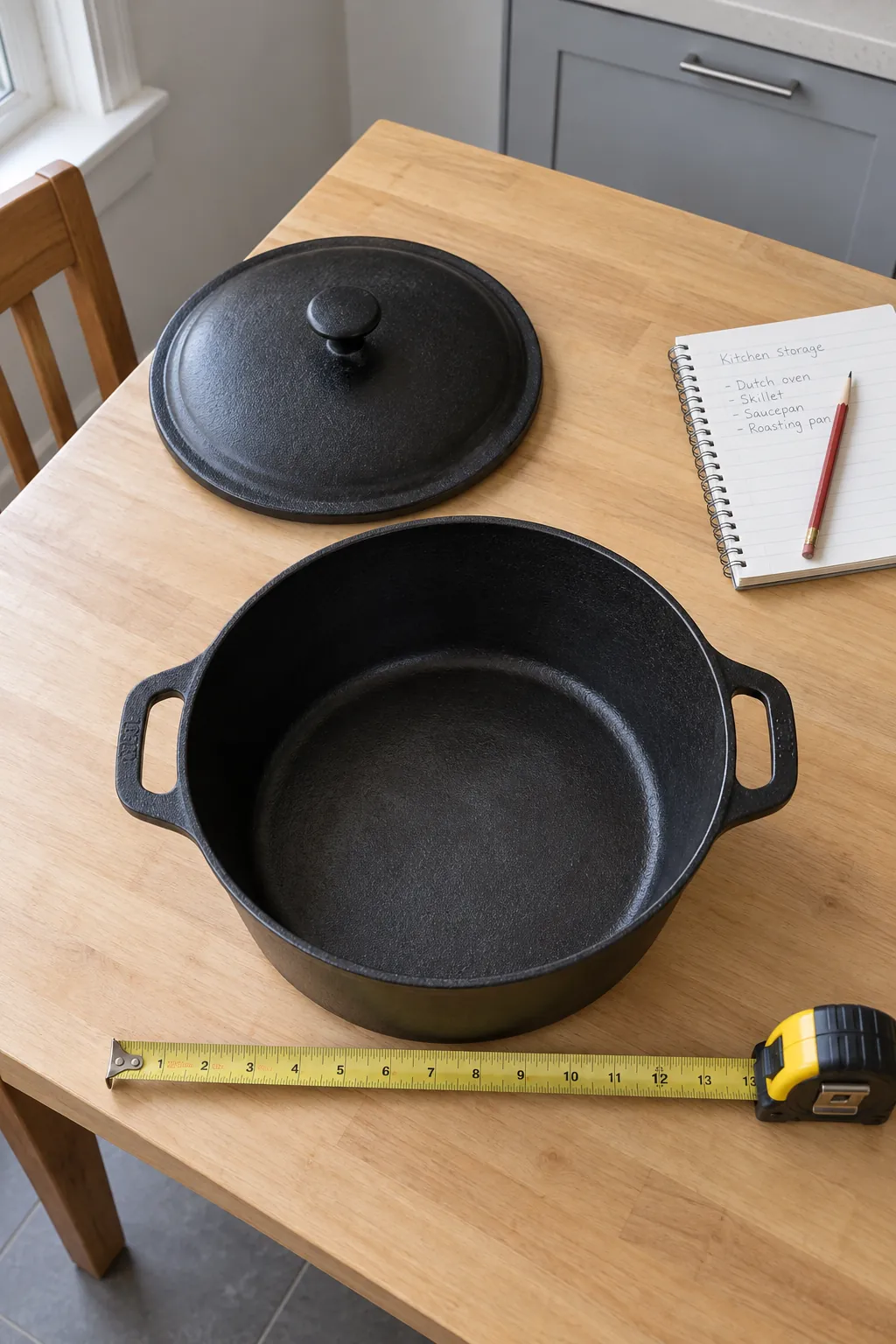
Measure each item across its widest points, including handles, and measure the cabinet opening as well as the interior. Check the usable height above the rim so you can grip the pot rather than drag it out. For drawers, handles must clear the cabinet frame throughout opening and closing.
Check the manufacturer’s load rating for the shelf, drawer or organizer. The entire support system matters: a strong rack does not strengthen the thin shelf beneath it. If the cabinet is sagging, its fasteners are loose, or its construction is uncertain, have it assessed before adding a collection of heavy pans. Kitchen cabinet reinforcement needs a solution matched to the cabinet, not a guessed screw size.
Let a low shelf carry the bulky pots
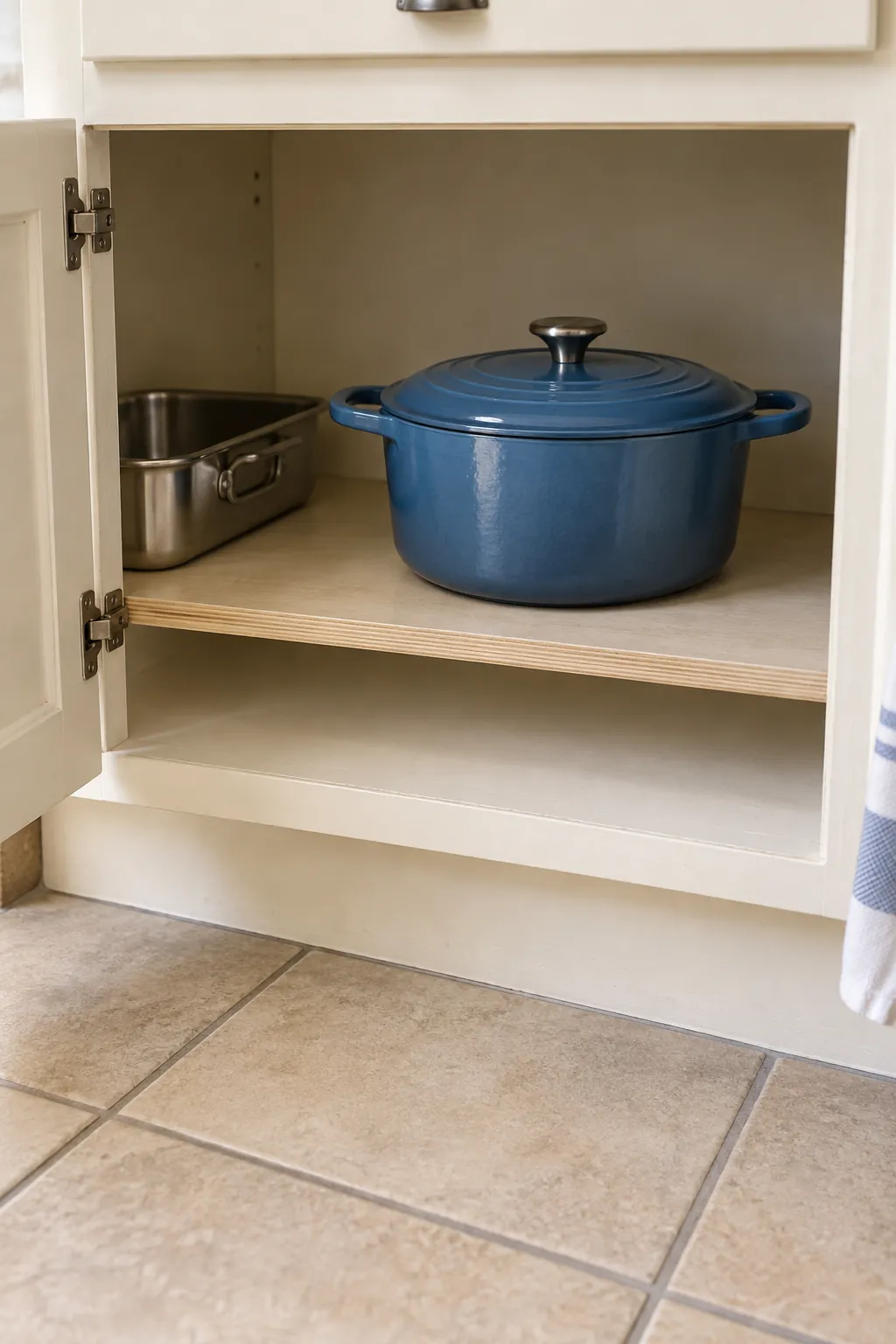
Cast iron shelf storage is often the simplest choice for a Dutch oven or deep casserole. Place bulky pots separately on a stable lower shelf where you can lift them without reaching overhead. Keep a small gap between side handles and neighboring cookware.
If you have to crouch and twist to reach the pot, move it nearer the cabinet opening. Store lighter, less frequently used items farther back. A corner cabinet can swallow a lot of cookware, but capacity is not useful if retrieving one pot requires unloading everything in front of it.
Use a rated drawer for the daily pieces
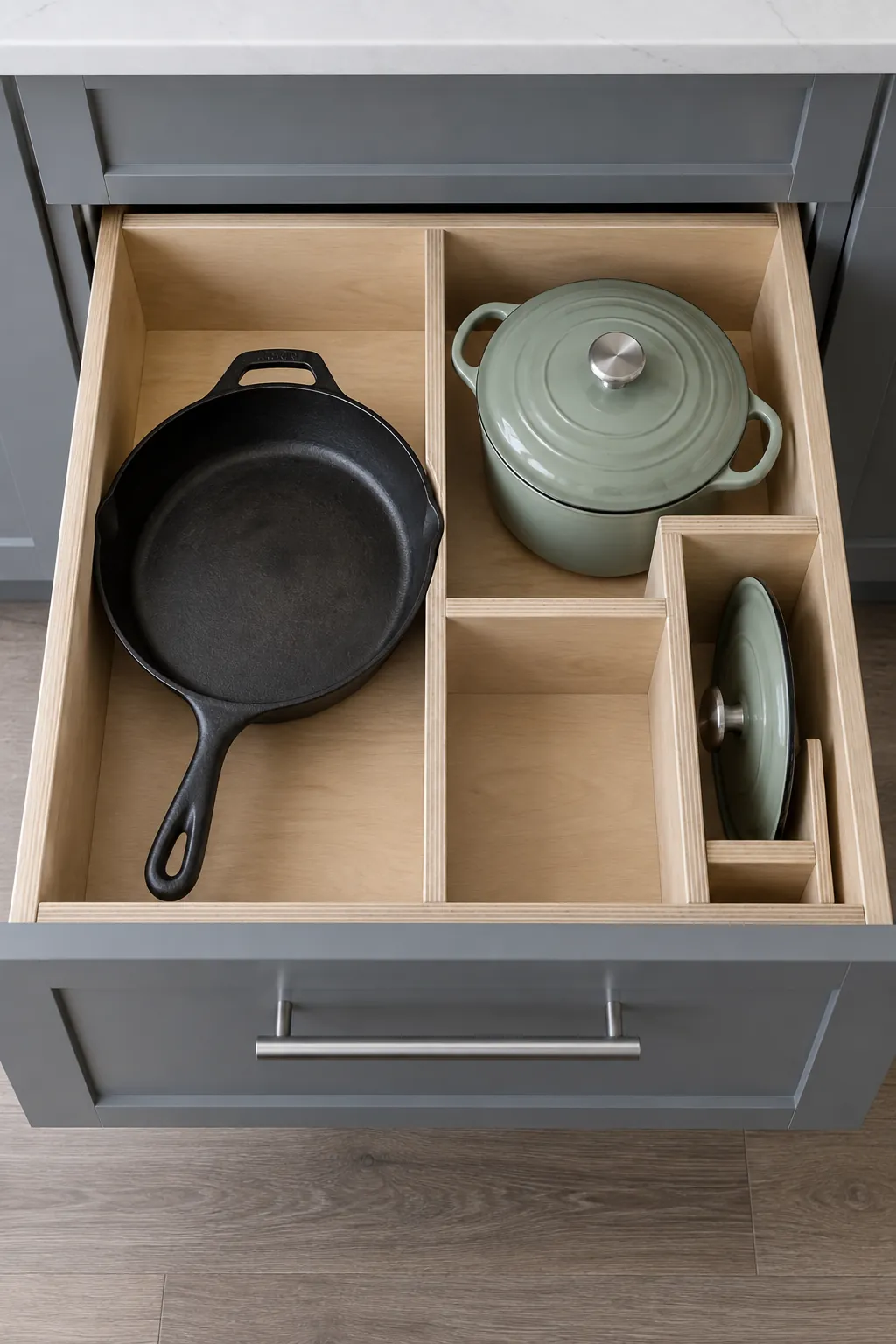
Deep drawer pot storage brings cookware into view, but the drawer must be rated for the combined load under the manufacturer’s stated conditions. Include the weight of dividers and any other contents. Follow the cabinet maker’s instructions for distributing that weight rather than concentrating everything at the front.
Stand a Dutch oven on its base and keep its lid in a separate supported position if the available height allows. A fitted divider can prevent a skillet from knocking against an enameled pot when the drawer moves. It should locate the cookware without wedging it so tightly that removal becomes difficult.
Open and close the drawer gently after arranging it. Handles should stay inside its footprint, and neither cookware nor dividers should strike the cabinet frame. If the runners bind or the drawer sags, unload it and address the support problem; a liner will not fix inadequate hardware.
Choose vertical storage for skillets that fit
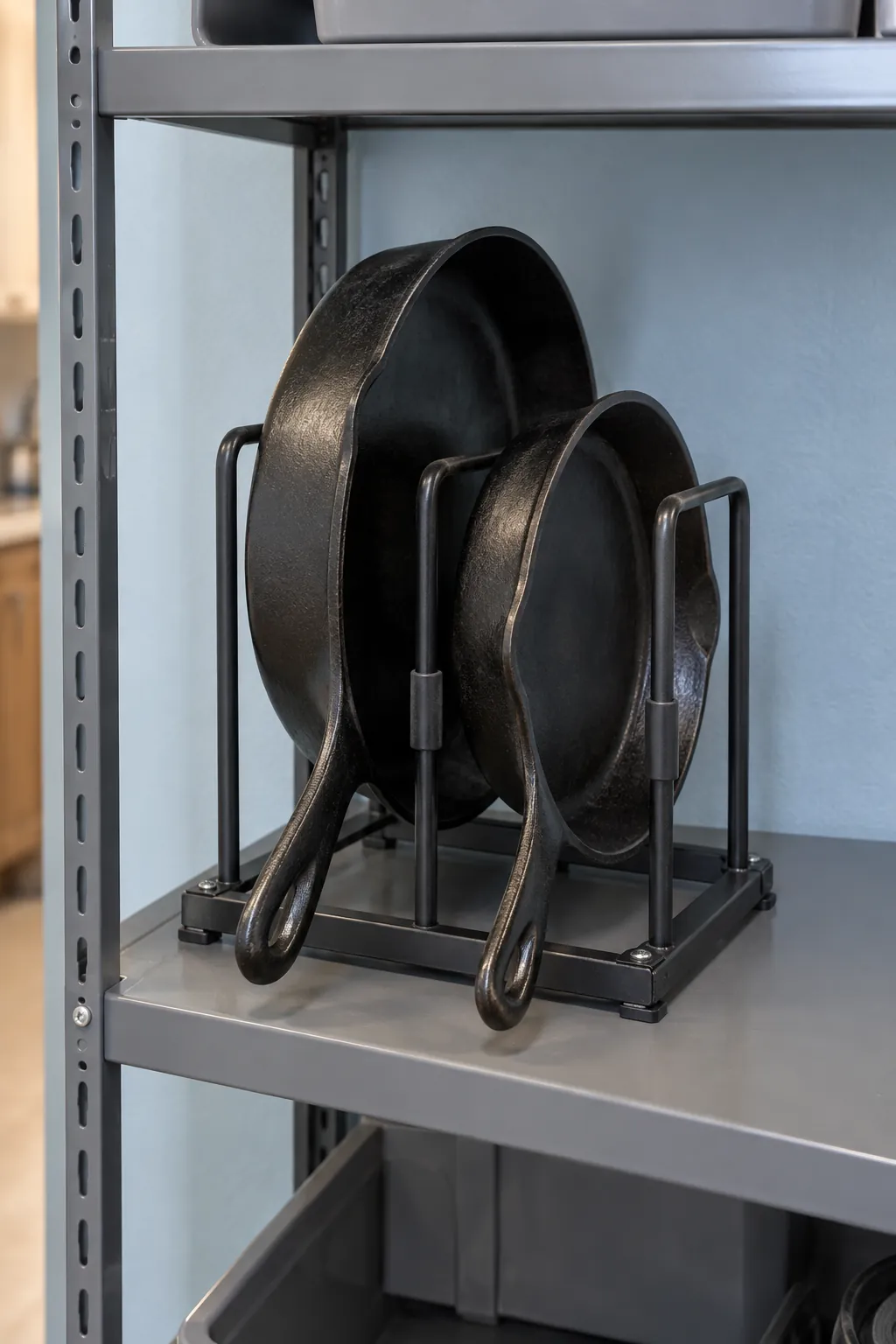
A heavy cookware organizer can separate skillets so you can remove one without lifting a stack. Choose a rack explicitly suitable for the pan weights and for the orientation you intend to use. A light divider intended for baking sheets is not automatically a pot rack for cast iron.
For vertical skillet storage, each pan needs a stable slot with room for its rim and handle. Put the rack on a level, adequately supported surface and follow any anchoring requirement. Keep handles from projecting into the aisle or blocking the cabinet door.
Do not force a deep pot into a narrow skillet slot. If the rack flexes, shifts, or lets the pan lean unpredictably, use separate flat storage instead. The convenience of individual access disappears when you must steady the organizer every time you remove a pan.
For a small collection, start by organizing the two pans used most often. Buying a tall rack for every piece can create a new reach problem while leaving a simpler shelf arrangement unused.
Hang cookware only from a verified support
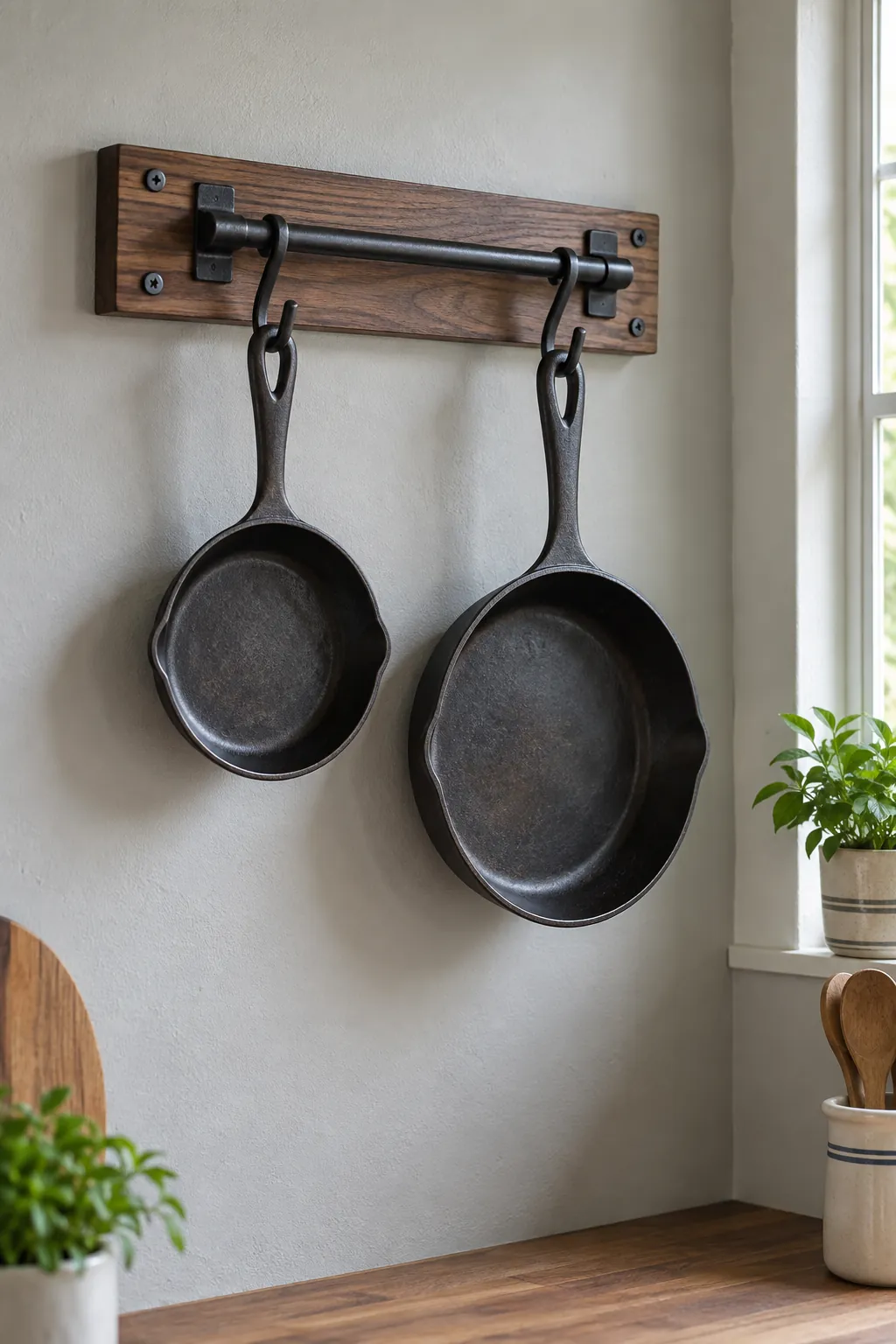
A wall mounted pan rack can free cabinet space, but the rack, hooks, fasteners and supporting wall all need to suit the full load. Follow the product’s installation instructions for the actual wall construction. Drywall alone, adhesive hooks and decorative rails are not substitutes for a mounting system rated for heavy cookware.
Plan the lifting motion before installation. You should be able to place and remove a pan without stretching over a hot stove or reaching above a comfortable height. Leave separation between hanging pans so they do not strike each other, and keep the handles and rims outside walking routes.
If you rent, get approval for the proposed mounting and wall repairs before drilling. Where the wall construction or load capacity is uncertain, use an appropriate cabinet or floor supported shelf instead. A qualified installer can assess the connection; a photograph of a similar rack cannot establish what your wall will hold.
Put everything away dry, with lids protected
Let cookware cool and follow its maker’s cleaning directions. Dry the interior, exterior, handles and lid thoroughly before storage. Bare seasoned iron generally benefits from a very thin wiped layer of cooking oil, with excess removed; pooling oil can leave a sticky surface. Enameled cookware has different care requirements, so do not treat its coated interior as bare iron.
Keep the storage location dry and away from leaks or persistent condensation. A paper towel or pan protector does not make damp cookware safe to stack. Use a clean, dry separator only after the pieces are fully dry, and avoid tall stacks that require lifting several heavy items at once.
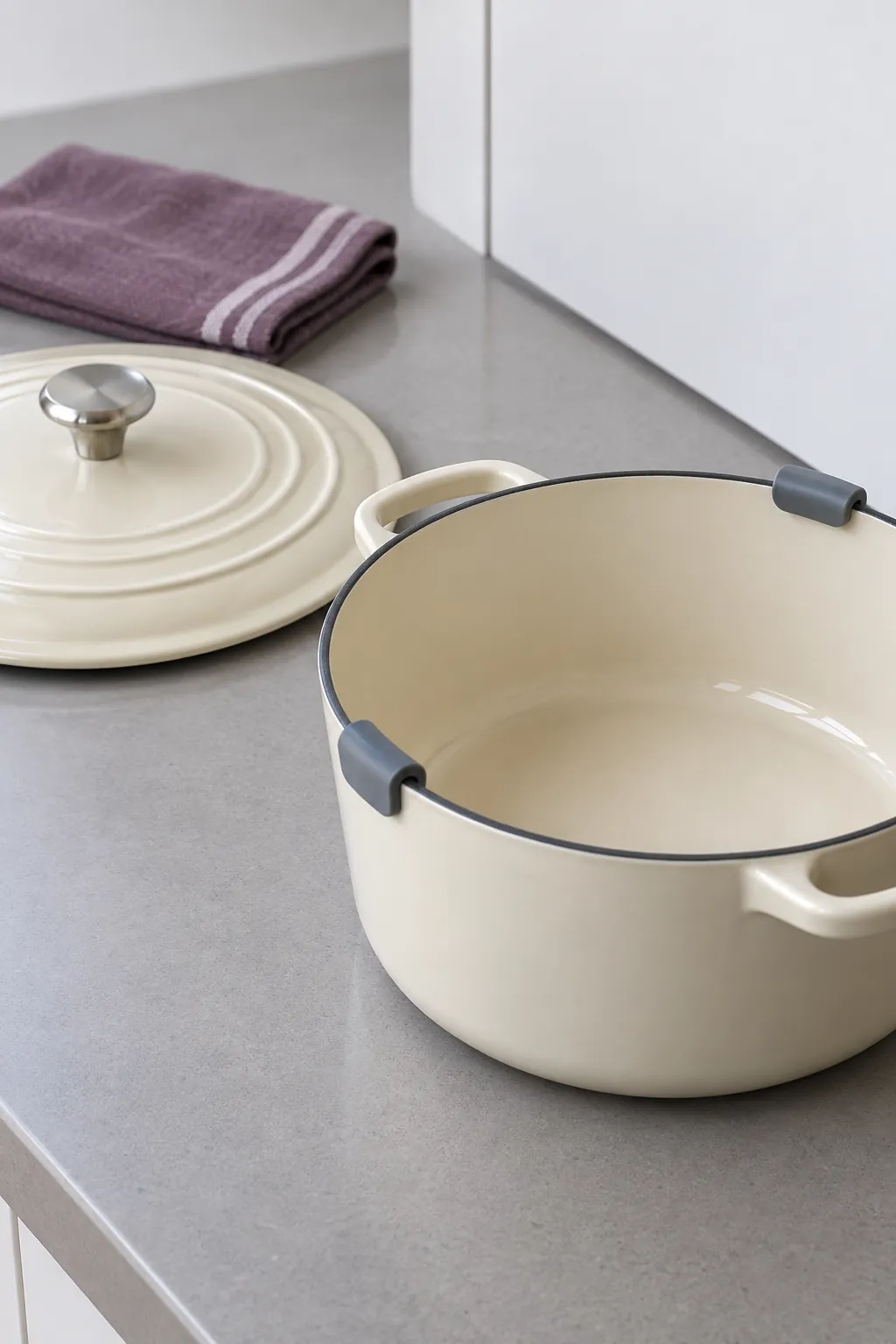
For enameled pots, use suitable rim protectors or separate lid storage according to the manufacturer’s guidance. Do not balance a heavy lid precariously on its edge. Keep lids supported where they can be lifted independently, with air circulation around dry cookware.
After the next meal, pay attention to the return trip. If the pot must be shoved past another handle or the lid has nowhere stable to go, adjust that spot while the problem is fresh. A good arrangement lets the cookware cool, dry and return to its place without a balancing act.