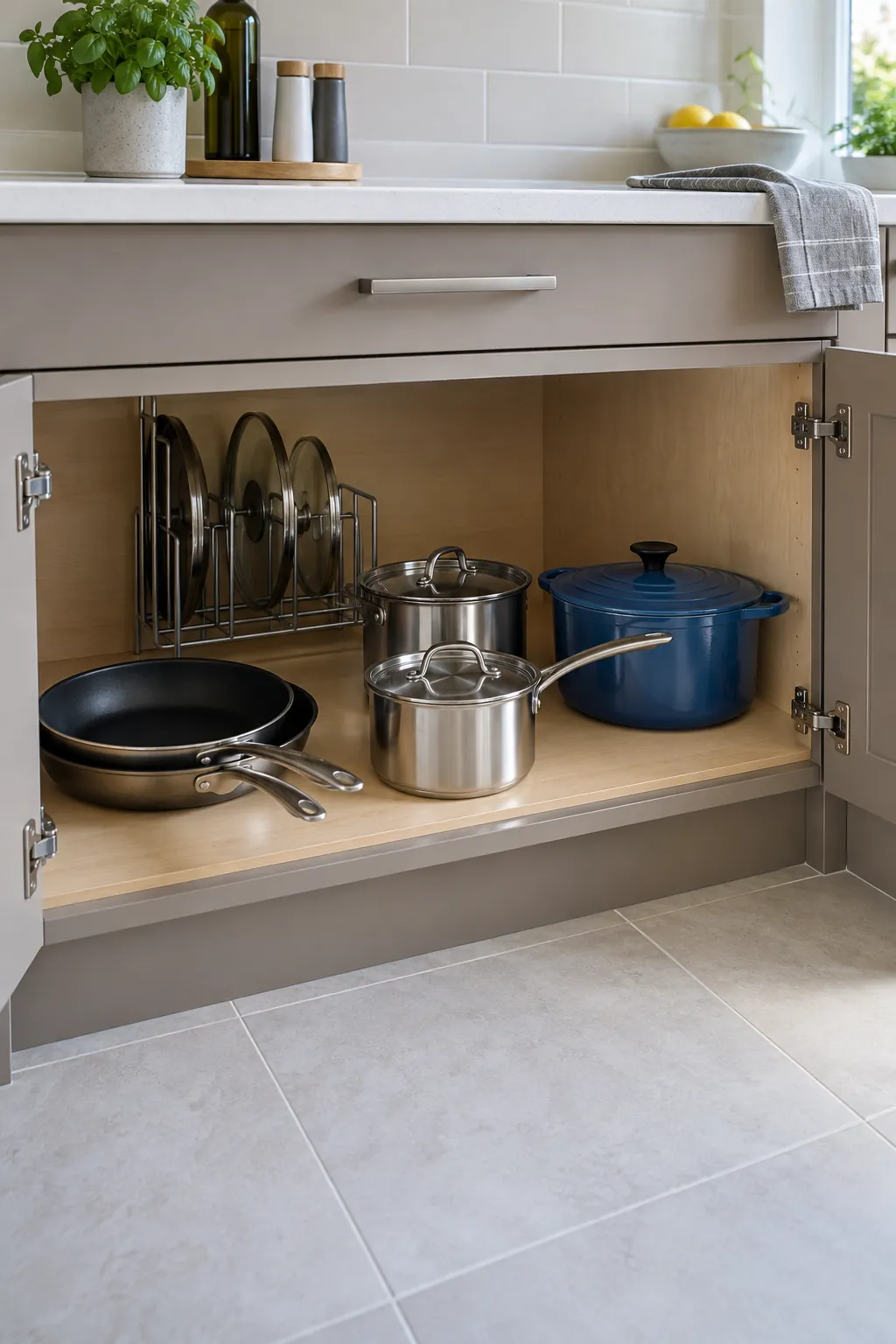
Dinner is already enough work without dismantling a stack of pans to find the one underneath. Good cookware storage starts with the weight you can comfortably lift and the space your handles need. Choose a place for the everyday pieces first, then fit the occasional pots around that routine.
Give daily cookware the easiest lift
The pan you use every evening should not sit beneath the stockpot you use twice a year. Group cookware by how often you reach for it, then reserve the most accessible cabinet or drawer for the daily group. Put rarely used pieces in a secondary location that you can still reach safely.
Before buying a pots and pans organizer, check the full width of your largest pan including its handle. Measure the cabinet opening as well as the interior, since a face frame or hinge can stop a wide pan from passing through. Keep heavy cookware where you can lift it with control, rather than automatically putting it on the highest shelf or the floor.
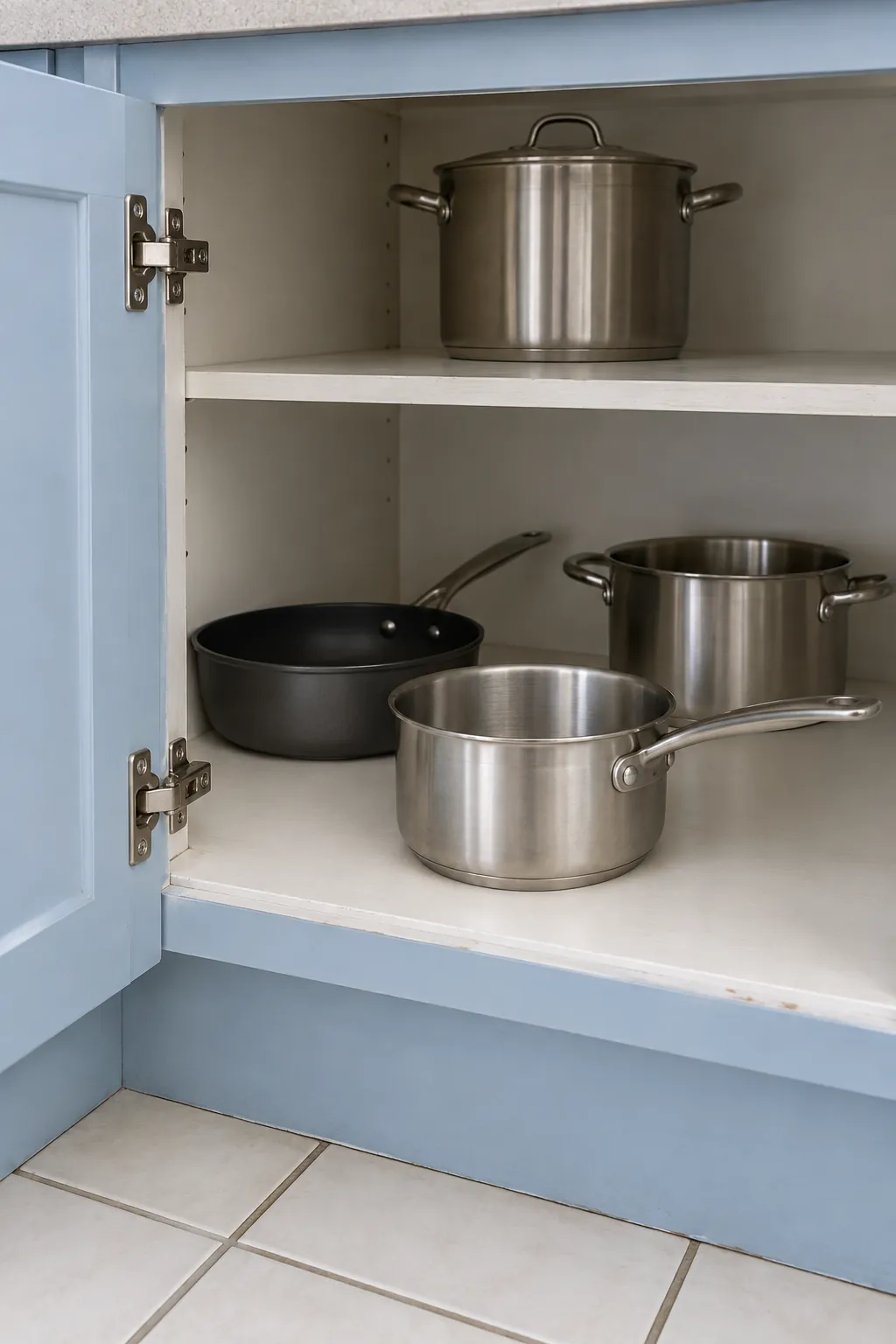
Nest compatible pots and protect the surfaces
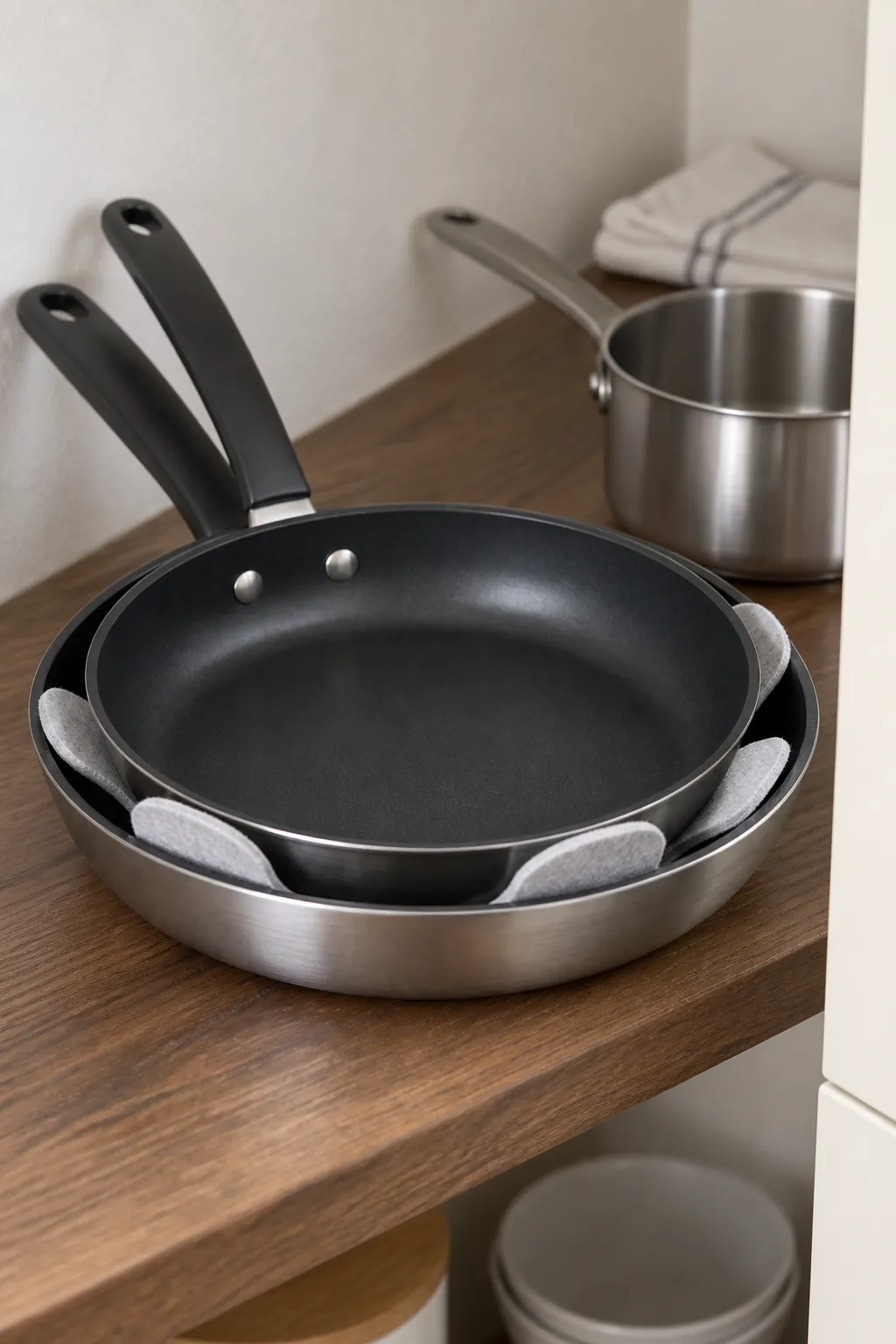
Nested cookware storage saves space when the pots actually fit inside one another without wedging. Place the larger, sturdier piece at the bottom and use clean, dry pan protectors where contact could mark a cooking surface. Follow the cookware maker’s care guidance, particularly for nonstick coatings and enamel.
Keep each stack low enough that removing the bottom piece is manageable. Handles should not lock together or project into the door swing. Store lids separately when they prevent nesting, and leave wet cookware out until it is fully dry. A crowded tower that scrapes every time you pull out a pan has traded usable storage for a smaller footprint.
Cast iron deserves a dry location and the care specified by its manufacturer. Avoid trapping moisture beneath a tightly closed lid or damp protector. If a heavy Dutch oven fits comfortably by itself, give it that space instead of treating it as the base for every other pot.
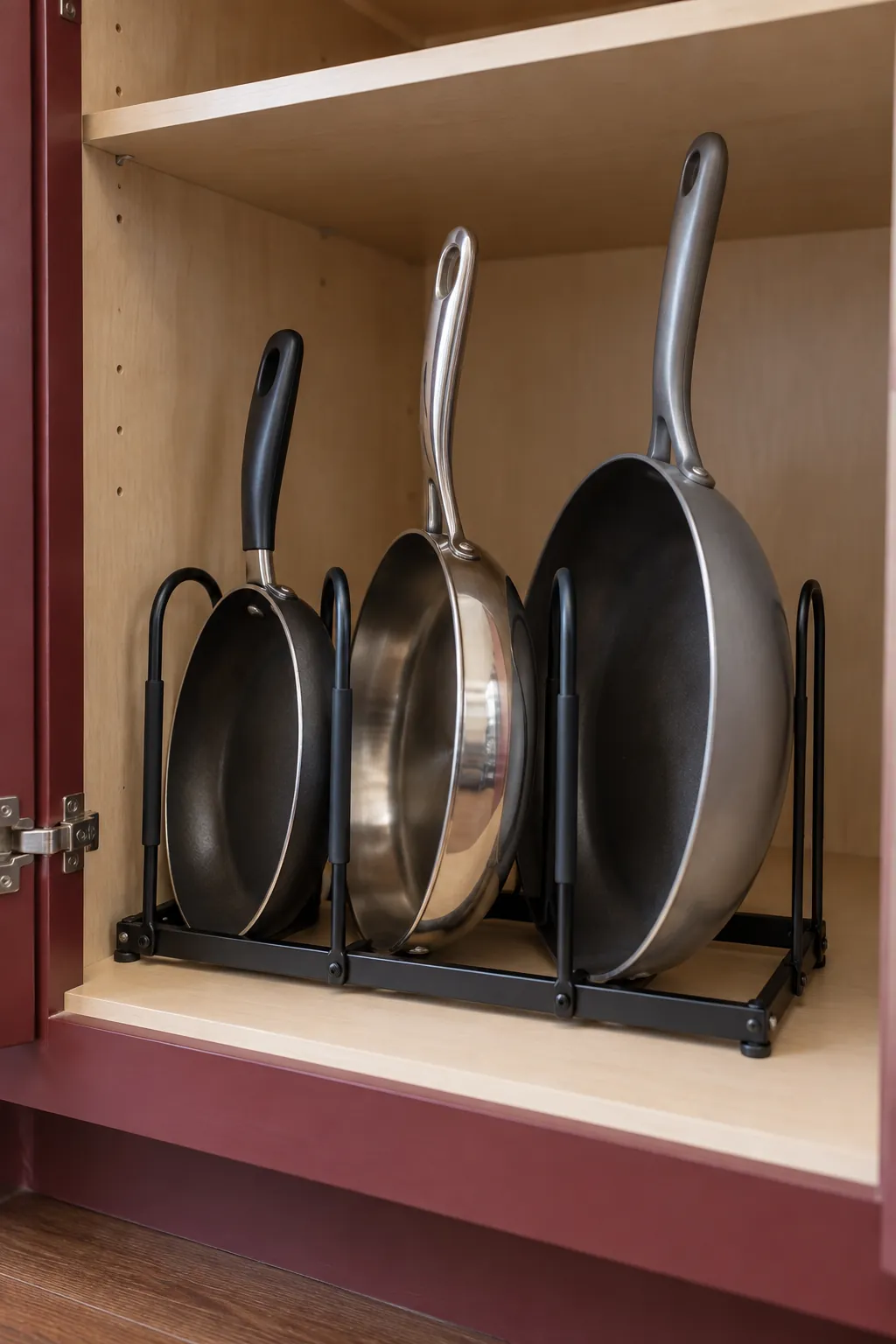
File frying pans vertically when height allows
Vertical cookware storage can make shallow frying pans easier to select because each piece has its own slot. Use a cabinet pot organizer designed for the dimensions and weight of the pans, with a stable base and dividers that support them without scraping their cooking surfaces. A rack intended for thin baking sheets may not handle a heavy skillet.
Test the largest pan in the least convenient slot before filling the rack. Its handle must clear the shelf above, and the pan needs room to tilt or lift out through the opening. Keep the rack toward the front of a deep cupboard if access becomes awkward at the back.
Let a drawer carry the cookware toward you
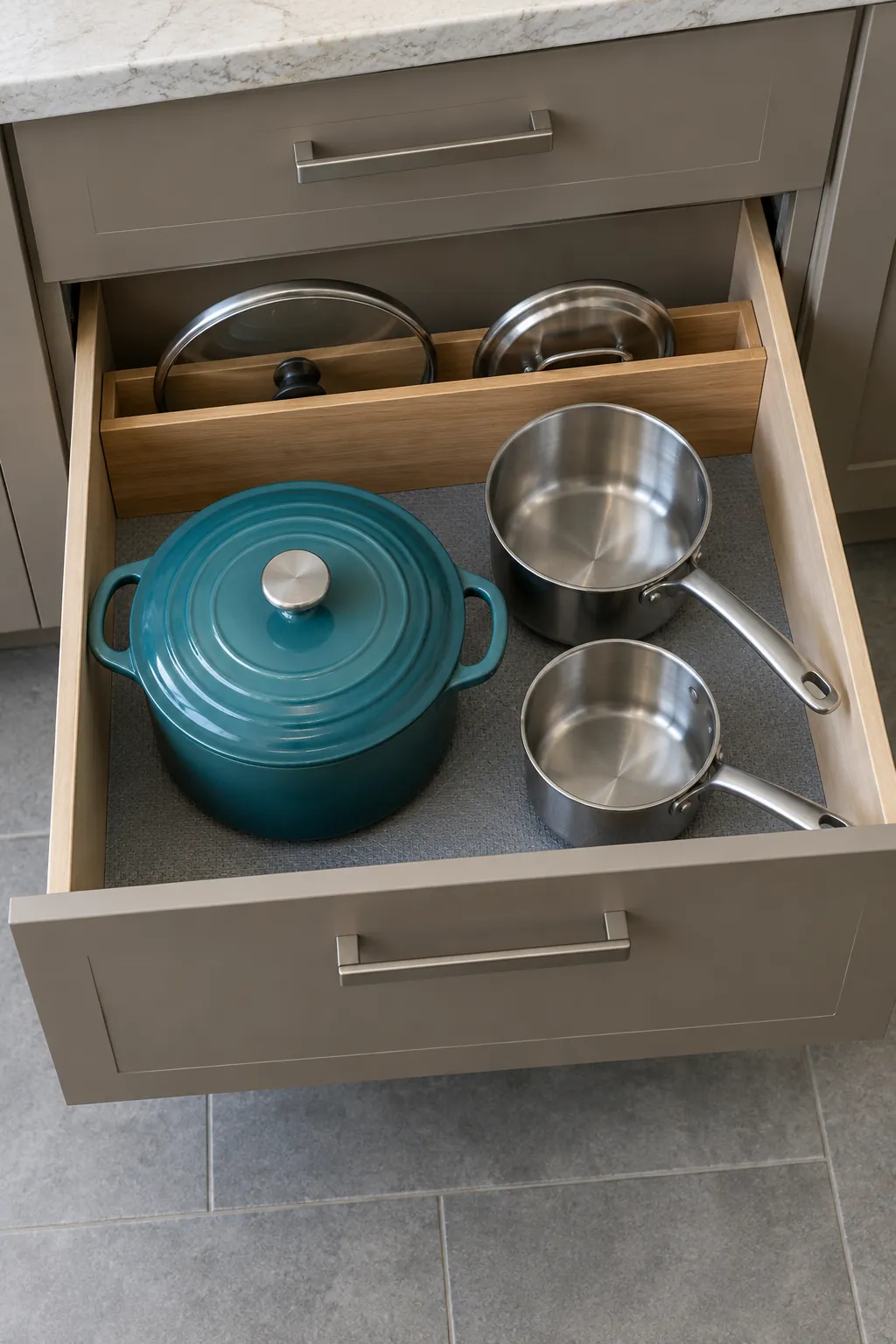
A deep drawer gives you a view of several pots at once. Store the heaviest pieces flat and use deep drawer dividers only where they prevent sliding or separate lids from handles. Leave room around side handles so you can grasp them without first removing another pot.
A pull out pot drawer inside an existing cabinet can offer similar access, but its hardware must suit the cabinet construction and loaded weight. Check the manufacturer’s rating for the complete installed system, including slides, fixings and cabinet base. Measure the clear door opening and hinge intrusion before ordering.
Corner cabinet cookware requires a different fit check. A rotating shelf or shaped pull out needs clearance through its whole movement, with handles kept inside the supported area. If the mechanism is hard to reach or already overloaded, keep lighter occasional items there and move daily pans to a straight cabinet.
Hang a few pans only where the wall can support them
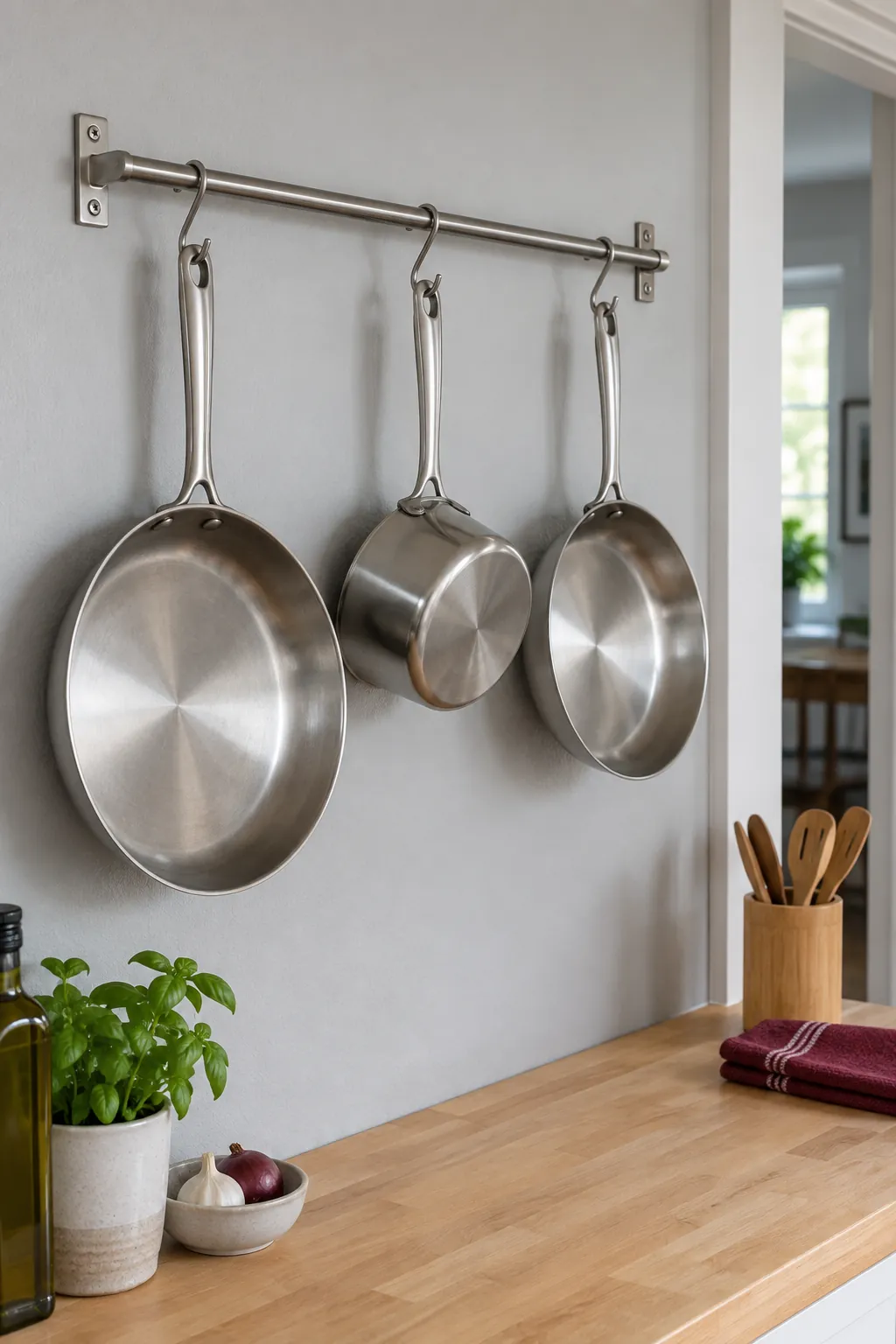
A hanging pot rack frees cabinet space when the room has a suitable mounting position. Use a rack, hooks and fixings rated for the combined cookware weight, and install them into appropriate structure according to the product instructions. If the wall or ceiling construction is uncertain, get installation advice instead of choosing anchors by appearance.
Keep hanging cookware out of head paths, door swings and busy walkways. Leave enough distance between pans that you can remove one without swinging its neighbor. A wall rail beside a work area can suit a small collection, while a ceiling rack may make a low kitchen feel crowded.
Open cookware collects dust and cooking residue more readily than pieces behind doors. Hang what you use frequently and can clean easily; do not put a display above a burner where it compromises required appliance clearances.
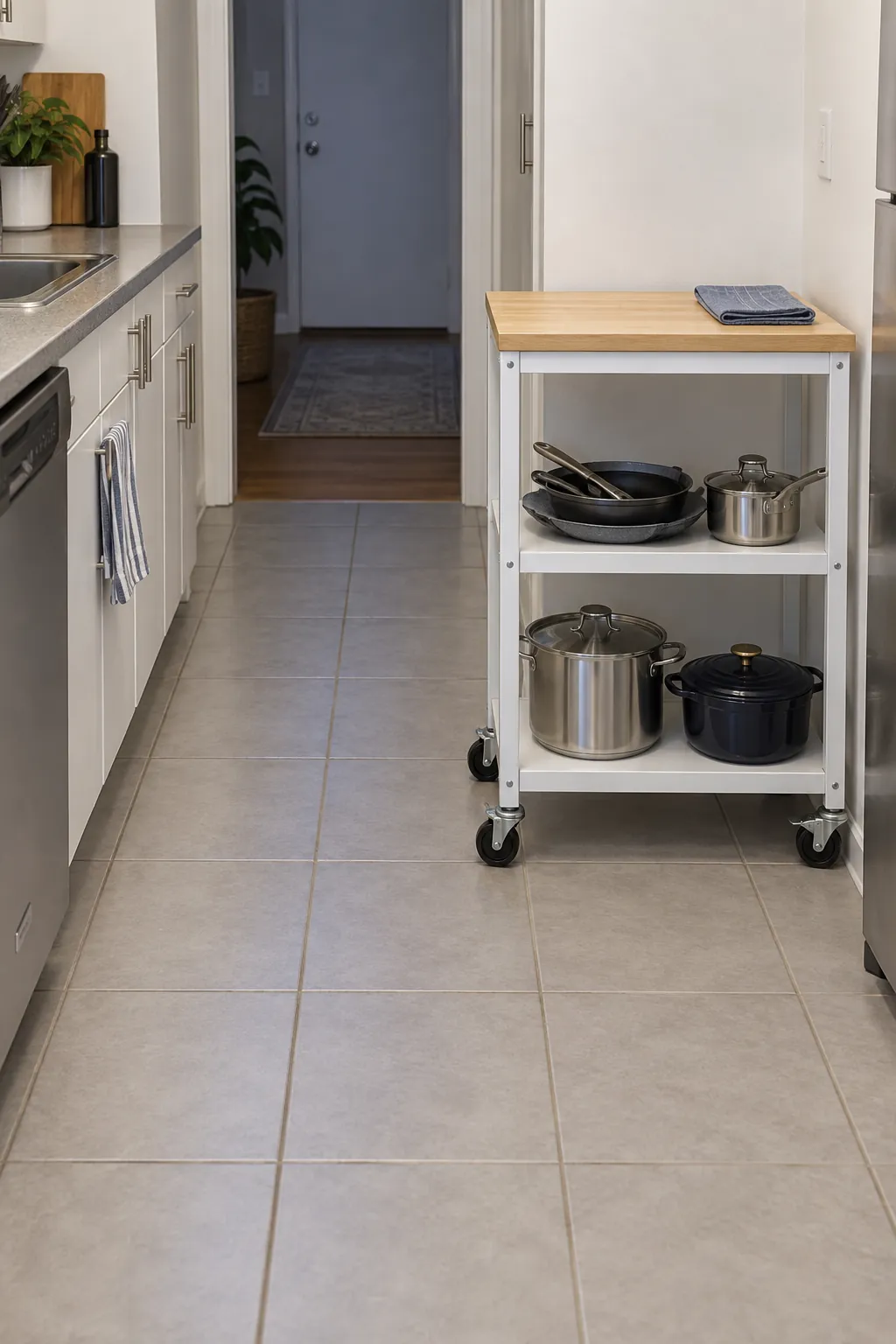
Use a small cart when the cabinets are the wrong shape
Narrow cupboards can be a layout problem even when you do not own much cookware. A compact freestanding kitchen cart can give wide pans a suitable shelf, provided it leaves a clear route through the room. Choose shelves rated for the contents and keep heavier pieces low enough for stability while still comfortable to lift.
Lock the casters before loading or removing cookware, and avoid building a tall stack on a narrow cart. In a rental, this can be a practical alternative to drilling, but check the actual parking space with the doors and appliances open. An organizer should not block the dishwasher to solve a cupboard problem.
Use the new space for the pieces that did not fit, then stop. If every roommate has a duplicate stockpot, agree which items stay in the daily kitchen and which can be stored elsewhere. The useful measure is whether tonight’s pan comes out in one controlled lift.