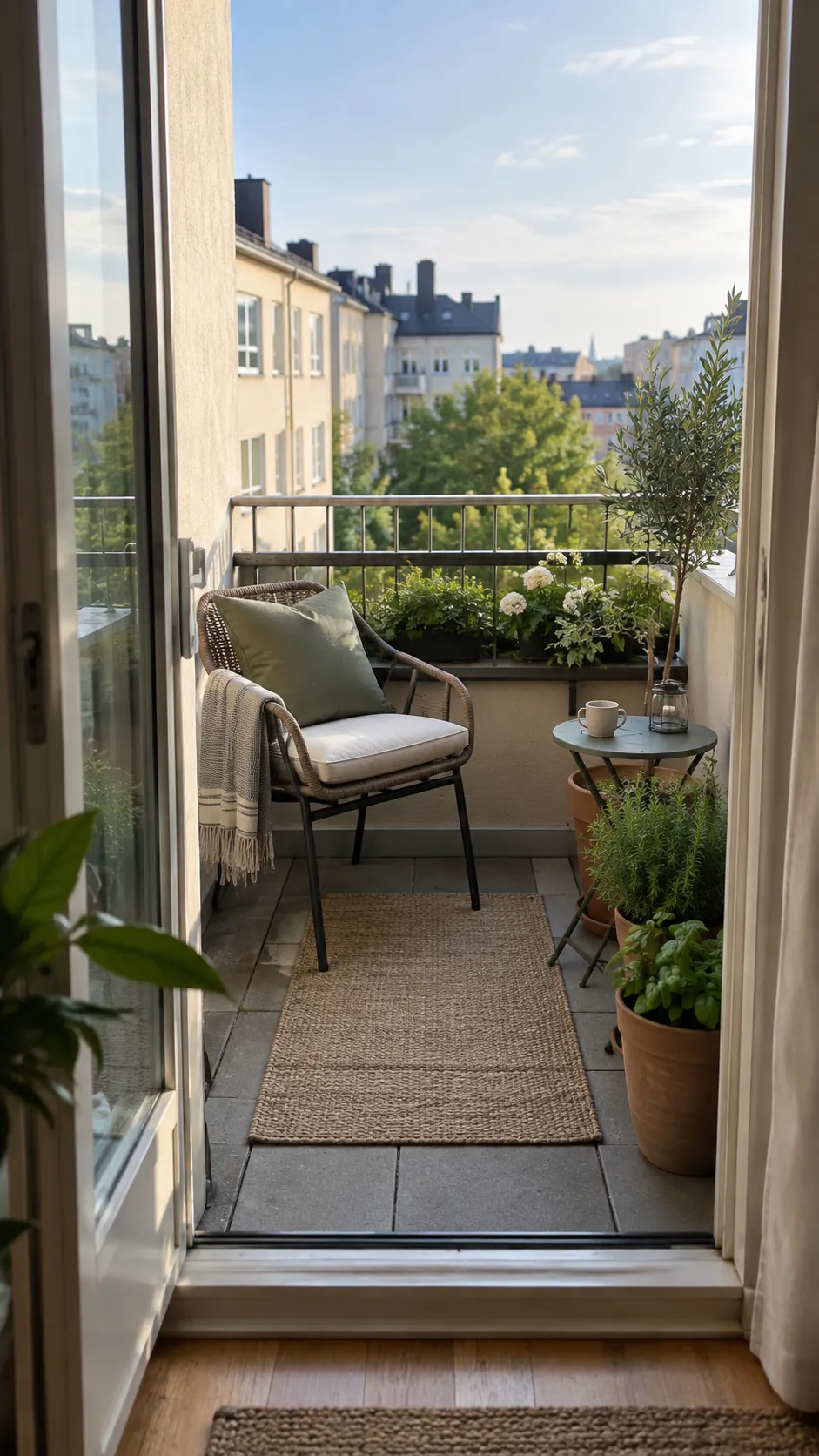
On a small terrace, the first chair often decides whether the whole space works. A table that looks modest in a store can block the door once someone pulls out a seat. Start with the way you want to use the terrace, then leave a clear route from the doorway before adding furniture, plants, or a privacy screen.
Check the building rules, the terrace structure, and where rainwater leaves the floor before moving heavy planters outside. Then make a simple plan with one primary activity, such as morning coffee or reading. A compact terrace feels more generous when every object supports that activity and can be reached without shifting another object first.
Map the door, walking route, and sunny spots
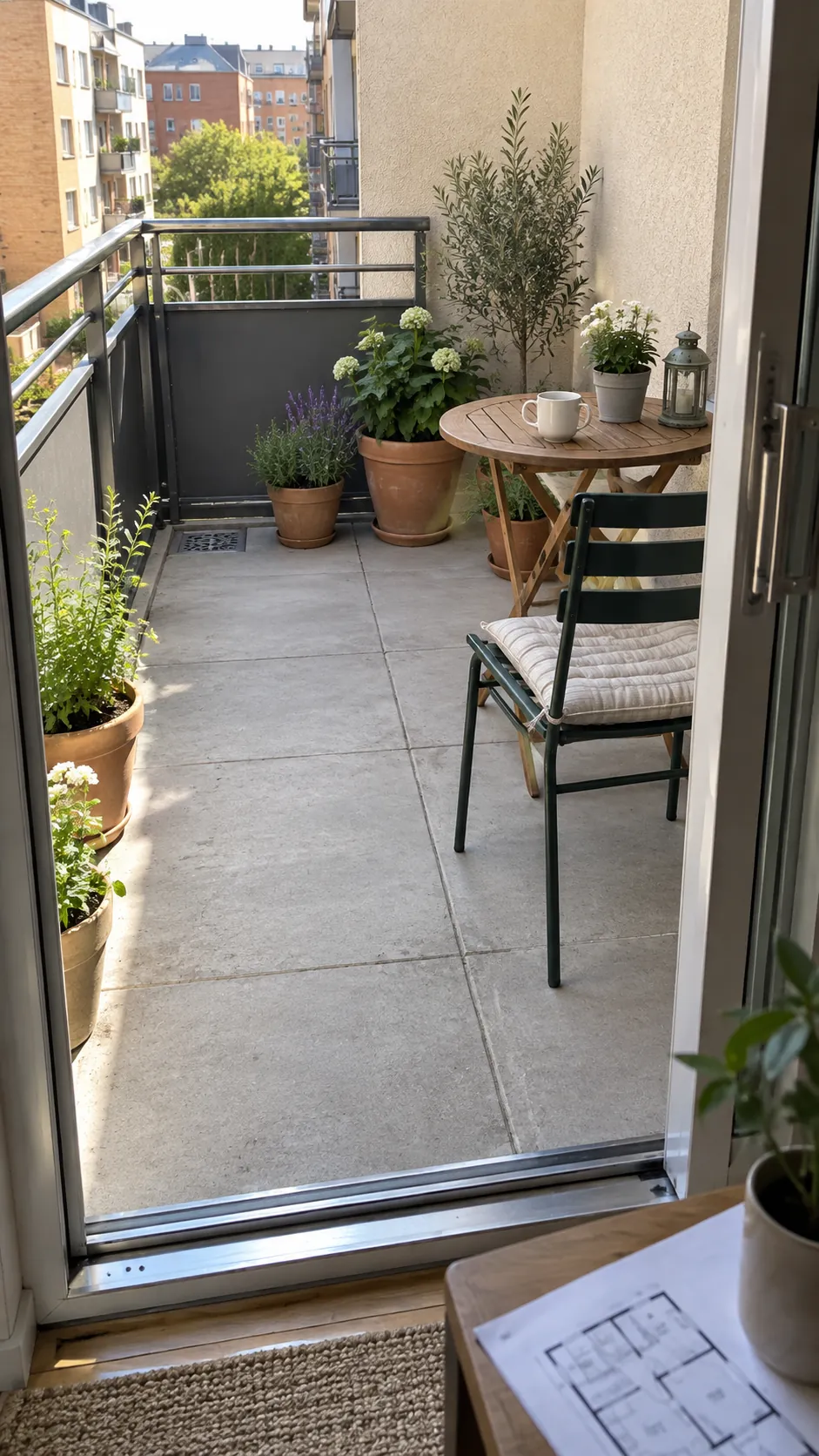
Measure the terrace at floor level and mark the door swing, drain, railing, and any utility access. Put paper or boxes where a chair and table might go, then walk the route while the door is open. Leave enough room to pull a seat back and carry a watering can without stepping over furniture.
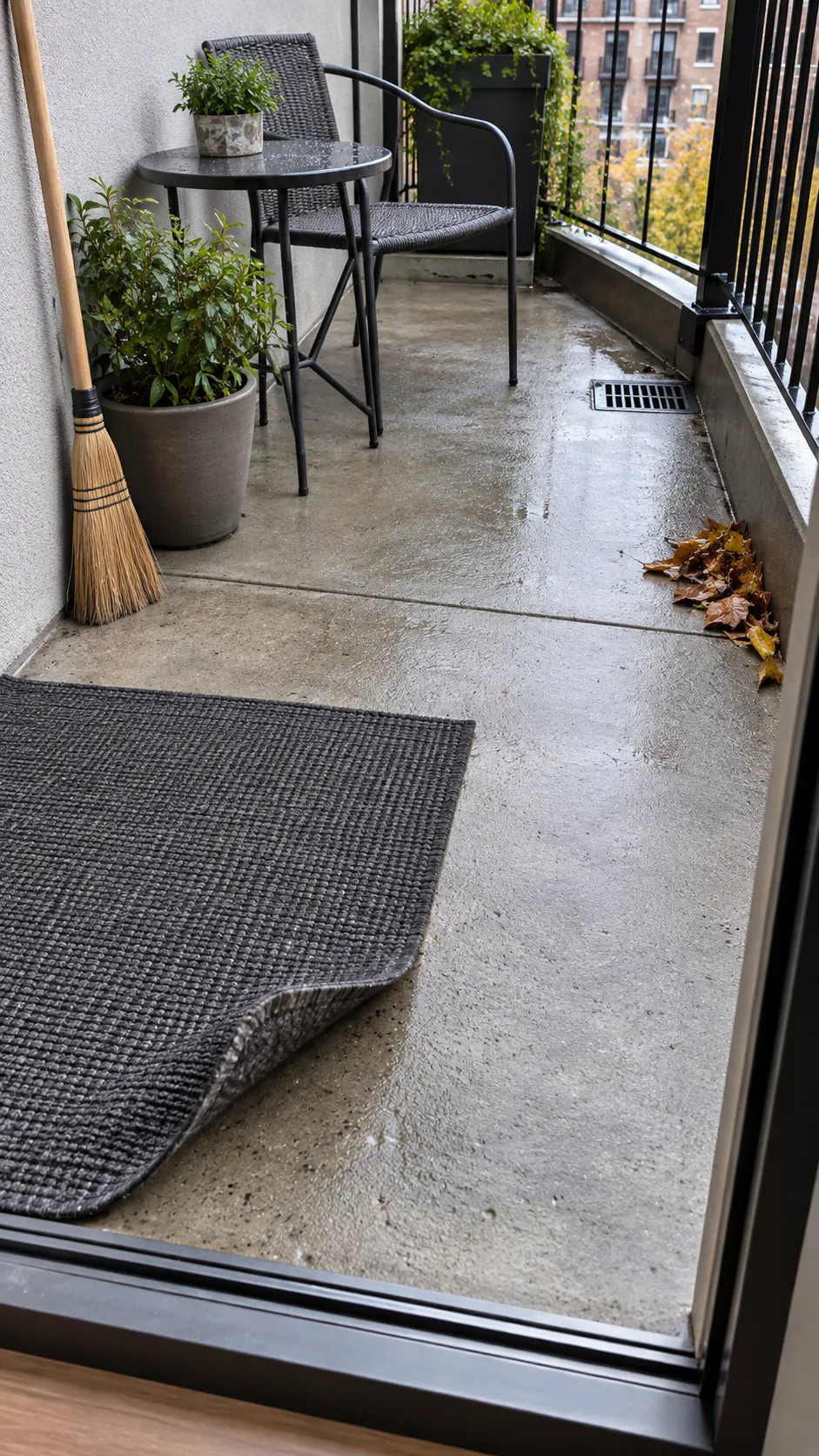
Watch the space at different times of day. A sunny corner may be ideal for plants but uncomfortable for a seat at noon, while a sheltered wall may be better for a reading chair. Keep the route to the drain visible in your plan so pots and mats do not hide standing water.
Choose seating for the activity you actually use
A compact bistro set suits meals for two when both chairs can be pulled out. For reading, one comfortable chair and a small side table may be more useful than a full set. Test the seating at its working size, not with every chair pushed neatly under the table.
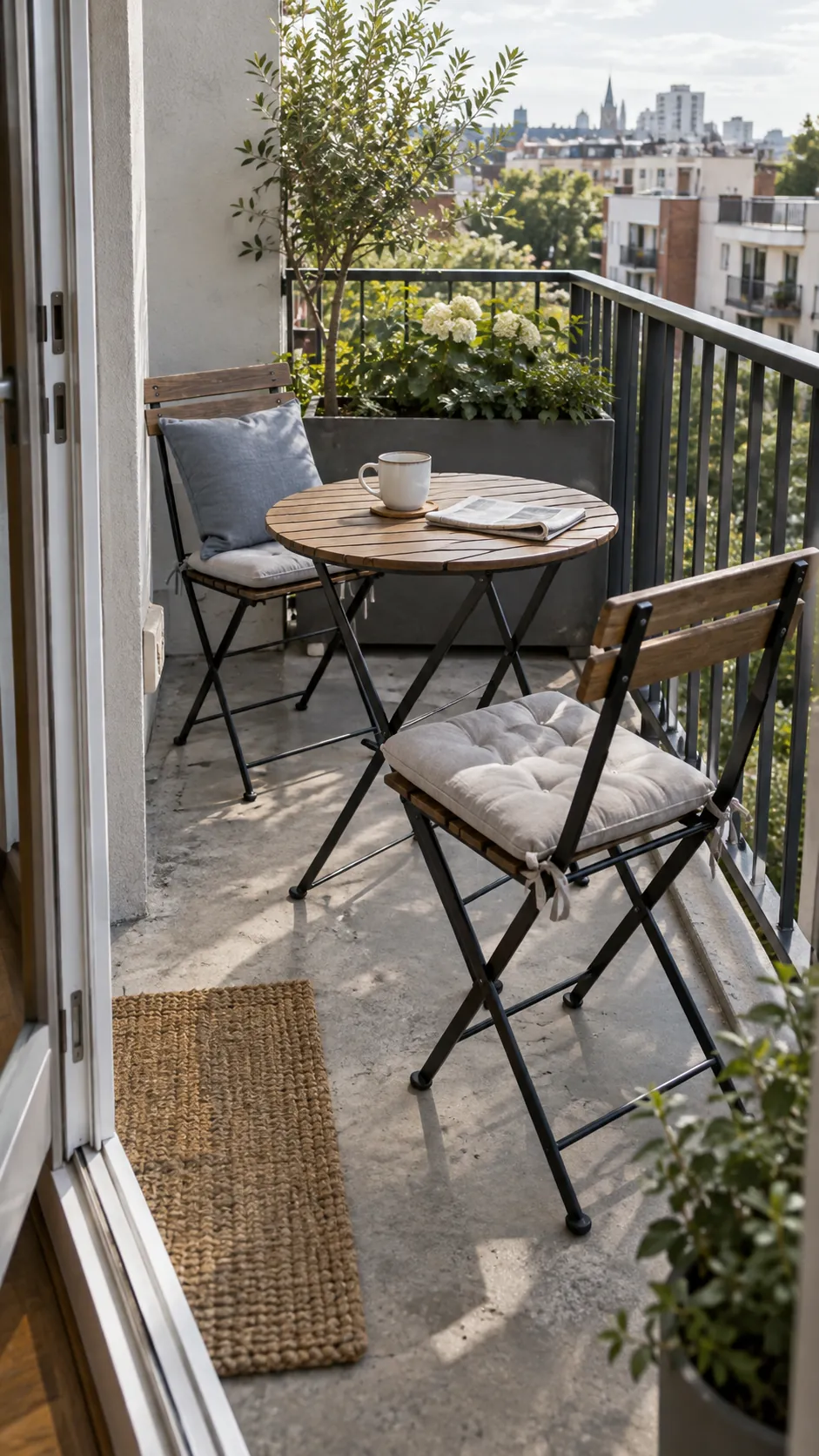
Foldable balcony furniture can free the floor when the terrace has another job, such as drying laundry. Check where folded pieces will stand in wind and whether the door remains usable. Choose materials suited to the local weather and bring cushions indoors when they would otherwise stay wet.
Give supplies one weather suitable home
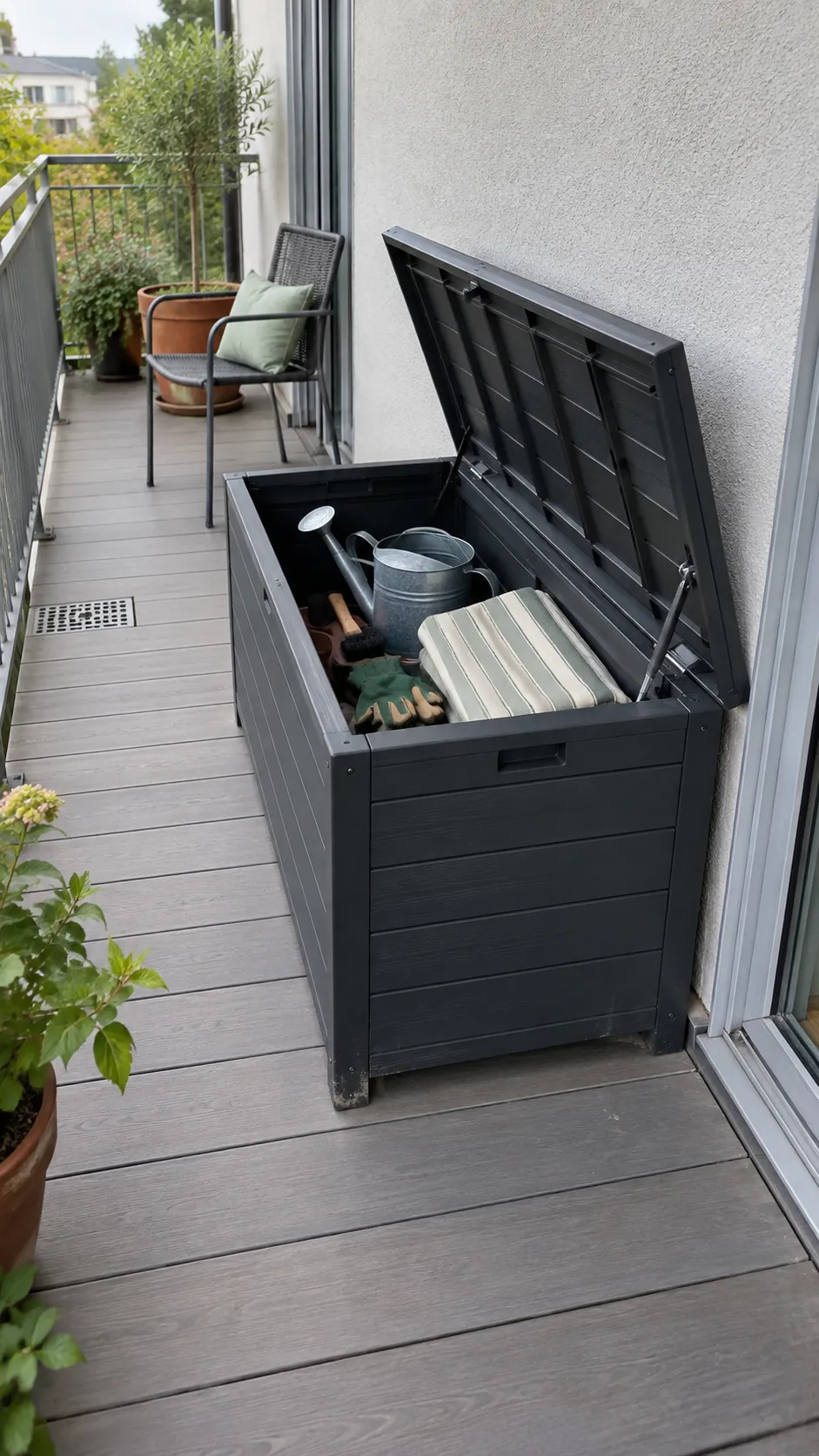
Group the items you use outdoors, such as a watering can, small tools, and chair cushions, before deciding on storage. A slim cabinet or outdoor storage bench can hold them if it fits without narrowing the main route. Measure the lid or door in its open position; a bench that cannot be opened behind the table is not useful storage.
Do not treat a closed box as a solution for wet textiles. Let cushions dry first and check the container after rain. Keep heavy objects low, and confirm any storage unit is stable in wind and permitted by your building.
Arrange plants by light, water, and weight
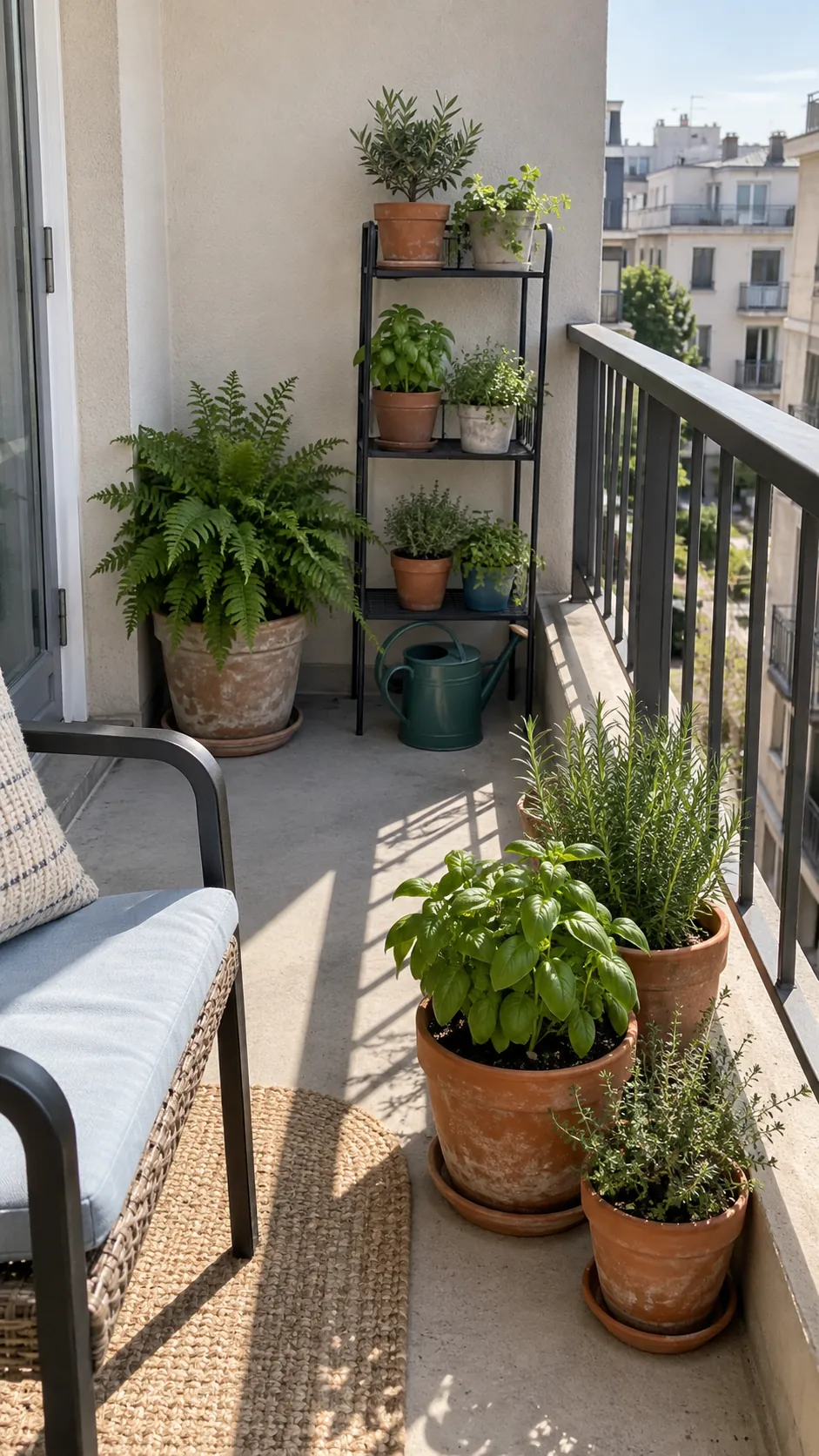
A tiny terrace garden works best when plants with similar light needs share a zone. Set the sunniest pots where they will not shade a chair, and use a narrow stand only if it is stable and allows water to drain safely. Leave space to reach every pot for watering and pruning.
Vertical wall planters can release floor area, but fixings and total wet weight matter. Check your building rules before attaching anything to a wall or railing, and never place pots where they could fall beyond the terrace. Use saucers or approved drainage methods without trapping water against the building surface.
Add privacy without closing in the terrace
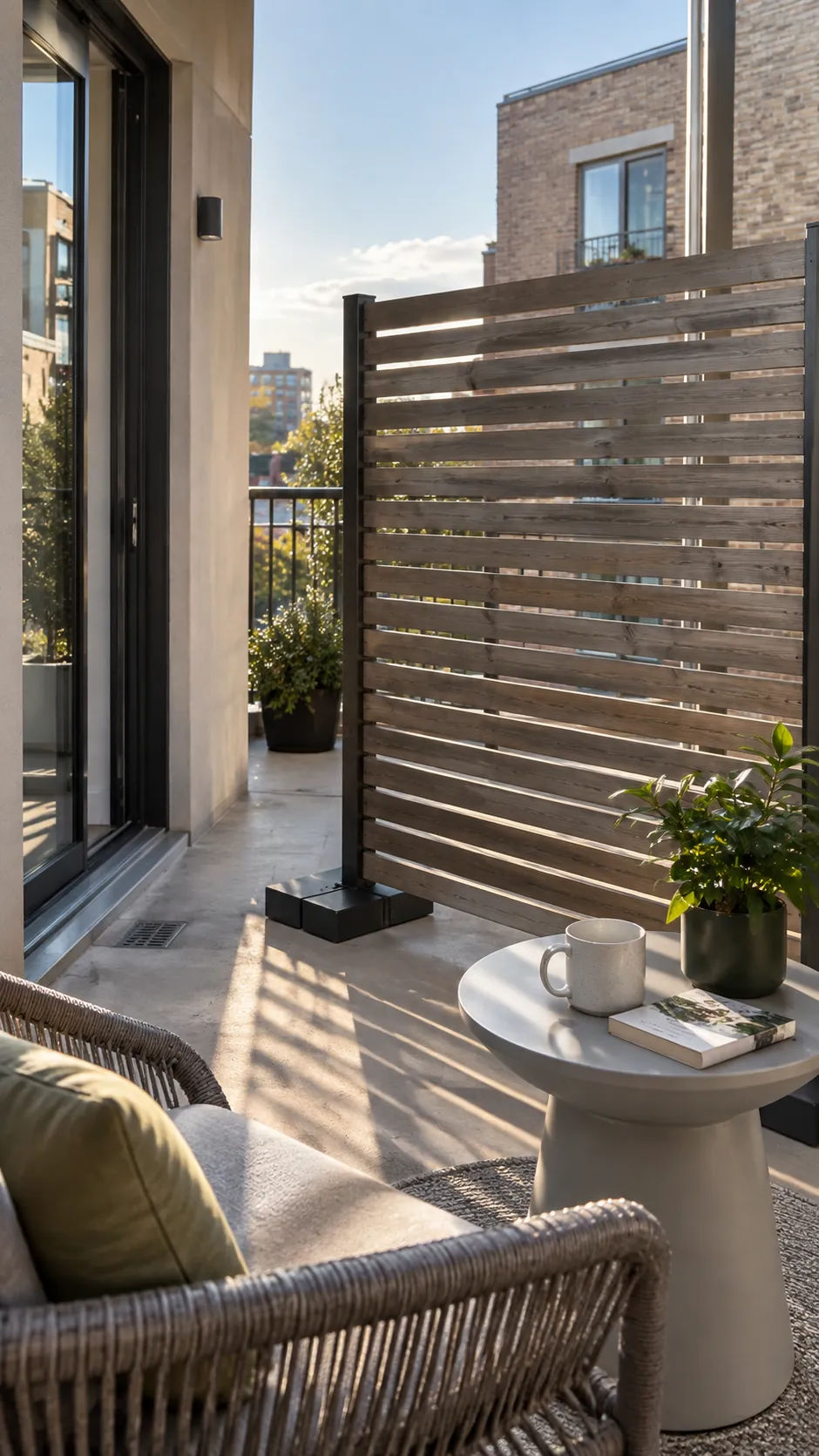
Stand at the seat and identify the actual sightline you want to soften. A single tall planter or a partial terrace privacy screen may solve that view without wrapping every edge. Keep the screen below any limit in your lease or building rules, and consider how wind will act on a broad solid panel.
Choose a screen or plant arrangement that still admits light and lets you clean around it. Privacy should not hide a drain, block a safety feature, or attach to a shared railing without permission. If the terrace feels dark after adding a barrier, reduce its width before adding more lighting.
Keep the floor easy to drain and maintain
Before adding a rug or deck tiles, find out how the floor drains during a normal rain. Any covering should be easy to lift and should not bridge over a blocked outlet. If water stands near the door or building wall, report the problem to the responsible building manager rather than hiding it beneath a new surface.
Finish with only the lighting and textiles you can maintain. Outdoor rated lights should follow the building’s electrical rules, and loose items need a place indoors or secure storage before strong wind. Once a week, clear leaves from the drain, wipe the table, and check that the route from the door still works. That simple routine keeps a cozy apartment terrace usable after the first photo.