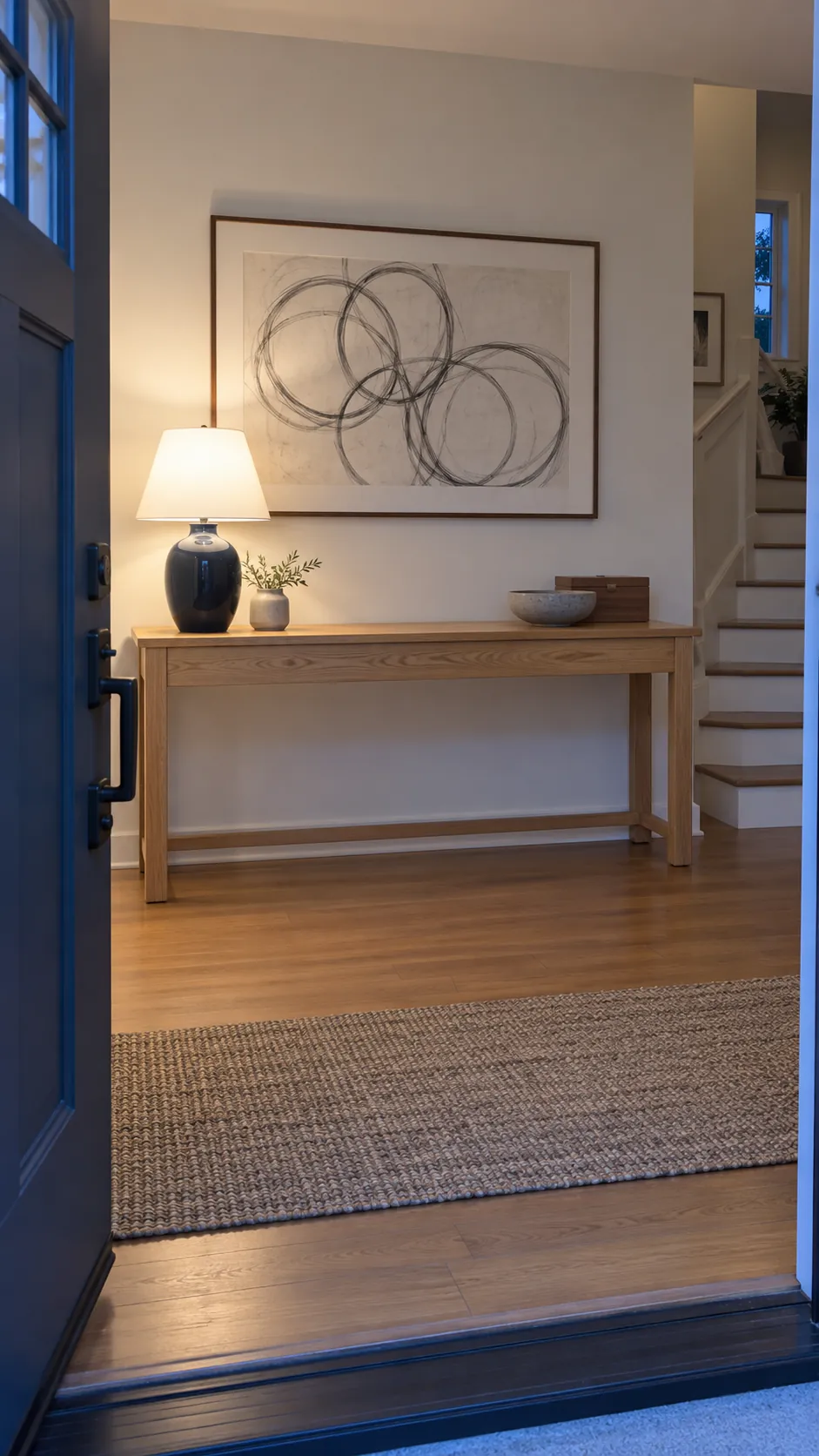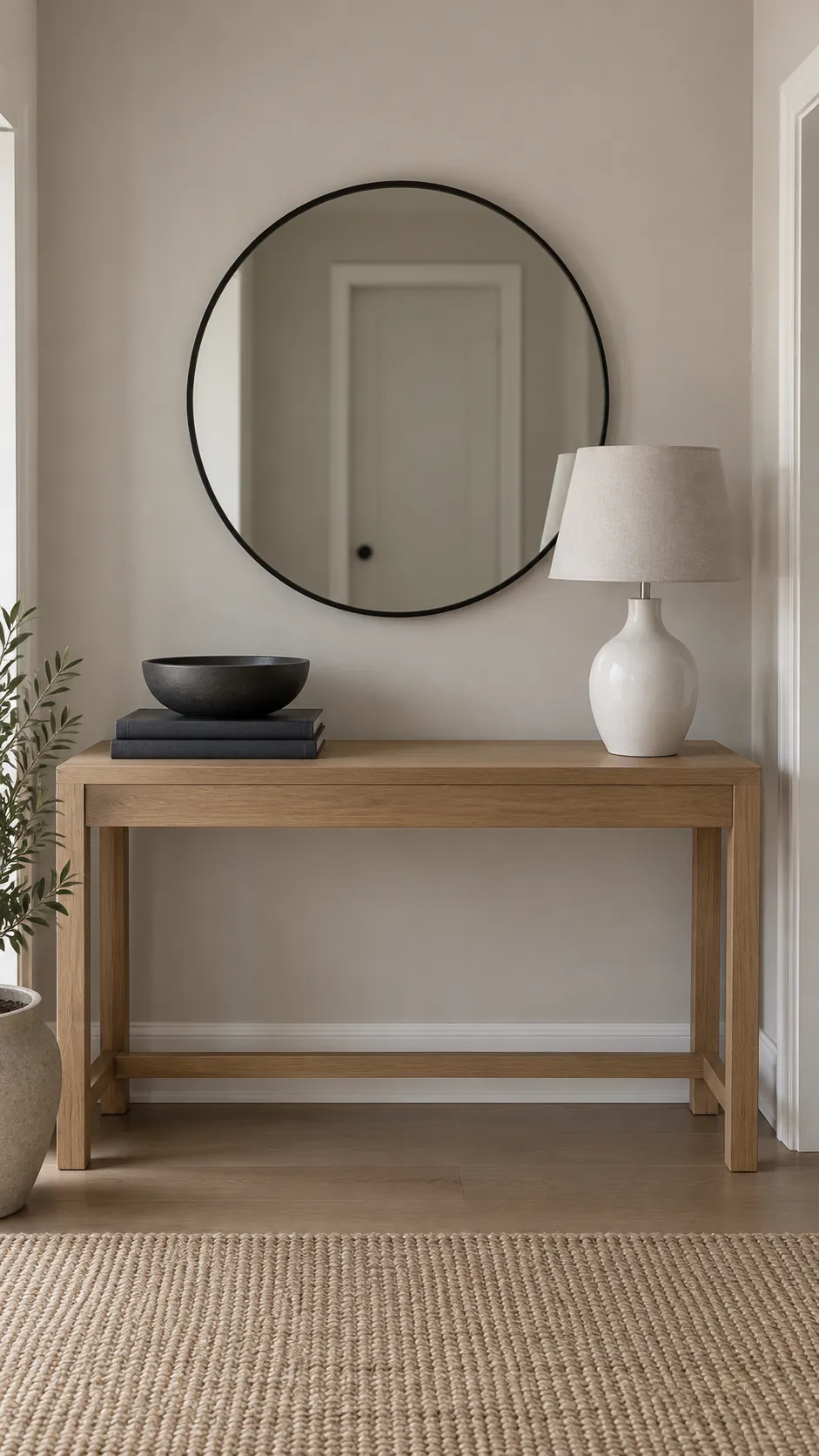
A lamp can pull all the attention to one end of a console, even when the table still has plenty of space. The answer is often a broader, quieter group on the other side, plus a better view of what sits above and below. Start by checking fit, then adjust the whole arrangement before buying anything.
Check the Lamp Footprint Before Adding Anything
A shade that hangs into the walkway or covers most of a shallow tabletop creates a size problem before it creates a styling problem. Start with the lamp alone, positioned where its base is fully supported and its switch is easy to reach. Check the shade edge, nearby door movement, and the space left for the things you drop when you come home.
If the lamp fits comfortably, keep it and work with its visual weight. A broad shade or dark base can feel substantial even when the lamp is not unusually tall. If it does not fit, piling objects on the opposite side will only make the console more crowded. A smaller lamp may be the useful change, but matching another lamp to it is not required.
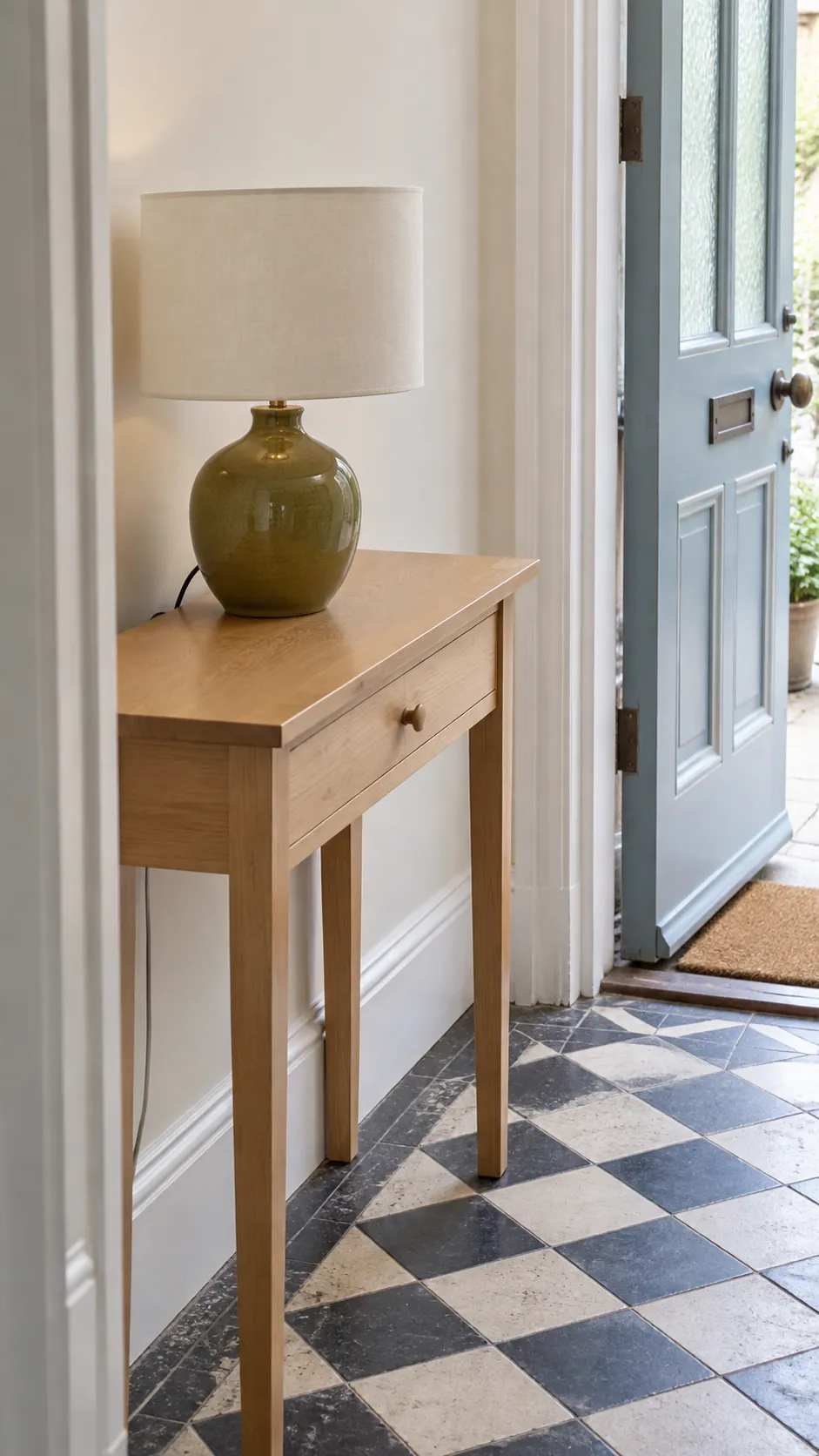
Give the Lamp a Stable Position Near One End
Move the lamp toward one end of the console, with a little room around the base rather than pressing it against the outer edge. Choose the side that gives the cord a clear route to the outlet and keeps the shade away from a door or coat hook. This establishes a tall anchor and leaves a larger continuous area for a separate group. Use the view from the doorway to judge the placement. The center of the tabletop can remain open even if the arrangement looks uneven at first. An asymmetrical console does not need equal objects on both sides; it needs enough presence on the quieter side that your eye does not stop at the lamp.
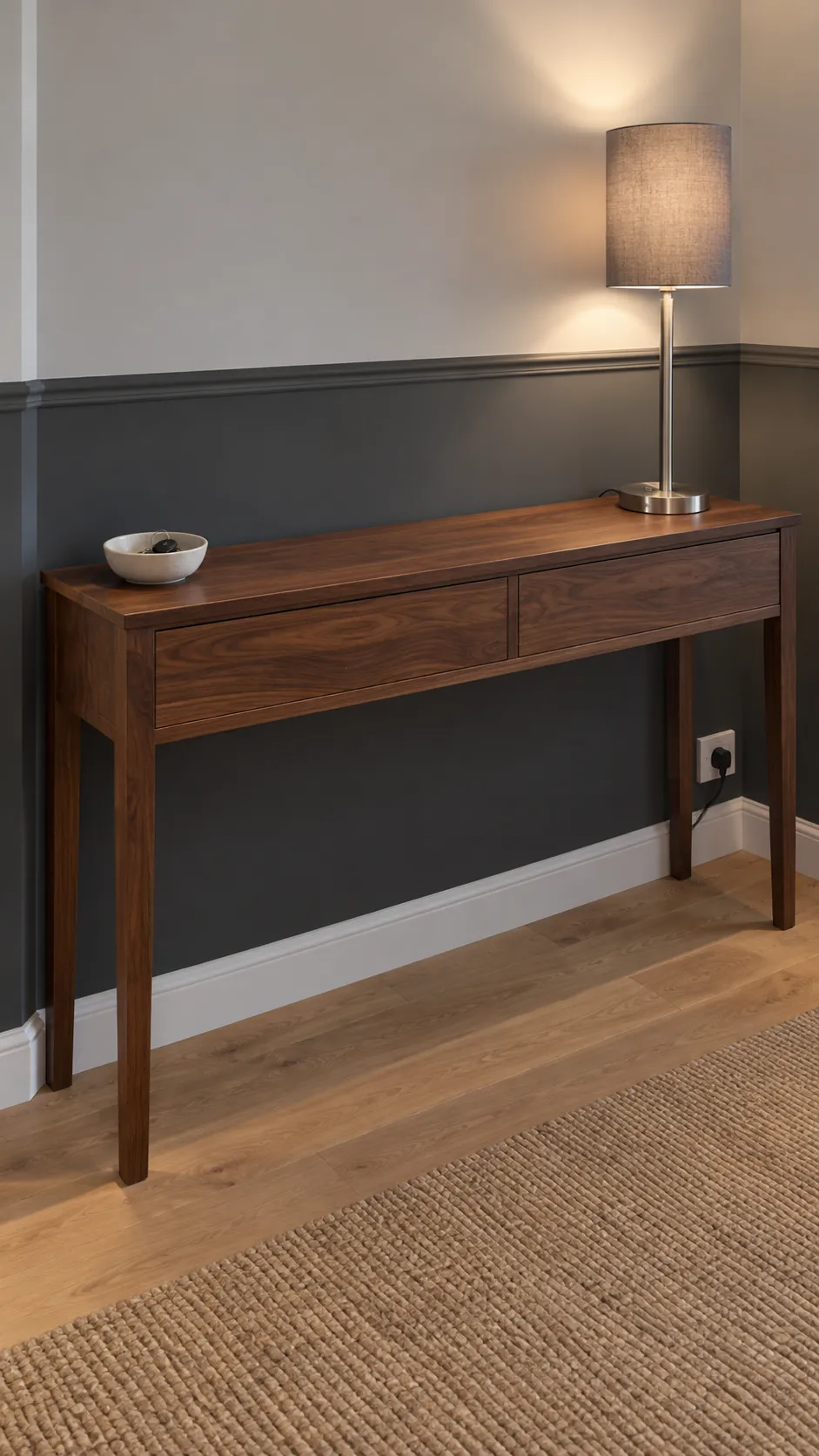
Answer a Tall Lamp with a Wider Low Group
On the opposite side, try a broad shallow bowl beside a short book stack or a compact ceramic object. The group can be lower than the lamp because width, darker color, and several connected shapes also attract attention. Keep the objects close enough to read as one group, with an obvious gap between that group and the lamp.
A tiny ornament stranded at the far end often looks weaker than the same ornament placed beside a useful tray. Build with a few pieces you already own, then remove the least useful one. Do not spread a row of small accessories across the full table just to make every inch look occupied.
If the lamp has a very pale shade, a darker bowl may provide enough contrast without a taller vase. If the base is visually dense, a wider group may work better than one delicate stem. These are starting points to test in your own entrance, not rules that require a specific number of objects.
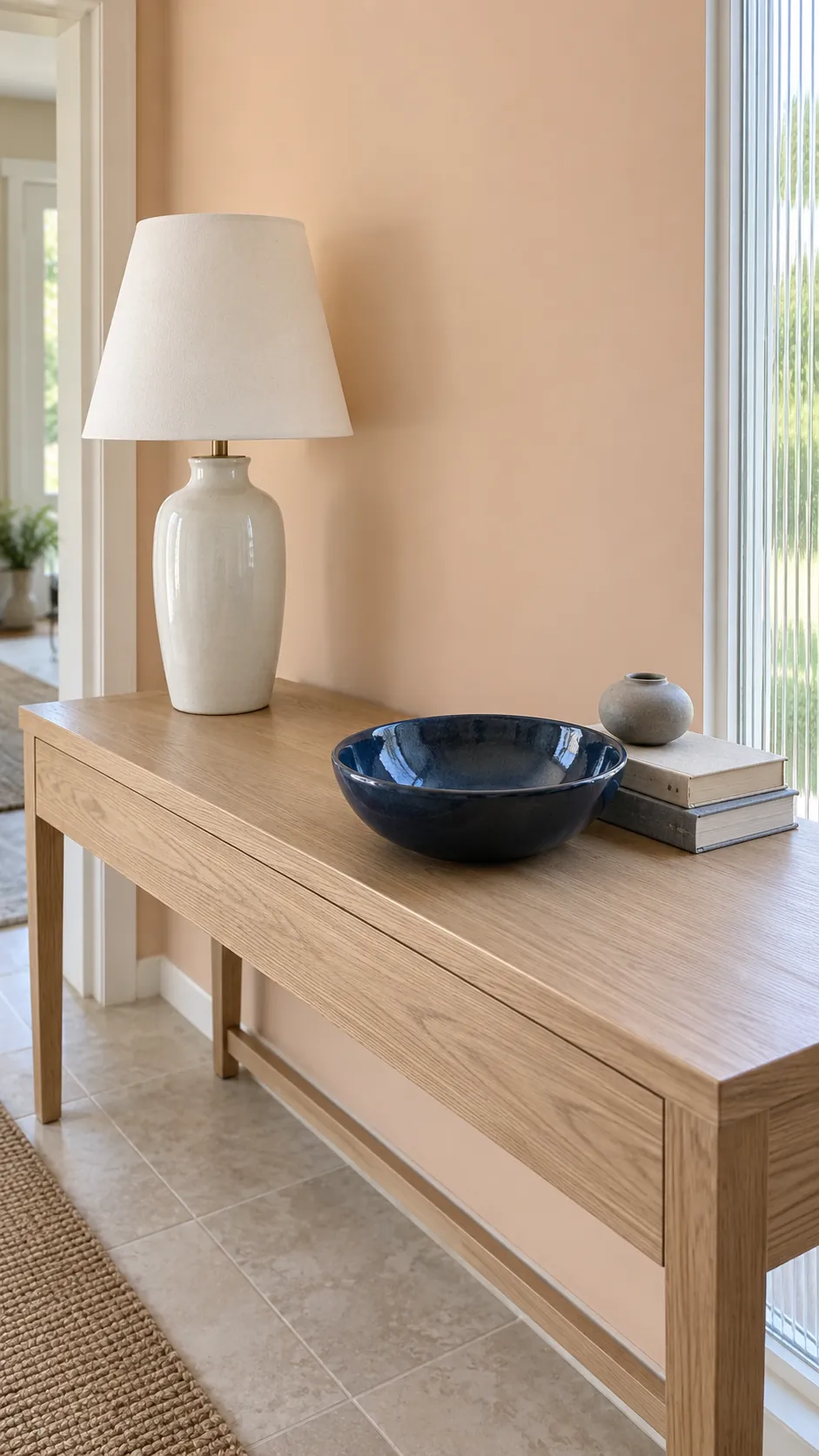
Let the Wall and Lower Shelf Share the Balance
A mirror or framed print affects the whole arrangement, so judge it together with the lamp. A centered wall object can provide a steady backdrop for an offset lamp, while an offset mirror may make sense when the doorway or furniture position already favors one side. Avoid forcing the mirror center, lamp center, and table center into a single vertical line if that leaves the rest of the console looking empty.
Look below the tabletop as well. A dark basket directly under a dark lamp can make that side feel heavier, even when the objects above seem balanced. Move the basket toward the quieter side if the shelf supports it fully and it does not obstruct the walkway. This can change the composition without adding another tabletop accessory.
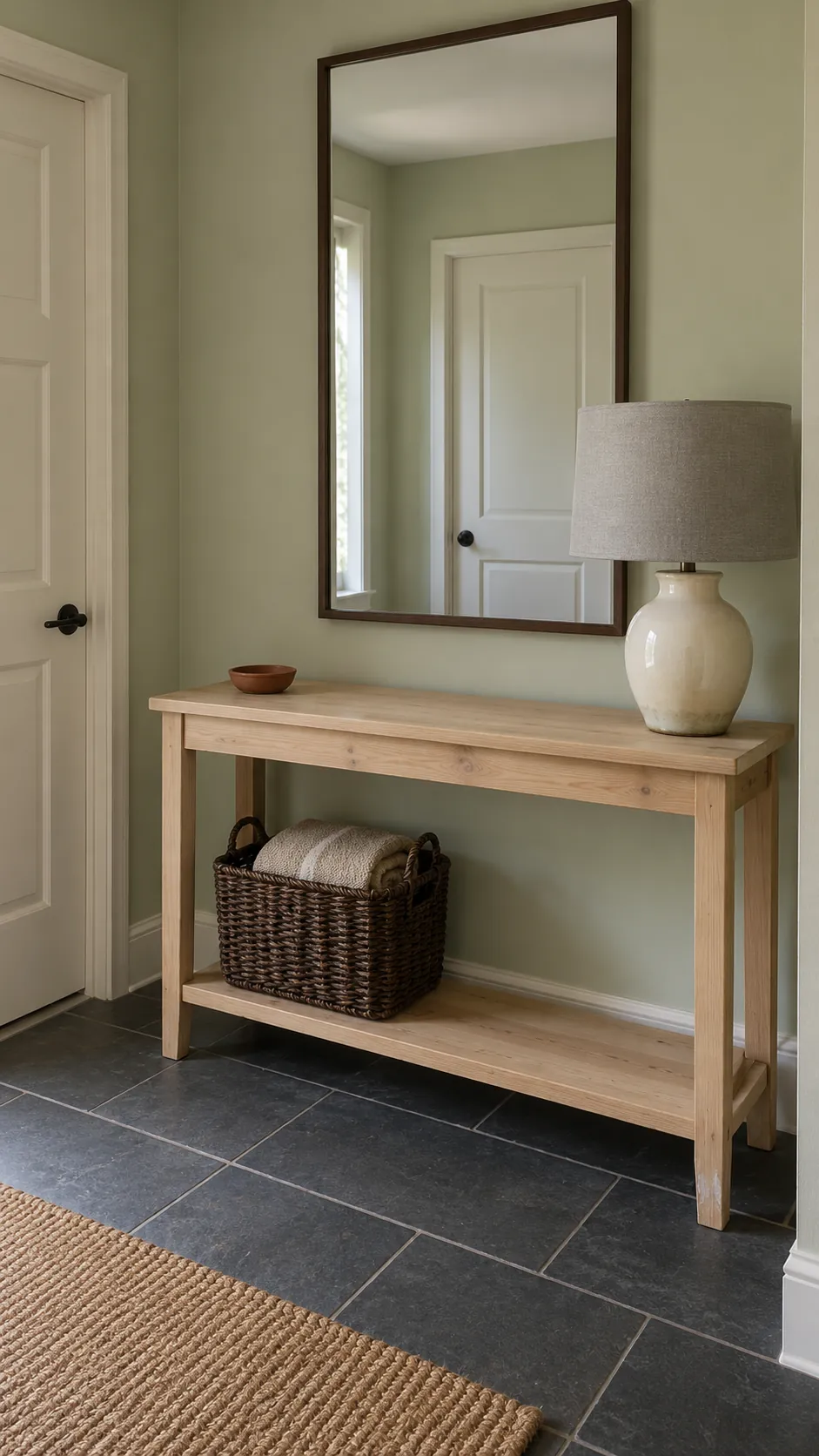
Keep a Daily Landing Spot in the Arrangement
A balanced tabletop arrangement still needs to work when you arrive carrying a bag. Place the key tray toward the front of the quieter group, outside any leaves or shade overhang. Keep everyday keys separate from purely decorative objects so the landing area does not become an unsorted display. The useful open space may matter more than a perfect outline. Leave room to set something down temporarily, and keep the switch accessible. Route the lamp cord behind the furniture where it can stay clear of pinching, heat, and foot traffic; stop using a damaged cord rather than hiding it with decoration.
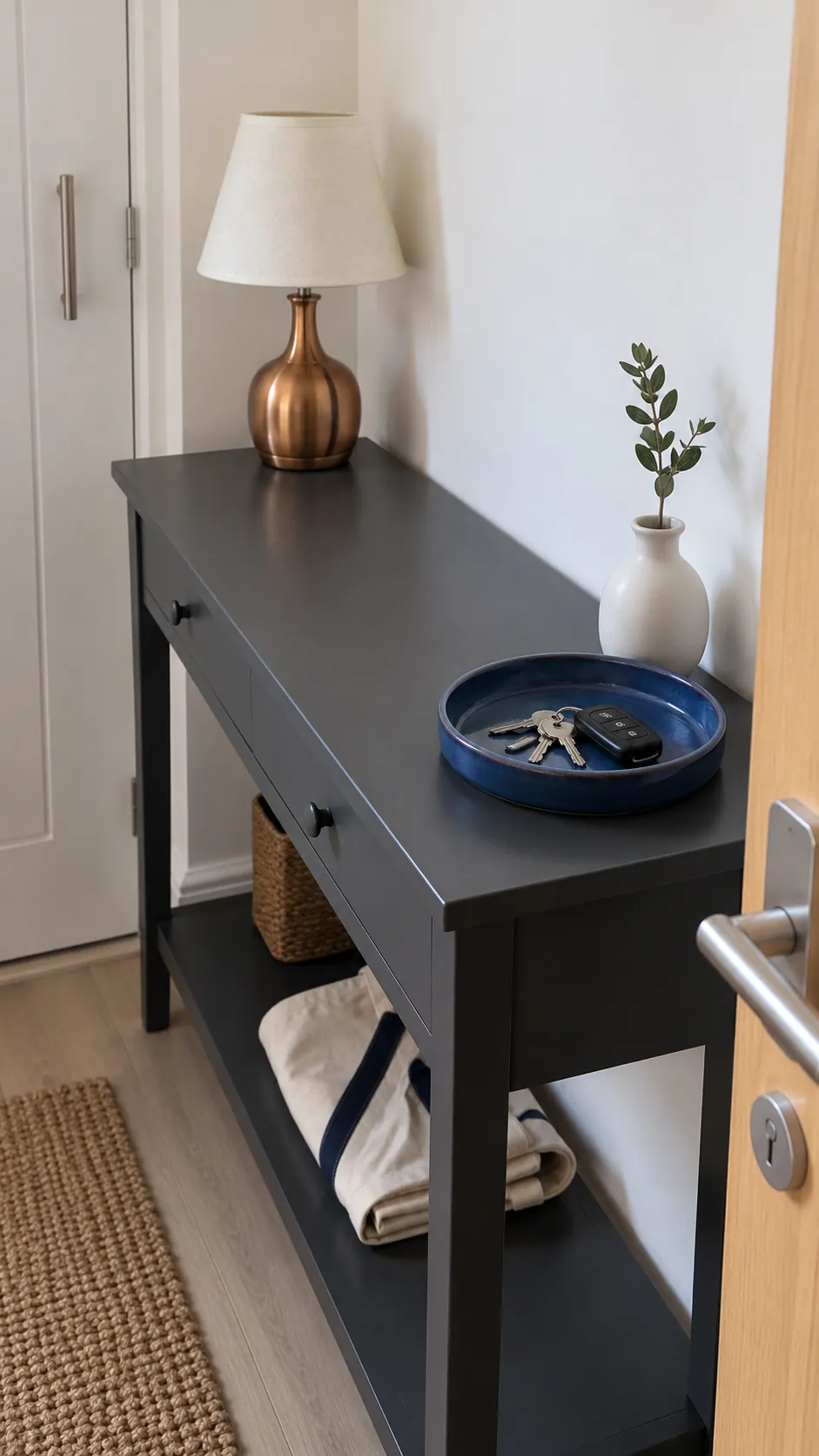
Judge the Whole Console from the Doorway
After arranging the pieces, stand where you first see the console when entering. Check the lamp once with it off and once with it on, since a glowing shade can attract more attention than the same shape in daylight. A quick photograph can make an overly heavy side easier to notice, especially when you have been adjusting objects from close range.
Make one change at a time: move the low group inward, shift a basket, or remove a small object. Then return to the doorway before deciding whether it helped. Finish by reaching the key tray and lamp switch as you normally would. The arrangement is ready when the whole console feels settled and the things you use are still easy to reach.