
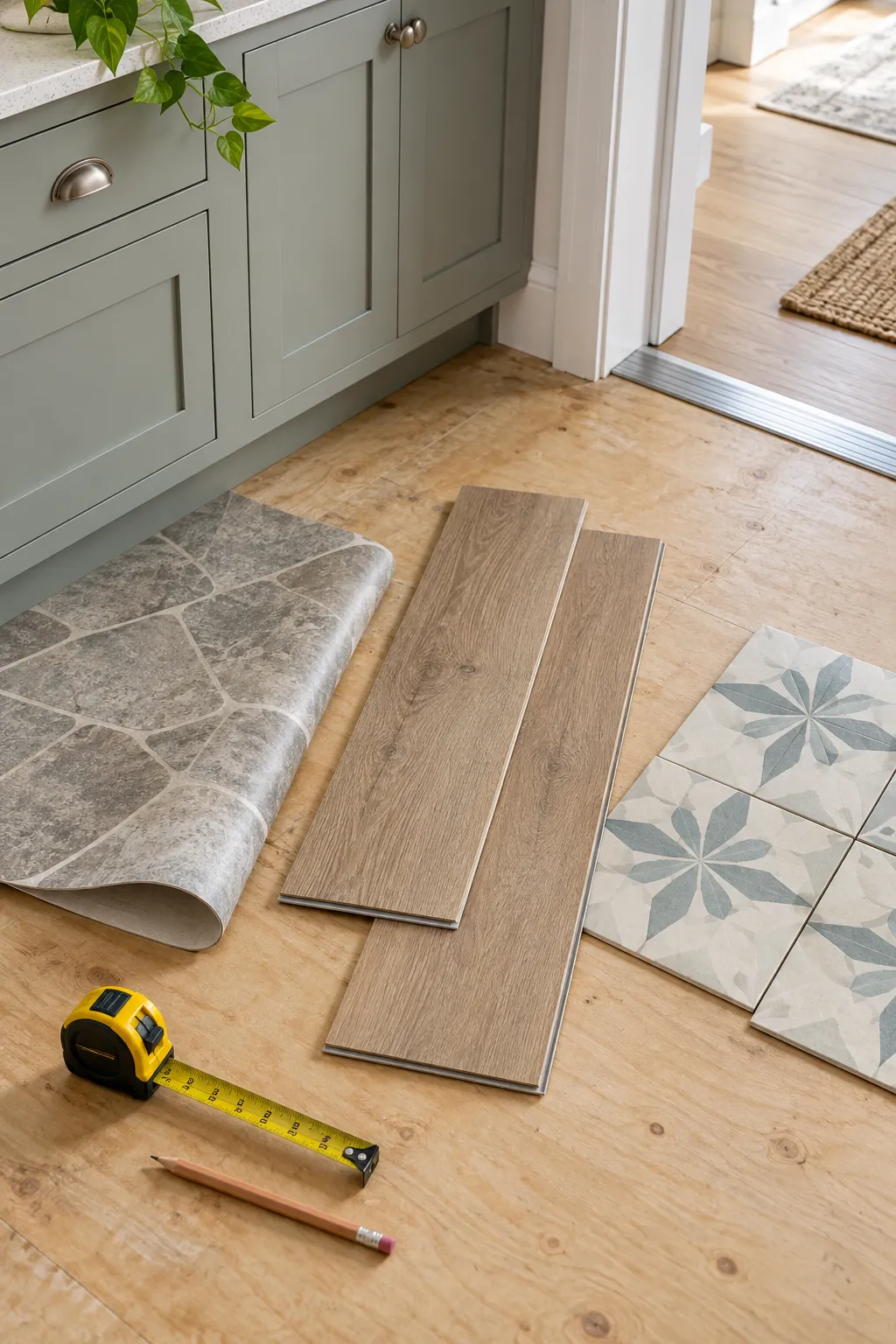
A low shelf price does not always produce the lowest kitchen floor cost. Seams, subfloor repairs, trim, underlayment, delivery, cutting waste, and the chance of an early replacement can change the result. The best budget choice is the one that fits the room, the existing floor, your installation skill, and how long the new surface needs to last.
Sheet vinyl, luxury vinyl plank, and peel and stick tile can all work in a kitchen, but they solve different problems. Sheet vinyl limits seams and usually offers the lowest material cost across a simple room. LVP is easier to replace piece by piece and can feel more substantial. Peel and stick tile is approachable for a small temporary update, yet it demands a very smooth clean base.
Sheet vinyl offers broad water coverage at a low price
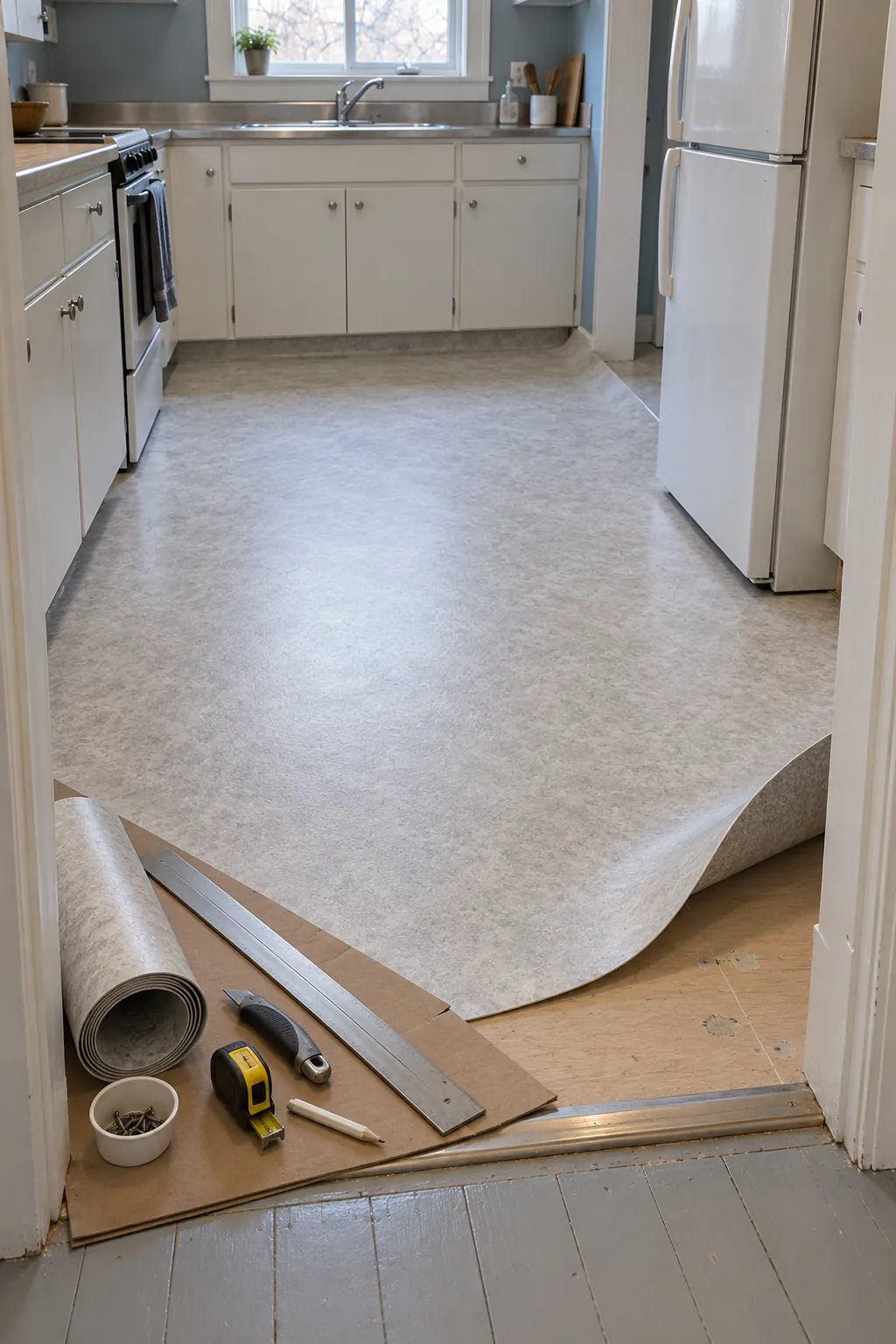
Sheet vinyl can cover a small kitchen with few or no field seams. That matters near sinks and dishwashers because there are fewer joints where surface water can travel downward. The material is also comfortable underfoot and available in wide rolls, but the room shape determines whether the installation stays simple.
Accurate fitting around cabinets, doorways, pipes, and appliances is the difficult part. A cutting mistake can affect a large piece rather than one replaceable plank. Professional installation may be worth pricing when the room has several alcoves or when a seam must be placed and sealed correctly.
Sheet vinyl needs a smooth base because ridges, old grout lines, and debris can show through. Some products use full adhesive, some use perimeter attachment, and others allow a loose lay method within stated limits. Follow the specific product instructions instead of assuming every roll installs the same way.
LVP gives a sturdy feel and practical piece repair
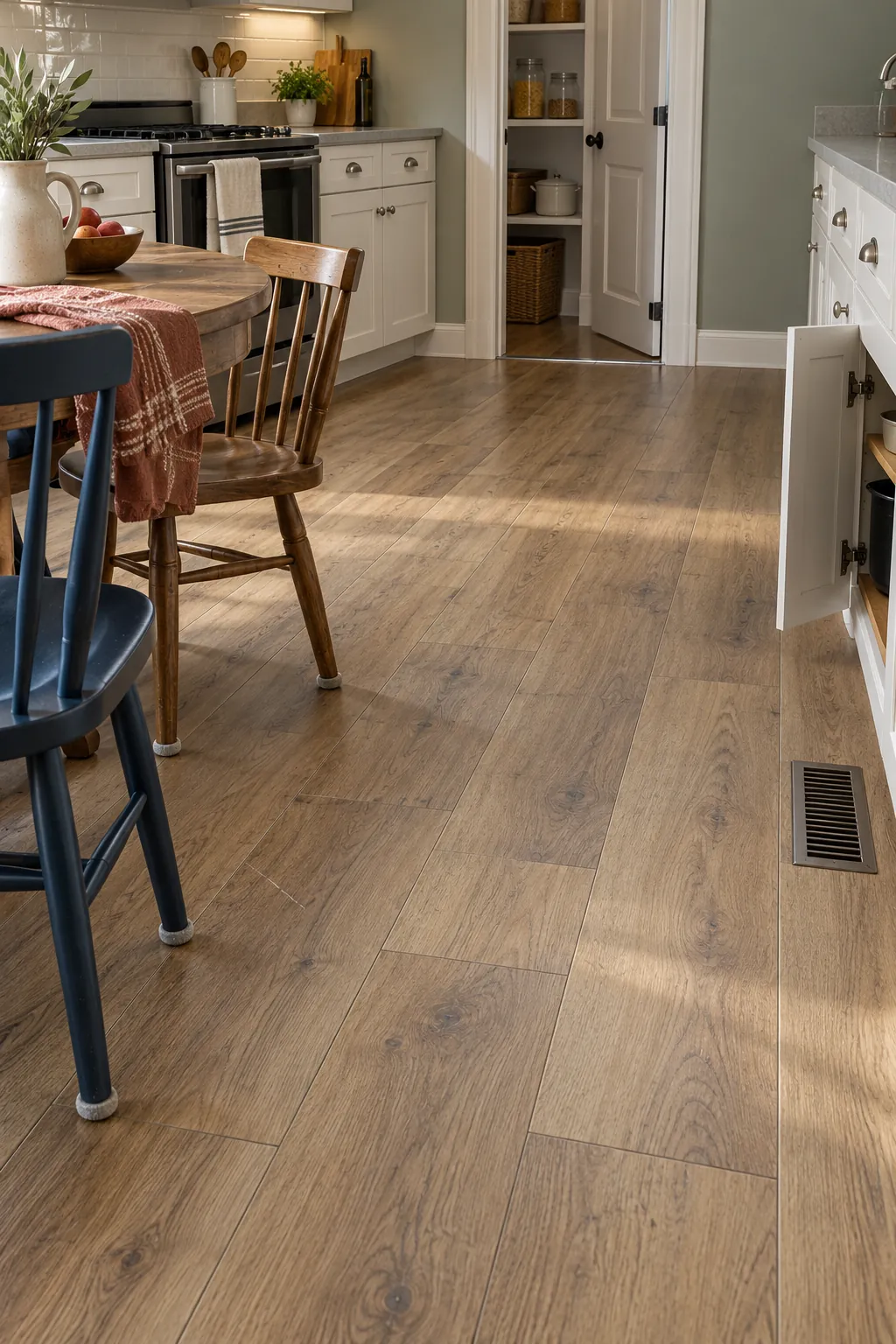
Luxury vinyl plank usually costs more than basic sheet vinyl or peel and stick tile, but it can provide a thicker walking surface and a convincing wood look. Click together products create a floating floor, so individual planks can be planned around the room without handling one large sheet. A damaged area may be repairable, although reaching an interior plank can require removing rows from the nearest wall.
Water resistant product claims apply to the plank itself, not automatically to the entire room below it. Water can still reach edges, expansion gaps, transitions, and the subfloor after a leak. Wipe spills promptly and address plumbing problems rather than treating the floor as a waterproof pan.
LVP also adds height. Check dishwasher clearance, door swing, cabinet toe kicks, and transitions to nearby rooms. Some planks include an attached pad, while other products require a specific underlayment or prohibit extra padding. The installation guide should decide that purchase.
Peel and stick tile suits small and temporary updates
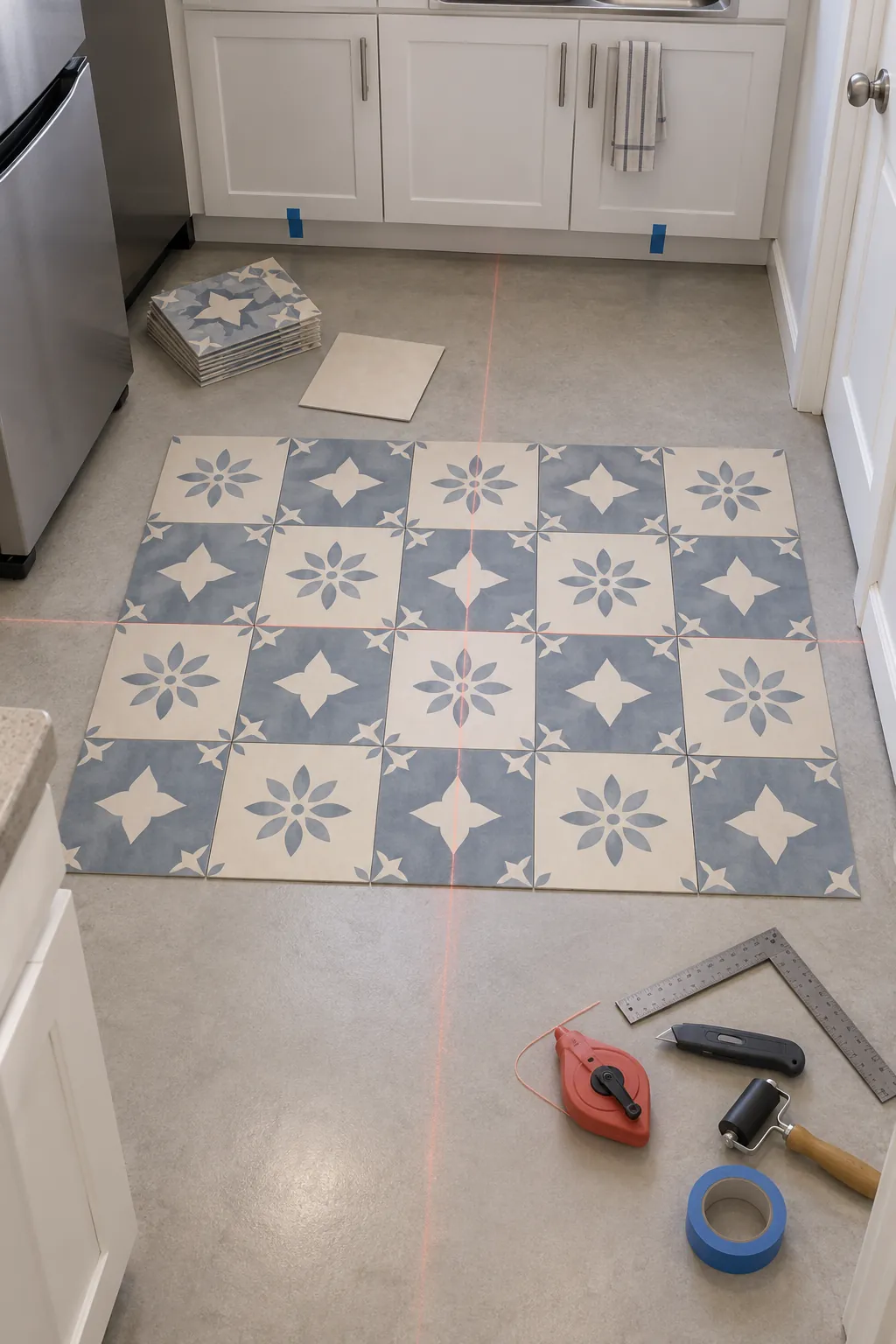
Peel and stick floor tiles are easy to carry, easy to dry fit, and simple to cut with a suitable knife and straightedge. Those advantages make them attractive for a small kitchen, a short ownership horizon, or a renter friendly plan that has written approval. The finish can look intentional when the layout is centered and the cut pieces at opposite walls stay balanced.
The adhesive is only as reliable as the surface beneath it. Dust, grease, moisture, textured flooring, loose finish, and deep grout lines can cause lifting or telegraph through the tile. Primer may be required by the manufacturer. Adding an unrelated adhesive can create compatibility and removal problems, so do not improvise without approved guidance.
Heat and repeated water exposure can challenge edges over time. A failed tile is easy to replace if you keep spares from the same batch, but widespread lifting can erase the original savings. Treat peel and stick as a specific budget solution, not as a direct equal to every thicker plank or commercial sheet product.
The subfloor decides whether any option looks good
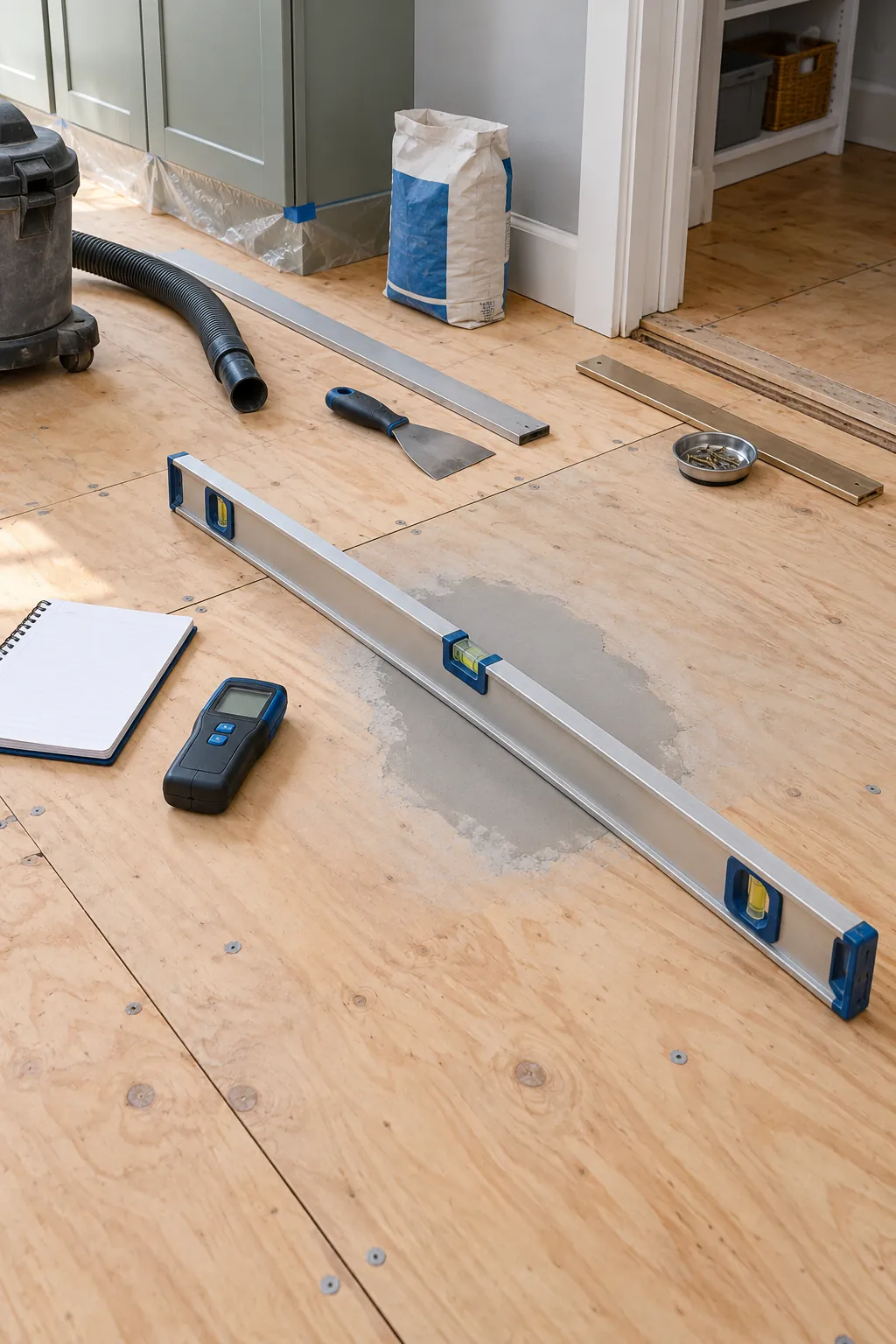
A clean floor is not necessarily a ready floor. Loose panels, high seams, low spots, cracked tile, soft areas, and moisture need attention before installation. Thin flooring shows defects most clearly, while a floating plank can bridge tiny texture changes but still needs the flatness stated by its manufacturer.
Removing the old floor may reveal extra work, but installing over it can add height or preserve an uneven pattern beneath the new surface. Confirm whether the chosen product allows installation over the existing material. Also consider whether older flooring or adhesive could contain hazardous material before sanding, scraping, or demolition.
Budget for patching compound, primer, an approved underlayment, or professional repair when needed. Preparation is not wasted money. It is what lets seams close, tiles stay bonded, and the final surface wear evenly.
Water resistance still requires fast cleanup
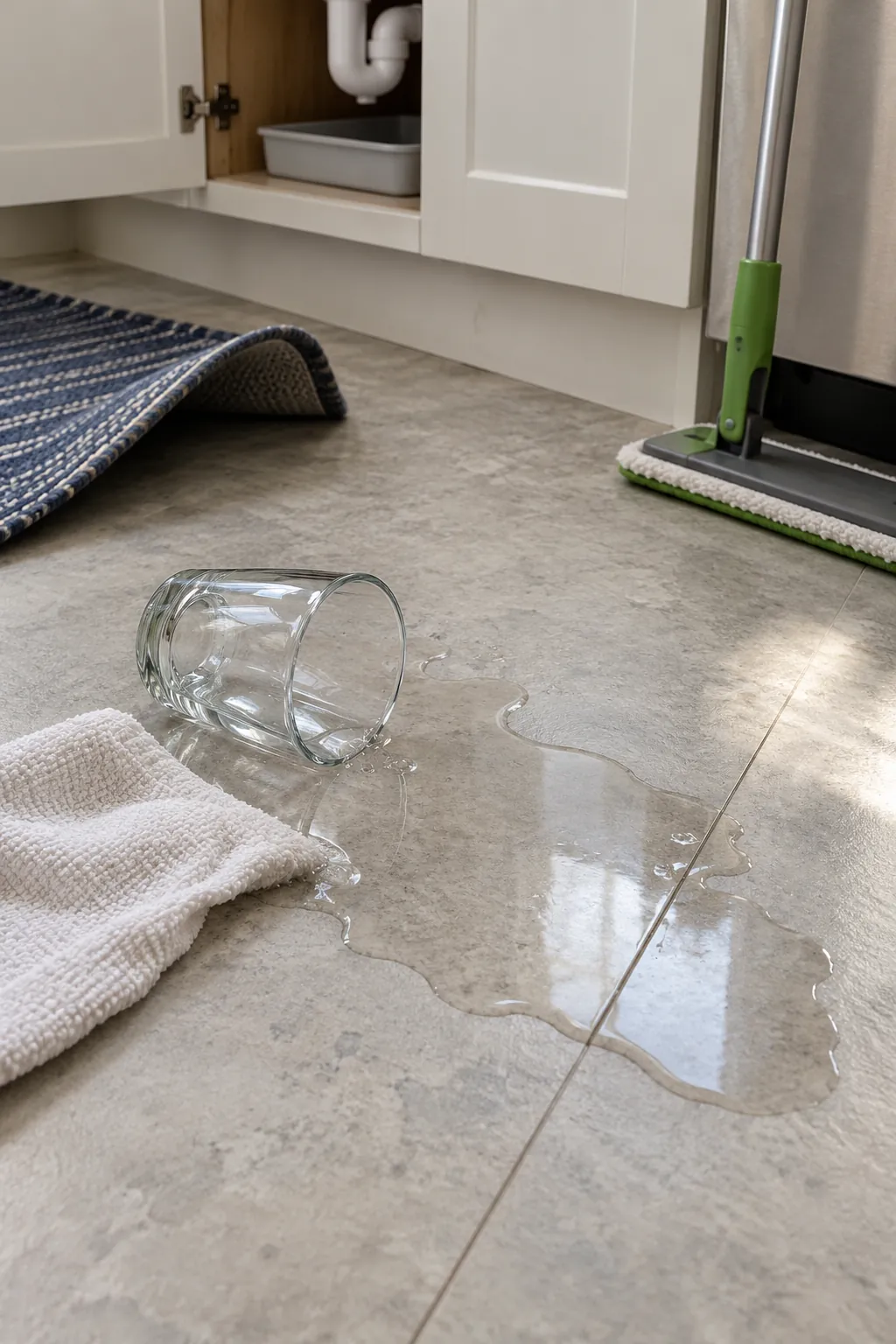
All three choices can handle ordinary surface splashes when correctly installed and maintained. None makes a hidden dishwasher leak harmless. Sheet vinyl has the advantage of broad continuous coverage. LVP has many joints but often uses a water resistant core. Peel and stick tile has adhesive edges that deserve prompt attention.
Place a washable mat where repeated drips occur, but let the floor dry and avoid rubber backings that the manufacturer prohibits. Use the recommended cleaner and avoid flooding the surface. Check the sink base, refrigerator line, and dishwasher area periodically so a slow leak is found before it damages the subfloor.
Compare the complete installed cost
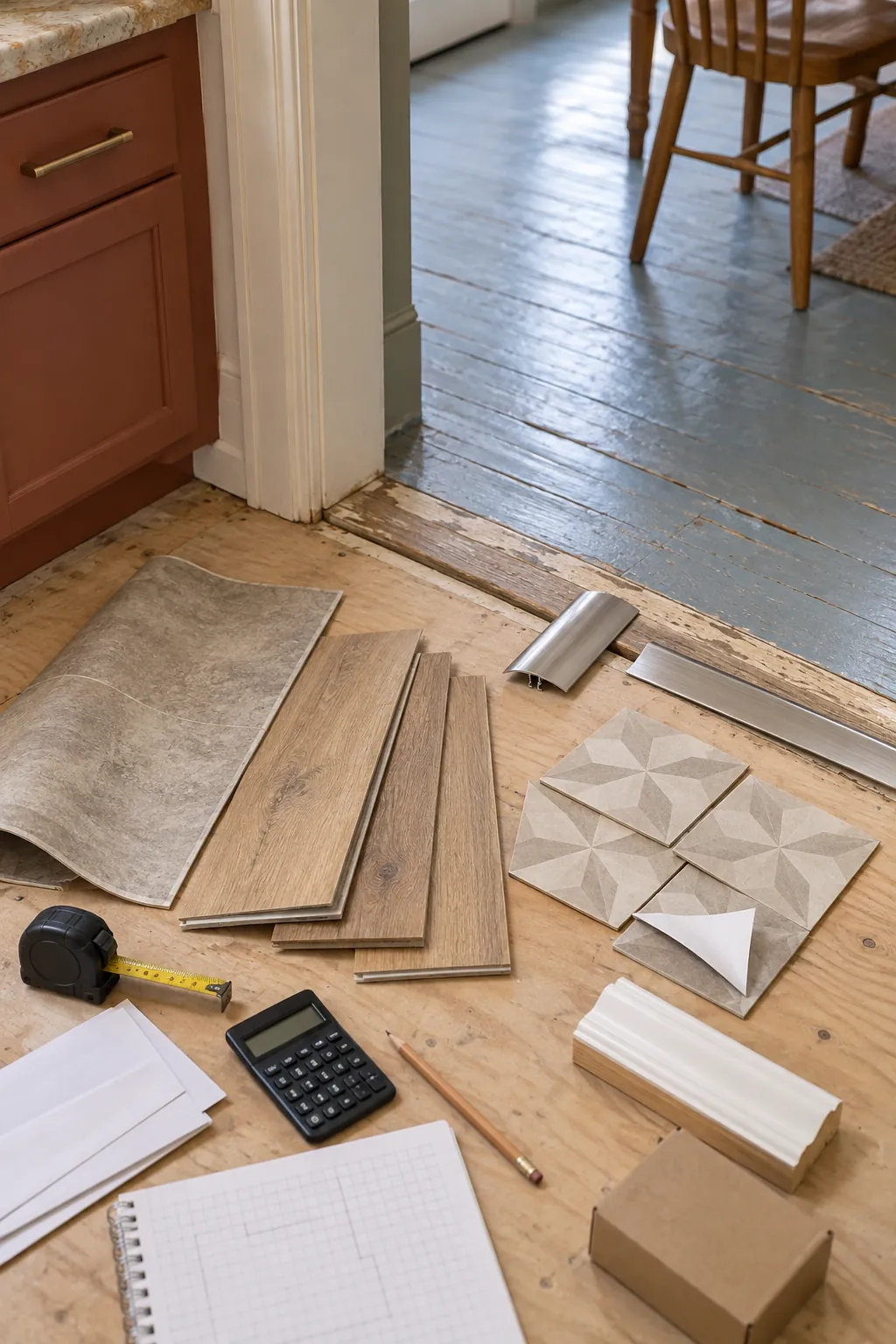
Start with the kitchen square footage and add the recommended waste. Then include preparation, underlayment when approved, adhesive, primer, transition pieces, trim, delivery, tools, disposal, and labor. Sheet vinyl may have the lowest material cost but higher fitting labor. LVP may cost more per square foot but suit a confident floating floor installation. Peel and stick may win in a tiny space yet need more preparation than expected.
For a renter, written permission and removal consequences belong in the cost comparison. A low priced permanent adhesive floor is not economical if it leads to damage charges. A floating product is not automatically permitted either, and added height can create safety or appliance issues.
Choose sheet vinyl when broad water coverage and low material cost matter most, and the room can be fitted well. Choose LVP when a thicker feel, wood appearance, and piece based installation justify the higher price. Choose peel and stick for a small, smooth, approved surface when the budget and expected service life are modest. The right answer comes from the whole room and the whole bill, not the price printed on one box.