
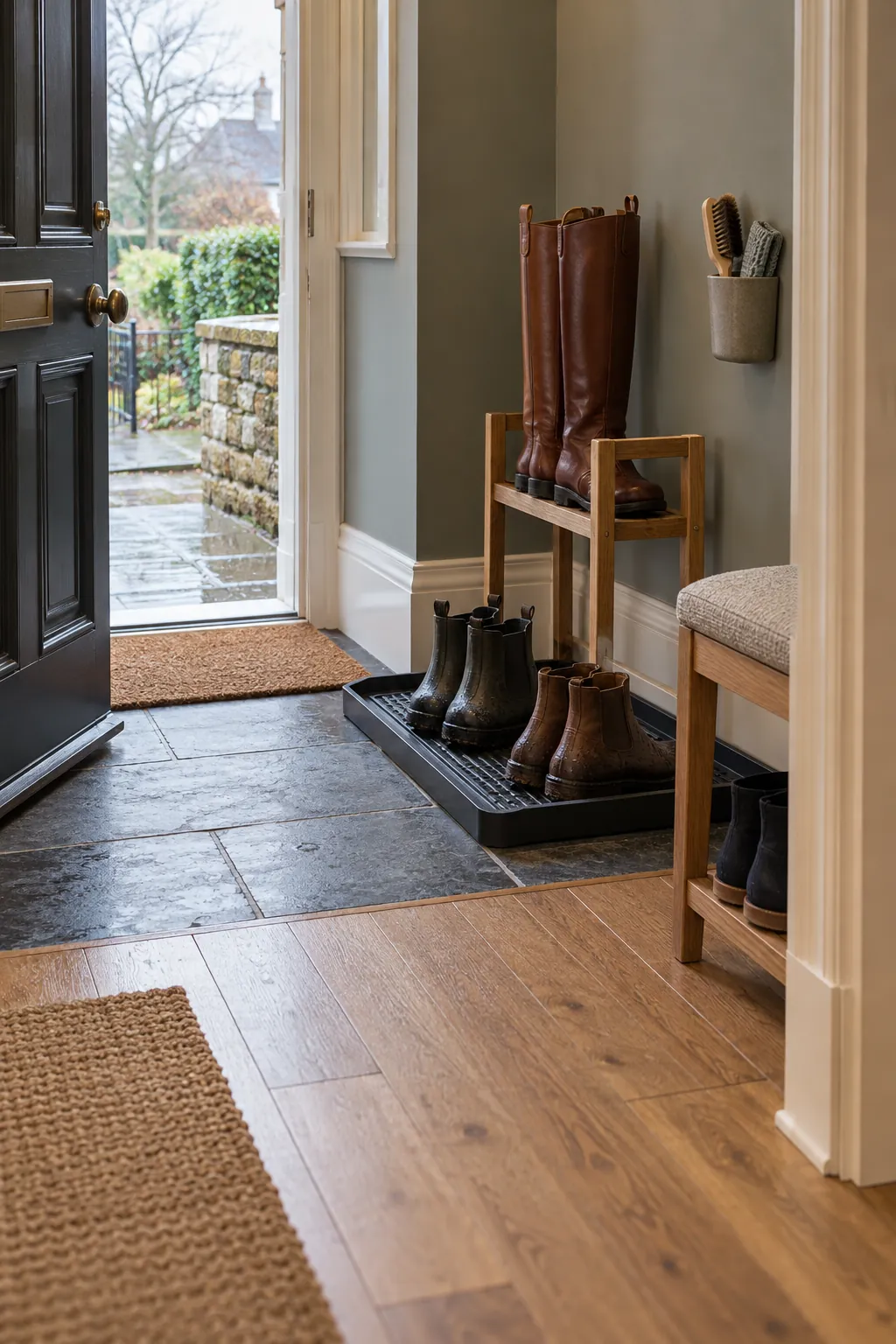
Boots create a different entryway problem from ordinary shoes. They carry more water and grit, take longer to dry, and need enough height to keep their shafts from collapsing. A useful system handles those needs before it tries to hide the footwear.
Start with the pairs your household wears during the current weather. Give those boots an easy arrival zone, then move occasional and off season pairs away from the door. This keeps a narrow hallway usable while protecting the boots and the floor.
Set a clear boot limit
Count the pairs that actually arrive wet or muddy during a normal week. Reserve entryway boot storage for those pairs, not the entire footwear collection. A visible limit prevents a boot tray or rack from spreading into the walking path.
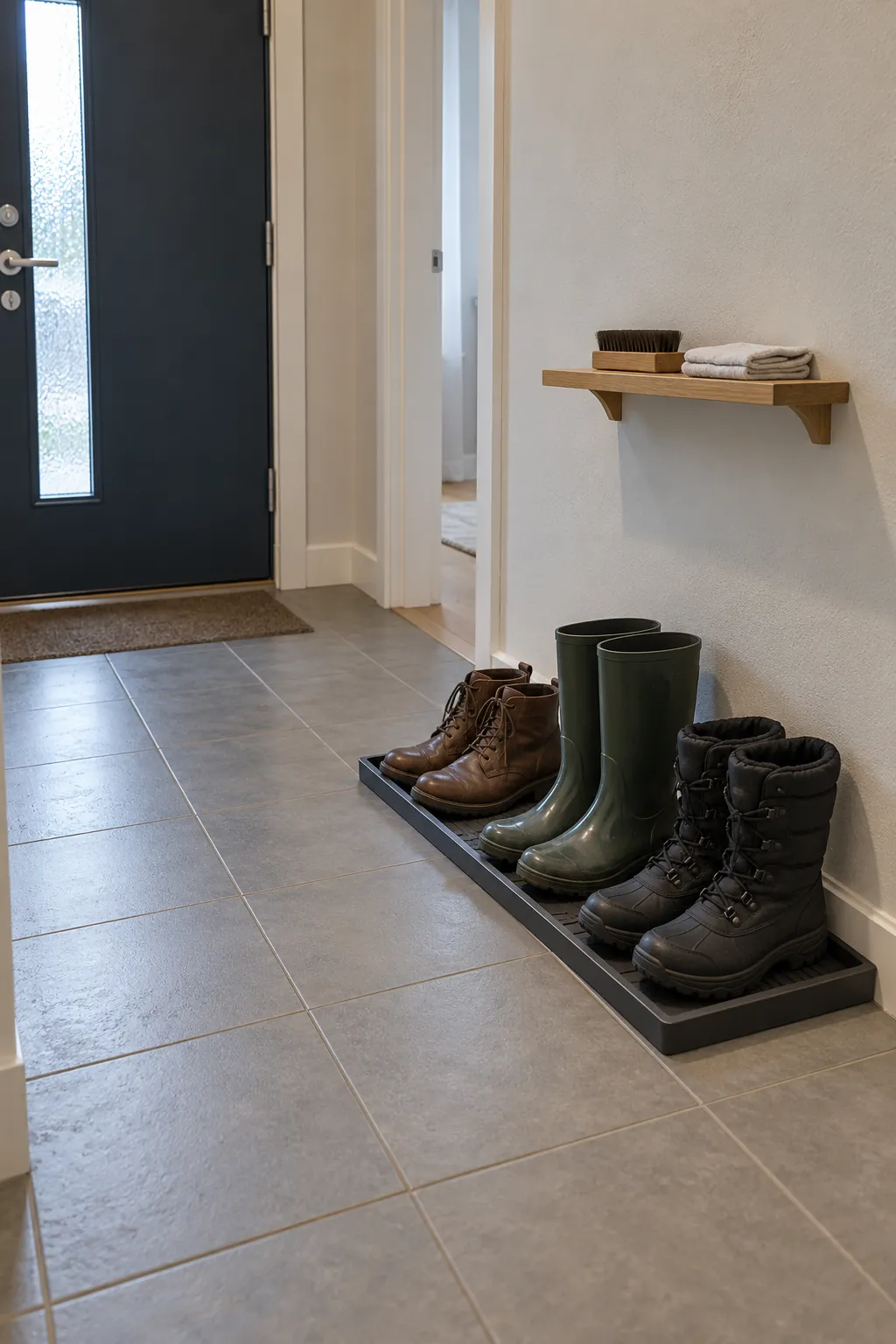
Contain water before storing boots
Place wet boots on a tray with a raised edge and a removable ribbed insert. The insert lifts soles above pooled water, while the edge keeps slush away from the floor. Choose a tray wide enough for the active pairs but shallow enough to stay outside the door swing.
Empty standing water and loose grit promptly. Let boots dry with space between them before closing them inside a cabinet. A washable mat beneath or beside the tray can catch the few drops that fall while someone removes a pair.
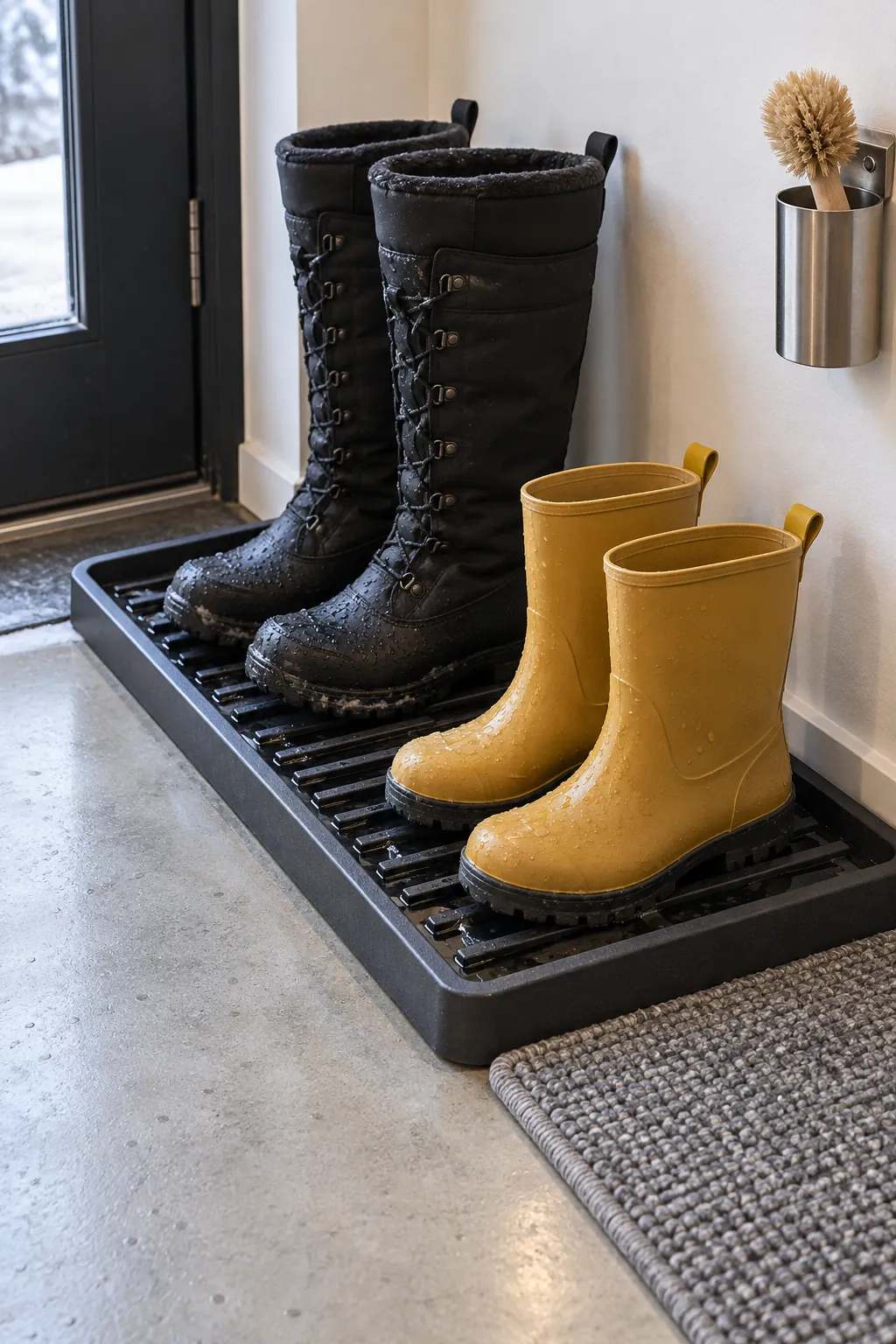
Support tall boot shafts
Tall boots last longer when their shafts stay upright and can breathe. Use smooth boot shapers, rolled clean cloths, or a tall boot rack that supports each pair without stretching the material. Keep enough space between pairs for air to move around damp leather or fabric.
Avoid folding shafts under a bench or forcing them into a short cubby. Creases can become permanent, and hidden moisture can create odor. Store each pair together so the morning routine does not become a search for a match.
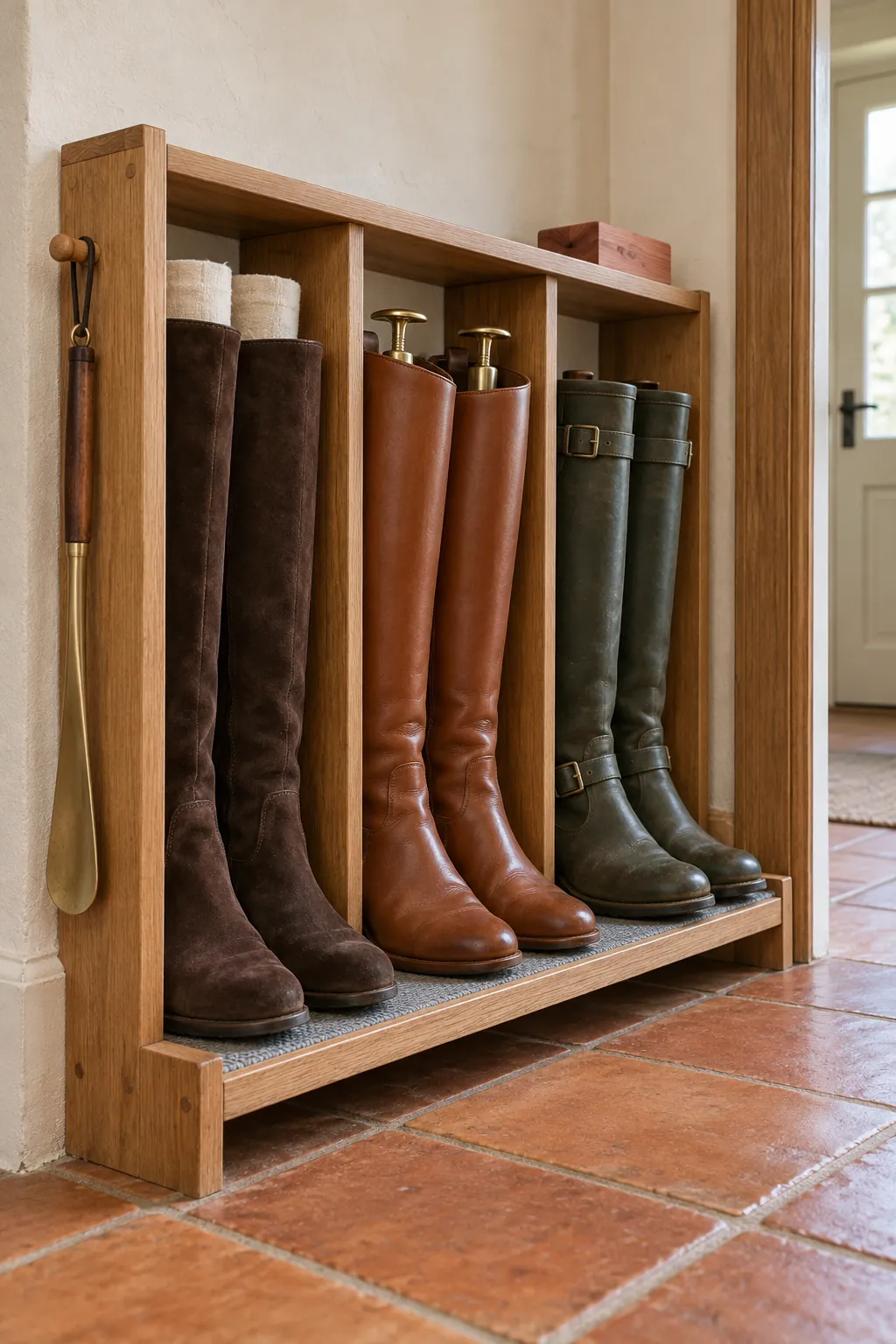
Use a bench for short everyday boots
A narrow shoe bench with boot space can combine seating and storage when its lower shelf is tall enough for ankle boots. Measure the tallest active pair before choosing the shelf clearance. Keep the boot toes behind the front edge so they do not catch bags or feet.
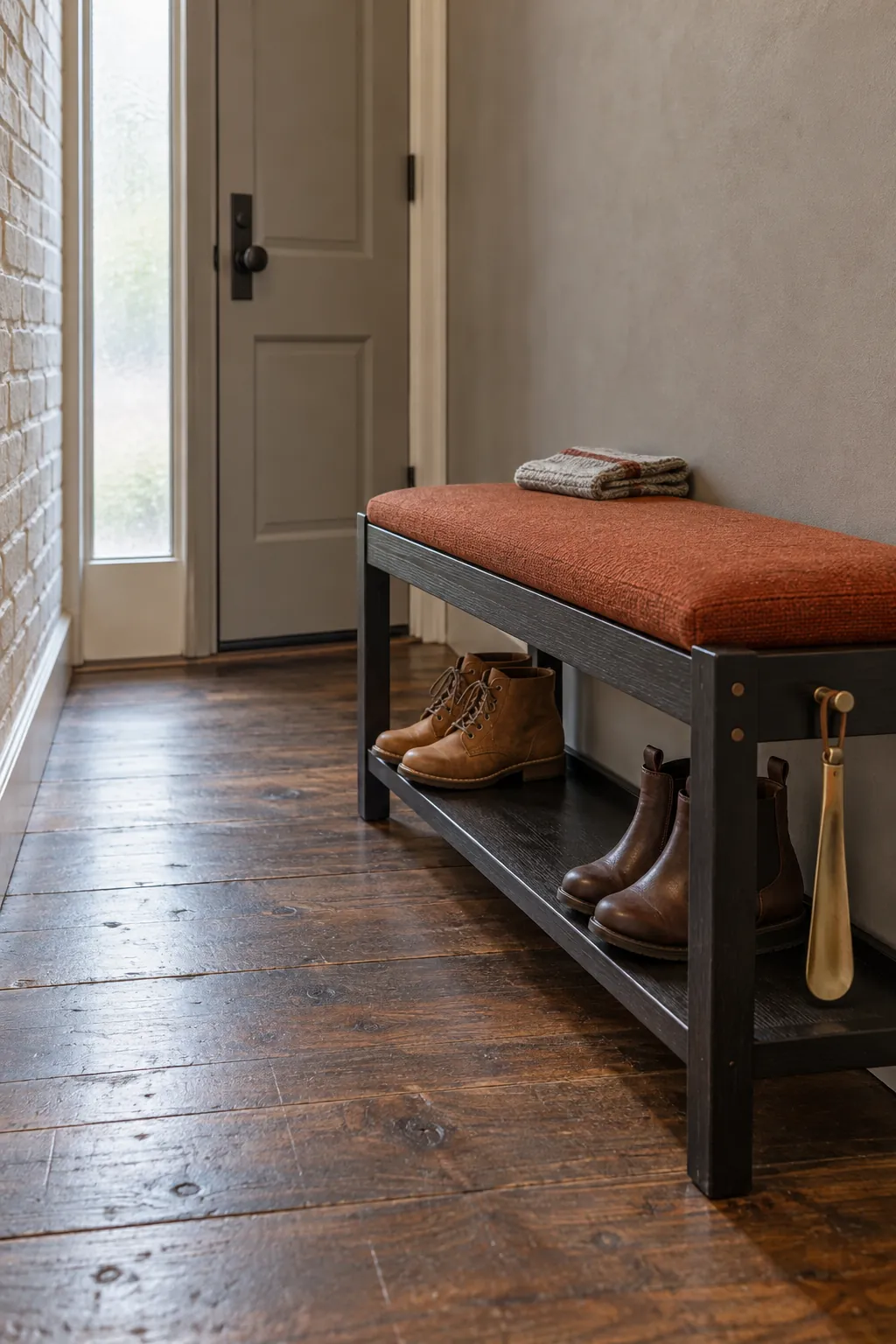
Add vertical storage only for clean dry pairs
Wall storage can free floor space, but it must suit the boot and the wall. Use purpose made hangers with broad protective grips for light, clean boots, and follow the maker’s load guidance. Do not hang saturated heavy boots above a walking path or from delicate straps.
Place the lowest hanging pair where it will not brush shoulders or block a door. Renters should choose fixings approved for their wall surface and lease. A wall system works best as secondary storage, while the wet arrival zone remains on the floor.
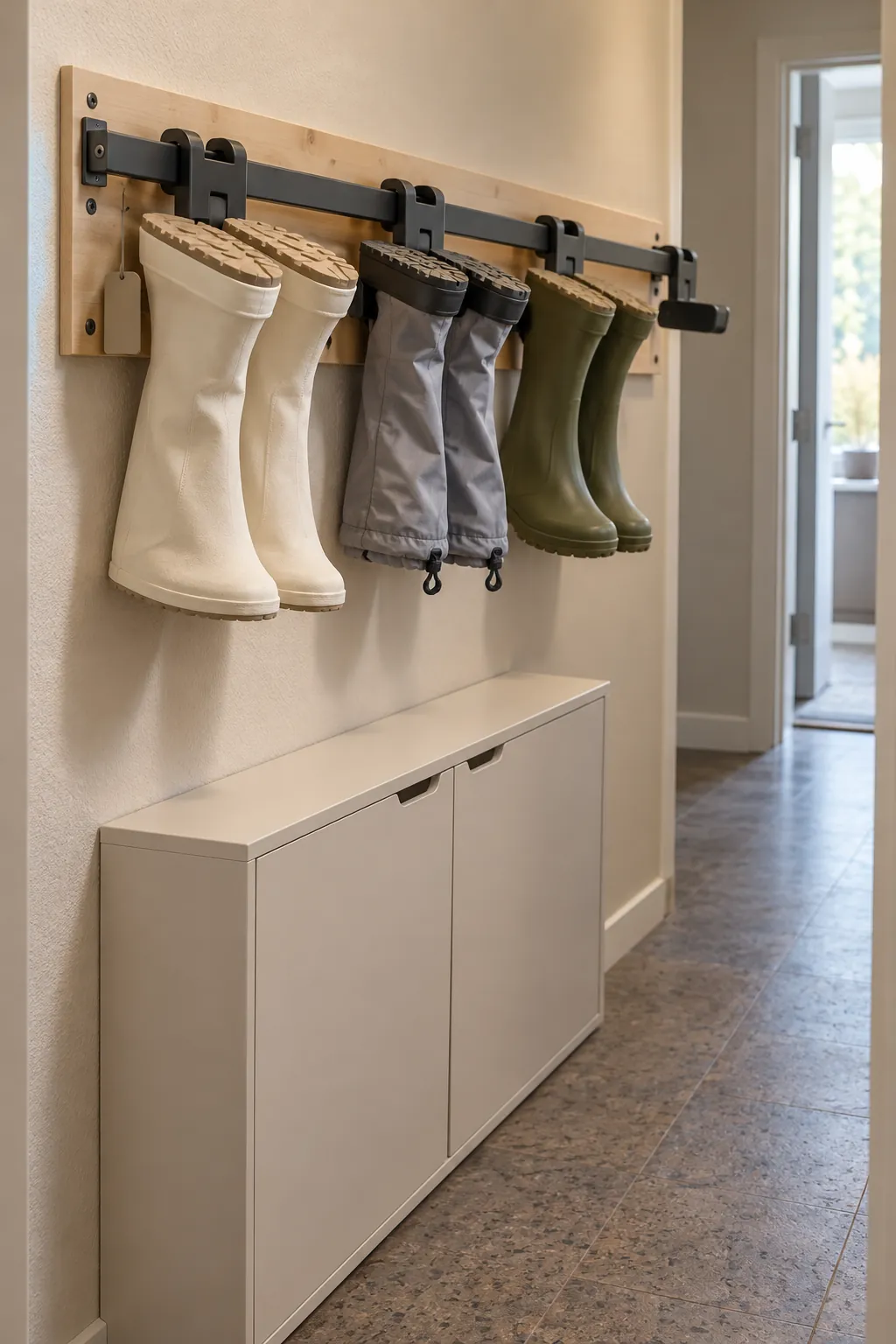
Rotate pairs when the weather changes
Clean and dry off season boots before moving them to a closet shelf or breathable container. Add shaft support, keep pairs together, and avoid sealing any remaining moisture inside plastic. Bring only the next season’s most used pairs back to the entrance.
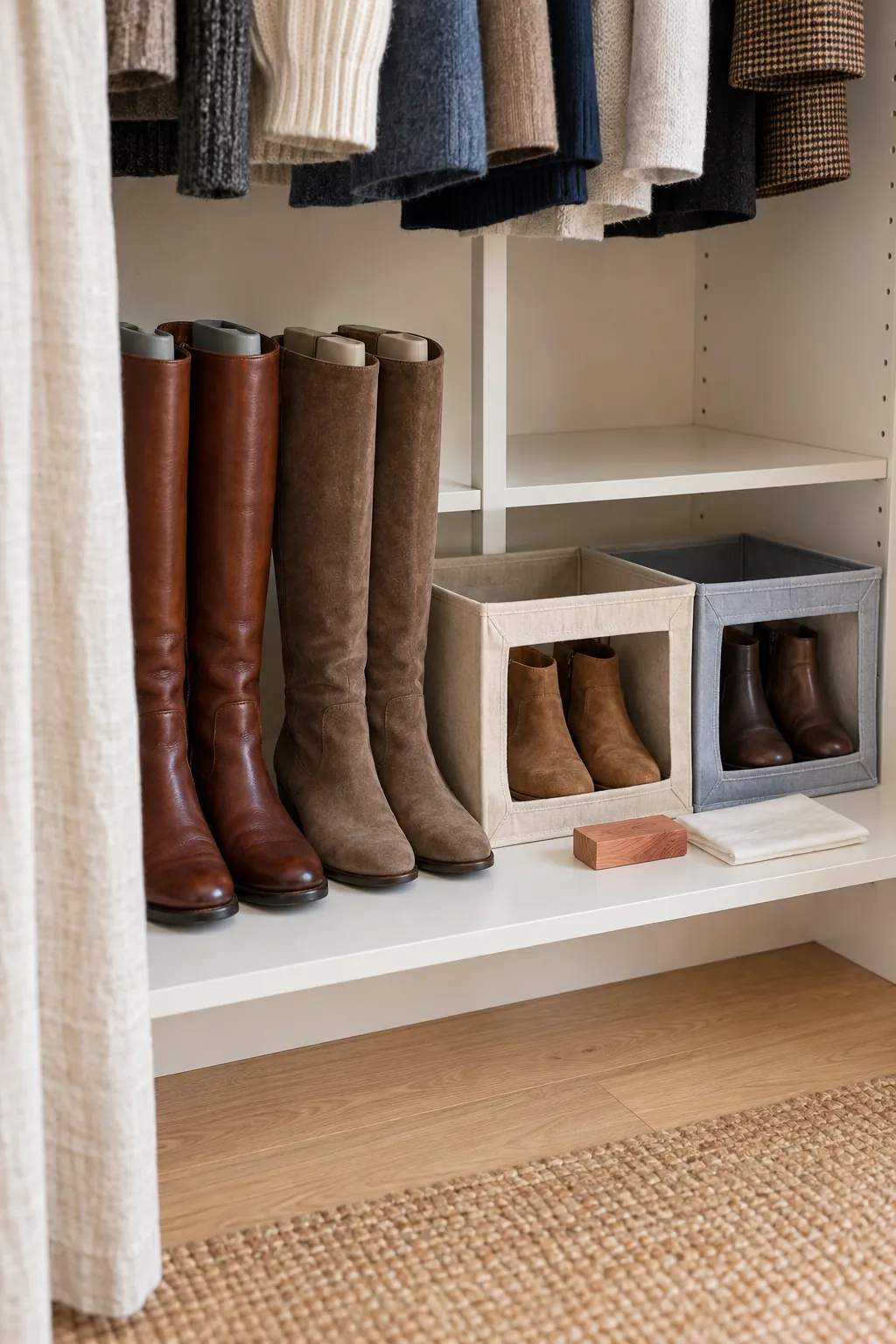
Reset the boot zone after bad weather
Pair the boots, shake loose grit into the tray, and return accessories such as a shoehorn or boot brush to one nearby holder. Once the soles are dry, move any extra pair back to its longer term home. This short reset keeps winter entryway organization from becoming a growing line of damp footwear.
A good mudroom boot organizer is not defined by size. It succeeds when water stays contained, tall shafts keep their shape, active pairs remain easy to reach, and the route through the entrance stays open.