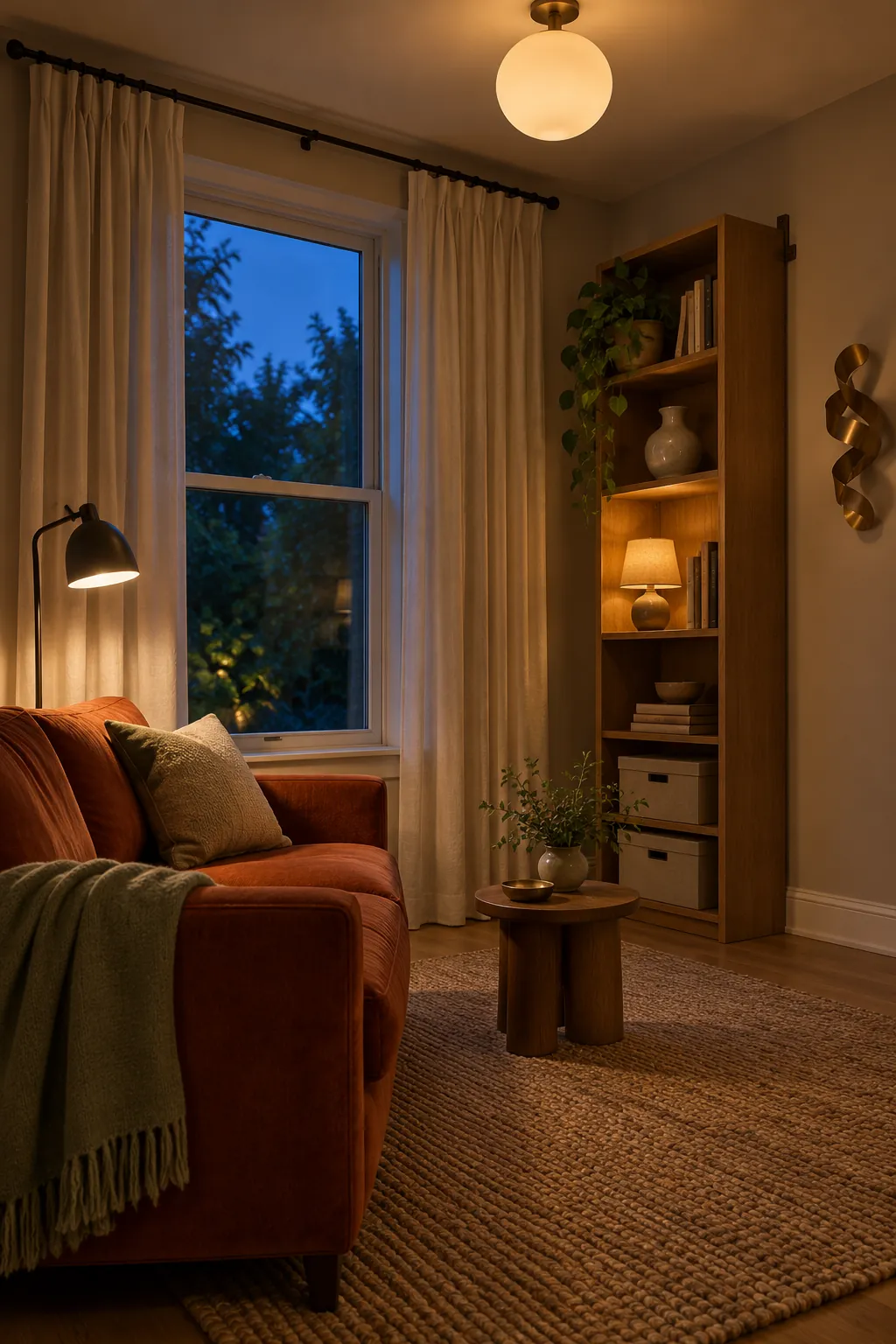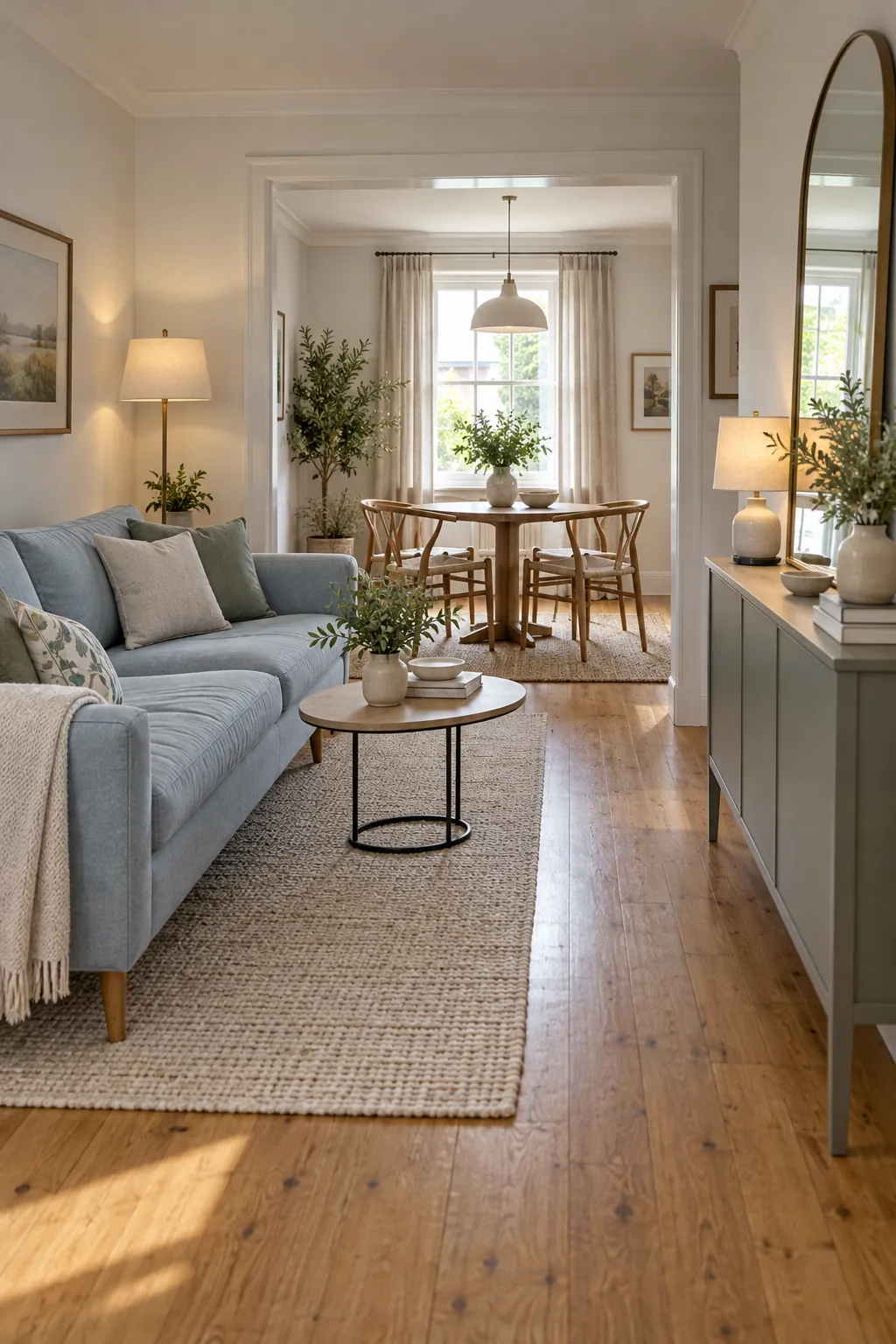
A home feels larger when the eye can travel through it without stopping at clutter, bulky silhouettes, or dark corners. This is less about hiding the true size and more about making the available space easy to see and use.
Start with the changes that affect movement and sightlines. Paint, mirrors, and lighting become more effective after furniture and everyday objects stop interrupting the room.
Open the Main Sightline
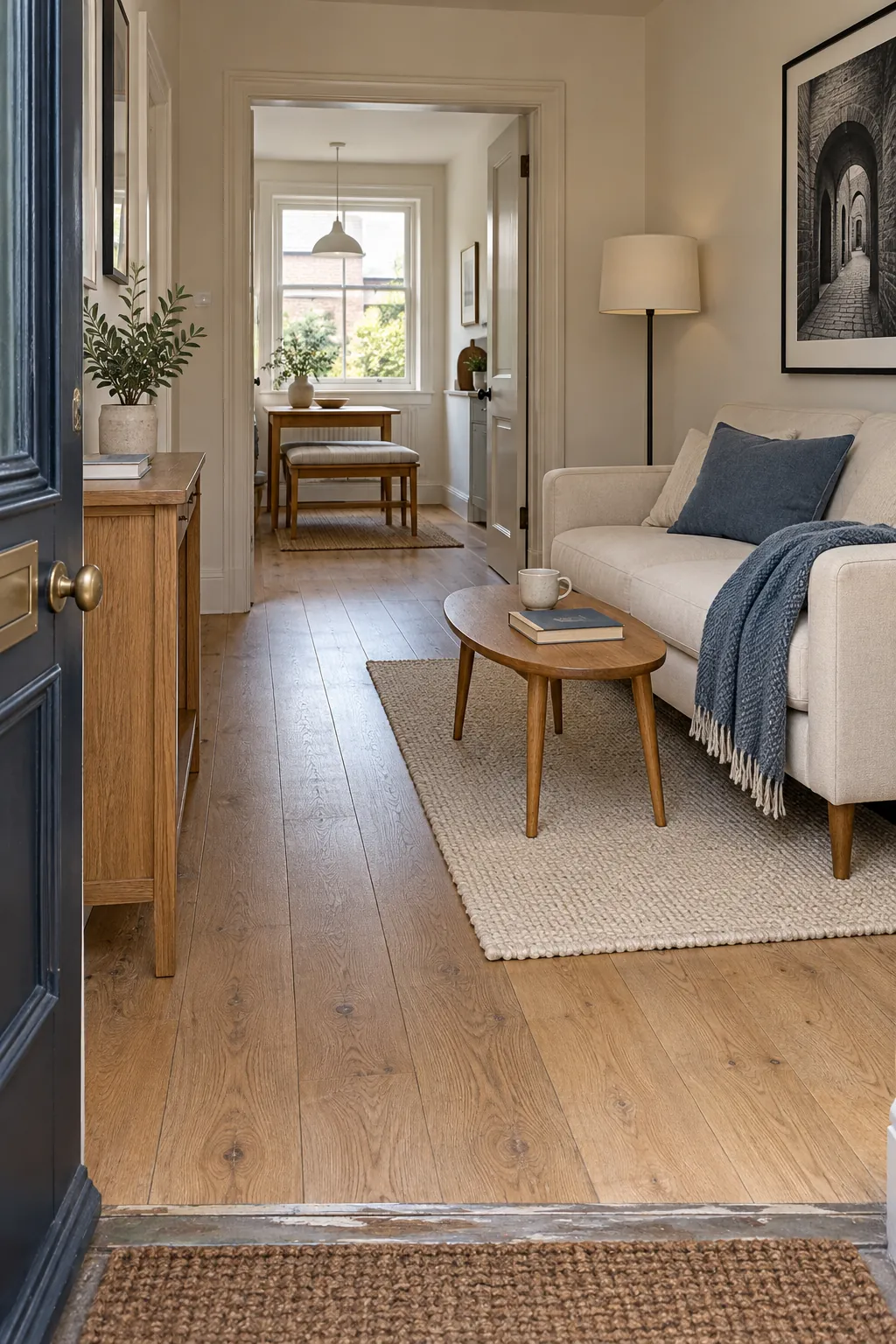
Stand at the entrance and identify the farthest pleasant point you can see. Keep the route toward it free of tall furniture and loose objects. A window, open doorway, or calm wall can become a visual destination that gives the room depth.
Move bulky pieces away from narrow passages, and avoid placing a cabinet where it shortens the longest view. Furniture does not need to hug every wall, but it should define useful zones without creating a maze.
Reduce Visual Clutter at Eye Level
Decluttered home decor does not mean removing everything you enjoy. Group related objects, give daily items closed storage, and leave part of each surface empty. Several tiny displays can create more visual noise than one larger, deliberate arrangement.
Work one category at a time so you do not move the same objects between rooms. Decide how much space the category receives, keep the best and most useful pieces, then remove the rest before buying containers.
Use a Continuous Light Color Base
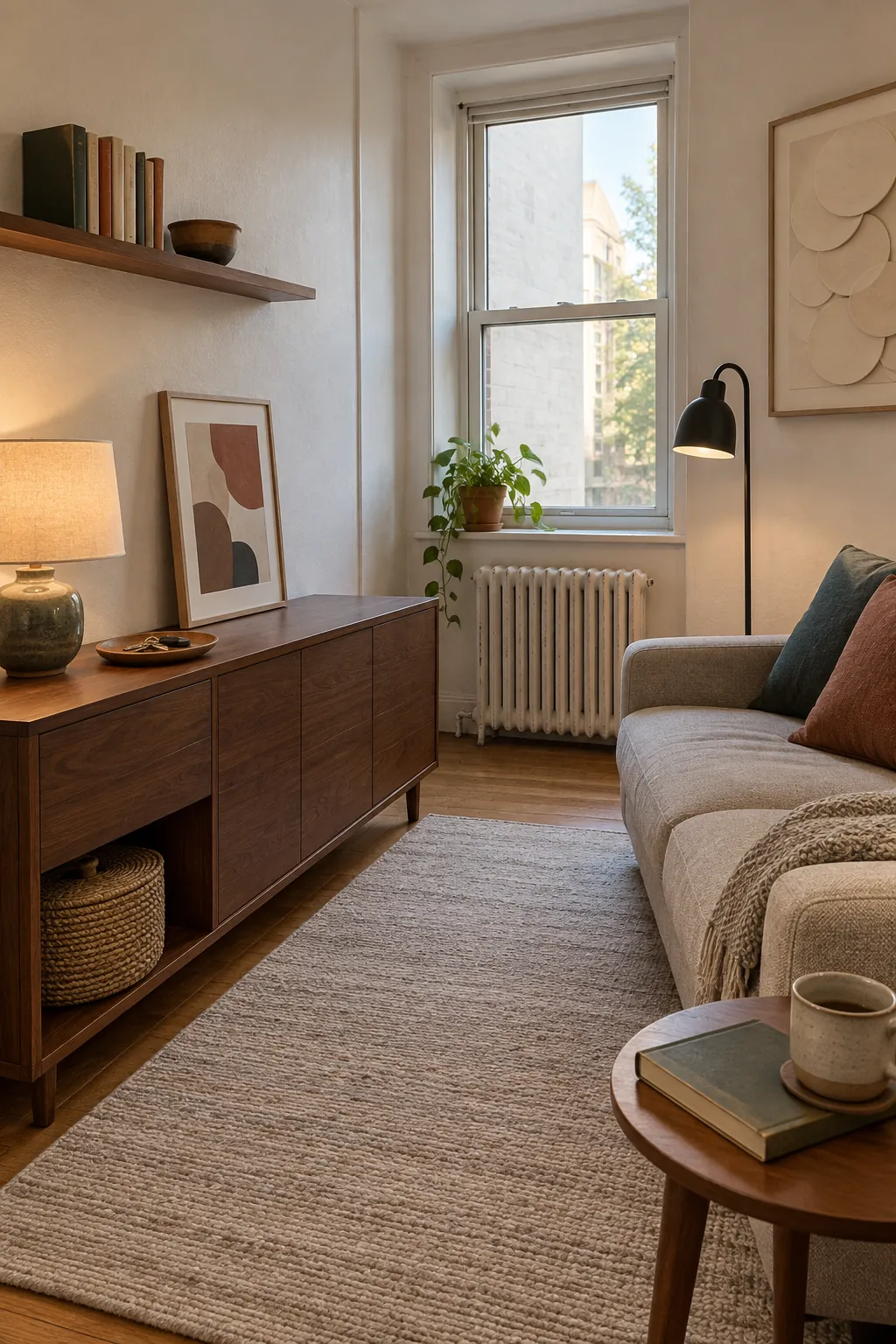
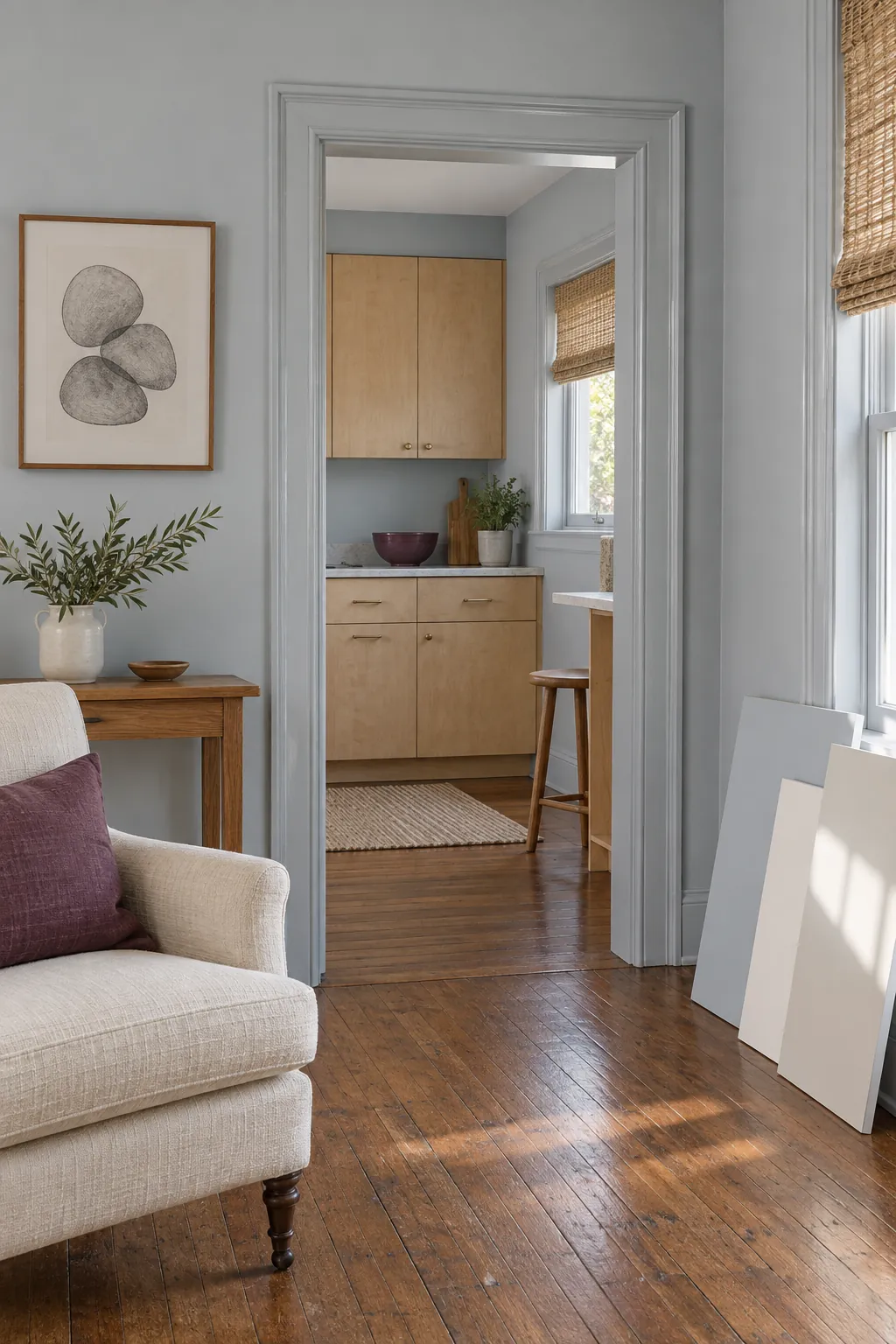
Light interior paint colors can soften boundaries when nearby walls, trim, and doors have similar values. Warm white, pale gray, soft blue, and quiet beige all work when their undertones suit the floor and daylight. Test large samples before choosing.
Continue the base color through connected rooms, then use richer accents for depth. A home can include dark or colorful furniture without feeling smaller if the surrounding surfaces remain calm and the contrast has a clear purpose.
Show More Floor Around Furniture
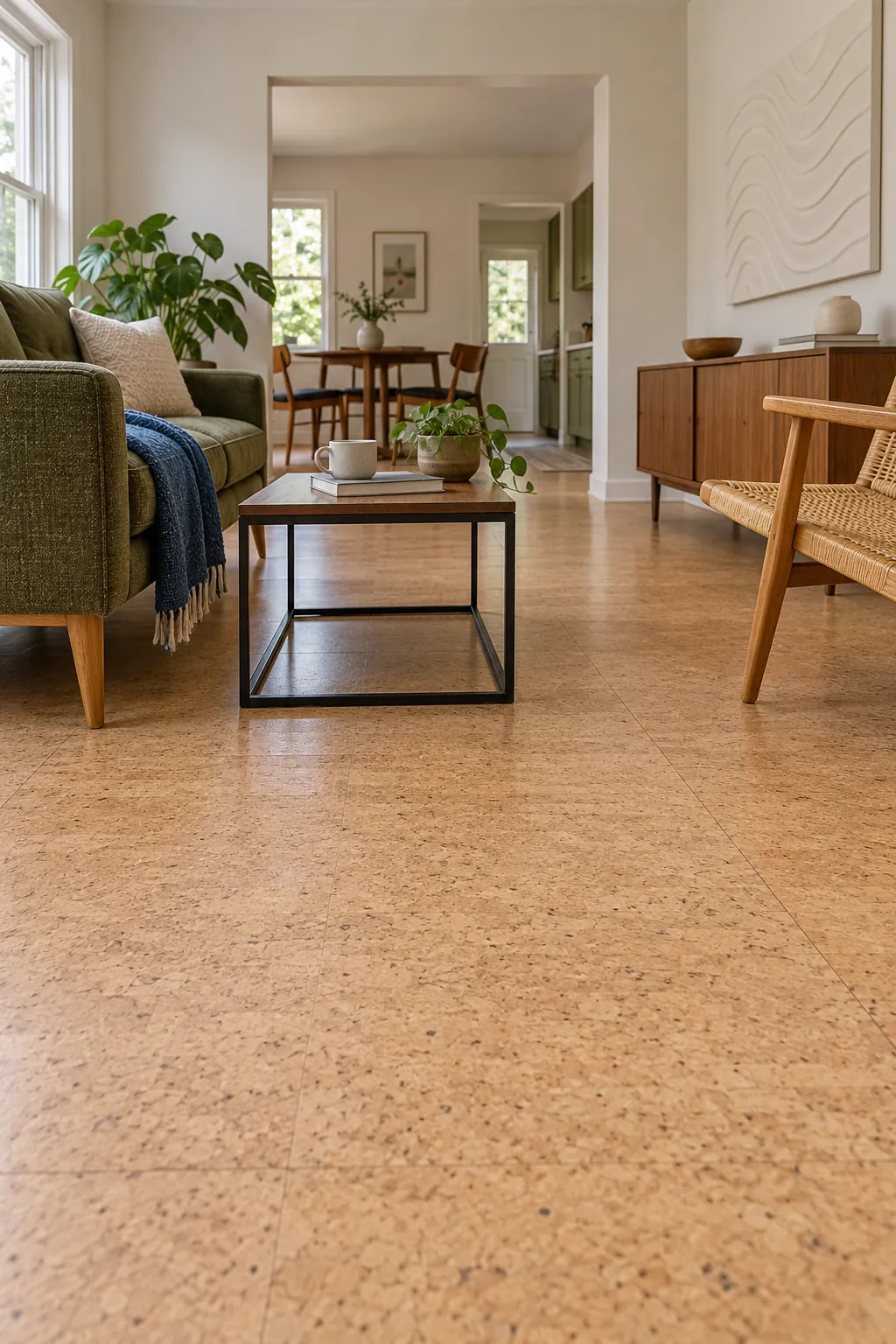
Open leg furniture lets light and flooring continue beneath sofas, chairs, consoles, and tables. This reduces the number of solid blocks in view. Choose pieces with useful proportions rather than tiny furniture that sacrifices comfort.
Consistent flooring across connected areas strengthens the effect because the eye sees one broad surface. If replacing floors is not practical, use rugs that fit their zones clearly and avoid many small mats that break the room into fragments.
Place Mirrors for a Useful Reflection
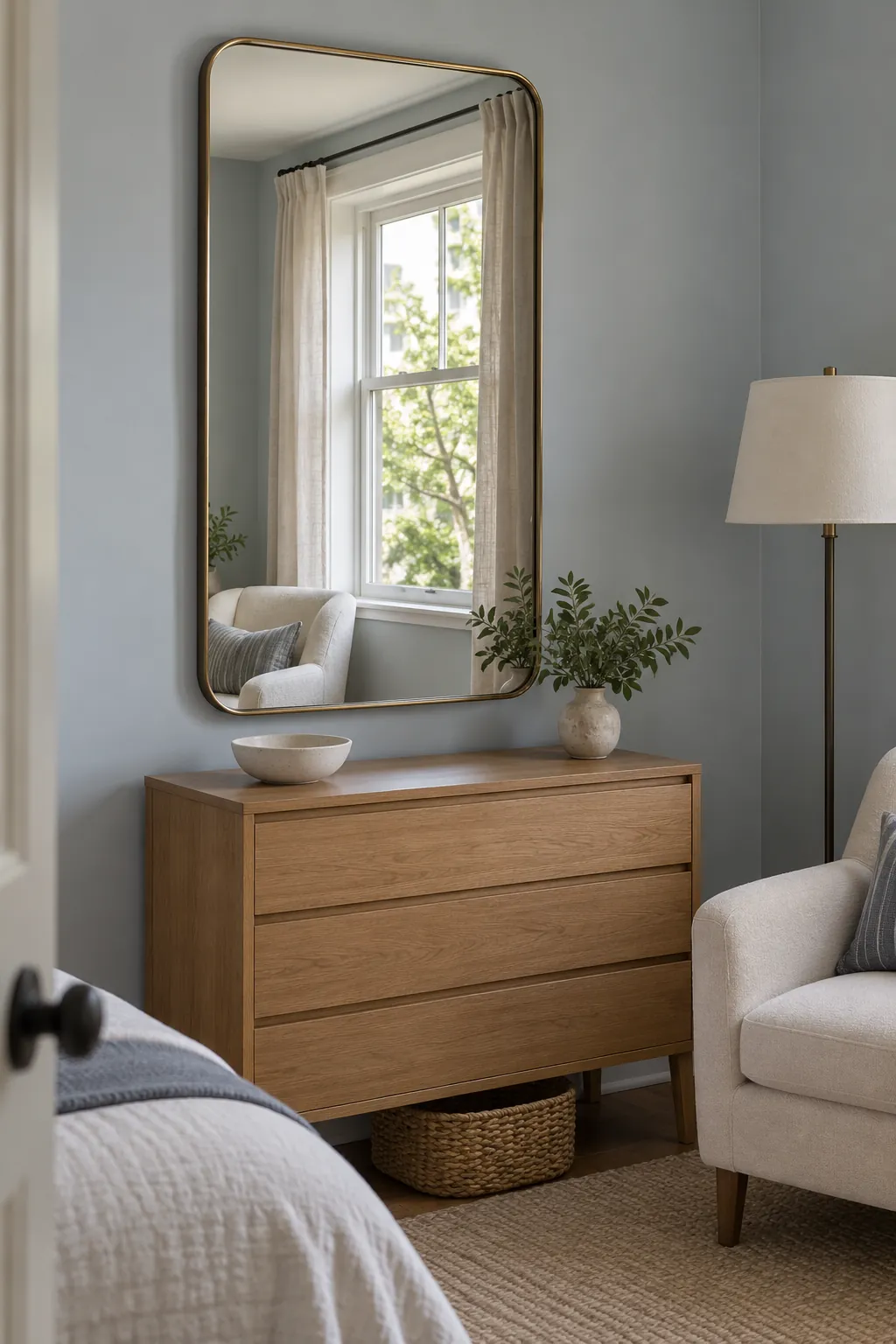
Large mirror placement matters more than size alone. Angle or position a mirror so it reflects a window, a lit doorway, or an orderly part of the room. A mirror that doubles a cluttered shelf or harsh bulb can make the space feel busier.
Check the reflection from the main seat and entrance before hanging it. Secure heavy mirrors with hardware suited to the wall. A tall leaning mirror can work when it is safely anchored and remains outside the walking path.
Light the Edges and Draw the Eye Up
Small home lighting should reach corners as well as the center. Combine a ceiling source with a reading lamp and a smaller light near a shelf or cabinet. When the edges remain visible, the room feels more complete after sunset.
Hang curtains close to the ceiling and let them clear as much glass as possible when open. Use vertical storage ideas selectively, with one tall cabinet or shelf rather than several short pieces. The upward lines add height, while open wall around them keeps the room from becoming crowded.