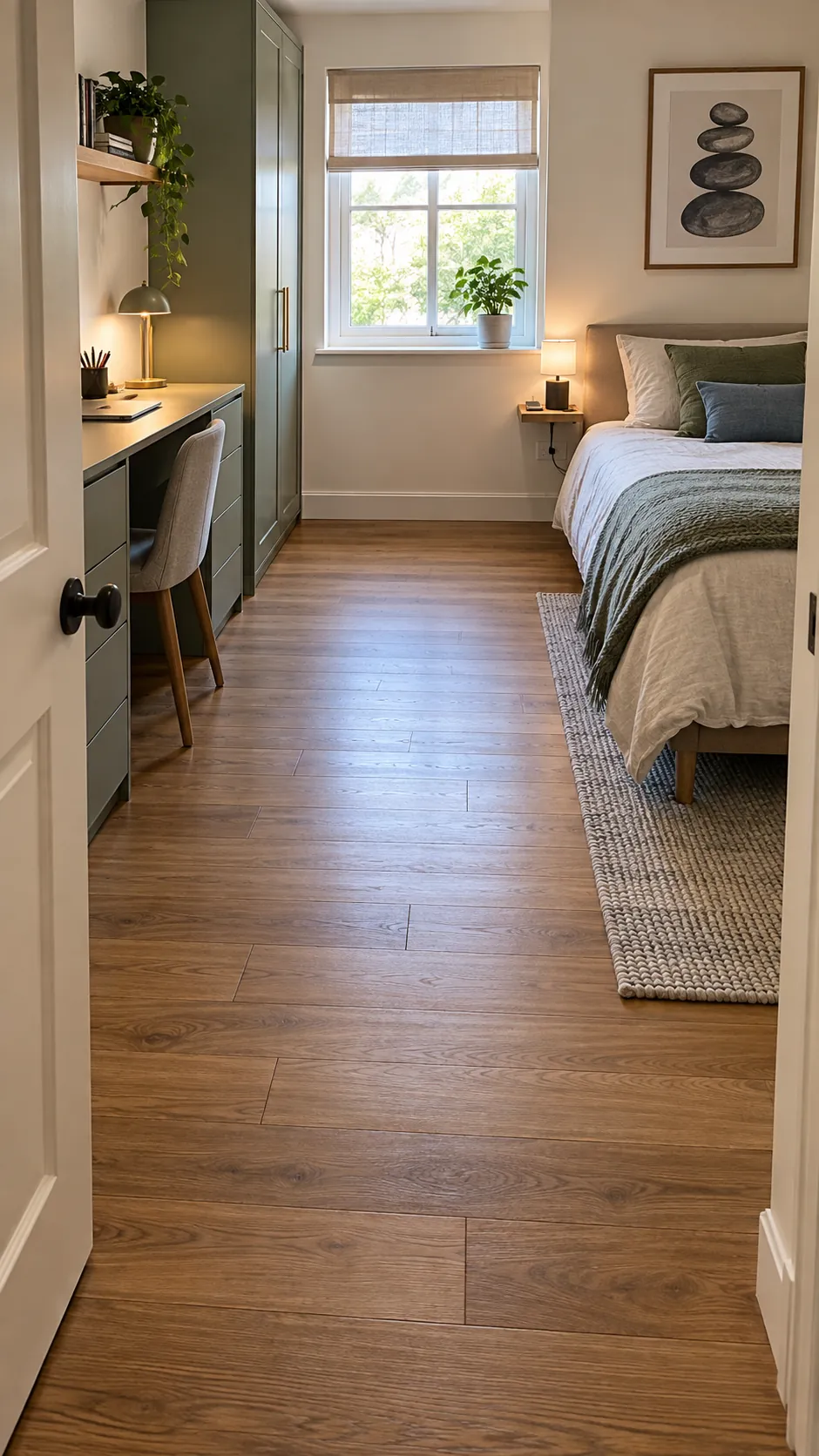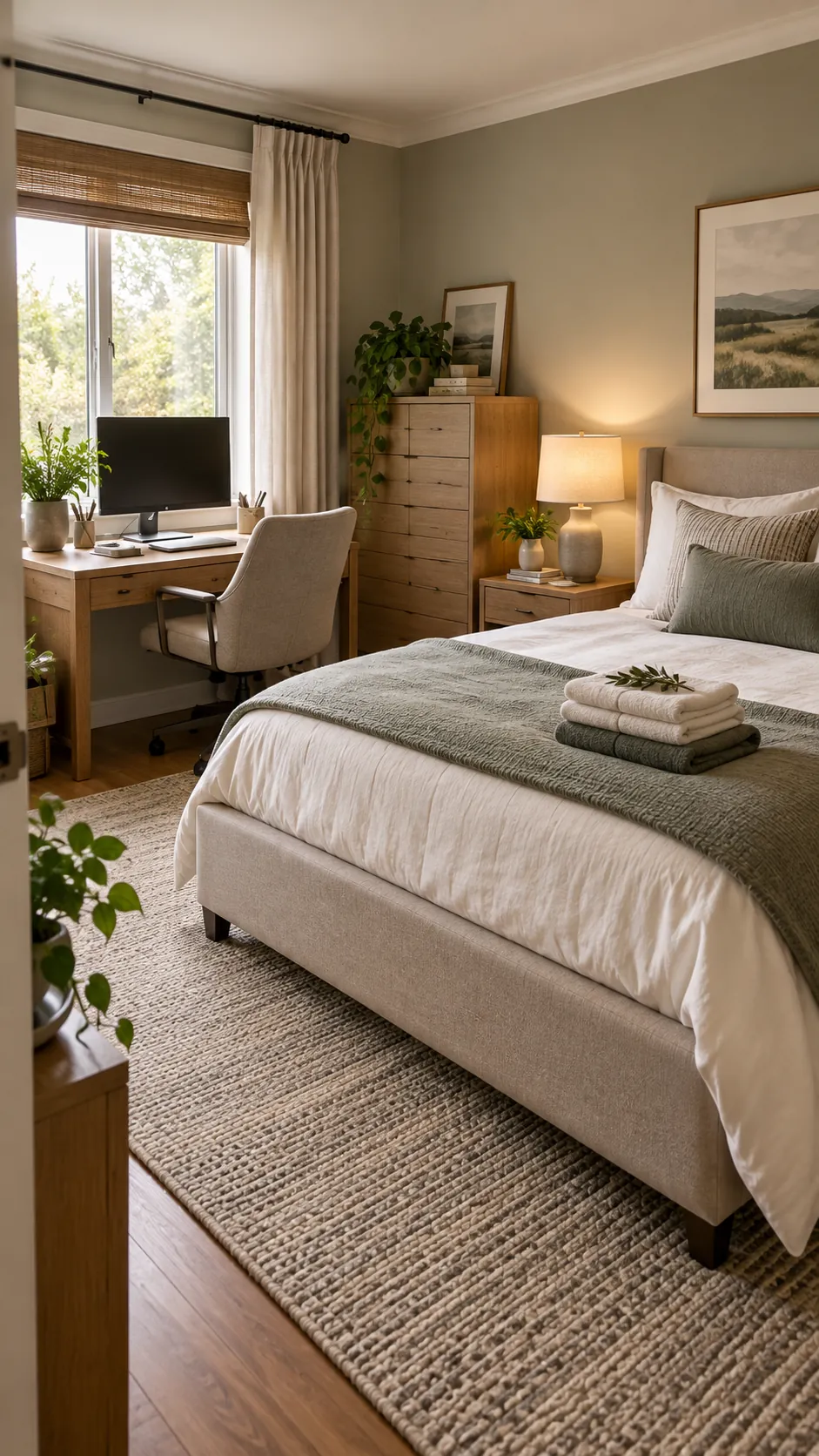
A spare room can fail in two ways at once. A permanent office can make visitors feel as if they are sleeping in a storage area, while a guest focused setup can leave everyday work without a comfortable base. The most useful solution gives each function a clear place and makes the switch between them quick.
Start with the way the room is used on ordinary weekdays, then protect the comfort that matters during an overnight stay. Good zoning, closed storage, practical lighting, and a genuinely supportive bed do more than decorative styling. They create a flexible guest room that feels calm even when it has worked hard all week.
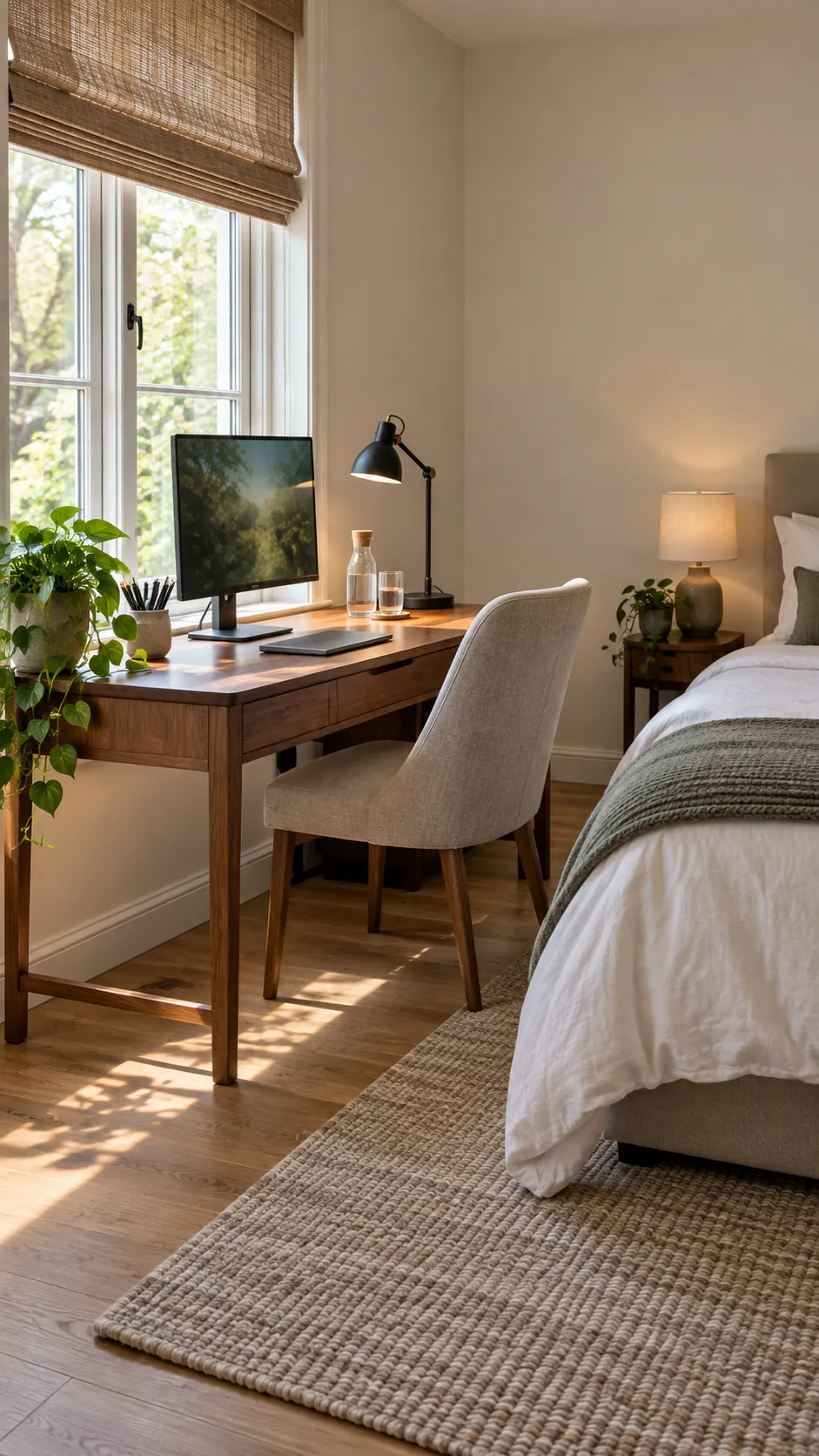
Place the desk beside the window
Natural light makes a guest bedroom office easier to use during long work sessions. Set the desk beside the window rather than directly in front of it so glare does not dominate the monitor. A slim curtain or woven shade lets guests soften early morning light without disturbing the work zone.
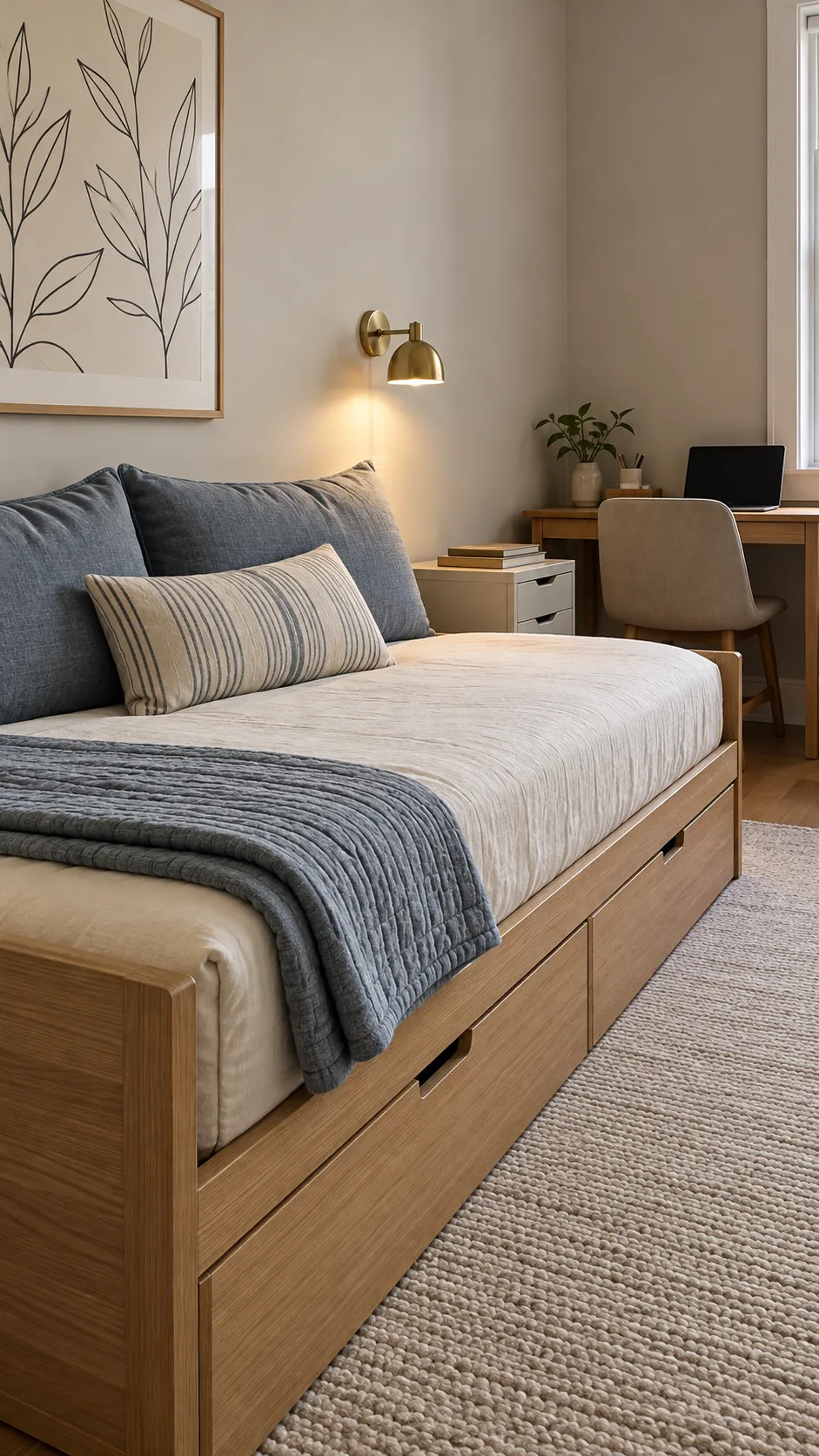
Choose a daybed with a real mattress
A daybed preserves open floor area without asking visitors to accept a thin temporary pad. Choose a standard mattress with enough support for an adult, then add a washable cover and generous back cushions for daytime use. The result reads as relaxed seating during video calls and becomes a comfortable spare bedroom at night.
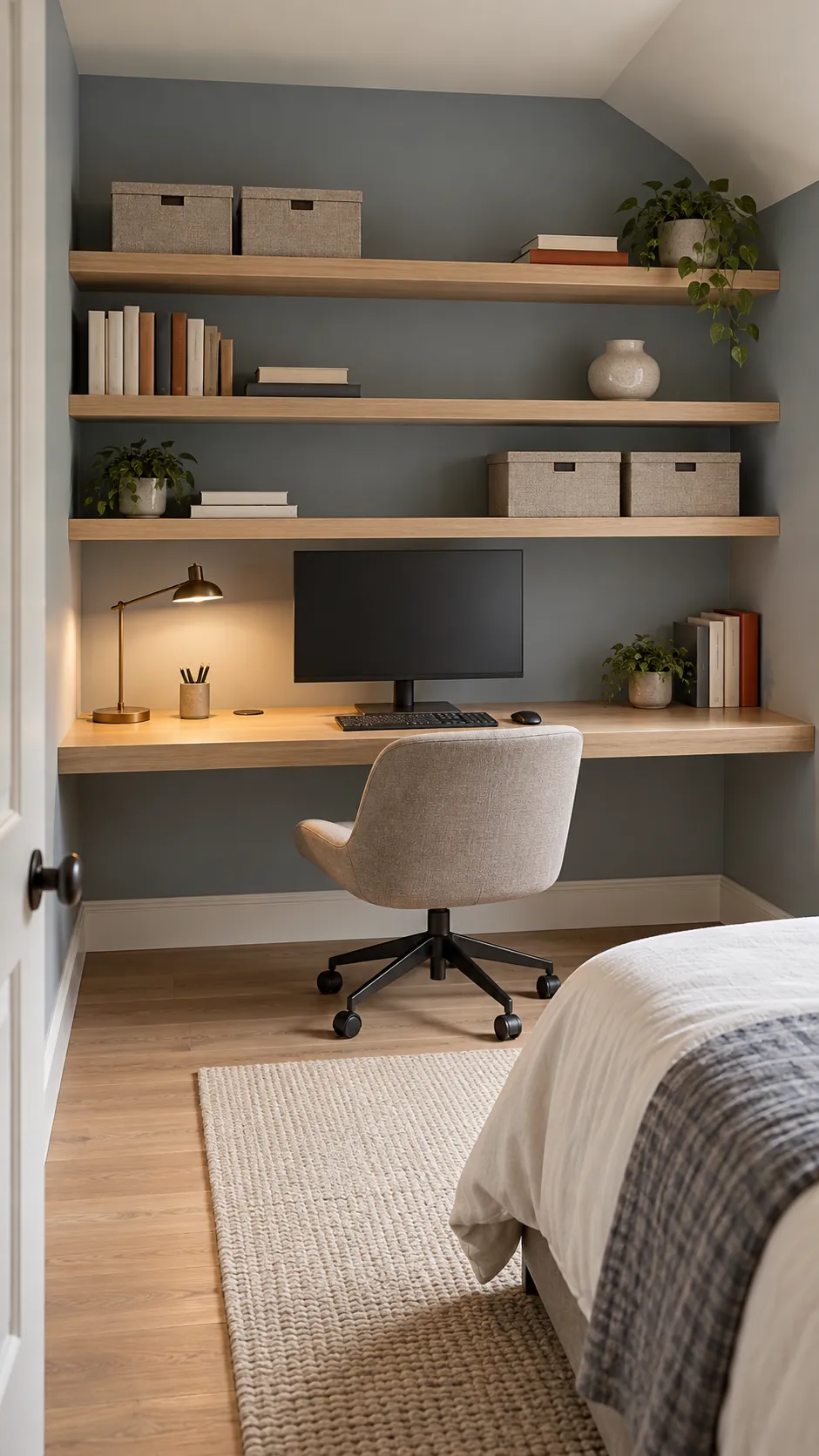
Build a shallow desk wall
A shallow work surface can provide useful depth without narrowing the route around the bed. Use wall mounted shelves above it for reference books, but keep the lowest shelf high enough that the desk does not feel cramped. Matching the desk and shelves to the wall color helps this guest room work area feel integrated rather than added later.
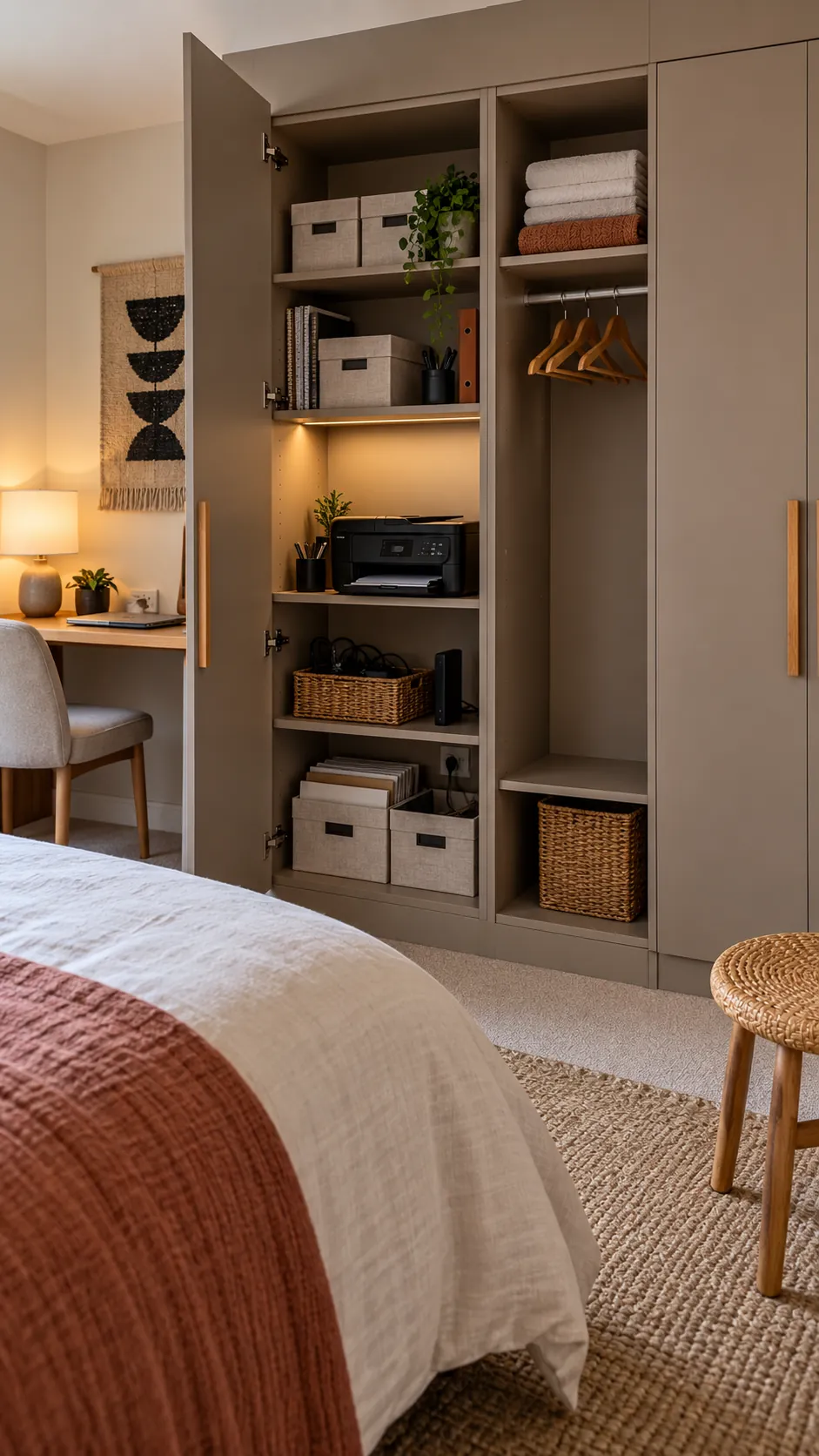
Hide work supplies behind doors
Closed storage is the fastest way to make work disappear before a guest arrives. Reserve one cabinet for paper, chargers, and equipment, and leave a separate empty section for a visitor. Label the inside of containers if needed, while keeping the visible cabinet fronts simple and restful.
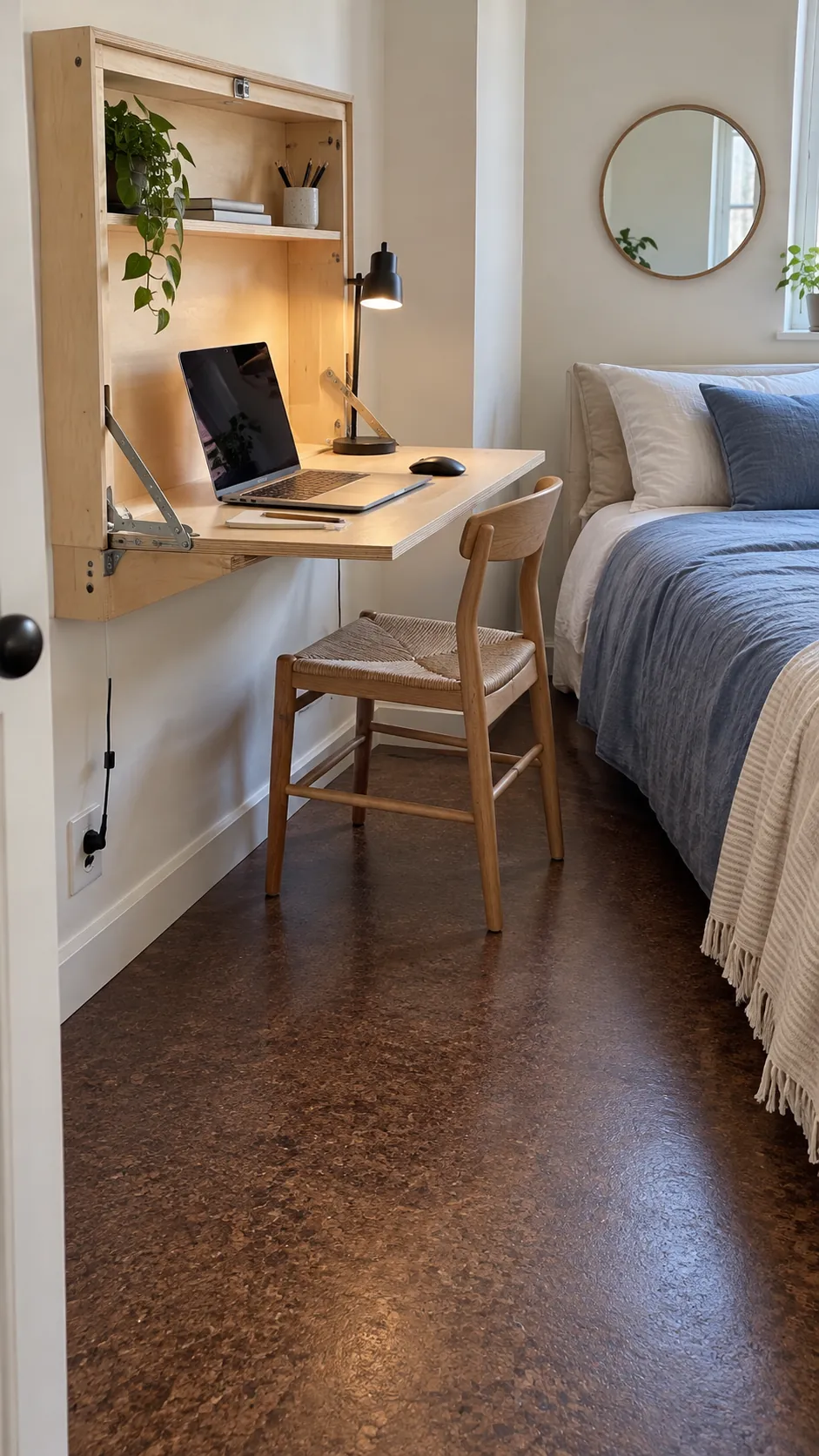
Use a folding wall desk
A folding desk works well when walking space is more valuable than a large permanent surface. Select a model that closes securely and still has room for the equipment you use every day. Clear the surface before folding it up so visitors receive an uncluttered wall and an easier path to the bed.
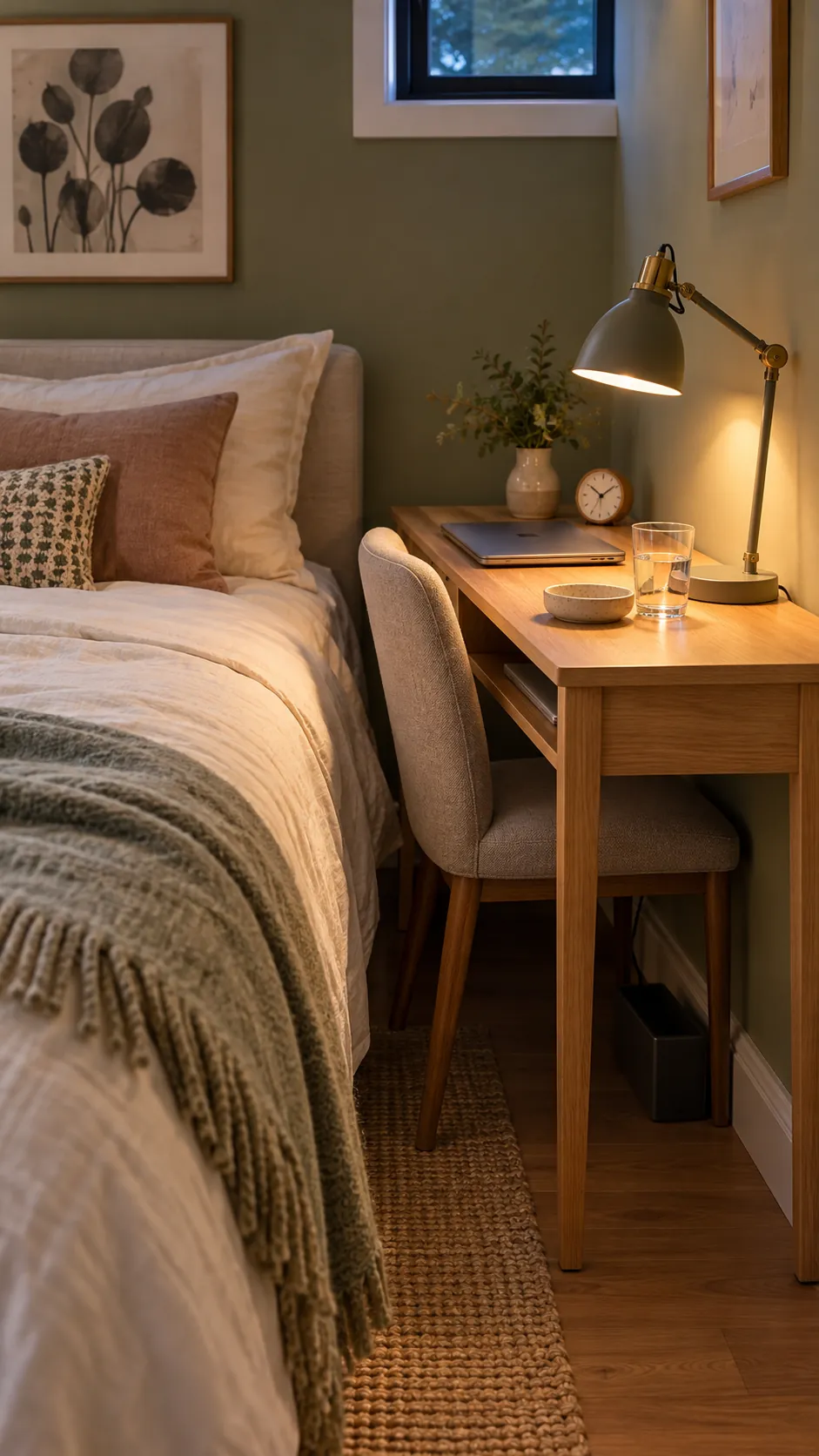
Turn the desk into a bedside surface
In a narrow room, one piece can serve as both desk and nightstand. Position the work surface near the bed, then keep one corner clear for a lamp, water glass, and phone. A cable box underneath prevents computer cords from becoming the first thing a guest notices.
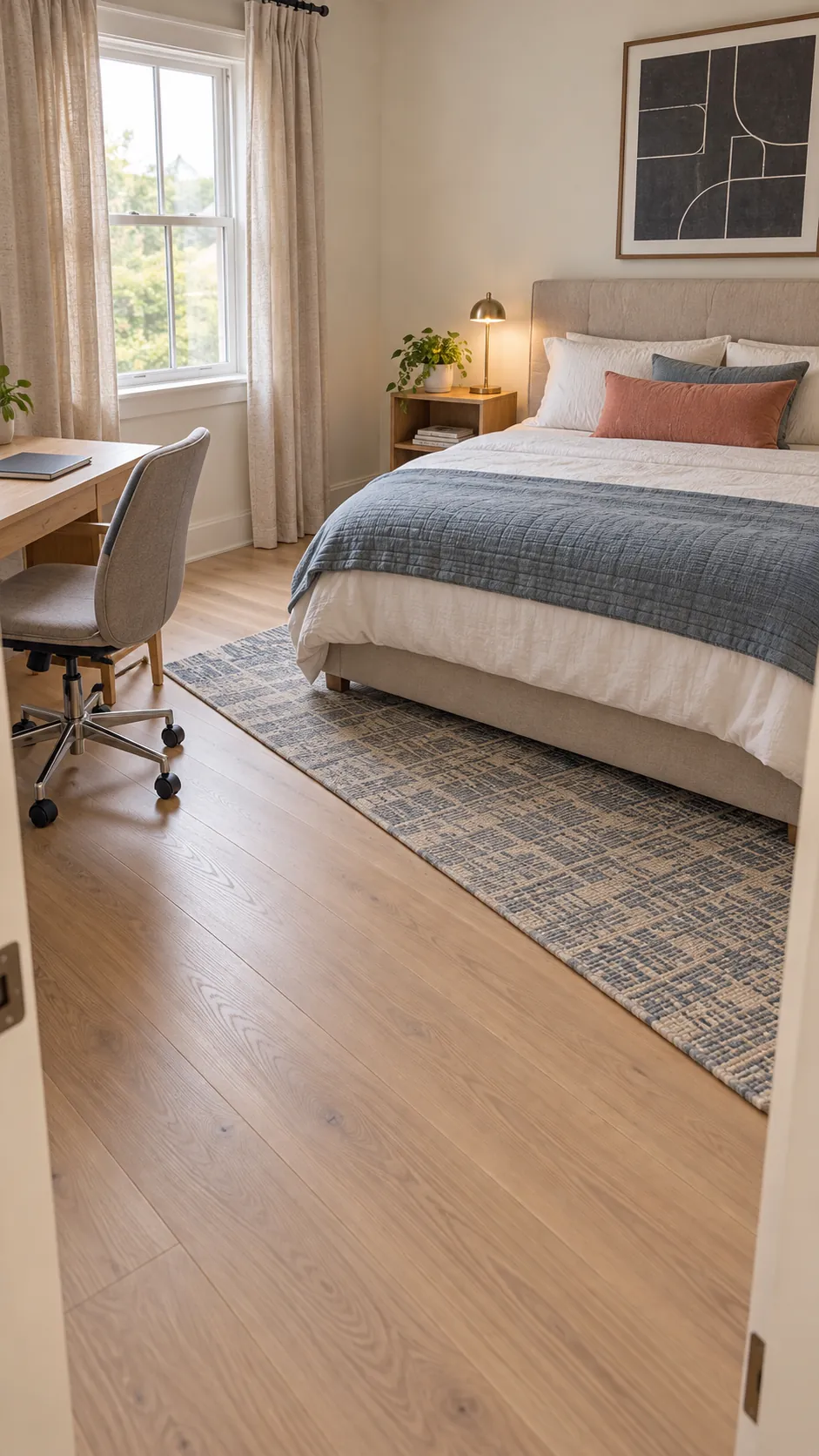
Zone the room with a washable rug
A rug can define the sleeping area without adding a divider that blocks light. Place most of the rug under the bed and keep the office chair on a smooth, stable floor surface. This simple office guest room zoning keeps rolling movement easy and gives the bed a warmer visual boundary.
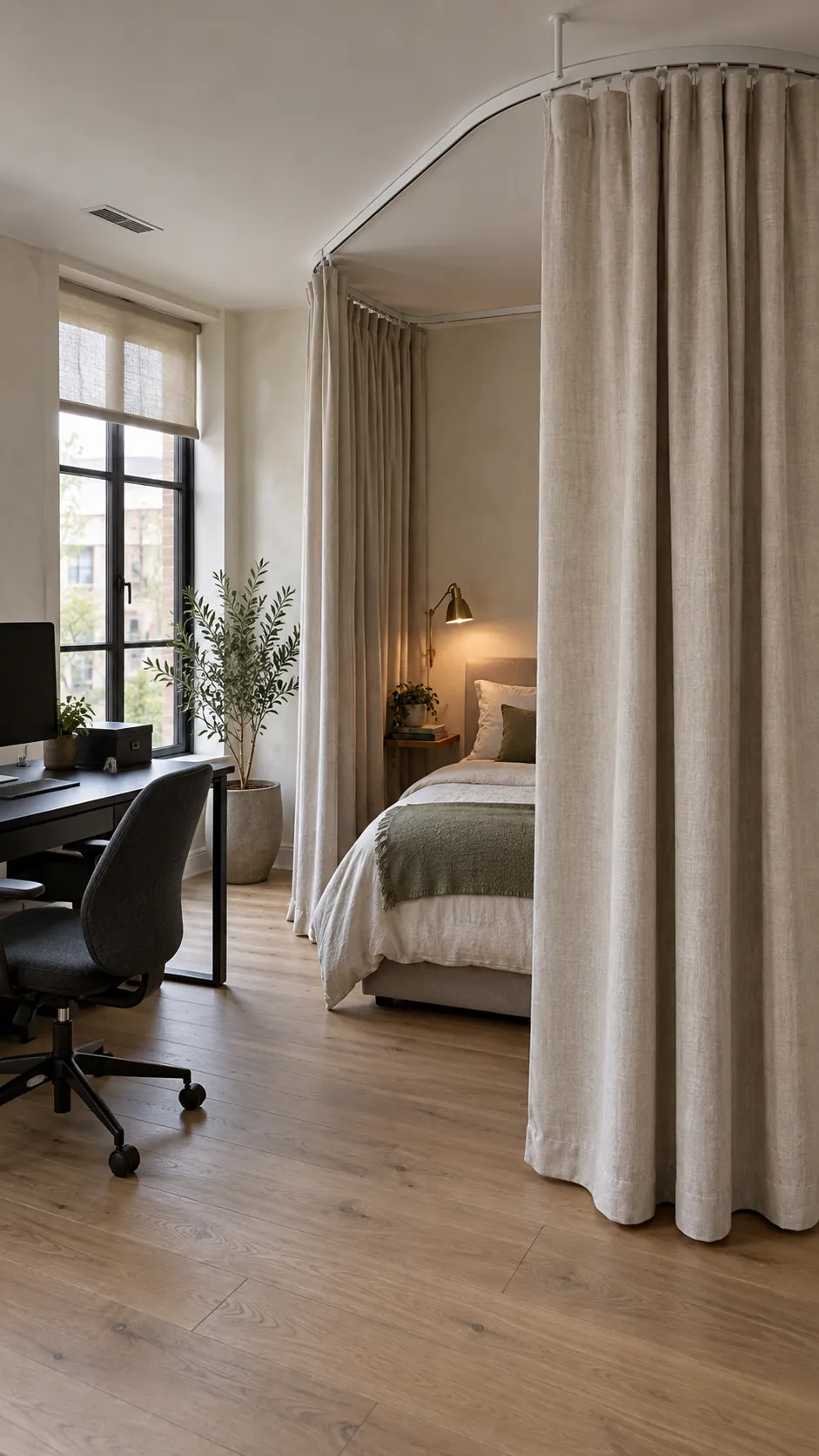
Add a curtain that closes around the bed
A ceiling track curtain gives a guest privacy while leaving the whole room open during work hours. Choose a dense fabric that filters visual clutter but can stack into a narrow space. Check that the track clears lights, vents, and cabinet doors before deciding its exact path.
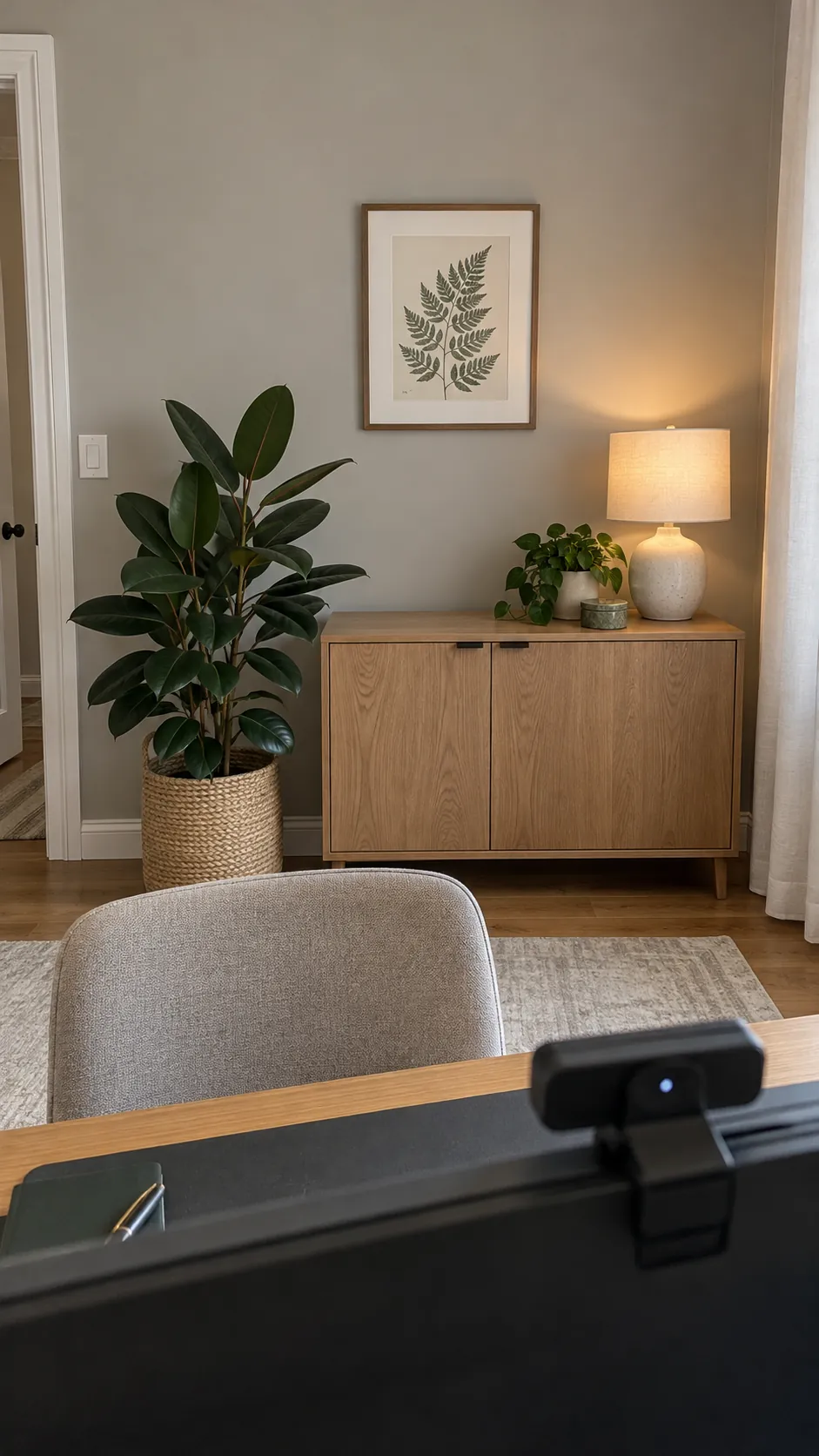
Keep the video call background calm
The camera view deserves its own plan in a home office bedroom. Aim the desk toward one tidy wall with a small botanical print, a plant, and one closed cabinet rather than the unmade bed. Test the frame while seated because objects that look balanced from the doorway can feel distracting on screen.
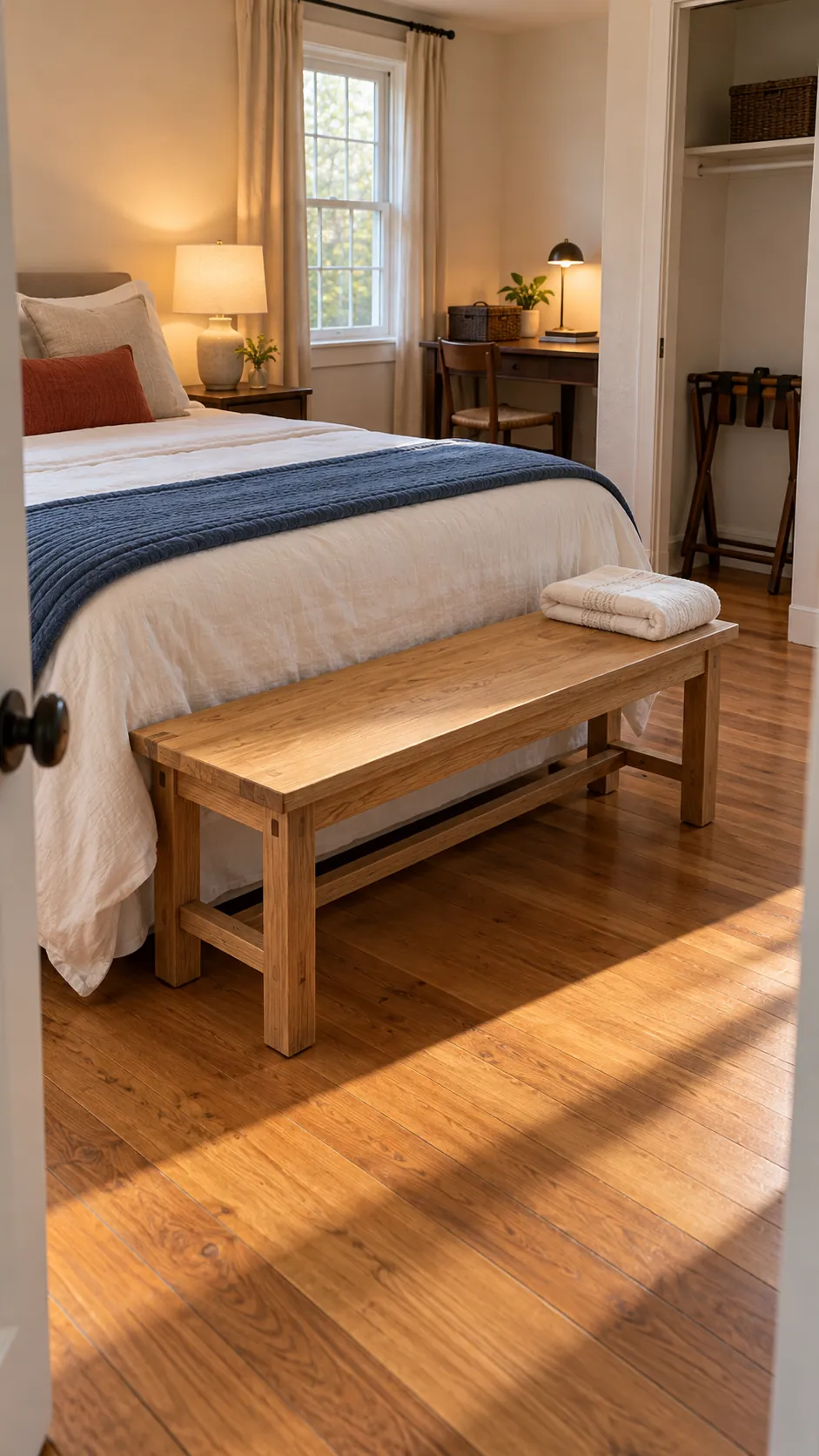
Give guests an empty luggage zone
Visitors need a place for a suitcase that is not the desk chair. A low bench at the foot of the bed or a folding rack inside the closet keeps luggage accessible and off clean bedding. Leave the surface empty between visits instead of letting it become permanent office overflow.
Layer work light and bedside light
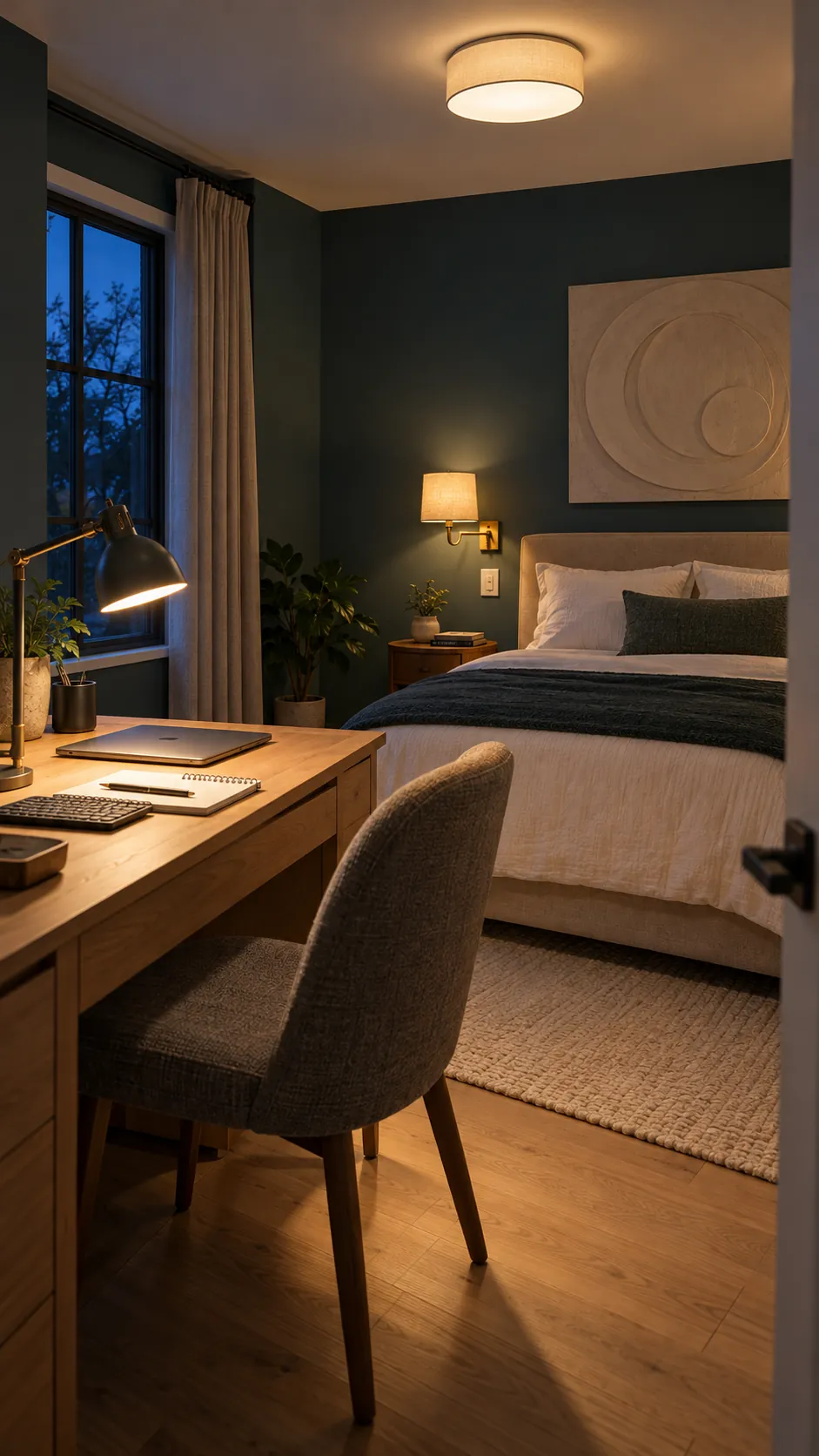
One ceiling fixture rarely supports focused work and relaxed reading equally well. Add an adjustable desk lamp for task light and a warm bedside lamp that guests can reach without standing. Separate switches let each person use only the light they need, which makes the room feel intentional in both modes.
Choose an office chair that looks at home
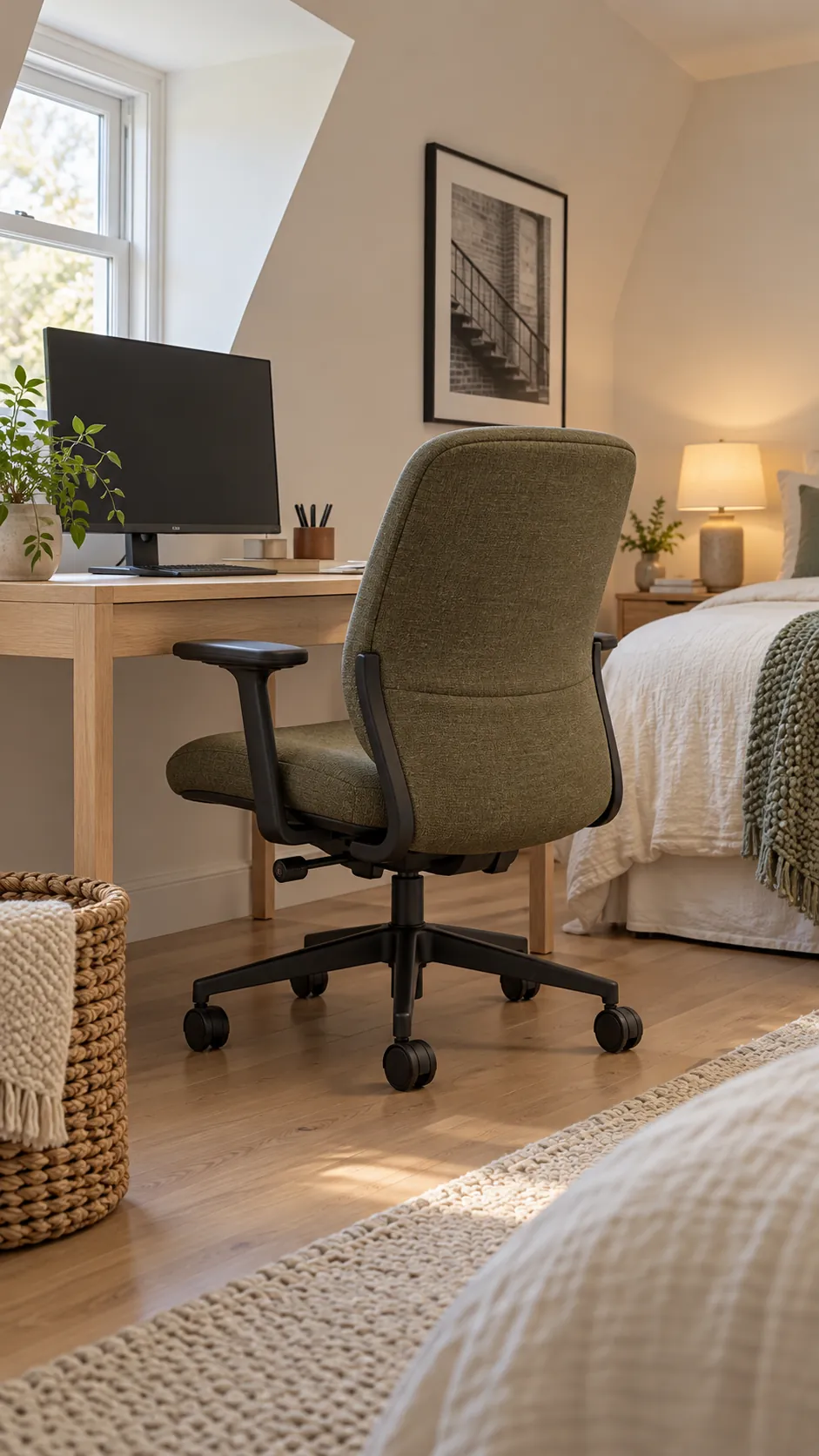
An ergonomic chair is important, but it does not need to dominate the spare room design. Look for supportive proportions, adjustable height, and quiet upholstery in a color already used near the bed. Roll it neatly under the desk before guests arrive so the circulation path remains open.
Use a headboard with hidden storage
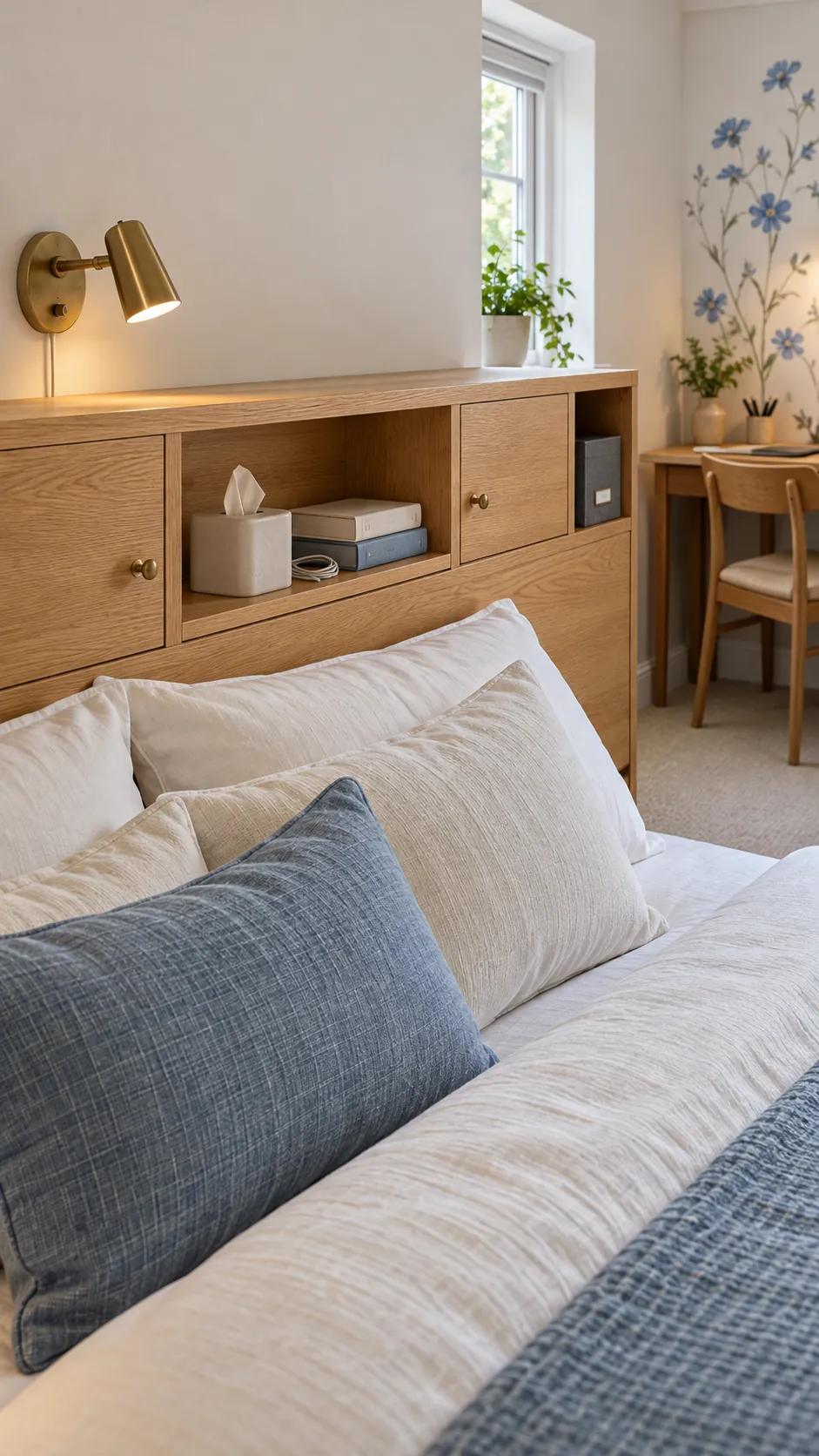
A storage headboard can hold guest essentials without taking floor space from the office. Keep tissues, a spare charging cable, and reading material in the guest side, then reserve the less visible compartments for work items. Avoid filling every shelf because a little open space makes the arrangement easier to understand.
Mount the monitor on an adjustable arm
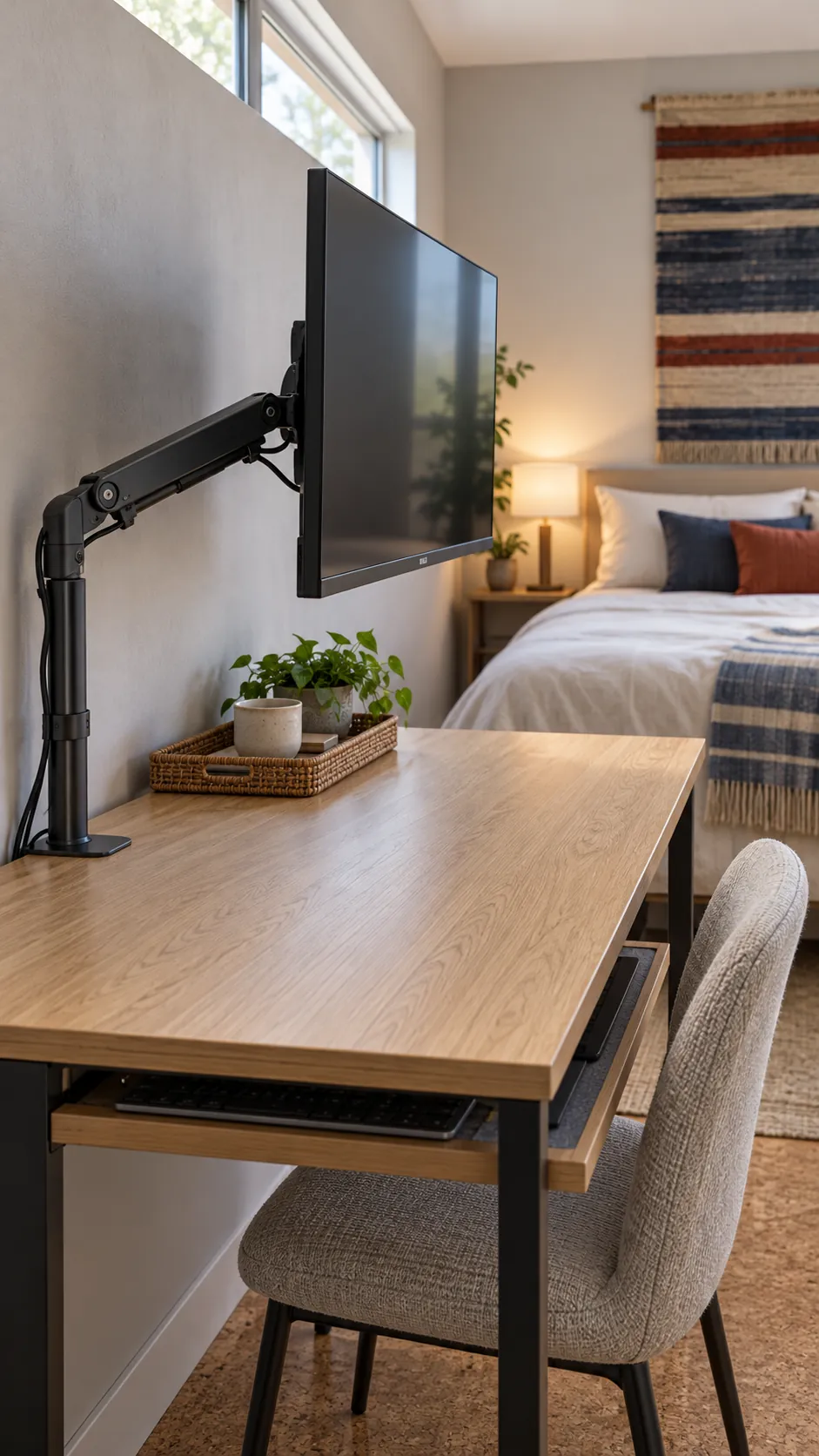
A monitor arm frees useful desk area and makes the screen easier to reposition. Push the monitor close to the wall when the room changes to guest mode, then use the open surface for a welcome note or small tray. Route the cable along the arm so it does not hang against the wall.
Create a simple arrival routine
A dual purpose room works best when the conversion does not require a full cleaning day. Use one basket for active papers, close the laptop in a drawer, refresh the bedding, and empty the guest shelf. A written routine inside the cabinet keeps the transition consistent when visitors arrive with little notice.
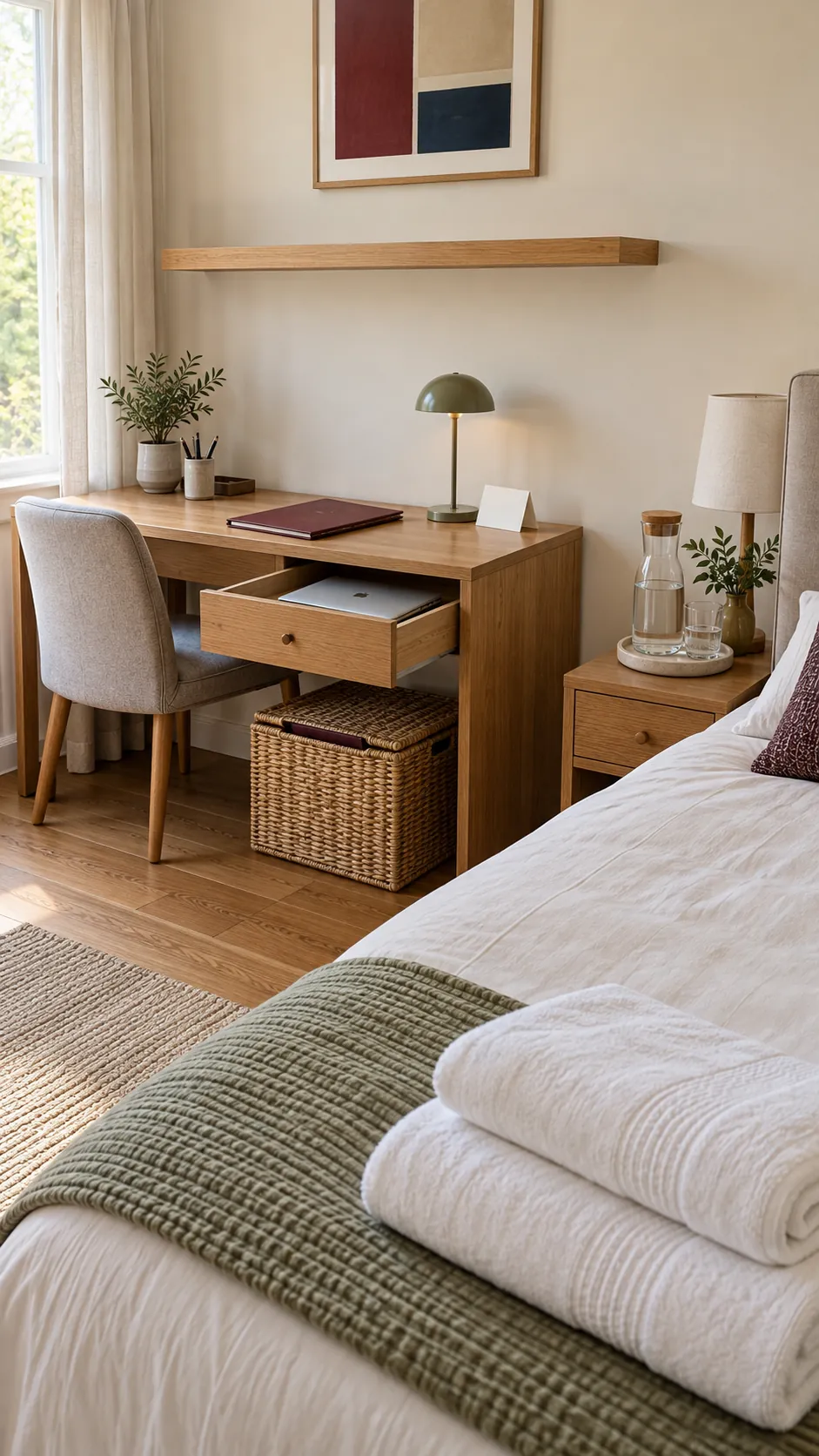
Leave one outlet for the visitor
A desk can consume every convenient outlet with monitors, lamps, and chargers. Install an approved power strip for the office equipment and leave one clearly accessible charging point beside the bed. Guests should not need to unplug your work setup or crawl behind furniture to charge a phone.
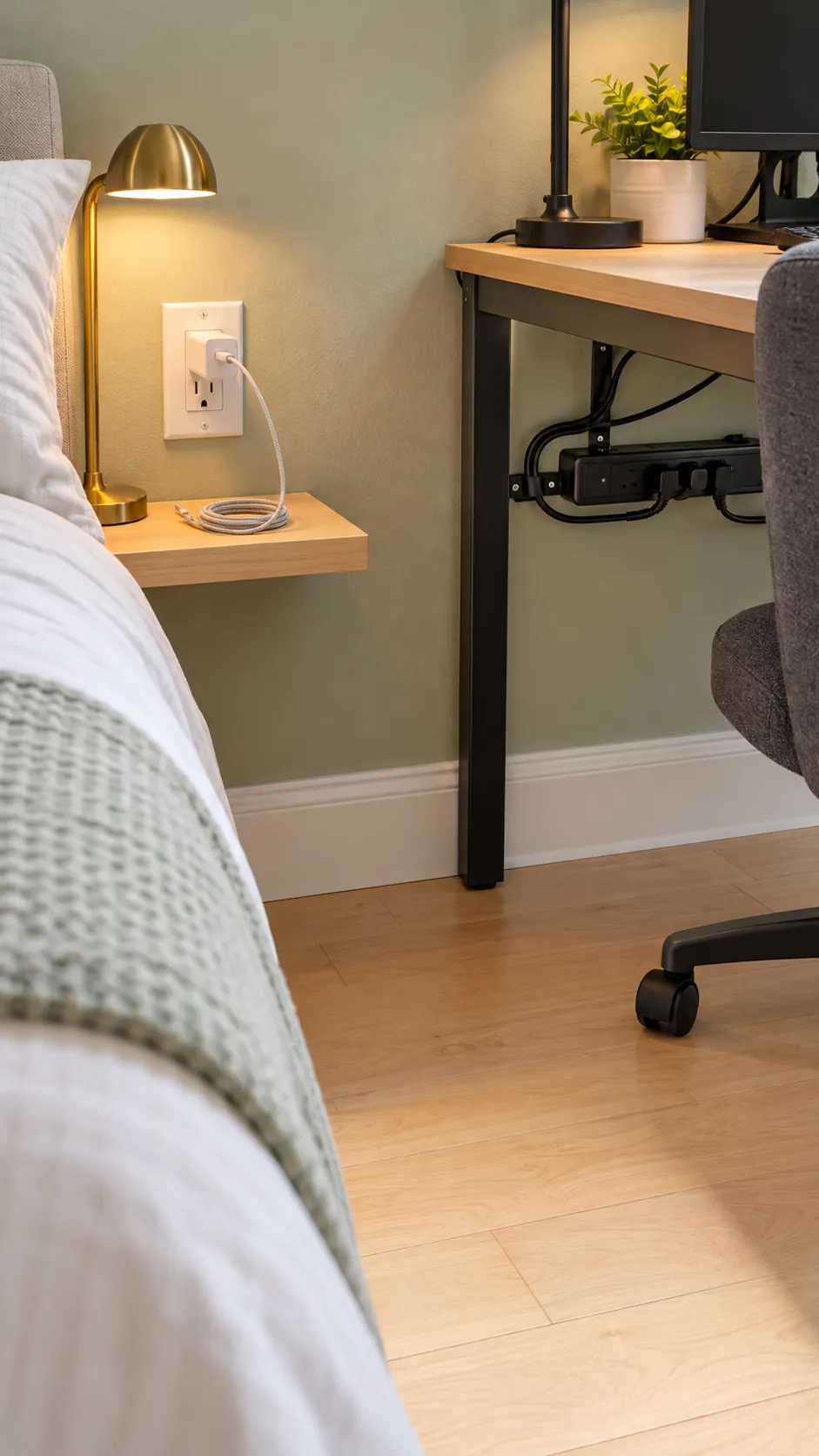
Soften sound with useful textiles
Curtains, a rug, and an upholstered headboard reduce the hard echo that makes calls tiring. These same materials help a weekend guest bedroom feel settled and private after work ends. Choose washable or vacuum friendly finishes so the room remains practical instead of becoming precious.
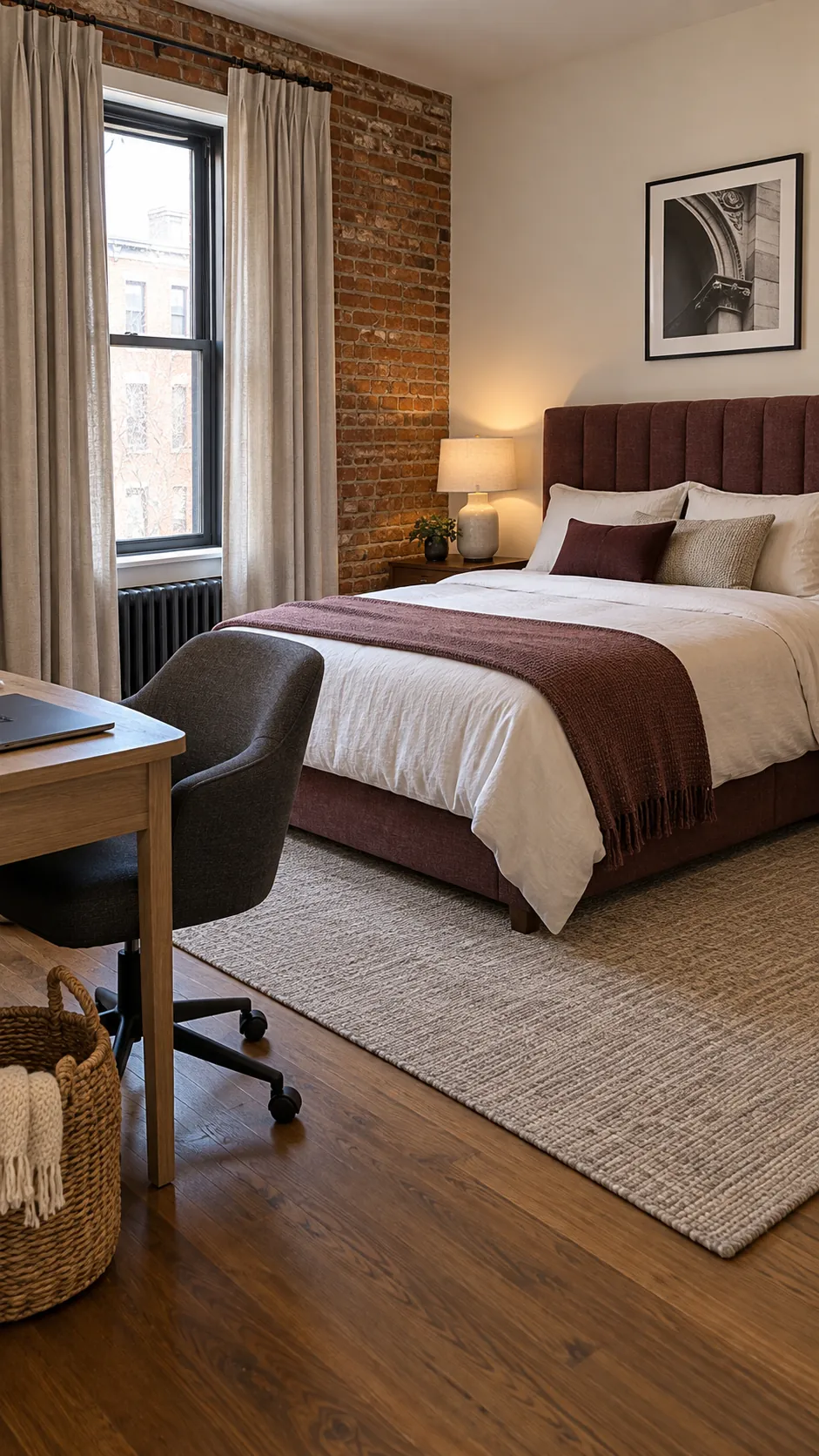
Keep a clear path from door to bed
The final layout check is about movement rather than decoration. Walk from the door to the bed, closet, window, and charging point without turning sideways around the chair. If the route feels tight, reduce the desk depth or move small storage upward before sacrificing a supportive mattress.