
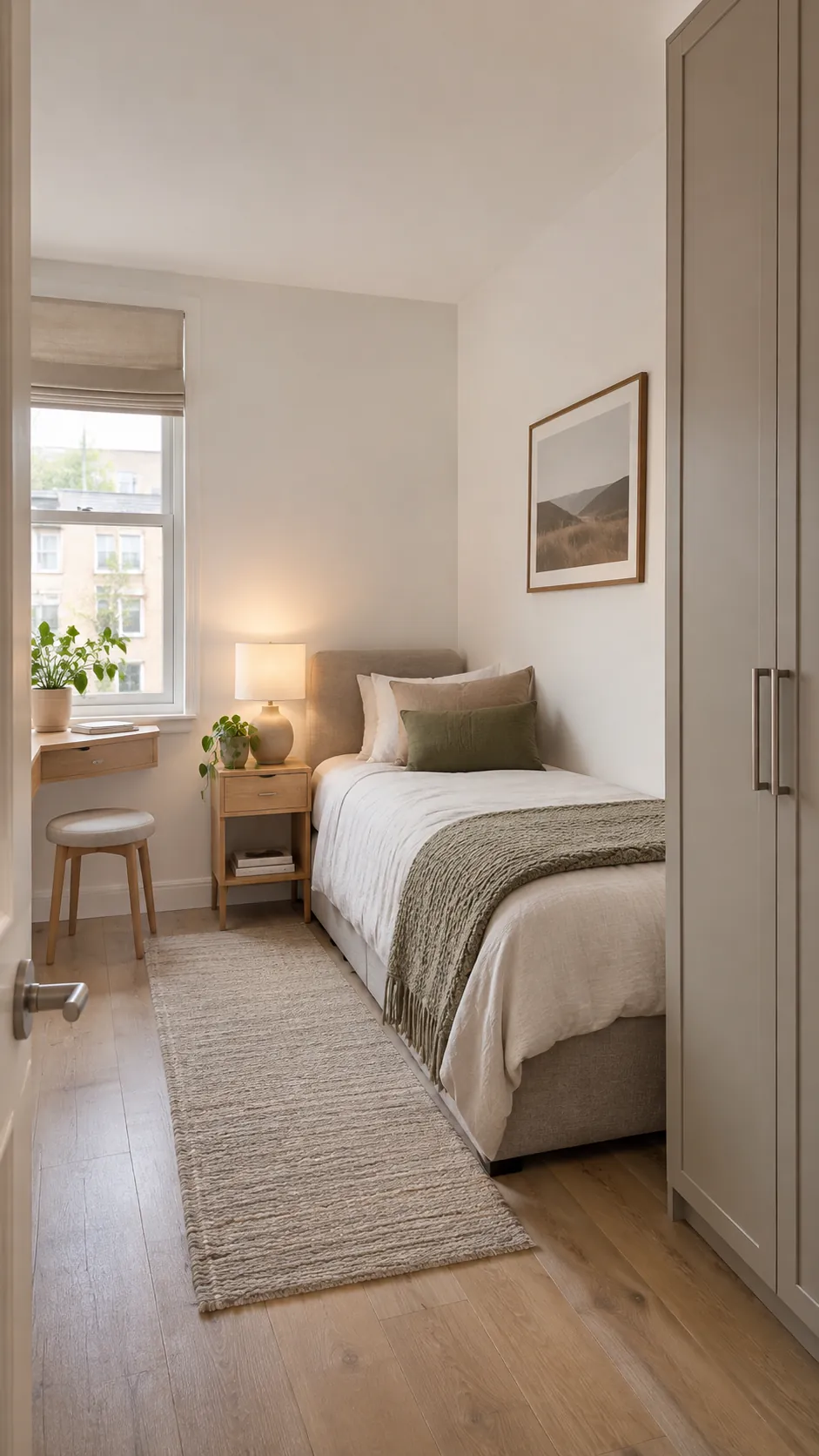
A cramped bedroom usually feels difficult because the furniture was chosen before the room was planned. The bed blocks a door, the dresser steals the only clear wall, and useful storage becomes hard to reach. A better approach begins with the room’s fixed features and the activities that must fit, then assigns each remaining piece a precise job.
Measure the usable floor before shopping
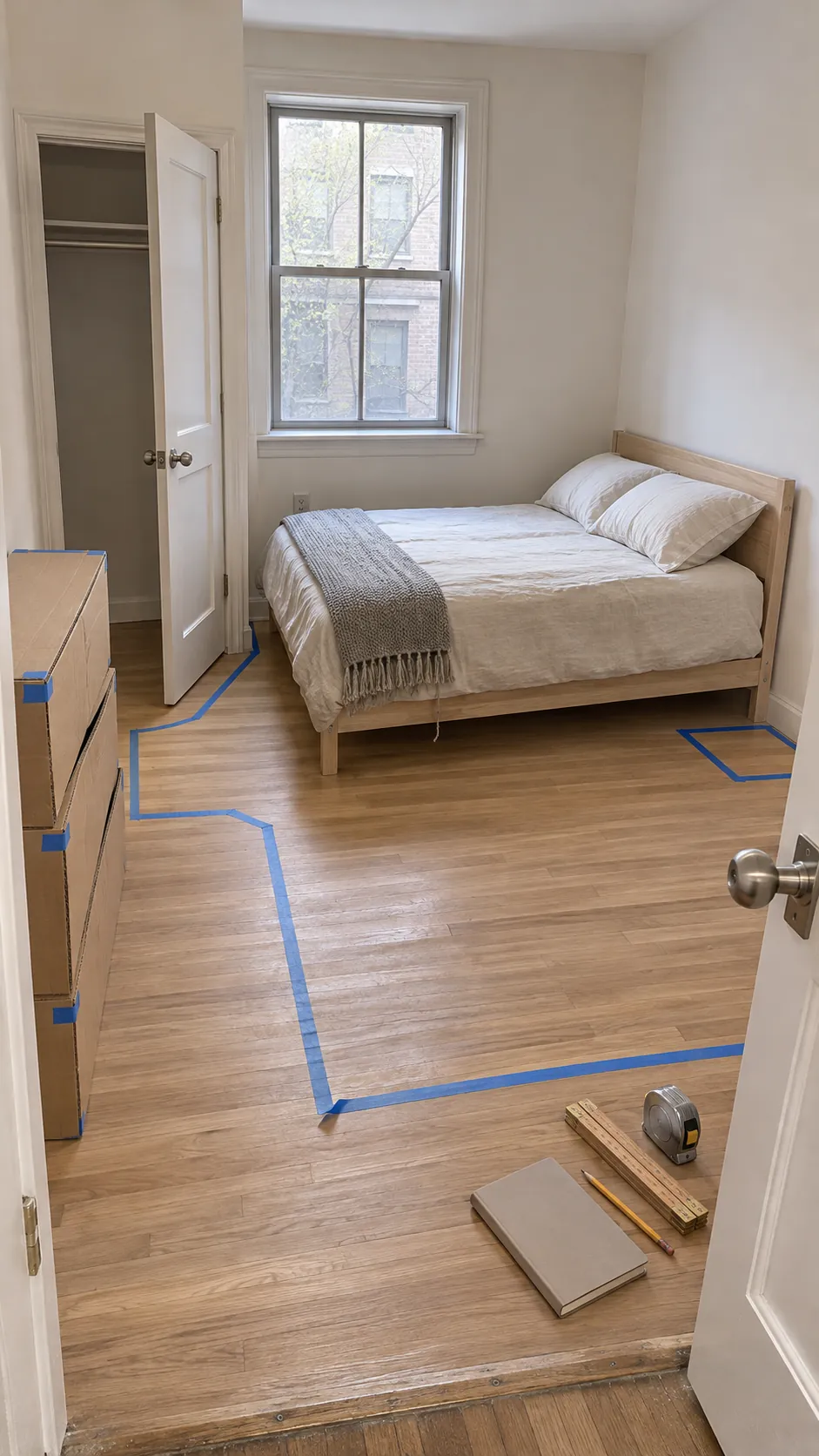
Measure every wall, then mark the door swing, closet opening, radiator, outlet, and window sill. Record the narrowest clear route from the entrance to the bed and closet, because that path matters more than a large patch of floor that nobody can reach. Use painter’s tape to outline possible furniture footprints, and walk through the room before committing to a purchase.
Aim to protect a comfortable passage beside the bed and enough room for drawers and doors to open fully. The exact clearance depends on the room and the person using it, so test the space with the actual daily routine. This simple trial often reveals that one smaller piece works better than several specialized pieces.
Choose the bed size by the life around it
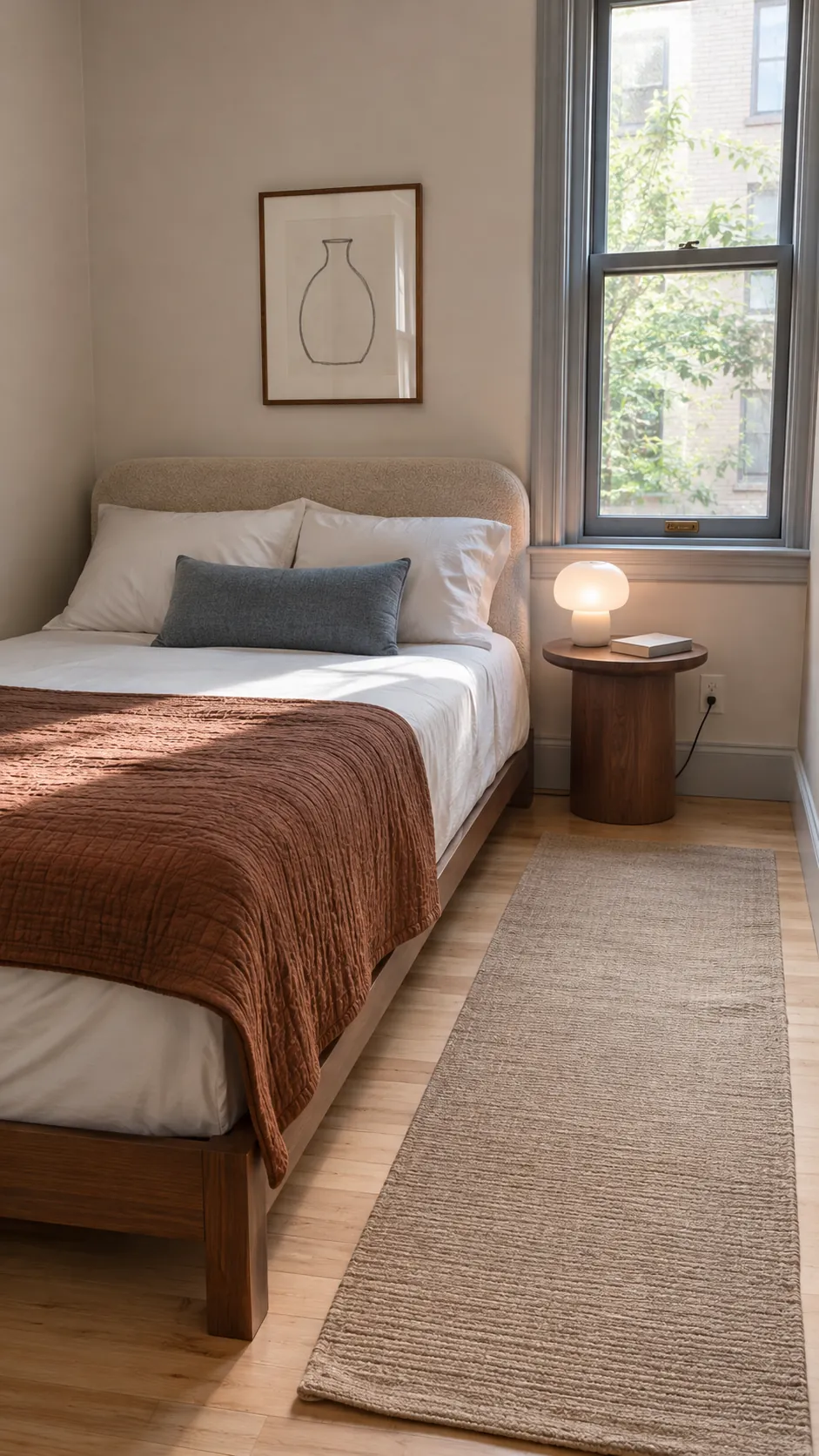
The largest bed that physically fits is not always the bed that makes the room work. A full bed may preserve a useful desk or second access point, while a queen may be worth the tighter plan for two sleepers. Compare the benefit of mattress width with the cost in circulation, closet access, and usable wall length.
Place the headboard on a solid wall when possible, but do not force symmetry if it wastes space. One open side can be enough for a single sleeper, while two people usually need practical access from both sides. Keep the window, heater, and escape route safe and unobstructed.
Make the bed carry hidden storage
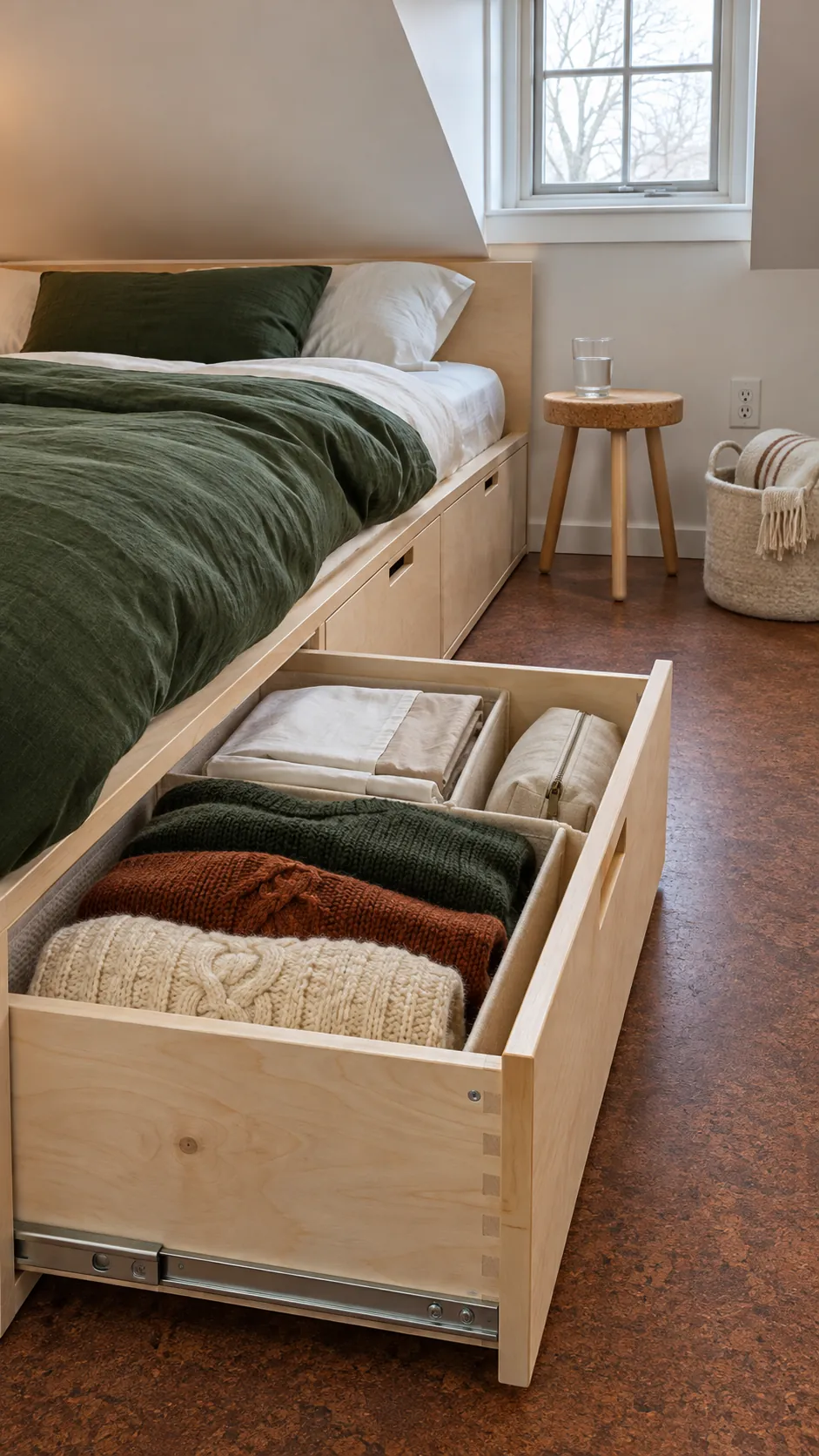
A storage bed can replace a bulky chest when the closet is small. Drawers are convenient only if they have room to extend, so a lift mechanism or fitted bins may suit a narrow aisle better. Store seasonal bedding, spare towels, and less frequently used clothes below, while keeping daily items at an easier height.
Check the internal dimensions instead of judging storage by the outer frame. Some upholstered beds look substantial but provide little usable volume. A simple raised frame with matching lidded boxes can offer more flexible storage for a renter and can move to a future home.
Use a compact bedside surface
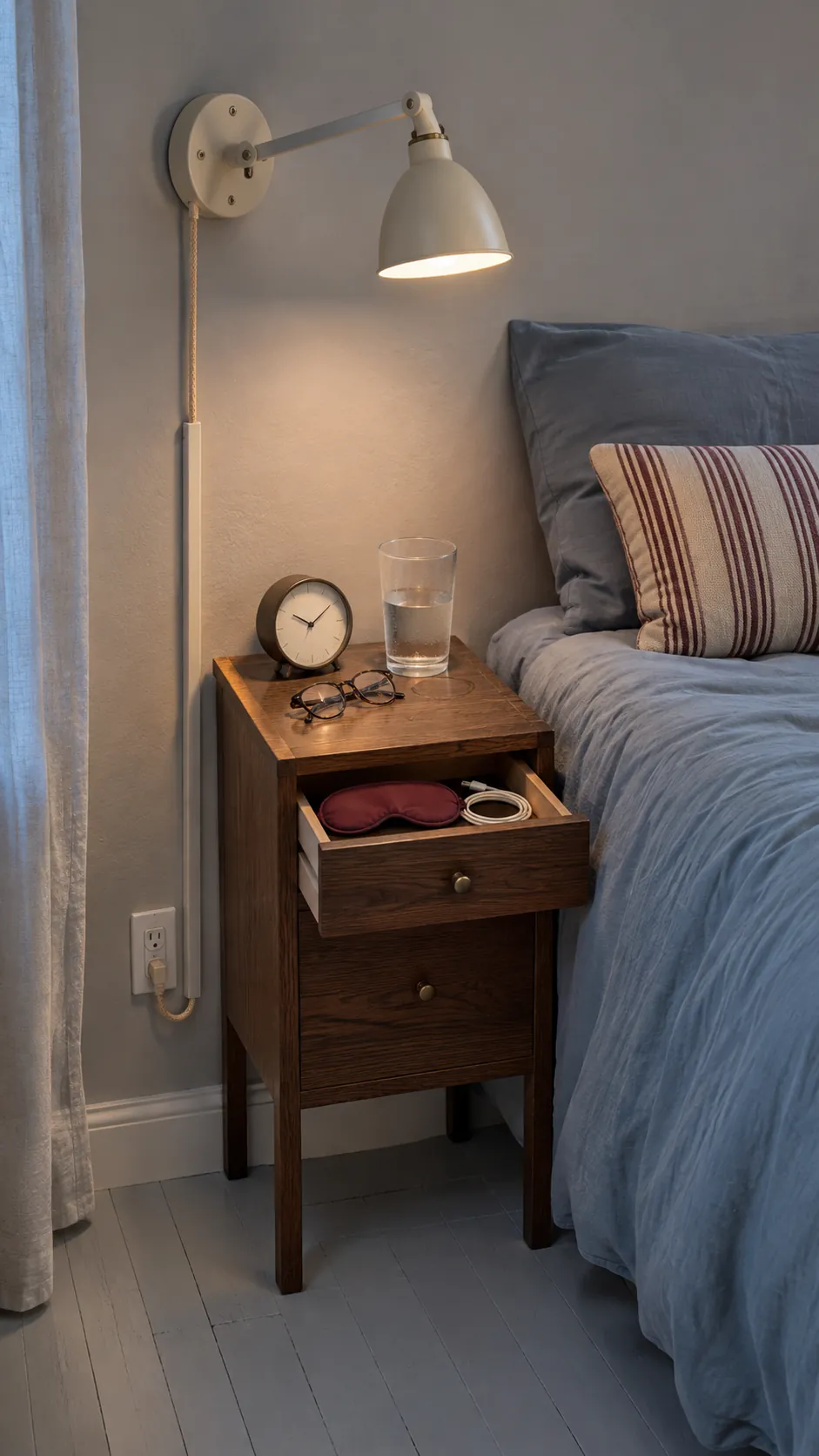
A bedside piece only needs to hold what the sleeper actually reaches for. A narrow table, wall shelf, or small three drawer chest can support a lamp, phone, water, and a few personal items without filling the aisle. Match its height closely to the mattress so objects remain easy to reach.
Wall mounted lighting frees even more surface area and reduces cord clutter. Renters can use a plug in sconce with a secure removable cable channel when the wall finish allows it. If two sides of the bed are accessible, the two bedside pieces can differ as long as both meet their user’s needs.
Consolidate clothes into one efficient zone
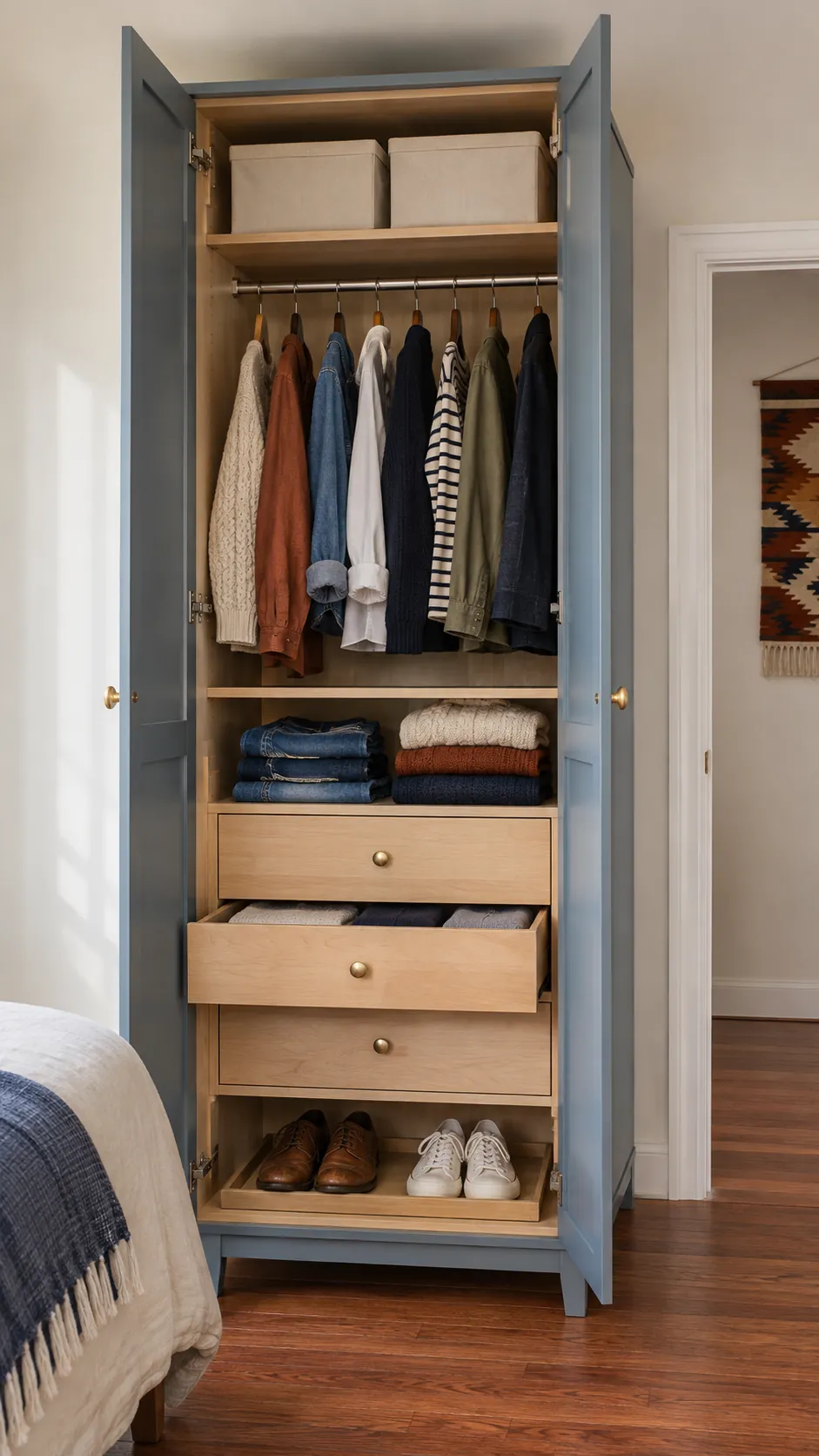
Before buying a small bedroom dresser, test the closet at full capacity. Add a second hanging rail, shelf dividers, or a slim drawer unit if those changes solve the real problem. Many rooms become easier to furnish when one improved wardrobe replaces a separate dresser and open rack.
If the room has no closet, choose a slim wardrobe with doors that open without blocking the main route. Interior drawers keep the exterior calm, and a full height design uses wall space that a low chest leaves empty. Keep the top shelf for occasional items and reserve the most accessible area for the current season.
Create a work surface that gives floor space back
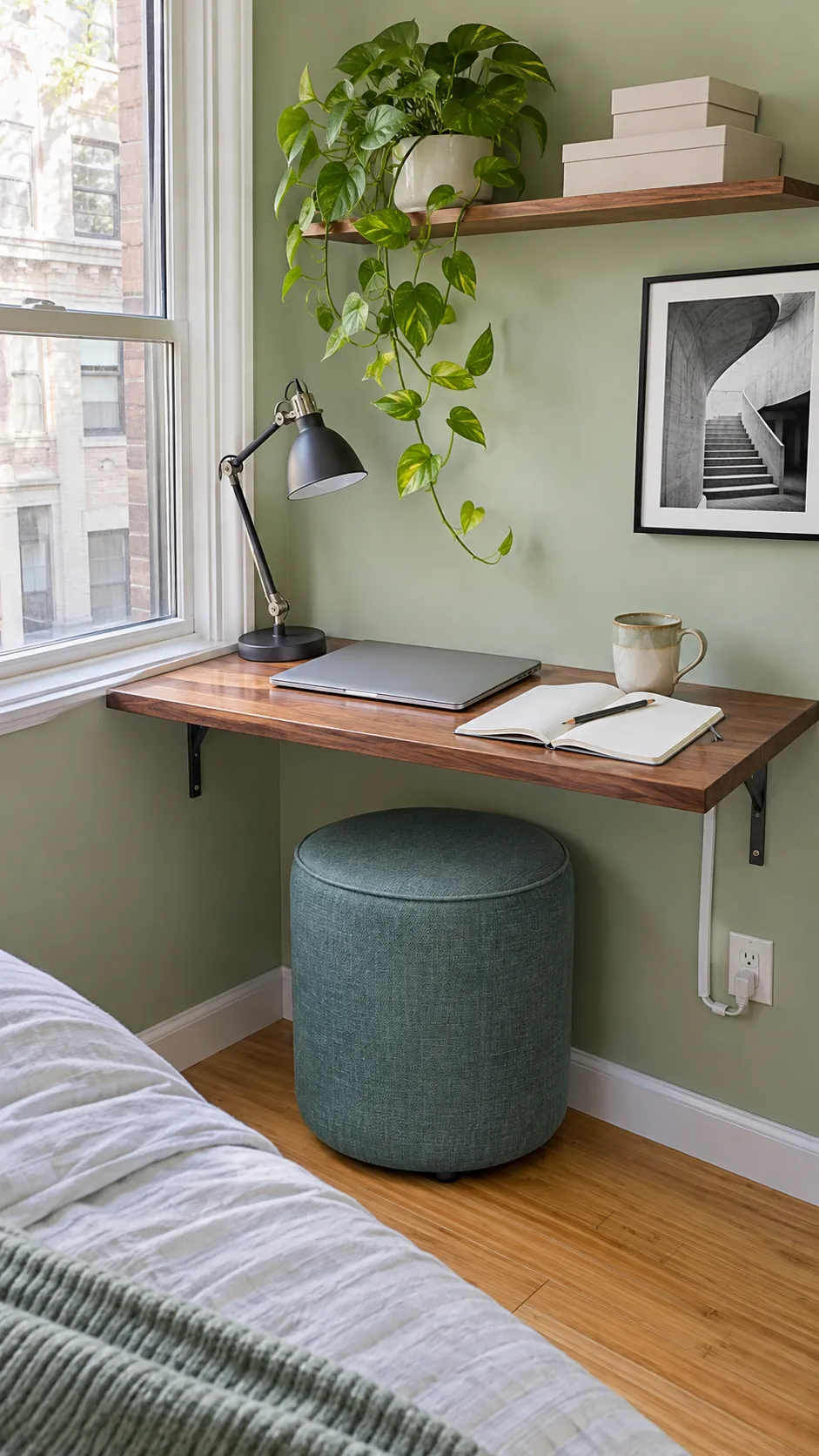
A floating desk bedroom setup works when the surface is sized for the real task rather than an imagined office. A laptop, notebook, and small lamp need far less depth than a desktop computer. Mount the surface at a comfortable height, keep knee space clear, and place it where daylight does not cause screen glare.
A fold down desk suits occasional work, while a shallow fixed shelf feels steadier for daily use. Route cables along the wall and give chargers one contained home. A stool that fits fully below the surface preserves the path when work is finished.
Add a chair only when it earns its footprint
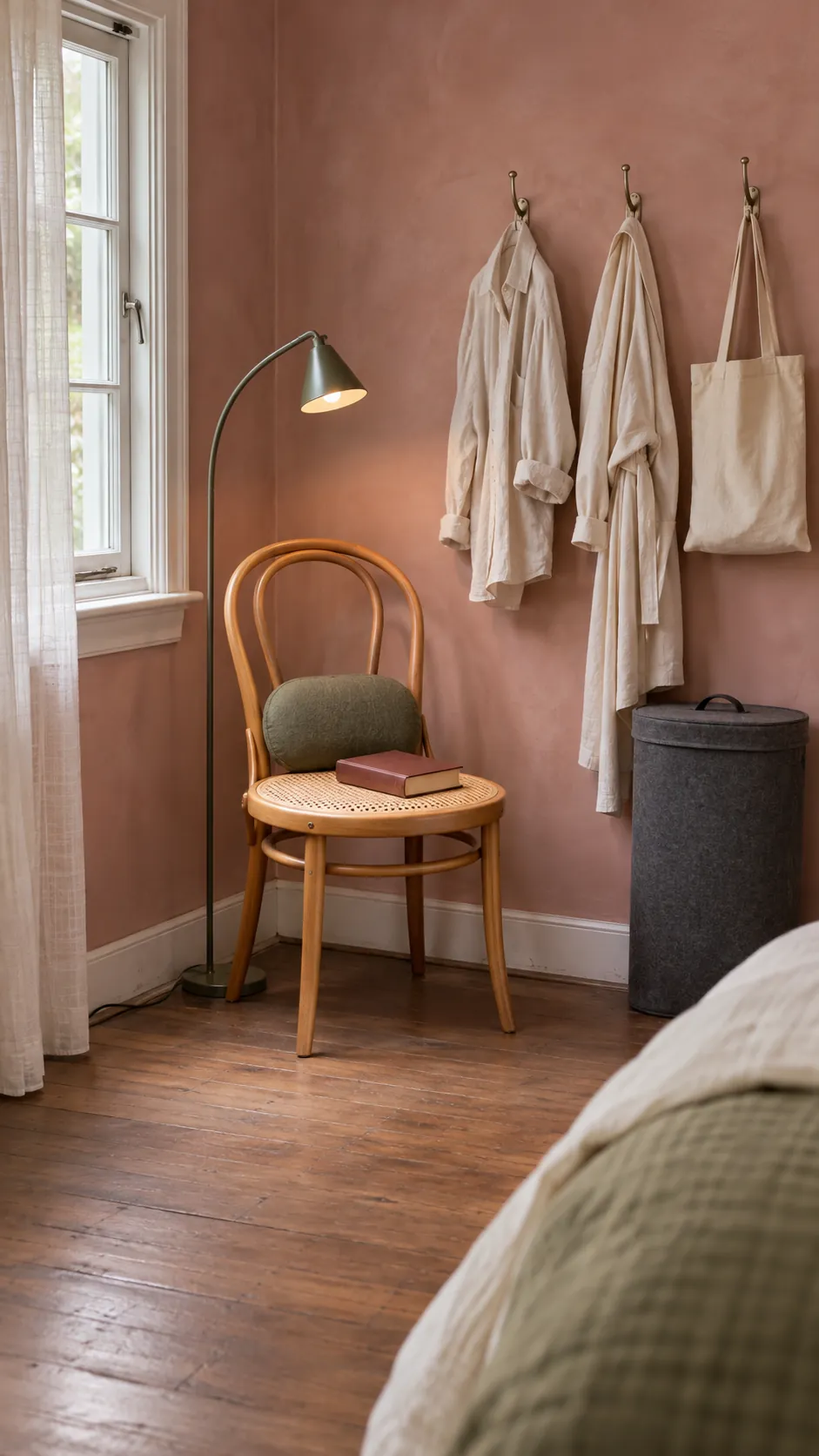
A small bedroom chair is useful when someone reads, dresses, or works there every day. Choose an armless chair with a compact seat, or let the desk stool serve two roles. If clothing repeatedly collects on the chair, a wall hook, valet rail, or lidded hamper may solve the actual need with less floor area.
Finish the room by checking each piece against one question: does it support sleep, dressing, storage, or a necessary daily activity? Remove any item that duplicates another function without improving comfort. The room will feel more generous when open floor and easy movement are treated as useful features, not empty spaces waiting to be filled.