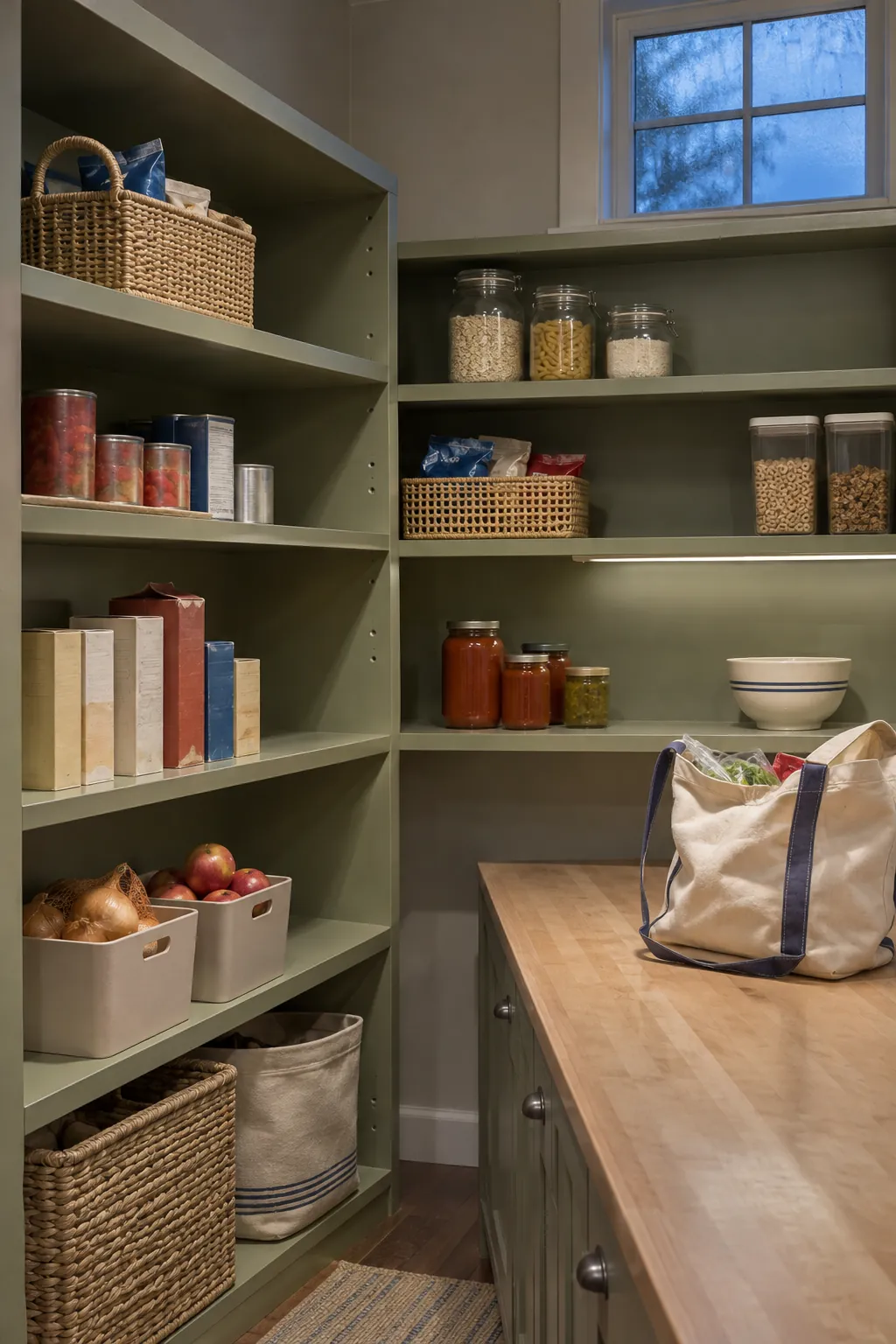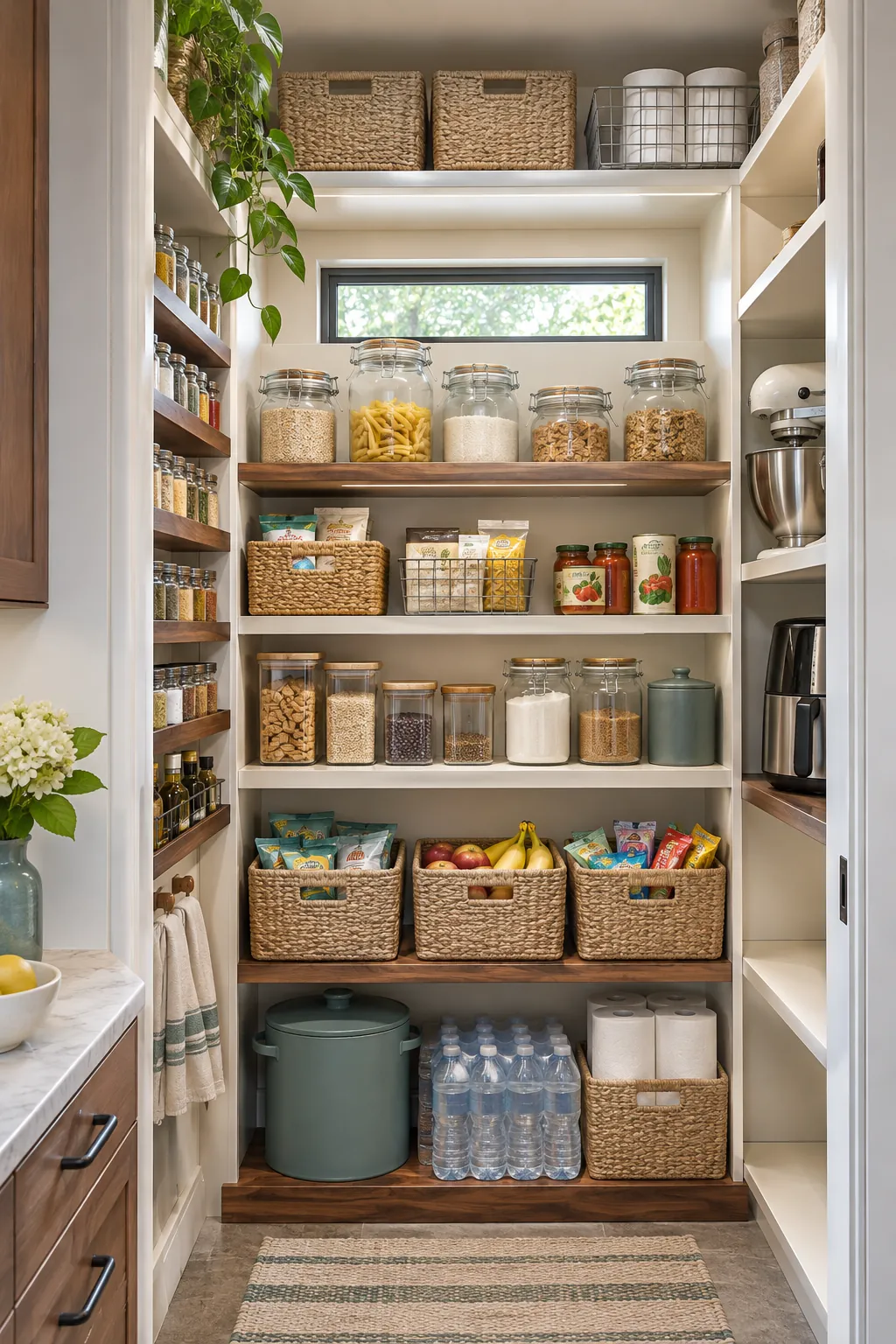
More shelves do not always create more usable storage. A deep cabinet can swallow groceries, while a narrow closet can waste space above the door and beside the frame. The useful question is not how much food fits. It is whether each item can be seen, reached, and returned without moving a pile.
Measure the Clear Space First
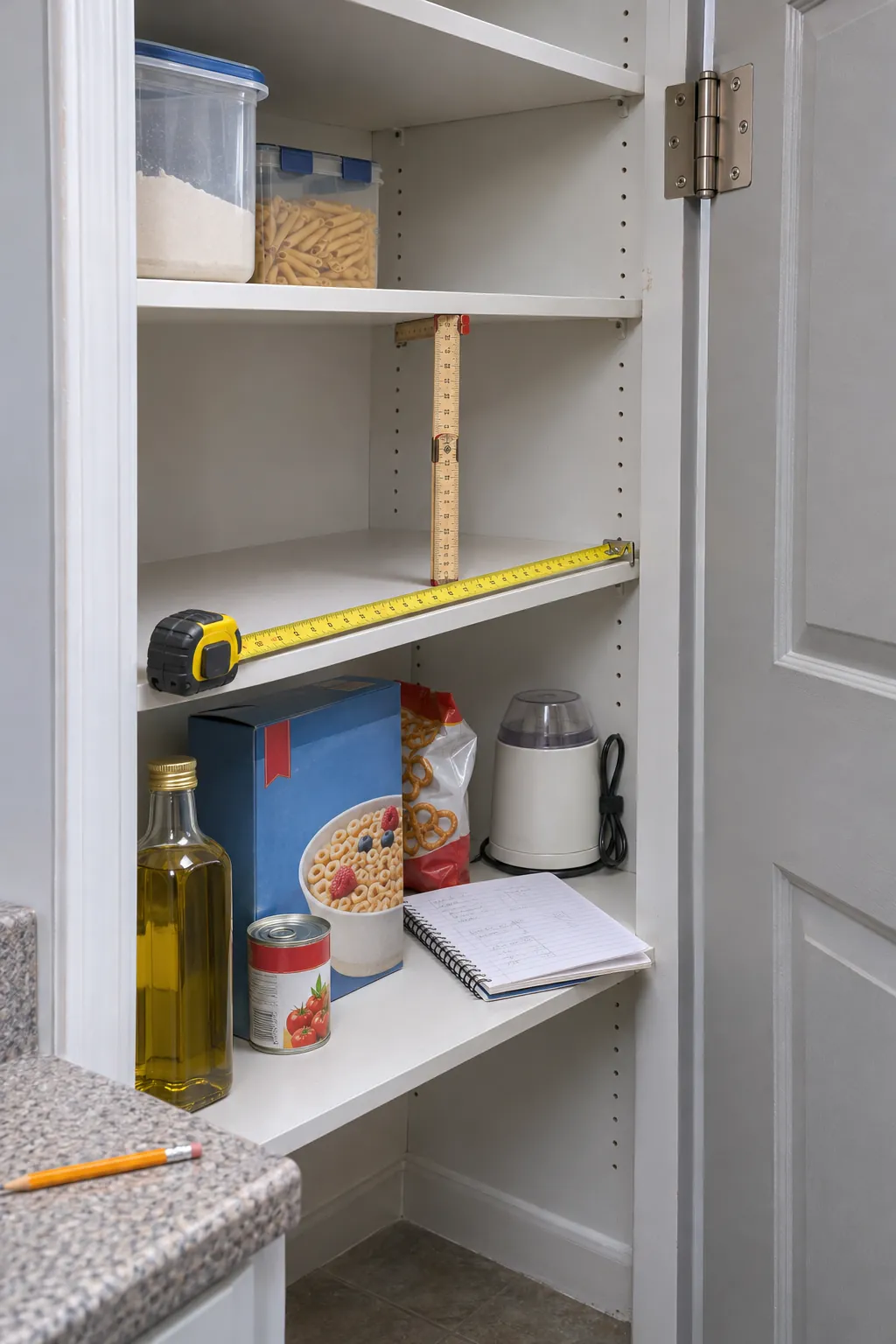
Measure width, depth, and the height between every shelf. Note hinges, door trim, pipes, outlets, and any shelf supports that reduce the clear opening. Then measure the packages you buy most often. This simple record prevents bins, risers, and turntables from becoming new obstacles.
Match Shelf Depth to the Food
Shallow shelves are ideal for cans, jars, spices, and packets because one glance reveals the supply. Deep shelves work better for bulky appliances, large refill bags, or one handled bin per category. Avoid placing three bins in front of three more bins. The rear row will become invisible and the front row will be annoying to move.
If fixed shelves are deep, use a turntable for bottles or a full depth tray that pulls forward. A riser can lift one rear row of cans into view. Choose the device according to the package, not according to a matching storage collection.
Contain Soft Bags Without Crushing Them
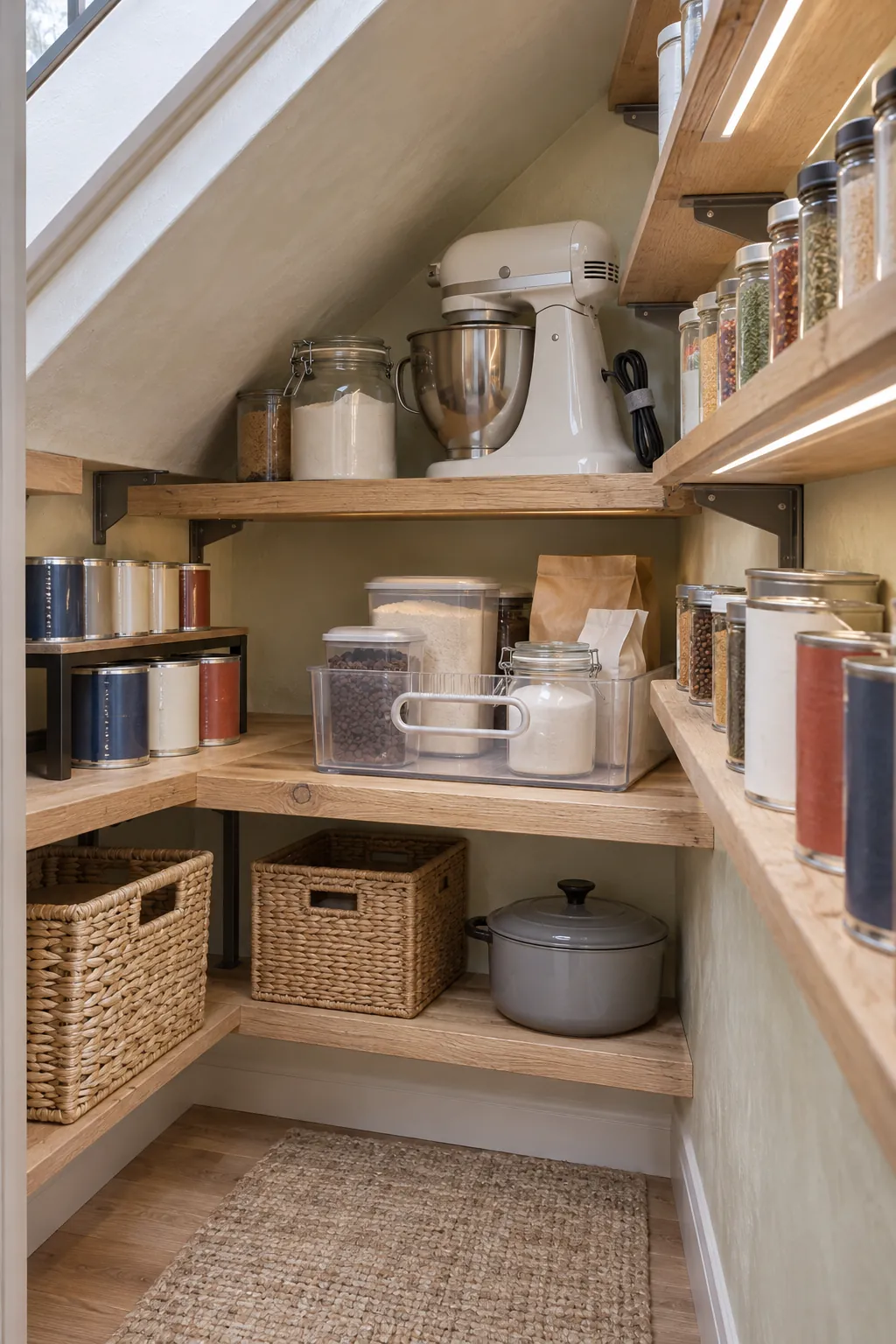
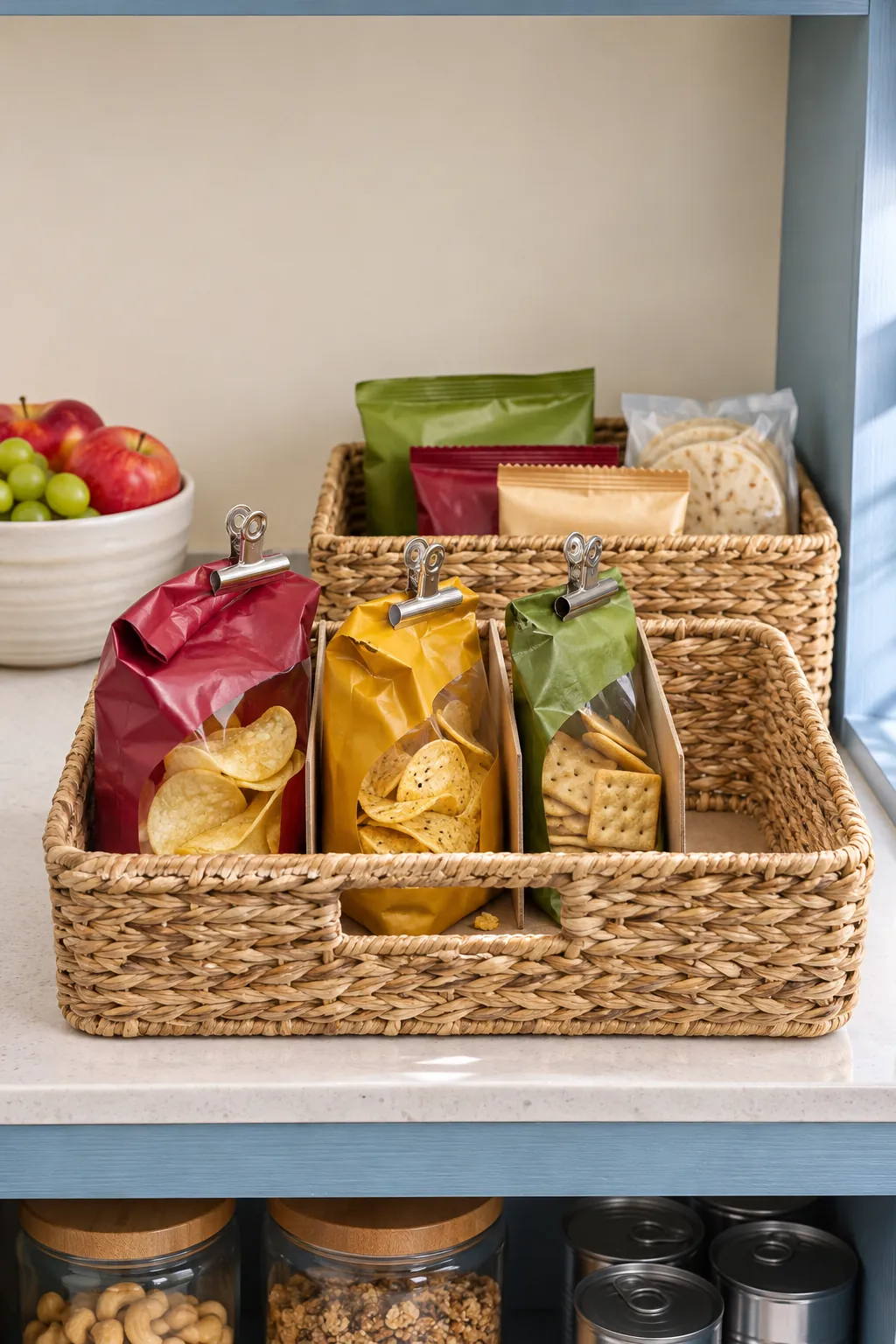
Chips, crackers, wraps, and snack packets change shape as they empty. Give them an open basket or a divided upright bin instead of stacking them under heavier food. Store open packages at the front and unopened extras behind. A clip keeps each bag closed, while the open top shows what remains.
Use the Door for Light Items
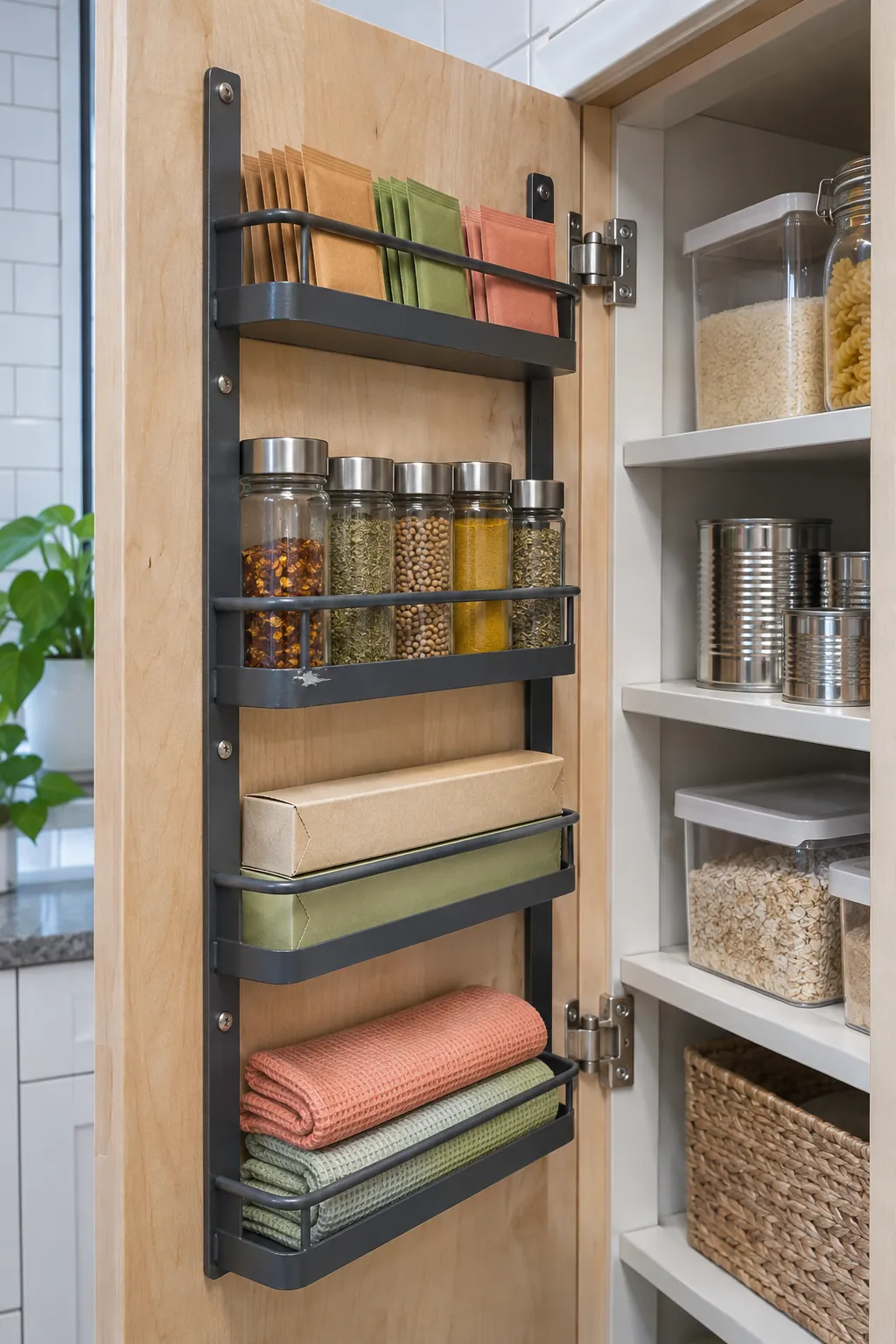
A solid pantry door can hold spices, small packets, wraps, or light cleaning cloths. Check hinge capacity and make sure the rack clears every shelf when the door closes. Keep glass bottles and heavy cans on fixed shelves. In a small pantry room, a shallow door rack can release an entire shelf for larger food.
Reserve Floor Space for Heavy Goods
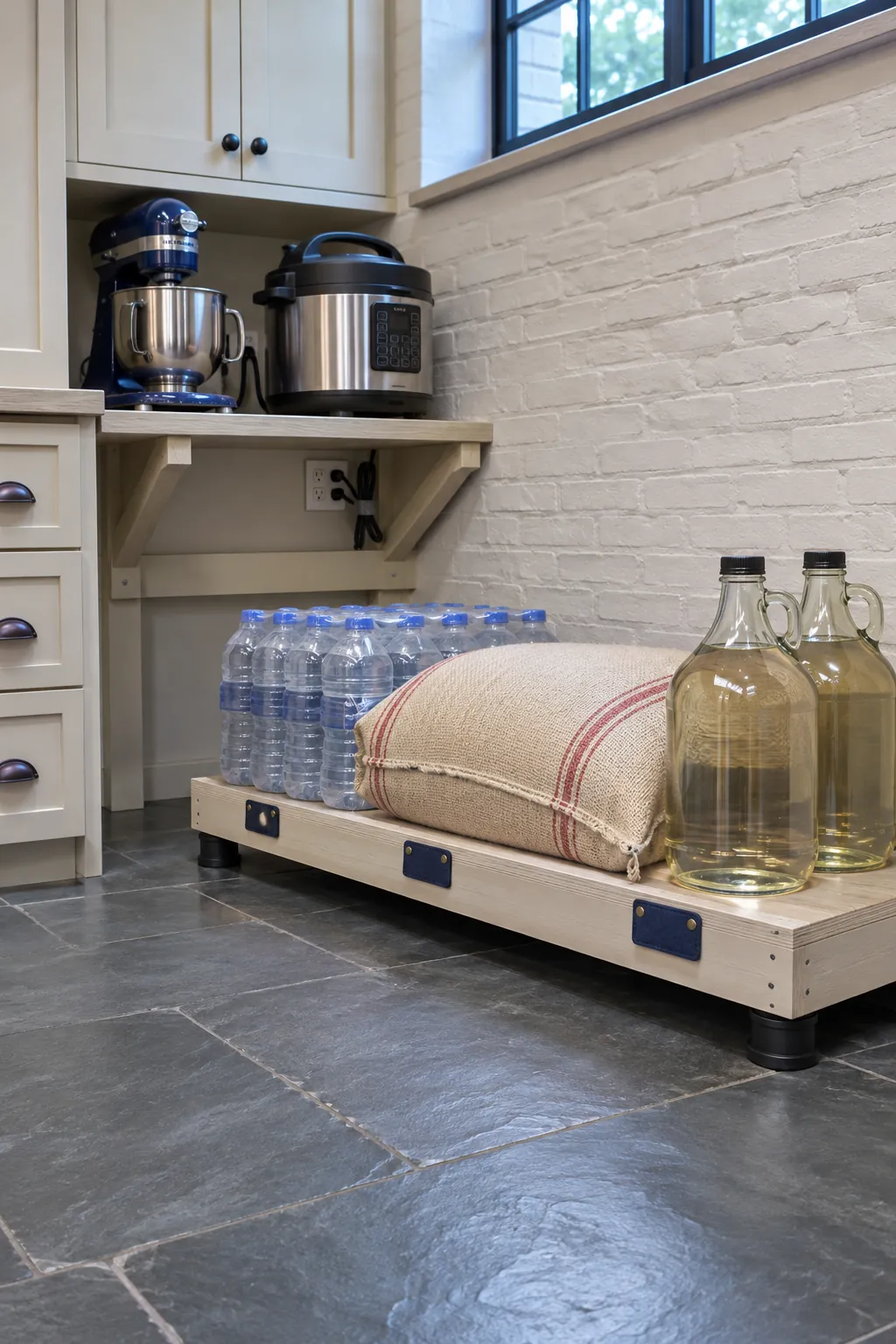
Water, bulk rice, vinegar jugs, and small appliances are safer below waist level. Place them on a low shelf, sturdy cart, or washable platform rather than directly on the floor. Leave room to clean around them. If an appliance is used several times each week, a butler pantry counter may serve it better than a deep lower shelf.
Keep Growth Space in Every Zone
Do not fill storage to its exact limit on the first day. Grocery quantities change, packages vary, and new staples appear. Keep a little open width in active zones and one defined place for backstock. Review the shelf before shopping, move older food forward, and adjust a zone when it repeatedly overflows. Good pantry design ideas make change easy instead of hiding it.