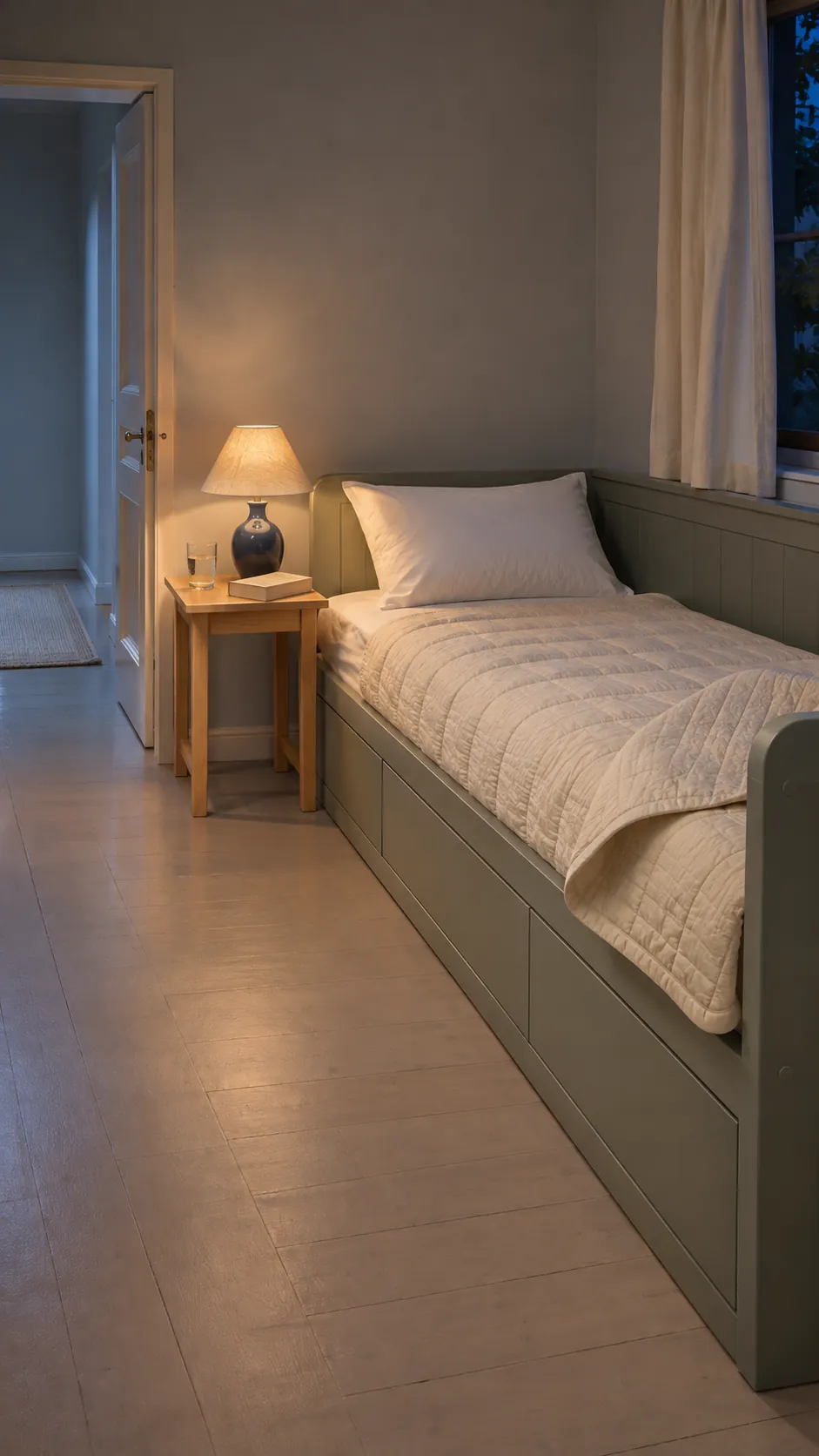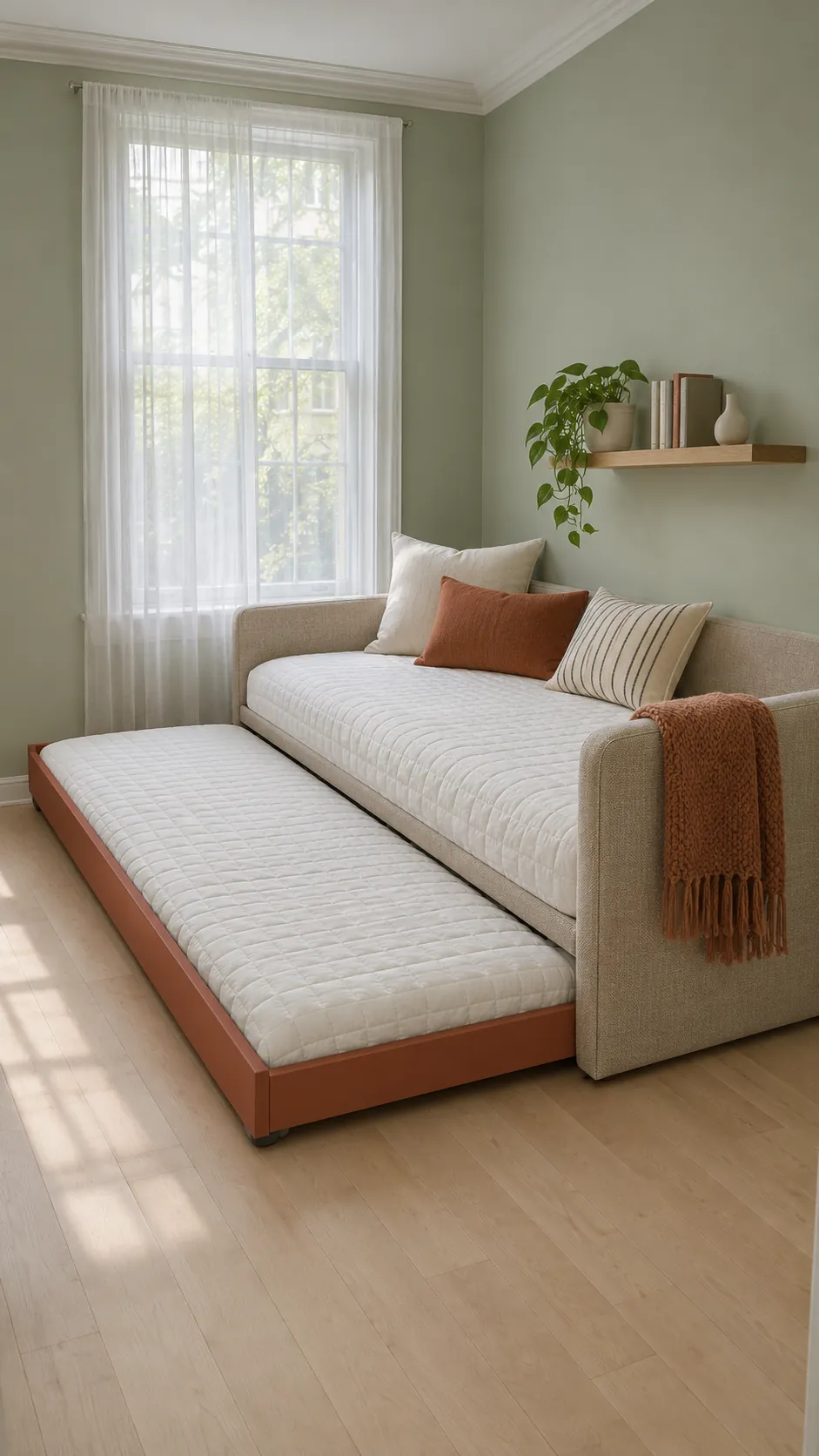
The coffee table is usually the first thing a guest bed displaces. Before you buy a daybed, decide where that table will go at bedtime and how often you are willing to move it. If your usual visitor needs just one bed, the top mattress already does that job. The space below can solve a different problem.
What the space under the daybed buys you
A daybed with a trundle gives you a second mattress that lives inside the footprint of the first while stored. A frame with storage drawers gives you a place for sheets, spare blankets and pillows without taking another shelf in the closet. For a household that hosts one visitor at a time and struggles to put away linens every week, the drawers earn their space more often.
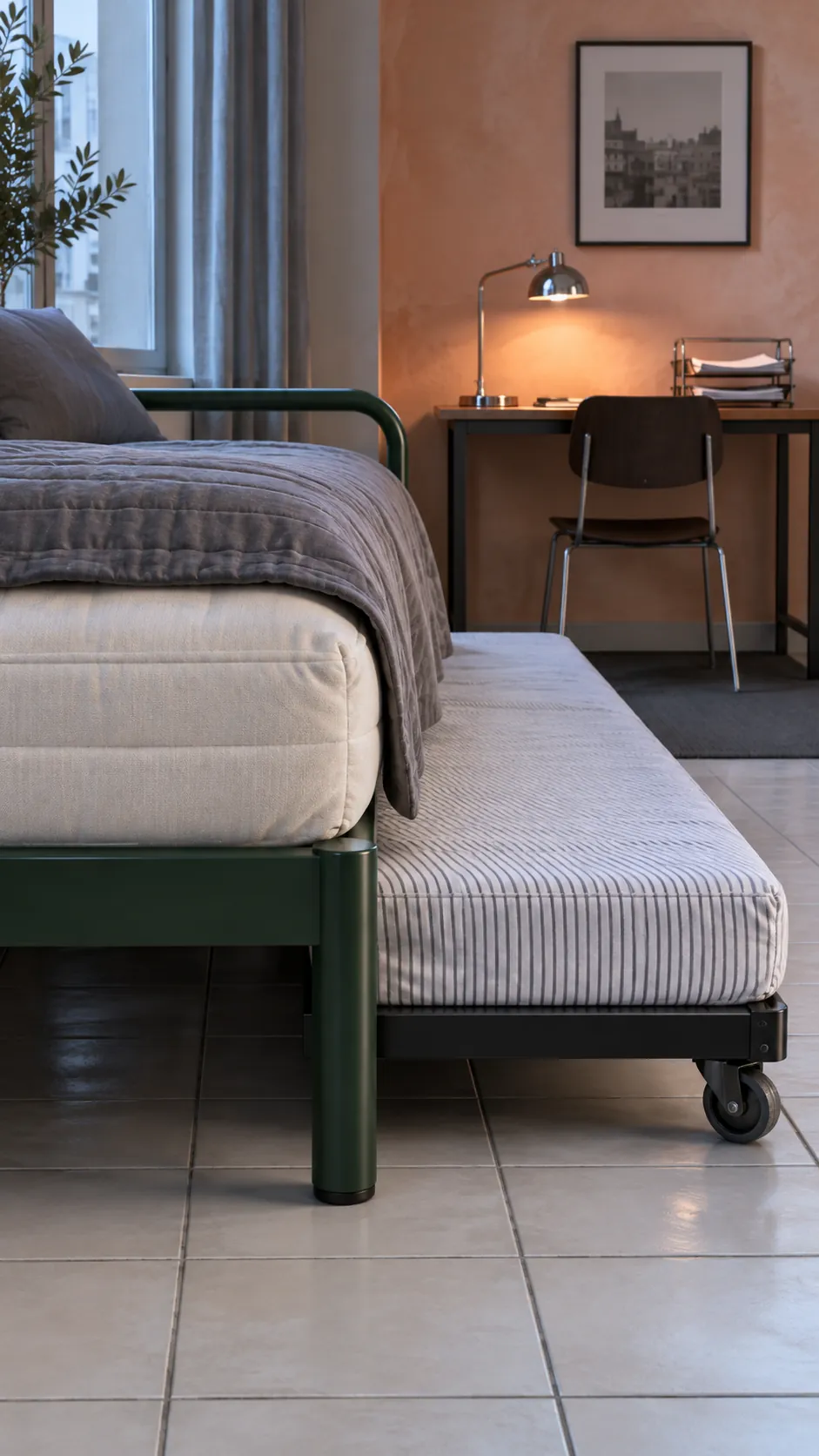
Furniture listings use the word trundle for different designs. A low pullout guest bed holds its own mattress close to the floor. A pop up trundle can raise the second mattress, while some extending frames use the two mattresses to create a wider surface and may also have drawers. Check the assembly drawings so you know which parts move and where both mattresses go.
Mark the open footprint before buying
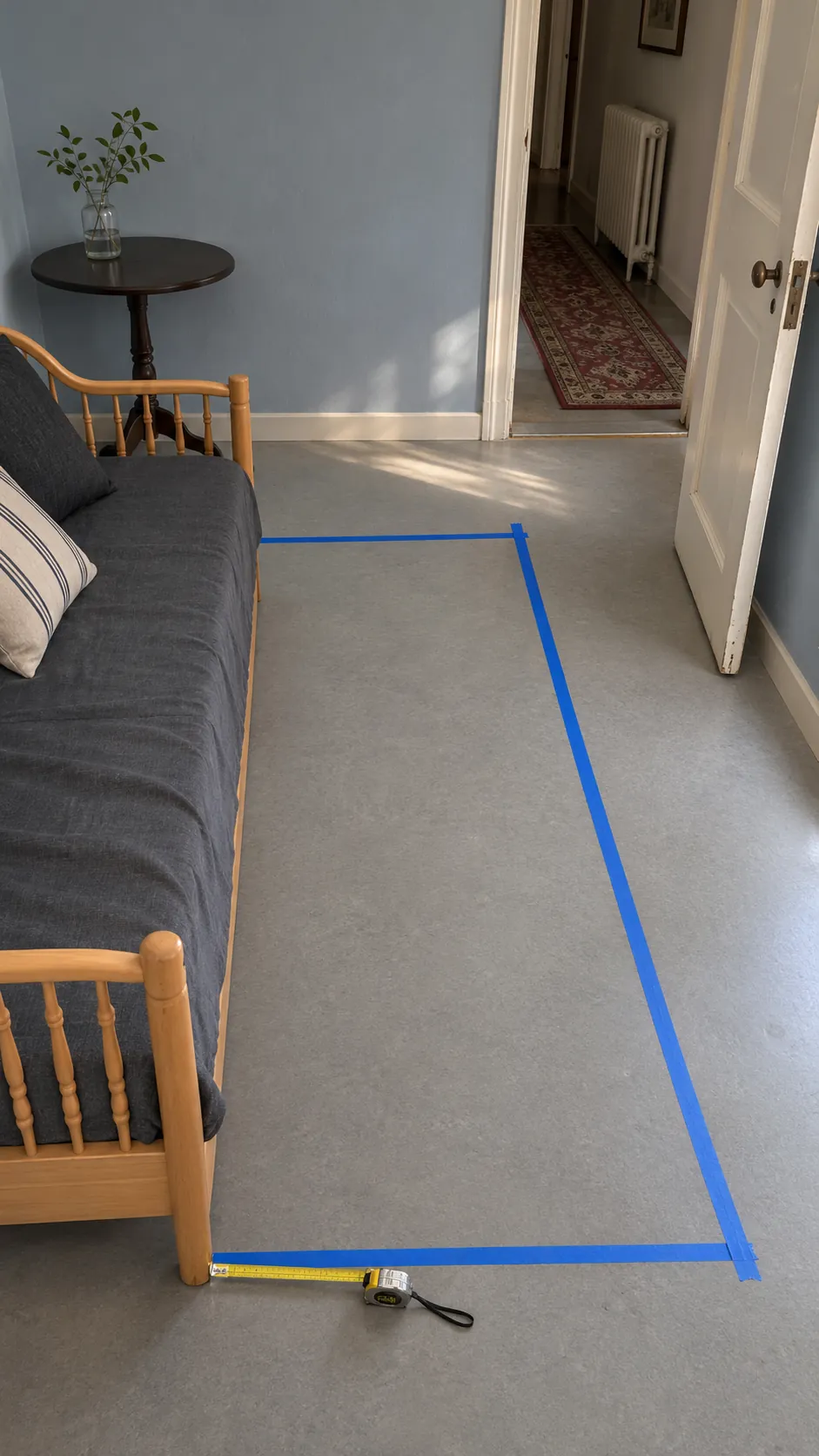
Take the closed and fully open dimensions from the drawing for the exact model. Mark the frame and the outer edge of its fully extended base with painter’s tape, including any handles that project. Check the swing of the room door and closet door and walk from the guest’s pillow side to the hall. A frame that fits the room on paper can leave a guest with no clear way to get up at night.
Do a separate movement test for the rug and coffee table. Chunky rugs can catch small trundle wheels, and moving the table to a hallway can trade one obstruction for another. If the only spare space is a tight strip beside the bed, measure drawer travel as well. You need enough room to stand and pull linens out when each drawer is open.
Set up the lower mattress for the person using it
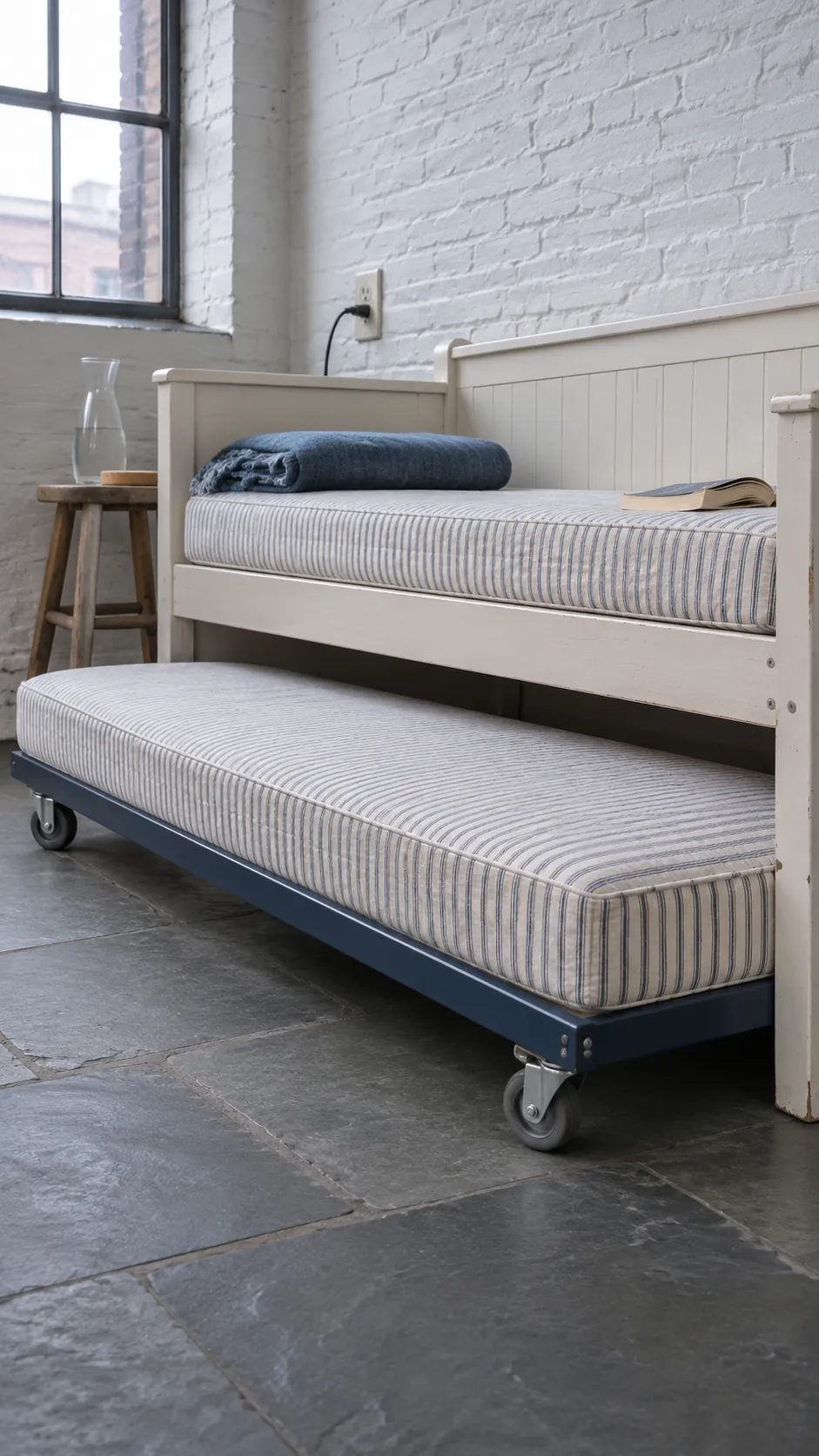
Check the trundle’s own weight limit and mattress thickness limit. The space under a frame can take a thinner mattress than you would buy for the top, and the lower and upper bases can have different ratings. Measure how high the surface will sit with the allowed mattress on it. A guest with sore knees may find the upper mattress easier to rise from.
If two people expect to share a level bed, check whether the trundle is designed for that arrangement. Matching heights still leave a seam between mattresses, and a reading of the user manual can save you from ordering two that sit at different levels. A low trundle can work well for a guest who is comfortable sleeping close to the floor and wants their own mattress.
Check what the drawers actually hold
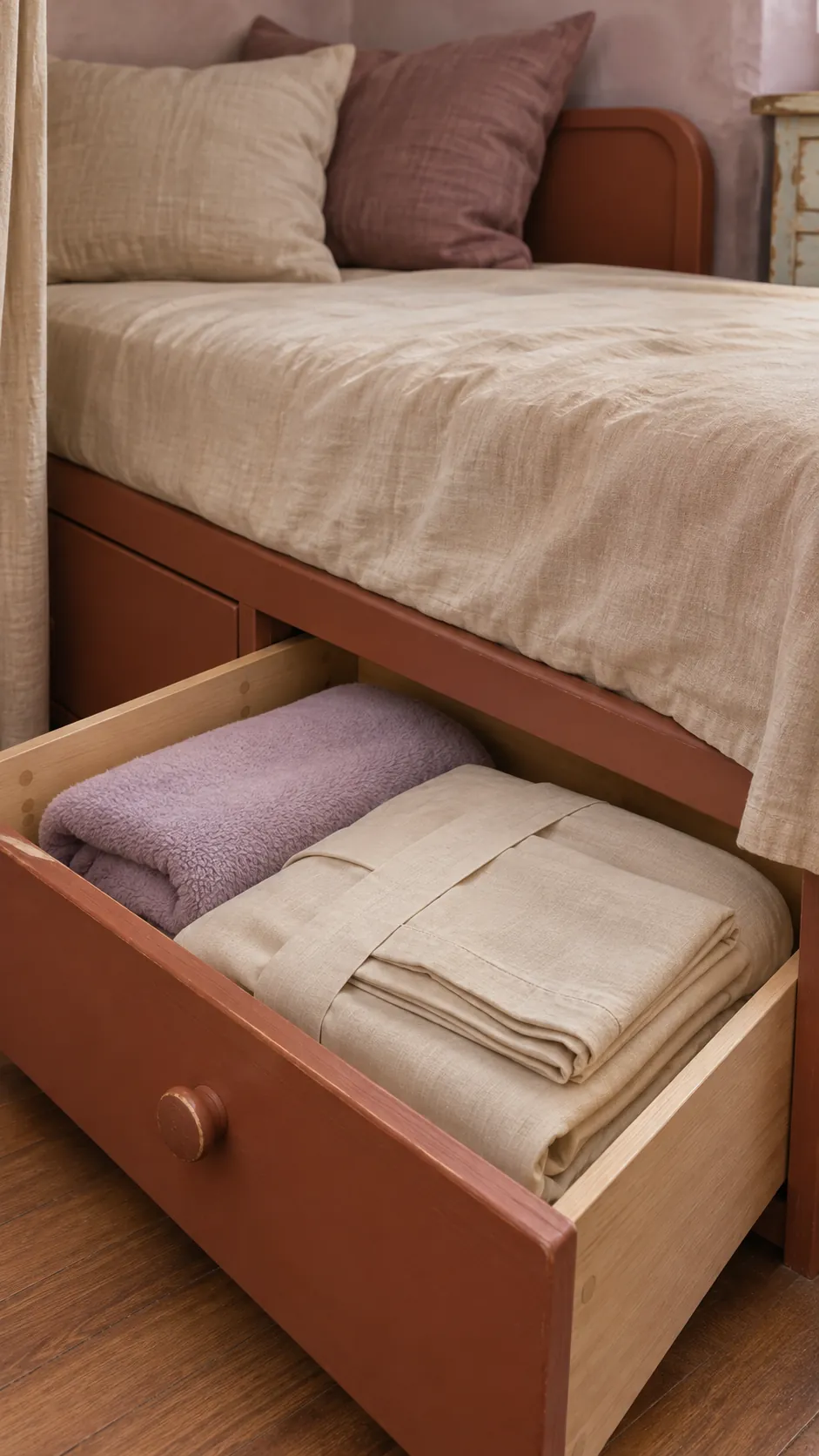
Measure a folded guest duvet and compare it to the usable inside width, length and depth of a drawer. The face of a drawer can look deep even when its sides are shallow and the rail above it cuts into the opening. Fold a sheet set around its matching pillowcases so a visitor can pull out one bundle. Keep bulky pillows in the closet if they need to be squeezed down just to close the drawer.
Try the daybed as a seat as well
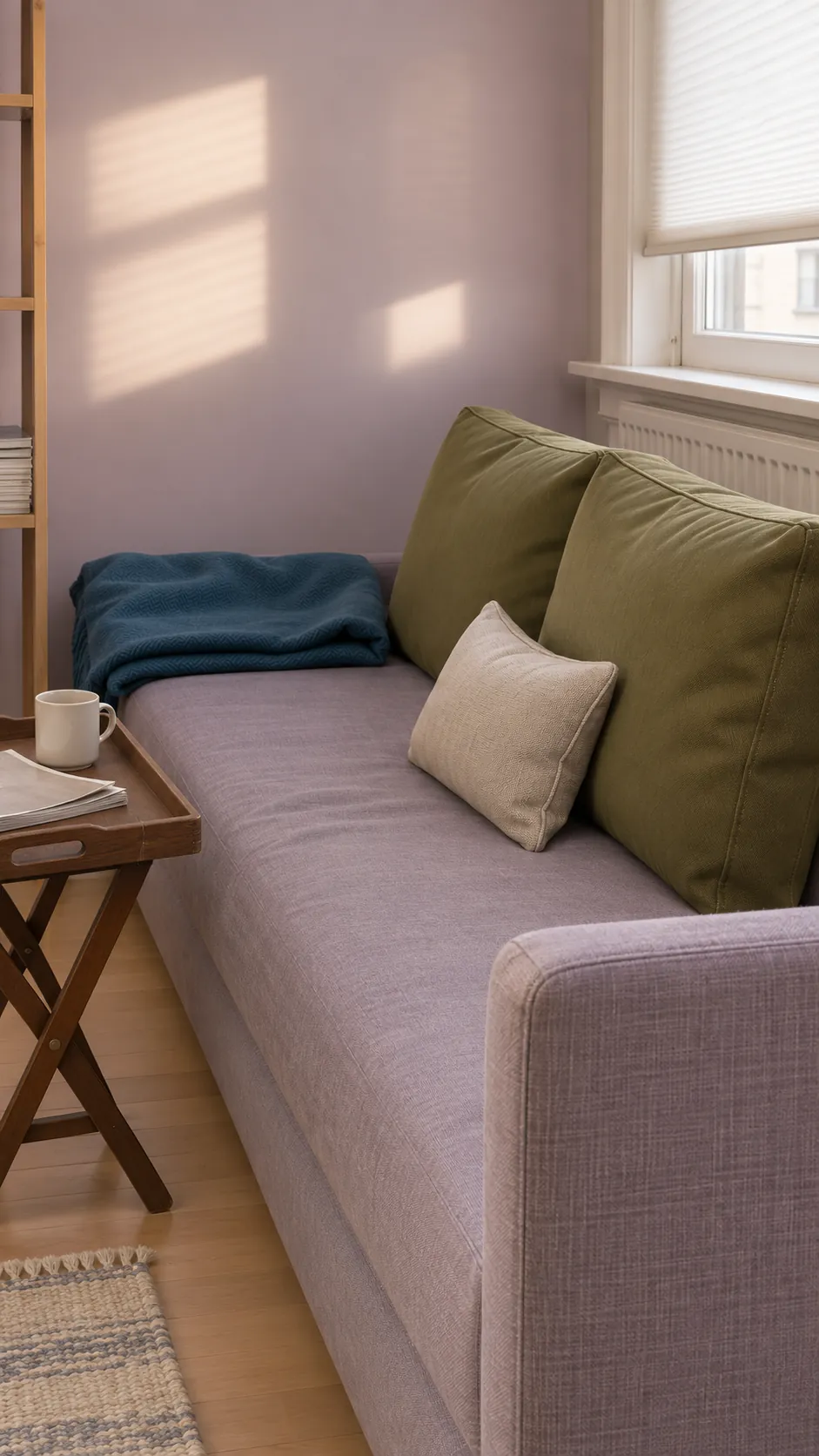
If the room also serves as a living room, the top mattress and frame set the seat height. Sit back against the cushions with your feet on the floor if you can try the model in person. On a deep daybed, firm back cushions can bring the usable seat forward. Plan where those cushions will go when a guest sleeps so they leave the walkway clear.
Check the instructions for how the top mattress rests on the base. Keep the main sleep surface flat and accessible during the nightly changeover. A place for a water glass or glasses within arm’s reach may do more for your guest than any extra pillows on the bed.
Buy for the nights you actually host
Look at the last few visits. If two people often need separate places to sleep, the room has a clear route with the trundle extended, and both mattresses suit those guests, use the space under the daybed for the second mattress. Choose drawers when a single sleeping surface covers your typical visit and putting away bedding is the problem you face between visits.
If you rarely need a second bed, compare the setup you would use on that one occasion with the space you give up every day. For example, a drawer daybed and a folding guest mattress make sense only if there is a real spot to store the folded mattress. Decide where that item or the spare linens will go before ordering. The right choice should give every piece a place even with guests in the room.