
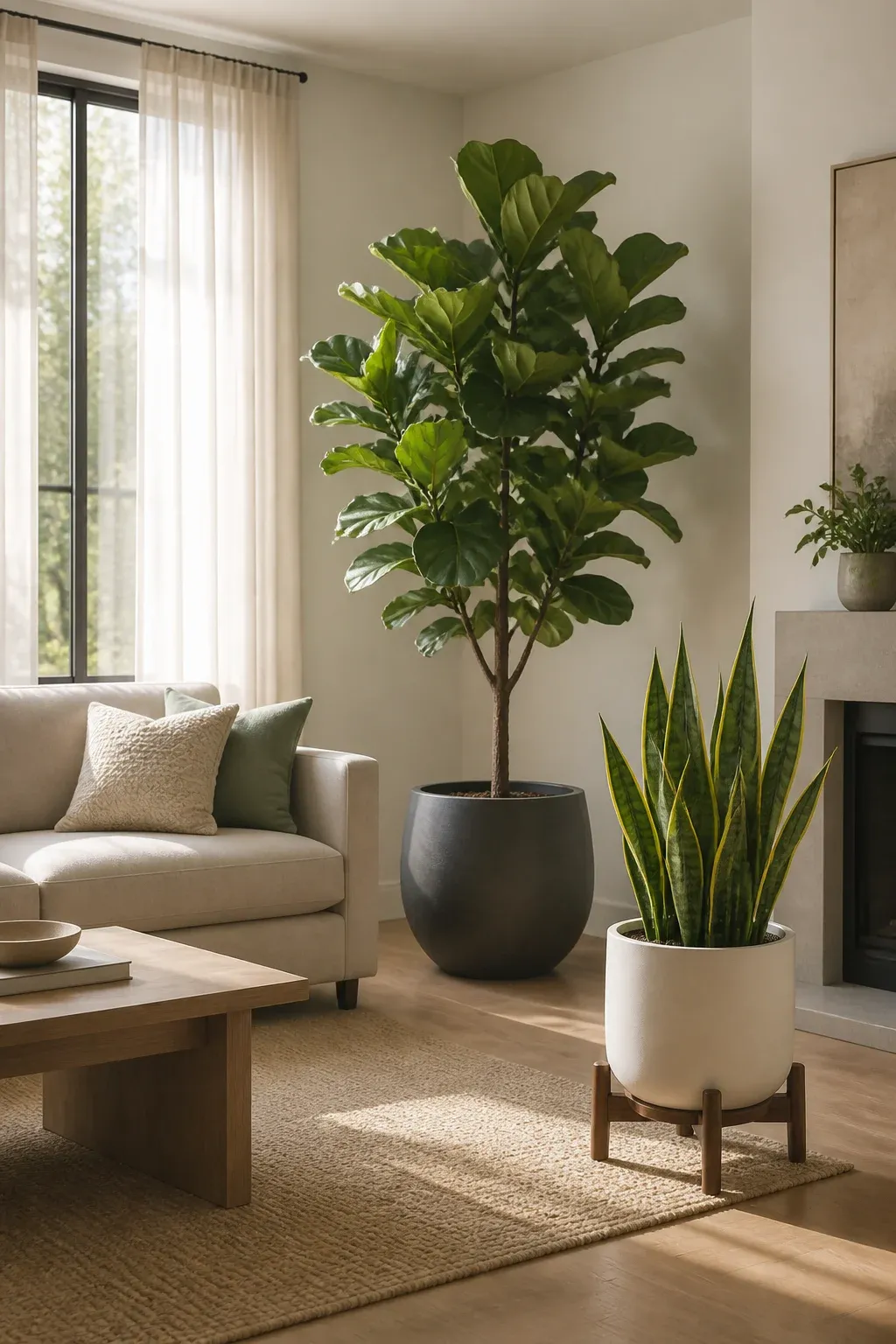
Keeping a house full of lush, living plants is a dream for many, but the reality of busy schedules and low-light corners often gets in the way. You don't have to choose between a plastic-looking home or a graveyard of wilted leaves. By mixing high-quality artificial greenery with hardy live plants, you can create a vibrant indoor garden that looks full and healthy year-round.
This approach allows you to place greenery in spots where nothing could possibly grow, while keeping the authentic feel of nature near your favorite seating areas. We will look at how to select the right materials, how to trick the eye with natural soil, and where to place each type of plant for the most believable result.
Choosing Artificial Plants with Realistic Features
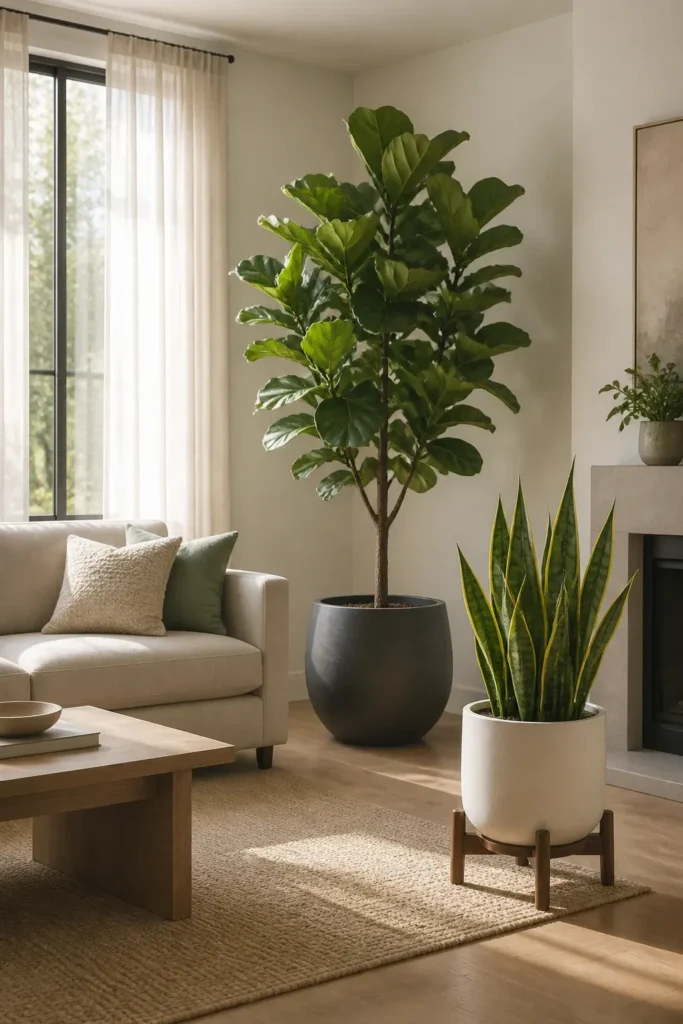
Not all faux plants are created equal. To make them blend in, look for details that mimic nature's imperfections. Real plants aren't a solid, flat green; they have color variations, tiny spots, and stems that change shade as they grow. When shopping, avoid plants with a shiny, plastic sheen. Instead, look for 'real-touch' materials or silk plants with wire-reinforced stems that you can bend into slightly irregular shapes.
Check the undersides of the leaves and the way the branches connect to the main trunk. If the joints look like molded plastic, they will stand out as fake. Choose species that naturally have a waxy or stiff look in real life, such as snake plants, fiddle leaf figs, or succulents. These are much harder to distinguish from their living counterparts than delicate ferns or thin-leaved flowers.
Placing Real Plants in High-Visibility Areas
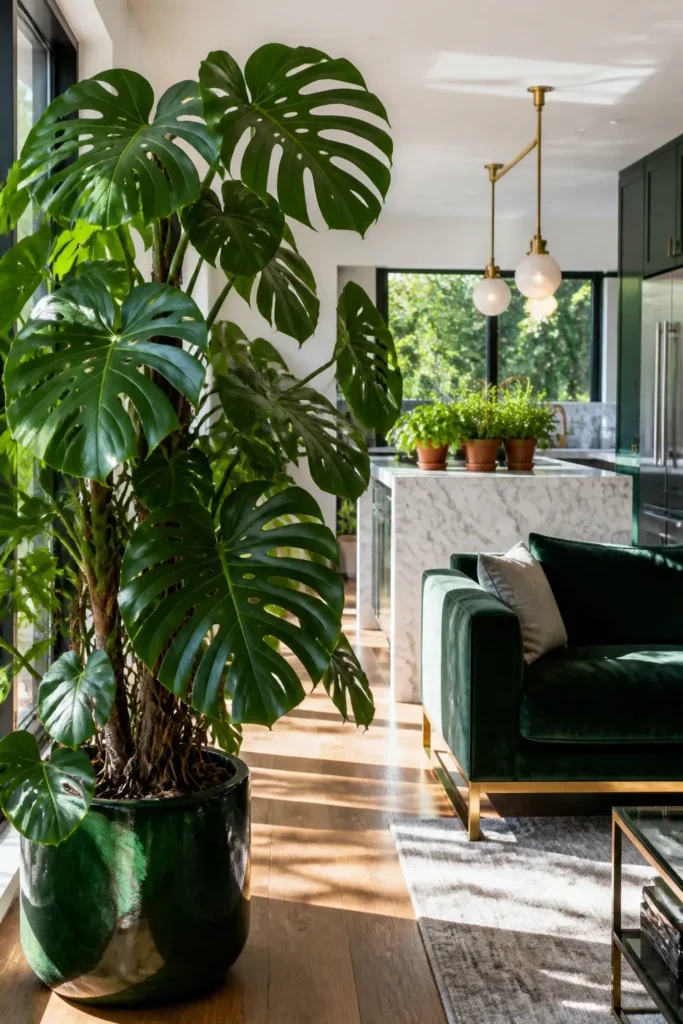
The best way to convince guests that all your plants are real is to put the living ones where people see them most. Place a healthy, vibrant live plant on a coffee table, a kitchen island, or an entryway console. When someone smells the damp earth or sees a new leaf unfurling right in front of them, they subconsciously assume the rest of the greenery in the room is just as authentic.
Use your live plants as the 'stars' of the room. A large, thriving monstera in the corner of the living room draws the eye and sets a standard for the space. Once you have established that real plants live here, the faux ivy on top of a high bookshelf or the silk palm in a dark corner becomes much more believable.
Using Natural Soil and Toppings in Faux Pots
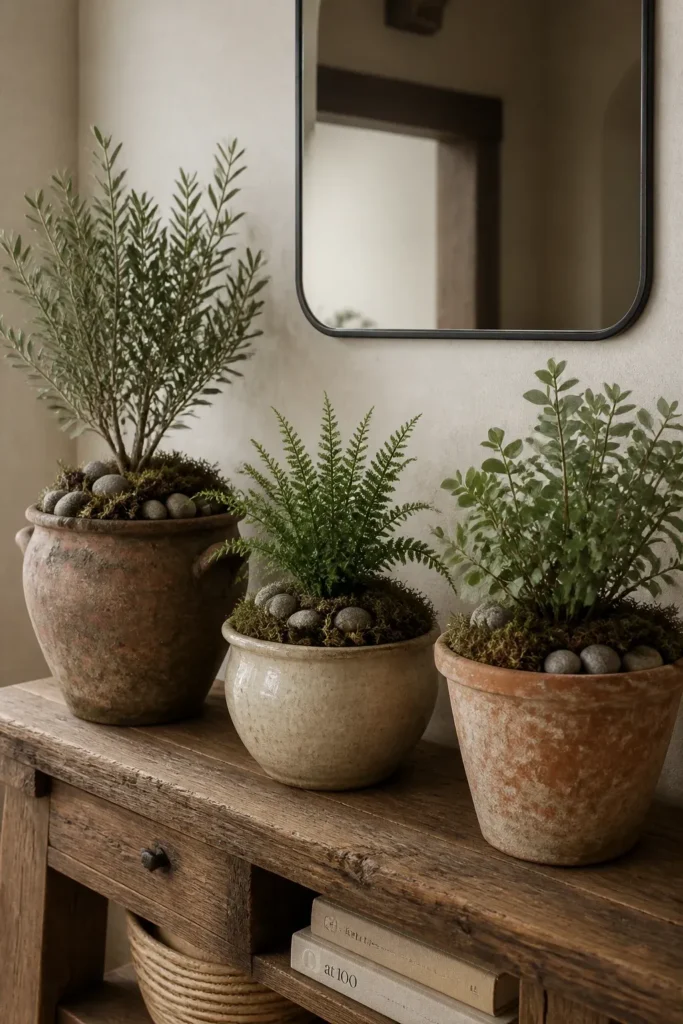
One of the quickest ways to spot a fake plant is the empty plastic pot or the glued-on moss it comes with. To fix this, move your artificial plants into heavy ceramic or terracotta pots that match your home's style. Fill the base with actual dirt or sand to give the pot some weight, which prevents it from tipping over and feeling flimsy.
Cover the top of the 'soil' with natural materials like dried moss, river stones, or wood chips. If you use the same topping for both your live and fake plants, it creates a visual bridge between them. This small detail removes the dead giveaway of a bare plastic base and makes the artificial plant look like it is rooted in the earth.
Grouping Living and Silk Plants Together
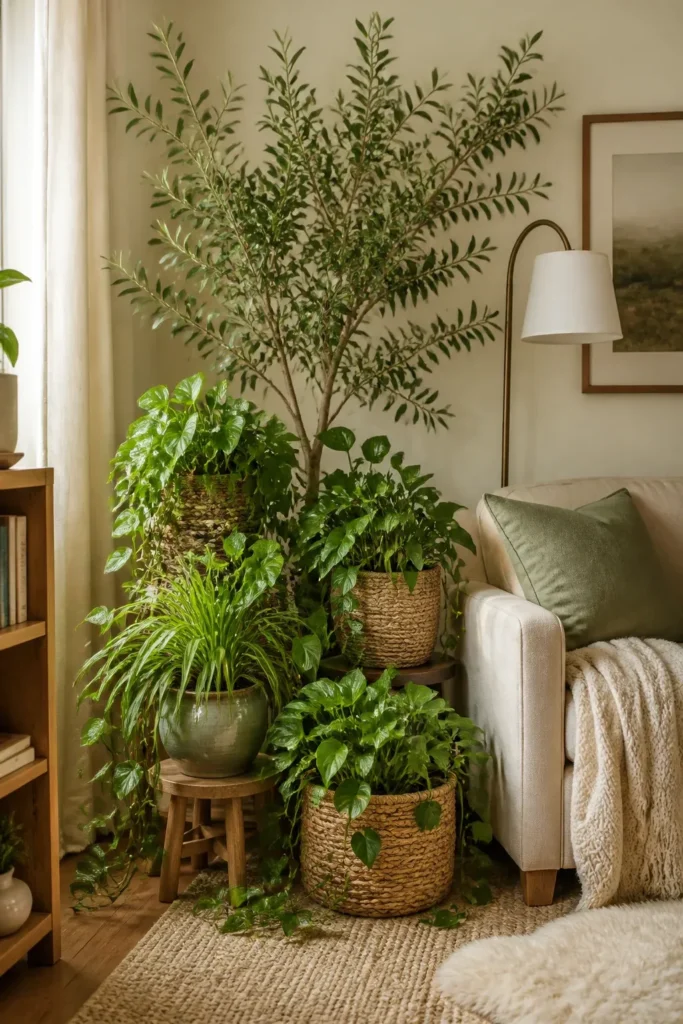
Instead of keeping your fake plants in one corner and live ones in another, mix them into the same clusters. Creating a 'plant gang' helps camouflage the artificial pieces. Put a large faux tree in the back to provide height and volume, then place smaller live plants like pothos or spider plants in front of it.
The movement of the live leaves and the natural variation in their growth will distract from the static nature of the artificial plant. Because the eye sees the real texture of the living plants first, it fills in the blanks for the rest of the group. This technique is especially helpful for filling out large empty spaces without doubling your watering chores.
Positioning Faux Greenery Where Real Sunlight Hits
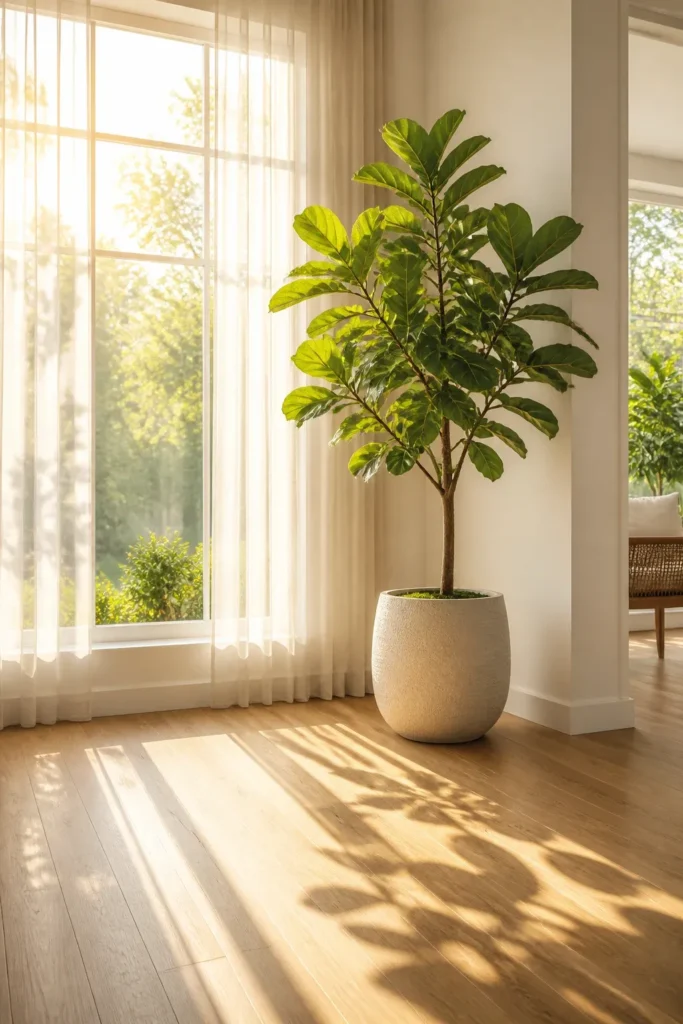
It might seem counterintuitive to put a fake plant in a sunny window, but it is a very effective trick. We expect plants to be near light sources. If you put an artificial plant in a pitch-black hallway, it looks suspicious because nothing could survive there. By placing a high-quality faux plant in a spot that gets some natural light, you reinforce the idea that it is a living organism.
Just be careful with direct, harsh sunlight over long periods, as this can fade the fabric or plastic of artificial plants. Aim for spots with filtered light or place them near windows where a real plant of that species would typically thrive. This logical placement makes the greenery feel like a functional part of the room rather than just a piece of decor.
Cleaning and Maintenance for a Consistent Look
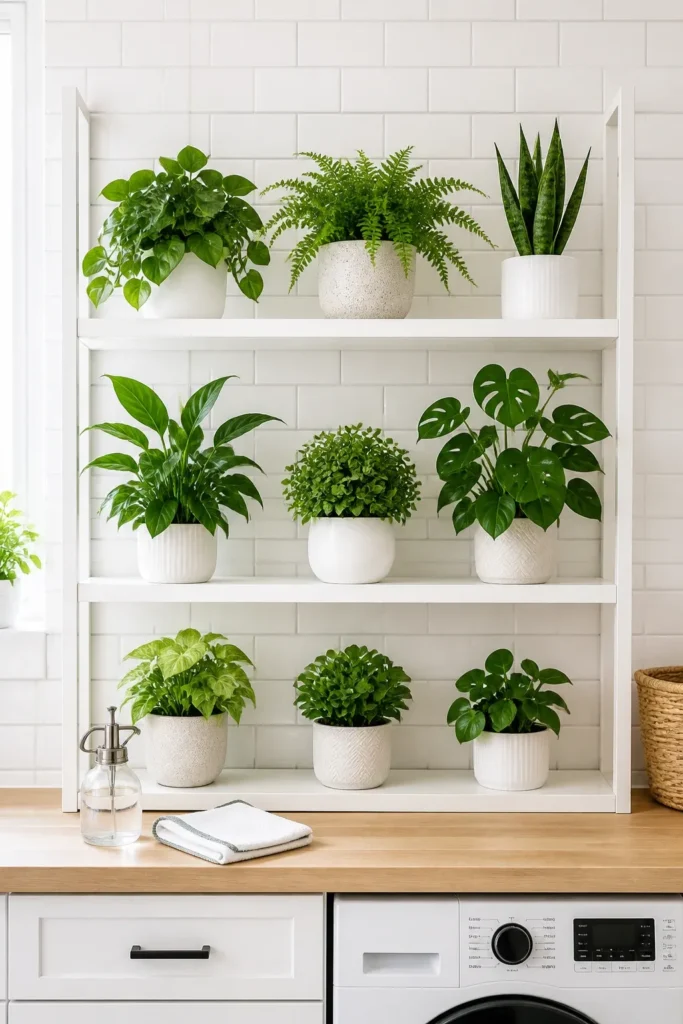
Dust is the enemy of a realistic look. Real plants get dusty too, but they usually get wiped down or rinsed. When dust builds up on silk leaves, it turns gray and looks dull, which is a clear sign of an artificial object. Make it a habit to wipe down your faux leaves with a damp cloth or use a soft duster once every few weeks.
For live plants, keep them pruned and remove any yellowing leaves immediately. If your live plants look sickly while your fake ones look pristine, the contrast will be too sharp. Keeping both types clean and well-maintained ensures they share the same healthy glow. If a faux plant starts to fray or the color begins to look 'off' compared to your living plants, it is time to rotate it out or replace it.
Blending live and artificial plants is a smart way to enjoy a green home without the stress of keeping every single leaf alive. By focusing on quality materials, smart placement, and natural finishes like real soil, you can create a seamless look that brings life to every corner. Start by adding one or two high-quality faux pieces to your current collection and see how they change the feel of your space. With a little bit of dusting and the right pots, no one will know the difference.