
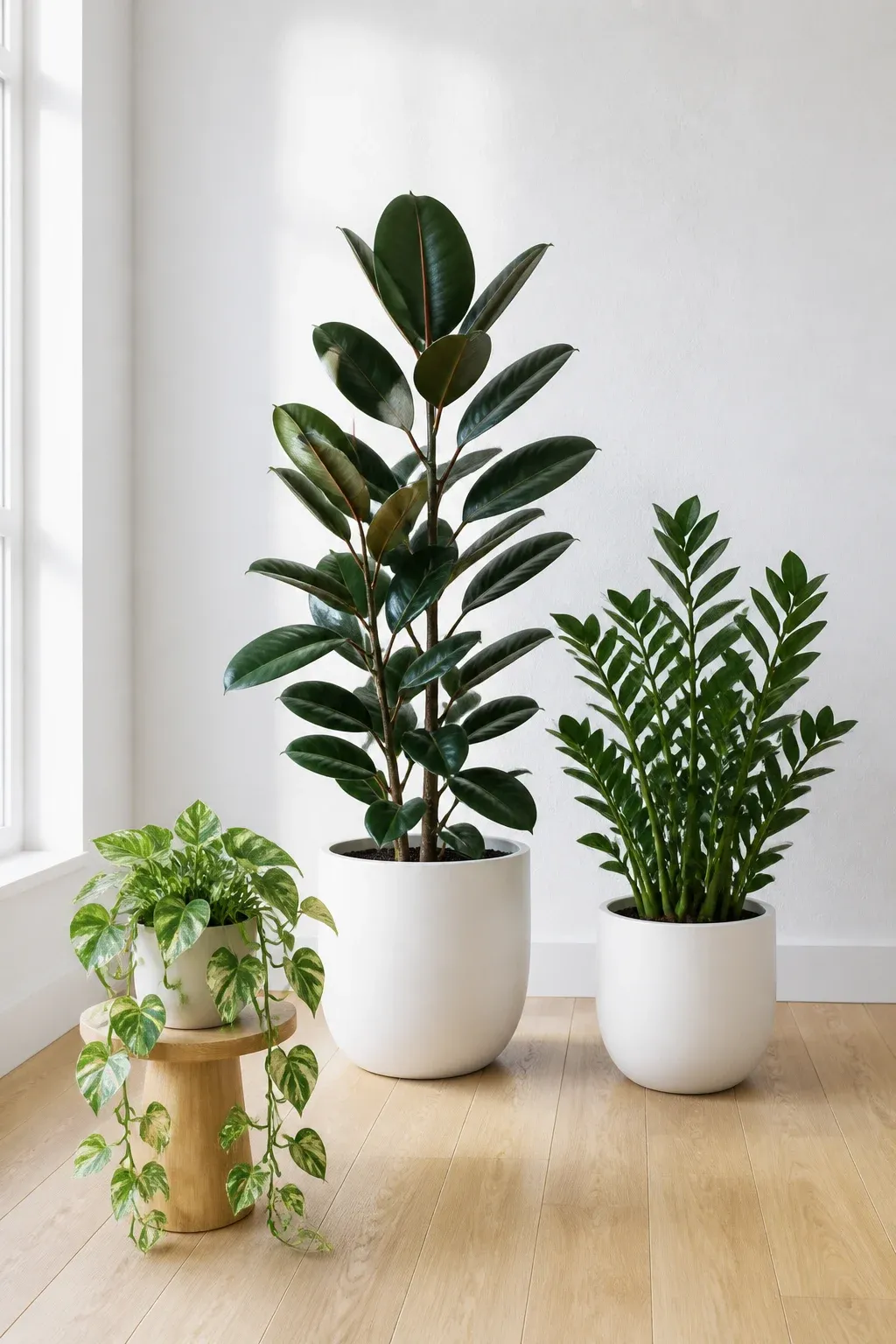
White walls provide a blank canvas that makes indoor greenery stand out, but without the right arrangement, a space can feel cold or cluttered. The stark background offers a unique opportunity to highlight the shape, color, and texture of your plants, turning them into living art rather than just corner fillers.
In this guide, we will look at how to balance the brightness of white paint with natural tones and diverse plant species. You will learn how to use height, grouping techniques, and specific materials to create a cohesive indoor garden that feels intentional and warm.
Choosing Greenery with High Contrast Foliage
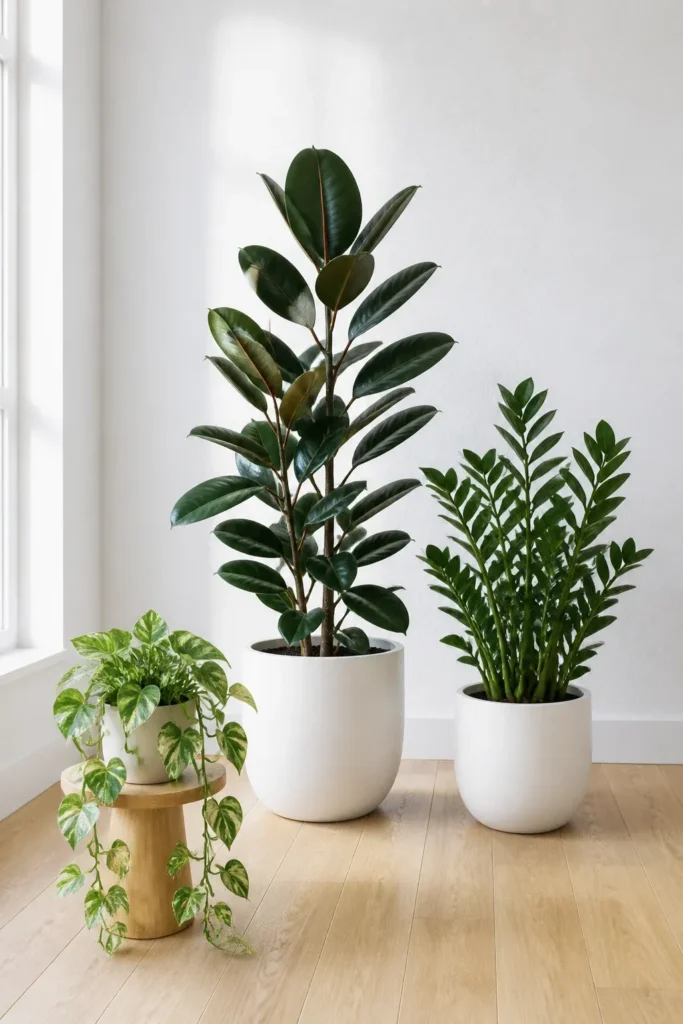
When your backdrop is bright white, plants with deep green or variegated leaves create the most impact. Darker foliage, like that of a Rubber Tree or a ZZ plant, pops against a pale surface, making the structural lines of the plant more visible. If you want something more intricate, look for plants with white or cream patterns, such as a Marble Queen Pothos. The white in the leaves connects with the wall while the green provides the necessary definition. Avoid too many pale, silvery plants like certain eucalyptus varieties, as they can sometimes look washed out when placed directly against a light wall.
Using Natural Wood and Terracotta to Add Warmth
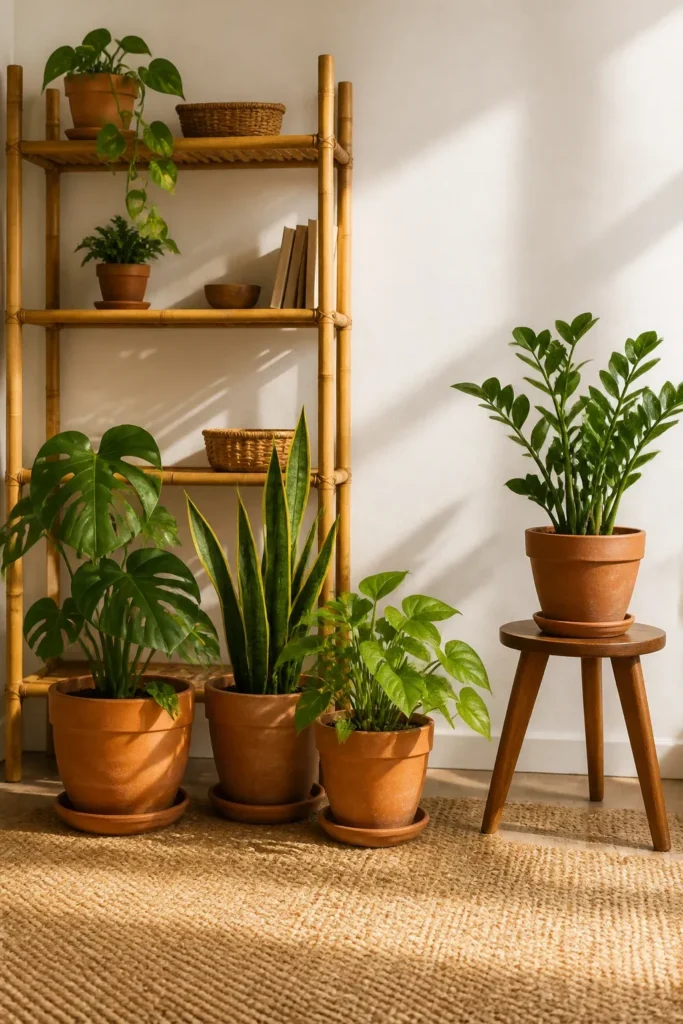
White walls can sometimes feel clinical. To fix this, pair your plants with materials that have earthy tones. Wooden plant stands or bamboo shelving units break up the white space and add a necessary organic feel. Terracotta pots are another excellent choice because their warm orange-brown hue provides a classic contrast to the cool tones of a white room. These materials act as a bridge between the stark wall and the green plant, making the entire setup feel more grounded and cozy.
Creating Visual Interest with Varying Plant Heights
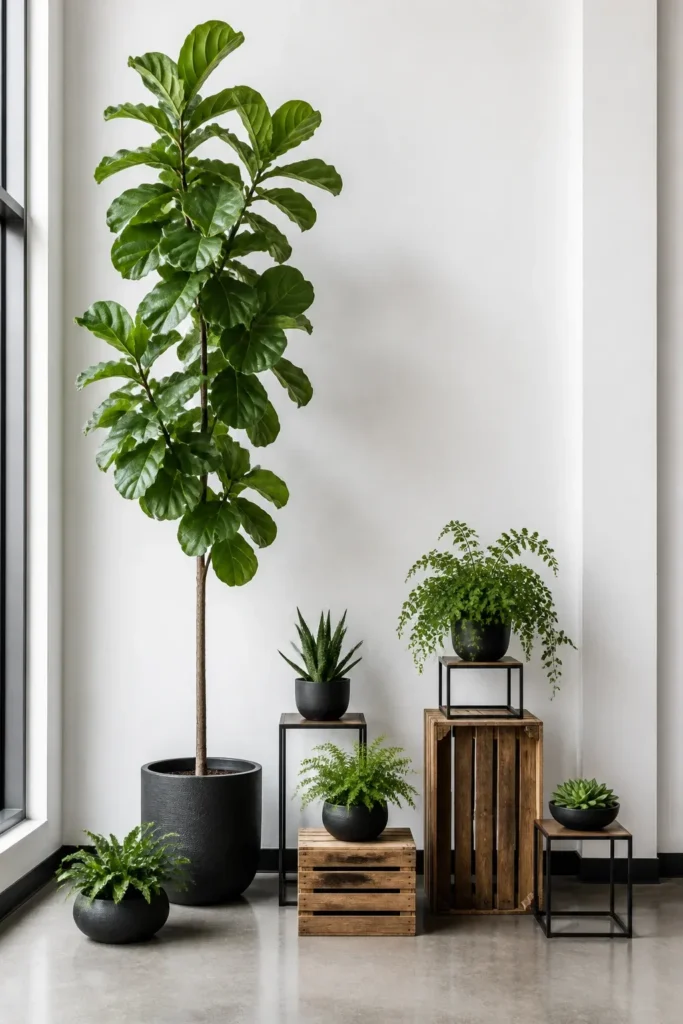
Placing all your plants at the same level can make a room feel flat. Instead, try to move the eye up and down the wall. You can achieve this by using a mix of floor plants, tabletop specimens, and plants on stands. A tall Fiddle Leaf Fig can anchor a corner, while a small succulent sits on a shelf nearby. If you don't have naturally tall plants, use stools or stacked crates to give smaller pots more height. This staggered approach fills the vertical space and prevents the bottom of the room from feeling too heavy.
Managing Empty Wall Space with Hanging Vines
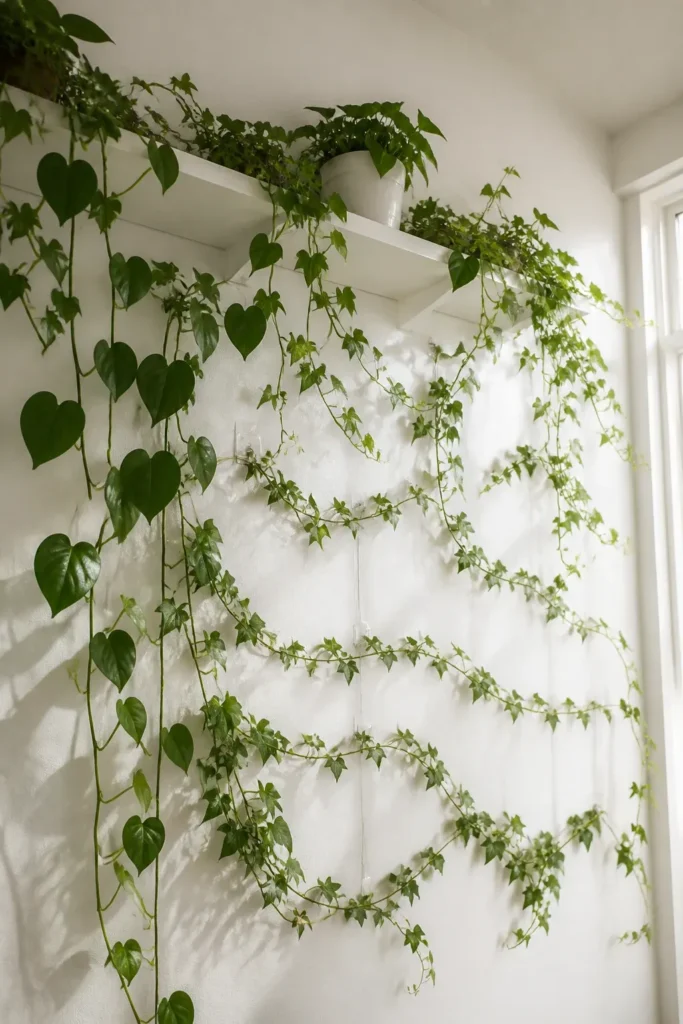
Large expanses of white wall can feel intimidating to decorate. Vining plants like Heartleaf Philodendron or English Ivy are great for softening these areas. You can let them trail down from a high shelf or use small, clear hooks to train the vines to grow across the wall. This creates a living wallpaper effect that adds movement to the room. It is a simple way to add life to a space without needing to hang heavy frames or install permanent fixtures.
Grouping Plants to Build Texture and Depth
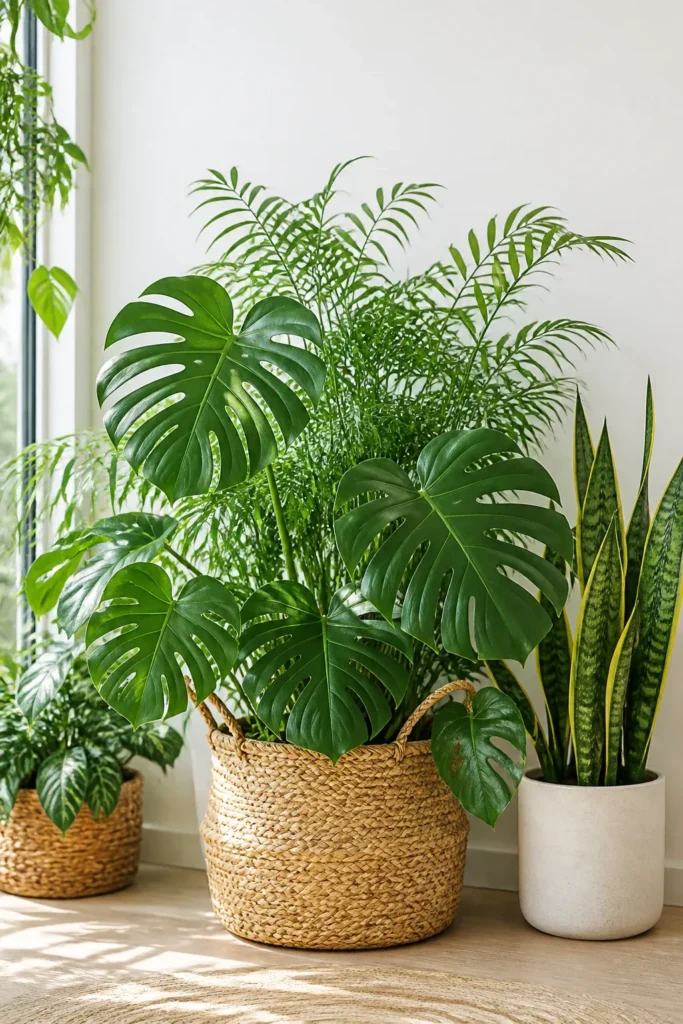
A single plant can look lonely against a large white wall. Grouping plants in odd numbers, such as threes or fives, creates a more natural and lush appearance. When grouping, mix different leaf shapes—pair the broad, flat leaves of a Monstera with the thin, wispy fronds of a Parlor Palm. This variety in texture prevents the arrangement from looking like a solid green blob and allows the white wall to peek through in interesting gaps, emphasizing the unique silhouette of each species.
Selecting Pots and Planters for a Clean Look
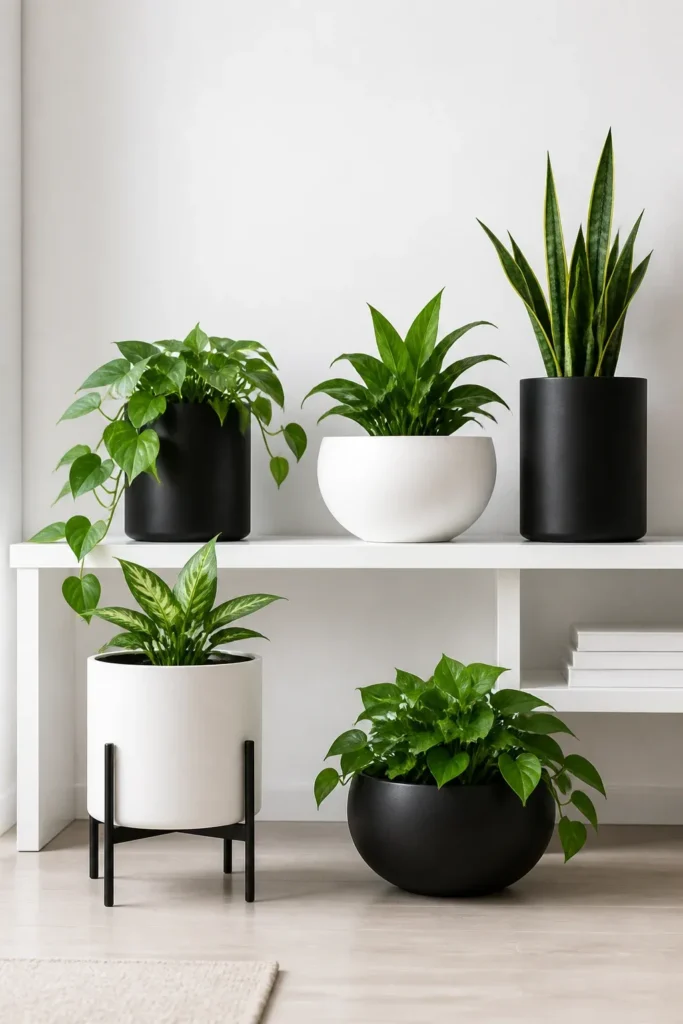
The containers you choose are just as important as the plants themselves. For a minimalist look, matte black pots create a sharp, modern contrast against white walls. If you want the plants to be the main focus, white pots can blend into the wall, making the greenery appear as if it is floating. Using a consistent color palette for your pots helps the collection feel like a curated set rather than a random assortment. Stick to two or three complementary materials, like stone, ceramic, or woven baskets, to keep the visual noise to a minimum.
Arranging plants against white walls is all about finding the right balance between contrast and warmth. By playing with different heights, textures, and natural materials, you can turn a plain room into a vibrant living space. Start by picking one corner of your home and experimenting with a few different pot styles and plant heights to see what feels best in your light.