
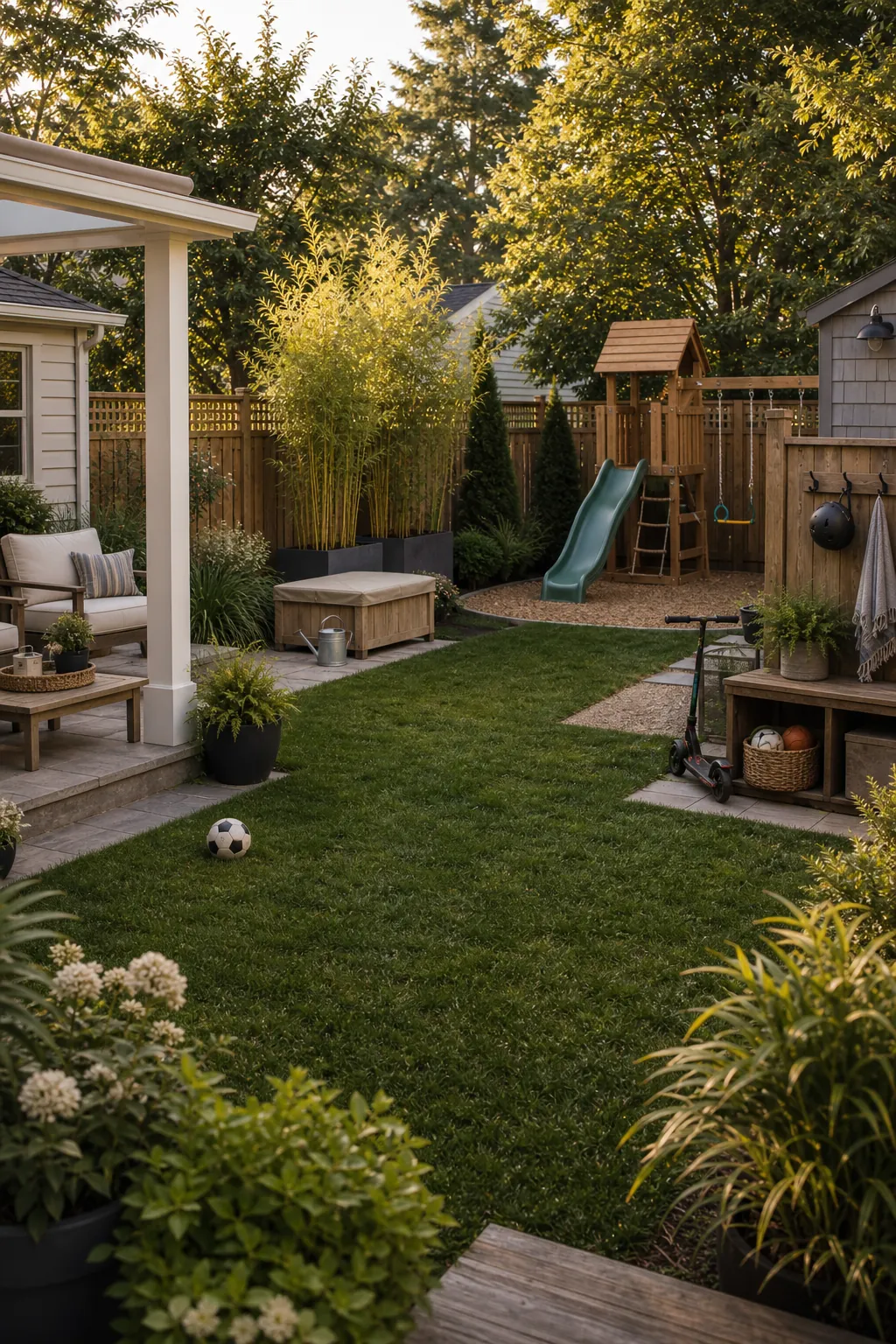
A backyard for children does not have to look like a toy aisle spilled onto the lawn. The real problem is usually not that kids need too much stuff. It is that every toy, chair, bin, playset, scooter, and half-finished project is given the same visual importance.
The better goal is simple: make outdoor play easy to start, easy to supervise, and easy to reset. When the yard has a few clear zones, kids stay busy because they understand what the space is for. Adults get a family backyard that still feels like outdoor living, not a permanent playroom with grass.
Use these backyard ideas as a design filter. You do not need all of them. Pick the ones that solve your actual pain: scattered toys, unsafe equipment placement, muddy corners, boring patio decor, awkward outdoor seating, weak privacy ideas, or a lawn that never looks intentional.
Start with a calm backbone, not a shopping list
The fastest way to make a kids backyard look chaotic is to buy one more thing every time the children get bored. A slide appears. Then a water table. Then a swing, a sandbox, a little house, a ball net, three bins, and a plastic picnic table. None of those pieces are wrong on their own. Together, without a layout, they create noise.
Begin by dividing the yard into three quiet roles:
- One active zone for climbing, swinging, running, kicking, balancing, or riding.
- One messy zone for water, sand, mud, chalk, leaves, small tools, and creative outdoor play.
- One reset zone that stays visually open: lawn, deck, patio, or a simple garden path.
This is where the backyard starts to feel designed. Kids still get movement and discovery. Adults still get breathing room. The yard reads as one outdoor living space instead of a collection of unrelated kid gear.
Put one big-movement feature where you can actually supervise it
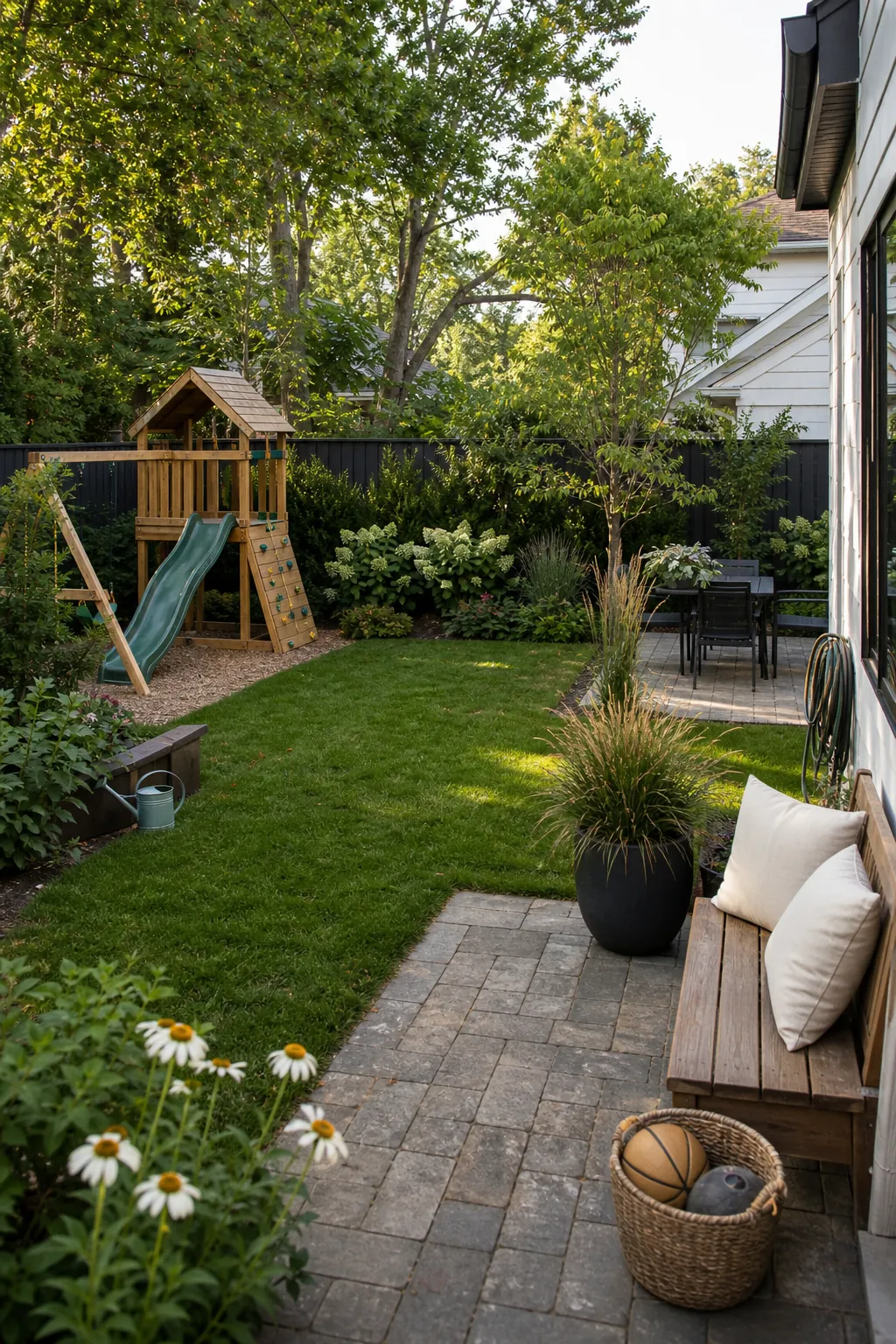
Most families do need one high-energy feature. Kids need somewhere to climb, hang, chase, jump, or test their strength. The mistake is treating that feature as a decoration and tucking it into the prettiest corner. If you cannot see it easily from the kitchen, patio, or outdoor seating area, it becomes harder to use and harder to manage.
A small climbing dome, timber balance beam, simple swing, compact playset, or low obstacle loop can work better than a giant structure. The test is not whether it looks impressive on delivery day. The test is whether children return to it in five different ways: climbing, hiding, pretending, racing, resting, and making up rules.
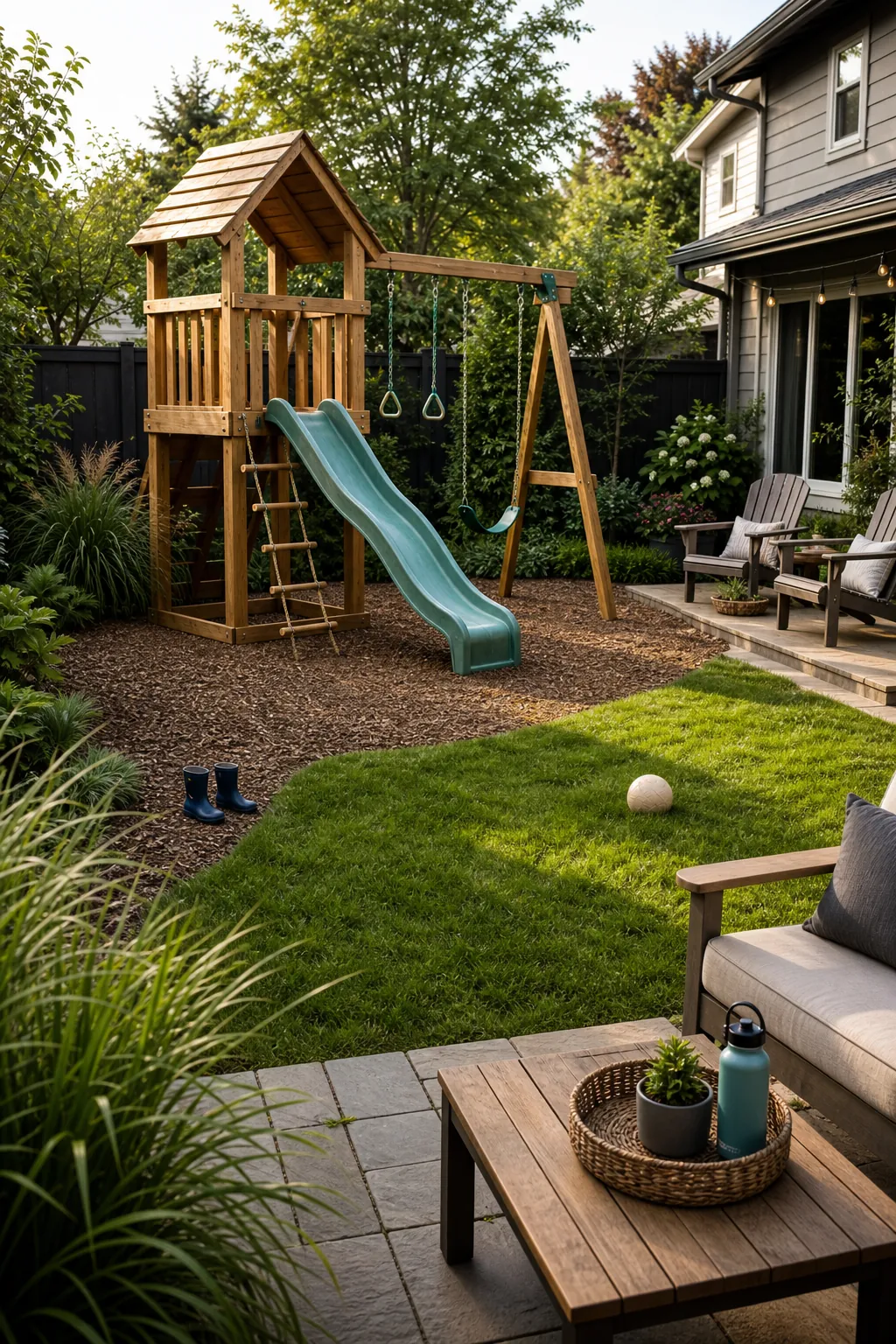
For installed play equipment, treat safety as part of the design. The American Academy of Pediatrics’ HealthyChildren.org playground guidance recommends energy-absorbing surfacing, maintained at least 9 inches deep, extending at least 6 feet around equipment. That kind of detail matters because a beautiful play corner that is hard, cramped, or poorly drained is not a good family backyard.
HealthyChildren.org playground safety guidance
Give messy play a boundary so it feels intentional
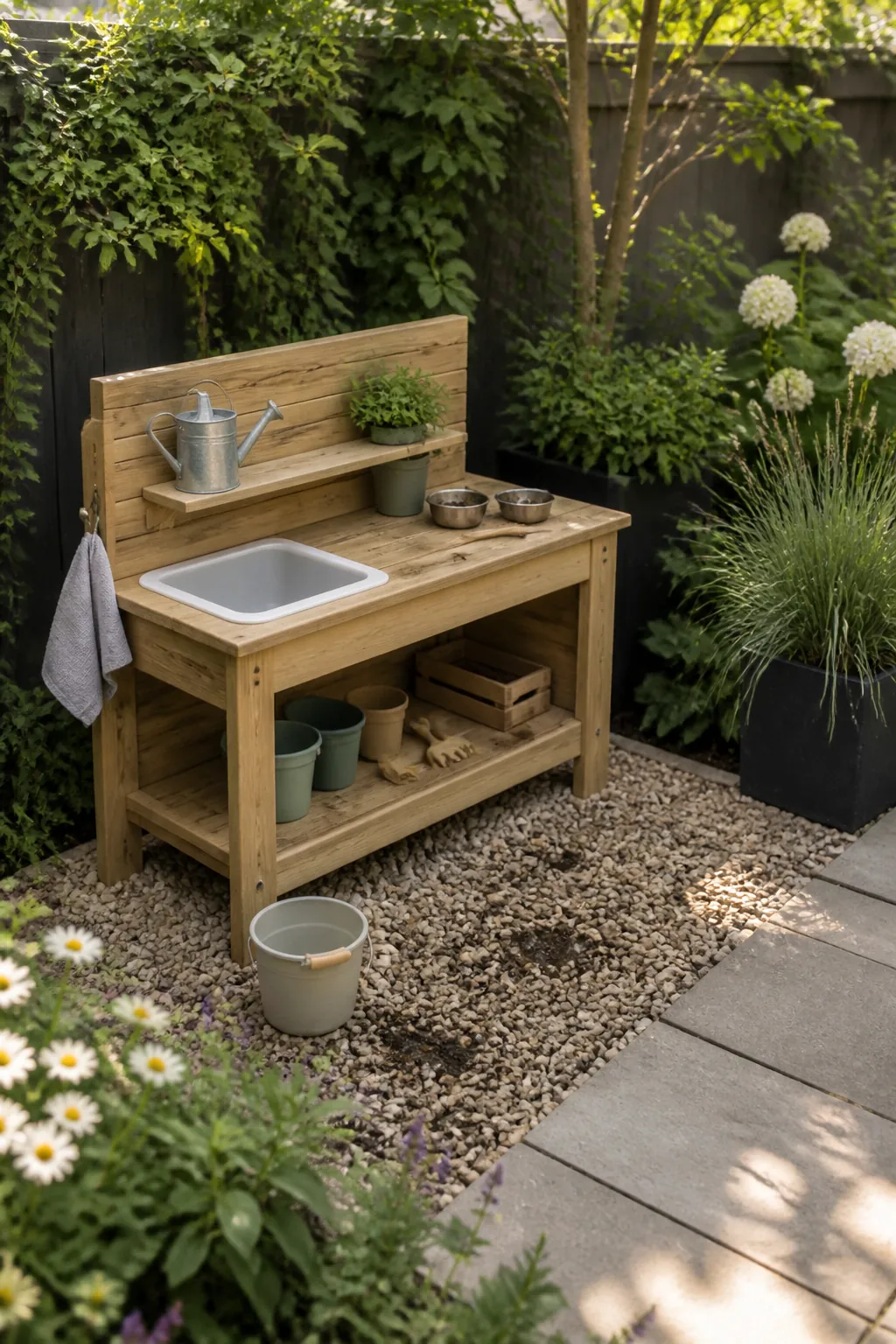
Messy play is not the enemy. It is usually the part of outdoor play kids remember. Water, sand, soil, pebbles, leaves, flower petals, sticks, and little tools can keep children busy longer than another battery toy. What makes it look chaotic is the lack of an edge.
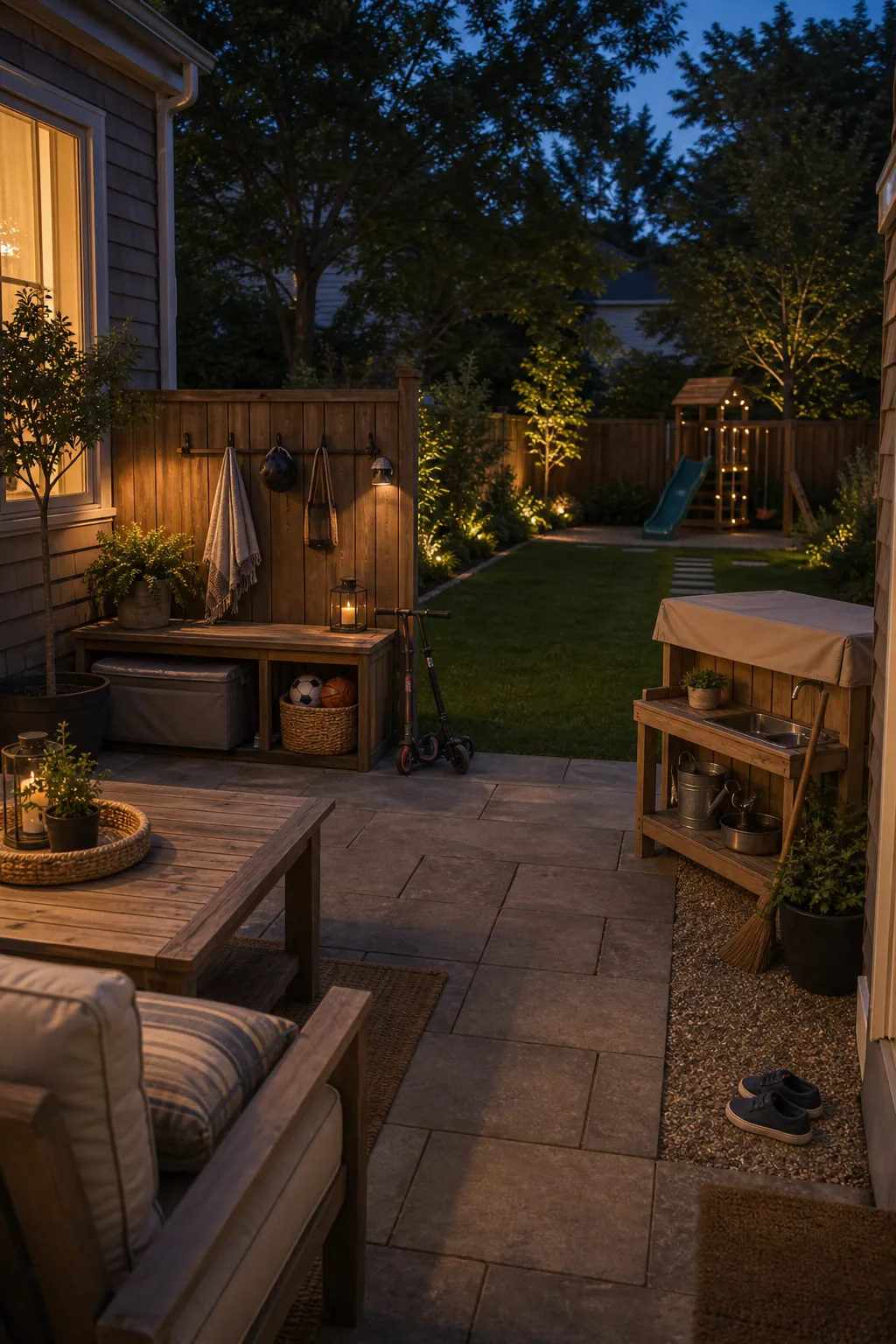
Put the messy zone on a surface that already makes sense: pea gravel, mulch, pavers, a small deck landing, or a shaded corner with a washable mat. Use one good-looking mud kitchen, water table, potting bench, or low outdoor shelf. Add two or three metal or woven containers, not ten plastic bins. Keep a child-size broom, small watering can, and towel hook nearby.
The boundary is the trick. A defined messy corner tells the eye, this is a planned play station, not clutter that escaped. It also tells kids where the materials belong when play is over.
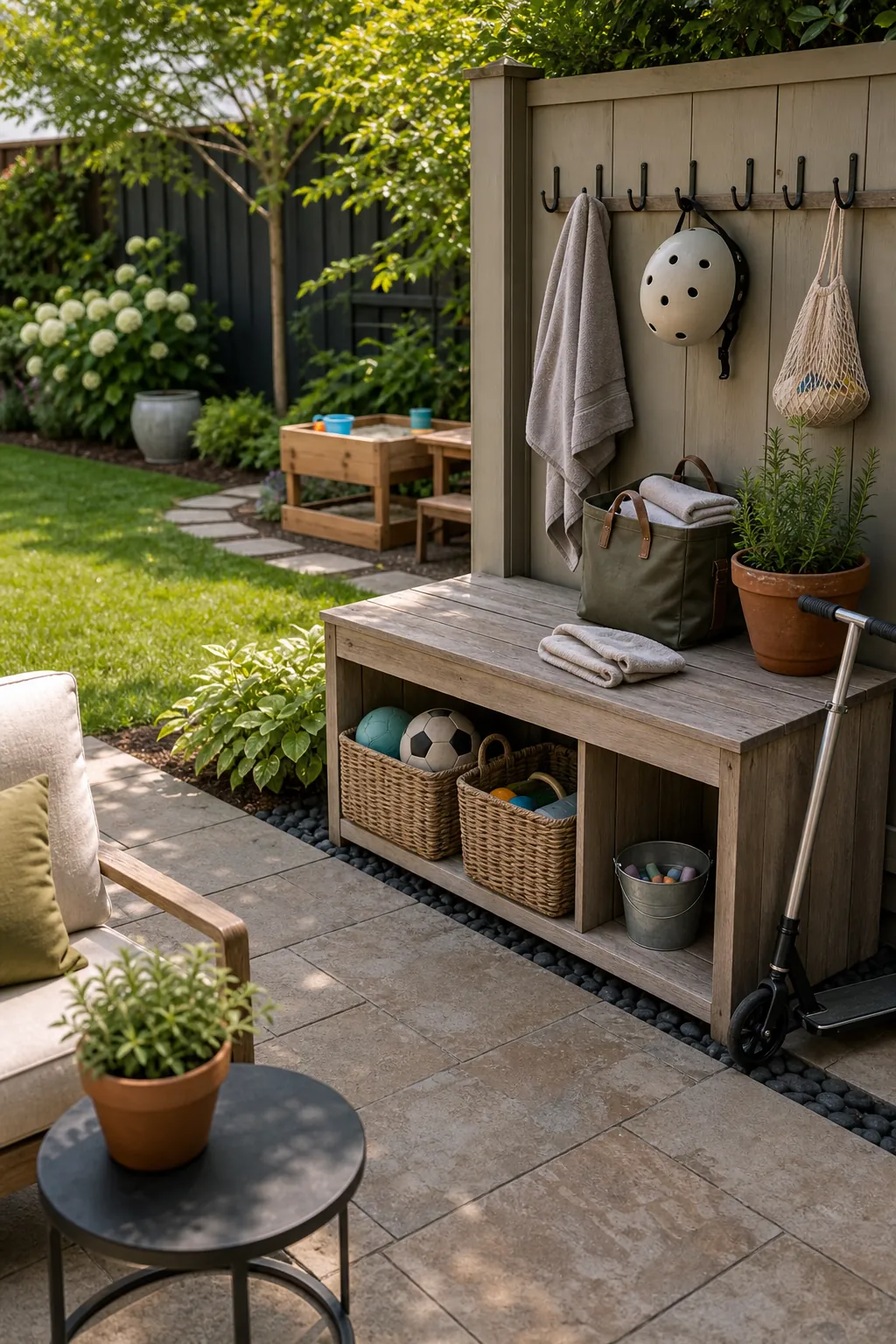
Make storage part of the patio decor
If toy storage looks like punishment, no one uses it. If it looks like part of the patio decor, it becomes a habit. This is one of the highest-impact backyard ideas for families because the visual problem is rarely the toys themselves. It is the toys staying visible after the play is done.
Choose storage that works at kid height. A deck box can hold balls and cushions, but it is not enough if small children cannot open it safely or sort what belongs inside. Use a mix of closed and open storage:
- Closed storage for ugly items: bubble wands, chalk packs, small loose toys, water blasters, helmets, and backup towels.
- Open storage for daily items: balls, scooter parking, garden tools, sand toys, and watering cans.
- Wall or fence hooks for jump ropes, hats, kneeling pads, and quick-dry bags.
Keep the materials consistent with your garden design. Wood, galvanized metal, dark resin, canvas, rattan-style baskets, and muted bins usually blend better than a row of primary-colored tubs. The point is not to hide that children live here. The point is to make the reset obvious.
Leave an open reset zone
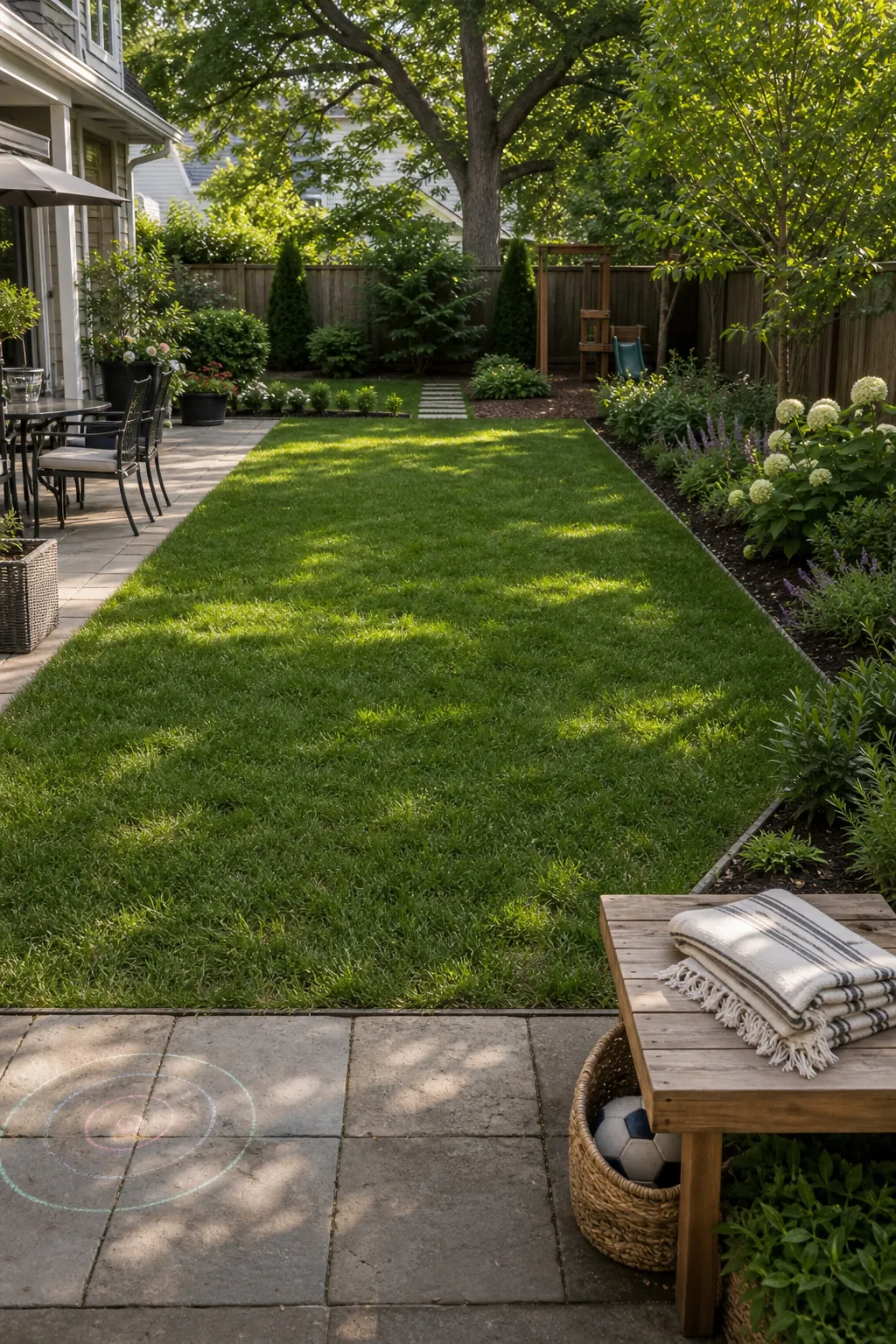
A backyard can be too full. Kids need equipment, but they also need open ground where the rules change every day. One day it is a soccer field. The next day it is a picnic blanket, a chalk target, a cardboard fort, a sprinkler run, or an outdoor dining spillover when cousins visit.
Protect this space on purpose. Do not let every new purchase creep into the middle. If the yard is small, the reset zone might be a clear strip beside the patio or a hardscape rectangle where ride-on toys can loop. If the yard is larger, it might be one clean lawn panel framed by planting.
The open zone is also what keeps adult eyes calm. Negative space is not wasted space in a family backyard. It is what makes the busy areas feel like choices instead of a mess.
Use privacy planting as a soft screen, not a hiding place
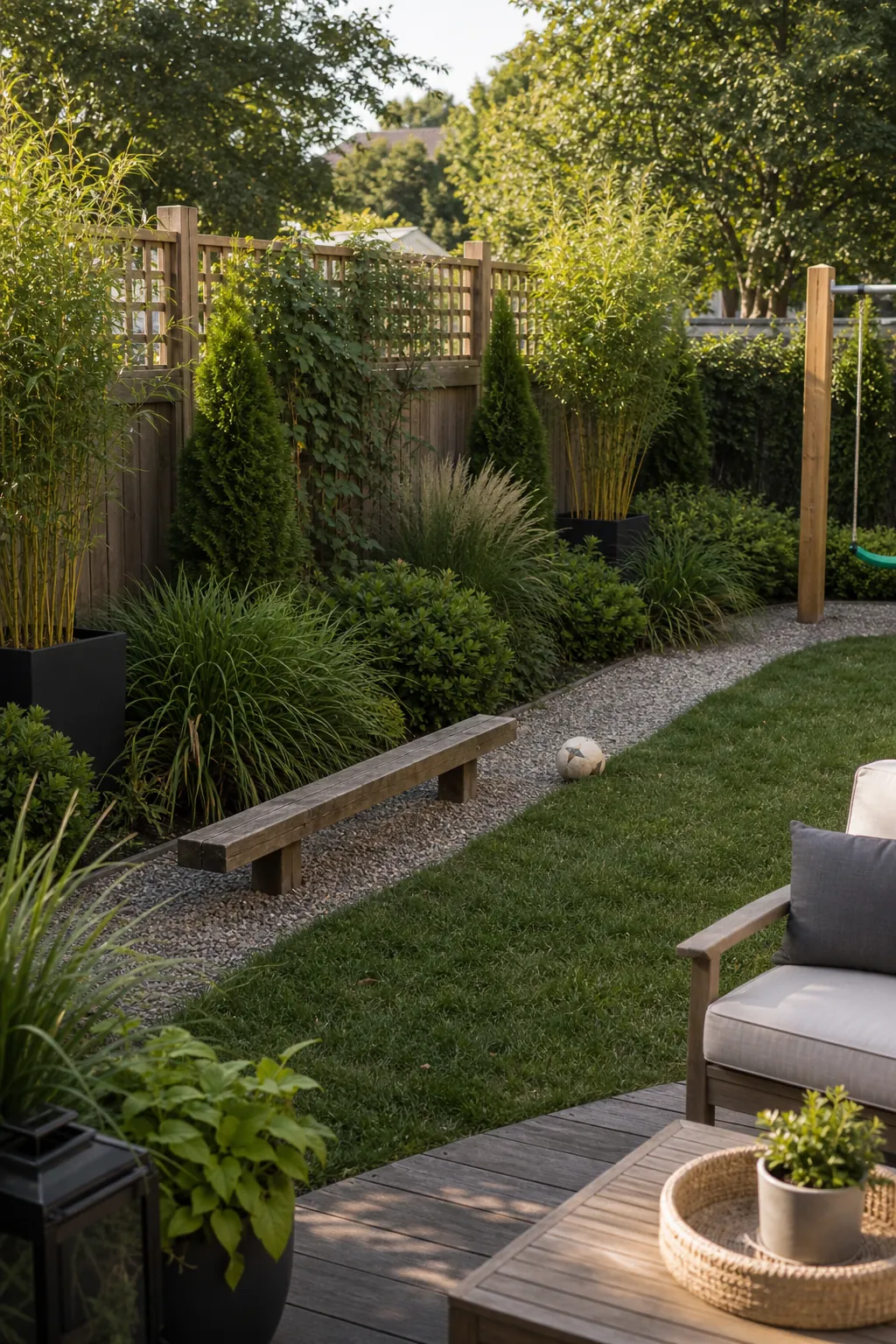
Privacy ideas can make a kids backyard feel calmer, especially when neighbors are close or the playset faces a fence. The key is to screen the view without creating blind corners. Tall grasses, clumping bamboo in containers, espaliered shrubs, vines on a trellis, or layered evergreen planting can soften the boundary while keeping adults aware of what is happening.
Think in layers instead of walls. Low planting near the play area keeps balls from rolling into beds. Mid-height shrubs create a garden edge. Taller planting handles privacy where you actually need it, such as behind outdoor seating or along the neighbor-facing side of a patio.
A good screen does two jobs: it makes the yard prettier, and it helps the play zones feel contained. That is why planting is often more effective than another piece of play equipment.
Put the adults where the children naturally want to be
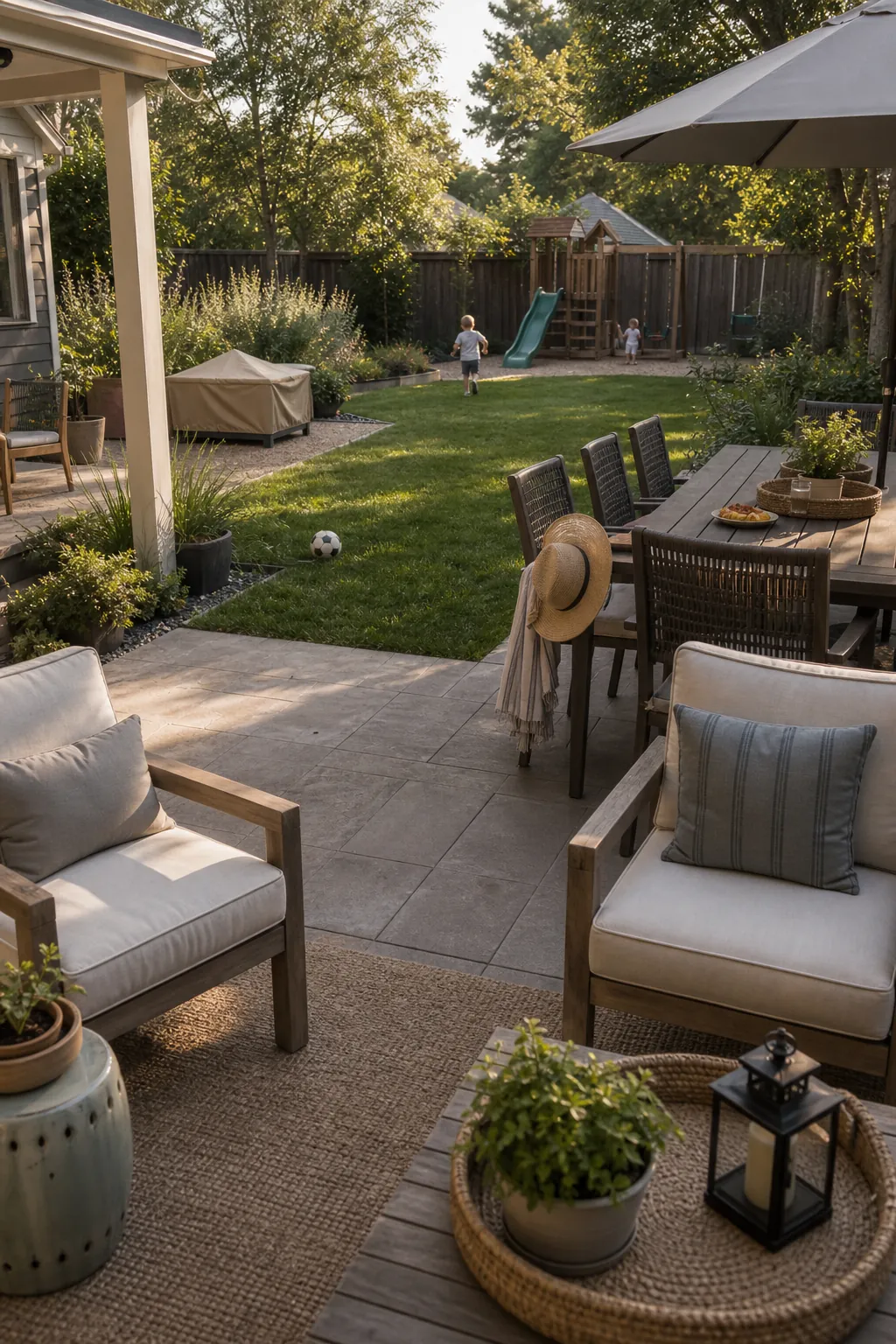
Many backyards fail because the adult seating and the children’s play are designed as separate worlds. The chairs face the fire pit, the play gear sits at the far edge, and nobody uses either zone comfortably. A better family backyard lets supervision feel like ordinary outdoor living.
Place outdoor seating where adults can see the movement zone and the messy zone without standing up every two minutes. This can be a bench along the patio edge, a dining table with a clear view of the lawn, or two lounge chairs angled toward the play area. Add shade, a side table, and a place for a drink. If the adult zone feels neglected, the whole yard gets used less.
Outdoor dining also helps. Kids may drift from water play to snacks to chalk to running games, but a table creates an anchor. It gives the day a center, which makes the yard feel less scattered.
Choose fewer materials and repeat them
Visual chaos often comes from too many finishes: bright plastic, black rubber, pale wood, red brick, blue tarp, green turf, silver metal, ten flower colors, and a patterned outdoor rug fighting for attention. You can make kid gear feel calmer by repeating a short material list.
Try one warm material, one dark grounding material, one planting texture, and one washable surface. For example: cedar, charcoal planters, ornamental grasses, and tan pea gravel. Or teak, black metal, leafy vines, and concrete pavers. Once you choose the palette, let new purchases pass through it. A bright ball is fine. A bright yard is tiring.
This does not need to be expensive. The most useful upgrades are often paint, hooks, matching baskets, edging, mulch refresh, and replacing broken mismatched pieces with one better item.
Build a five-minute closing routine into the layout
A yard that requires a full cleanup campaign will stay messy. A yard that closes in five minutes can look good almost every evening. Design the routine before you buy more storage.
- Park scooters, bikes, and ride-on toys in one visible strip.
- Dump balls and loose outdoor play pieces into one open basket.
- Hang towels, hats, jump ropes, and wet bags.
- Cover sand or water play materials.
- Clear the outdoor dining table and reset cushions.
The routine should be visible enough for kids to help without constant instructions. Labels can work, but layout is stronger. A ball basket beside the lawn is self-explanatory. Hooks beside the water area make sense. A scooter strip near the gate prevents wheels from drifting across the patio.
Three easy layouts for common backyards
Small patio or townhouse yard
Use the patio as the reset zone, not the storage zone. Choose one vertical play element such as a climbing triangle, small wall-mounted chalkboard, or compact water station. Add a bench with closed storage and one planter screen for privacy. Keep ride-on toys limited to what can park cleanly along one wall.
Suburban lawn with a patio
Place the active zone to one side of the lawn, not in the center. Keep the patio for outdoor seating and outdoor dining, with a direct view to the playset or climbing feature. Use planting to frame the lawn, then put messy play near a hose, shade, and storage.
Long narrow backyard
Build a sequence: dining near the house, open movement in the middle, play or garden discovery at the back. Use stepping stones or a simple path so the yard feels like a journey rather than a corridor. Keep tall privacy planting along one side and lower planting along the supervision side.
The rule that keeps the yard from slipping back into chaos
Before adding anything new, ask where it will live when nobody is using it. If there is no good answer, the item is not a backyard idea yet. It is future clutter.
A calm kids backyard is not a perfect yard. It still has chalk dust, muddy knees, damp towels, snack crumbs, and surprise obstacle courses. The difference is that the mess has places to happen and places to go away. That is what lets a family backyard stay playful without looking chaotic.