
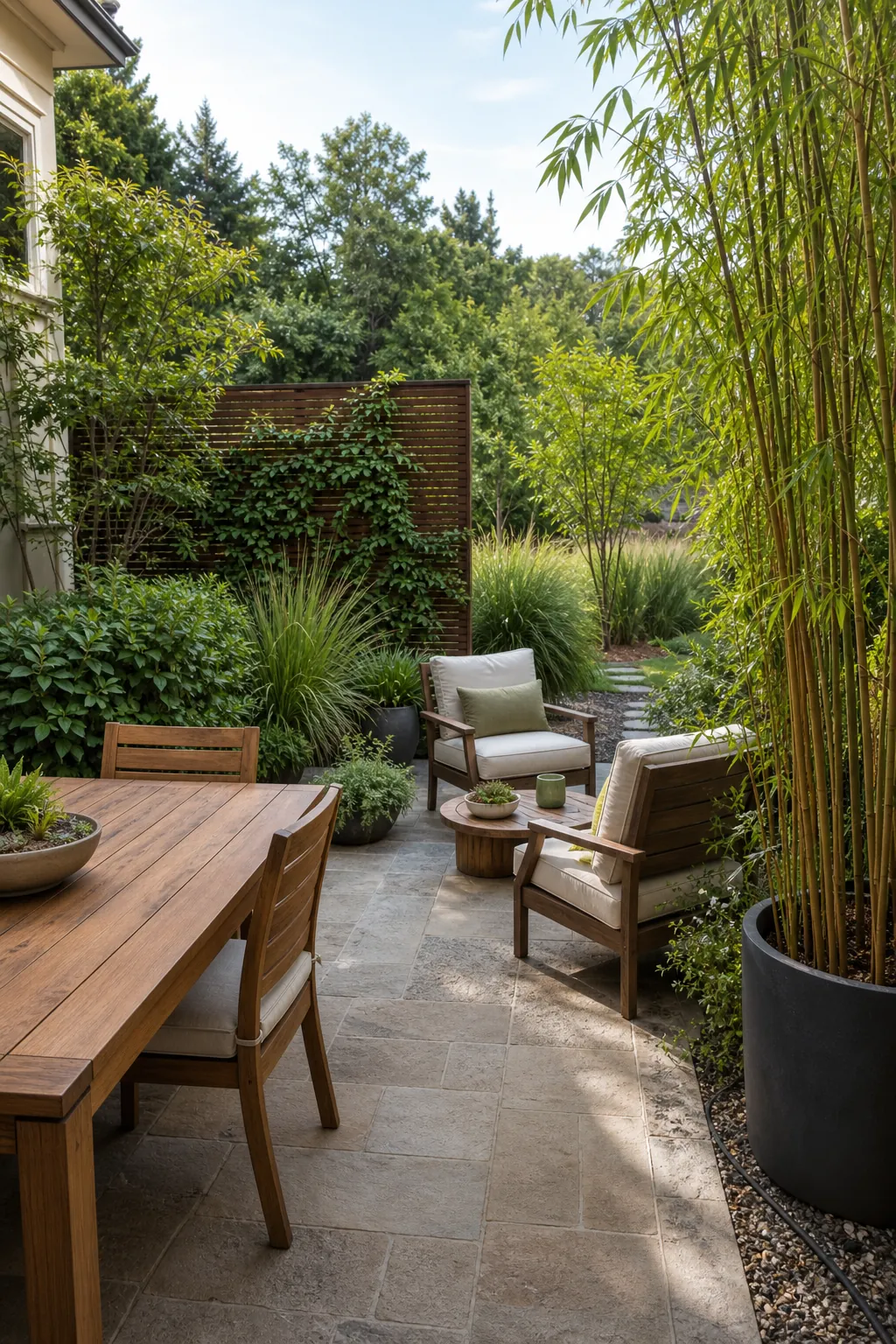
A patio can be full of plants and still feel exposed. That is the frustrating part. You add pots, buy a nicer chair, move a few planters around, and somehow the neighbor’s deck, the side street, or the blank fence still controls how the space feels.
The better way to design patio privacy is not to plant everywhere. It is to decide which view needs blocking, which plants can do that job, and how the seating should sit inside the screen. Privacy and plants work best when they are planned as one layout, not two separate projects.
Use these patio ideas as a practical filter. The goal is a private outdoor living space that still has air, light, walking room, and plants you can maintain. A patio should feel sheltered, not trapped.
Block the Sightline, Not the Whole Yard
Most patio privacy problems come from one or two specific sightlines. A neighbor can see from an upper window. A sidewalk looks straight into the chairs. A corner lot exposes one side. A raised deck looks down over the fence. If you try to screen every edge equally, the patio can become dark, crowded, and expensive.
Start from the chair, not the property line. Sit where you actually want to relax and look for the uncomfortable view from eye level. That is the line to interrupt. A tall planter, narrow screen, vine panel, or small tree may solve the real problem better than a full wall of planting.

This is also how you keep the patio usable. Leave at least one side visually open, especially if the patio connects to a garden, lawn, gate, or outdoor dining area. Good privacy edits the view; it does not erase the whole backyard.
Pair a Screen with Living Plant Layers
A privacy screen gives instant structure, but it can look harsh on its own. Plants give softness, but they may take years to fill in. The strongest patio privacy usually uses both: a simple built element behind or beside the seating, then living layers that make it feel like part of the garden.
Think of the screen as the backbone. Slatted wood, black metal, bamboo panels, lattice, cable trellis, or a narrow fence extension can all work when the style matches the house. Then add plants to blur the edges: vines, upright grasses, evergreen shrubs, leafy containers, or a small ornamental tree.

The built screen handles the immediate view. The plants make the corner feel alive. That combination is often more reliable than asking one plant to be tall, narrow, evergreen, fast-growing, clean, drought-tolerant, container-friendly, and beautiful all at once.
Use Containers Only When They Are Big Enough
Container privacy sounds simple: buy tall plants, line them up, and wait. In real life, small pots dry out, tip visually out of scale, and leave gaps exactly where you need coverage. If plants are doing privacy work, the containers need enough depth and volume to support them.
Choose fewer, larger planters instead of many small pots. Long trough planters, deep square boxes, or heavy round containers look more intentional and give roots a better chance. They also create a cleaner patio edge, which matters when the space is small.
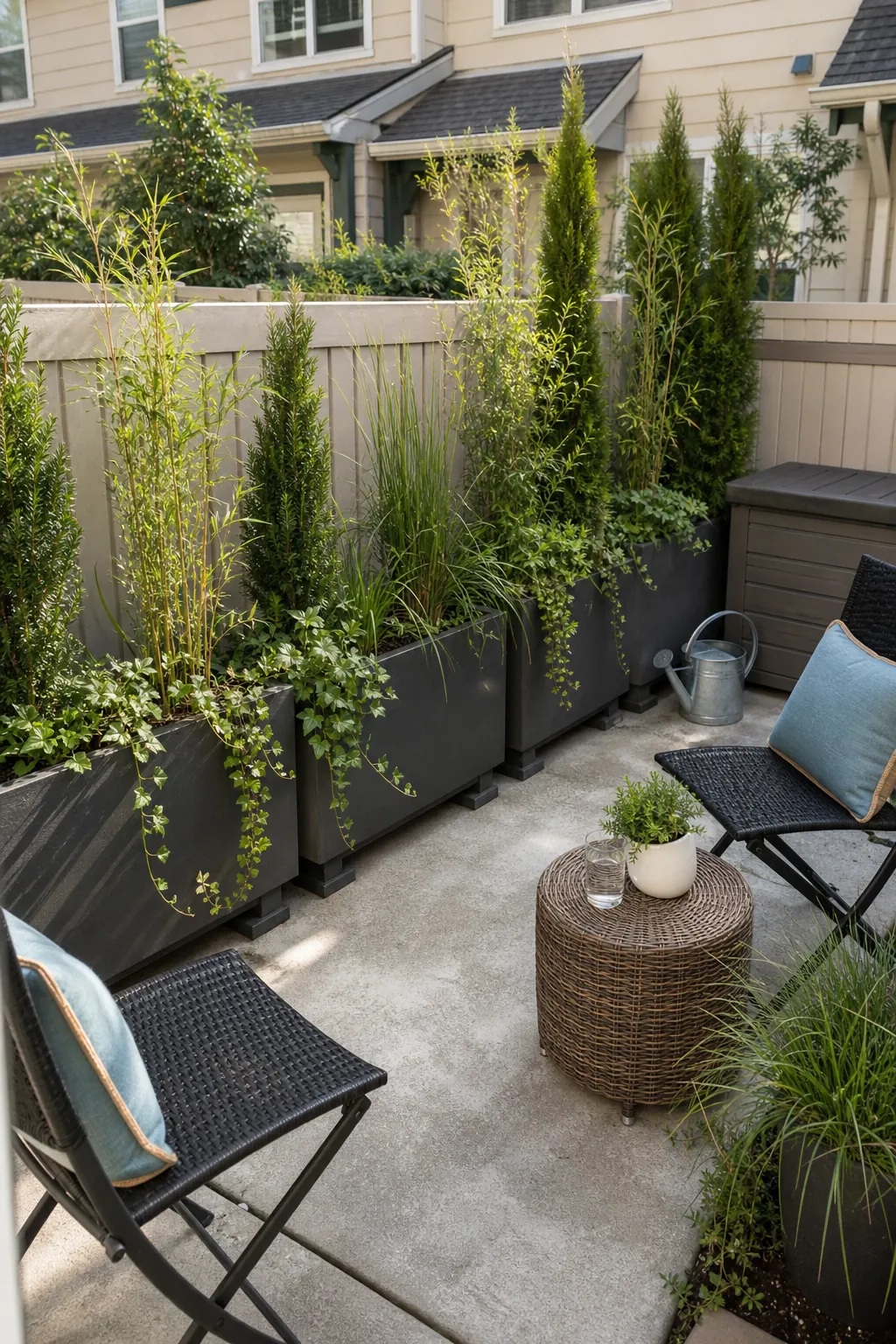
Before buying plants, check the boring details: sun hours, wind exposure, water access, mature width, leaf drop, root behavior, and winter hardiness. A plant that looks perfect in a nursery pot can become a messy maintenance problem on a hot paved patio. The container has to fit the plant’s adult life, not just the first season.
Layer Plants by Job
A private patio rarely needs one giant hedge. It needs plants doing different jobs at different heights. This creates depth, hides gaps, and keeps the space from feeling like a green wall pressed against the chairs.
- Tall plants interrupt sightlines: clumping bamboo in controlled containers, upright evergreens, columnar shrubs, trellised vines, or ornamental grasses.
- Middle plants soften the screen: hydrangea, pittosporum, boxwood, rosemary, lavender, ferns, or leafy perennials chosen for your climate.
- Low plants finish the edge: herbs, groundcovers, compact grasses, seasonal flowers, or trailing plants that hide planter bases.
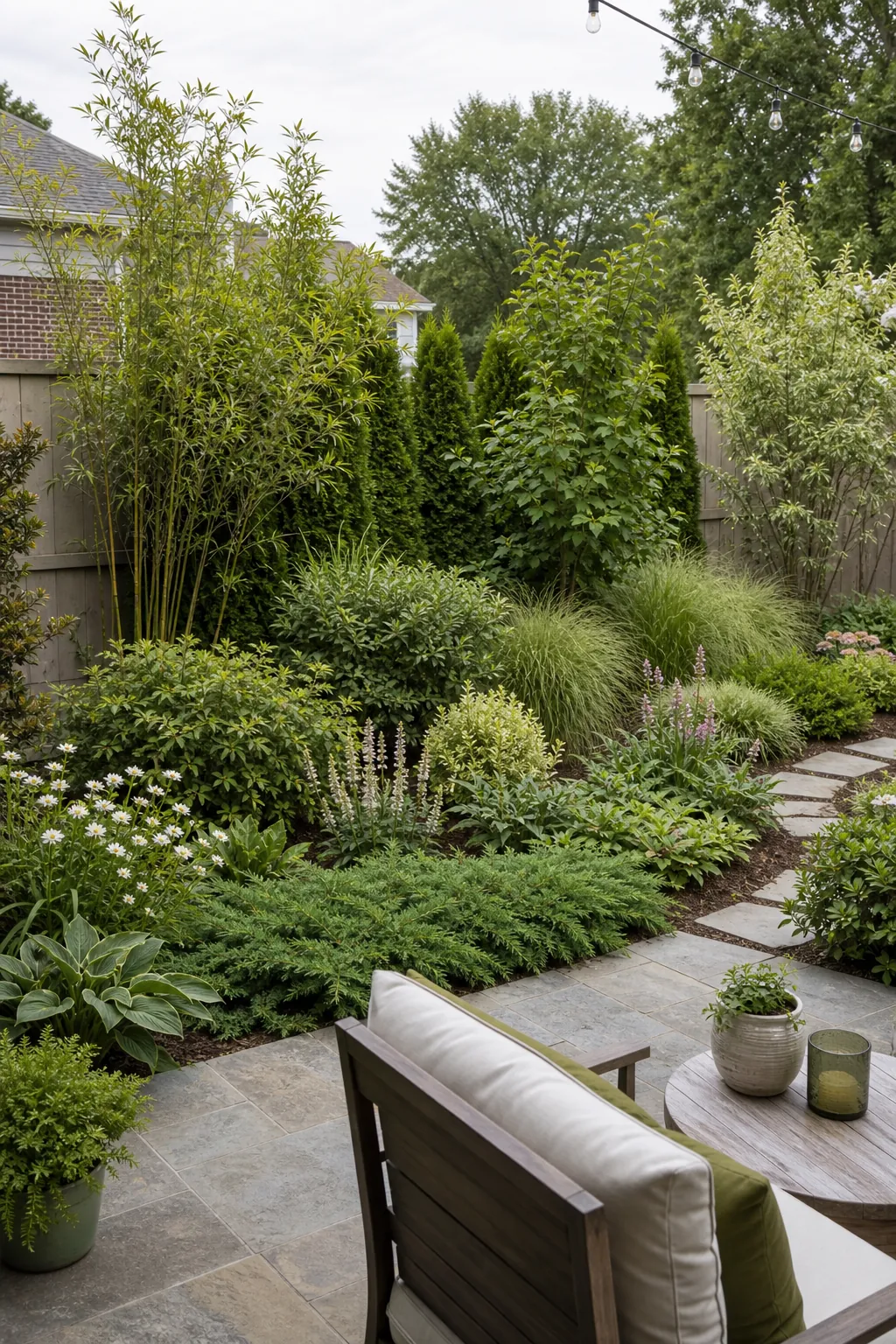
Use repetition to keep the patio calm. Three matching large planters with repeated tall plants look more designed than nine unrelated pots. Add variety through texture and height, not through buying one of everything.
Let a Pergola or Trellis Create Soft Privacy
Privacy is not only horizontal. Sometimes a patio feels exposed because it has no ceiling. A pergola, arbor, or trellis can make the seating area feel held, especially when neighbors look down from a higher deck or second-story window.
You do not need a heavy structure. A light pergola over the seating, a trellis behind the chairs, or a vine frame beside the dining table can create enough enclosure. The key is to place it where people sit, not randomly at the far edge of the patio.
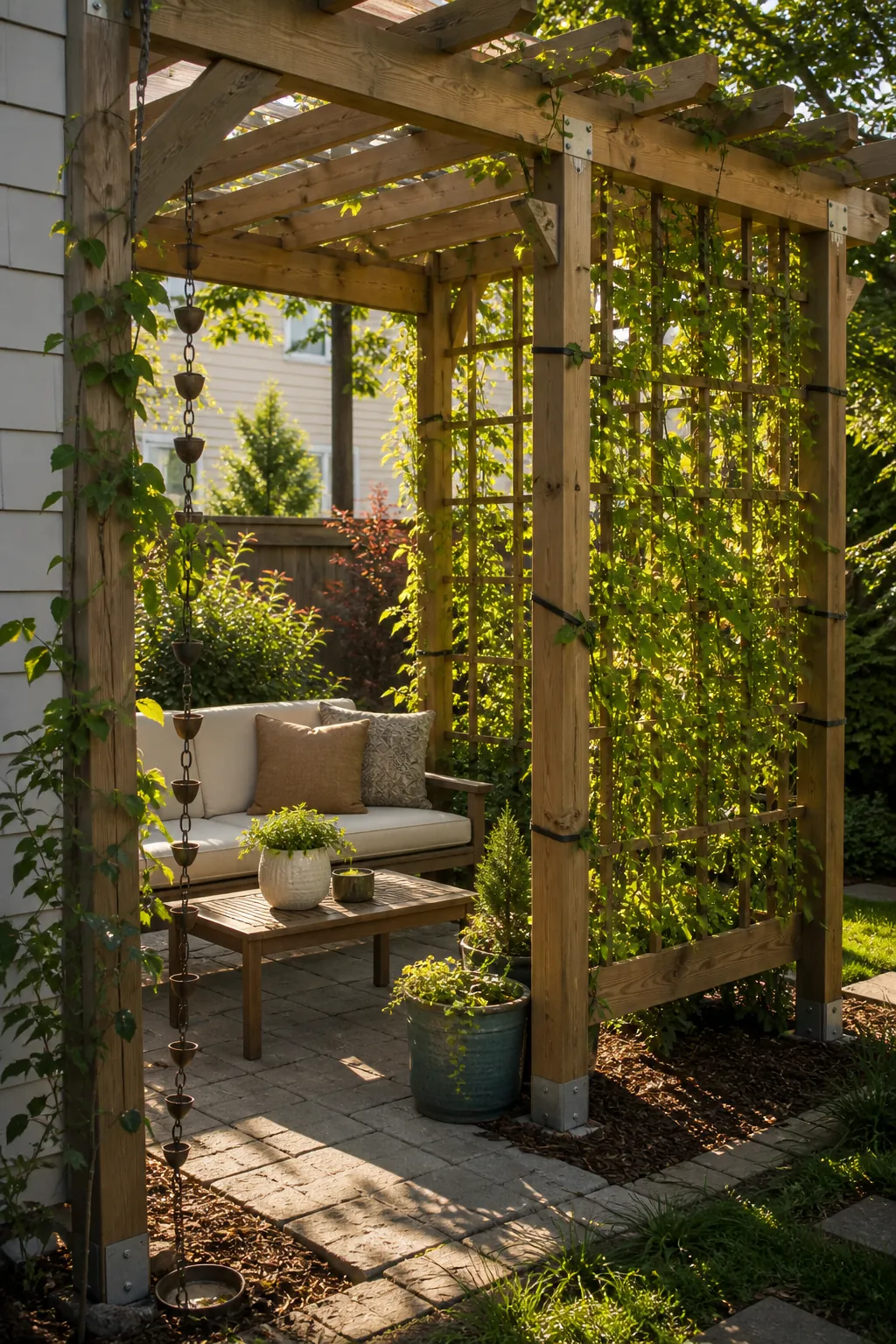
Climbing plants need patience and pruning access. Choose them for the real conditions: sun, shade, heat, wind, soil volume, and whether you can reach the top safely. A vine that grows fast but overwhelms the structure will not feel private for long. It will feel like another chore.
Arrange Seating Inside the Privacy, Not Behind It
Privacy plants work better when the furniture helps them. If chairs are pushed against the most exposed edge, every screen has to work harder. Pull seating slightly inward, angle chairs toward each other, and let planters sit behind or beside the exposed side.
A small patio may only need two chairs and a side table. A larger patio may support a dining table plus a lounge corner. Either way, keep clear walking space. If people brush leaves every time they sit down, the planting will start to feel annoying no matter how pretty it looks.
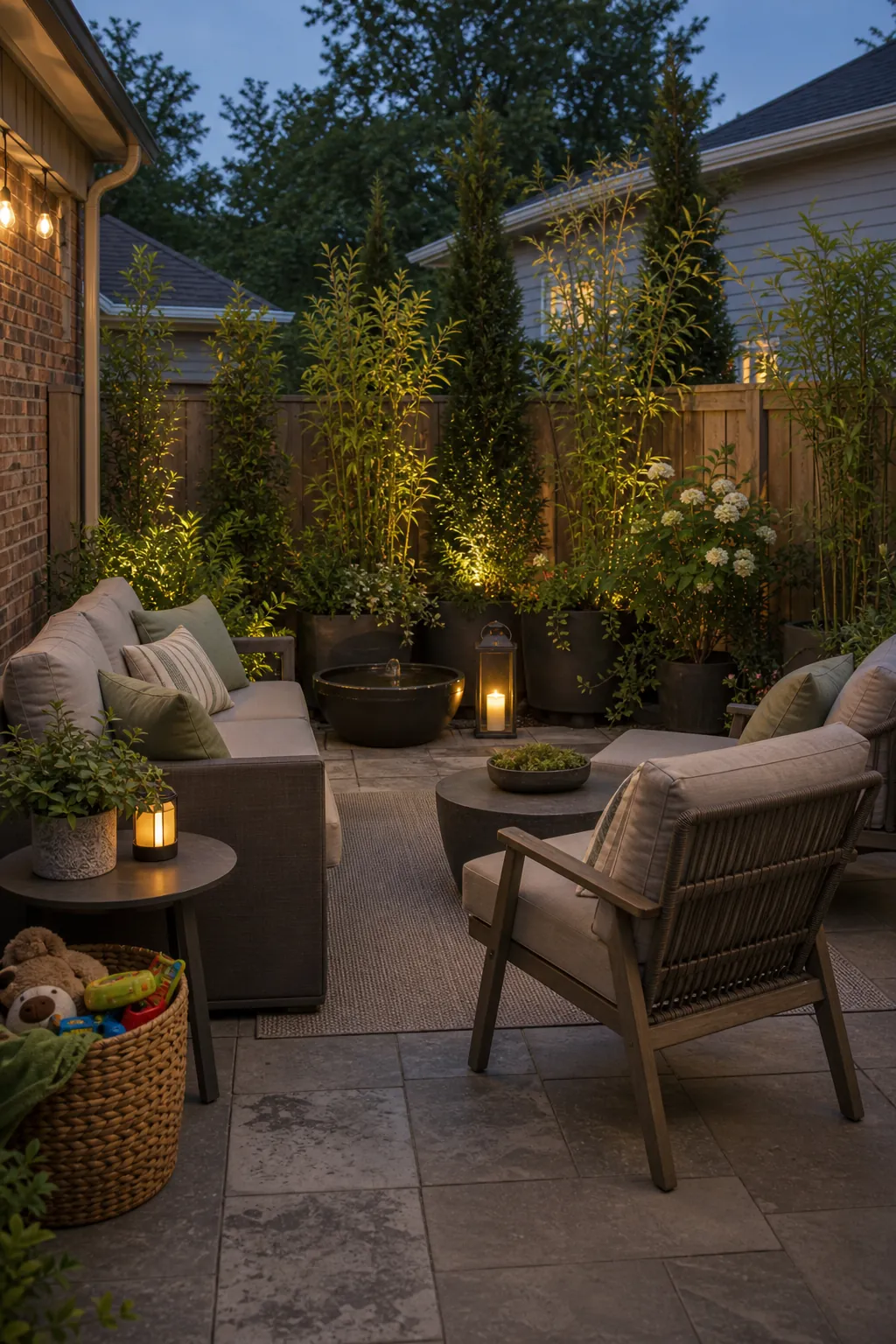
Use a rug, paver change, planter line, or low table to define the seating zone. That small boundary tells the eye the patio is a room. It also keeps plant containers from drifting into the circulation path over time.
Choose Plants by What They Need to Do
The best privacy plants are not universal. They are matched to the job. A patio that needs year-round screening may need evergreen structure. A patio that only feels exposed in summer can use deciduous shrubs, vines, or tall grasses. A windy balcony needs tougher container plants than a sheltered ground-level courtyard.
Ask these questions before buying:
- Do I need privacy while seated, standing, or both?
- Do I need screening in winter, or only during patio season?
- Will this plant stay narrow enough for the patio path?
- Can I water and prune it without moving furniture?
- Will leaf drop, berries, thorns, or aggressive roots become a problem?

This is where many patio ideas fail. They choose the prettiest plant first, then hope it behaves. Start with the privacy job, then choose the plant. Your patio will look better after year three, not just week three.
Keep Family Movement and Maintenance Clear
A private patio still has to work for everyday life. Kids need a path. Adults need room to carry food, move chairs, water plants, sweep leaves, and reach the gate. A privacy plan that blocks every route will slowly get dismantled because it fights the way people live.
Keep the tallest plants on the exposed side, not in the path. Use lower planting where sightlines matter less. Leave access behind large containers if you need to clean, prune, or adjust irrigation. If children or pets use the yard, avoid sharp leaves, unstable pots, and narrow squeeze points.
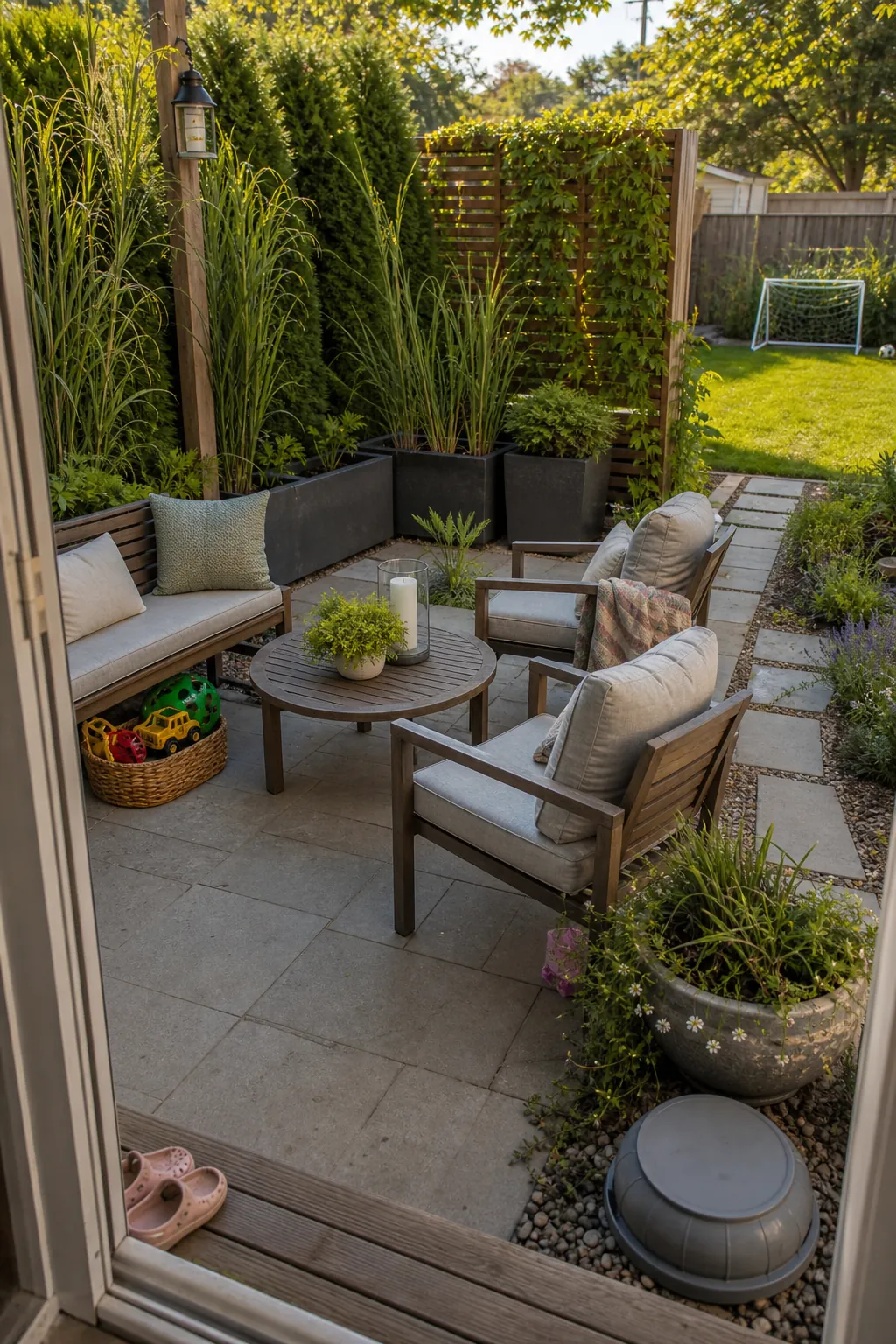
The most useful privacy plants are the ones you can live with. They make the patio feel calmer without taking over the weekend. They screen the awkward view while leaving the good light. They create a boundary without turning the space into a box.
A Simple Patio Privacy Formula
If the choices feel overwhelming, use this formula: one screen, three large planters, one repeated tall plant, one softer filler, and one clear seating zone. Place the screen where it blocks the worst view. Put the large planters beside it. Repeat the tall plant for structure. Add softer plants to make it feel like a garden. Pull the chairs just inside the protected area.
That simple layout works for many patios because it respects how outdoor spaces are actually used. People want to sit down, feel less watched, enjoy plants, and still move through the yard easily. Start there. Add more only when the patio asks for it.
A private patio is not the one with the most plants. It is the one where the right plants are doing the right work in the right place.