
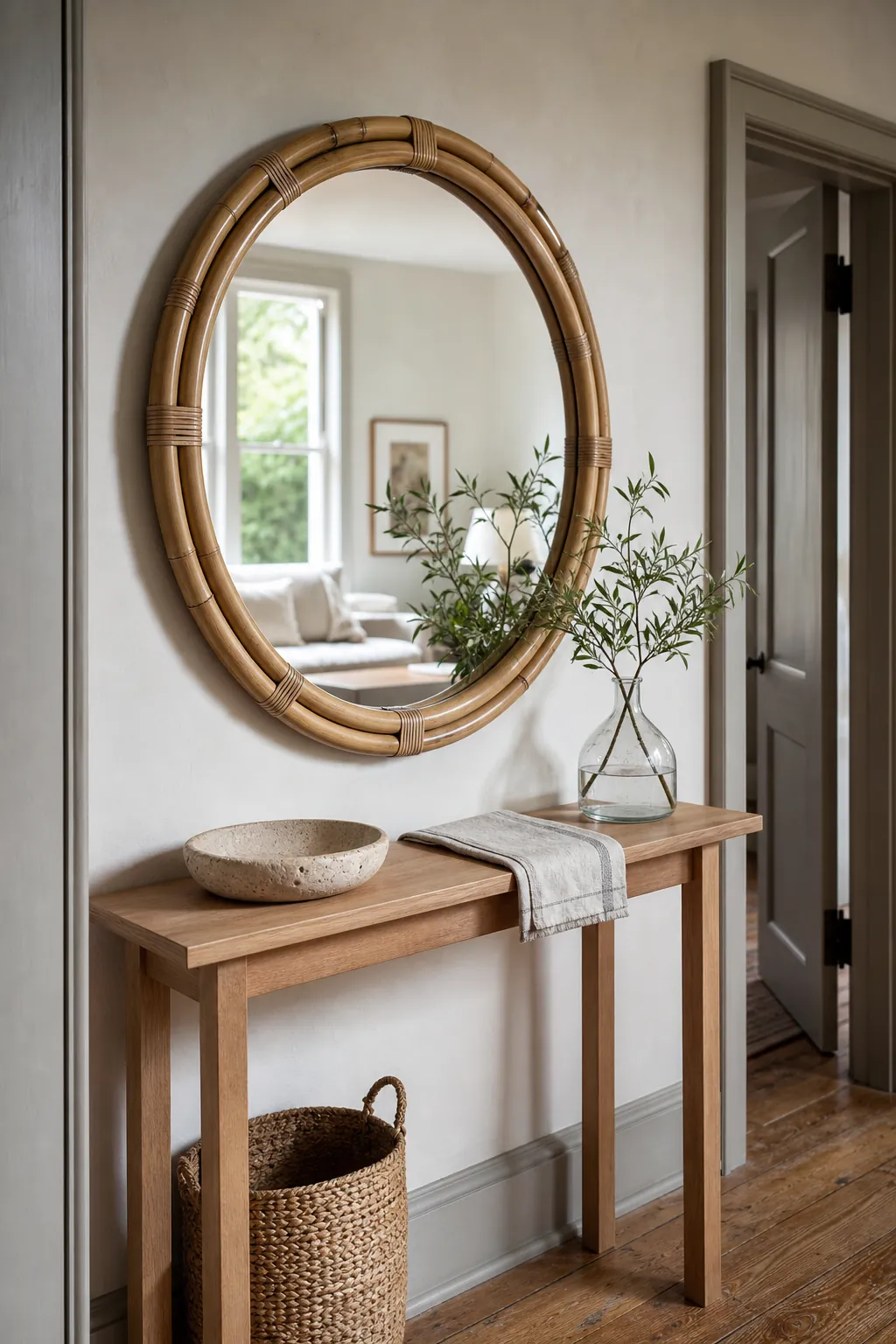
A bamboo mirror can warm up a room faster than almost any small decor change, but the frame alone does not make the arrangement feel natural. The mirror still has to reflect something pleasant, relate to the furniture below it, and help the room work. That is why the most convincing bamboo mirror styling starts with proportion and purpose, then adds texture in measured layers.
Start With What the Mirror Will Reflect
Before measuring the wall, stand where people will normally see the mirror. A beautiful bamboo frame loses its impact when it doubles a cluttered coat rack, a television, or a dark hallway. Aim it toward a window, leafy plant, textured curtain, calm artwork, or an open view into the next room. The reflection becomes part of the composition, so treat it as seriously as the objects placed beside the frame.
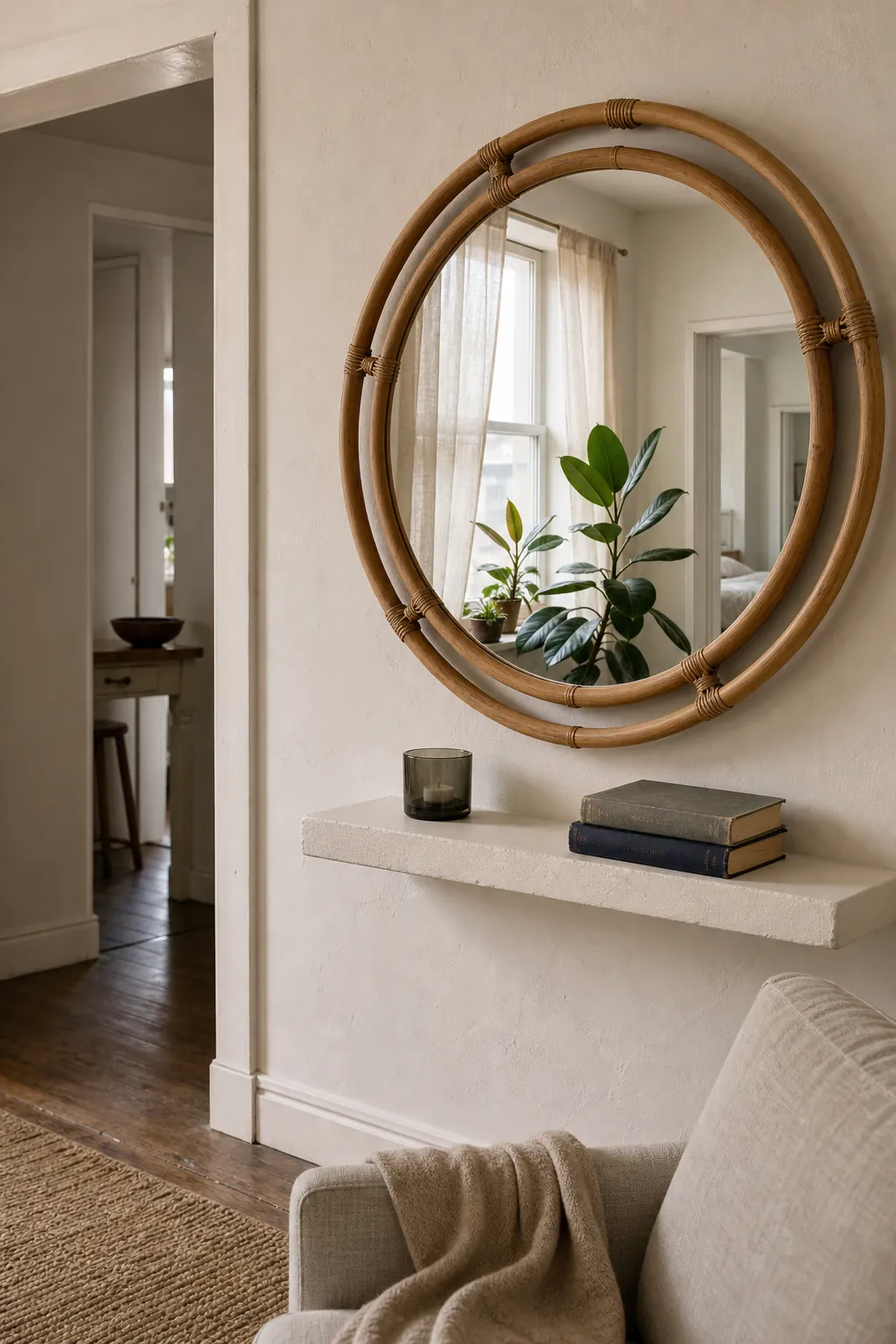
Natural light is especially useful because it makes woven fibers and cane joints easier to see without adding visual clutter. If the room has little daylight, reflect a shaded lamp rather than a bare bulb. The goal is a soft glow, not glare. Check the view in the morning and evening before making holes; a few inches of sideways movement can completely change what appears in the glass.
Match the Frame to the Furniture Below It
Many mirror arrangements look wrong because the mirror and console behave like unrelated objects. Centering is not always mandatory, but their visual weights must connect. A compact round bamboo mirror usually needs breathing room above a narrow console, while a broad rectangular or arched frame can anchor a longer sideboard. As a practical starting point, let the mirror occupy roughly half to three quarters of the furniture width, then judge the whole wall rather than following a number blindly.
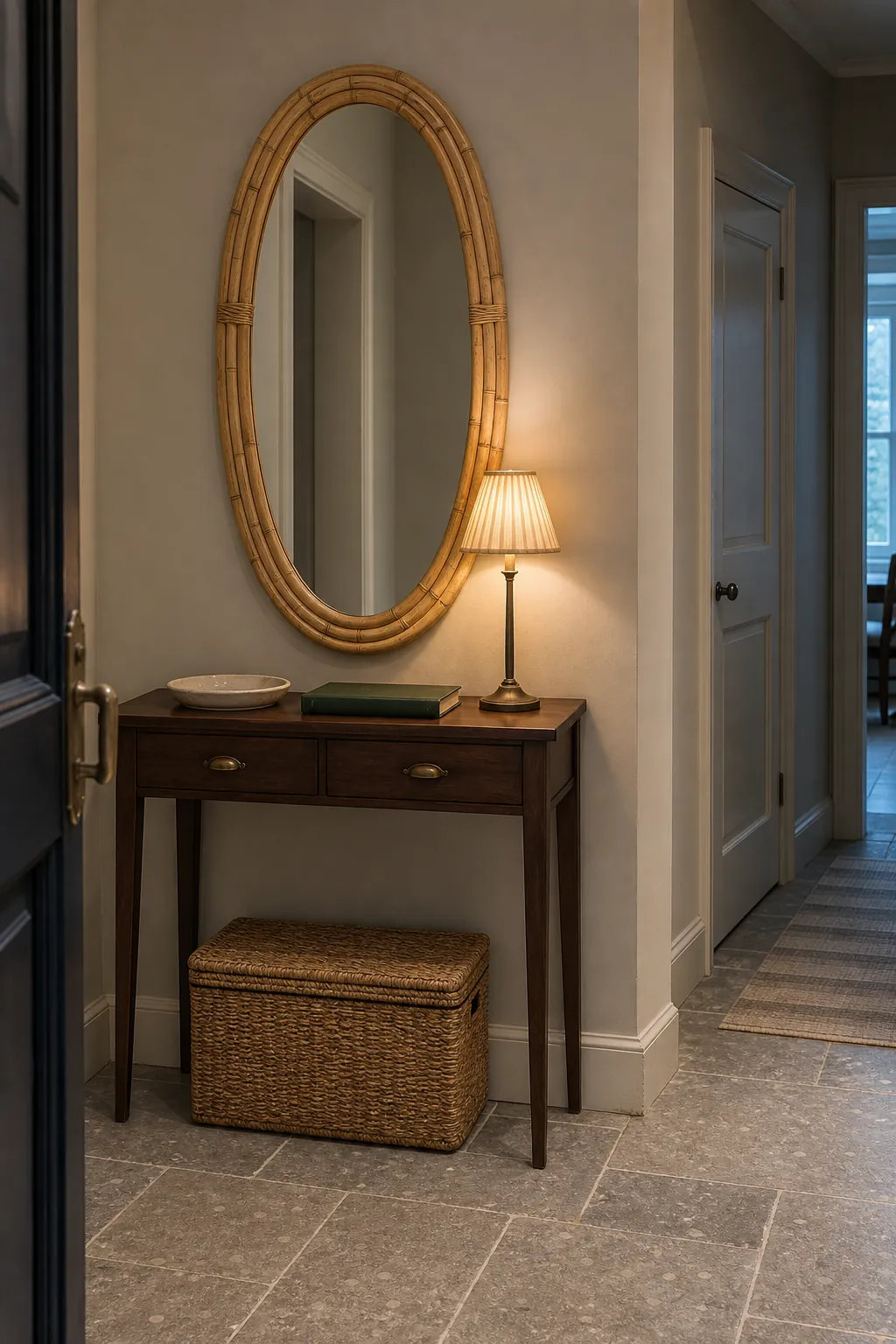
Hang it low enough to belong to the vignette but high enough for the people who use it. Test the position with paper or painter’s tape, then check your face in the glass. A mirror that photographs well but fails the last-look test is not correctly placed. If the gap above the console feels hollow, lower the mirror before filling that gap with more accessories.
Build a Useful Entryway Landing Zone
An entryway mirror earns its space when the surface below it handles arrivals and departures. Use a shallow tray for keys, a small shaded lamp for evening light, and one basket for items that otherwise migrate across the table. This functional base gives the arrangement a reason to exist and keeps the organic decor from becoming a collection of unrelated beige objects.
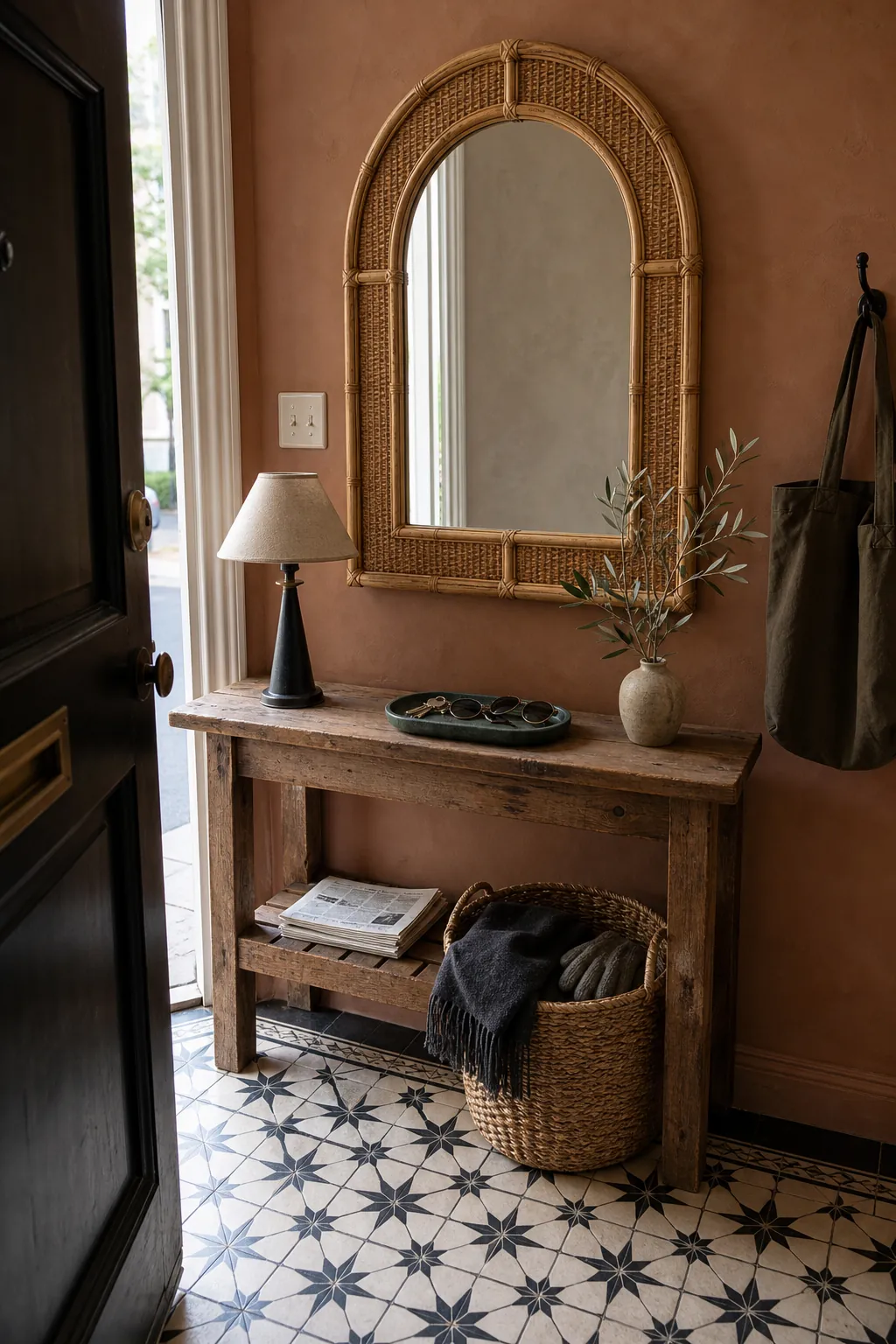
Keep the tabletop hierarchy simple: one tall element, one low catchall, and one living or sculptural accent. A lamp can provide height, a stone tray can hold daily objects, and a clipped branch can soften the hard edge of the glass. Leave open surface around them. In a narrow foyer, negative space reads as calm and makes it easier to put something down without dismantling the display.
Soften a Bedroom Without Making It Too Boho
Bamboo works beautifully in a bedroom because it adds pattern without the visual weight of dark timber or metal. Pair it with washed linen, warm white walls, and one darker grounding note such as walnut, bronze, or an olive textile. Avoid surrounding the mirror with rattan furniture, macramé, fringes, and dried grasses all at once. One expressive natural frame is stronger than a room full of matching motifs.
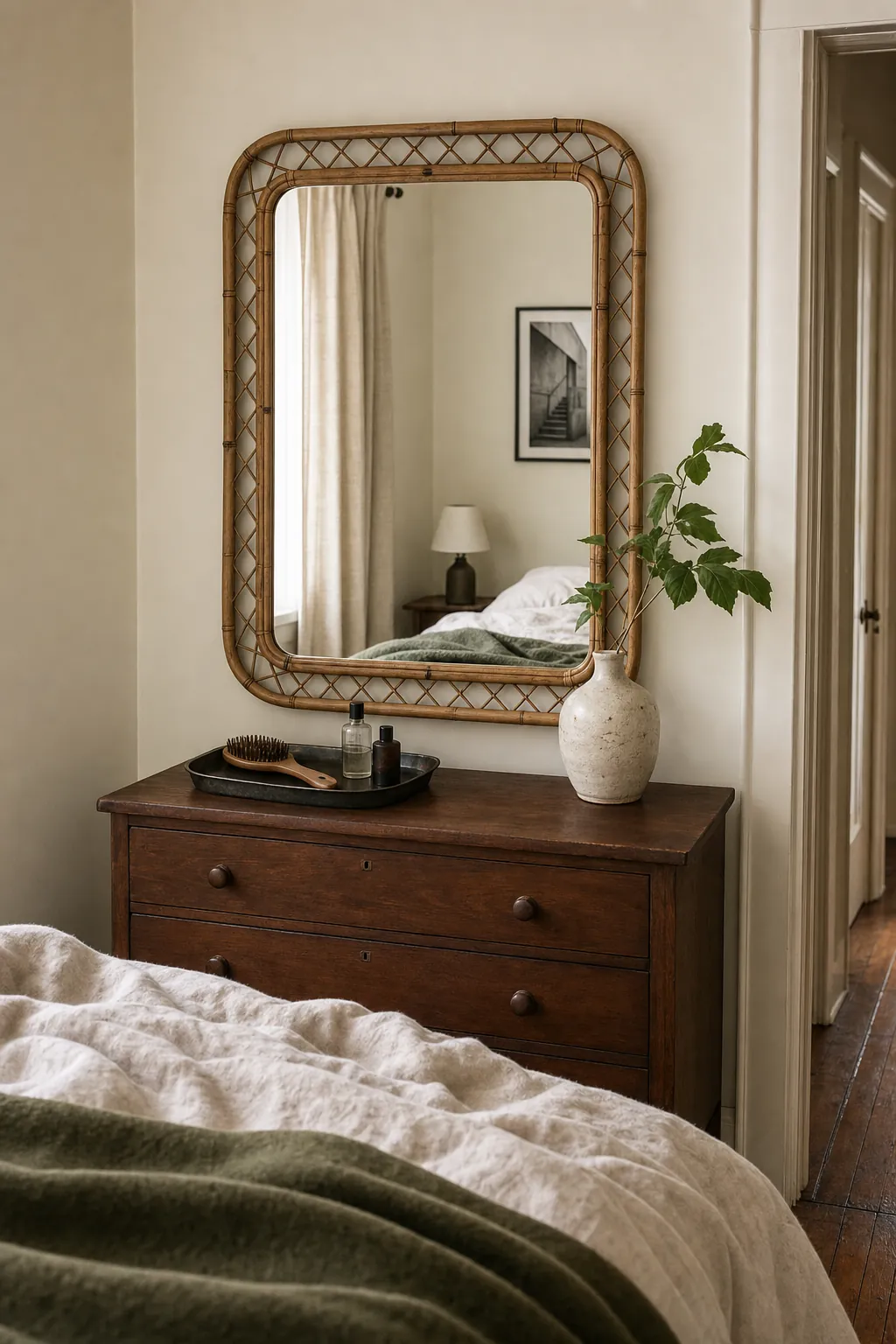
Over a dresser, edit for daily use. Keep the center clear, group small items on a tray, and add one object with an irregular outline to counter the mirror’s geometry. If the bamboo frame is ornate, let the bedding and lamps stay quieter. If the frame is slim and simple, a striped throw or hand-thrown ceramic vessel can supply the missing character.
Use Contrast to Keep Natural Decor From Looking Flat
A natural home needs more than natural color. Bamboo becomes more visible beside surfaces that behave differently: cool stone, softly wrinkled linen, matte plaster, dark wood, clear glass, or blackened metal. Choose two or three materials and repeat them lightly. This contrast preserves the warmth of the frame while preventing the room from dissolving into one tan palette.
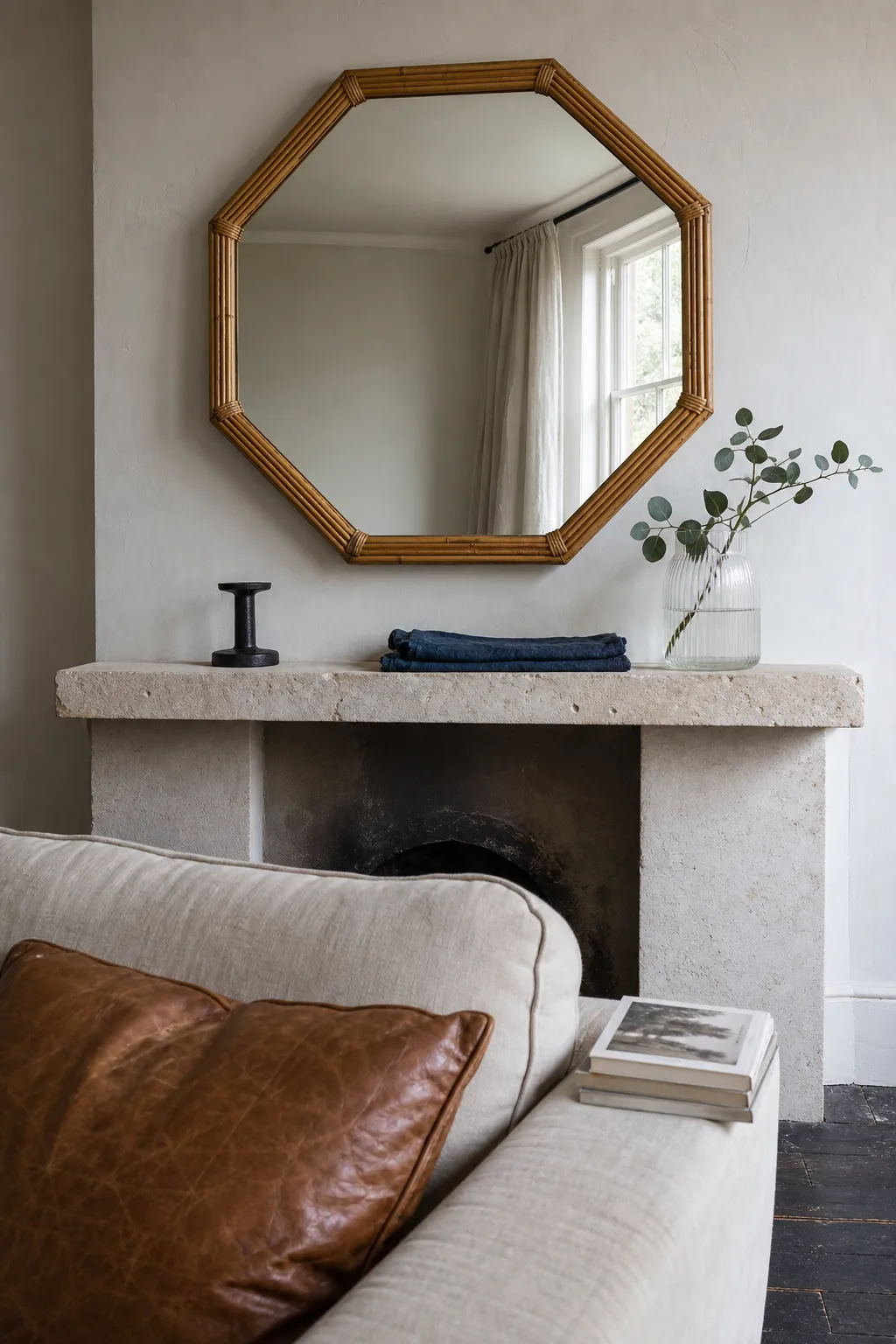
Color works the same way. Sage, clay, tobacco, ink, and muted blue all make bamboo’s honey tones feel intentional. Choose one accent already present elsewhere in the room and echo it near the mirror in a small object or textile. That link is enough; exact matching usually makes a space feel assembled rather than lived in.
Finish With Restraint and Everyday Detail
The final pass is subtraction. Remove anything that blocks useful mirror area, competes with the bamboo weave, or exists only to fill a gap. Then add back one sign of real life: a bowl for keys, a favorite book, a brush on a bedroom tray, or a basket that actually holds scarves. Those ordinary objects keep the scene believable.
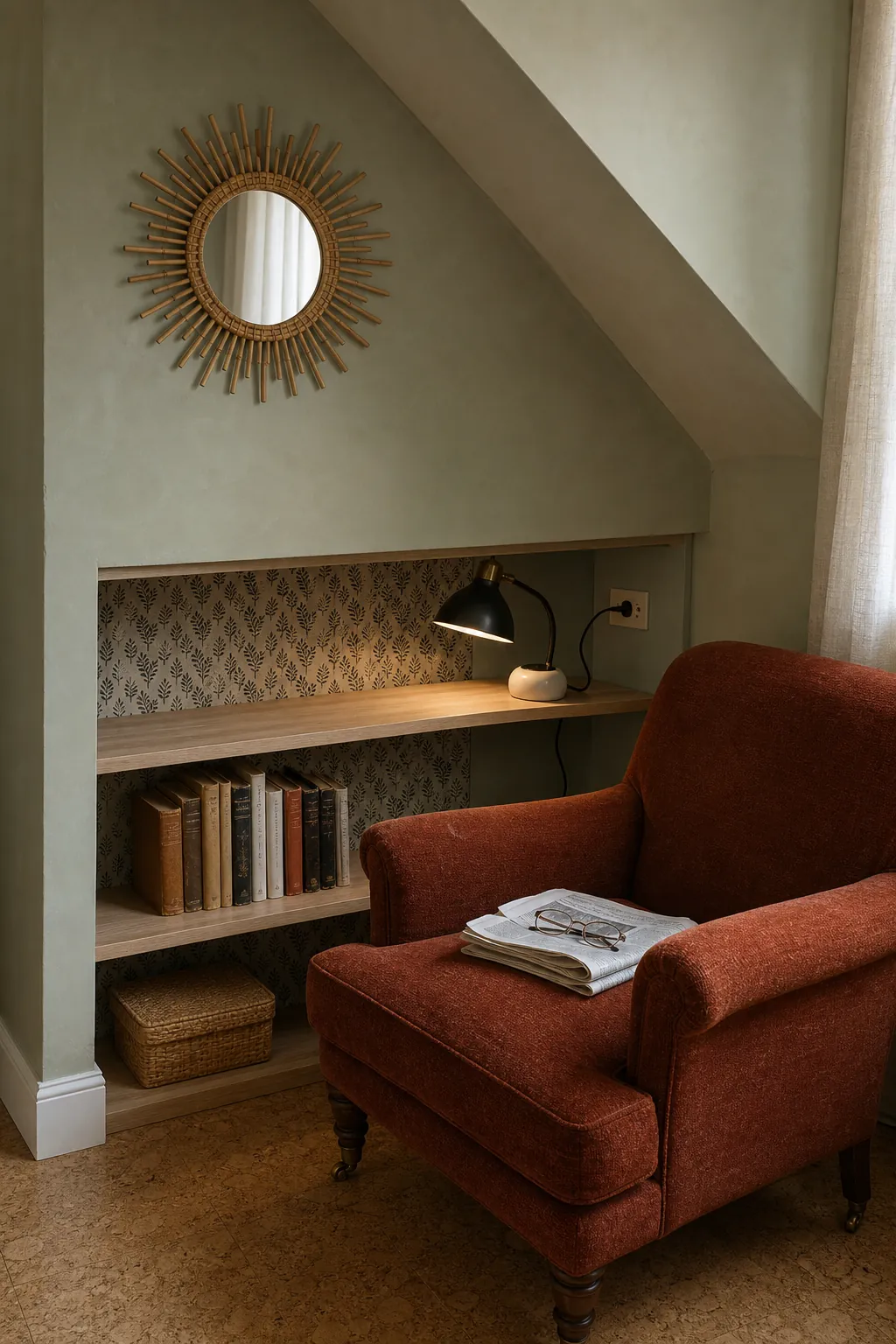
Step back and look at the mirror, its reflection, and the furniture as one shape. If your eye can settle on the frame and then move naturally through the room, the styling is finished. The best organic decor does not announce a theme. It makes the home feel warmer, lighter, and easier to use.