
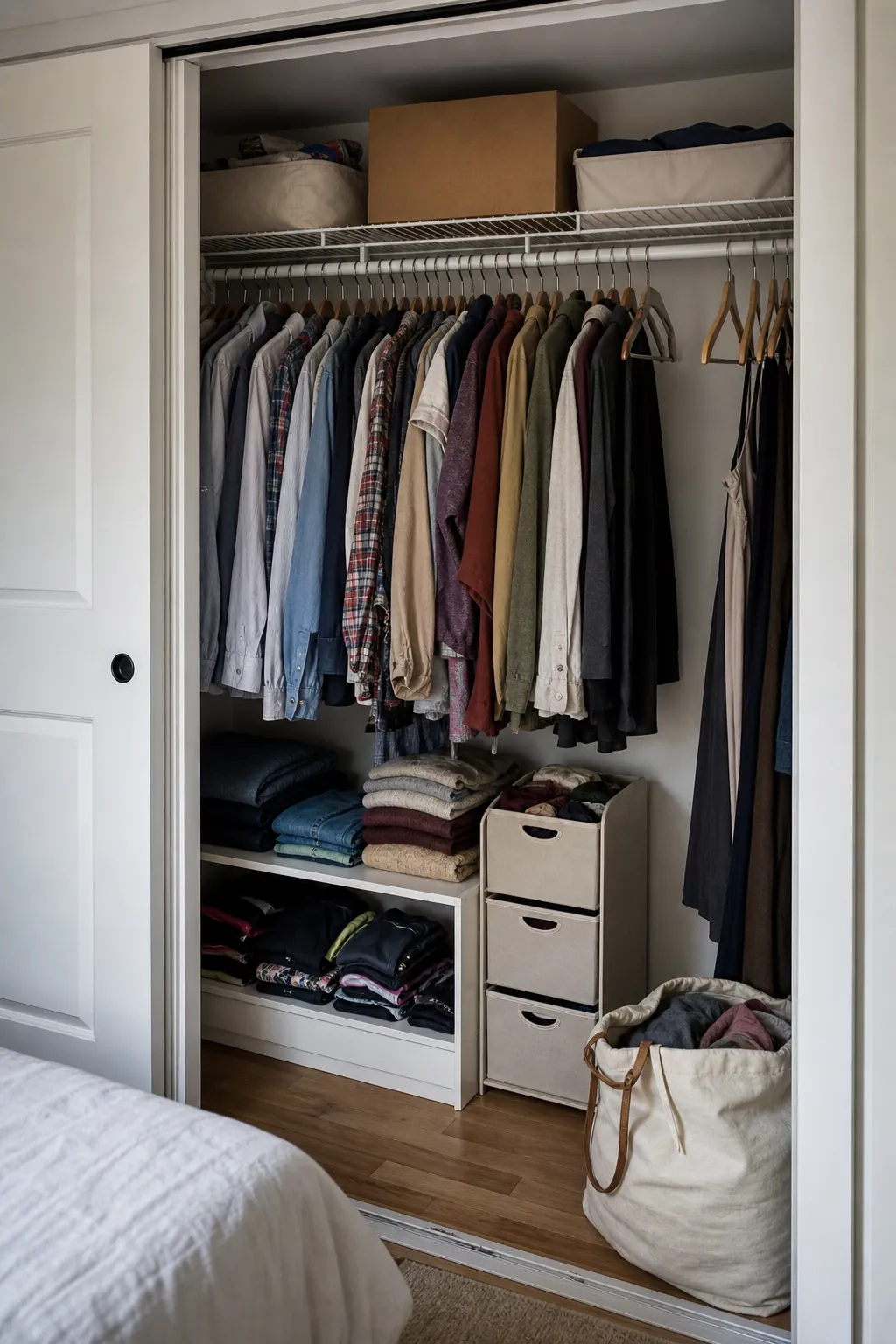
When you have too many clothes, another set of bins can make the closet look calmer for a week while preserving the real problem: more clothing is competing for prime space than the closet can serve. You forget what you own, drawers become hard to open, and favorite pieces disappear behind clothes you merely like.
The solution does not require becoming a minimalist or discarding half your wardrobe in one exhausting day. It requires choosing what earns active space, setting limits by category, and moving uncertain decisions out of the daily system. Work in small batches so your bedroom remains usable throughout the process.
Start With the Easy Exits, Not Everything
Do not empty the entire closet onto the bed if that will leave you overwhelmed. Start with one drawer, one foot of hanging rod, or one clothing category. Remove the pieces that require almost no debate: stained items, damaged garments you will not repair, uncomfortable fabric, obvious duplicates, and clothes you already avoid.
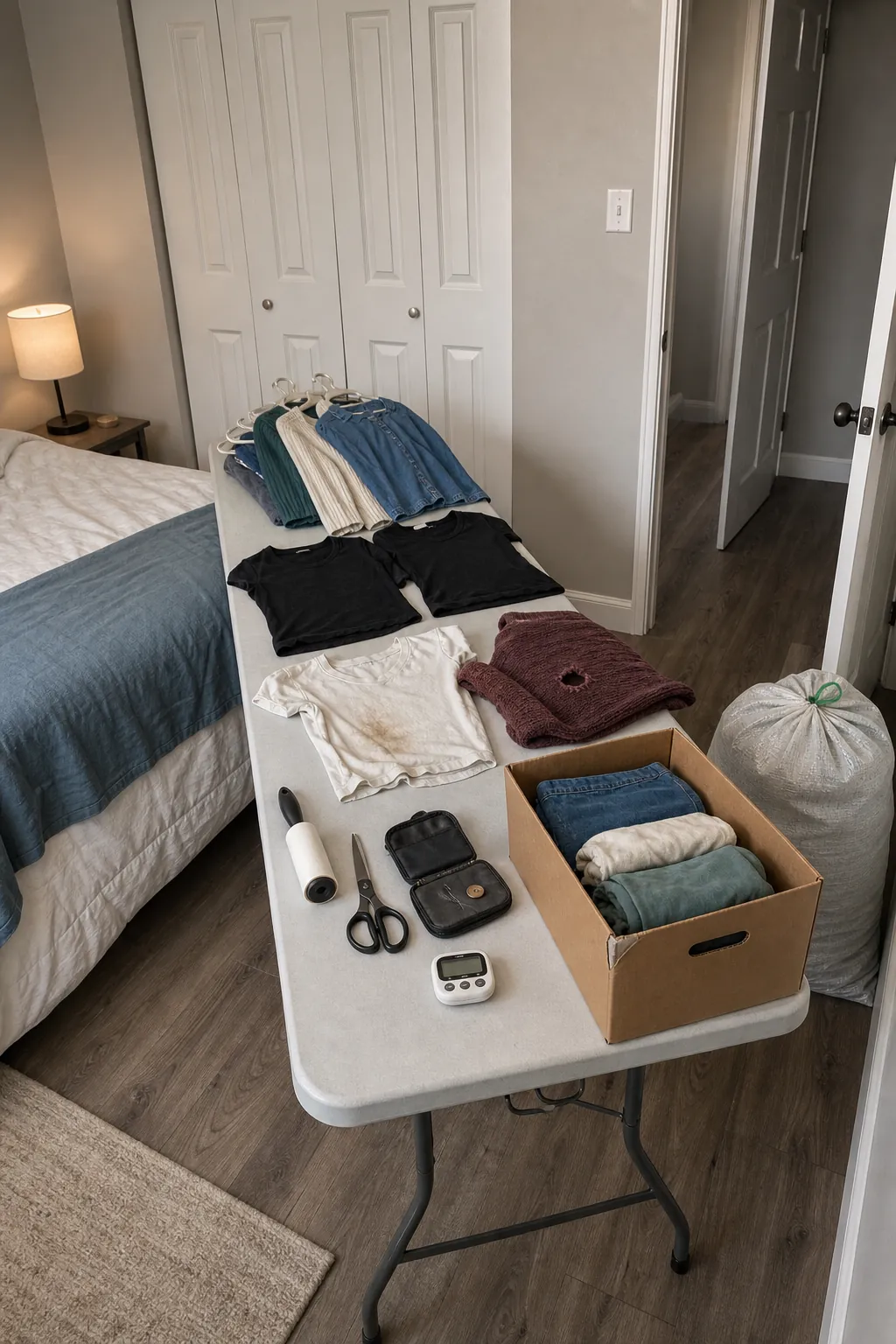
Separate wearable donations from textile recycling. Give repairs one small pouch and a deadline; a large repair basket is just another closet. Stop after a short session while the room is still functional. The first pass should create visible breathing room without demanding your hardest emotional decisions.
Choose Favorites Before You Debate Maybes
Instead of asking whether every item is good enough to keep, ask which clothes you would choose first. Pull the pieces that fit comfortably today, suit your current routine, and make getting dressed easier. Include enough work, casual, exercise, and occasion clothing for your real laundry schedule.
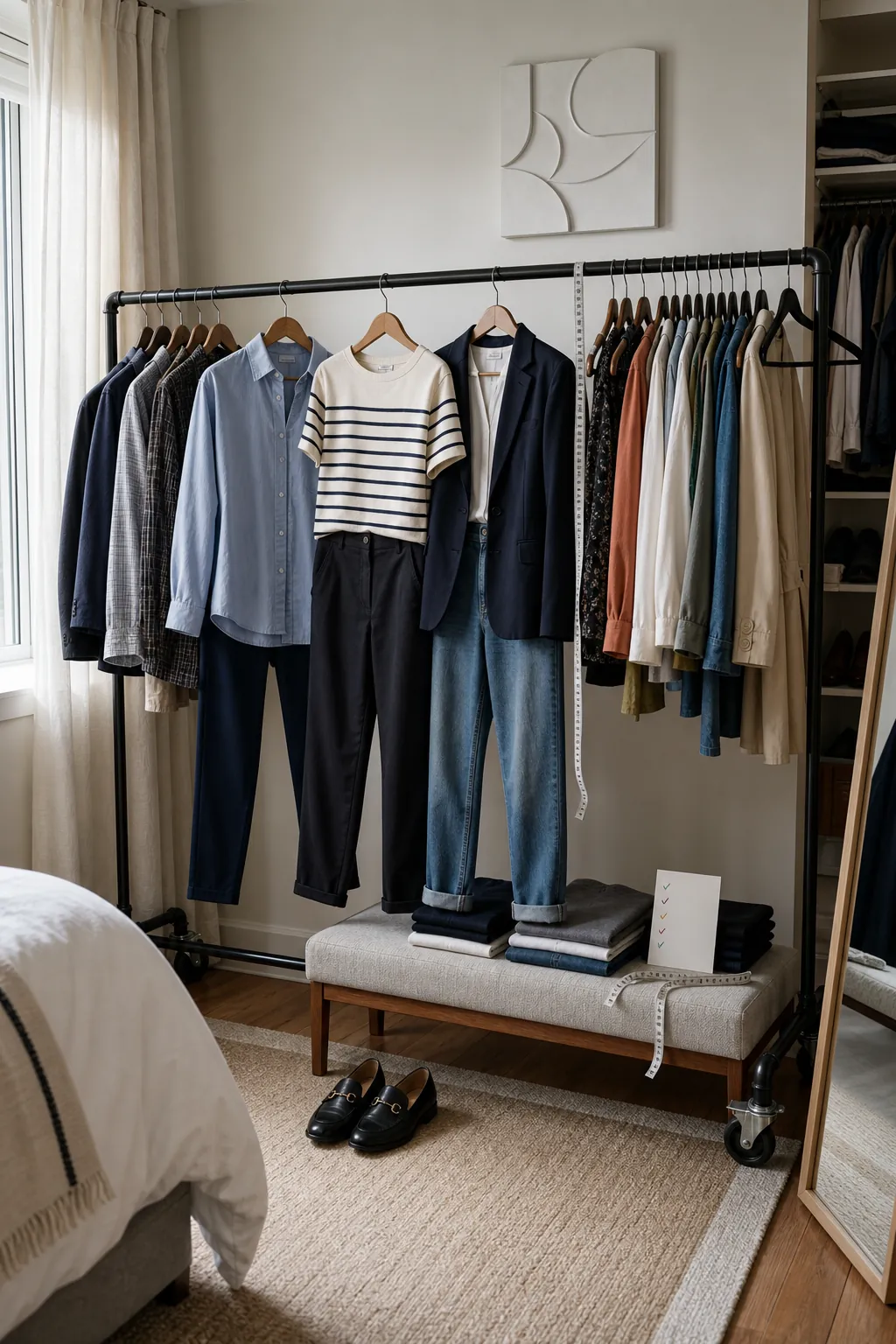
Build several complete outfits, not a collection of isolated beautiful pieces. A top that needs the one specific bra you dislike or trousers that work only with shoes you never wear may not be serving you. Prime closet space belongs to the wardrobe you live in now, not a fantasy schedule.
Set Capacity by Category
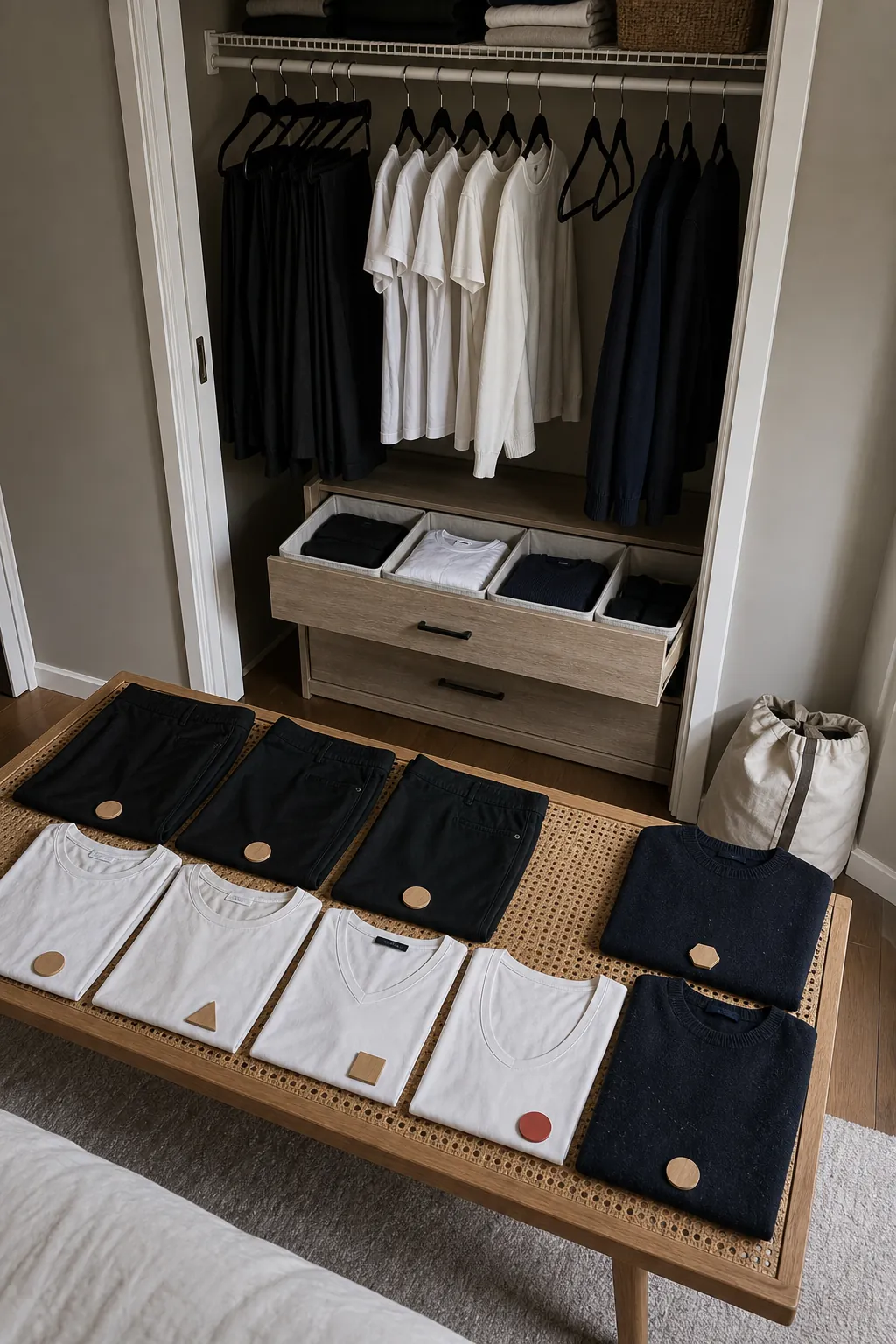
Sorting all clothes into keep-or-donate is emotionally vague. Comparing within a category is concrete. Put all black trousers together, all white tees together, or all cardigans together. Keep the strongest versions until that category fits its assigned hangers, drawer, or bin with room to move.
- Which item fits and feels best right now?
- Which one is easiest to wash and combine with other clothes?
- Which duplicate has the best fabric and condition?
- Would you buy this specific item again today?
The container is the limit. When a drawer cannot open smoothly or hangers cannot slide, the category is over capacity regardless of how neatly it is folded.
Keep Today’s Fit in the Active Closet
Size changes make clothing decisions especially personal. Your active closet should contain clothes that fit and support you now. If you are not ready to release other sizes, give them one breathable quarantine box outside the prime-access zone rather than mixing them into daily choices.
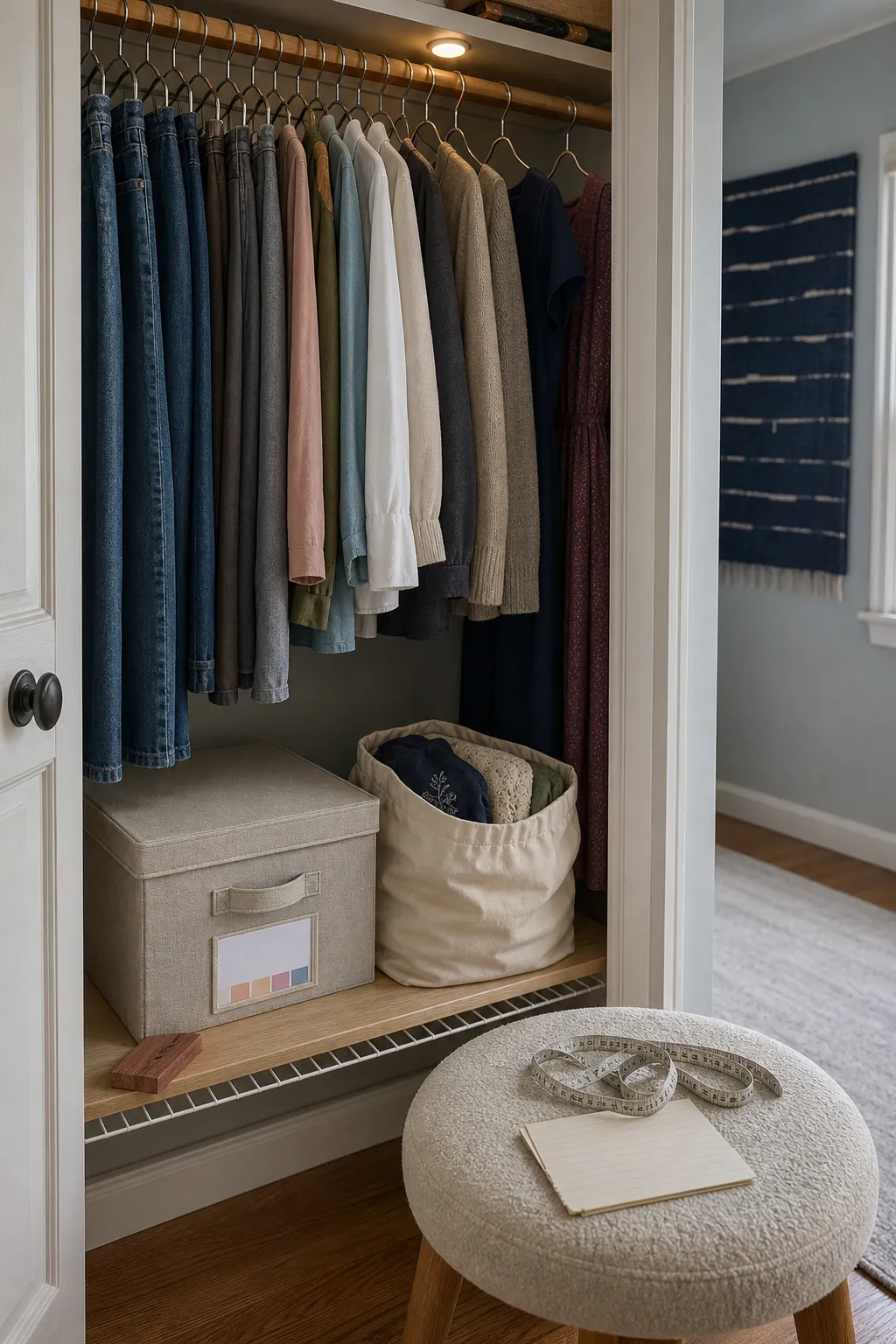
Set a review date and cap the box. Keep only pieces in good condition that you would genuinely be happy to wear again. This is not a permanent archive; it is a delayed decision with a boundary. A single box can reduce regret while allowing the everyday closet to function.
Run a Real Wear Test
If you believe you wear almost everything, collect evidence. Turn hanger hooks backward at the start of the test. After wearing, washing, and returning an item, hang it normally. For folded clothes, place a small divider in the drawer and return worn items to one side.
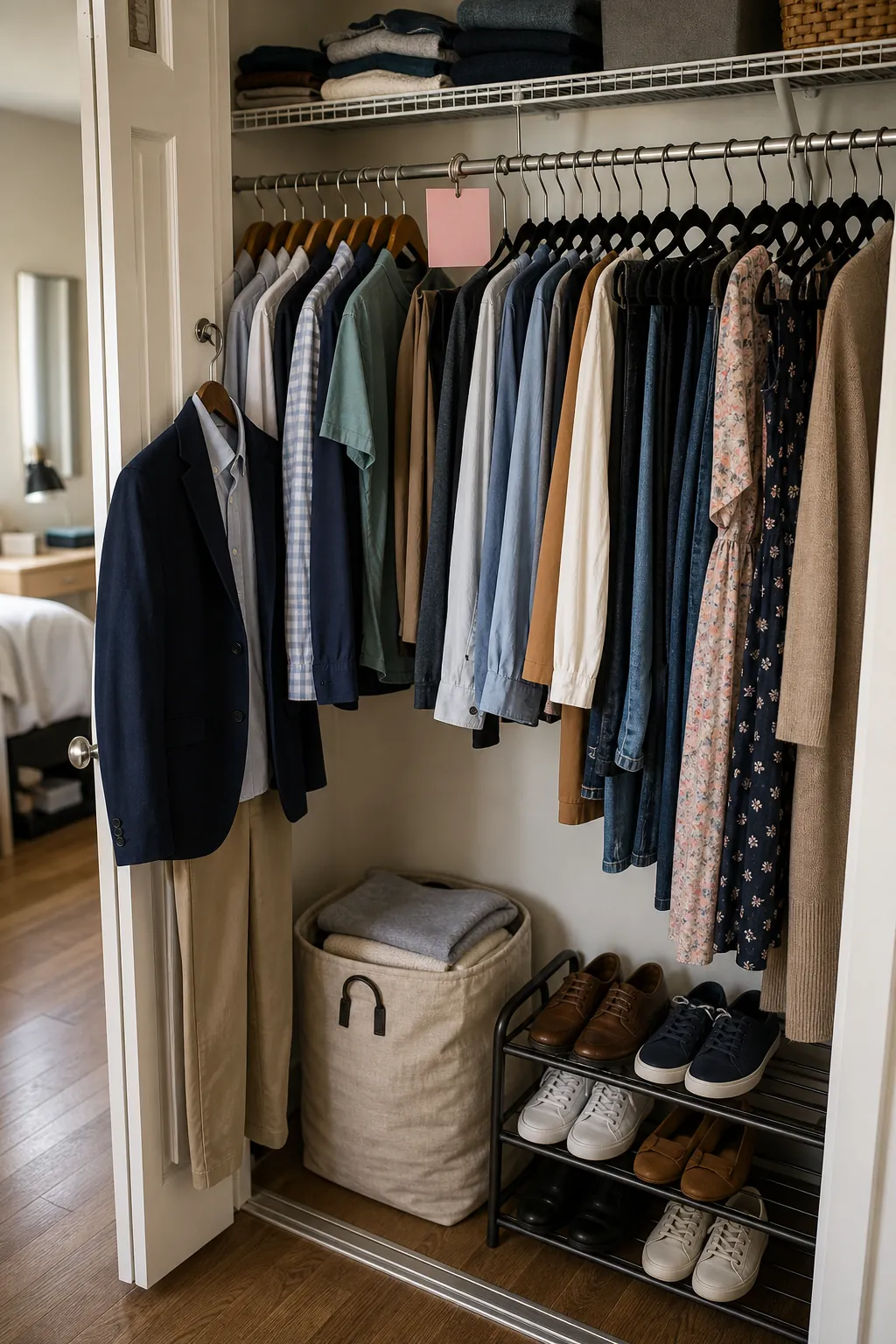
Run the test long enough to cover your normal laundry cycle and work pattern. Account separately for true seasonal and formal clothing. At the end, unworn items are not automatically bad, but they now carry the burden of proof. Ask what prevented you from choosing them when better options were available.
Build Maintenance Into the Finished Closet
Organize the remaining wardrobe by access: daily items in the center, long garments in a clear side zone, folded clothes beneath short pieces, and lightweight seasonal bins above. Keep a return basket for clean laundry, a tiny repair pouch, and a donation bag near the exit.
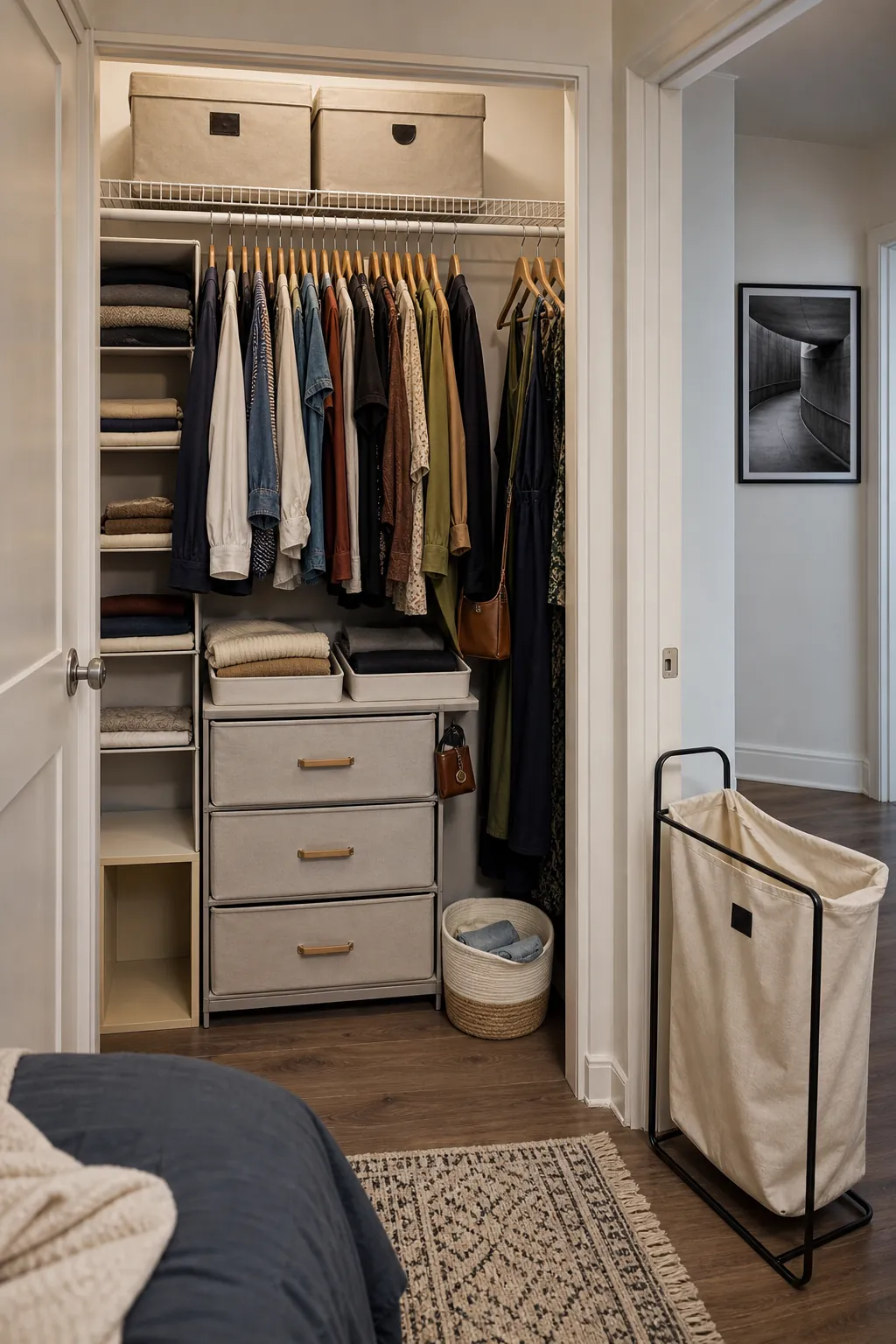
Leave several empty hangers, part of a drawer, or one shelf cube open. That is not wasted space; it is the working capacity that lets you put laundry away. Adopt a one-in-one-out rule for categories already at their limit, and pause clothing shopping while you learn what the edited wardrobe actually needs.
A functional closet does not prove that you own the fewest clothes. It proves that you can see, reach, wear, and return what you keep. When the space itself sets the limit, organization stops being a recurring rescue project and becomes a simple weekly reset.