
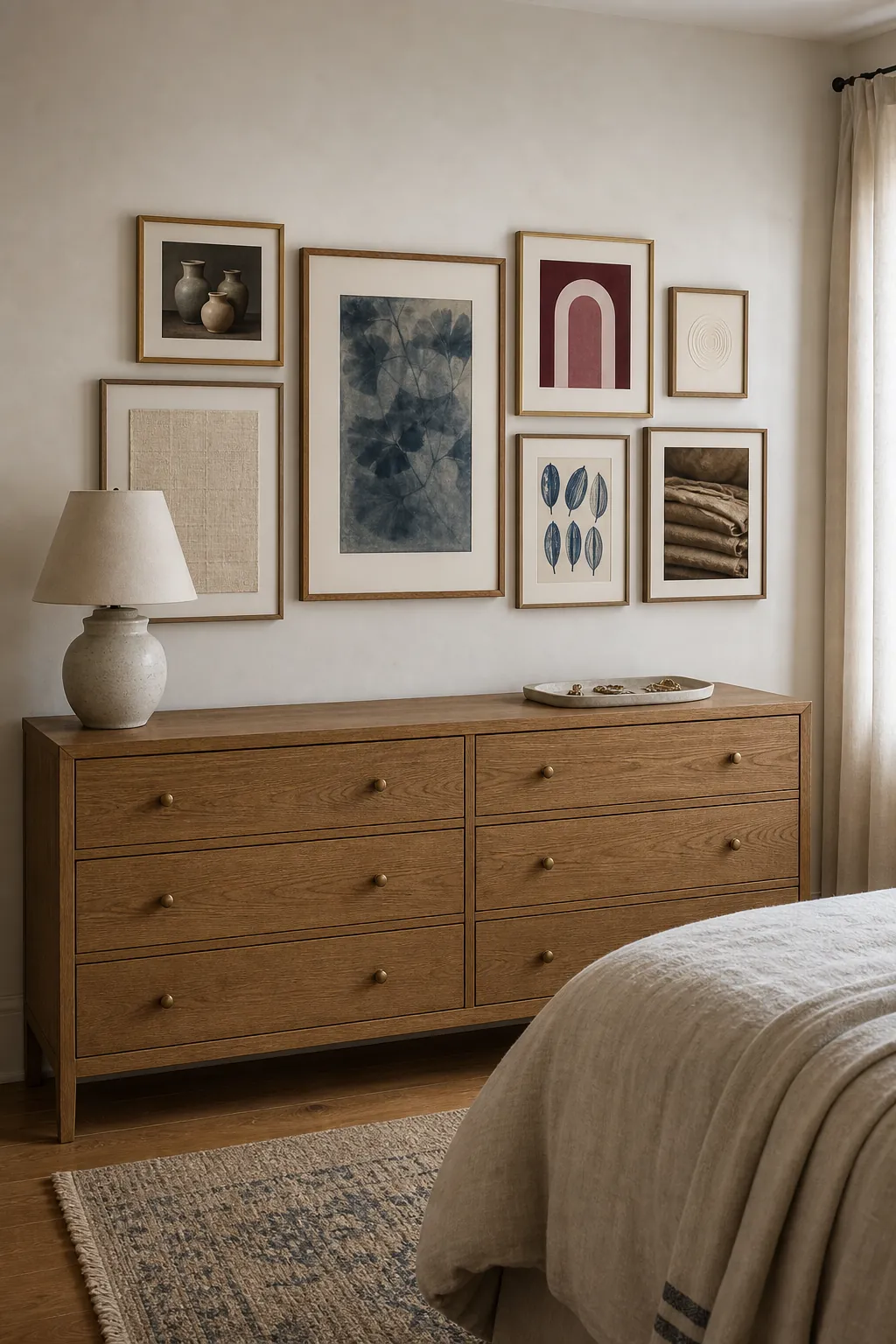
The empty wall above a dresser can make an otherwise finished bedroom feel strangely unresolved. The instinct is often to add several small frames and spread them upward, especially when the ceiling is tall. That usually creates the opposite effect: the art looks undersized, the dresser feels detached from it, and the whole arrangement seems to float.
The strongest bedroom gallery wall ideas above a dresser begin with the furniture, not the ceiling. Treat the frames and dresser as one connected composition. Choose art that can be enjoyed from the bed, keep the lowest pieces visually close to the dresser, and leave some wall empty on purpose. This approach makes bedroom wall decor feel personal without making a restful room busy.
Measure the Dresser Before Choosing Frames
Measure the dresser’s actual visual width first. A cabinet with curved ends, open sides, or a narrow top may read smaller than its widest measurement. As a starting point, plan for the complete gallery wall to occupy roughly two-thirds to three-quarters of the dresser’s visual width. That range usually feels substantial without making the artwork appear heavier than the furniture supporting it.
Do not use the full bedroom wall as the sizing reference. A dresser may sit on a twelve-foot wall, but the frame wall should still relate to the dresser below. Trying to fill every inch around the furniture often pulls the eye away from the room’s center and makes the arrangement feel ungrounded.
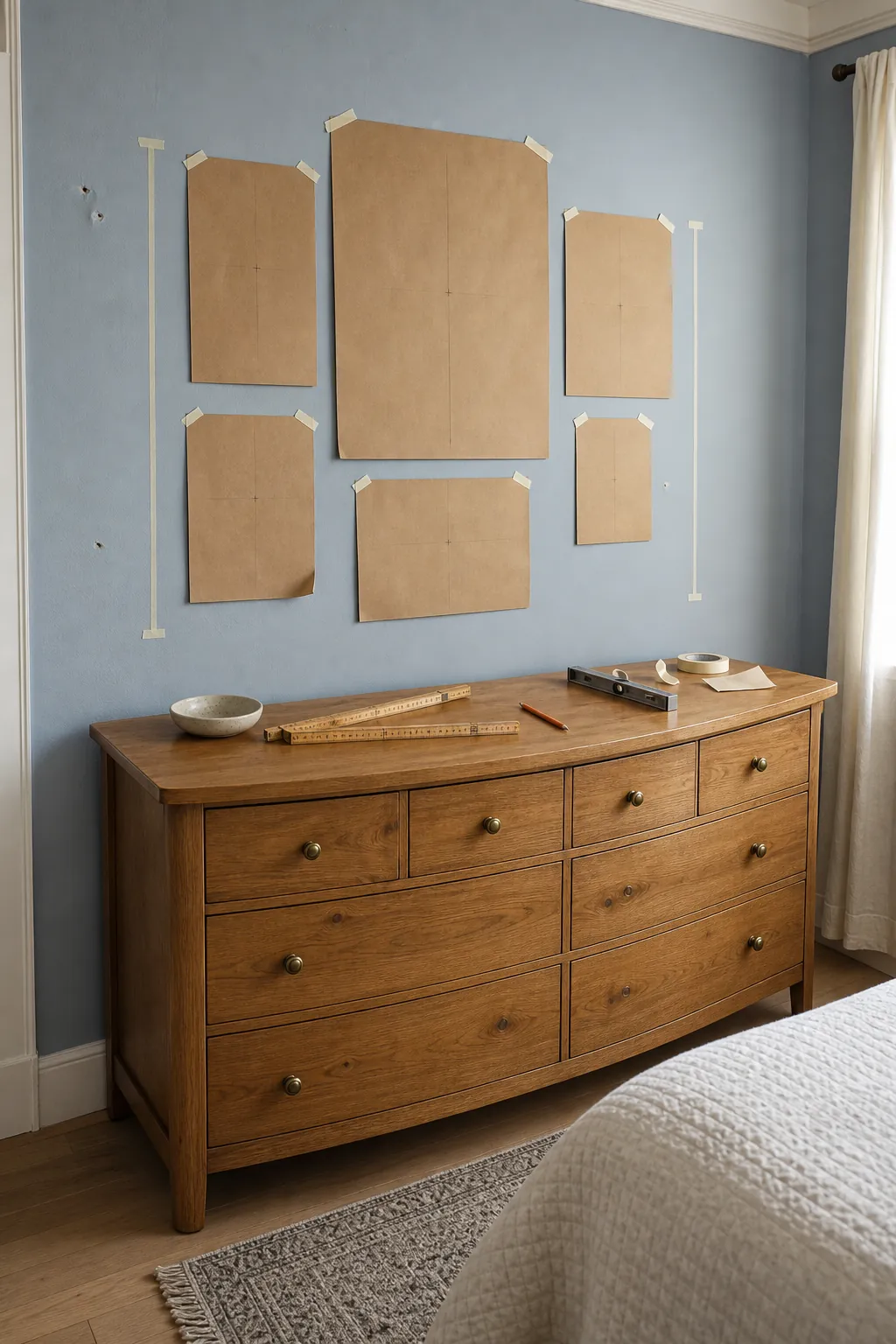
Use painter’s tape to mark the proposed outer width on the wall. Then look at it from the doorway and from the bed. If it appears timid in both views, increase the frame sizes before adding more frames. Fewer medium and large pieces usually look calmer than many small ones.
Pick One Clear Layout Structure
A bedroom gallery wall does not have to be symmetrical, but it should have a structure you can describe in one sentence. That prevents the common in-between result: a few frames almost forming a grid, with other pieces drifting at random.
- A compact grid feels quiet and polished. It works especially well above a modern dresser or in a small bedroom where visual order matters.
- A centered anchor with supporting pieces uses one large work in the middle and smaller frames around it. This is helpful when you already own one meaningful piece.
- An offset composition balances art on one side with a tall lamp, vase, or plant on the other. It suits an off-center dresser or a wall with a window, door, or sloped ceiling.
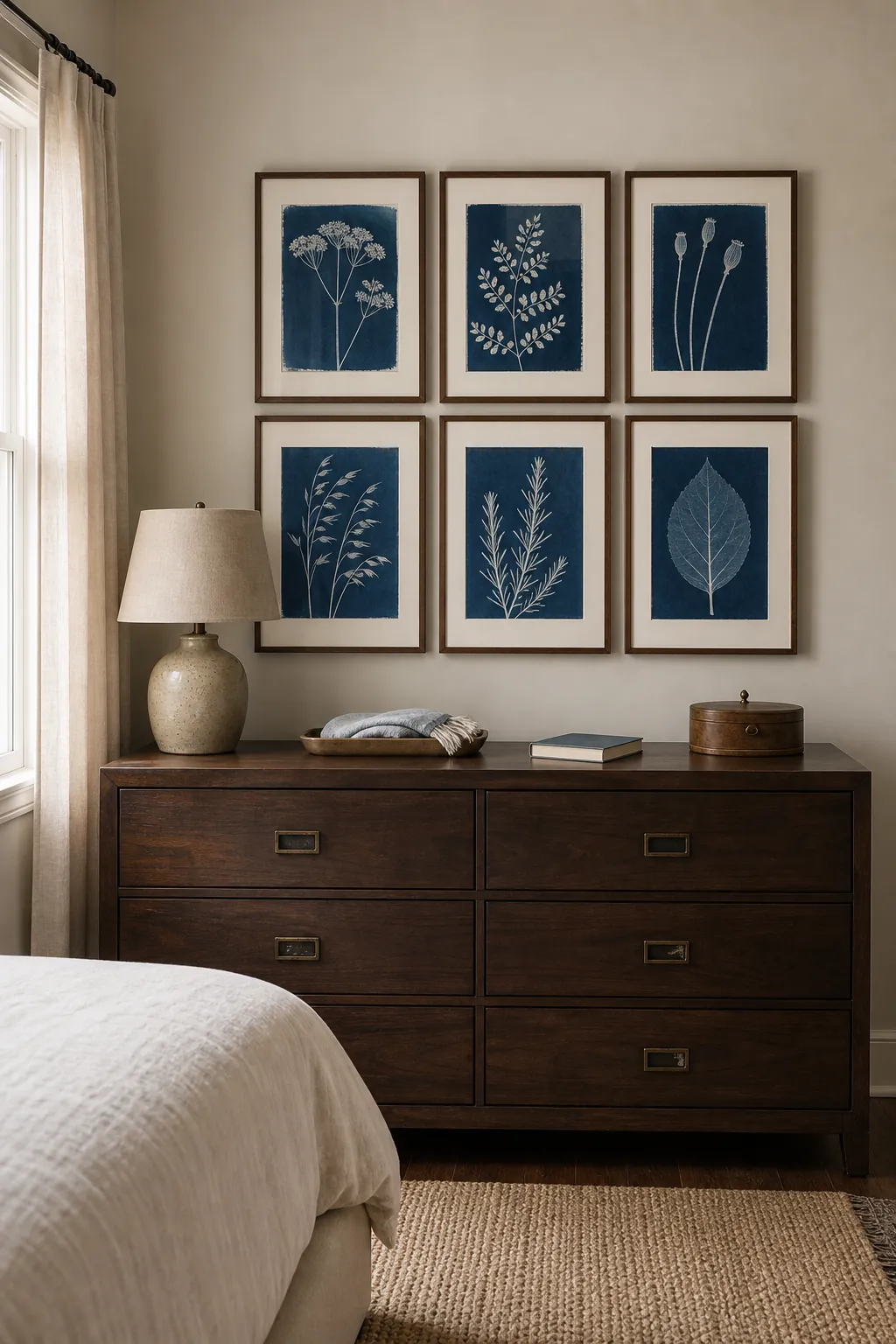
Commit to the chosen structure. In a grid, repeat frame dimensions and gaps precisely. In an organic layout, repeat at least one edge or centerline and keep the spaces between neighboring pieces consistent. An offset arrangement should look intentionally balanced by the dresser decor, rather than as if the gallery slid to one side by accident.
Hang the Group Lower Than You Think
Art above furniture follows a different rule from art on an empty wall. Instead of centering every piece at standing eye level, visually connect the gallery to the dresser. A useful starting range is about 4 to 8 inches between the dresser top and the lowest frame. A tall dresser often looks best near the lower end of that range.
The final distance depends on what lives on the dresser. Leave enough clearance for a lamp, jewelry box, or vase, but do not let accessories force all the art toward the ceiling. If a lamp is permanently part of the setup, include its full height in your paper mock-up from the beginning.
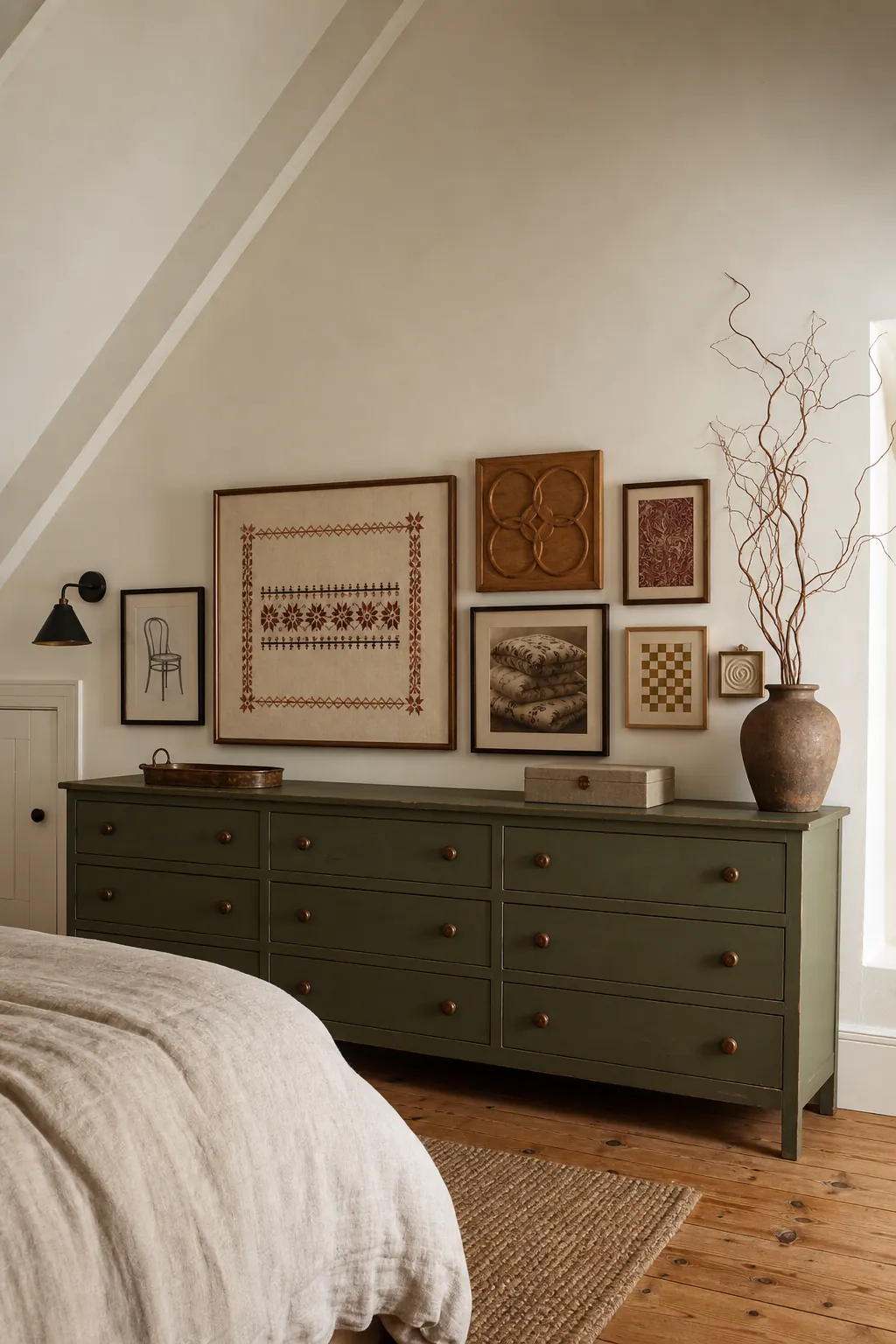
A high or sloped ceiling does not need to be filled. Blank wall above a well-proportioned frame wall can make the room feel taller and more restful. If the arrangement feels low only because there is a large amount of space above it, look again at the dresser relationship. The furniture is the anchor; the ceiling is not the target.
Choose Art That Reads From the Bed
A frame can look large when you hold it and surprisingly small from across the bedroom. Test every layout from the pillow or the bedroom doorway. You should be able to understand the major shapes, colors, or subjects without walking over to the dresser. Very detailed miniatures are better for a bedside wall, desk, or hallway where they can be seen up close.
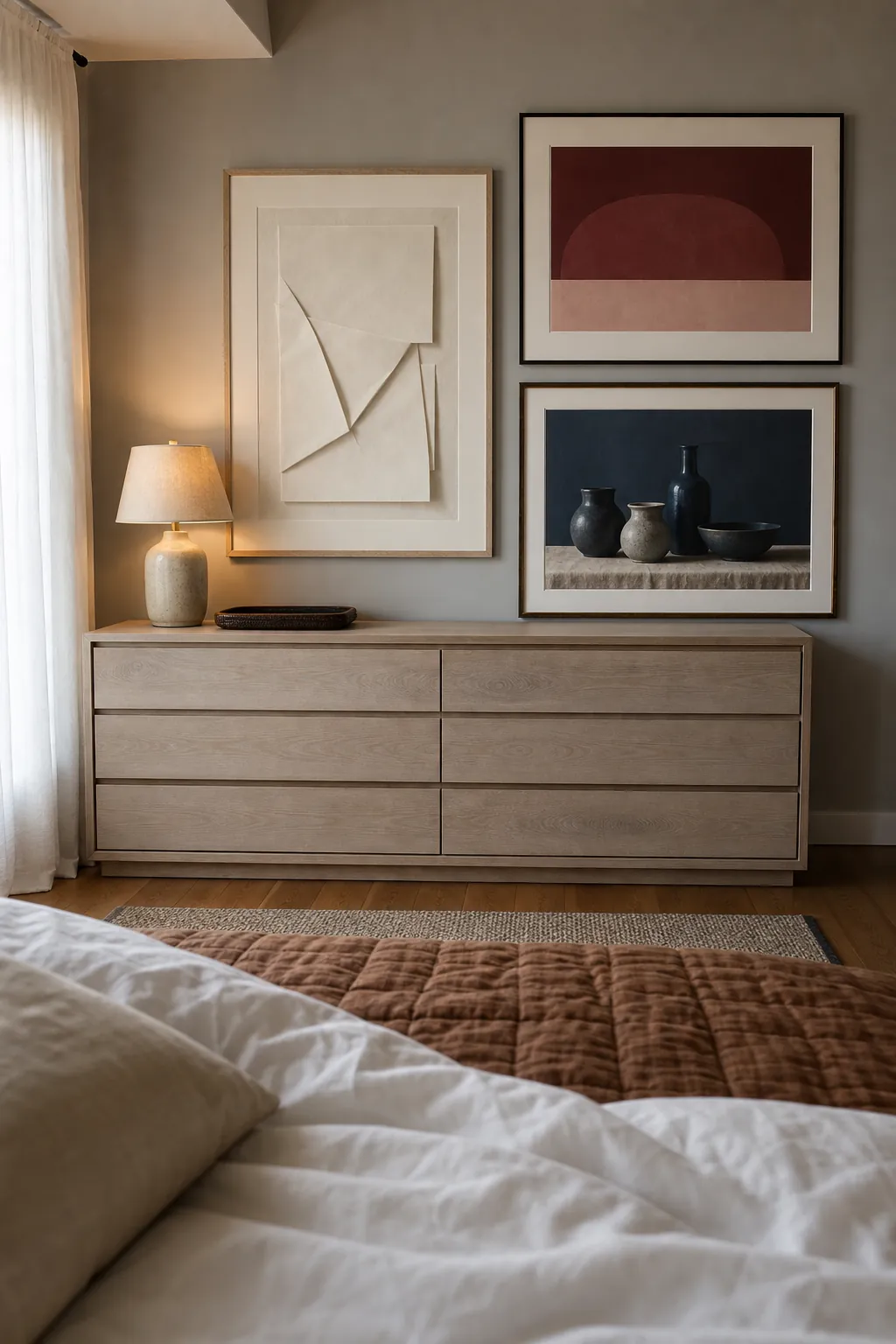
Generous mats can help a smaller print carry more presence. They create breathing room inside the frame and make a collection feel more composed. When the wall still looks weak, enlarge the overall frame dimensions or reduce the number of pieces. Adding several tiny fillers rarely solves a scale problem.
Use a Mirror as an Anchor, Not a Requirement
A mirror above a dresser is useful when the dresser also functions as a grooming area or when the bedroom needs reflected light. It is not automatically the best answer. If there is already a full-length mirror nearby, the dresser wall can hold art instead and become a more personal focal point.
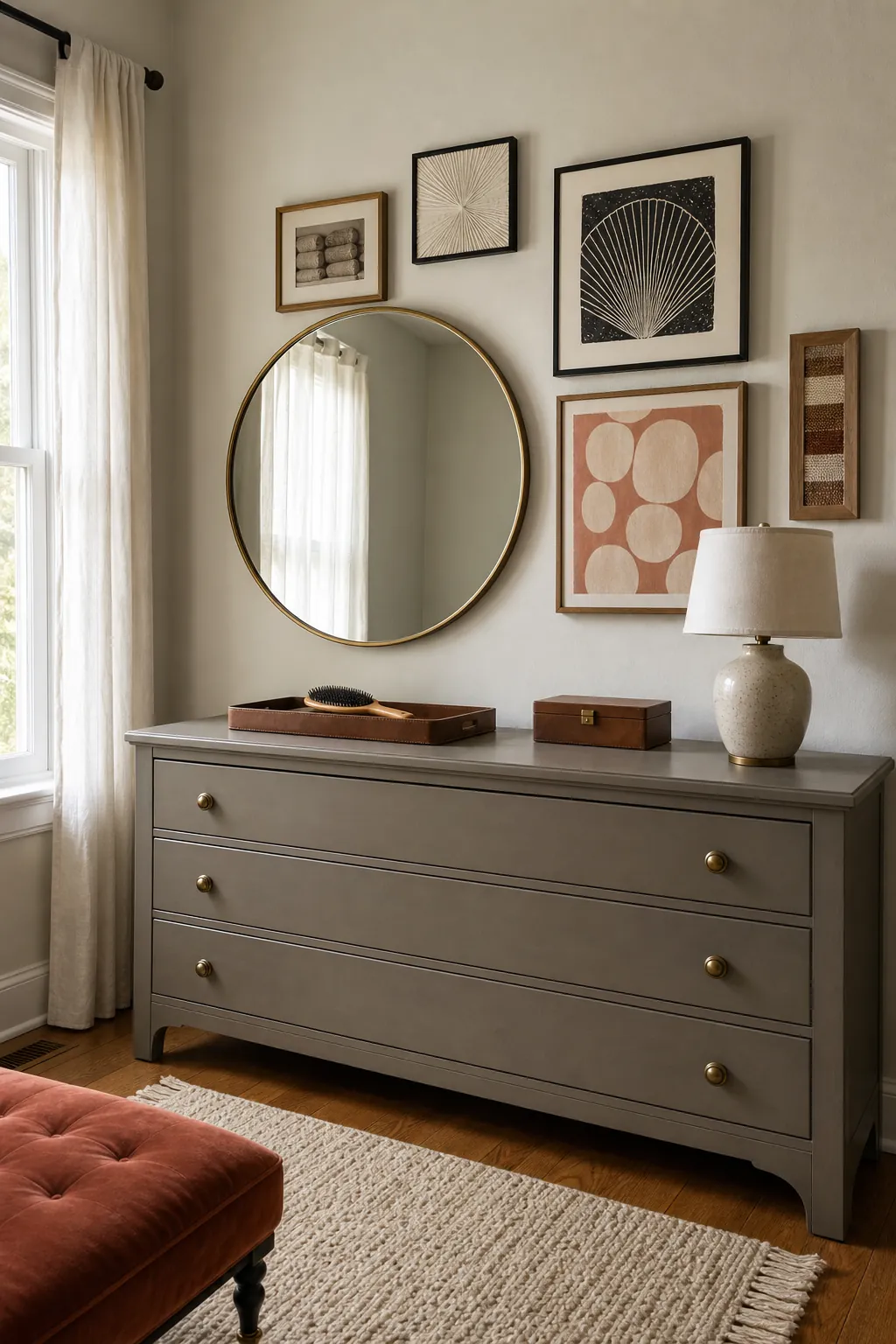
When you do include a mirror, treat it as the largest piece in the gallery. A round or softly arched mirror can break up a collection of rectangular frames. Keep the smaller art clearly related to its edges, repeat the mirror’s metal or wood finish elsewhere, and avoid placing fragile frames where opening a dresser drawer or reaching for jewelry could knock them.
Build Cohesion Without Buying a Matching Set
A bedroom frame wall can include photographs, drawings, textile fragments, paintings, and found paper without feeling messy. Give the collection one repeated element: two frame finishes, a shared mat color, a limited art palette, or recurring curved shapes. Repetition makes unrelated pieces feel like a collection instead of leftovers.
Pull color from the bedding, rug, curtains, or dresser wood, but do not match every shade exactly. A muted version of the room’s accent color often feels more settled. In a calm bedroom, let one piece carry the strongest contrast and allow the rest to support it. Not every frame needs to compete for attention.
If pale frames disappear against a pale wall, add definition with a darker moulding, wider mat, or one stronger outer frame. Conversely, a wall of thick black frames can feel heavy over a delicate dresser. Mix visual weights deliberately and repeat each finish at least twice.
Keep the Dresser Surface Quieter Than the Wall
The dresser and gallery are one vignette, so they should not both be densely layered. Start with what the surface must hold: perhaps a lamp, a tray for daily jewelry, a small box, or a mirror. Remove everything else, then add only what balances the frame wall.
- Group small daily items on one tray so they read as a single shape.
- Use one tall object to balance an offset gallery rather than scattering several medium accessories.
- Keep the space in front of the lowest frames open enough for dusting and drawer access.
- Store perfume, cables, and grooming tools in a drawer if the labels and cords create visual noise.
Photograph the finished dresser straight on. The camera makes excess clutter and weak balance easier to spot. If the surface still feels busy, remove an accessory before removing art; the wall should carry most of the visual story.
Mock It Up and Hang It Securely
Trace every frame onto kraft paper and tape the templates to the wall. Mark each hanging point on the paper, check the layout from the bed, and leave it in place overnight. Morning and evening light can change glare, frame contrast, and how crowded a collection feels.
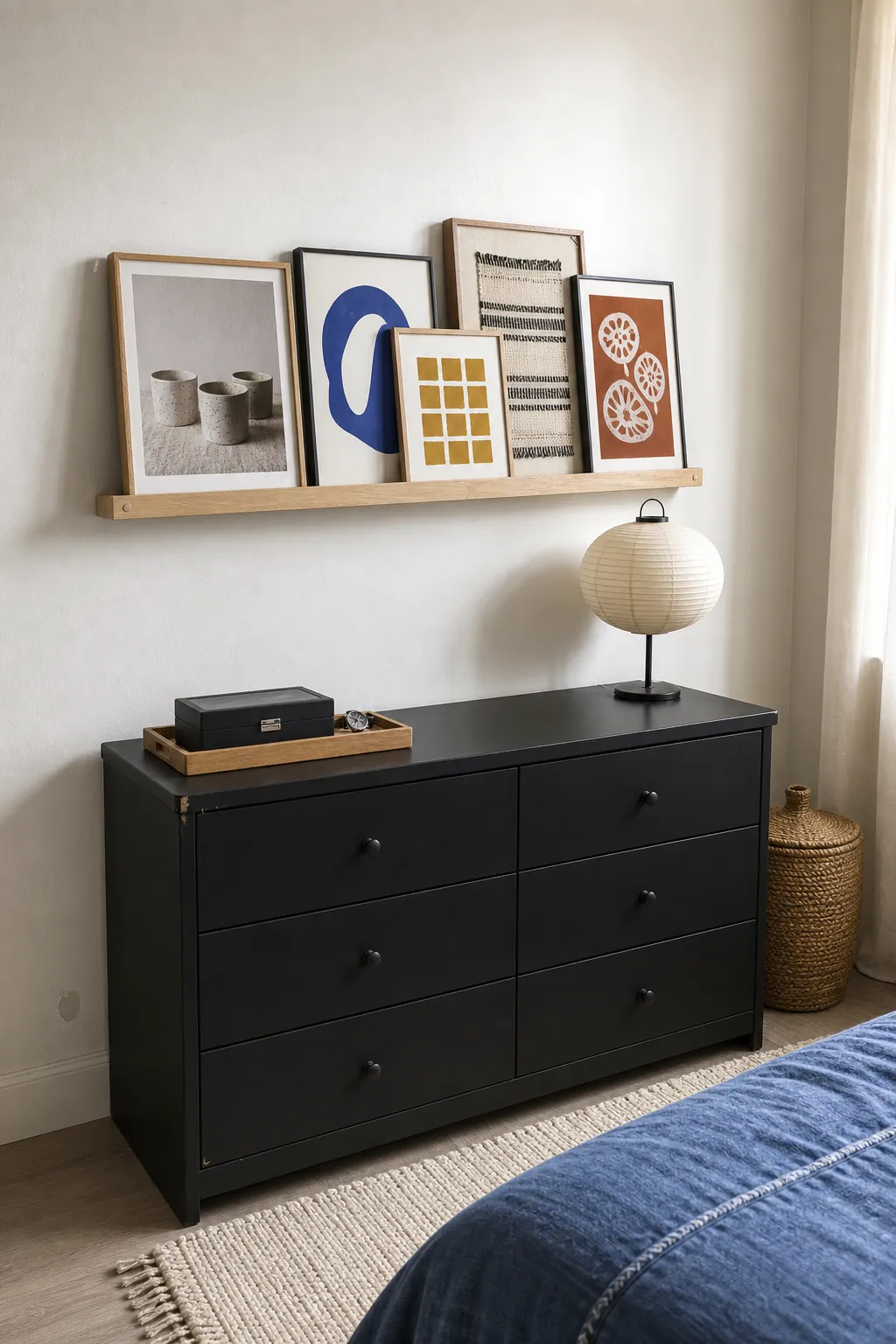
Use hanging hardware rated for the frame weight and your wall type. Renters can consider compatible removable strips used exactly as directed, or a properly secured picture ledge that concentrates the mounting points and allows future rearranging. Add bumpers behind lower frame corners so pieces stay level and do not mark the wall.
In homes with children or pets, anchor the dresser to the wall and avoid leaning heavy glass frames on top. Keep cords, breakable objects, and climbable drawer handles out of reach. A gallery wall should make the bedroom feel finished without making the dresser less safe or practical.
Let the Dresser Ground the Final Composition
Stand in the doorway for the final edit. The first thing you should notice is one complete dresser-and-art composition, not a cabinet below and a separate cloud of frames above. If the gallery floats, lower it. If it looks timid, enlarge the frames. If it feels restless, reduce the number of pieces or simplify the dresser decor.
A successful bedroom gallery wall does not fill the most space. It creates the strongest relationship. Size the group to the dresser, keep it visually close, and choose art bold enough to read from the bed. Once those decisions are right, the unused wall around the arrangement becomes breathing room rather than a problem to solve.