
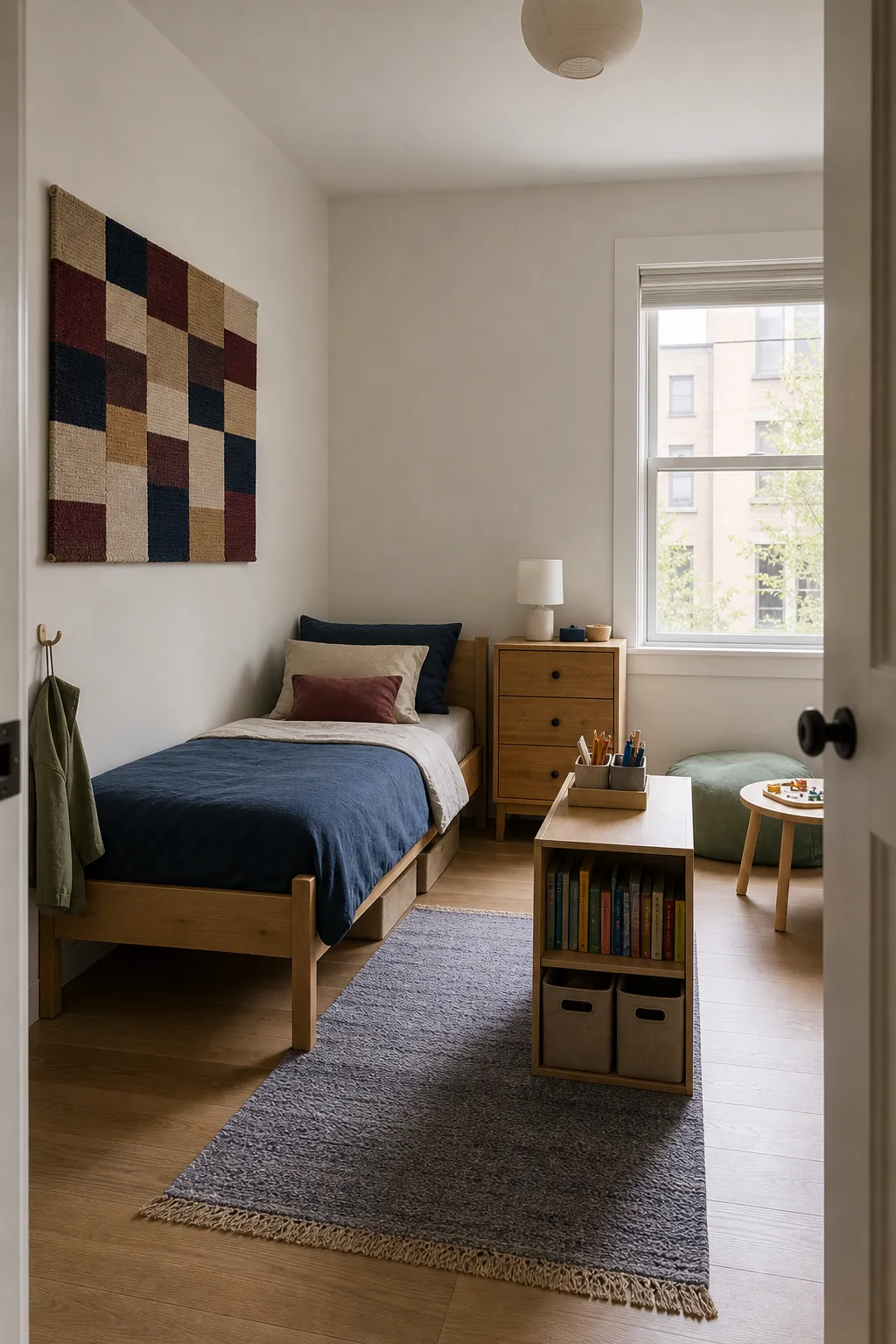
A child can outgrow the way a bedroom works long before outgrowing the bed. The toy shelf that was perfect at four may waste valuable space at eight. A preschool craft table becomes too short for homework. Sweet themed decor begins to feel embarrassing, while the room still has to hold more books, larger clothes, school supplies, hobbies, and a growing need for privacy.
The best grow with me room is not a room that predicts every future interest. It is a room with a stable, well-measured foundation and a few zones that can change jobs. Keep the expensive pieces quiet and adaptable; let the easy-to-replace layers show the child’s current age and personality. In a small kids room, that approach saves more space—and usually more money—than buying clever furniture for every possible stage.
Design for the Next Transition, Not Every Future Year
Start with the change most likely to happen next. A toddler room may soon need independent clothing access and more floor play. An early elementary room may need a reading light, school storage, and a regular work surface. A preteen room may need fewer toys, more books, charging space, and a stronger say in the decor.
Planning only one transition ahead prevents the room from becoming crowded with furniture that is “for later.” Parents often worry about fitting a desk from the beginning, but a young child may work happily at the kitchen table for years. The smarter move is to reserve a desk-sized zone without necessarily filling it with a desk today. Let that same patch of floor hold a play mat, small table, or book basket until the need is real.
Map the Fixed Points Before Choosing Furniture
A flexible bedroom layout begins with the things that cannot move: the door swing, closet door, window, radiator or vent, outlets, and the clearest walking path. Measure the walls, but also measure the spaces furniture needs to function. A dresser needs room for open drawers. A bed needs enough clearance for changing sheets. A future chair needs space to pull back from a work surface.
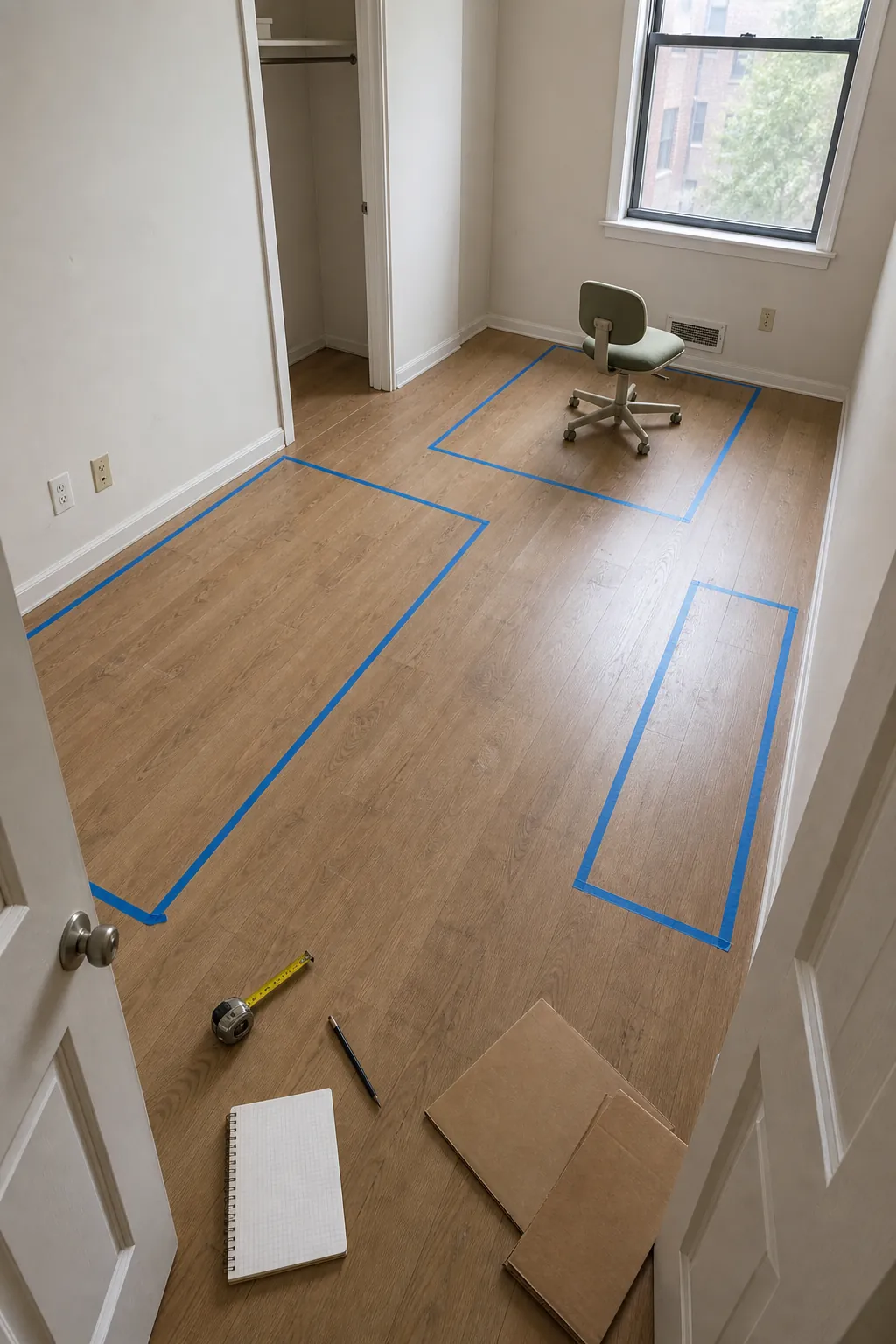
Use painter’s tape to mark the footprint of the bed, storage, and a possible future desk. Walk through the room, open every door, kneel beside the bed, and pretend to remove a storage bin. This ten-minute test reveals more than a floor-plan app because it includes bodies and movement. In a narrow room, a few saved inches can decide whether the child can use a drawer independently.
- Protect the path: keep a direct route from the door to the bed and window.
- Use the best daylight: reserve the window-adjacent zone for reading, drawing, or future study when glare can be controlled.
- Keep tall storage on a solid wall: anchor it and avoid crowding vents or window access.
- Leave one zone under-programmed: open floor today can become a chair, instrument stand, or study corner later.
Choose Furniture by Useful Life, Not by Novelty
Furniture that claims to convert through many stages can be helpful, but only if every configuration fits the room and the hardware is simple enough to use. Before paying extra for a transformer piece, check the actual dimensions in its largest form. Ask whether replacement parts are available and whether the final version is something an older child will want.
Often, ordinary pieces have the longest life: a well-made twin bed, a narrow dresser with full-extension drawers, a simple bookcase with adjustable shelves, and a sturdy chair that can move elsewhere in the home. Select clean shapes and durable finishes instead of furniture cut into castles, cars, or cartoon silhouettes. Timeless does not have to mean beige; it means the function and form will survive a new color scheme.
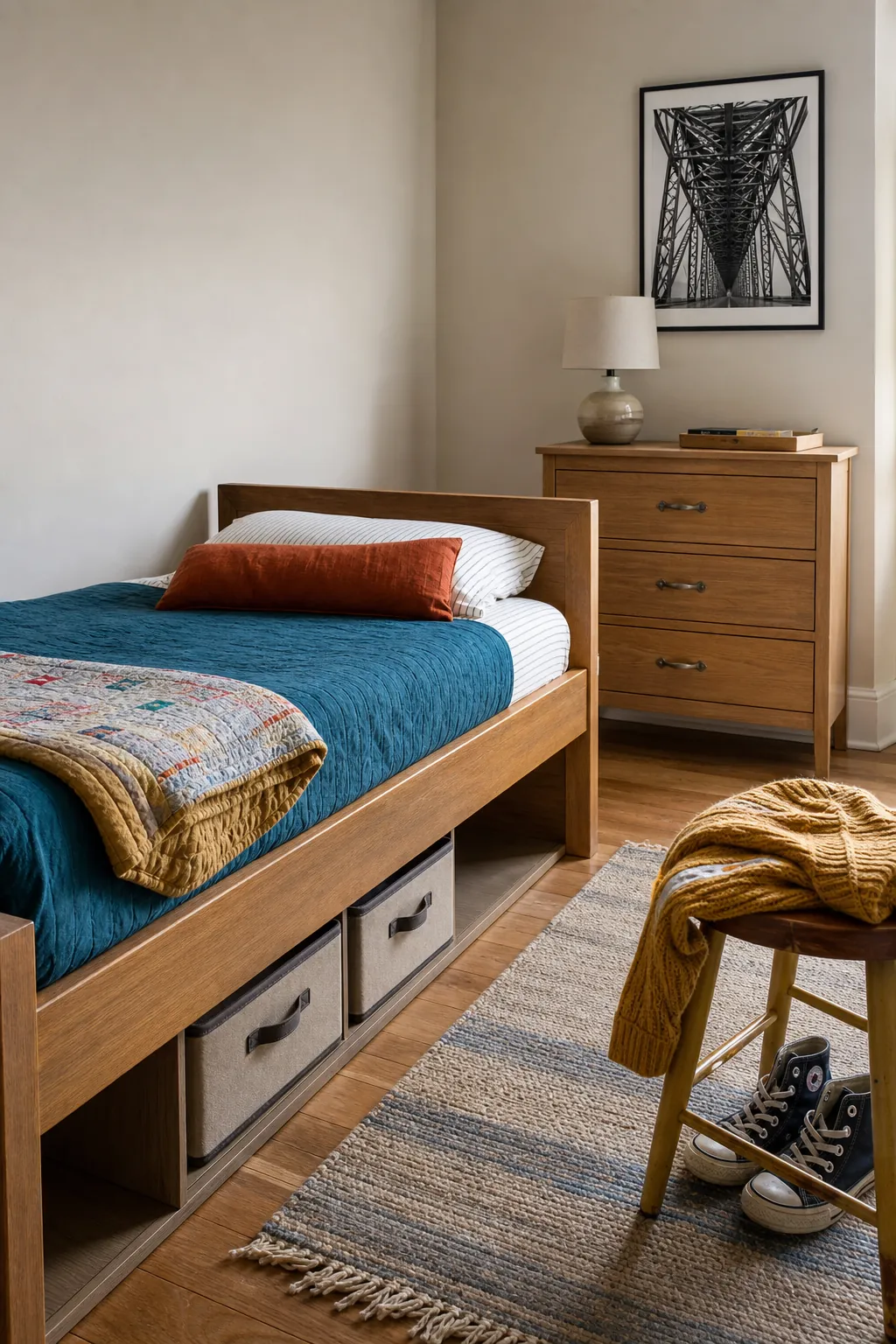
Look for beds with enough space beneath for standard-size drawers or boxes, but do not fill that space automatically. It may be more useful later for sports gear, spare bedding, or seasonal clothes. A full-size bed can consume a small room too early; upgrade when sleep needs justify it rather than as a theoretical investment.
Use Storage That Changes Height and Category
Flexible storage is less about moving the entire unit and more about changing what each level does. Young children need broad toy storage low down. School-age children need books, project trays, and a place for a backpack. Older children need hobby equipment, folded clothes, tech accessories, and private containers for small personal items.
Choose adjustable shelves, removable bins, standard-size baskets, and drawer inserts that can be replaced without replacing the furniture. A low cube may begin with toy baskets, shift to books and games, and later hold folded sweatshirts or records. Avoid highly specific labels printed onto expensive containers. Use removable picture labels or simple tags while they are useful, then take them off.
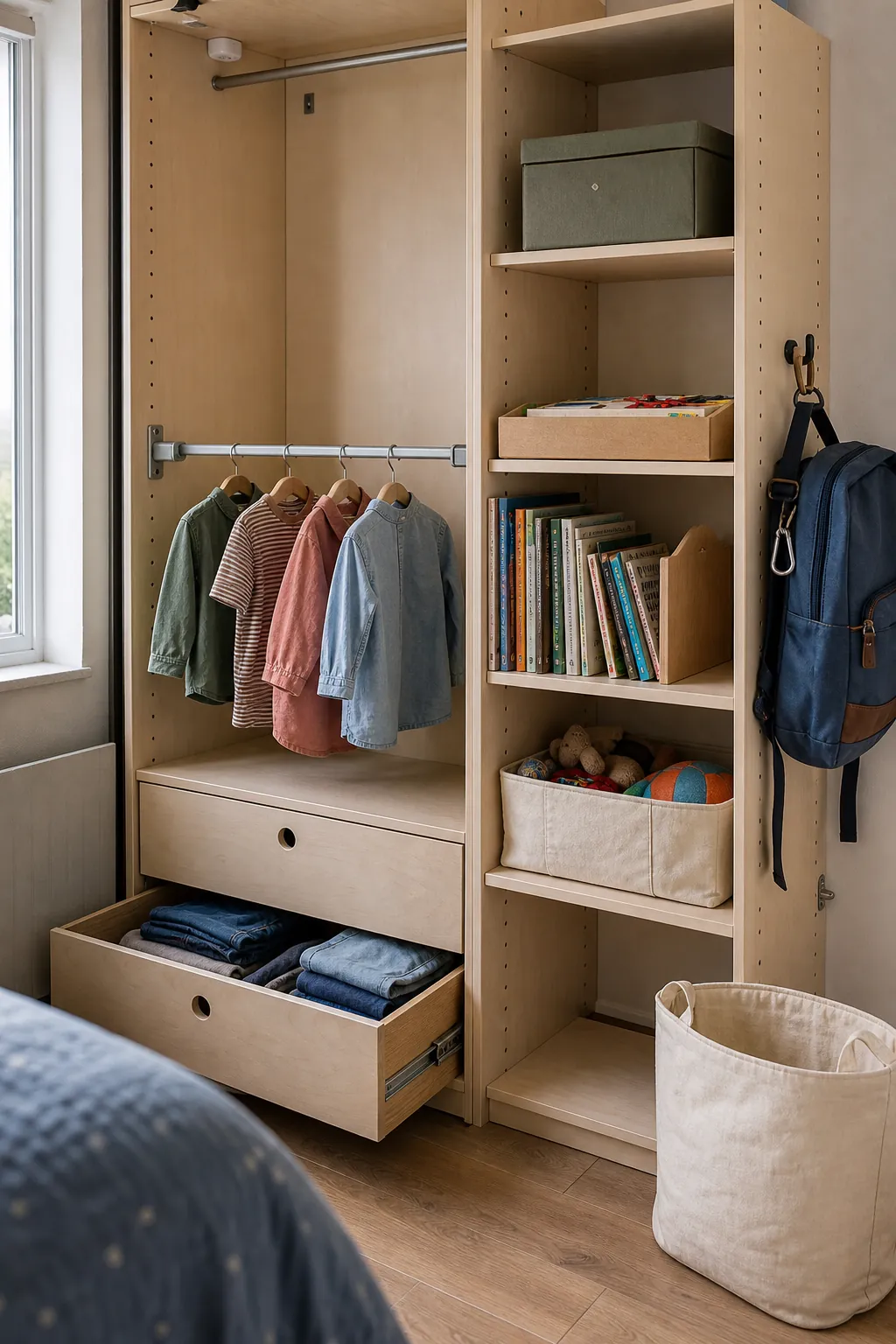
Keep everyday belongings in the easiest reach zone and move occasional items higher as the child becomes taller and more capable. Do not use high shelves for toys that tempt climbing. Anchor dressers, bookcases, and other climbable furniture according to the manufacturer’s instructions, and store heavier items low. A room cannot grow safely with the child if storage assumes supervision will prevent every climb.
Let the Play Corner Become the Study Corner
The most useful future zone usually sits near good light and an outlet but away from the direct bed path. During preschool years, it can hold a washable mat, a small freestanding table, and one art caddy. When schoolwork becomes regular, the mat and play table leave; a compact desk and adjustable chair use the same footprint.
A dedicated desk is not mandatory. The American Academy of Pediatrics notes that a consistent, well-lit homework location may be a desk, table, or another suitable surface. If the bedroom is too tight or too distracting, keep schoolwork elsewhere and use the reserved zone for reading or hobbies. Growing with the child means responding to how that child works, not checking off a standard furniture list.
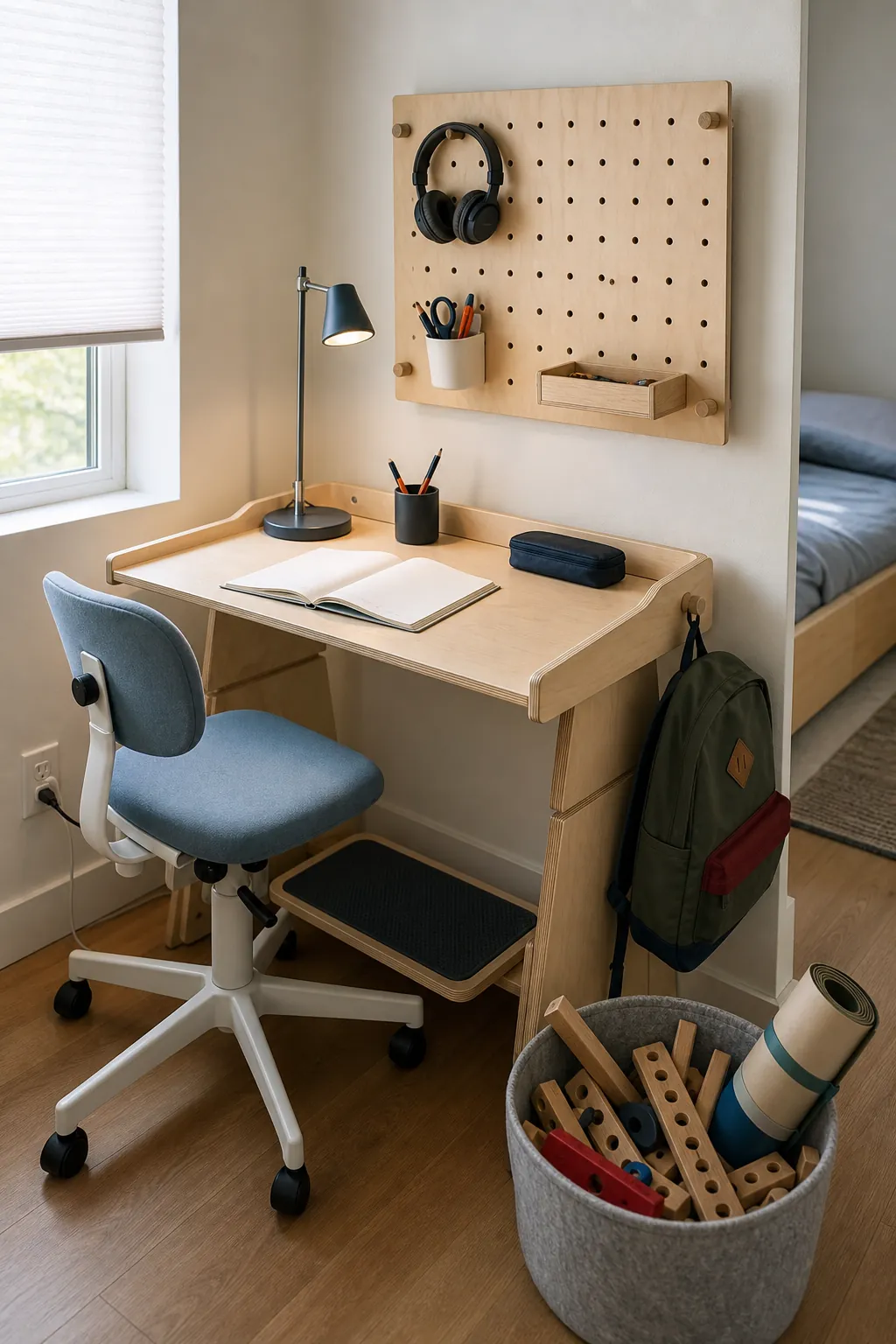
When a desk arrives, prioritize usable depth, an adjustable task light, and legroom over multiple drawers. Put only daily supplies within reach and store bulk materials elsewhere. A wall-mounted rail or pegboard can hold a pencil cup, headphones, and a small project tray, freeing the desktop without dictating a permanent style.
Put Personality in the Layers That Are Easy to Change
Children should not have to live in a bland room for the sake of longevity. The trick is to separate the durable shell from the current story. Keep the bed, dresser, main rug, and curtains adaptable. Use bedding, art prints, removable decals, a pinboard, shelf objects, and one painted accent to express the phase they love now.
Choose a base palette with two or three colors that work with several interests. Deep blue can support ocean animals at five, space at eight, and a graphic preteen room later. Clay, berry, forest green, or ochre can feel playful without being tied to a character. Repeat a favorite color in small doses rather than buying a complete themed set.
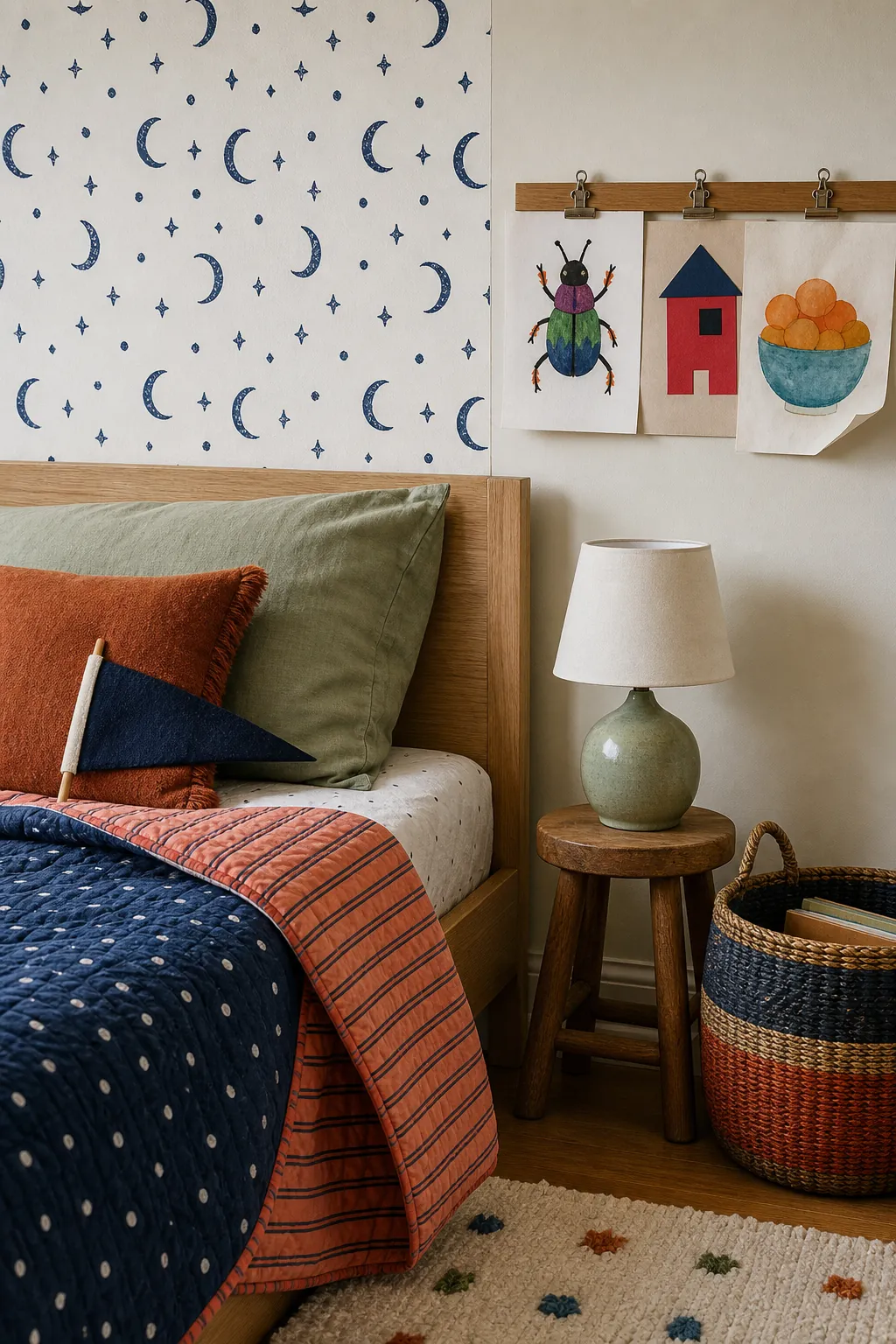
Create one place where the child can edit the display without remaking the room: a corkboard, magnetic strip, picture ledge, or clip rail. Rotate drawings, photos, certificates, and current interests there. This gives kids room decor an active life and keeps tape, pins, and random paper from spreading across every wall.
Plan for Clothes, Books, and Hobbies to Get Bigger
Toy storage often shrinks with age, but belongings do not necessarily shrink. Larger clothes take more drawer space. Chapter books need deeper shelves than picture-book ledges. Sports gear, craft tools, collections, and school projects create new shapes of clutter. Leave adaptable volume instead of assigning every inch to preschool categories.
- Use a closet rod that can gain or lose a lower child-height rail.
- Keep at least one adjustable shelf tall enough for future binders or display objects.
- Choose under-bed boxes in standard sizes so the contents can change.
- Reserve one lidded container for unfinished projects and hobby parts.
- Review storage every six months instead of adding furniture whenever a category overflows.
Do not preserve a large toy system after the play pattern changes. When dolls, trains, or pretend kitchens lose their daily role, remove the storage designed around them. The empty floor or shelf is not wasted; it is the room making space for the next stage.
Hand Over More Control as the Child Grows
A toddler needs reachable choices within firm boundaries. A school-age child can help decide categories, choose bedding, and test whether a desk location feels right. A preteen should have meaningful control over color, display, and the balance between open and private storage. The room will last longer when the child helped shape it rather than merely receiving a finished design.
Offer choices that respect the space: two furniture layouts that both preserve the path, three paint colors that work with the existing floor, or a fixed budget for a new lamp and bedding. Keep safety, sleep, ventilation, and necessary storage as the adult boundaries. Let preference decide the reversible details.
Use a Simple Age-by-Age Shift Plan
Preschool years
Prioritize open floor play, low broad toy categories, reachable books, a hamper, and simple clothing access. Use the future study zone for a mat or child-size activity table. Keep tall furniture anchored and climbing temptations low.
Early school years
Reduce bulky preschool toys, add a regular home for the backpack and school papers, improve reading light, and test where focused work happens best. Convert one or two toy bins to books, art supplies, or games before buying new storage.
Preteen years
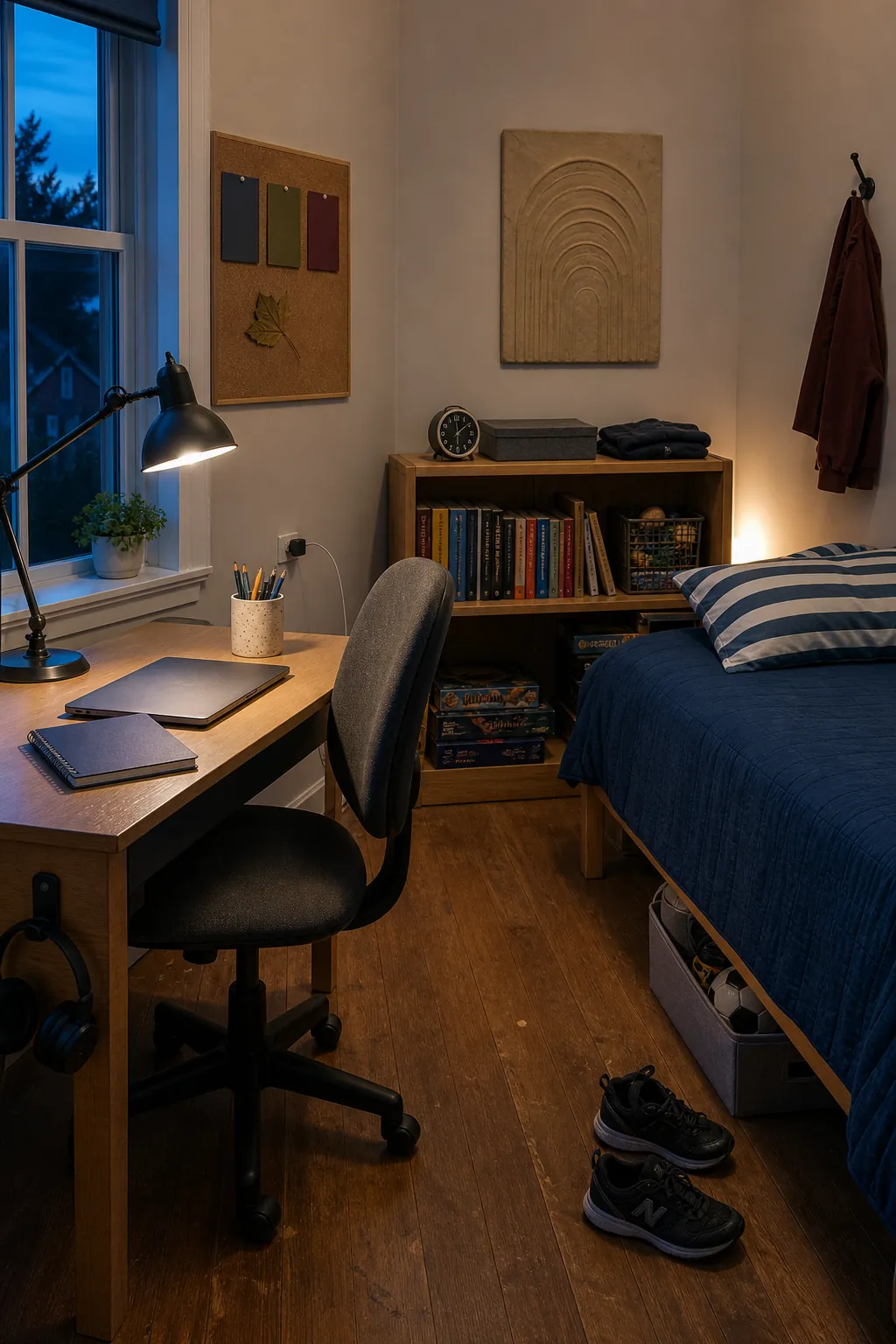
Give the child more visual control, add a useful desk only if the room is the right study location, and create private storage for personal objects. Replace small-scale play furniture with one supportive chair or hobby zone. Reassess the mattress, task lighting, charging setup, and clothing capacity.
Check These Details Before You Buy
- Will the largest configuration fit without blocking the door, window, vent, or walkway?
- Can shelves, rails, baskets, or inserts change without replacing the main unit?
- Is the furniture stable, anchorable, repairable, and easy to clean?
- Does the piece solve a current need, or is it consuming space for a hypothetical future?
- Could the item work elsewhere in the home if the child stops needing it?
- Can an older child personalize the room without replacing this piece?
Measure twice and wait a day before purchasing. Tape the footprint, test the movement around it, and identify what must leave the room when the new piece arrives. A small kids room grows successfully through subtraction and reassignment as much as through new furniture.
The room does not need to look ageless. It should look right for the child who lives there now, with a foundation that will not fight the next change. Preserve clear movement, choose useful dimensions, keep storage adjustable, reserve one flexible zone, and make personality easy to update. That is how a small bedroom can feel newly theirs at every stage without starting over.