
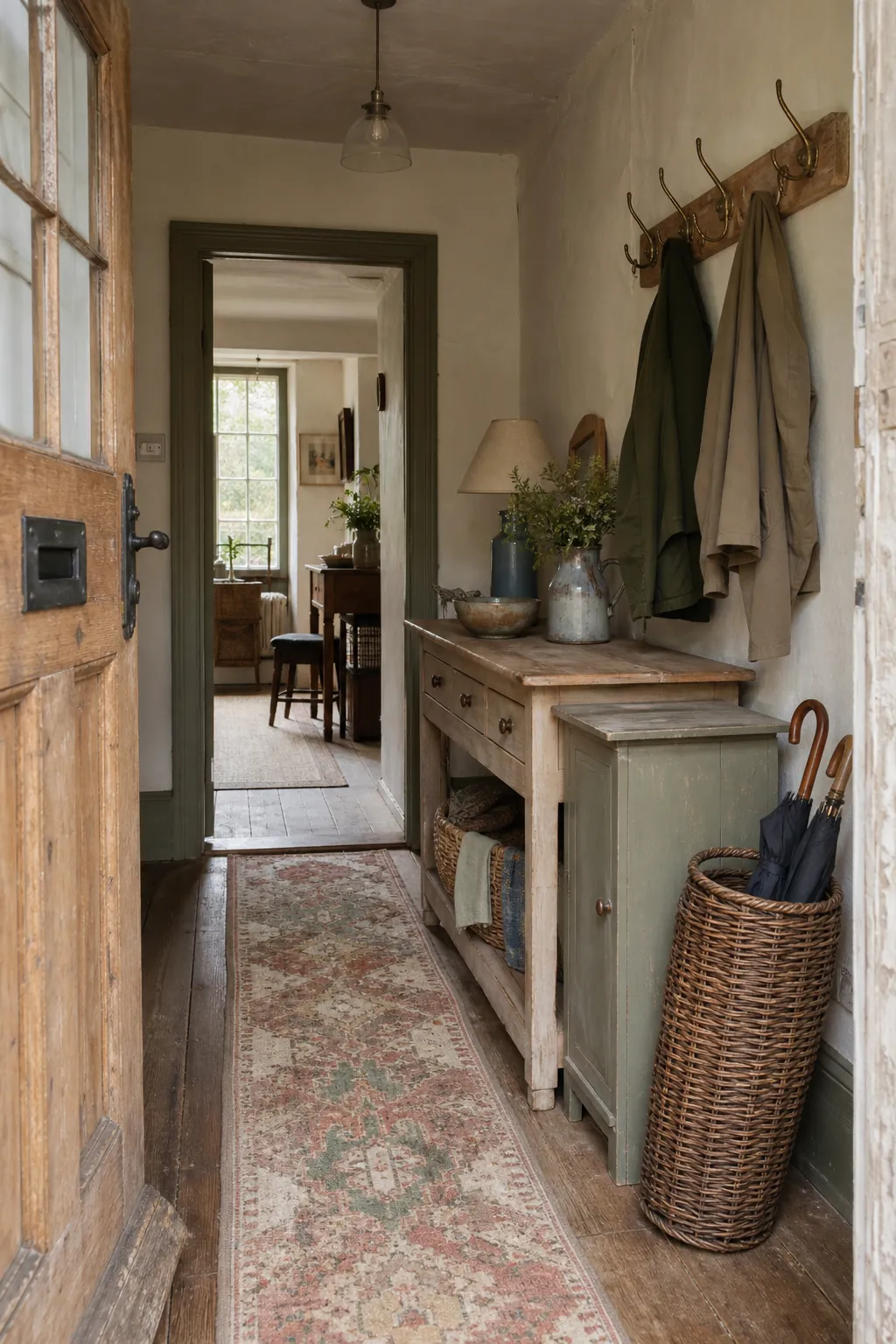
A welcoming cottage entryway is not the one with the most baskets, hooks, or vintage finds. It is the one that quietly answers the questions you face every time the door opens: Where do the wet shoes go? Where can a guest set a bag? What keeps the keys from disappearing? Once those answers are clear, the old-house character can feel relaxed instead of staged.
That distinction matters in a small hall. Real homeowners often worry that useful storage will make the space feel heavier, yet exposed shoes, coats, dog leads, and mail create more visual weight than one well-chosen cabinet. These cottage entryway ideas begin with daily life, then layer in vintage warmth.
Start With a Clear Landing Strip
Before buying anything, open the door fully and mark its swing. Then walk the path you use while carrying groceries. That uninterrupted strip is sacred. A narrow entry feels calmer when the floor route is obvious, even if the room itself is tiny.
Keep furniture shallow along that route and resist filling every wall. An old pine console only earns its place if you can pass it without turning sideways. If the hall opens directly into a cottage living room, use a runner to visually lead the eye inward rather than stopping the floor with several small mats.

Hide the Mess You Use Every Day
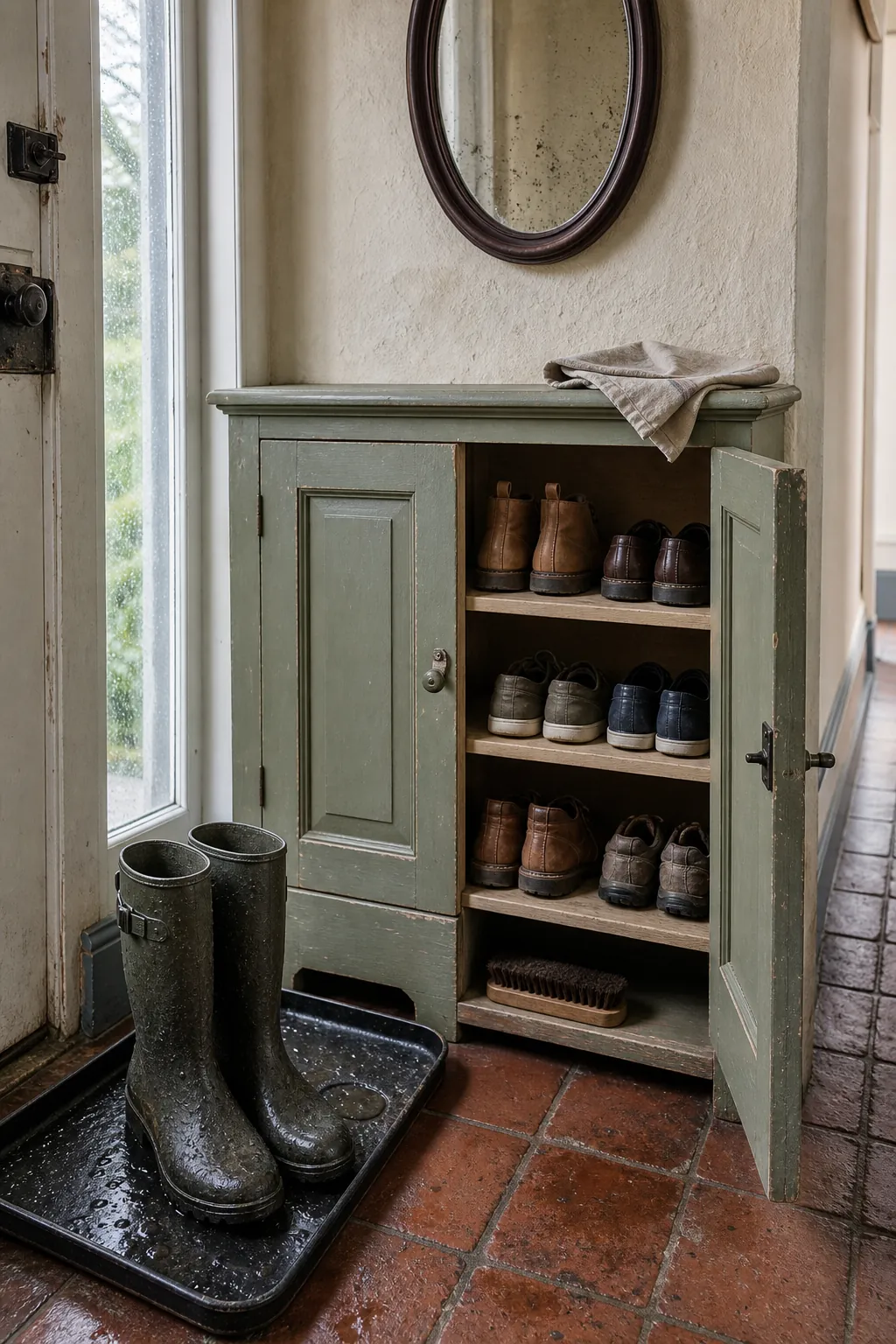
Open cubbies look charming in an empty photograph and chaotic after a wet Tuesday. Closed storage is usually the better foundation for a cozy cottage entryway. A slim shoe cabinet, painted cupboard, or small vintage dresser can hide the practical bulk while bringing more character than a wire rack.
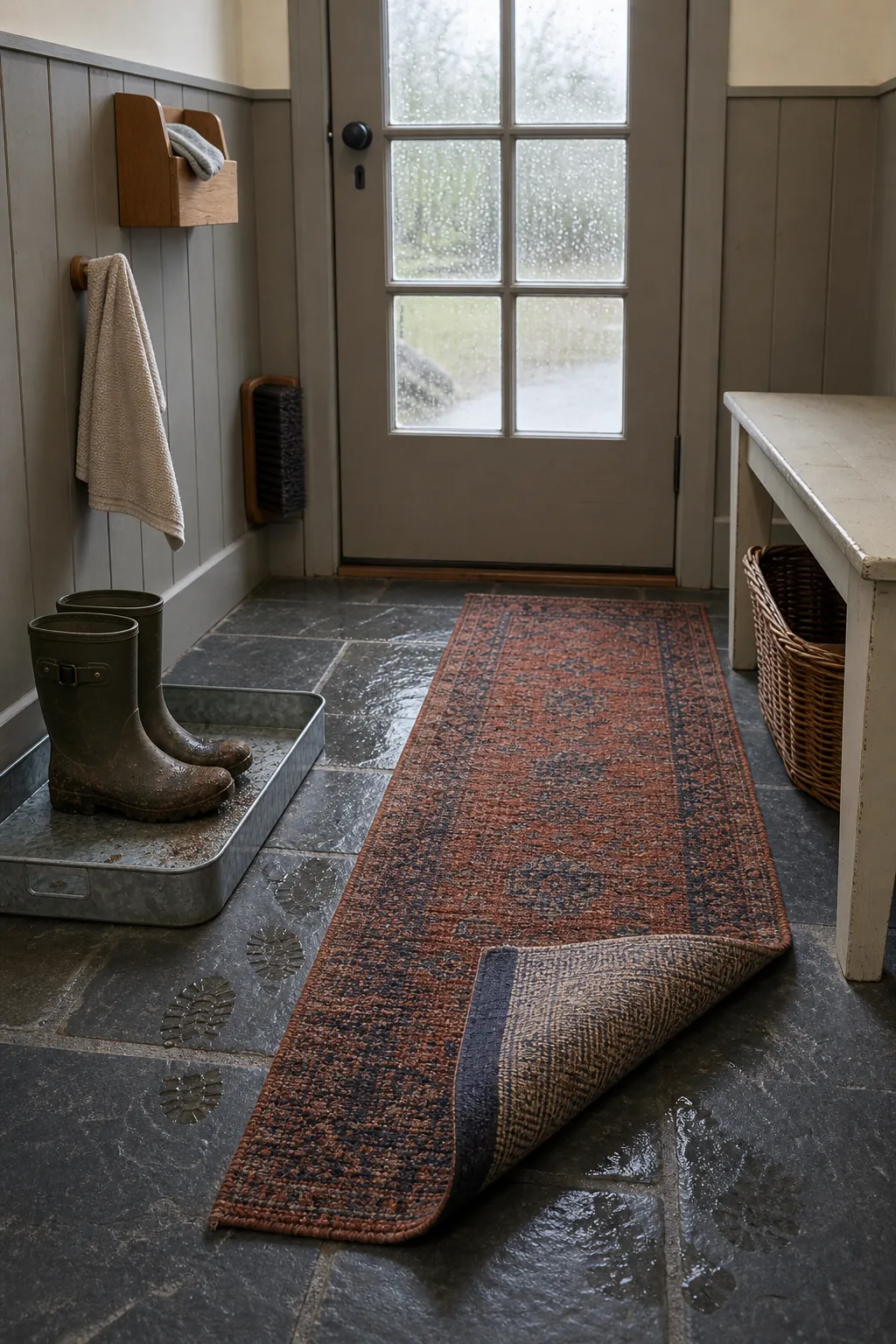
Store only the current season’s footwear by the door. Give each person a defined section, add a washable boot tray for rain, and move occasional shoes elsewhere. The goal is not to fit every possession into the foyer; it is to make the daily rotation effortless. Vent damp shoes before closing them inside a cabinet.
Build a Useful Drop Zone
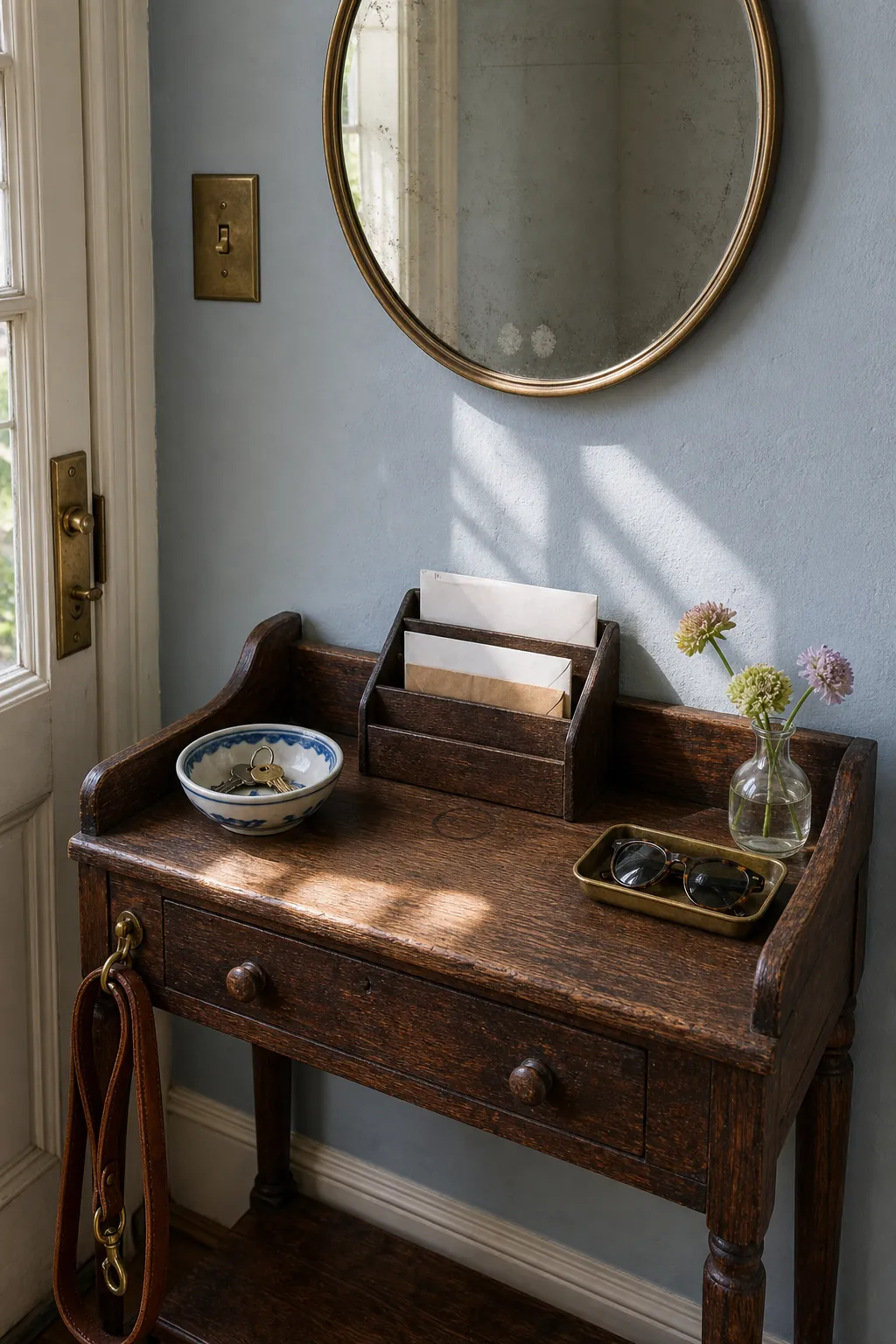
A beautiful vintage foyer still needs somewhere for keys, mail, sunglasses, and a dog lead. Choose one shallow surface and give each recurring item a boundary: a stoneware bowl for keys, a wooden letter rack for incoming post, and one hook for the lead. The arrangement should be small enough that clutter cannot spread.
A mirror above the console helps with a last glance and bounces daylight through the hall. Keep it in proportion to the furniture rather than choosing the largest one that fits. Leave breathing room around the edges, and never disguise an electrical panel in a way that blocks required access.
Choose Hooks That Match Real Habits
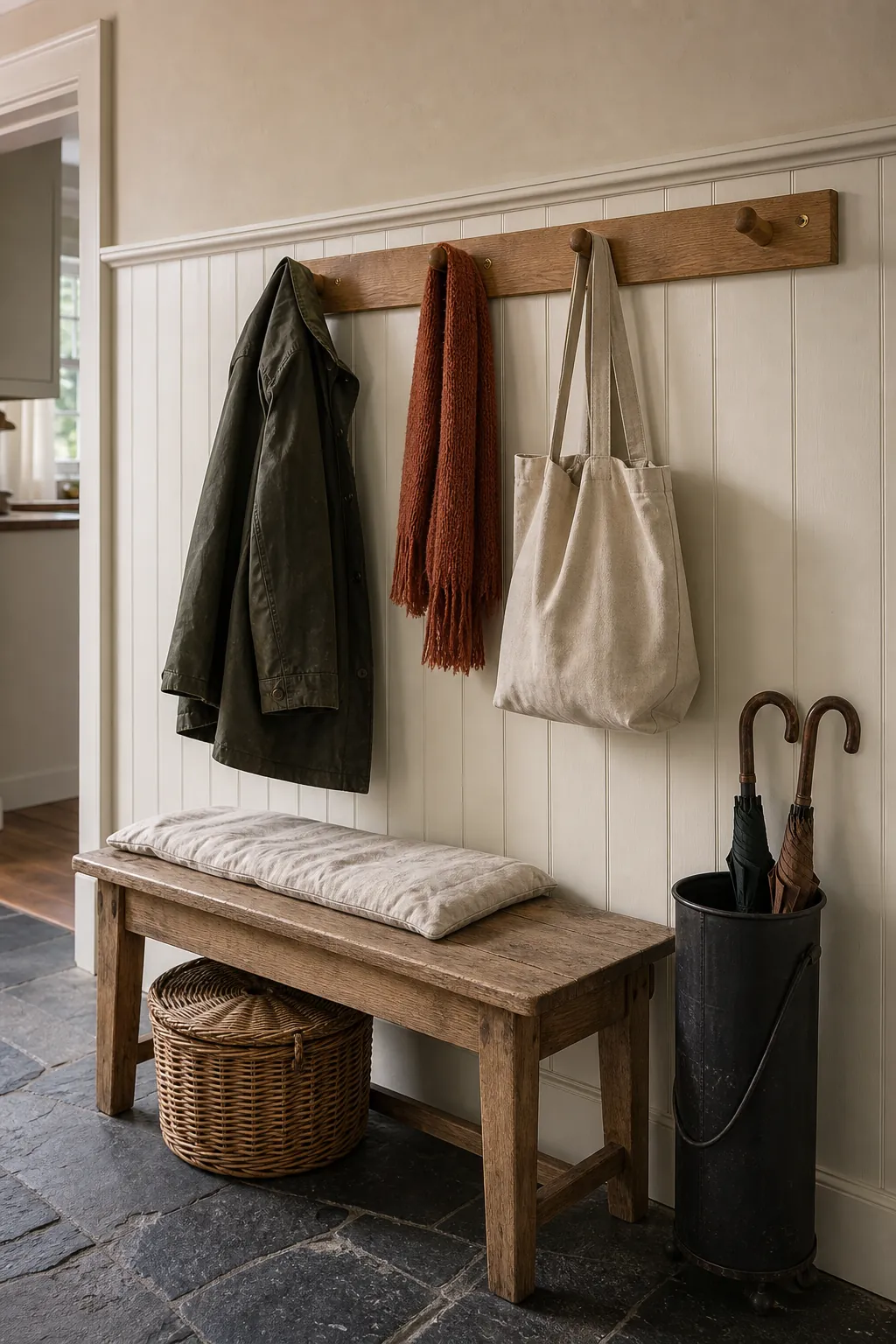
Hooks work when they are installed where a hand naturally reaches. Mount sturdy pegs into proper fixings, leave enough space for bulky coats, and add lower hooks if children use the entry. A short row of aged brass, black iron, or turned wooden pegs creates cottage decor without sacrificing strength.
Do not ask one hook rail to hold the entire household wardrobe. Keep only everyday outerwear visible and rotate it seasonally. A woven basket on a high shelf can hold hats and gloves, while an old umbrella stand contains long items. This makes the display look collected, not crowded.
Use Warm Light at Eye Level
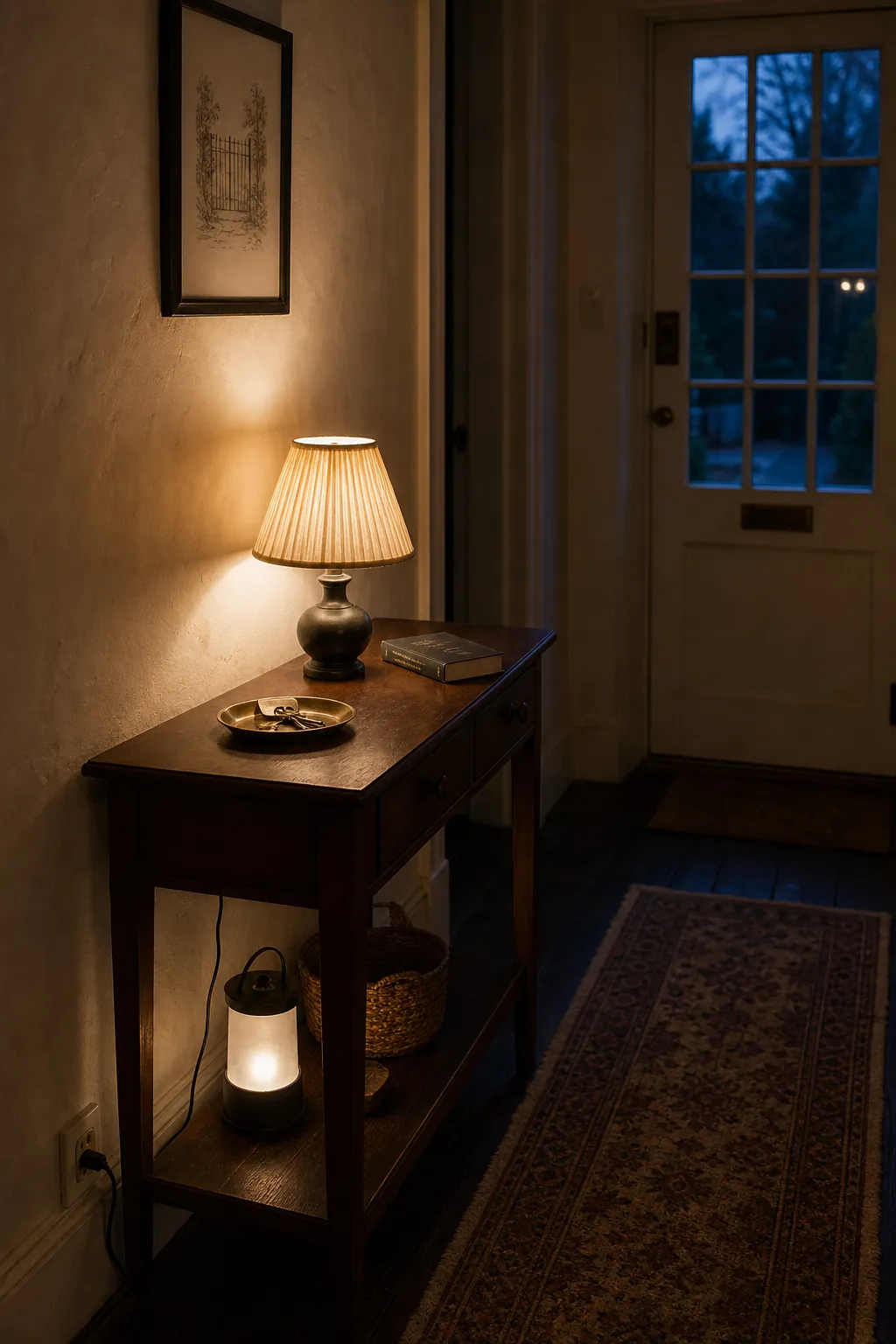
Many entryways are dim tunnels, especially in older homes. A small shaded lamp on a console is more welcoming than relying only on a harsh ceiling fixture. Choose a warm but not amber bulb, and let the shade soften the light across plaster, timber, and fabric.
If there is no outlet, a rechargeable lamp can create the same evening glow without a trailing cable. Keep the switch easy to reach from the door. During the day, avoid blocking sidelights or a transom with tall storage; borrowed daylight is worth more than another decorative object.
Layer Age Without Creating a Theme
Old house charm comes from evidence of use: rubbed timber, a slightly uneven handmade bowl, a faded runner, and hardware that feels good in the hand. You do not need a matching set of “farmhouse” accessories. In fact, a few thrifted decor pieces look more convincing when their finishes are related but not identical.
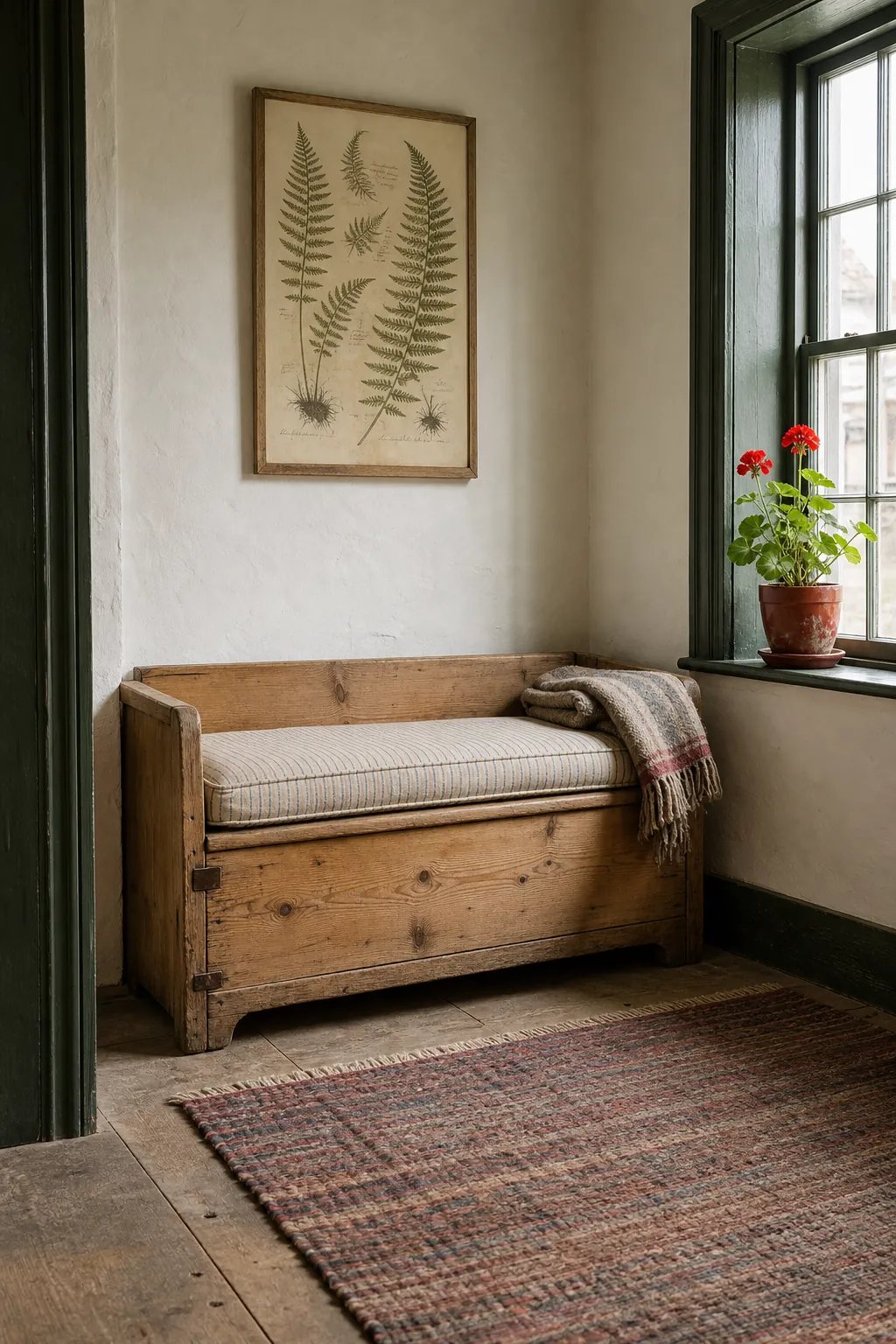
Try one substantial vintage piece, one textile, and one personal detail. That might be a scrubbed pine bench, a wool runner, and a framed botanical study found at a market. Let the useful furniture lead. Small signs, novelty objects, and too many baskets can turn a calm entry into a costume.
Make the Welcome Easy to Maintain
The loveliest entryway will not stay welcoming if its systems demand constant styling. Put washable protection where water lands, keep a cloth near the door for muddy paws, and choose a runner that can handle traffic. Leave a little unused capacity in every basket and cupboard so putting something away takes one motion.
Once a week, return stray items to their proper rooms and clear the drop zone. At the change of season, edit the visible shoes and coats. A cottage entryway feels generous when it offers people a clear path, a place for their things, and a warm pool of light. Everything decorative should support that welcome.