
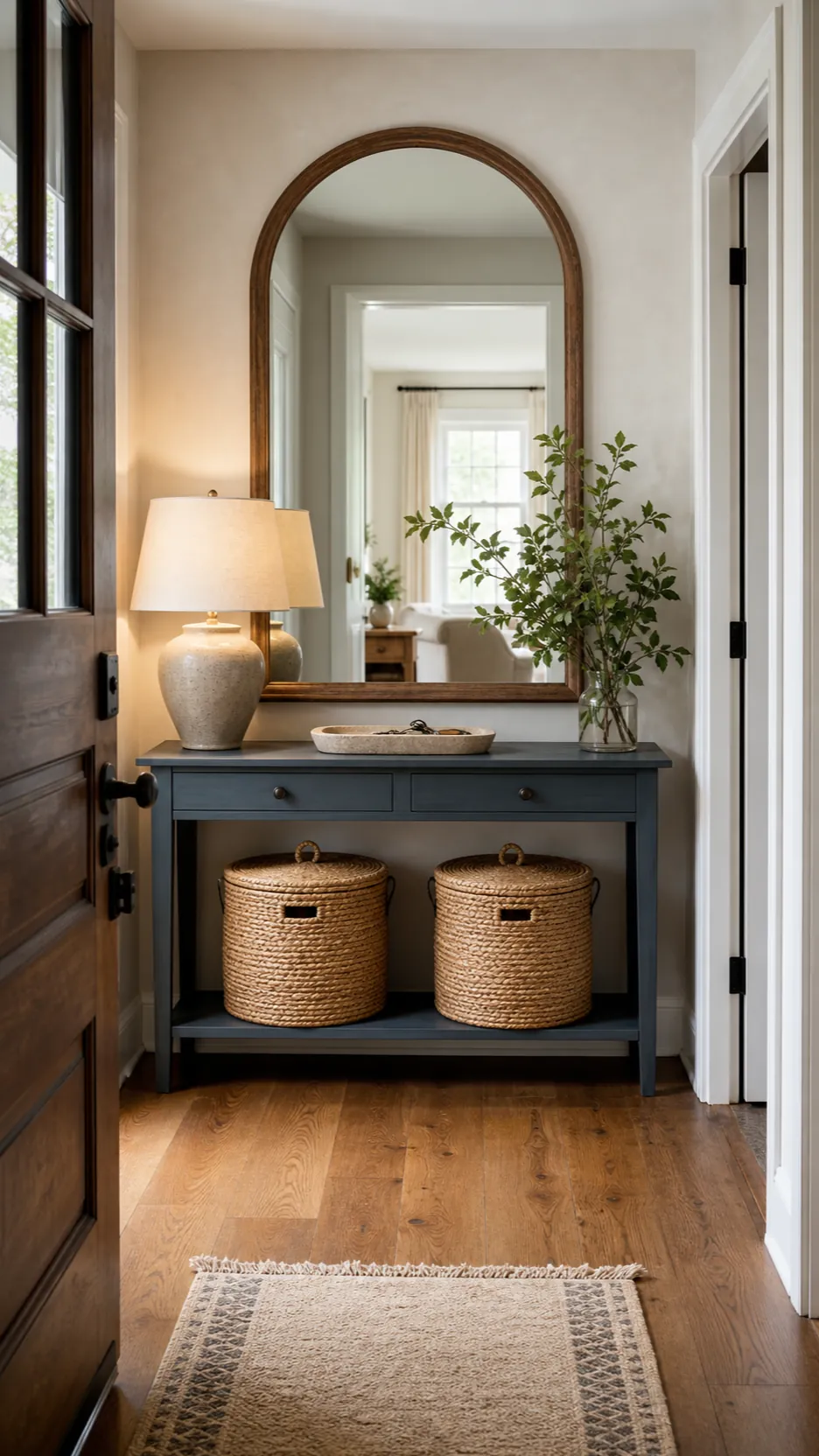
An entryway mirror, lamp, and basket can look like a ready-made decorating formula. The trouble is that each piece also competes for the same narrow footprint. A lamp can swallow the landing space, an undersized mirror can float above the console, and an open basket can display the clutter it was meant to hide. The arrangement works when you assign three jobs first: the mirror handles the last look, the lamp creates useful light, and the basket contains one predictable category of mess.
Let the Mirror Set the Scale
Choose the mirror before filling the table. Its outside dimensions should feel substantial enough to relate to the console, while its reflective area needs to work for the people using it. A round or arched wall mirror softens a rectilinear cabinet; a wide rectangular mirror can calm an ornate console. Tape the outline on the wall and check the view from the door, the stairs, and directly in front.
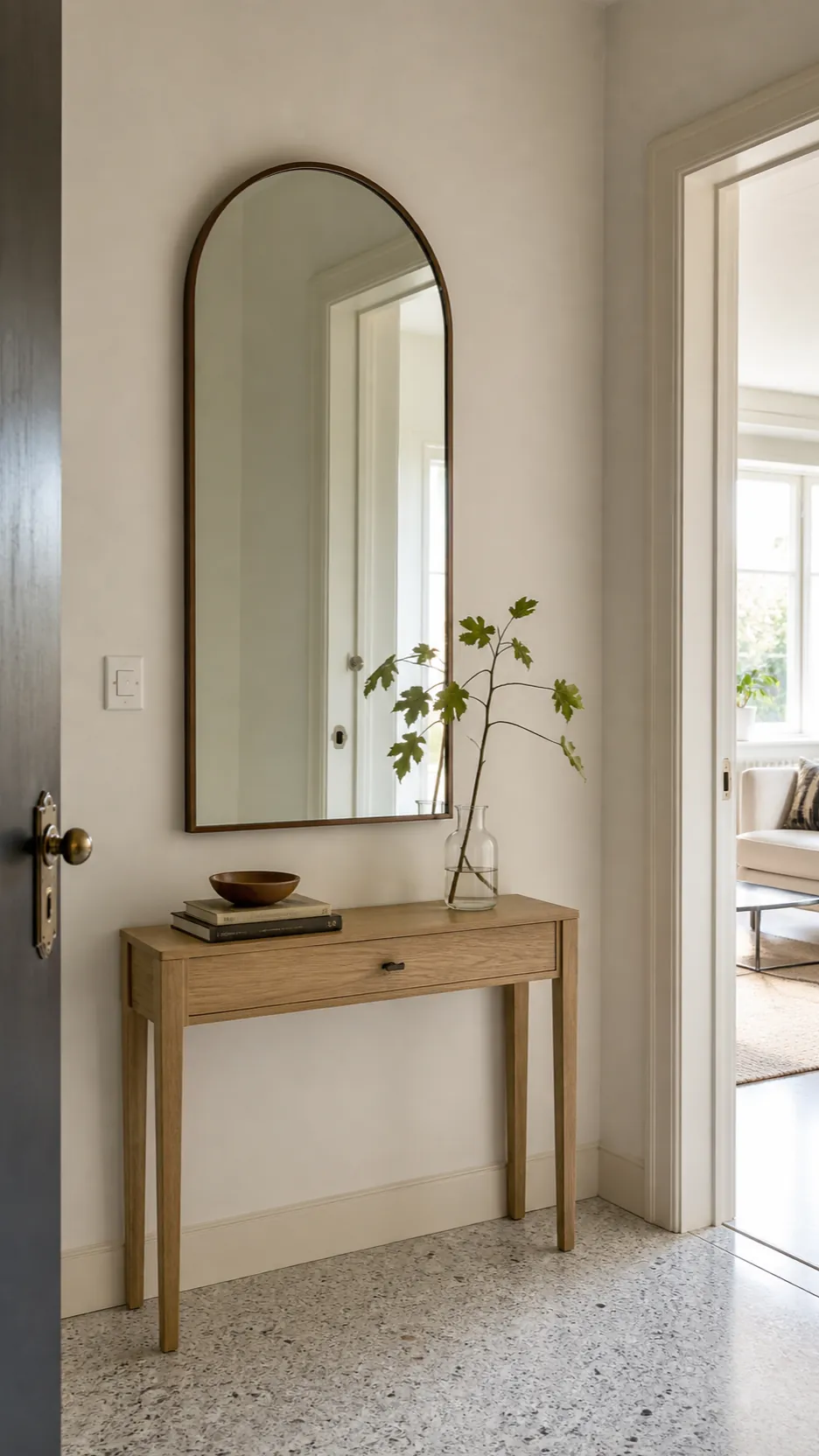
Keep the bottom of the frame visually connected to the surface below it. If the gap feels like an empty stripe, lower the mirror before adding objects. The lamp can overlap a small portion of the frame from the camera’s viewpoint, but it should not block the center of the glass or turn the mirror into background decoration.
Choose a Lamp for the Job, Not Just the Shape
Entryway lighting should help you find keys and check your face without creating glare in the mirror. A shaded table lamp gives softer light than a bare bulb and adds height to one side of the console. Look for a narrow base when surface space is tight, and keep the shade below the widest useful section of the glass. If there is no outlet, a rechargeable lamp can create the same evening pool without a cord crossing the walkway.
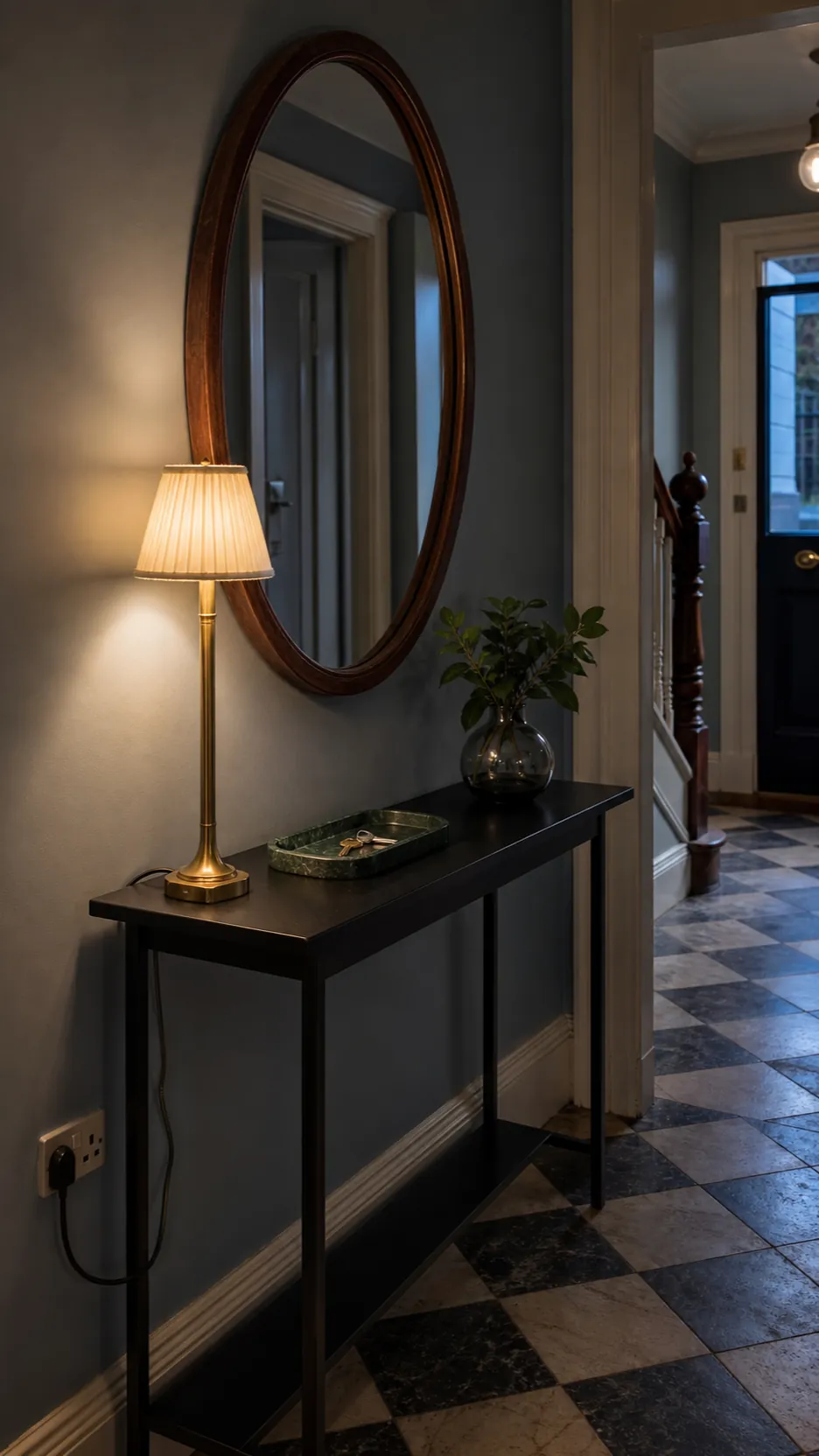
Switch the lamp on and look at the reflection before committing. If you see the bulb, move the lamp outward, lower it, or choose a denser shade. The best lamp decor is not merely sculptural; it makes the transition from a dark exterior to the house feel calmer.
Give Every Basket One Clear Purpose
A basket is not automatically organized storage. Decide whether it will hold shoes, scarves, dog gear, returns, or outgoing mail, and size it for that category. A lidded basket hides irregular contents; an open basket makes sense for frequently grabbed textiles. Two matching baskets under a long console create order, while one generous basket often suits a small table better than several little containers.
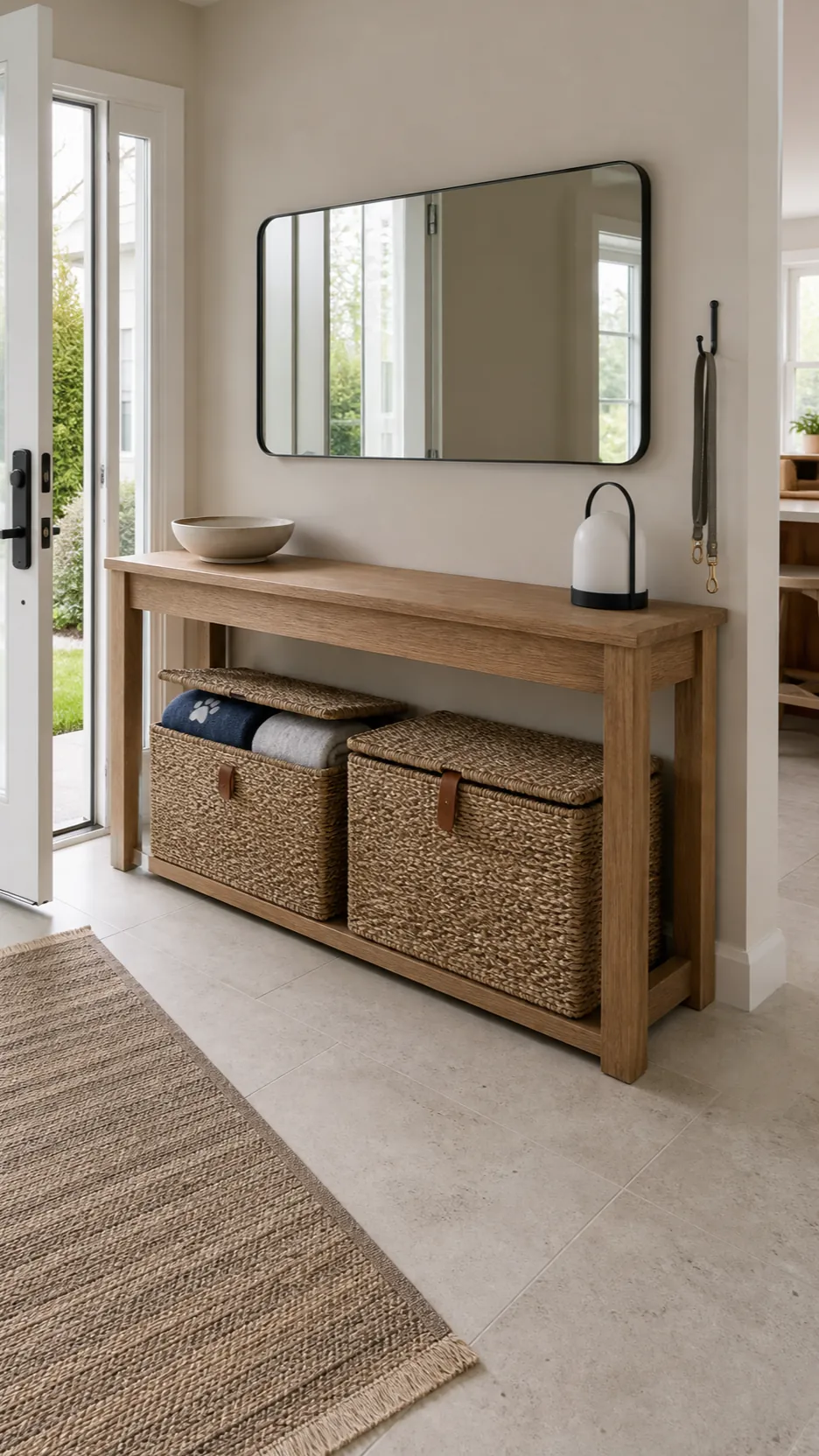
Measure the opening between the console legs, including any lower rail, before shopping. Leave finger room above the rim so the basket can slide out easily. Storage that is awkward to use becomes decor, and the clutter returns to the tabletop.
Protect a Real Landing Space
After placing the lamp, reserve a clear area wide enough for a handbag, parcel, or stack of mail. Add one shallow tray or bowl for keys inside that zone, not five separate trinkets. A small vase or branch can balance the lamp, but it should be easy to lift when the console needs to work harder.
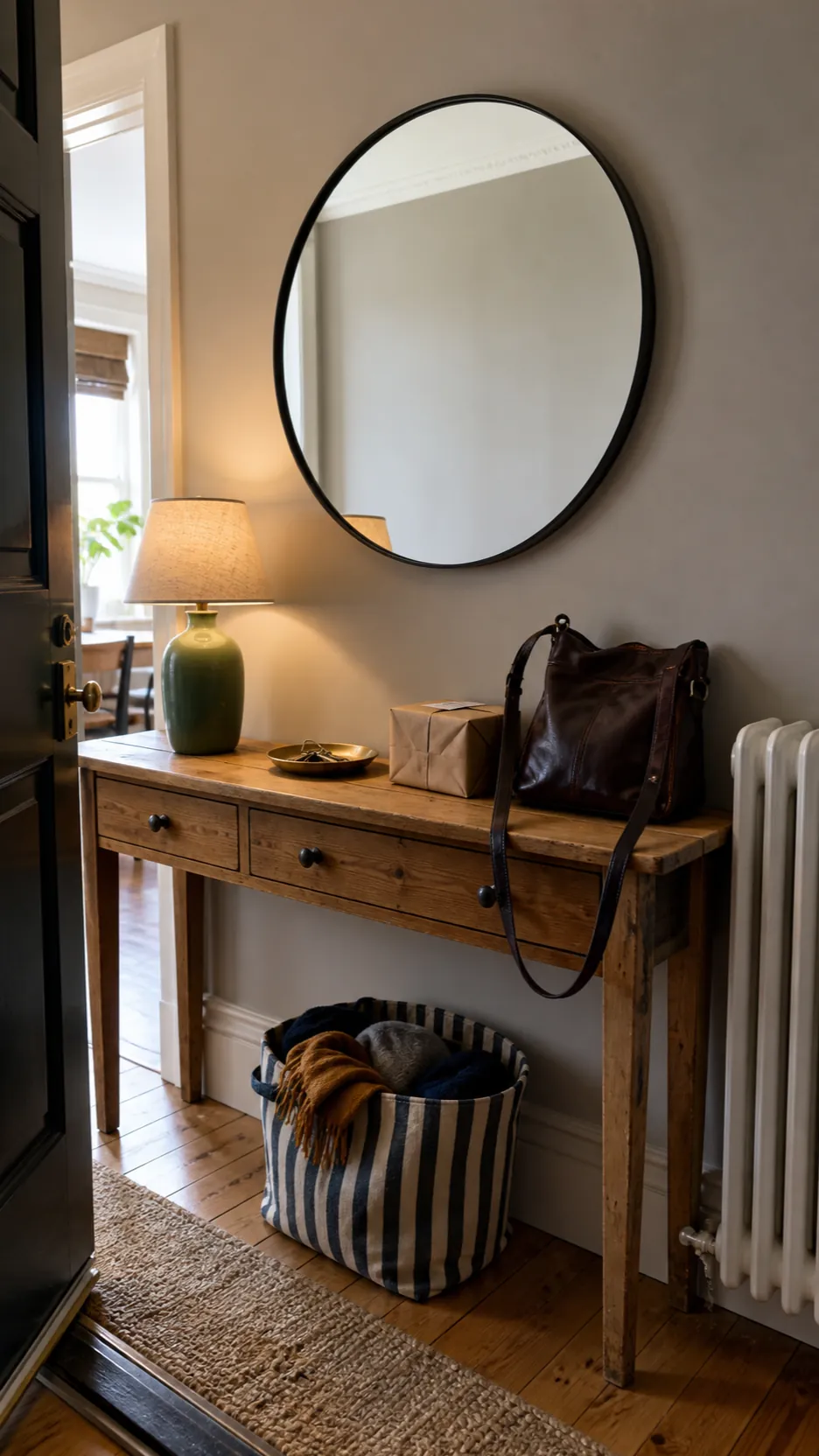
Test the setup for a week. Notice what actually lands there, then adjust the tray and basket to match. This produces a more personal vignette than buying accessories to fill every gap, and it gives the display room to change with the season.
Adapt the Formula to a Small Foyer
In a narrow entry, depth matters more than decorative abundance. Use a shallow wall-mounted shelf or slim console, one compact lamp, and one basket that fits below without narrowing the path. A taller mirror draws the eye upward and offers more useful reflection than a cluster of small pieces. Keep the floor around the door swing completely clear.
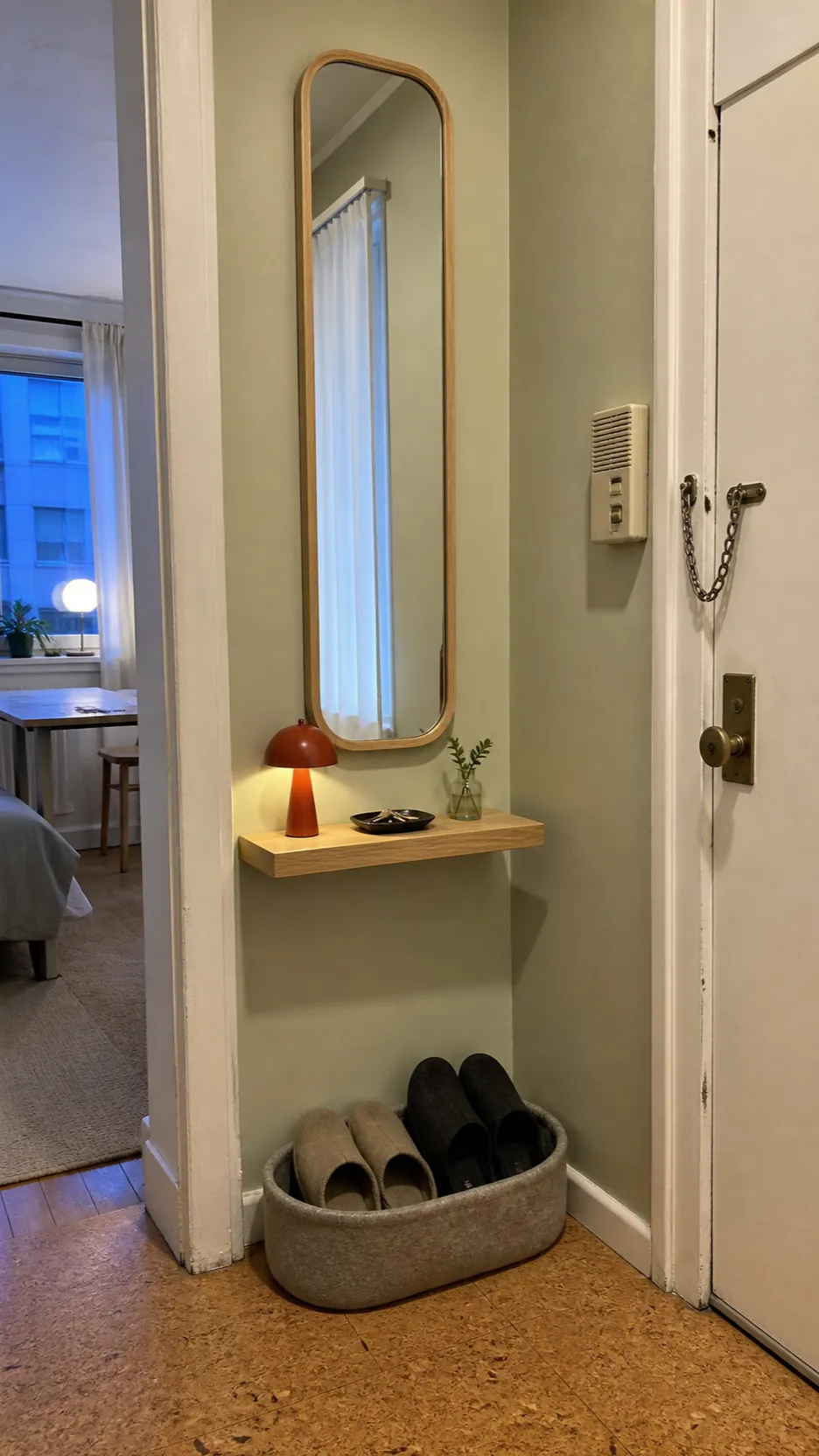
Wall hooks can take coats and bags off the console, but position them away from the mirror so hardware and swinging items cannot strike the glass. If the foyer also contains a vent, switch, or gate, design around those constraints rather than centering furniture mechanically on the wall.
Make a Busy Family Entry Look Intentional
A family entry needs more capacity, not more visible containers. Choose sturdy baskets with handles, washable or wipeable surfaces, and a lamp that cannot be knocked over easily. Labeling can happen inside the basket or with a subtle tag; the room does not need to look like a filing system. Repeat one material or color between the mirror, lamp, and storage so the practical pieces feel related.
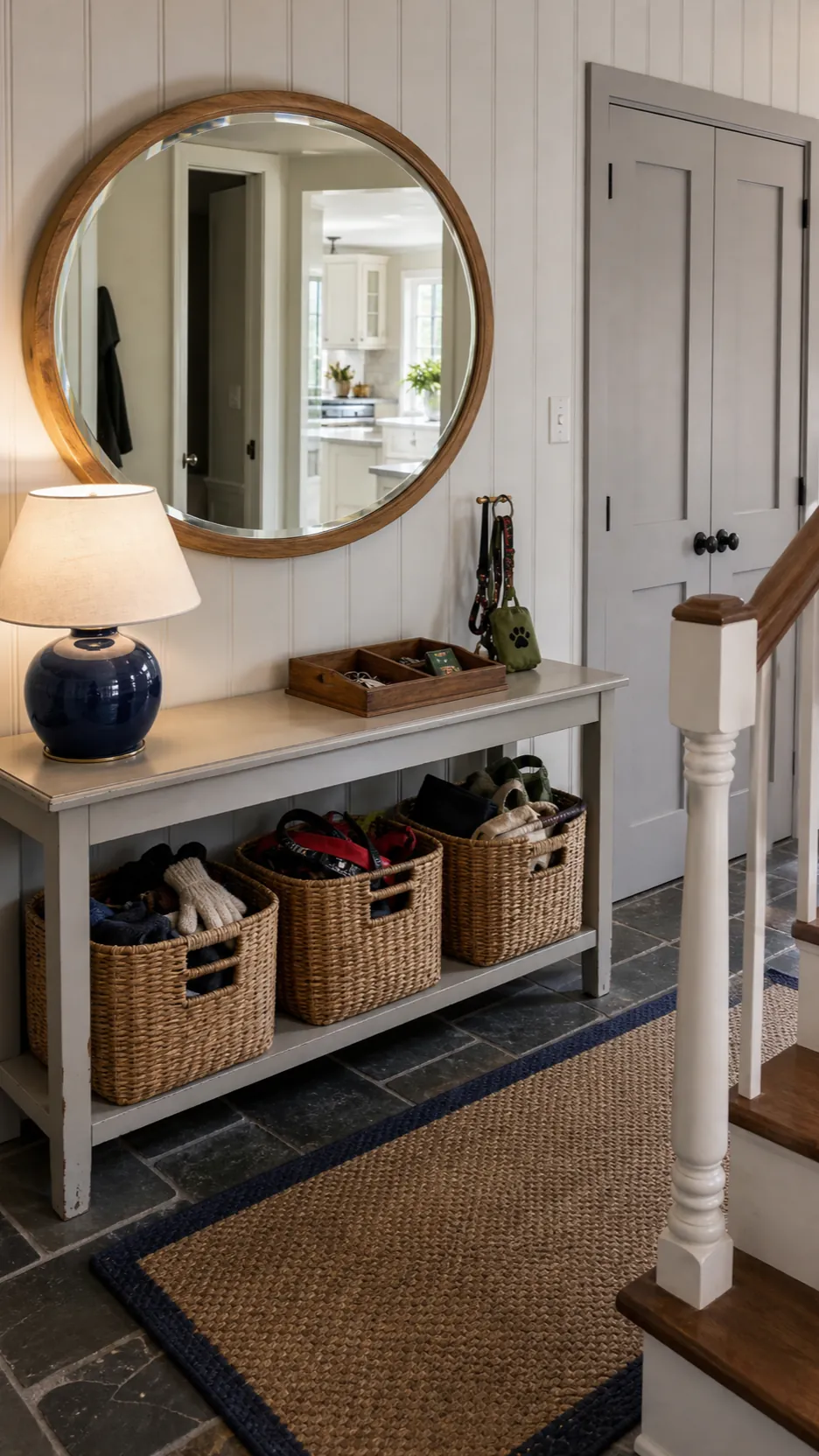
Finish by turning on the lamp and walking through the door with your hands full. If you can set something down, find the basket you need, check the mirror, and continue without sidestepping furniture, the entryway is finished. It will also look better because every visible element has earned its place.