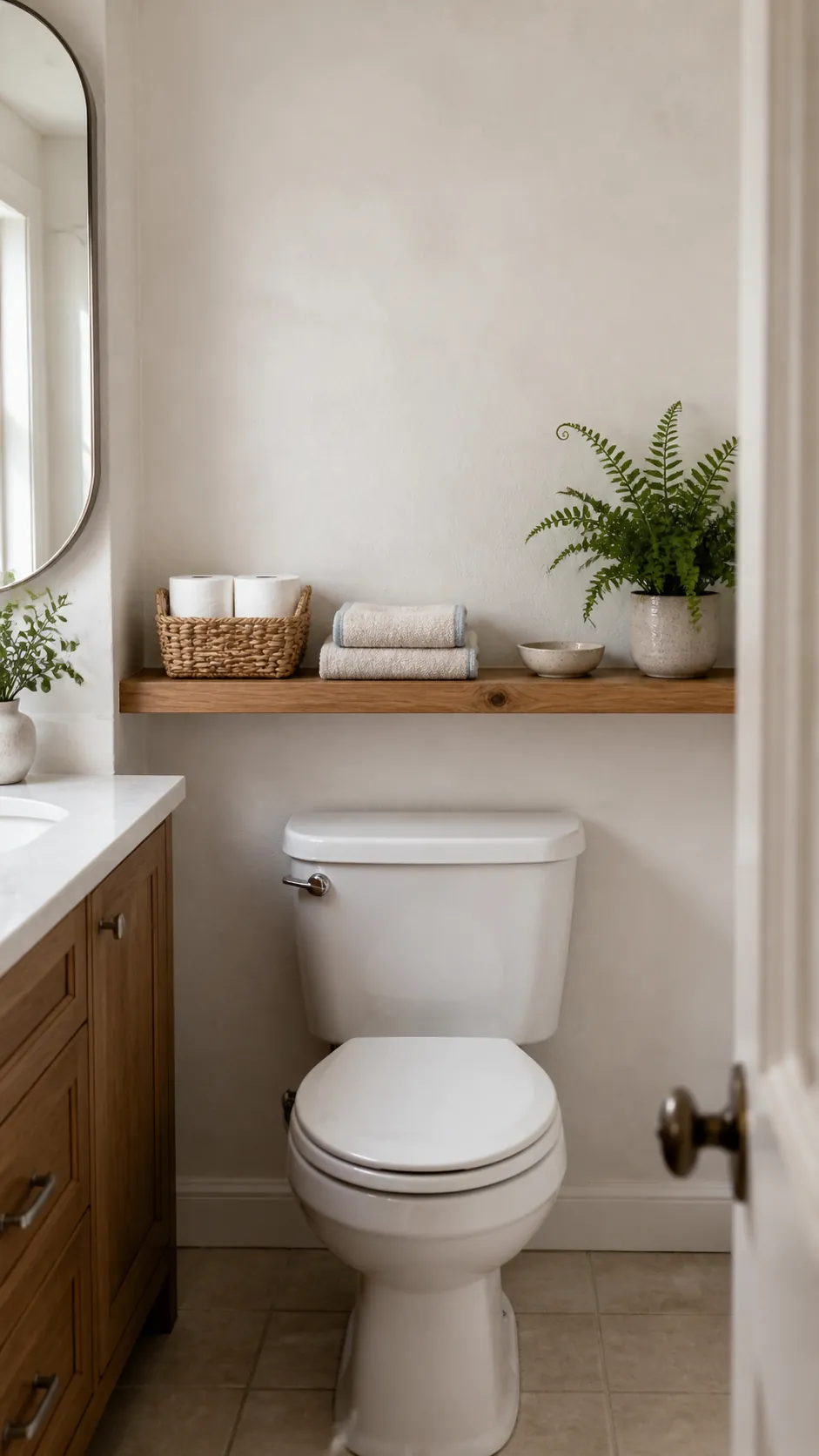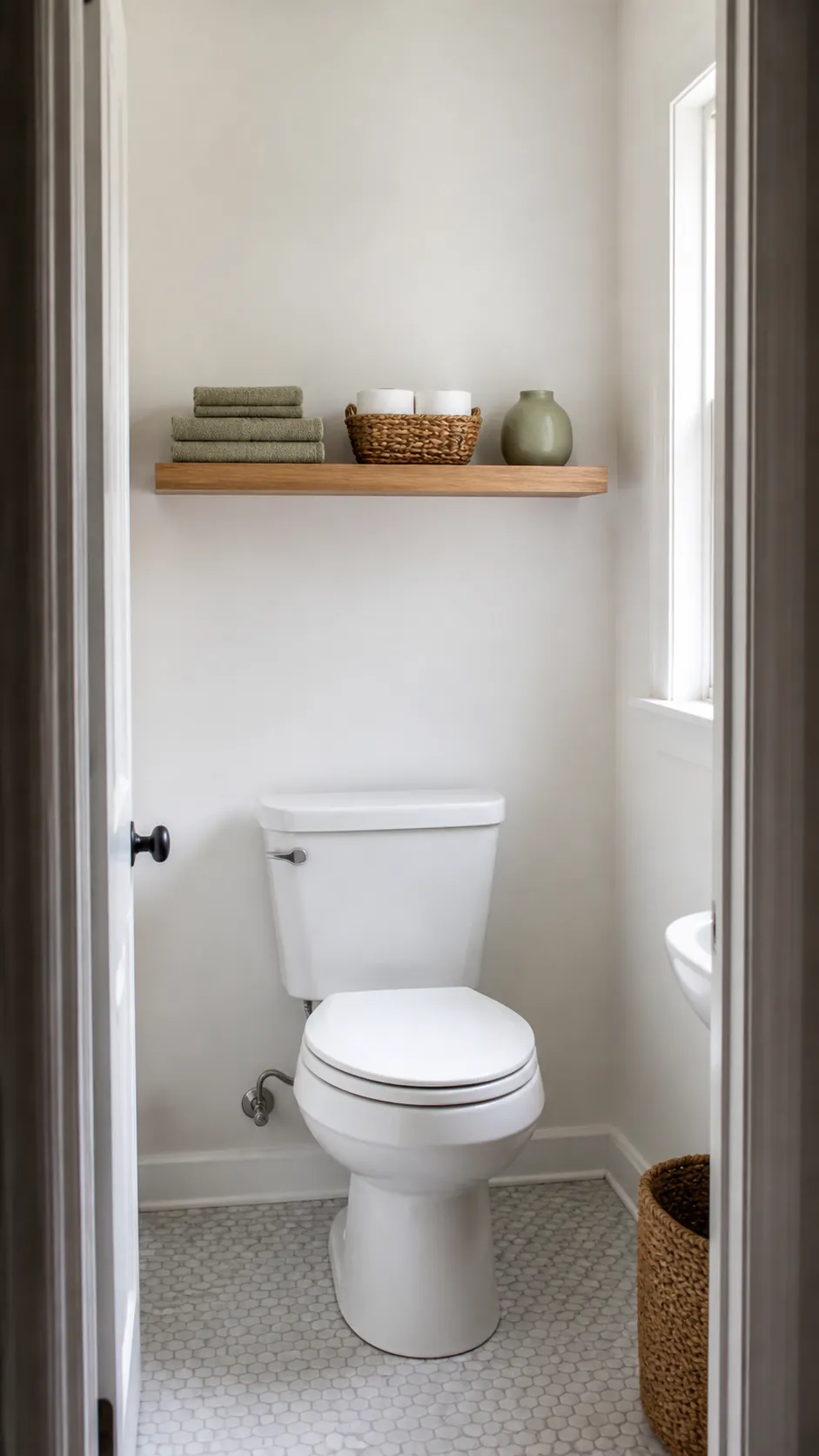
A good starting point is to place the bottom of the lowest shelf about 24 to 36 inches above the top of the toilet tank. The correct height depends on the shelf depth, the tallest user, the wall construction, and whether the tank lid can still be lifted without removing the shelf.
Measure from the tank, not only from the floor
Toilet heights and tank shapes vary, so a universal floor measurement can be misleading. Measure from the highest point of the closed tank lid to the planned underside of the shelf. A clearance of roughly 24 inches works for many shallow shelves, while 30 to 36 inches creates more breathing room and may feel safer for taller users.
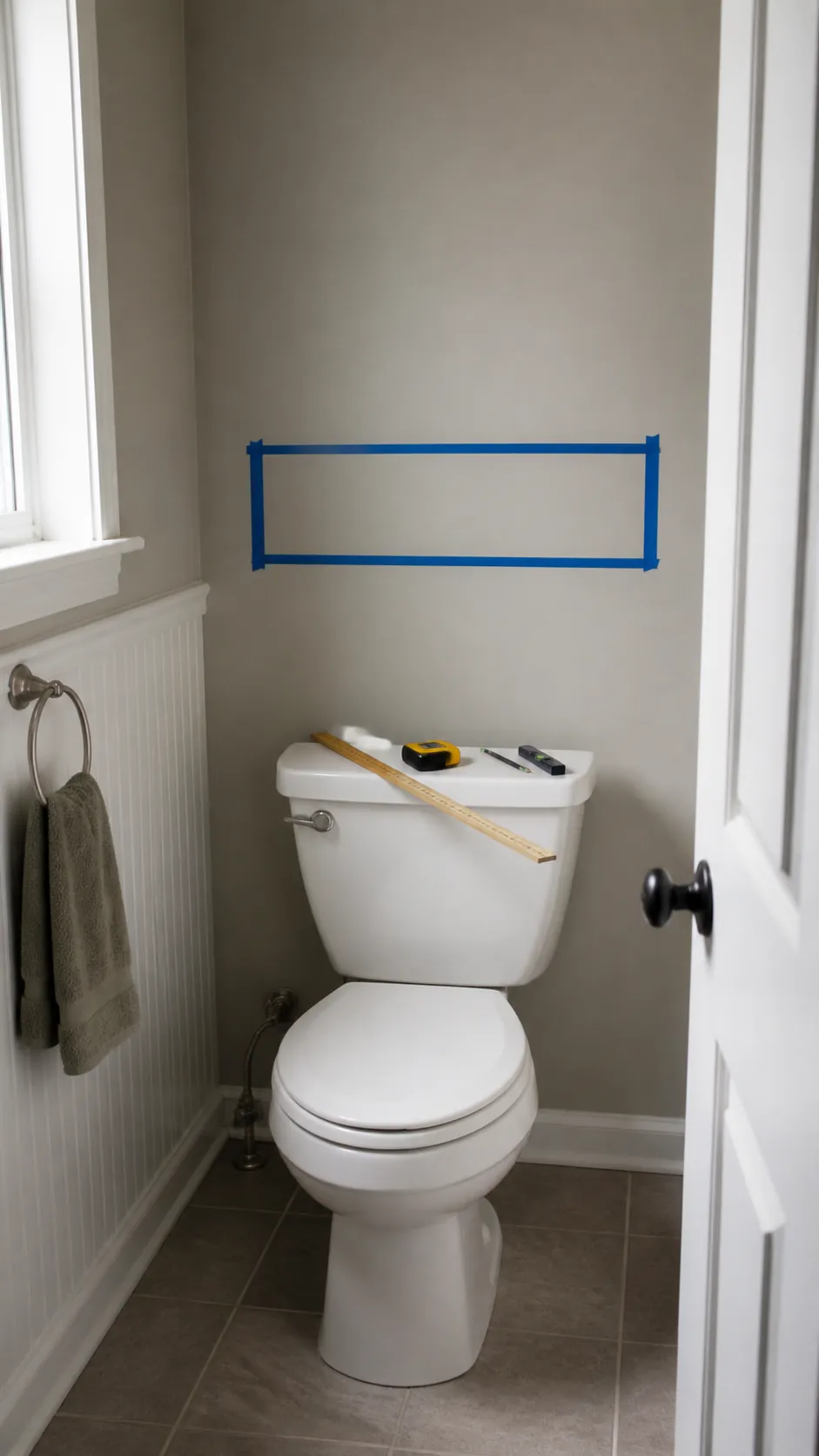
Use painter’s tape to mark the shelf width and underside, then view it while sitting and standing. Check that the composition relates to nearby mirrors, windows, and tile lines. The tape test catches awkward proportions before the drill makes them permanent.
Protect tank access and head clearance
The tank lid must lift high enough for maintenance, and a plumber should be able to reach the shutoff, fill valve, and supply connection. If the shelf is deep, raise it or reduce its projection so it does not become a head-bump hazard. Ask the tallest household member to sit, lean back slightly, and stand normally beneath the taped outline.
In a compact bathroom, a shelf 6 to 8 inches deep often holds toilet paper, a small basket, or folded hand towels without looming over the user. Deeper over toilet storage needs more vertical clearance and stronger mounting. Never trade comfortable use or plumbing access for one extra row of decor.
Anchor for the actual load
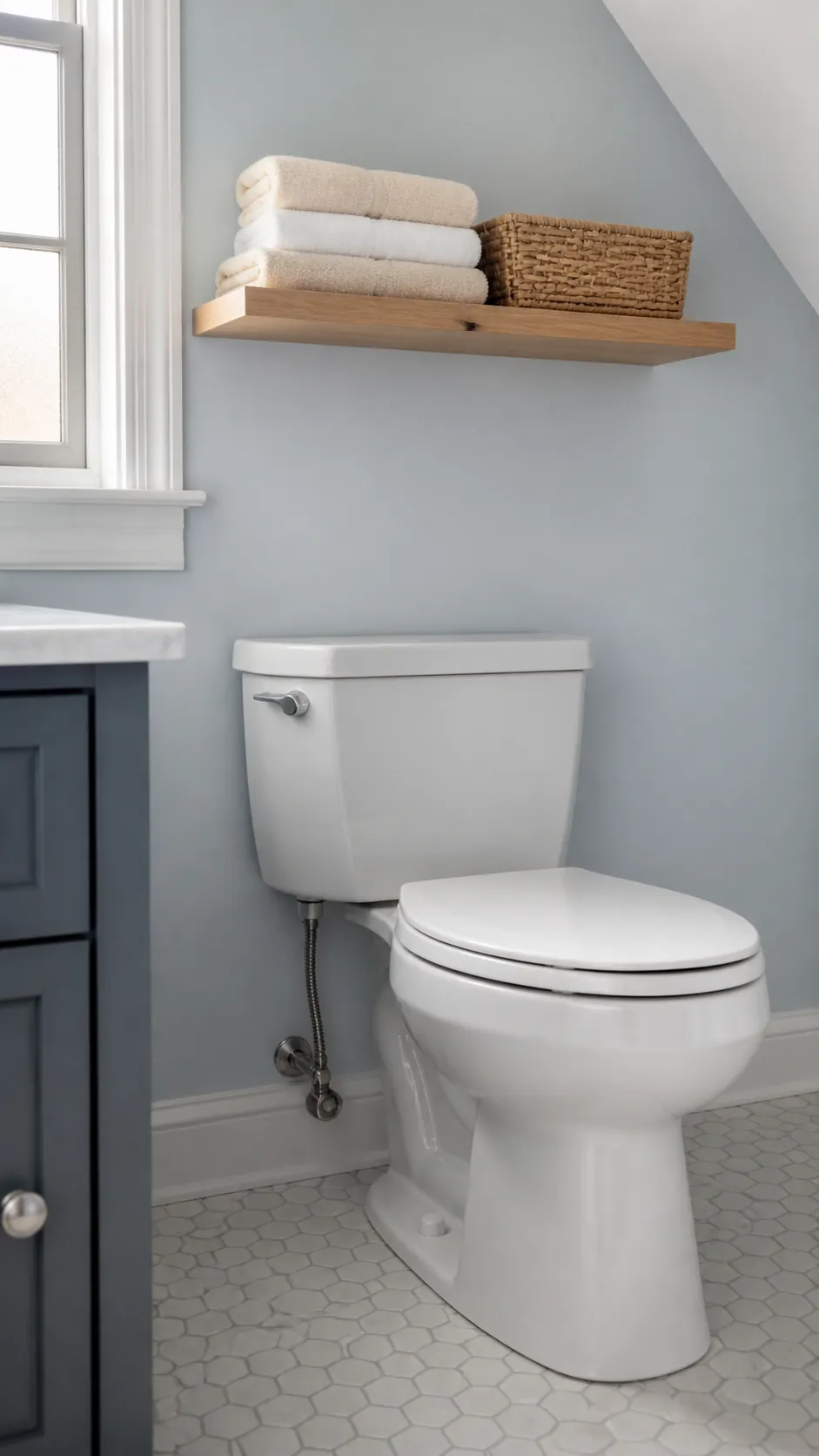
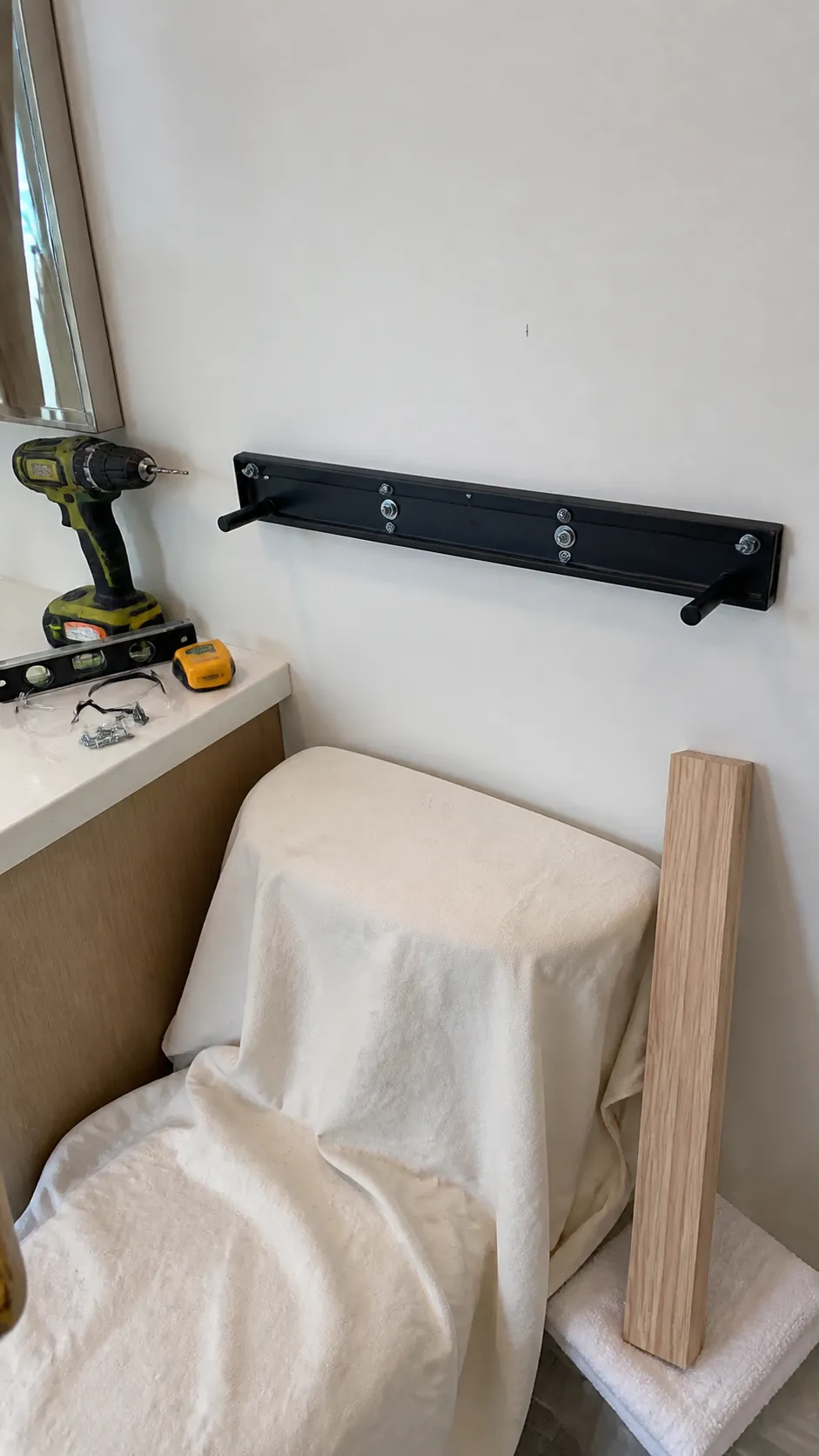
Locate studs before choosing bracket positions. When studs do not align with the design, use anchors rated for the wall material and expected load, following the shelf and fastener manufacturers’ instructions. Tile requires the correct drill bit, careful speed, and confirmation that no pipe or electrical cable sits behind the drilling point.
A floating shelf’s hidden bracket must be level, securely fixed, and fully seated inside the shelf. Do not use decorative adhesive mounting for towels, glass containers, or backup toiletries. Bathroom shelf installation should anticipate someone accidentally pulling on the edge, not only the static weight of pretty objects.
Space multiple shelves around what they hold
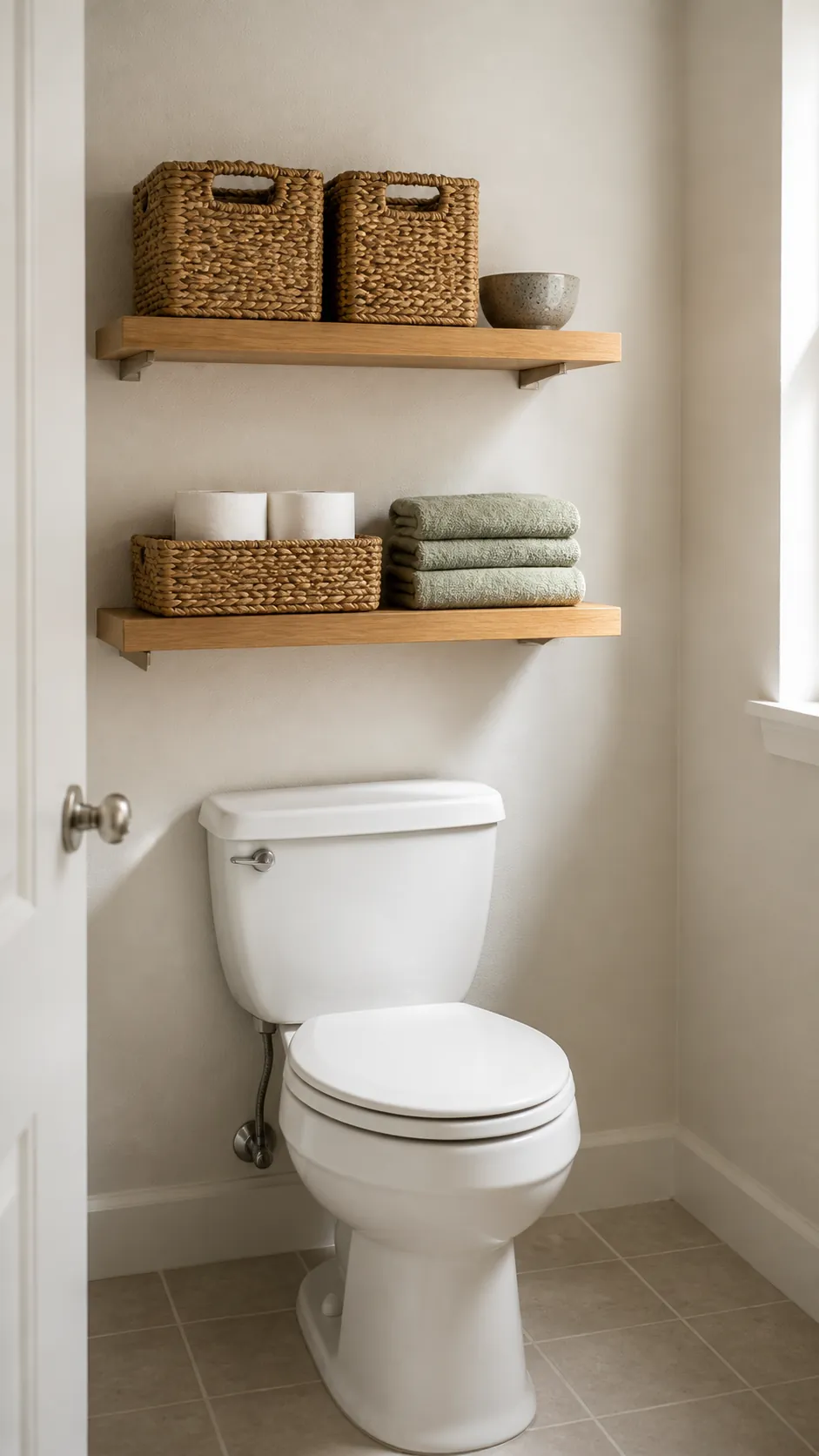
For two or three shelves, 10 to 14 inches of clear vertical space often accommodates toilet rolls, small baskets, and folded towels. Measure the tallest container and add enough room for your hand to lift it out. Varying the gaps can work when the lower shelf holds tall practical items and the upper shelf holds shorter decor.
Keep the first shelf the most generous distance above the tank, then align the upper shelf with a nearby architectural reference when possible. Equal gaps look orderly, but usable gaps matter more. Before installing, tape every shelf outline and place paper templates of the intended objects inside them.
Store bathroom essentials safely
Use the lowest shelf for soft, frequently reached items such as toilet paper and hand towels. Put small products inside a stable basket rather than lining loose bottles along the edge. Heavy glass, medicines, and anything harmed by humidity belong in a more secure cabinet away from accidental knocks.
Choose washable containers and leave enough open space to wipe the shelf. A small lip can help, but it does not replace secure mounting or careful placement. Small bathroom wall storage works best when daily essentials are easy to reach and rarely used backups are not crowding the display.
Style the shelf without hiding its purpose
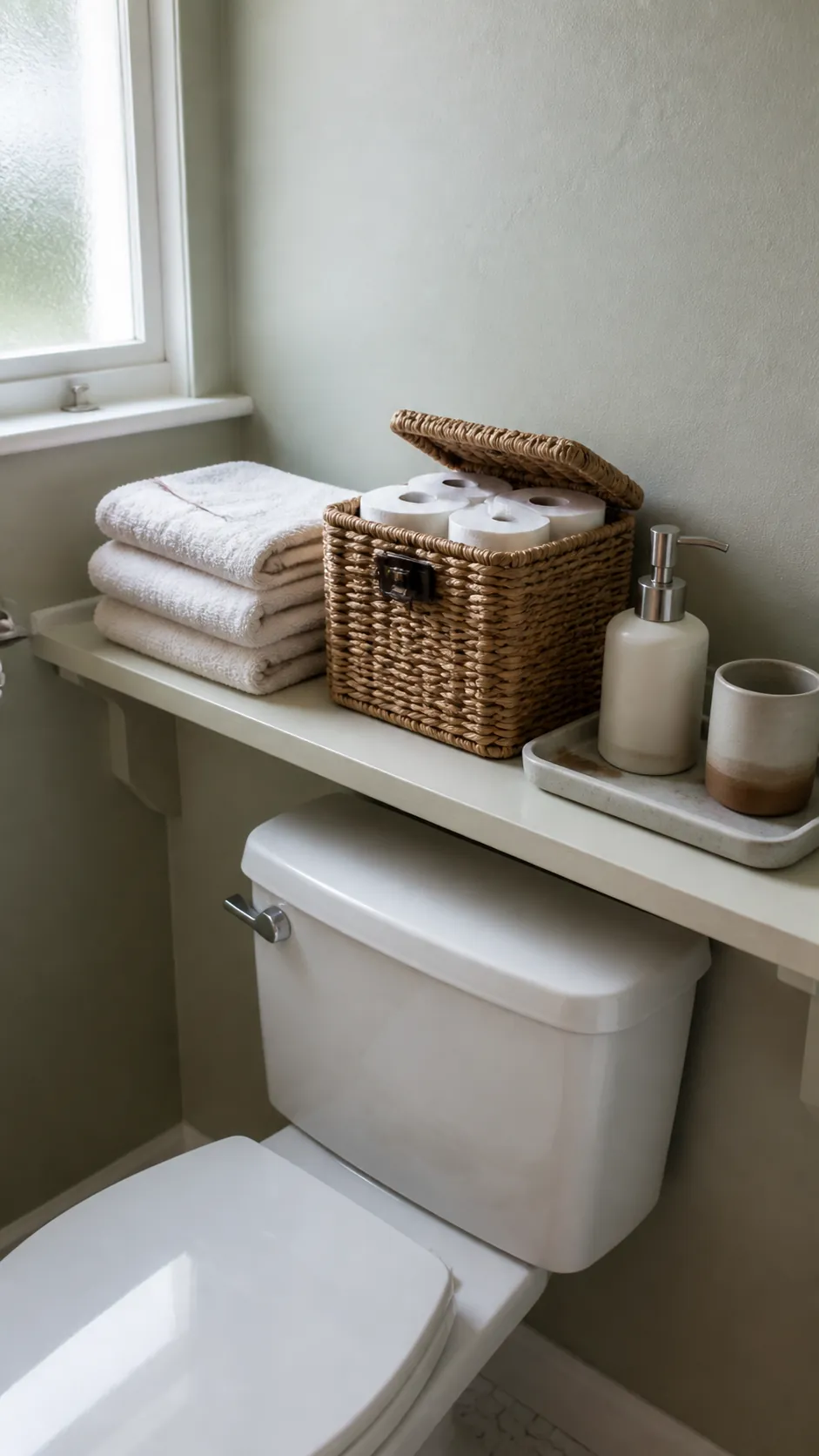
Begin with the necessary items, then add at most one or two moisture-tolerant accents. A small ceramic dish, framed print on an adjacent dry wall, or compact faux plant can soften the arrangement without blocking access. Repeat a finish already present in the room so the shelf feels connected rather than added later.
Leave roughly one-third of the shelf visually open and keep the tallest object away from a user’s head path. Step back from the doorway as well as the vanity before deciding the arrangement is finished. The right shelf height above a toilet is the one that clears people and plumbing, carries its load safely, and makes everyday supplies easier to use.