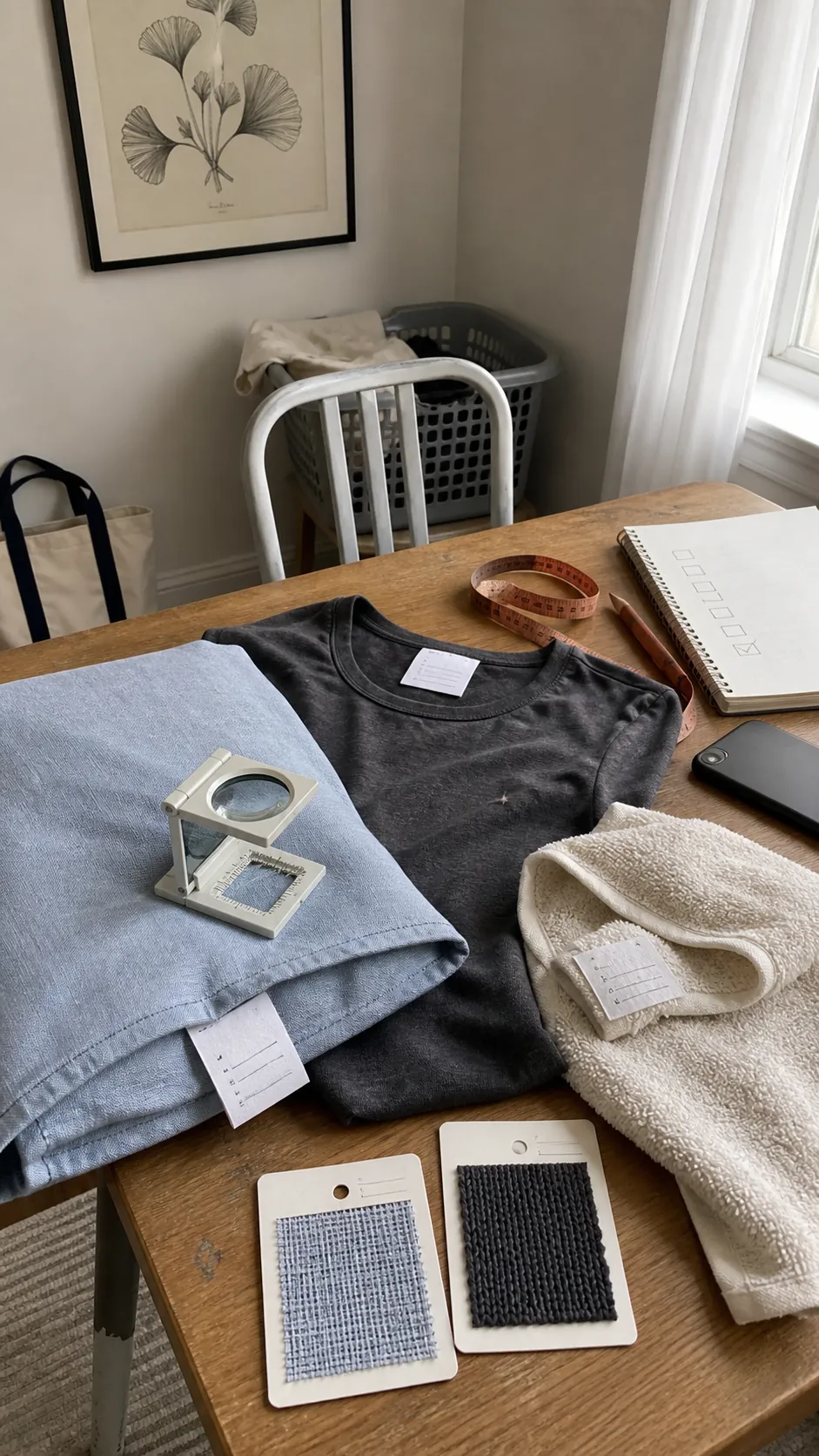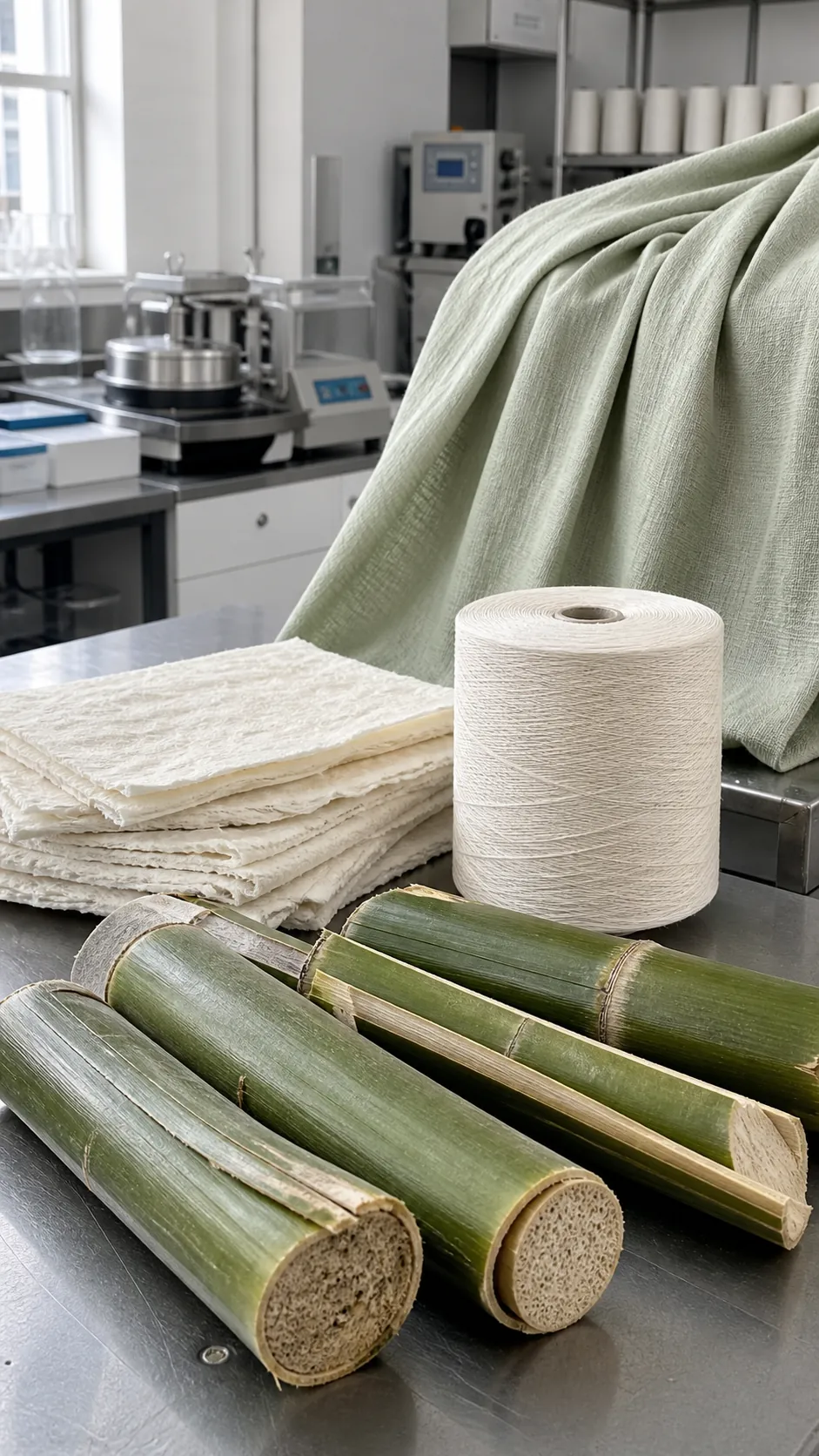
That silky bamboo shirt or set of sheets probably did not come from bamboo fibers combed straight out of a stalk. In most cases, the plant supplied cellulose, and a factory dissolved and rebuilt that cellulose as rayon or viscose. Understanding how bamboo fabric is made means separating the renewable crop from the chemical manufacturing process that gives the finished cloth its softness.
The Label Usually Describes Rayon Made From Bamboo
“Bamboo fabric” is an informal marketplace phrase, not one precise fiber category. The U.S. Federal Trade Commission says a textile can be called bamboo only when it contains fiber taken directly from the plant; regenerated material should be identified as rayon or viscose made from bamboo. That distinction matters because the soft drape shoppers associate with bamboo clothing fabric comes from regenerated cellulose, not from intact woody strands.
A second, much less common route mechanically separates bast-like fiber from the culm. It produces a coarser, linen-like material and costs more to make, so it is rarely the source of buttery knit pajamas or smooth bedding. When a care label lists “viscose from bamboo,” it is giving a more accurate answer than a large front-of-package claim that simply says “bamboo.”
Harvested Culms Become Clean Cellulose Pulp
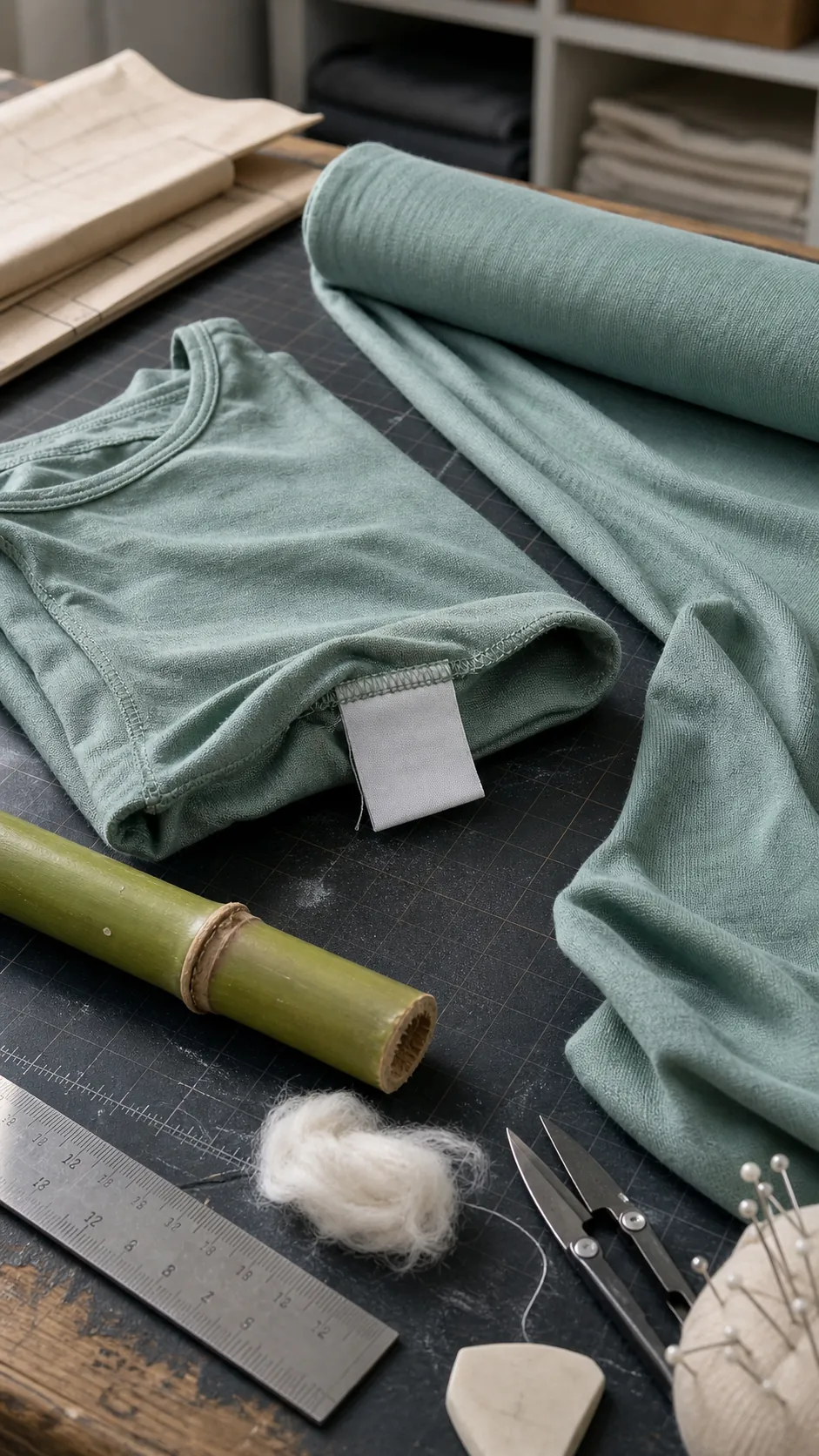
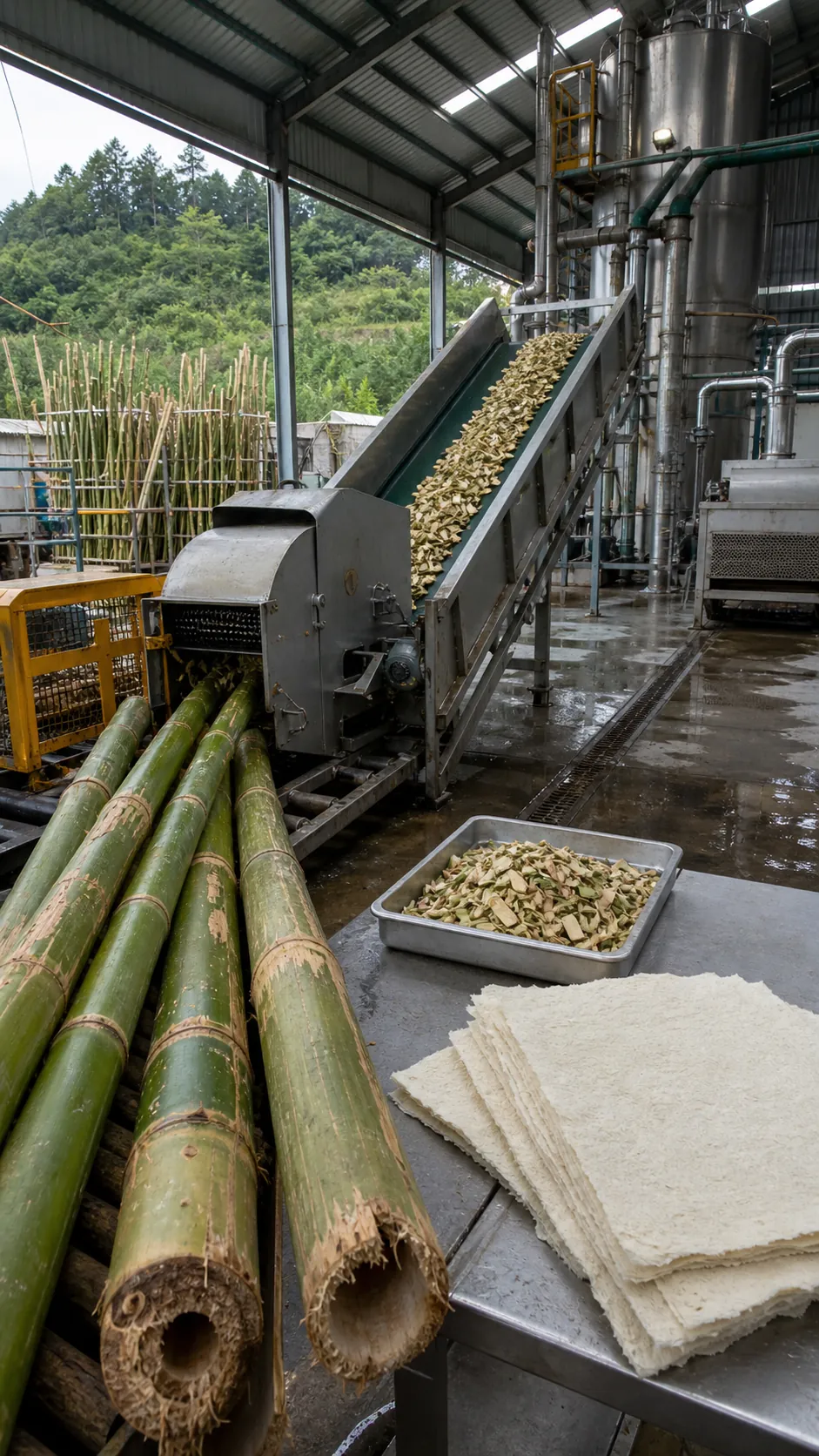
Bamboo fabric production begins by harvesting mature culms, removing leaves and branches, and cutting the hollow stems into manageable chips. Mills wash and screen the chips, then cook them to separate cellulose from lignin, hemicellulose, waxes, and other plant components. The result resembles the dissolving pulp used for many other regenerated cellulosic fibers.
Pulp quality is crucial because textile spinning needs cellulose that is cleaner and more uniform than ordinary paper pulp. The material is washed, bleached when required, dried into sheets, and graded for purity. At this point the bamboo’s original structure is gone, but its cellulose remains the raw material for the next transformation.
The Viscose Process Dissolves and Rebuilds Cellulose
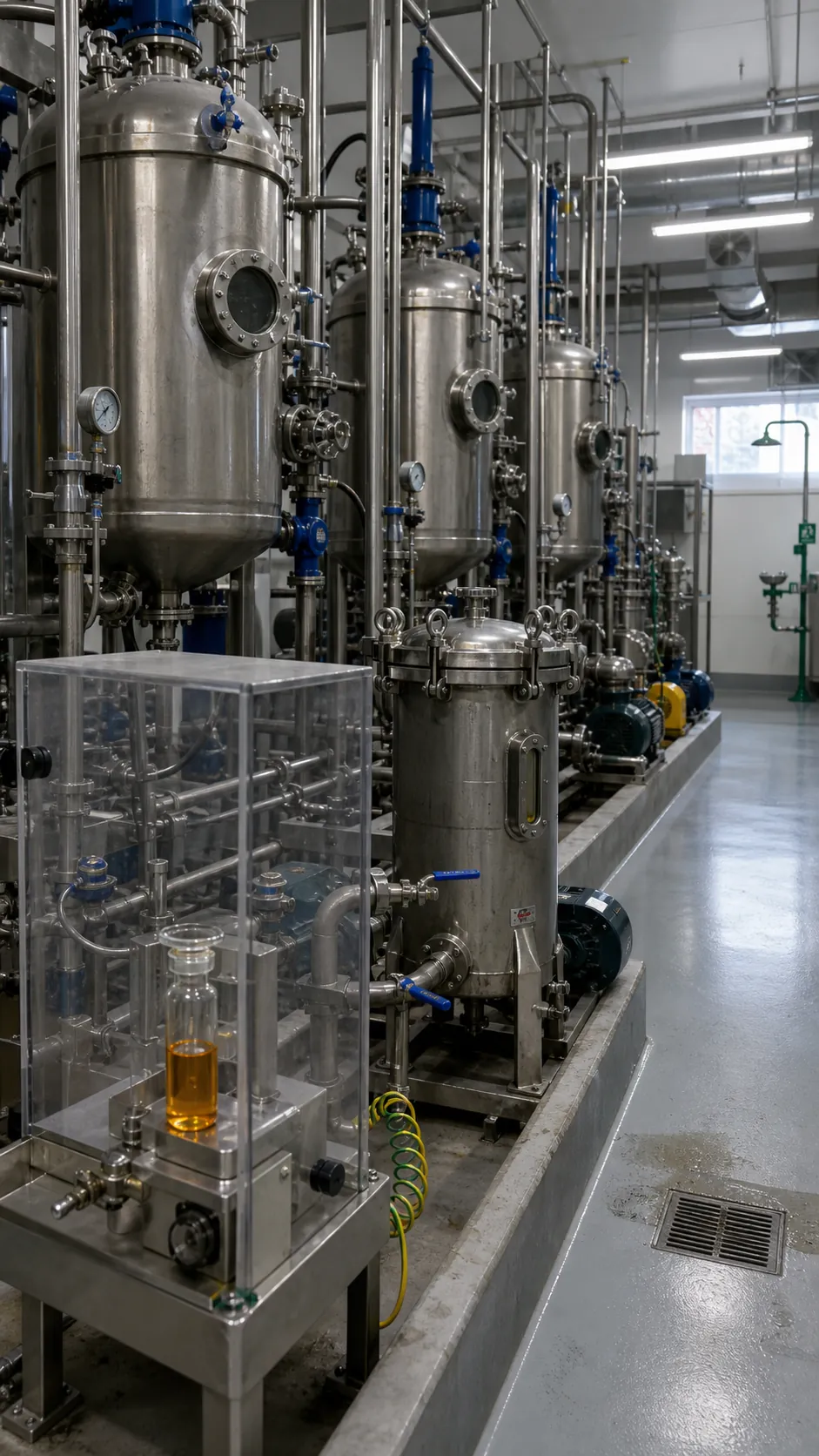
In the conventional bamboo viscose process, dried pulp is steeped in sodium hydroxide to form alkali cellulose. After pressing and shredding, the material is aged under controlled conditions and reacts with carbon disulfide, creating cellulose xanthate. A further alkaline solution dissolves it into a thick orange liquid known as viscose.
Filtration removes particles that could block a spinneret, while vacuum treatment removes bubbles that would weaken a filament. The liquid then rests until its viscosity and chemistry suit spinning. This is the decisive stage in bamboo rayon fabric manufacturing: a hard plant has become a precisely controlled cellulose solution, but solvent handling and worker protection now determine much of the process’s environmental and health burden.
Spinnerets Form Fine Regenerated Filaments
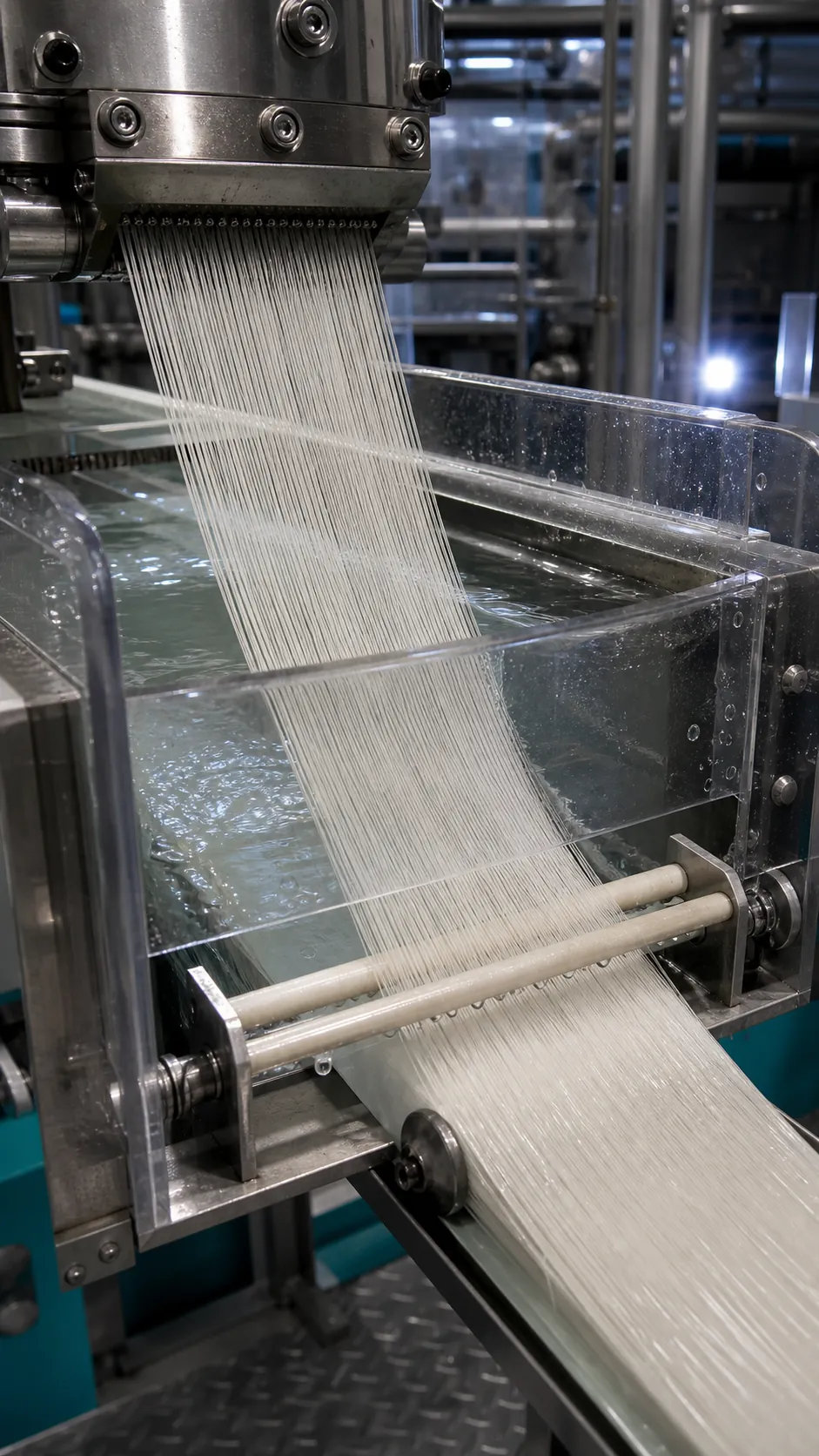
The viscose solution is pumped through spinnerets, metal plates pierced with many microscopic holes, into an acidic coagulation bath. The bath reverses the soluble intermediate and regenerates solid cellulose as continuous filaments. Operators control hole size, draw ratio, bath chemistry, and line speed because small changes influence diameter, strength, and hand feel.
Fresh filaments are stretched to align cellulose molecules, washed repeatedly, and treated to remove residual sulfur compounds. Some remain continuous; others are cut into staple lengths that can be blended and spun much like cotton. Careful washing and recovery systems are important because a soft final fiber does not by itself reveal how responsibly the plant handled emissions or wastewater.
Fiber Is Spun Into Yarn and Constructed Into Cloth
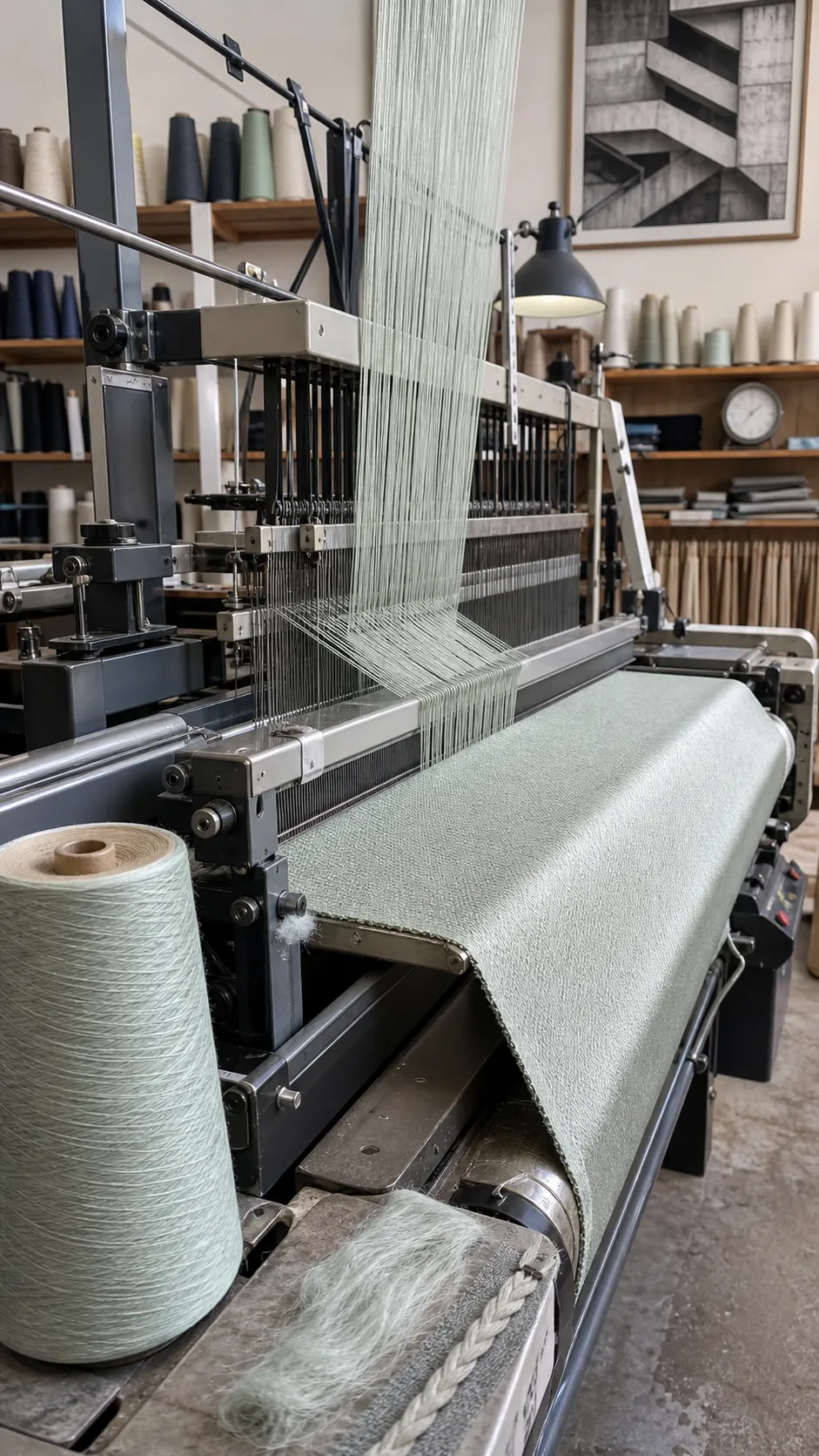
Staple bamboo viscose leaves the fiber plant in compressed bales. At a spinning mill it is opened, cleaned, carded into a web, drawn into an even strand, and twisted into yarn. Manufacturers may blend it with cotton, linen, wool, or synthetic fibers to adjust cost, resilience, warmth, and drying behavior.
The yarn becomes woven fabric on a loom or knitted fabric through interlocking loops. Weaves tend to provide dimensional stability, while knits emphasize stretch and fluid drape. Fiber length, yarn twist, fabric density, and finishing all affect pilling and durability, which explains why two products carrying the same bamboo-viscose label can perform very differently.
Dyeing and Finishing Create the Familiar Hand Feel
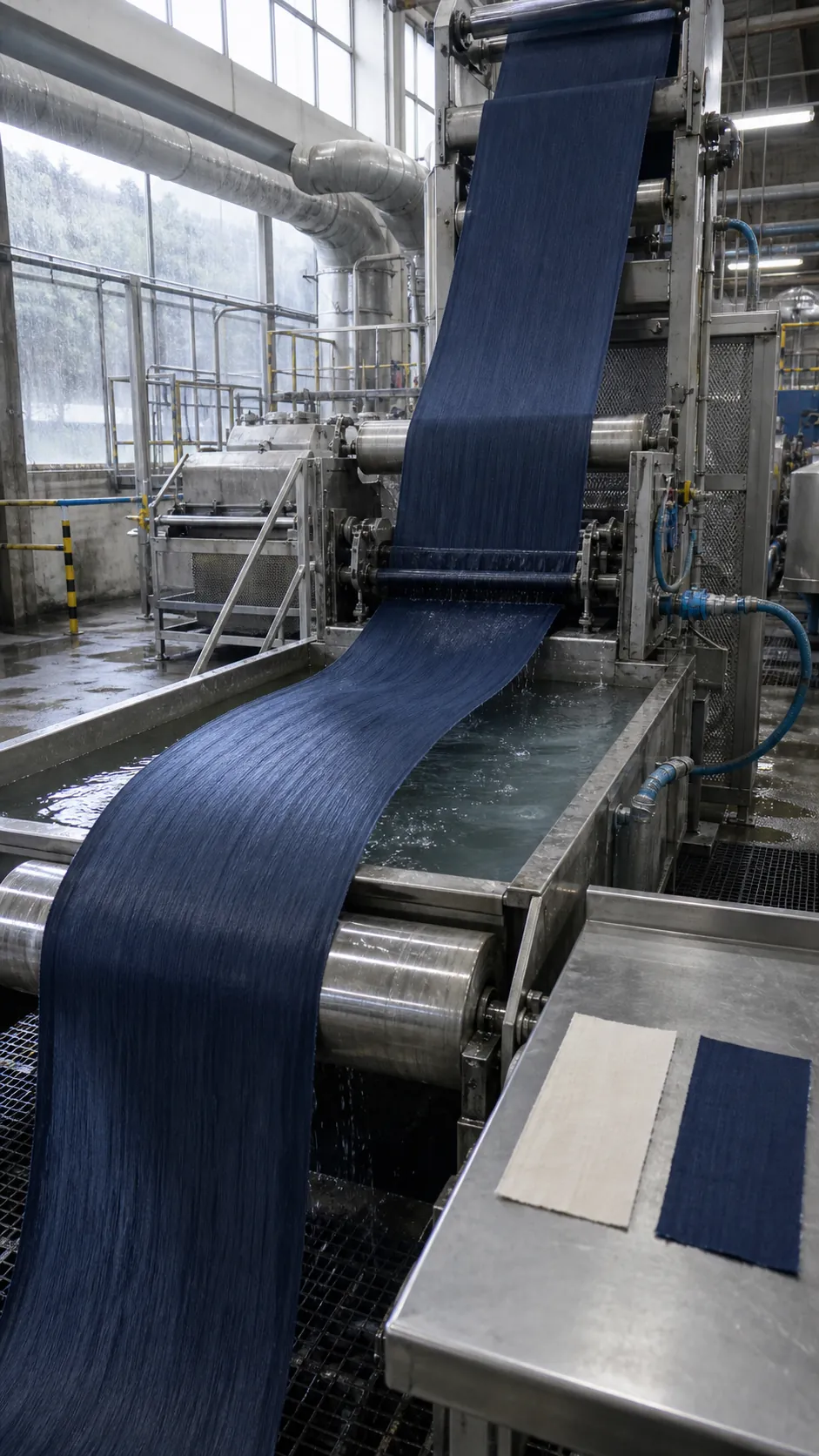
Greige cloth is washed, dyed, and finished after construction. Reactive dyes are commonly used for cellulosic material, followed by rinsing to remove unfixed color. Mechanical treatments can smooth the surface, compact a knit, or change luster, while chemical finishes may address shrinkage, wrinkles, or performance requirements.
This stage can consume substantial water and energy, so an honest sustainability assessment includes dye-house practices rather than stopping at bamboo cultivation. A fabric’s softness may come from the regenerated fiber, its knit structure, and finishing treatments working together. It should not automatically be treated as proof of a “natural,” chemical-free textile.
Sustainability Depends on the Method and the Mill
Bamboo grows quickly and can be a productive cellulose source, but crop benefits do not erase manufacturing impacts. Conventional viscose uses hazardous chemistry; responsible mills need effective recovery, ventilation, wastewater treatment, and transparent worker safeguards. Lyocell uses a different direct-solvent system that is commonly designed around high solvent recovery, though performance still depends on the actual facility and energy supply.
For a better purchase, read the legally required fiber composition instead of relying on green imagery. Look for a specific fiber name, credible sourcing information, process transparency, and relevant independent certifications, while remembering that a finished-product chemical test does not prove every upstream claim. The most useful question is not simply whether bamboo grew sustainably, but who turned its cellulose into fabric, by which process, and with what controls.