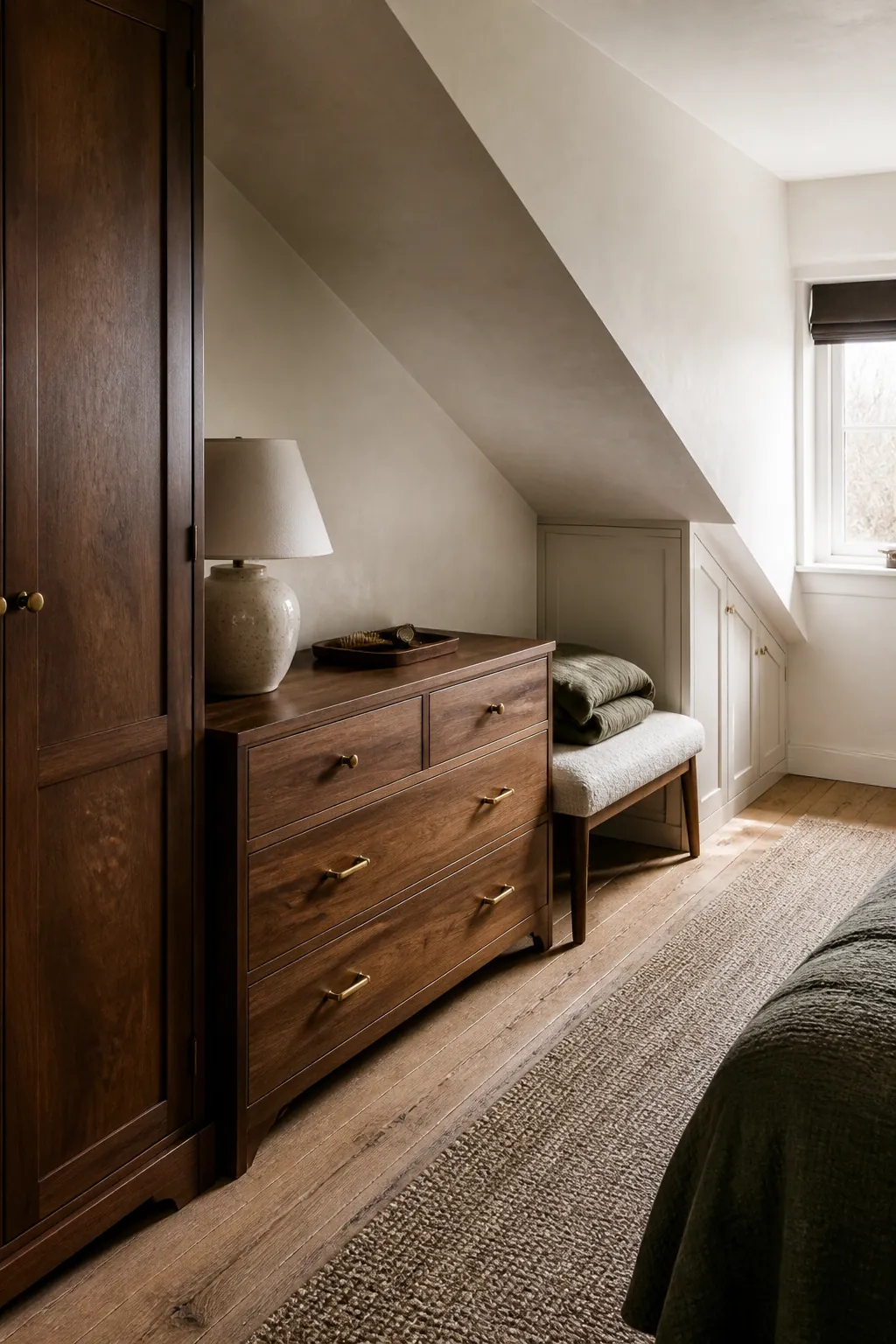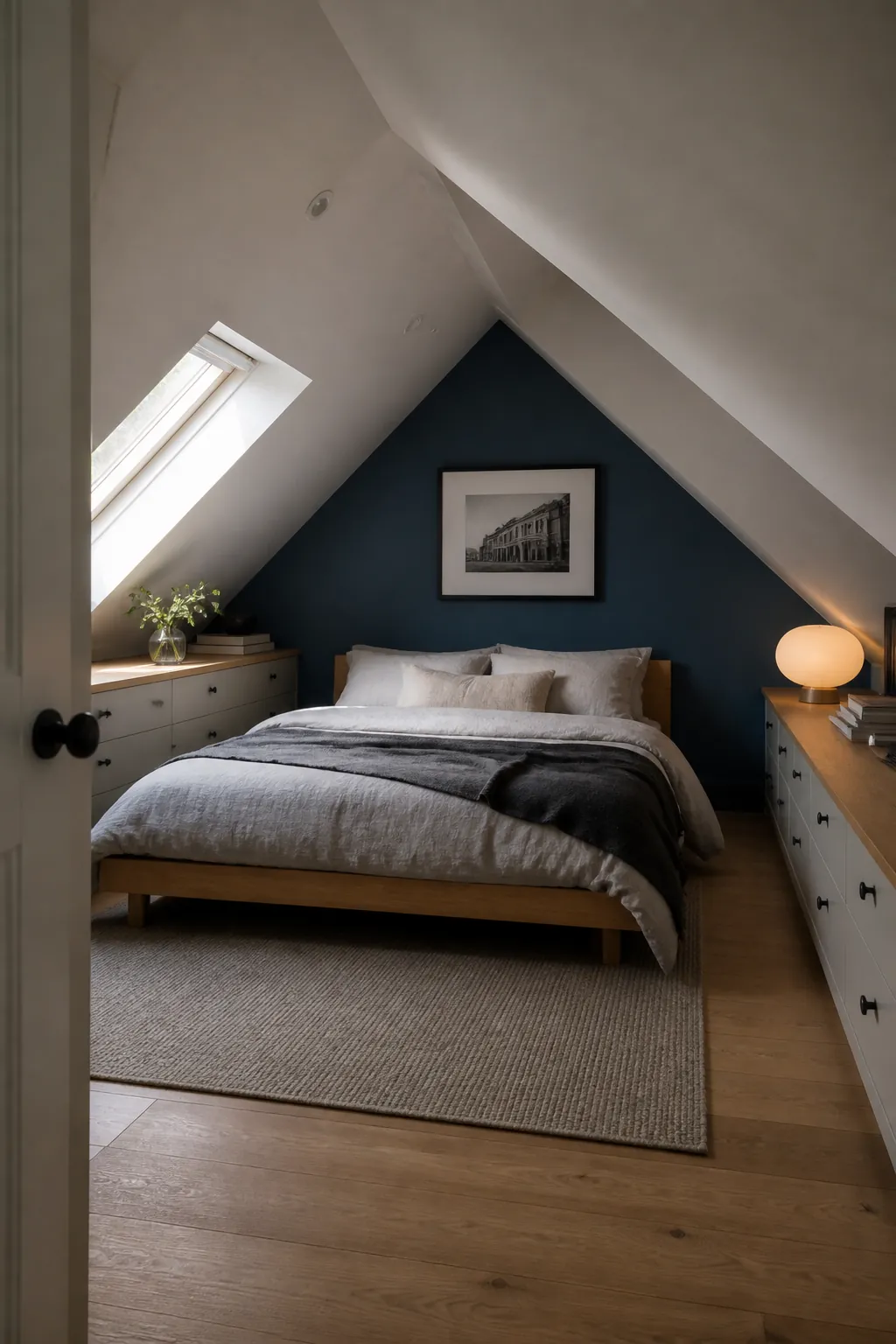
Slanted attic walls already create movement, so decorating them well is mostly an exercise in restraint. Decide which surfaces should visually recede, keep fragile decor out of head-bump zones, and use the full-height walls for the pieces that need secure hanging.
Decide where the wall ends and the ceiling begins
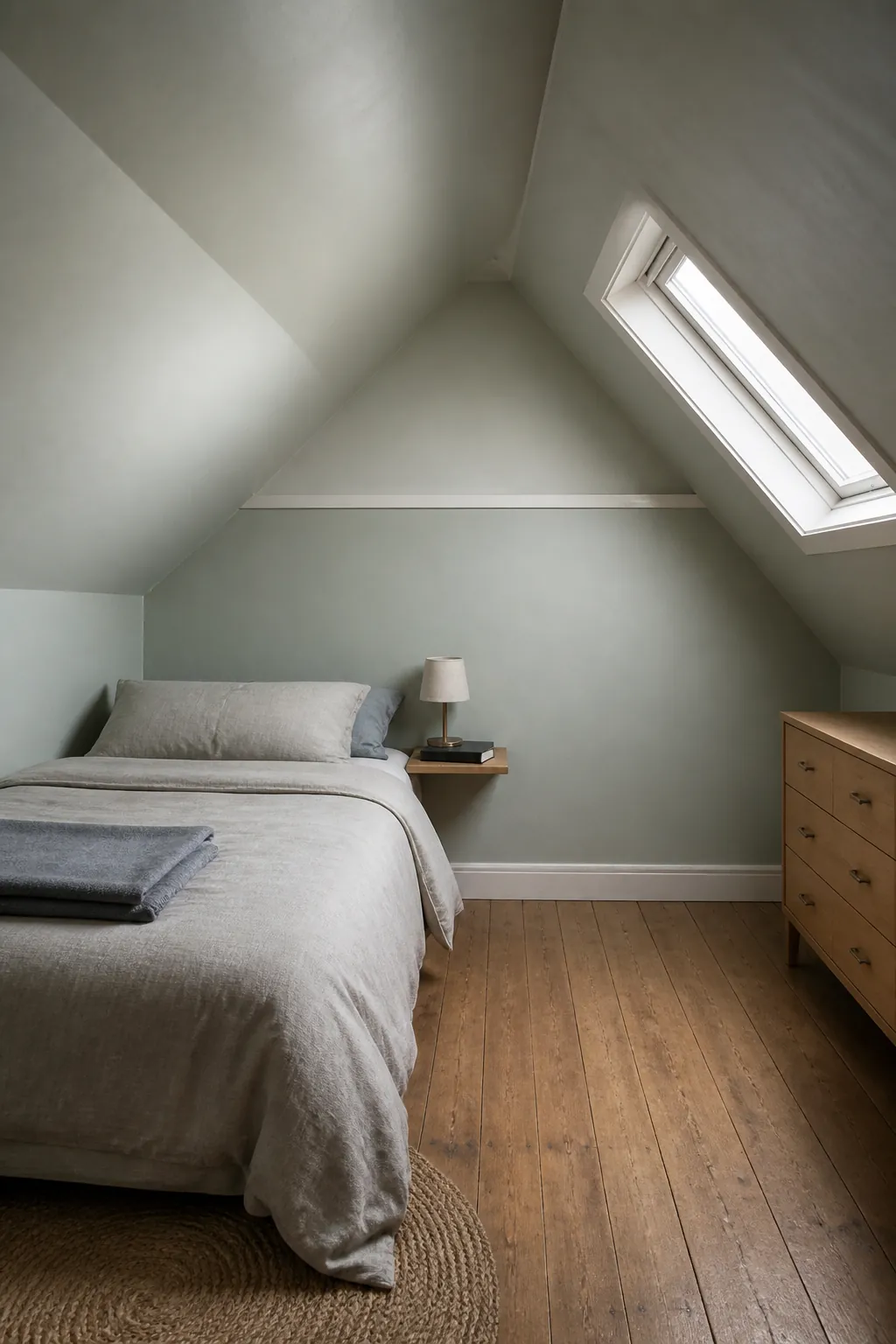
There is no universal paint boundary for a sloped ceiling bedroom. A useful rule is to treat an angled plane that runs down to a knee wall as part of the room envelope, then test whether contrast makes the geometry clearer or merely busier. In a dim attic, carrying one pale shade across the knee wall and slope often produces the calmest result.
If a narrow horizontal ceiling remains at the ridge, it can stay a cleaner white while the slants share the wall color. Large sample boards are more reliable than tiny chips because skylights change color throughout the day. Paint the architecture you actually have, not a rule copied from a rectangular room.
Place an accent on the full-height gable
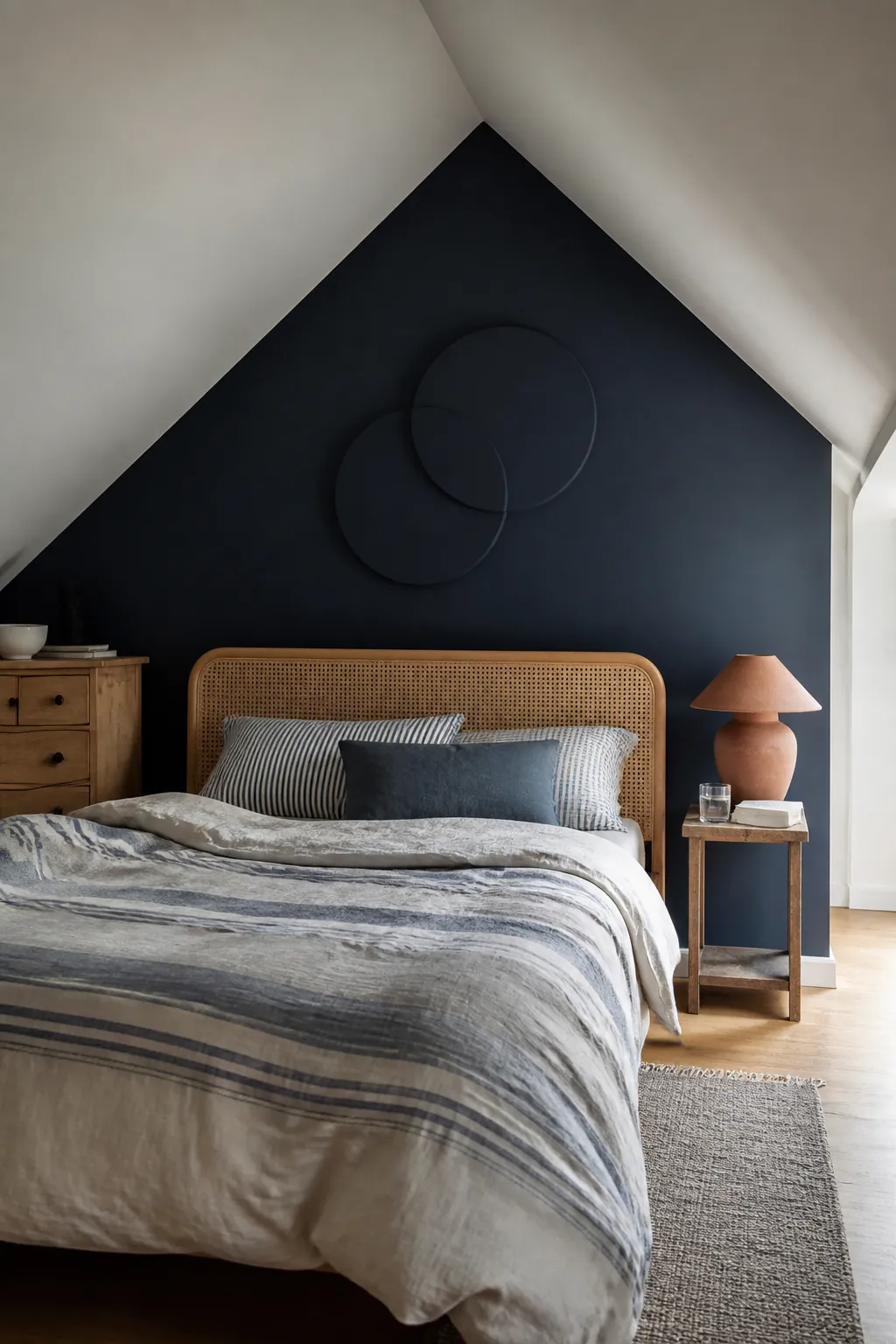
An attic accent wall works best where it has a complete, readable shape. The full-height end wall behind a bed or dresser can take a deeper paint color, timber detail, or one defined pattern without tracing every roof angle. That single destination gives the eye somewhere to rest.
Repeat the accent color in only two or three smaller objects, such as a cushion, lamp base, or rug stripe. Avoid making both gables and every slant compete for attention. When the roof structure is already dramatic, one controlled focal plane feels richer than several unrelated effects.
Use pattern where it can be installed cleanly
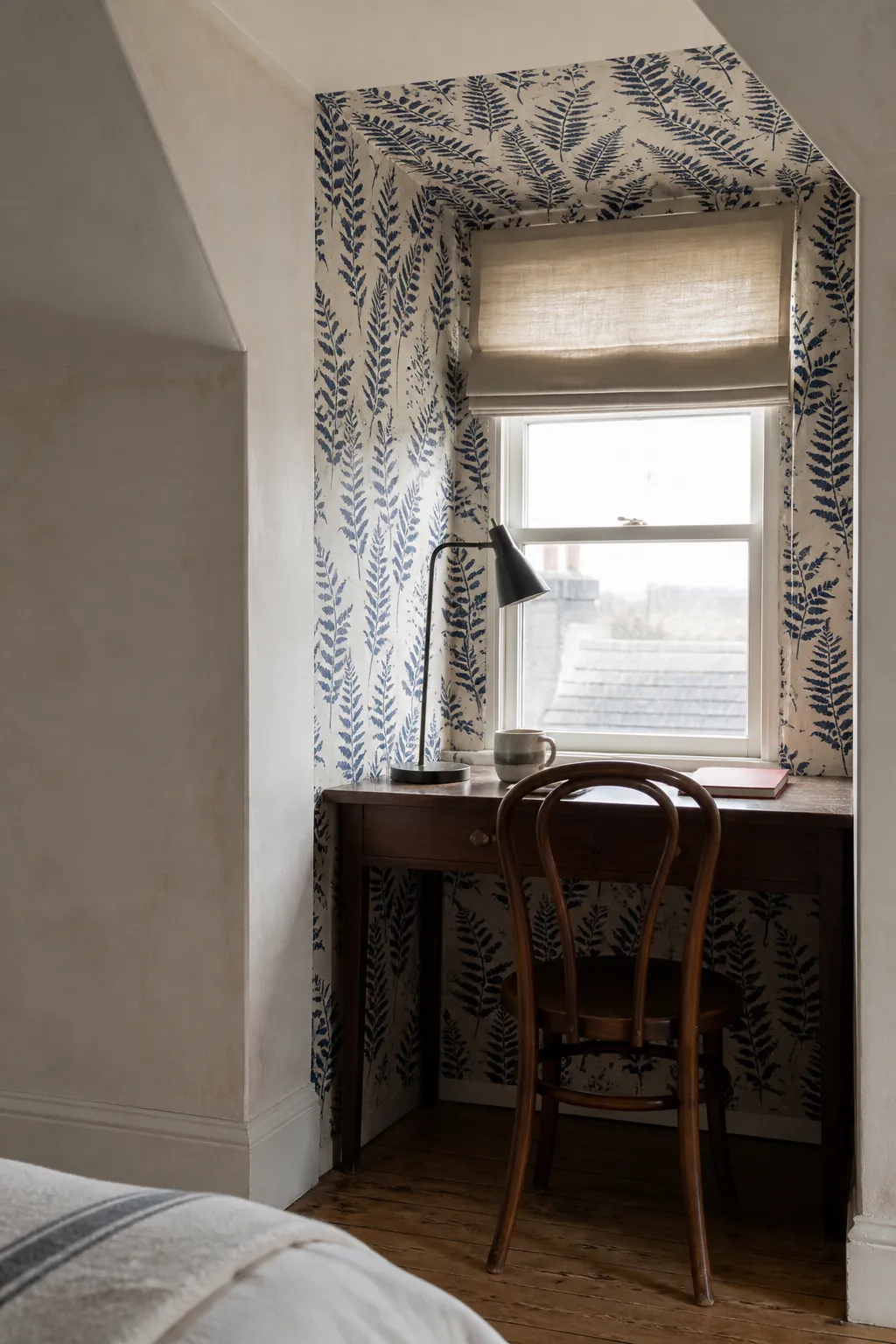
Wallpaper on a slant can work, but seams, gravity, and sightlines make installation less forgiving. A vertical dormer recess or gable is usually the safer location for a block-print wallpaper, while plain adjacent slopes prevent the pattern from becoming oppressive. Removable paper is useful for testing scale, though textured plaster may need preparation.
Choose a motif that is easy to orient and inspect the first drop from the room entrance before continuing. Small repeats can shimmer across uneven walls, whereas an open botanical or geometric block print tolerates old-house irregularity. Keep bedding quieter so the patterned surface remains intentional.
Keep art on secure vertical surfaces
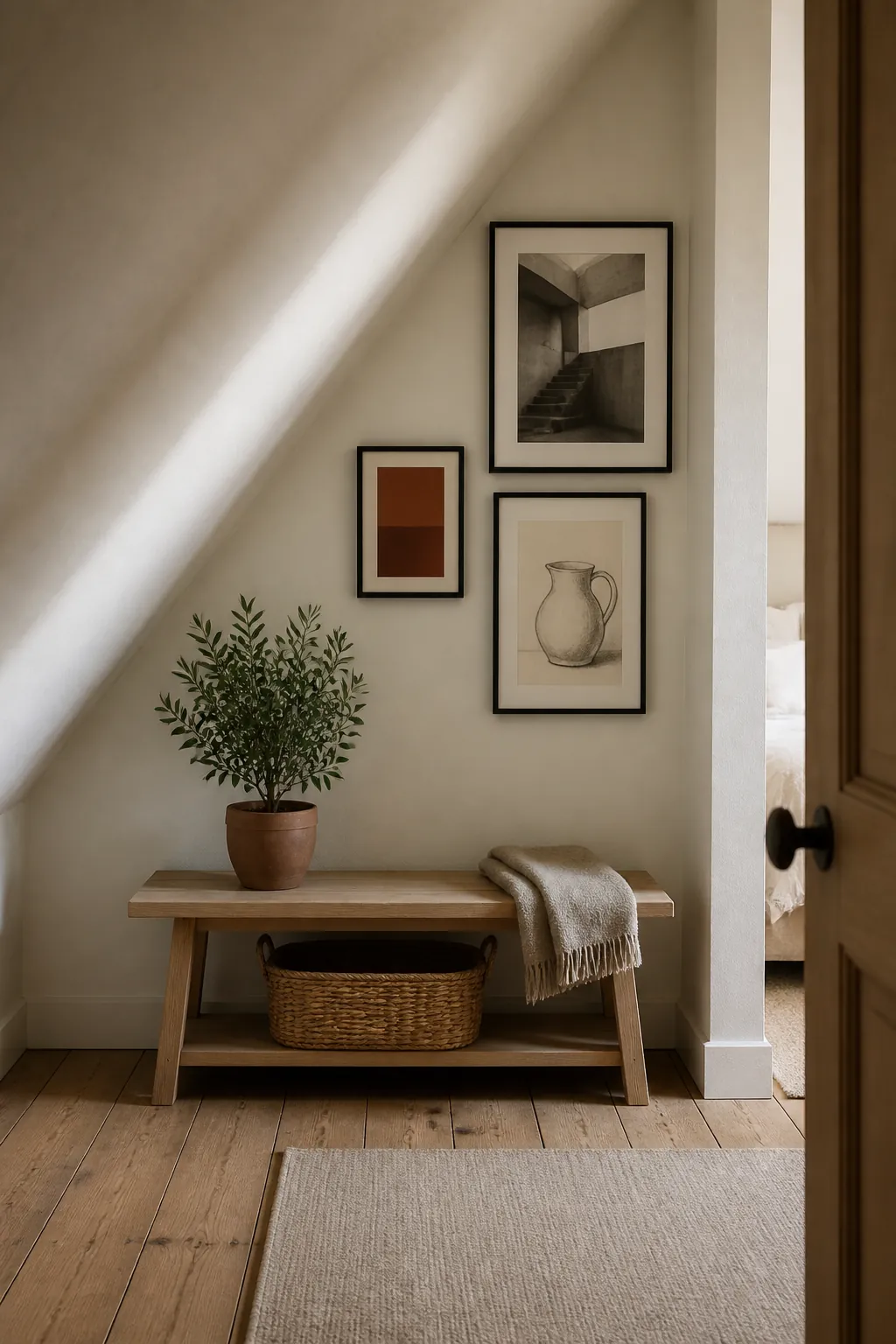
Conventional picture hooks rely on gravity, so they are not appropriate for a slanted plane unless the hardware is specifically engineered for that angle and anchored into structure. The simpler solution is to reserve framed pieces for vertical gables, dormer returns, and knee walls. Low art can look deliberate when it aligns with a bench or chest beneath it.
For the slope itself, consider paint, shallow applied trim, or a lightweight textile panel installed by a professional method. Never hang glass where someone could strike it or where failure would land on the bed. Attic wall decor should improve the room without creating a maintenance or safety problem.
Wash the angles with indirect light
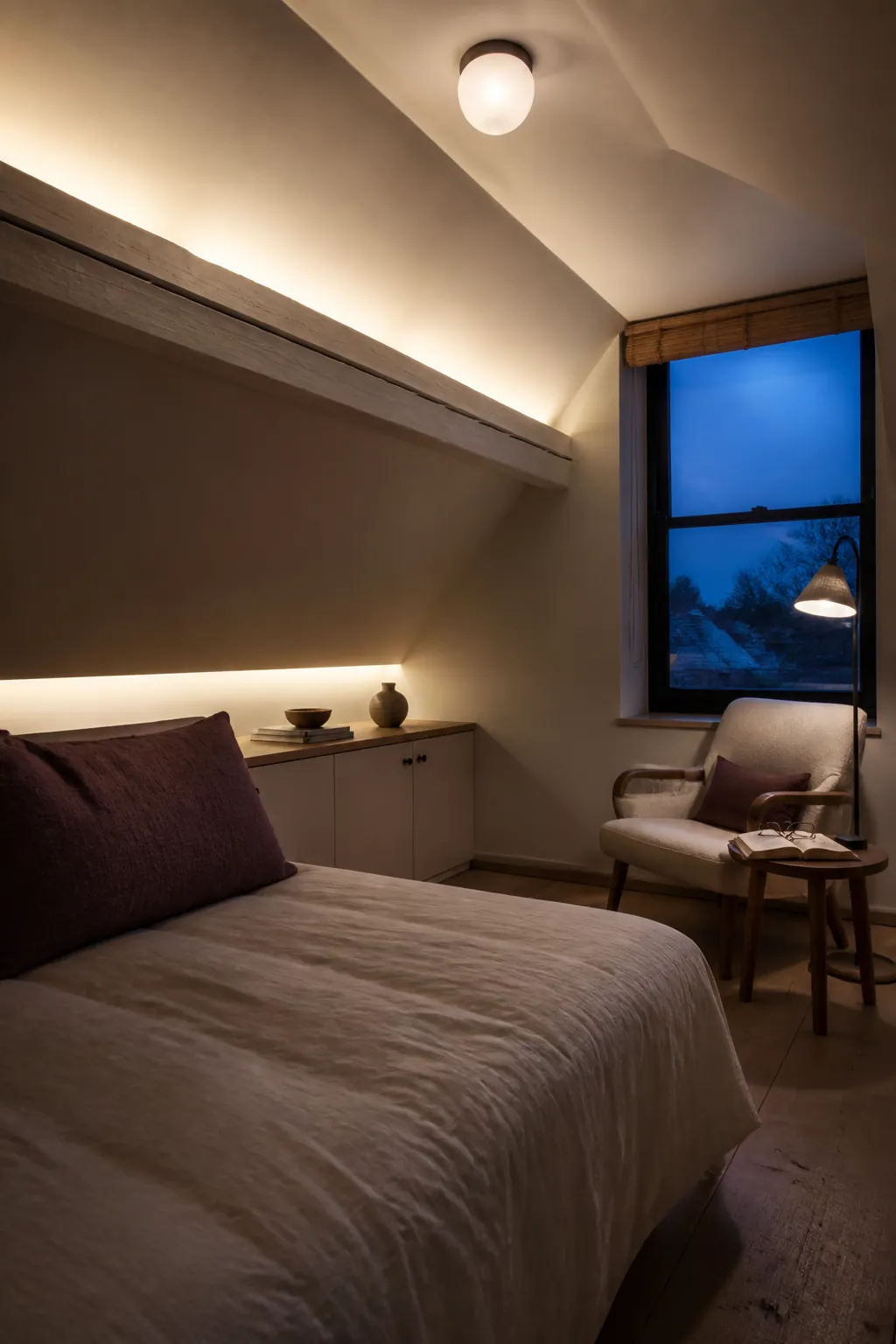
Light aimed across plaster reveals every bump, while light reflected gently off the slopes makes the room feel taller. Use compact ridge fixtures for ambient light and place lamps or sconces on vertical surfaces where they cannot steal headroom. A dormer lamp can brighten a low corner that a central fixture misses.
Keep bulb colors consistent and use dimmers where possible. Concealed LED lighting can be effective along a properly detailed beam or built-in, but visible adhesive strips quickly look temporary. The best skylight bedroom decor also includes a fitted blind so glare, heat, and early sunrise remain controllable.
Let low furniture complete the composition
A slanted wall looks awkward when tall furniture fights it. Place built-in eaves storage, a low dresser, bench, or shallow bookcase beneath the descent, then leave a small breathing gap so the roofline remains legible. The top surface can hold one useful lamp or a contained tray rather than a row of ornaments.
Balance the low side with one taller element in a full-height pocket, such as a wardrobe, curtain, or plant. This creates a visual step that follows the architecture instead of resisting it. Once paint, safe wall decor, lighting, and furniture all respect the same roofline, even aggressive slopes begin to feel like the room’s strongest feature.