
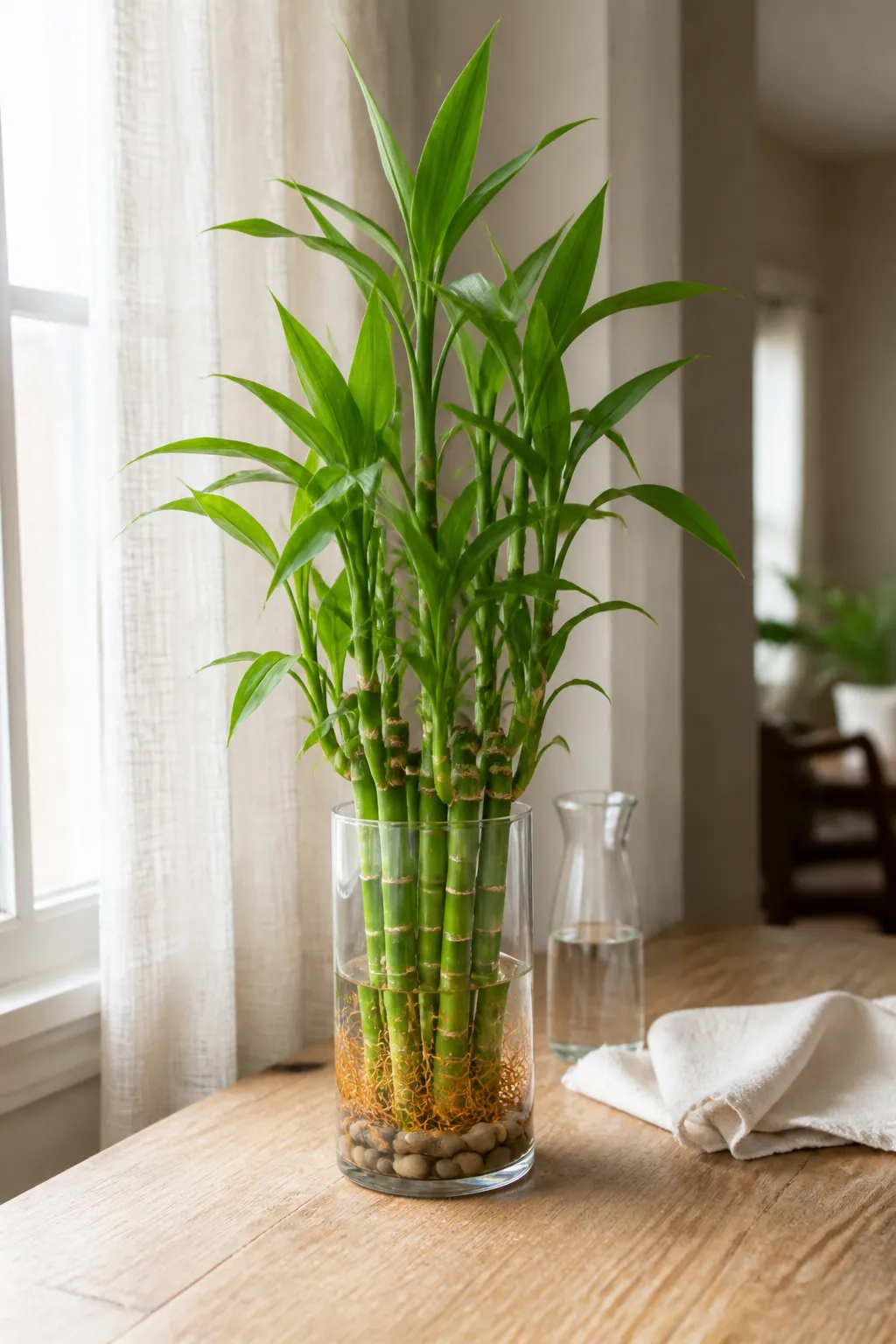
A yellow leaf can tempt you to add more water, move the pot into stronger sun, and pour in fertilizer all on the same day. That is exactly how a small problem becomes impossible to diagnose. The better approach is to identify the plant, check its roots and growing medium, and change one care variable at a time.
This guide focuses on the plant most often sold for indoor desks and homes as “bamboo”: lucky bamboo, botanically Dracaena sanderiana. It is not a true bamboo, although its ringed canes look convincing. If your plant has narrow leaves sprouting from shaped or bundled green canes and grows in pebbles, water, or a small pot, this is the care routine you probably need.
First, Confirm Which “Bamboo” You Own
Plant labels cause much of the confusion around bamboo plant care. Lucky bamboo is a tropical dracaena from Africa, while true bamboos are grasses with hollow, jointed culms and very different space, light, and root requirements. Bamboo palm is another unrelated houseplant that may appear under a similar label.
Look at the growing setup as well as the stems. Lucky bamboo is commonly sold as a group of cut canes rooted in water and supported by pebbles, or as a compact indoor bamboo plant in soil. True bamboo usually has finer branches and many grasslike leaves, and it does not make a durable tabletop plant in a shallow vase of water. Correct identification is the first care decision, because advice for an outdoor bamboo grove can harm a dracaena on your desk.
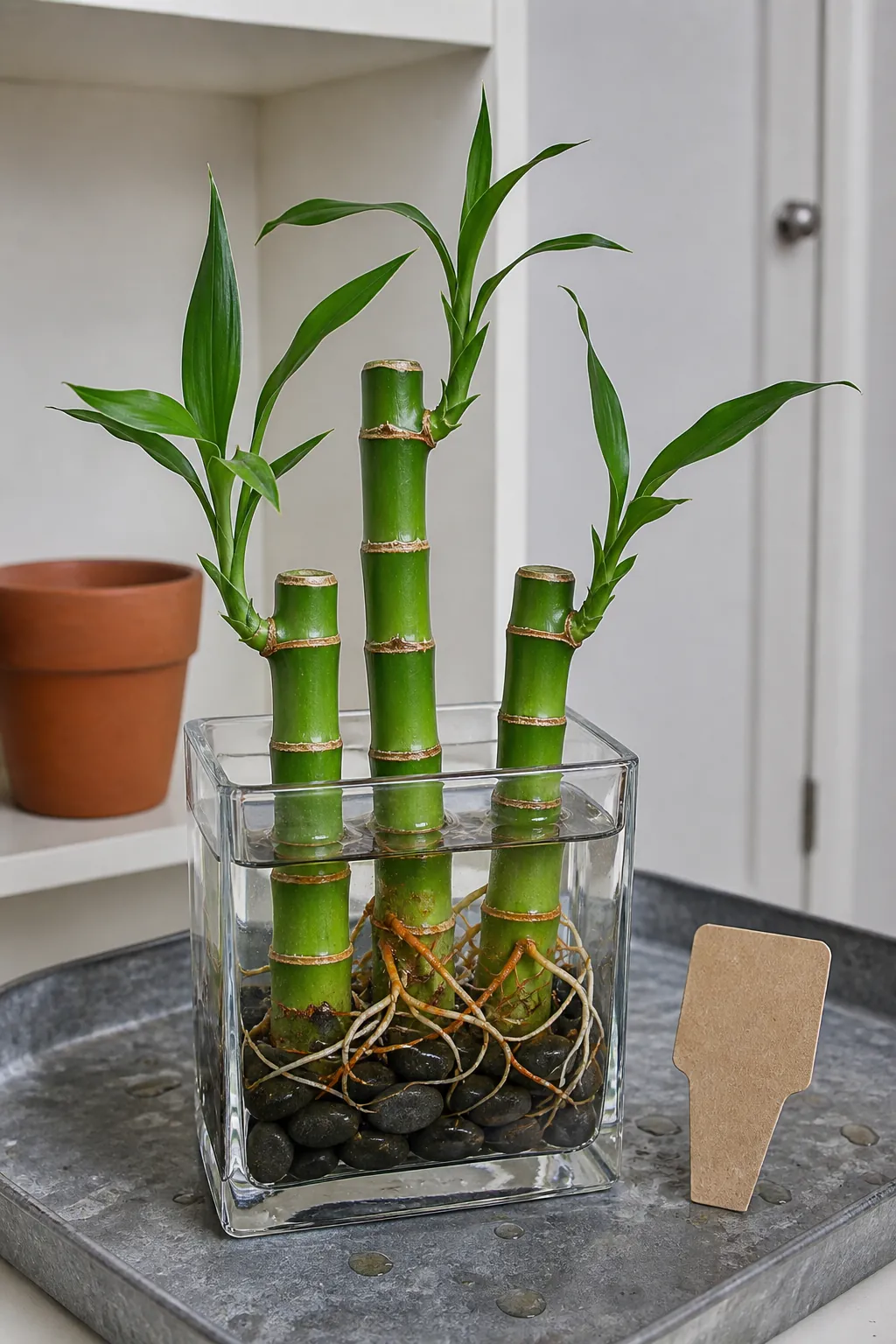
The Missouri Botanical Garden describes lucky bamboo as Dracaena sanderiana and notes that it can grow in evenly moist soil or in water with a substrate such as pebbles. Use the botanical name when searching for help, especially if symptoms are getting worse.
Give It Bright Light Without Hot Sun
Lucky bamboo tolerates a dim room, but tolerance is not the same as healthy growth. In very low light, new leaves may be smaller, growth slows, and canes can lean toward the nearest window. A position with bright, indirect light usually produces better color and steadier growth.
Place the plant near a bright window where direct midday rays do not land on the foliage. A sheer curtain can soften a harsh south- or west-facing exposure, while a spot near an east-facing window often works without adjustment. Rotate the container a quarter turn every week or two if the shoots bend noticeably. The useful test is the leaf, not the compass direction: bleached patches and crisp tan areas suggest excessive direct sun, while weak, stretched growth suggests too little light.
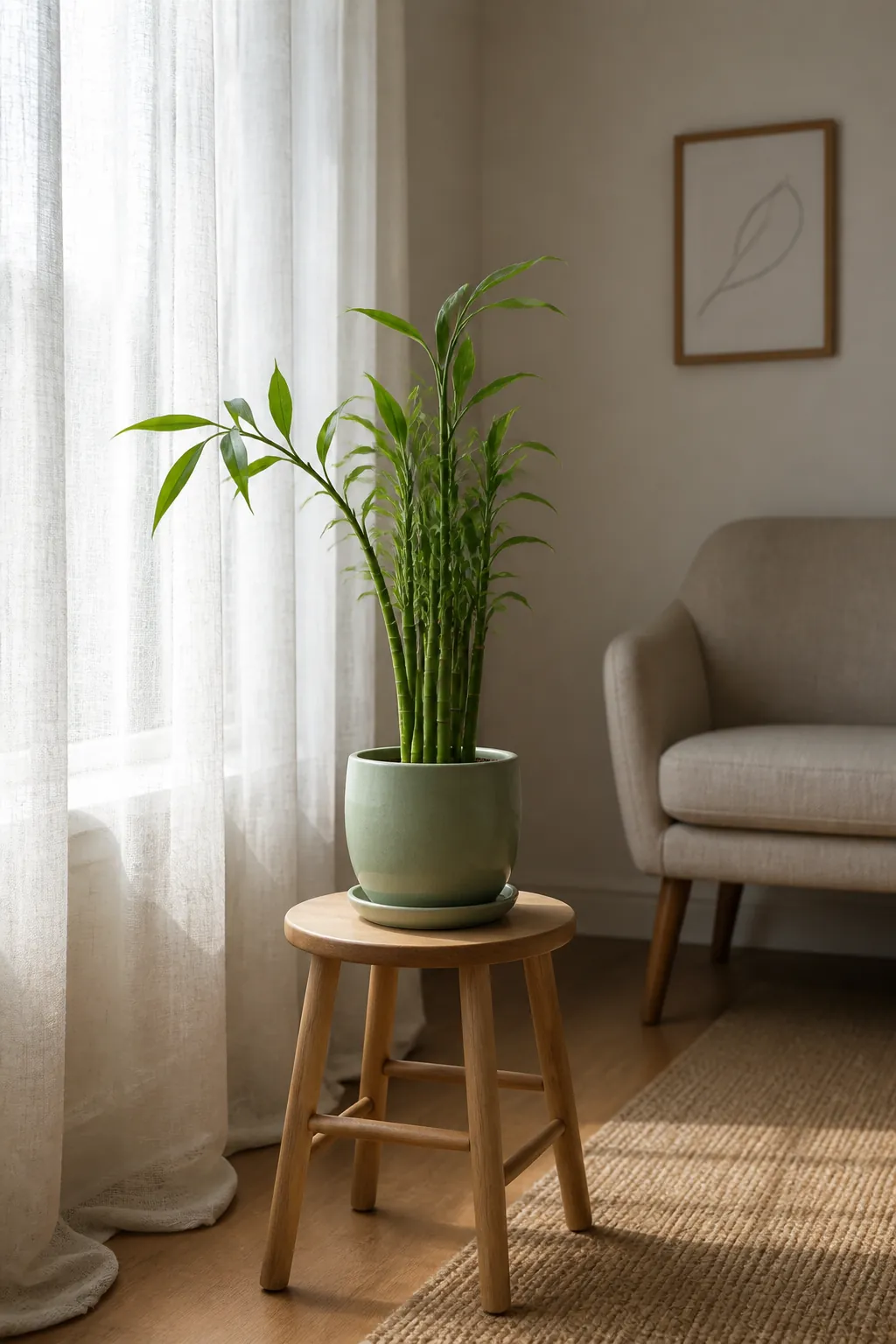
Keep the leaves several inches away from hot glass and heating vents. If you move a plant from a dark corner, increase its light gradually instead of shifting it straight into sun. The bright-indirect recommendation is also supported by the University of Vermont Extension and the Missouri Botanical Garden.
Use a Root-Level Water Routine for Pebble-Grown Plants
A bamboo watering schedule should describe what to check, not just name a weekday. For a plant grown in pebbles and water, keep the roots submerged but avoid needlessly drowning long sections of cane. The exact water line depends on where the roots sit, so a clear container is useful for learning the plant’s pattern.
Change the water about weekly, or sooner if it becomes cloudy, develops an odor, or feels slimy. Remove the plant gently, rinse the roots and pebbles with clean water, wash the container, and refill it. Top-ups replace evaporation, but they do not remove accumulated minerals or organic residue. Fresh water and a clean vessel matter more than keeping the vase filled to a decorative line.
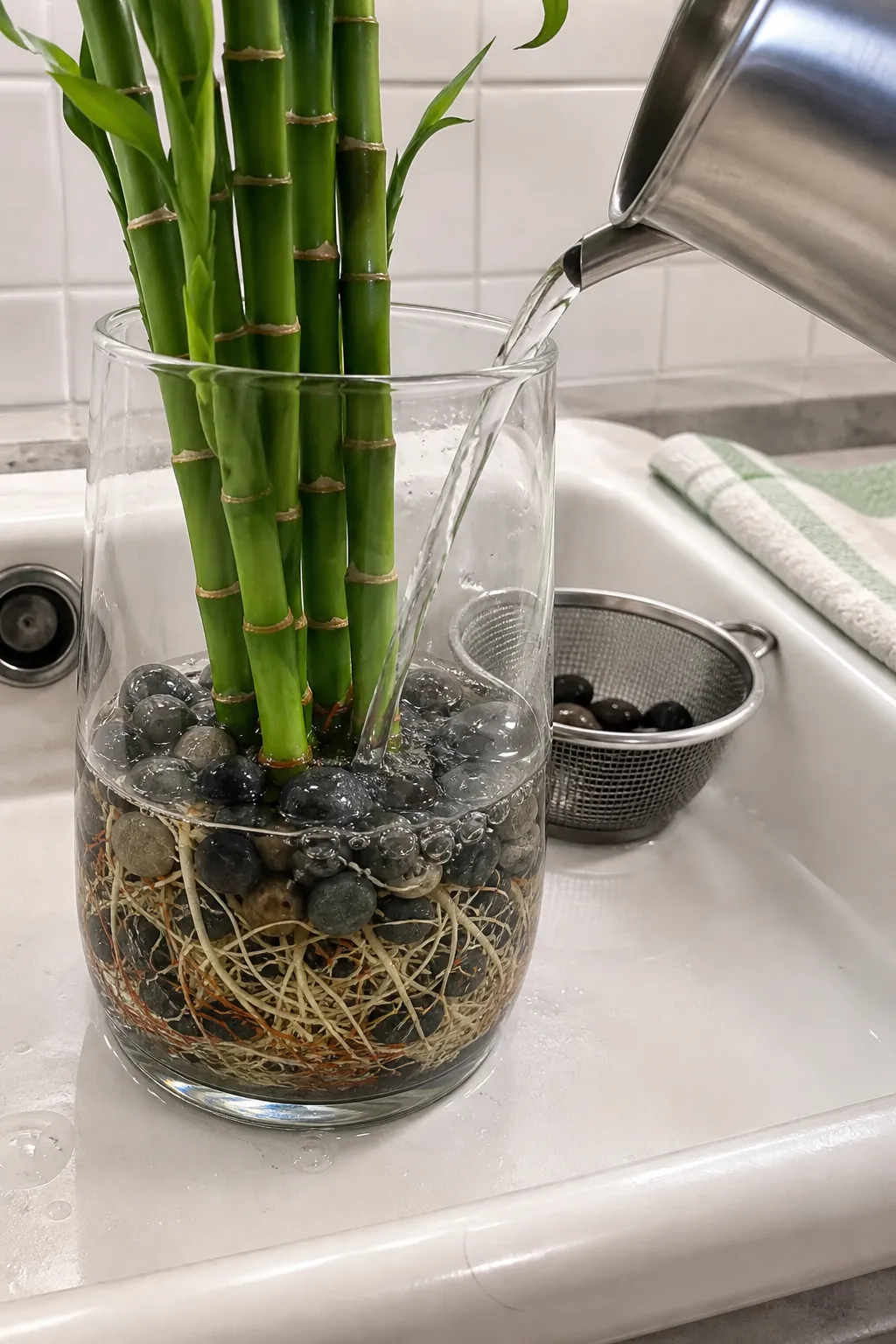
If your tap water repeatedly leaves brown tips, try rainwater, distilled water, or an appropriate low-mineral filtered water. Chlorine, fluoride, dissolved salts, and local water chemistry vary, which explains why tap water seems harmless in one home and troublesome in another. The NC State Extension Plant Toolbox recommends weekly water changes and weak liquid fertilizer for water-grown lucky bamboo.
Water Soil-Grown Lucky Bamboo by Touch
Soil-grown lucky bamboo needs a different rhythm. Use a pot with a drainage hole and an airy houseplant mix that holds some moisture without staying waterlogged. A decorative cachepot is fine only if you empty any runoff instead of leaving the inner pot standing in it.
Press a fingertip into the upper inch of mix. When that layer feels partly dry, water thoroughly until excess drains from the bottom, then let the pot finish draining. Check more often during warm, bright weather and less often during cool, slow-growth periods. Do not force a rigid twice-a-week schedule onto every pot, because container size, soil texture, temperature, and light all change how fast roots use water.
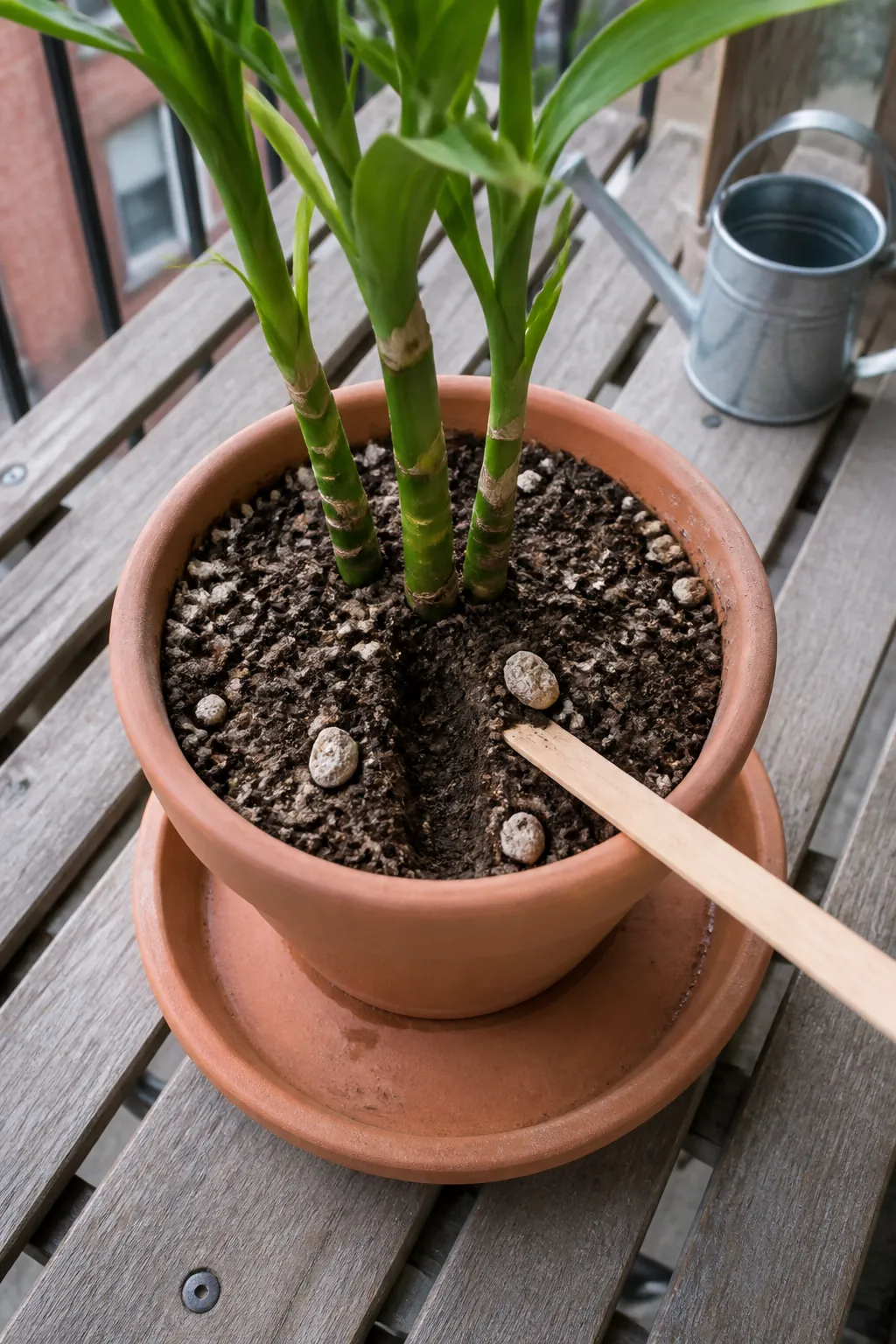
Roots need both moisture and oxygen. Soil that remains saturated can turn roots brown or black and soft, while severely dry mix can produce wrinkled canes and crisp foliage. For a potted plant, “evenly moist” means watering after inspection and allowing drainage—not adding small splashes to permanently wet soil.
Keep Temperature and Humidity Steady
Ordinary comfortable indoor temperatures suit lucky bamboo. The plant struggles more with abrupt changes than with a normal day-to-night shift, so keep it away from cold drafts, exterior doors in winter, air-conditioning blasts, radiators, and heating vents. A windowsill can be bright yet still expose the vase to hot glass by day and cold glass at night.
Average household humidity is often adequate, but persistently dry heated air can worsen brown tips. Grouping plants loosely or running a room humidifier is more effective than occasional misting. Leave space for air circulation and wipe dust from broad leaves with a damp cloth so the plant can use the light it receives. A stable room with clean foliage is a better goal than trying to create greenhouse humidity around a stagnant vase.
Watch for leaf edges that decline only after the heating or cooling season begins. That timing can separate an environmental problem from a watering change. If several variables changed at once, restore stable placement first and observe new growth rather than expecting damaged tissue to turn green again.
Fertilize Lightly and Only During Active Growth
Lucky bamboo grows slowly and does not need heavy feeding. Excess fertilizer can burn roots, discolor leaf tips, and create salt buildup, especially in a small water-filled container. Never treat fertilizer as an emergency cure for a yellowing cane before inspecting light, water quality, roots, and stem firmness.
For water-grown plants, use a fertilizer labeled for hydroponic or lucky bamboo use at a very weak concentration and at wide intervals during active growth. For soil-grown plants, a diluted balanced houseplant fertilizer can be applied occasionally in spring and summer after watering. Follow the product label, begin below full strength, and skip feeding when the plant is stressed or barely growing. Underfeeding causes slow growth; overfeeding can damage the roots you need for recovery.
Flush a soil-grown pot with plain water periodically if you see a pale crust on the mix or pot rim. For a water-grown display, regular full water changes perform the same housekeeping role. Pause fertilizer in the darker months unless warm temperatures and supplemental light keep the plant actively producing leaves.
Prune for Healthy Shoots, Not a Taller Cane
Most of the visible height on a lucky bamboo cane was established before you bought it. The cut cane itself will not resume growing from its sealed top; leafy side shoots provide new growth. Bamboo pruning tips therefore focus on controlling those shoots and removing damaged tissue rather than shortening every cane indiscriminately.
Use clean, sharp pruners. Remove a yellow leaf at its base once it is fully damaged, and trim an overlong healthy side shoot just above a node if you want a more compact shape. Do not peel away green leaves merely to expose more cane. If a cane is yellow or mushy, isolate it from a bundled arrangement and inspect how far the damage extends.
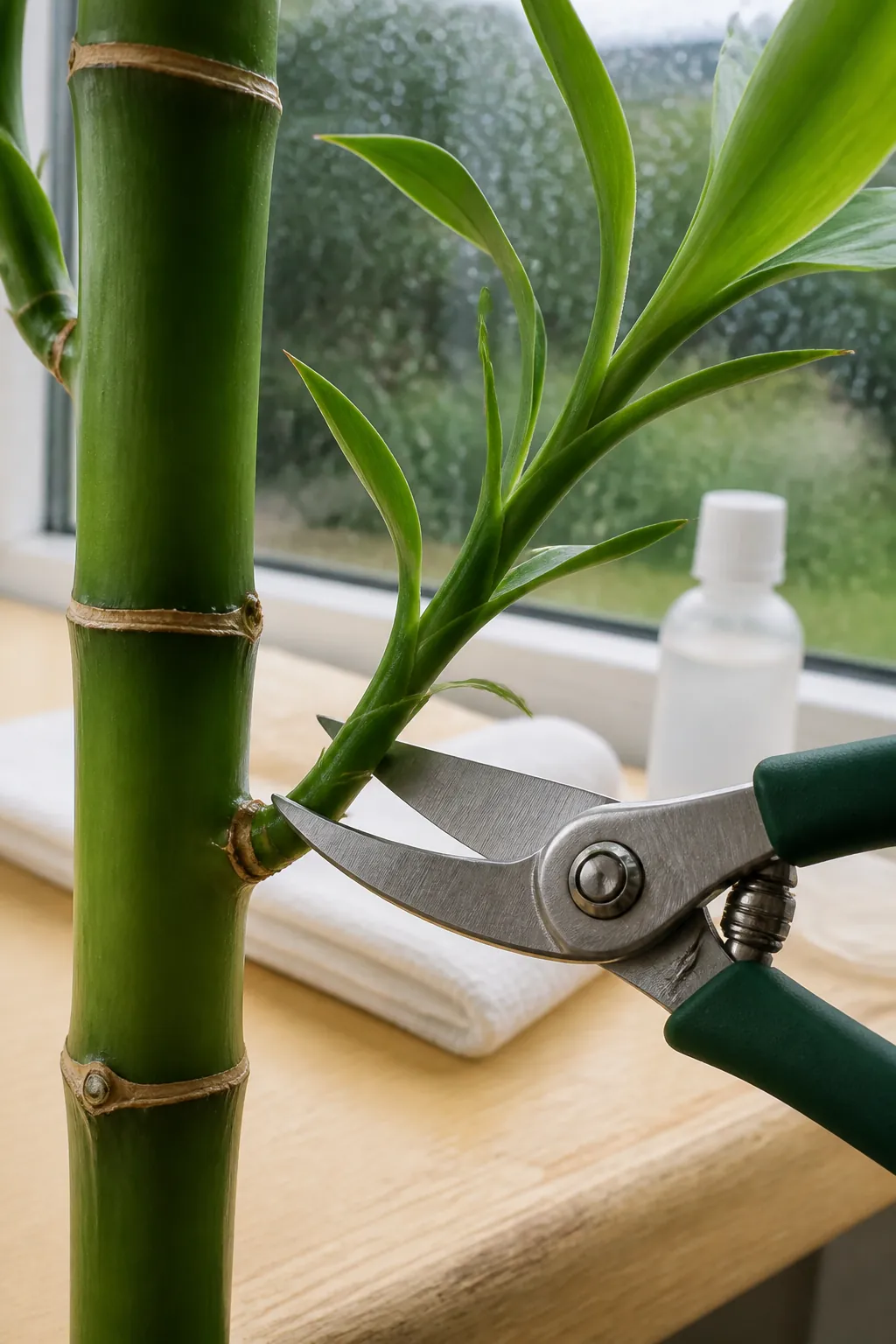
A healthy green section above localized rot may sometimes be propagated, but sanitation and timing matter. Cut with a disinfected blade into firm, clean tissue, keep the cutting separate, and root it in fresh water. Pruning can preserve healthy material, but it cannot restore tissue that has already turned soft, foul-smelling, or yellow through the cane.
Read Yellow Leaves, Brown Tips, and Soft Canes Differently
Healthy bamboo leaves should be flexible and evenly colored, but one symptom rarely identifies one cause by itself. A few older lower leaves can yellow naturally. Widespread yellowing after a move may point to direct sun or environmental shock, while recurring brown tips often justify checking water quality, dry air, or fertilizer salts.
Stem texture is a more urgent clue. A firm green cane with one damaged leaf deserves observation; a yellowing cane that feels soft or smells unpleasant calls for immediate root and water inspection. Dark, mushy roots and cloudy water suggest decay. Separate affected canes, remove dead roots with sanitized tools, clean the container, and reset healthy roots in fresh water or an appropriate fresh medium.
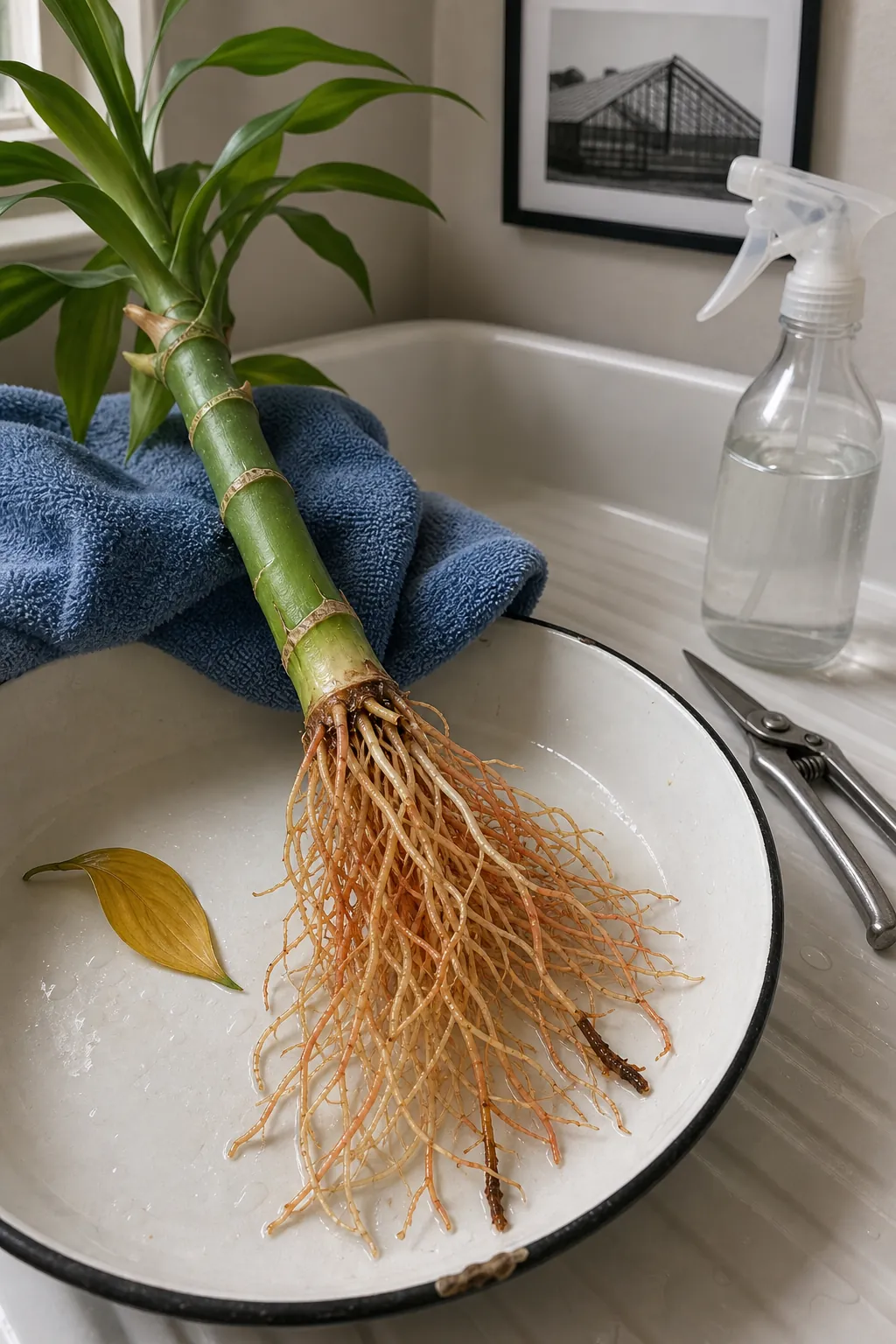
Do not respond to every yellow leaf with extra fertilizer, extra water, and extra light. Record the plant’s location, last water change or watering, root appearance, and recent feeding, then correct the likeliest cause. Damaged leaves usually stay damaged; judge recovery by a firm cane, clean roots, and healthy new growth.
Build a Care Rhythm You Can Diagnose
Check the plant once a week without assuming it needs intervention. Look at the water clarity or soil moisture, turn the container for even light, scan the leaf undersides for pests, and feel any discolored cane. This brief inspection is more reliable than a calendar that orders you to water regardless of conditions.
Once a month, wipe the leaves, inspect the roots through the container or drainage hole, and review whether seasonal light has changed. Feed only when the plant is actively growing and your previous dose caused no tip burn. When a symptom appears, change one variable and watch the next leaves rather than repeatedly rearranging the entire setup.
The most dependable bamboo growing tips are quiet ones: identify the plant correctly, keep it in bright filtered light, give roots clean water and oxygen, and resist overfeeding. That routine makes problems easier to read—and gives your lucky bamboo the stable conditions it needs to keep producing healthy leaves.