A bamboo fly rod is designed around a moving fly line, not merely shaped into a flexible stick. Its taper controls when the blank loads, how it recovers, and whether it presents a dry fly delicately or carries a heavier cast. Learning how to make bamboo fly rods therefore starts with a fishing brief and a proven split-cane taper, then moves through precision cane work, hardware fitting, static testing, and real casting.
Define the Water, Fly Line, and Casting Feel
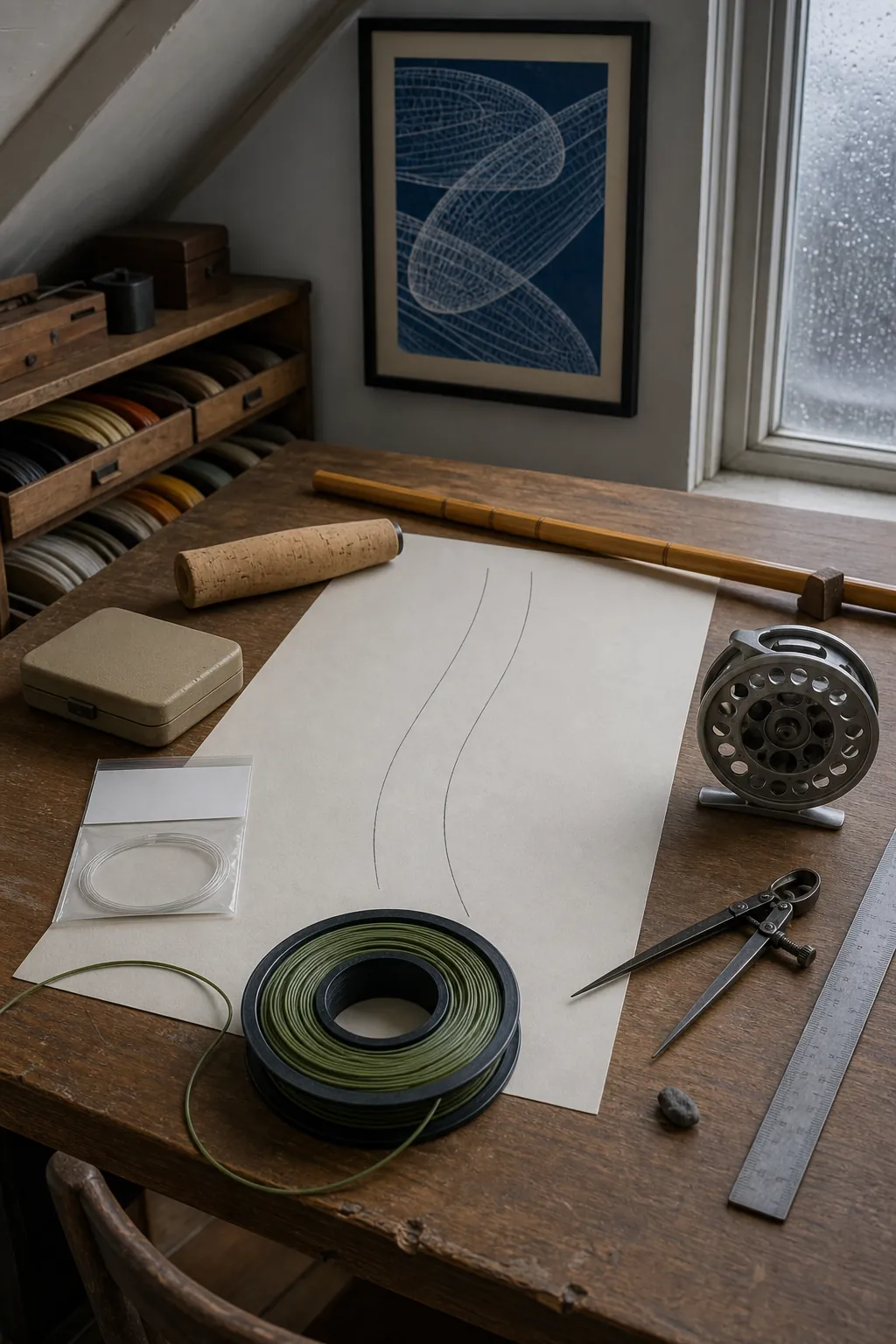
Write down the target line weight, typical casting distance, fly size, leader, stream width, and desired rod length before selecting a design. A short dry-fly rod for brushy water asks different things of cane than a longer rod for wet flies or bigger rivers. For a first project, choose a documented taper with successful examples rather than adjusting station dimensions by intuition.
Bamboo generally loads deeper and recovers more slowly than fast graphite, so “slow” is not automatically a fault. Many anglers value the longer casting stroke, delicate presentation, and protection of fine tippet. The useful target is a coherent action matched to a real line and caster, not maximum stiffness or minimum weight.
Prepare Tonkin Cane for a Fly-Rod Taper
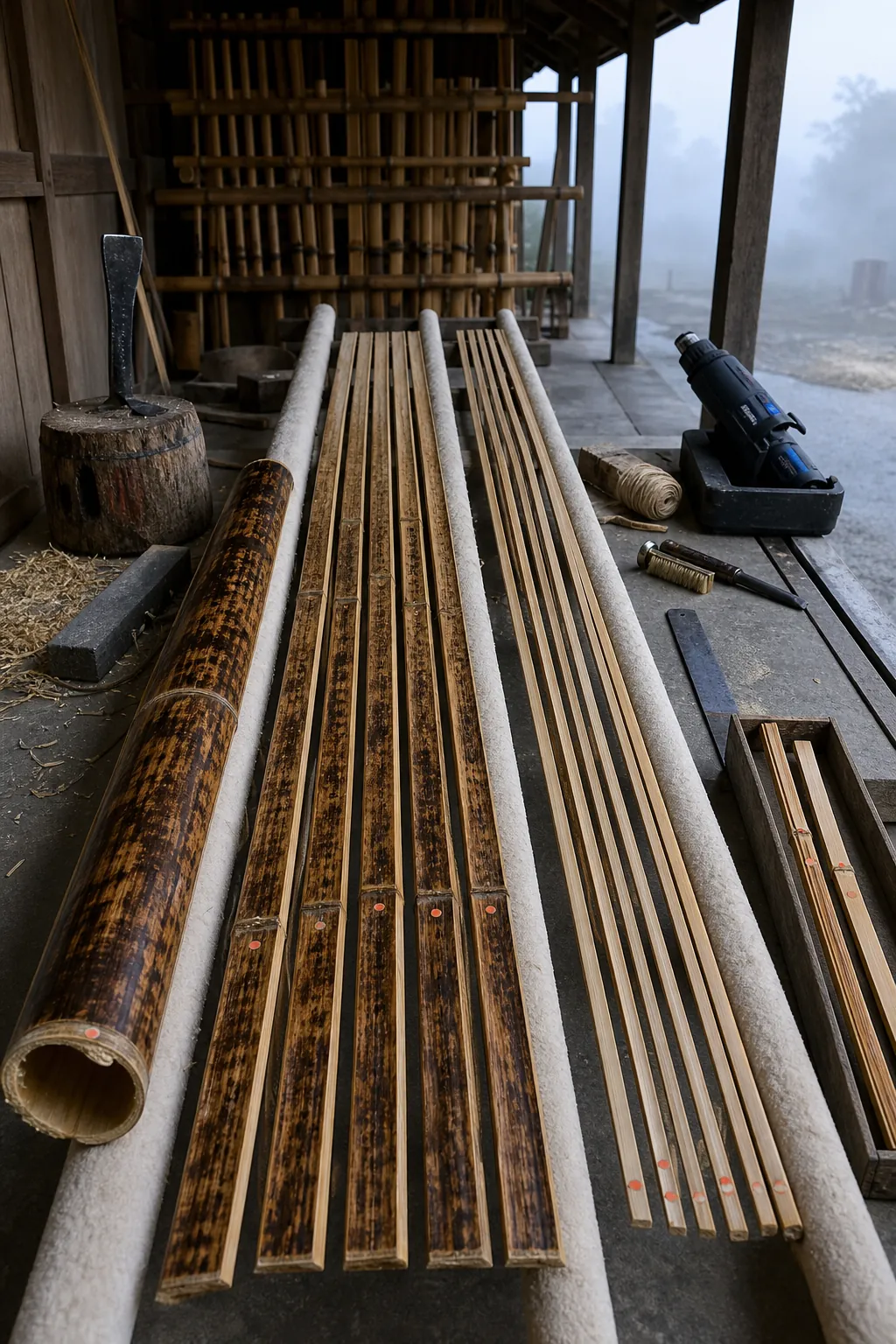
Inspect Tonkin cane for straight power fibers, manageable node spacing, and enough diameter for the selected butt and tip sections. Split with the grain into strips, retain spares, stagger nodes, and straighten each strip with controlled localized heat. Protect the dense enamel-side fibers that will form the outside of the finished hexagon.
Rough-bevel the strips, bind them for an even heat treatment where appropriate, and use a monitored schedule proven for the actual oven. Heat treatment changes moisture and working behavior, but uneven temperature or contact with chamber walls can damage cane. Let material cool and stabilize before final cutting.
Plane Matching Strips to the Chosen Taper
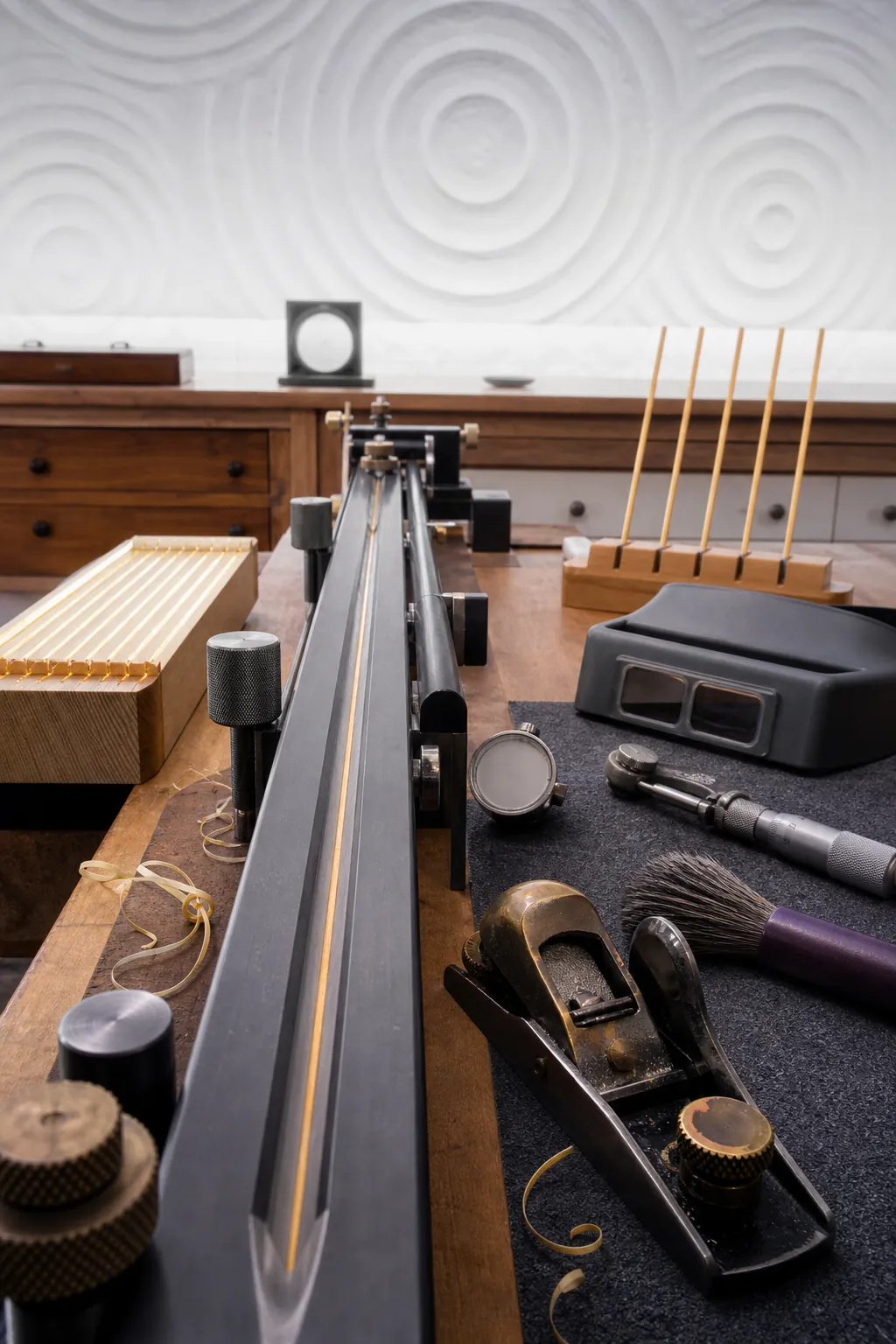
Set planing forms station by station with a depth gauge, checking the units and taper convention before removing cane. Work with a sharp plane and alternate the two pith-side faces so each strip retains a centered 60-degree apex. Near a fine tip, one careless pass can remove a significant share of the remaining material.
Measure often, clear form grooves, and compare all six strips at the same stations. Dry-bind them into a hexagon and inspect seams against side light. Matching triangles produce a straight, efficient blank; varnish and thread cannot correct a twisted apex or inconsistent taper.
Glue the Blank and Fit Fly-Rod Hardware
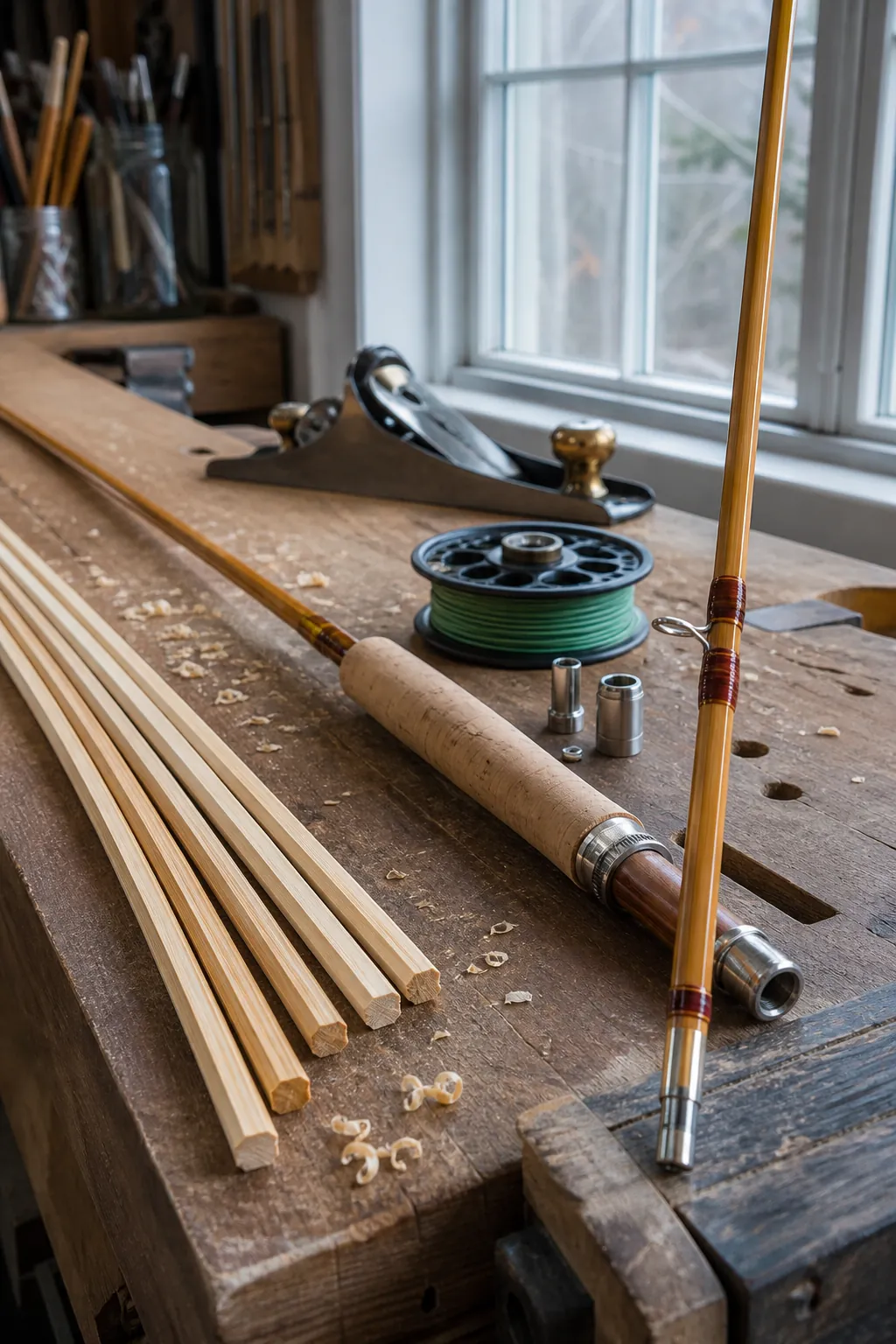
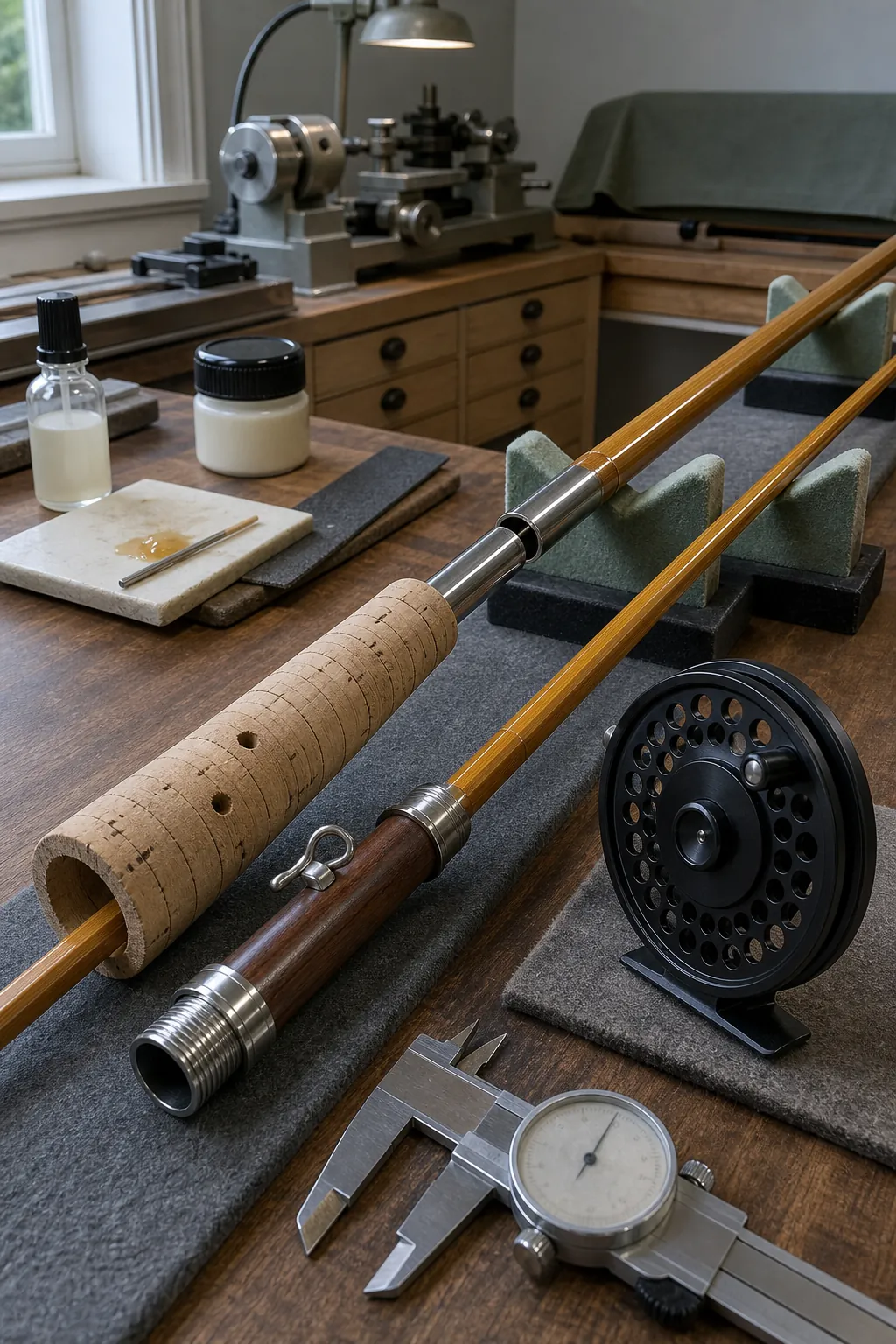
Rehearse the glue-up, then coat mating faces evenly, close the indexed strips, bind with consistent tension, and correct sweeps before cure. After the adhesive reaches its specified cure, remove binding cord, clean the flats, and inspect every glue line. Prepare ferrule stations concentrically and fit the metal hardware without excessive force.
Dry-fit the cork grip and reel seat with the reel weight in mind, because hardware changes balance in the hand. Keep ferrules clean and aligned; assembled sections should join with a straight push and separate with a straight pull, not twisting. Any click or movement must be corrected before casting loads the joint.
Place Guides With Static and Casting Tests
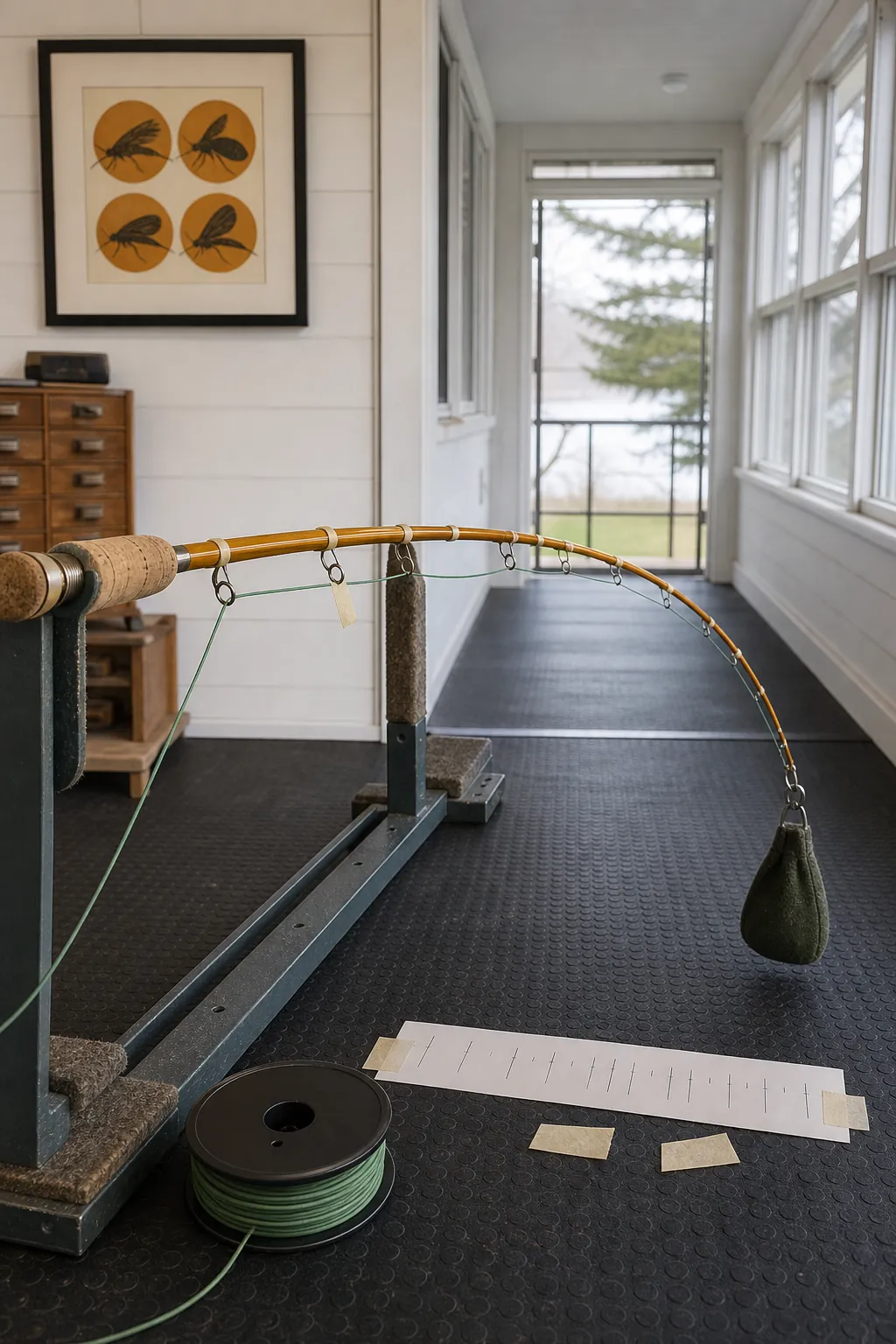
Use a spacing chart only as a starting point. Temporarily secure the stripper and snake guides, thread the intended line, and load the blank gently in a static jig. Adjust positions so the line follows the curve without sharp angles, while maintaining sensible clearance around ferrules and the grip.
Then make controlled test casts with the intended fly line before permanent wrapping. Check how the rod loads at practical distances, whether the line slaps the blank, and whether guide positions disturb recovery. File each guide foot to a smooth ramp, wrap with fine silk or nylon, and seal the turns sparingly.
Varnish, Cast, and Care for the Rod
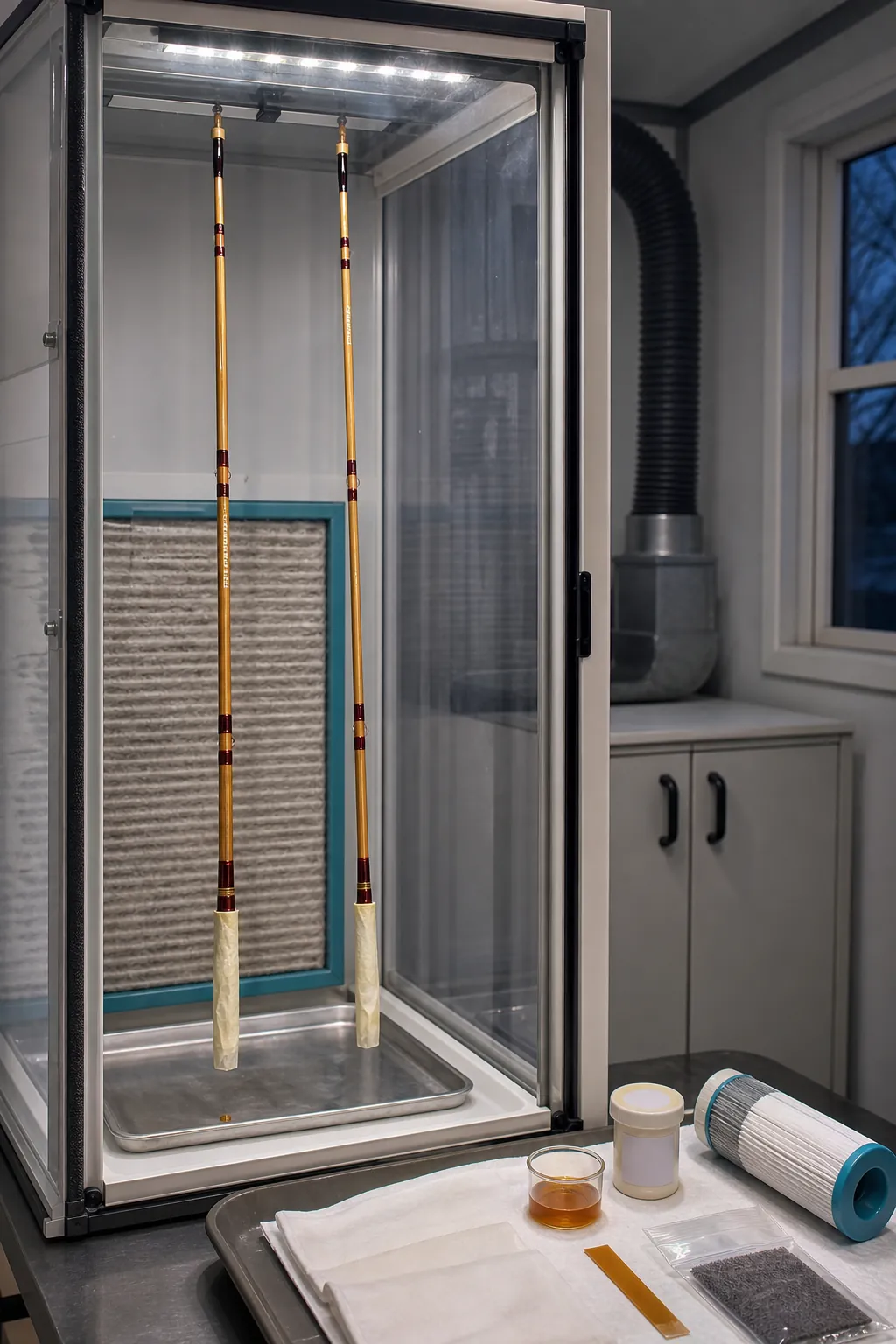
Apply thin coats of compatible finish in a clean, ventilated space and allow the specified cure between coats. Inspect guide tunnels and wrap edges rather than burying them under heavy varnish. Once fully cured, pair the rod with the design line, begin with short casts, and let the cane complete its deeper loading cycle before accelerating forward.
After fishing, wipe the rod dry, separate the sections, and store them supported in their bag and tube rather than leaning assembled. Keep ferrules clean, listen for clicks, and never force or twist a reluctant joint. A fine bamboo fly rod is finished only when its measured taper, line, hardware, and casting rhythm work together.