
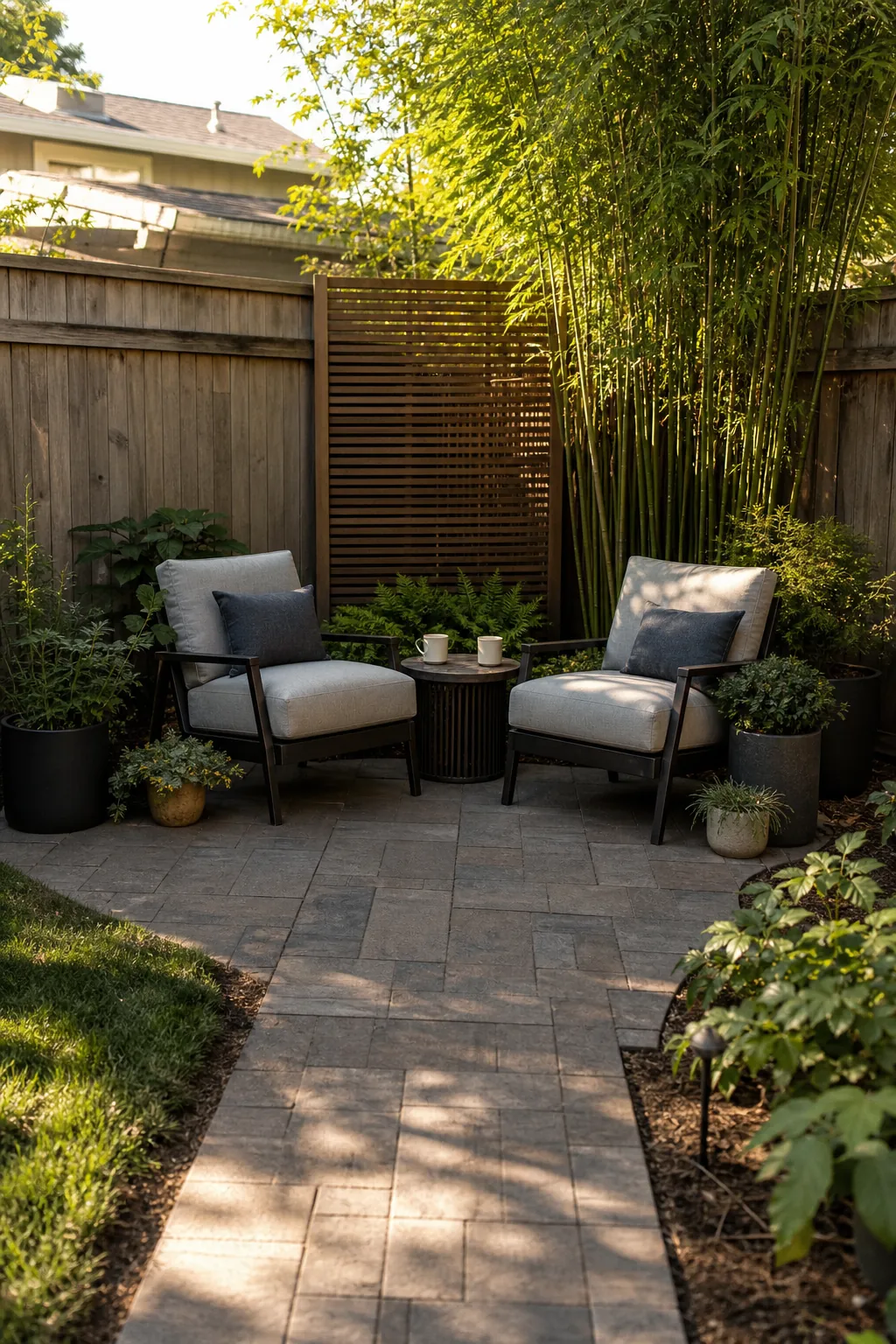
A backyard corner becomes useful when it stops being treated like leftover space. Most awkward corners do not fail because they lack decor. They fail because nobody knows what they are supposed to do there after the first five minutes.
The better goal is simple: create one comfortable, slightly protected outdoor living spot that adults can use without moving chairs, hunting for shade, dragging out cushions, or feeling watched from every direction. If the corner also works for a family backyard, pets, plants, and casual patio decor, even better. But the adult use comes first.
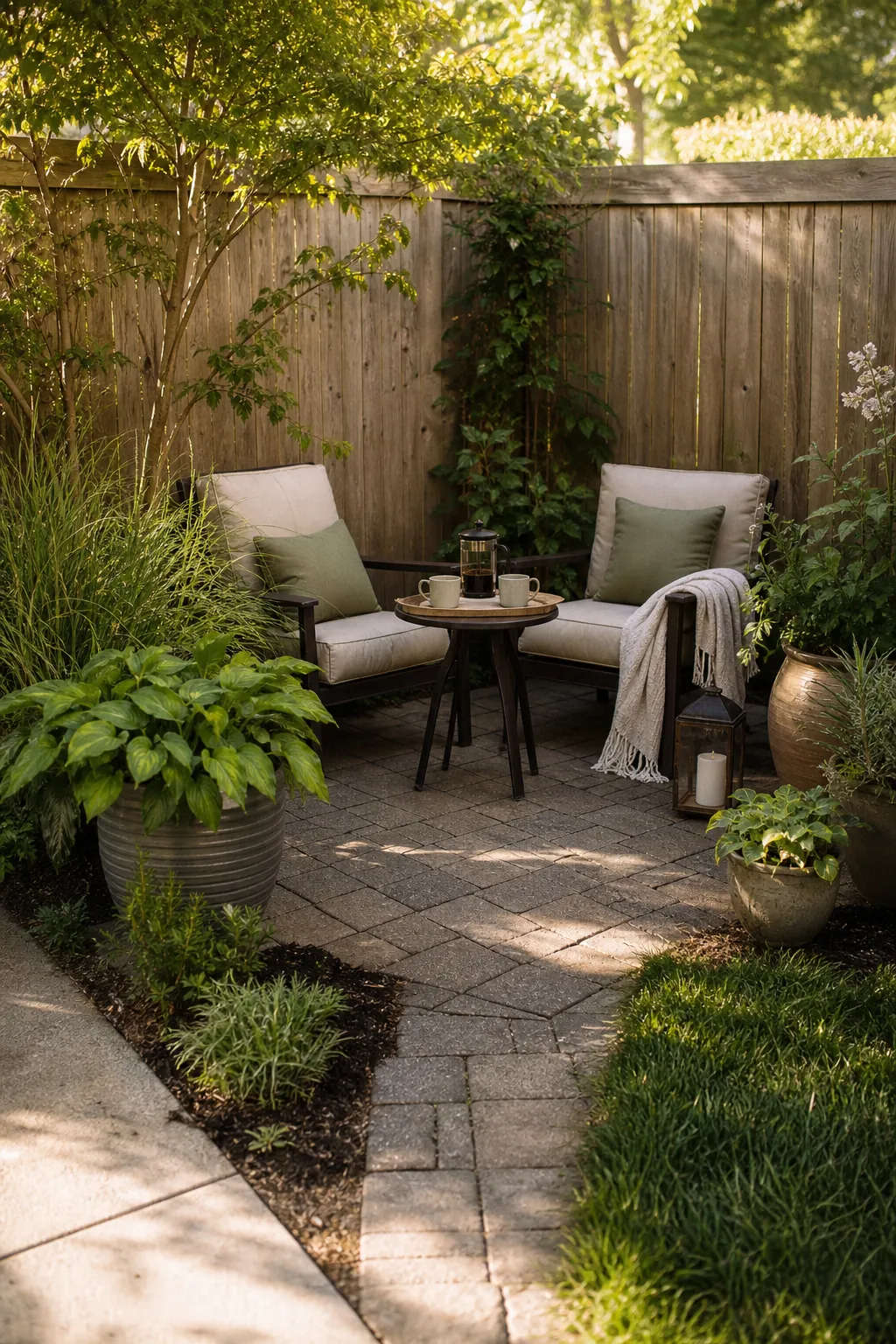
Give the Corner One Real Job
Before buying a bench, pergola, fire bowl, planter, rug, or bistro set, choose the use case. A backyard corner that tries to be a garden seating area, kids’ zone, grill stop, storage edge, and privacy screen at the same time usually becomes none of them.
Pick one adult behavior that should happen there often:
- Two people having coffee before the house wakes up.
- One person reading in shade with a drink and a phone nearby.
- Three adults talking after dinner while kids play on the lawn.
- A quiet patio corner for evening light, not a full entertainment zone.
This decision changes everything. A reading corner needs shade, a side table, and a chair that supports your back. A conversation corner needs seats facing each other, not all staring at the fence. A family backyard corner needs adult comfort plus a clear sightline to the rest of the yard.
The corner needs a reason to be entered. “A pretty spot” is too vague. “The place we sit with coffee because it is shaded at 9 a.m.” is specific enough to design around.
Fix the Floor Before the Furniture
If chairs wobble, feet sink into mulch, or rain turns the area into a mud track, adults will stop using it. The ground plane is the first comfort feature. It should be dry, level, and easy to step onto from the house, patio, deck, or main path.
For a high-use backyard corner, choose a surface that behaves like a room floor: pavers, brick, compacted gravel with stable edging, flagstone, decking, or an existing patio slab extended just enough to hold the furniture. Turf and loose mulch can look soft in photos, but they are rarely pleasant under chair legs or adult foot traffic.
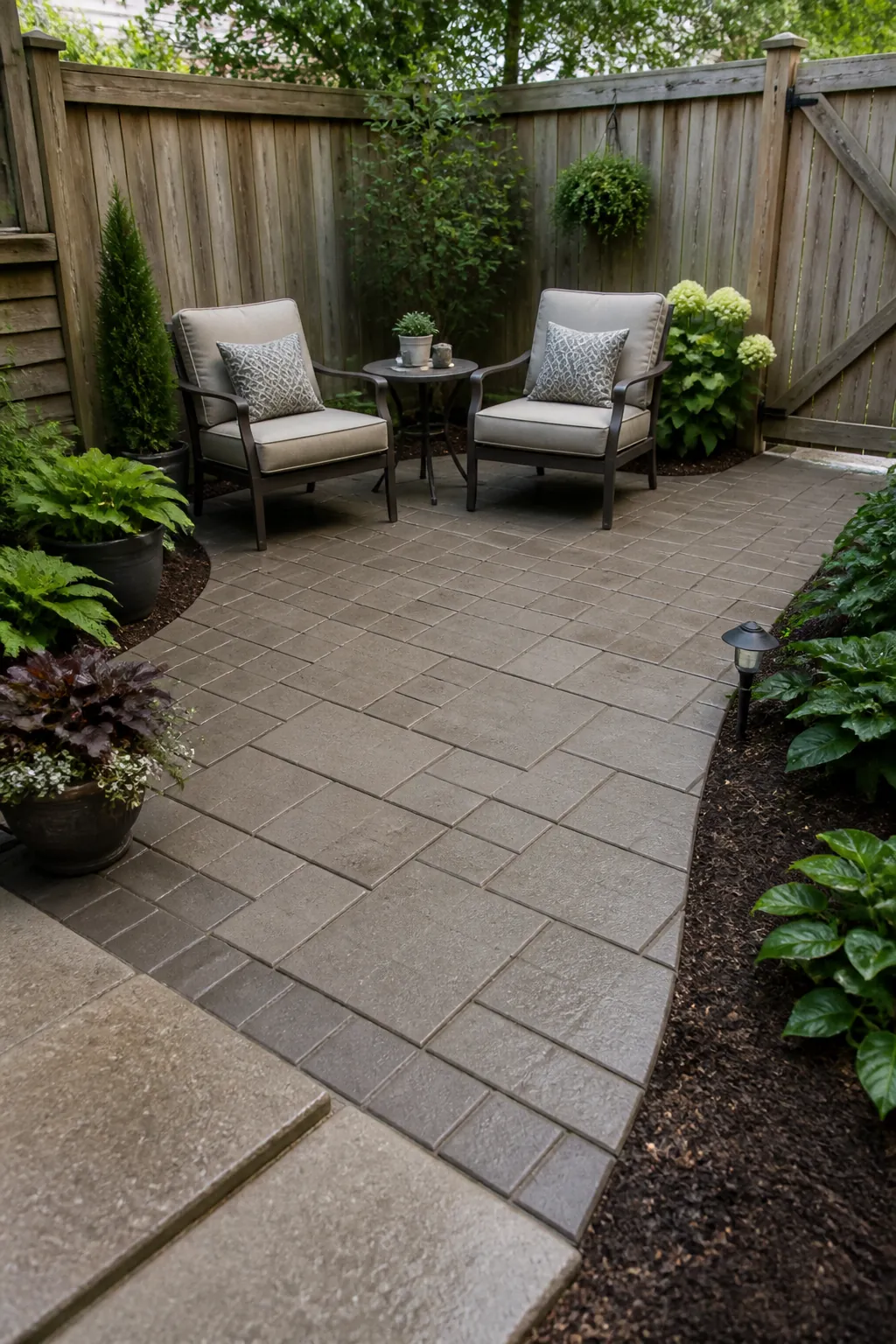
Do the unglamorous checks early:
- Drainage: water should move away from the house and not pool under chairs.
- Chair clearance: adults need room to pull seats back without stepping into planting beds.
- Traffic: keep the main path to the gate, grill, shed, or lawn open.
- Maintenance: leave enough access to trim plants, clean leaves, and move cushions.
A corner does not need to be large. It needs to be dependable. When the floor is solid, every later layer of garden design works harder.
Pull Seating Inward Instead of Pushing It Against the Fence
The instinct is to push outdoor seating tight against the fence to “save space.” That often makes a patio corner feel like a waiting area. Adults sit shoulder-to-shoulder facing the yard, the fence becomes the main view, and conversation feels stiff.
Instead, pull the seating slightly inward and angle it. Two lounge chairs with a small table between them often work better than a long bench. An L-shaped built-in can work if it leaves legroom and does not block the only route through the yard. A compact round table can make a small garden seating corner feel social without swallowing the whole patio.
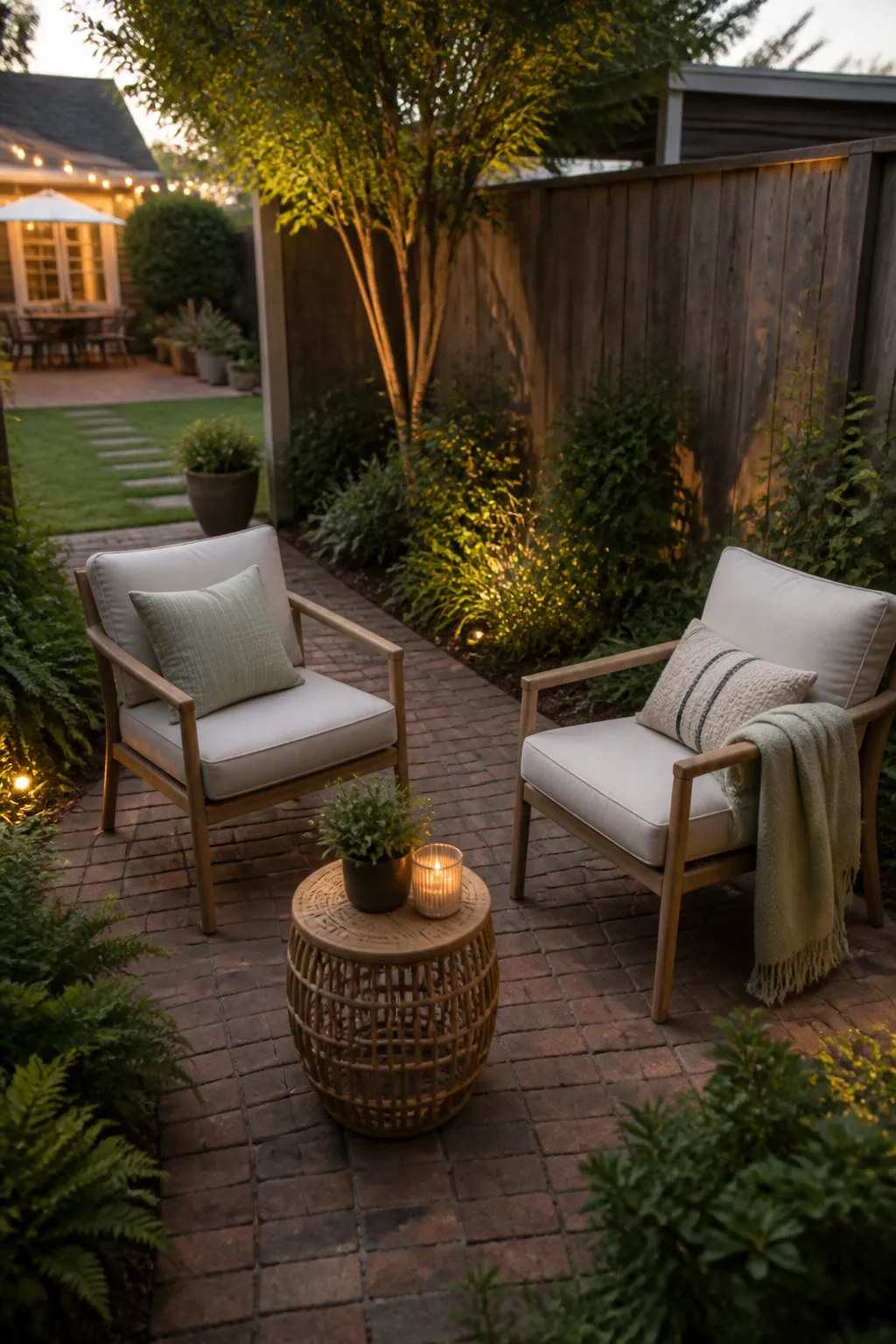
A good adult seating pocket usually has four things within arm’s reach: a comfortable seat, a place to set a drink, some shade or filtered light, and a view that is not just bare fence. If any one of those is missing, the corner may look finished but still feel inconvenient.
Use the “sit test” before committing. Put temporary chairs in the corner for two evenings. Notice where your knees point, where the sun hits, whether your back feels exposed, and whether people naturally stay. Your body will tell you what the layout drawing misses.
Solve Privacy at the Sightline, Not the Property Line
Privacy ideas often get expensive because people try to screen the entire boundary. Most backyard corners do not need that. They need one or two specific views interrupted: a neighbor’s deck, a side window, the street on a corner lot, or the direct line from a sidewalk into the seating area.
Stand where the chair will be, not where the fence is. Look for the uncomfortable sightline from seated eye level. Then place privacy where it blocks that line without closing the whole yard.
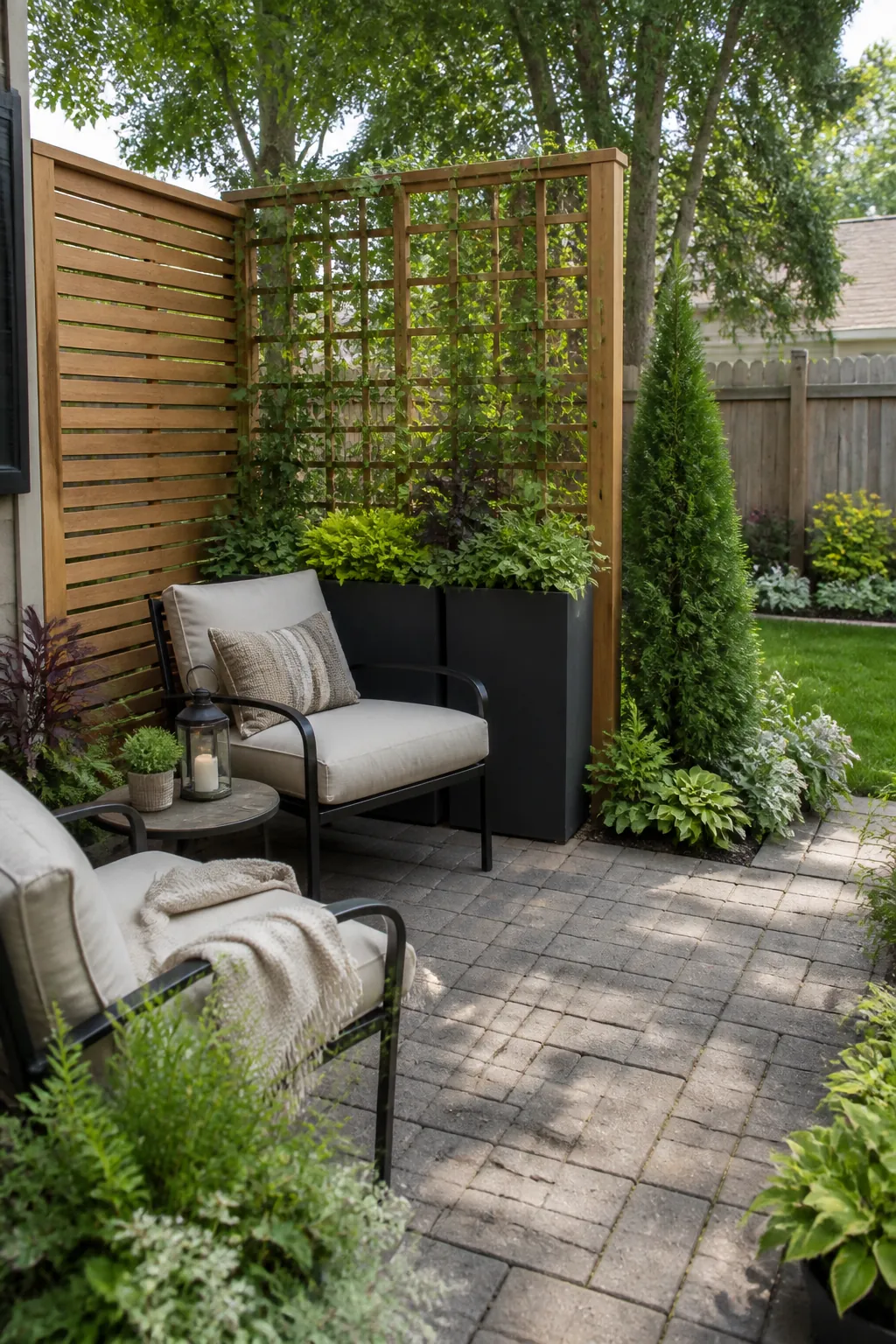
Useful privacy layers include:
- A narrow trellis with vines behind the main chair.
- Tall planters grouped on the exposed side of the patio corner.
- A slatted screen that filters views while keeping air moving.
- Evergreen shrubs where year-round screening matters.
- A small ornamental tree or multi-stem shrub that creates a canopy and softens the fence.
The best privacy is rarely a single wall. It is a layered edge: something tall, something leafy, and something low that makes the base feel intentional. Leave at least one side visually open so the backyard corner does not become a box.
Create a Ceiling: Shade, Canopy, or Filtered Light
A corner with only walls and floor can feel exposed even when it is private. Adults linger when there is some kind of ceiling: tree canopy, pergola, shade sail, umbrella, arbor, or overhead branches that make the space feel held.
Shade also decides when the corner gets used. Full afternoon sun may be great for photos and miserable for real outdoor living. Deep shade may feel cool but damp. The goal is not permanent darkness. The goal is usable comfort during the hours adults are actually outside.
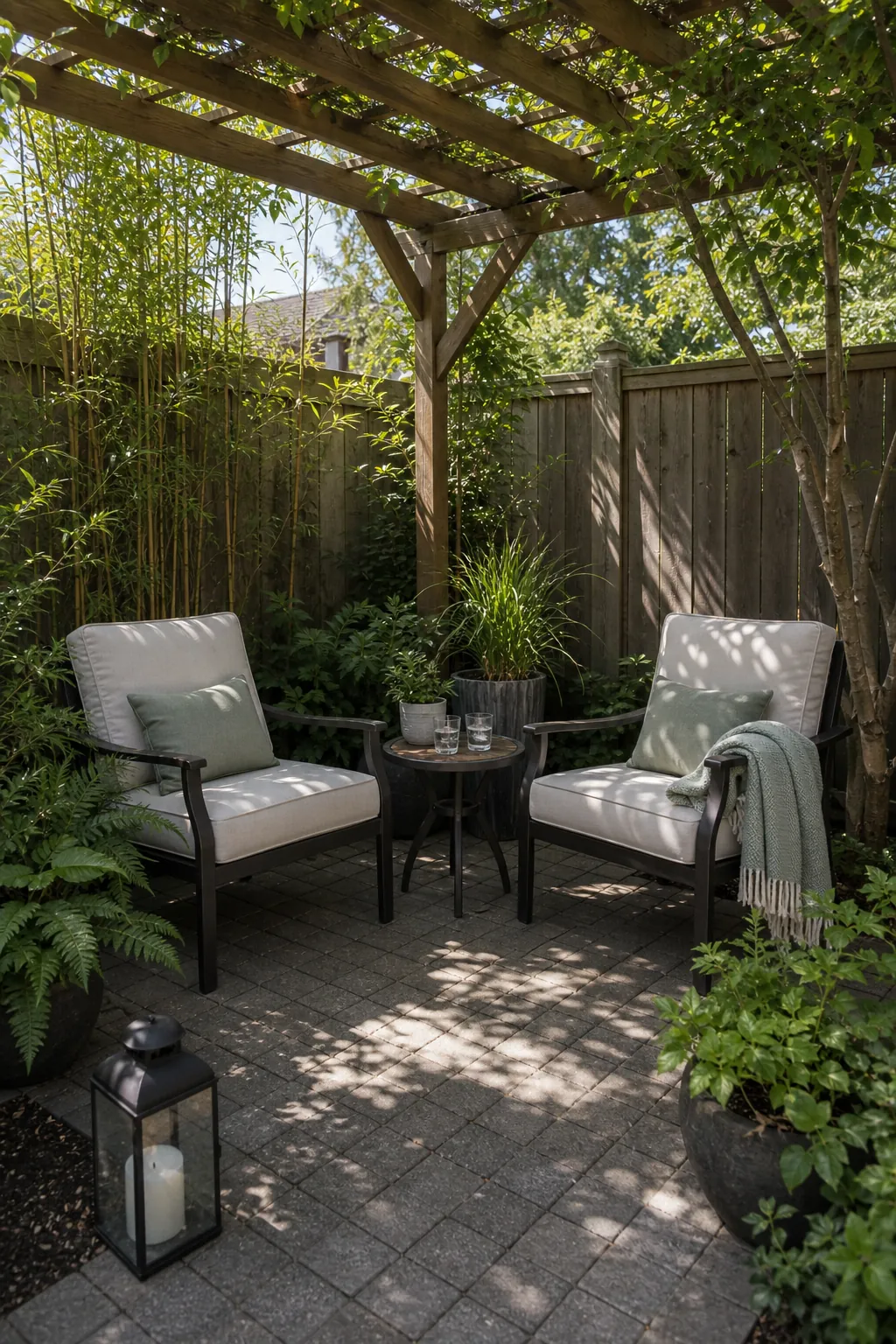
For a hot patio corner, use pale cushions, breathable fabrics, shade above the seats, and planting that does not block every breeze. For a cool shady corner, choose a brighter floor material, prune plants so air moves through, and add warm lighting so the space does not feel forgotten at dusk.
If mosquitoes are a problem, avoid making the corner damp and overplanted. Fix standing water, keep dense foliage away from ankles, and make air movement part of the comfort plan. Pretty plants cannot rescue a seating area nobody wants to sit in.
Make It Adult First, Family Friendly Second
In a family backyard, adult spaces often get diluted into storage, toys, dog paths, and leftover furniture. That is how a corner becomes unused again. The solution is not to make the area precious. It is to give it boundaries that are clear enough for everyday life.
Use a hard edge, planter line, low fence, step, rug, or change in paving to show where the seating zone begins. Keep toy storage, hose reels, compost, and pet areas nearby if needed, but not inside the adult seating pocket. If kids use the yard, angle the chairs so adults can watch the lawn without sitting in the middle of it.
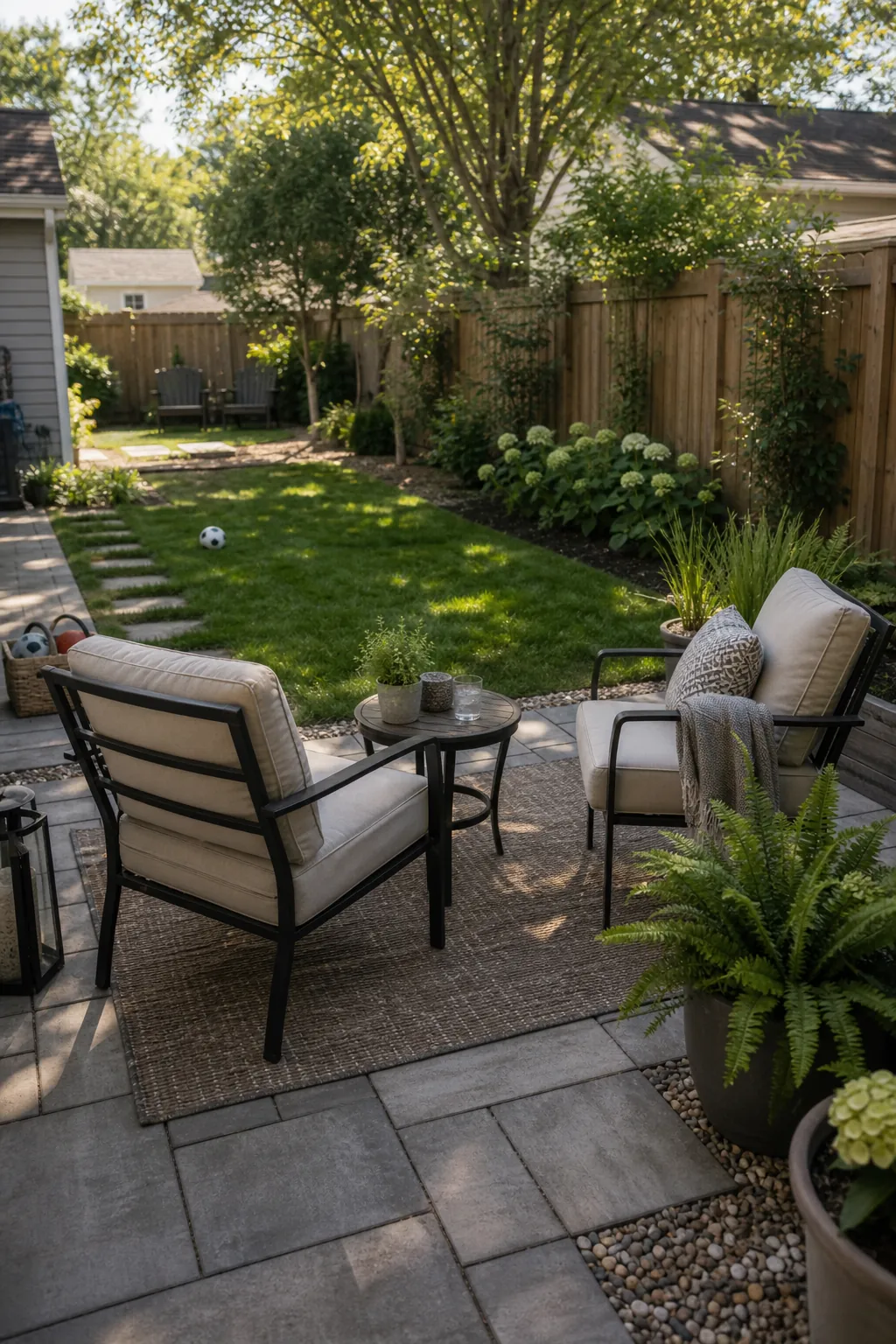
Think of this as a small outdoor living room at the edge of activity. Adults need a place to land. Children and pets need clear routes that do not cut between the chairs. Plants need protection from traffic. A simple layout can serve all three without turning the patio corner into a compromise.
Use Patio Decor That Removes Friction
The best patio decor is not just decorative. It makes the space easier to use. A side table means drinks do not sit on the ground. A storage bench keeps cushions close. A hook holds a throw blanket. Low lighting makes the corner usable after dinner. A weatherproof tray turns snacks into a reason to stay.
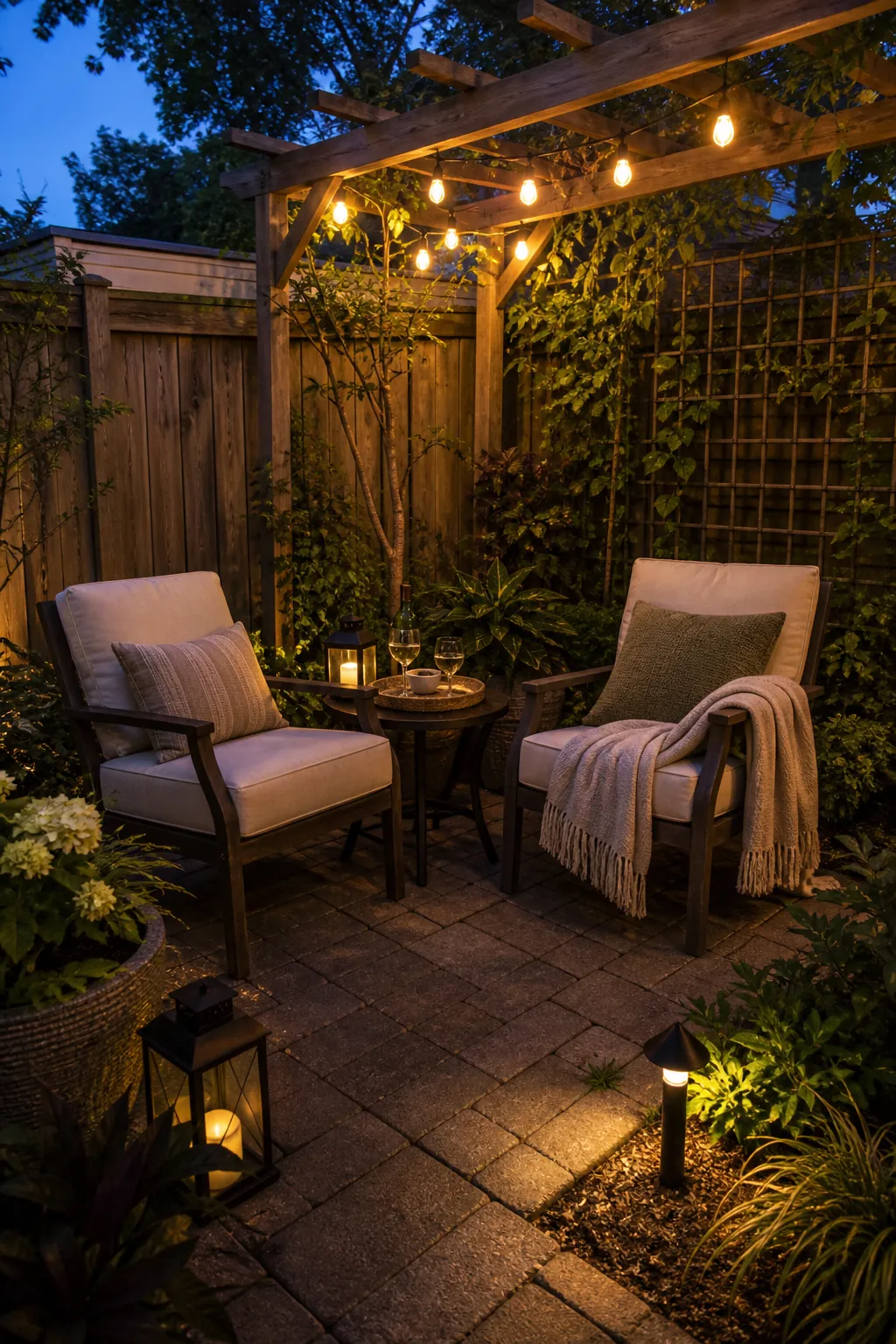
Keep the palette calm and natural: wood, stone, rattan, bamboo, matte metal, clay, linen tones, deep green planting, and one or two cushion colors. A backyard corner is already visually busy because it has fence lines, plant edges, house walls, and changing light. Too many small decor pieces make it feel cluttered.
Do not skip lighting. Adults use outdoor spaces most often in shoulder hours: early morning, late afternoon, and after dinner. Low path lights, a lantern on the table, warm string lights under a pergola, or a shielded wall light can make the patio corner feel intentional without blasting the whole yard.
Plant for Structure, Not Just Pretty Edges
Plants should help the backyard corner do its job. They can soften a fence, frame a view, provide privacy, cool the air, guide movement, or connect the patio to the garden. Random pots are not enough if the corner still feels harsh, exposed, or disconnected.
Use larger shapes first: a small tree, a tall shrub, a trellis, a cluster of large planters, or a hedge section. Then add medium texture and ground-level planting. Group plants in repeats rather than scattering one of everything. Adults read grouped planting as calm; scattered planting reads as chores.
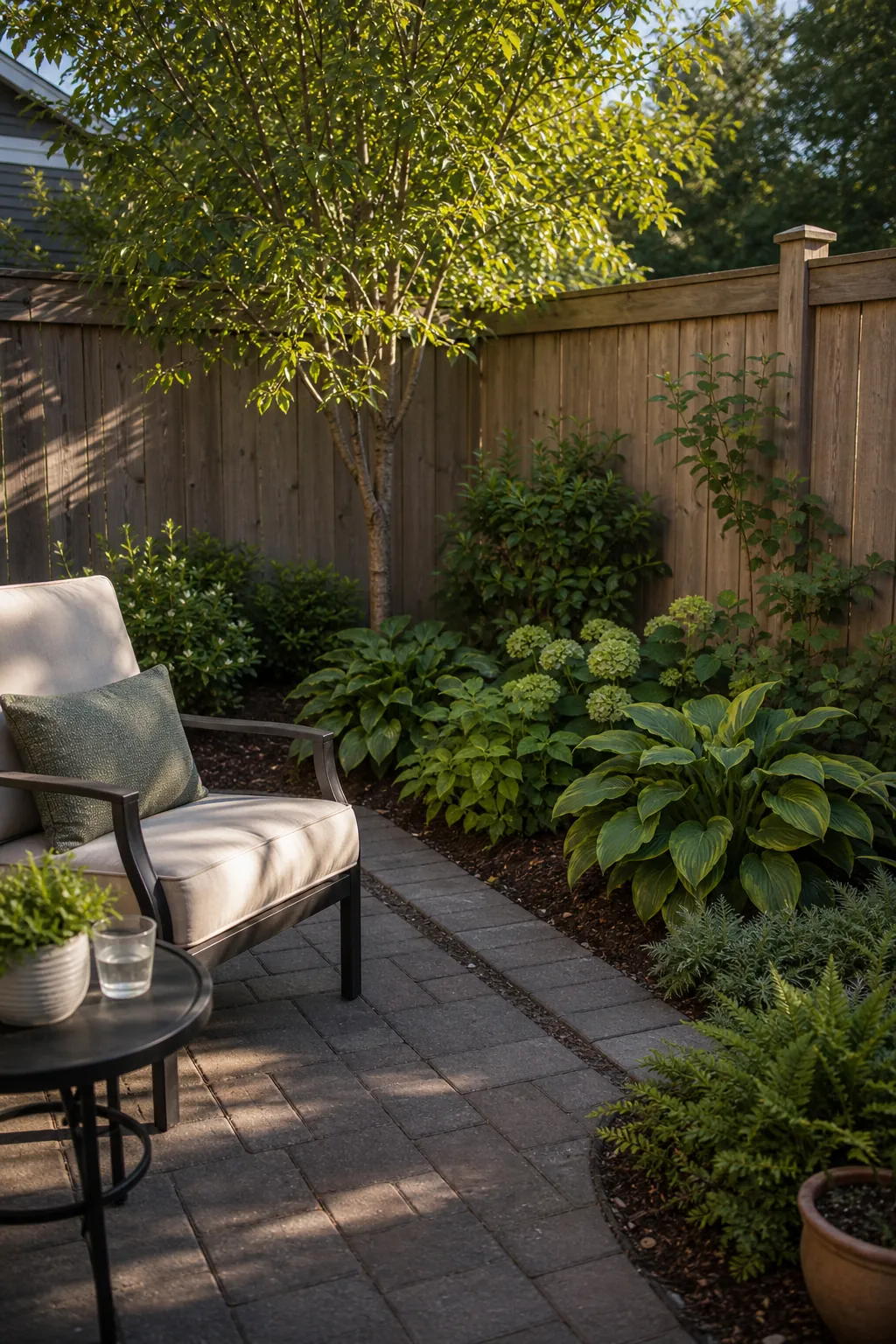
Match plants to the real site. A shady corner needs shade-tolerant structure. A hot fence line needs tough plants and mulch. A narrow side of a patio may need upright forms instead of spreading shrubs. If deer, dogs, or kids are part of the yard, choose plants and placement that can survive contact.
A Simple Backyard Corner Plan That Works
If you want a practical starting point, build the corner in this order:
- Choose the adult use: coffee, reading, conversation, or evening sitting.
- Confirm the floor: dry, level, stable, and easy to reach.
- Place the seats: angled inward with a side table and clear legroom.
- Block the worst sightline: use a screen, trellis, planter, shrub, or small tree.
- Add overhead comfort: shade, canopy, umbrella, pergola, or filtered branches.
- Layer plants: structure first, texture second, seasonal color last.
- Add use-based decor: lighting, storage, cushions, tray, and one useful surface.
- Test it for a week: if nobody sits there, fix the friction before buying more decor.
The point is not to create the most impressive backyard idea. It is to make a corner that earns its space. A small patio corner with a dry floor, two good seats, targeted privacy, shade, plants that belong there, and a table for drinks will beat a larger outdoor area that only looks good from the kitchen window.
When adults actually use the corner, the rest of the design starts to make sense. The plants have a reason. The decor has a reason. The seating has a reason. That is the difference between an awkward backyard corner and a real outdoor living spot.