Dark green can behave like a neutral, but it is not a passive one. It changes noticeably with daylight, finish, and the colors surrounding it. The most dependable companions are warm white, natural wood, camel, clay pink, ochre, muted blue, and small amounts of black or brass. The trick is to decide whether you want to lighten the green, warm it, or make its moodiness intentional.
Warm White Gives Dark Green Breathing Room
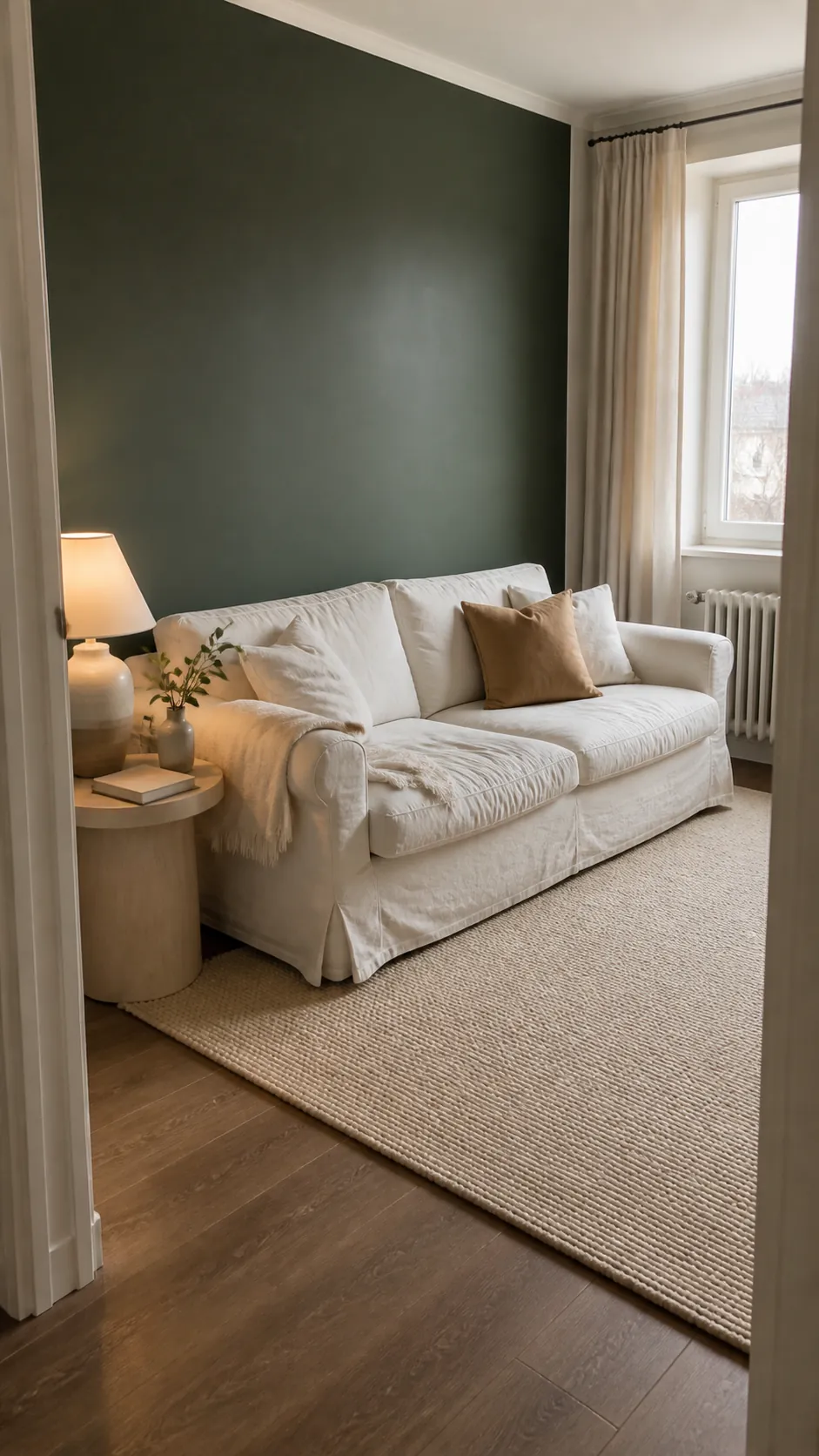
Warm white is the easiest way to stop a dark green interior color palette from feeling closed in. Choose cream, parchment, or soft chalk rather than a blue-white that can turn the green cold. Put the light color on surfaces that receive the most light: the ceiling, window treatments, a large rug, or the wall opposite the windows.
Contrast alone is not enough; the proportion matters. In a compact dark green living room, one pale sofa or rug may disappear if walls, curtains, and cabinetry are all green. Reserve at least one broad, uninterrupted light plane and repeat its tone in two smaller textiles.
Natural Wood Prevents a Flat, Painted Look
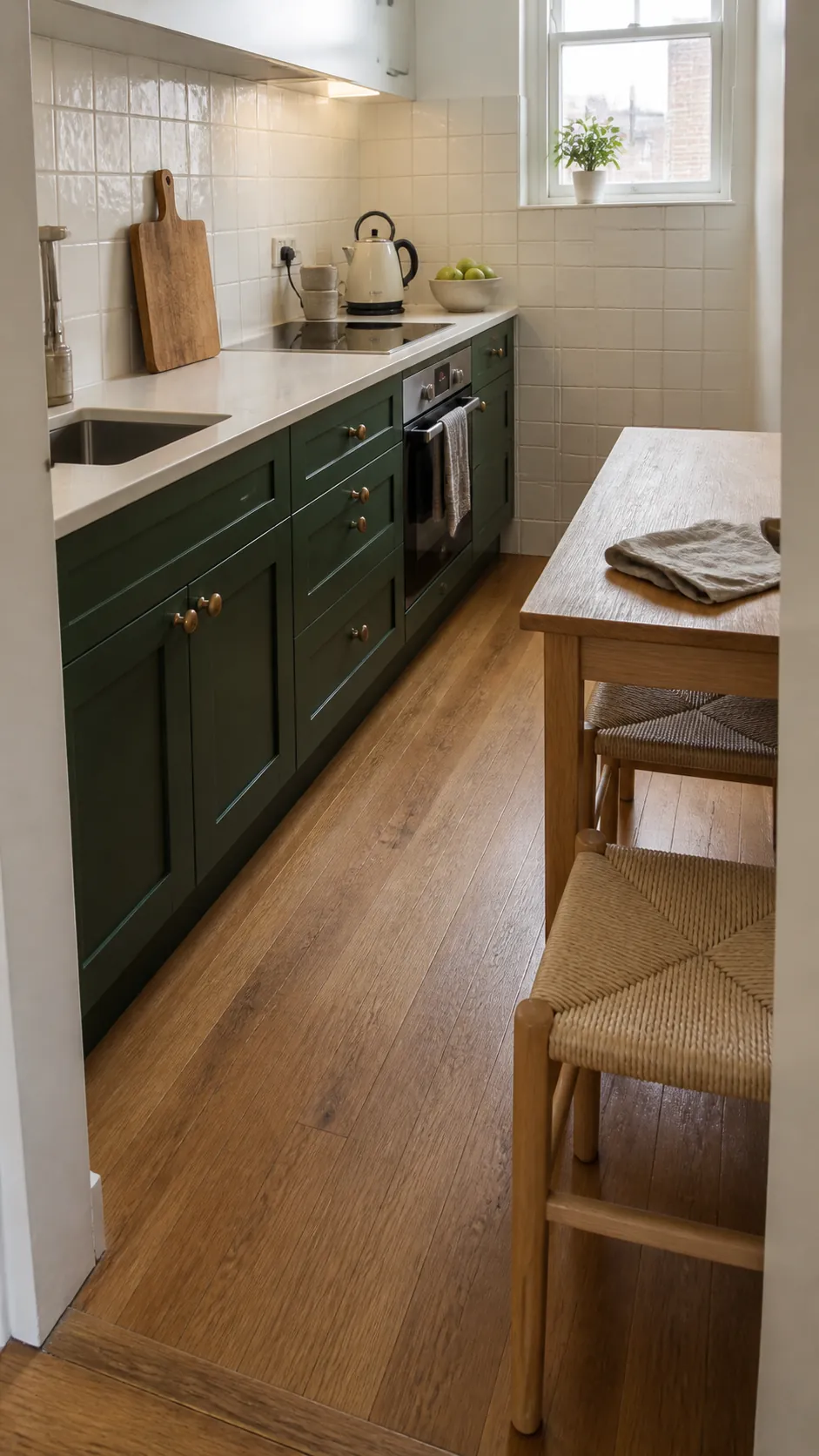
Dark green with natural wood works because grain introduces warm variation that paint cannot. Pale oak lifts green cabinetry, medium oak feels relaxed, and walnut creates a richer result when plenty of light material remains nearby. Judge the pairing against your real floor rather than an isolated sample.
You do not need identical wood everywhere. A pale table, darker cutting boards, and woven stools can look coherent when their undertones are warm and one repeated neutral connects them. Avoid crowding a dim room with several very dark brown pieces, which can erase the distinction between wood and green.
Clay Pink Softens the Contrast
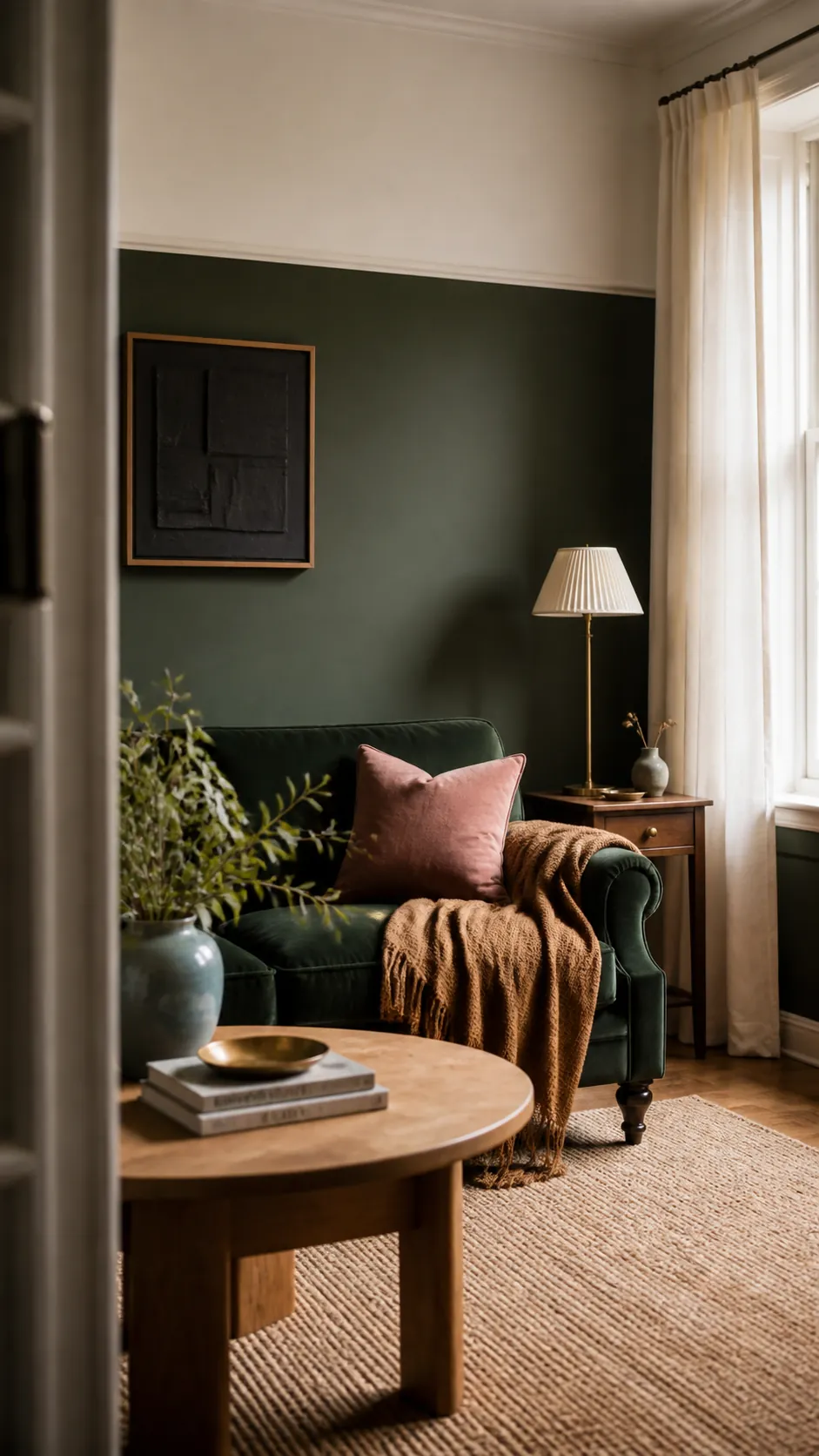
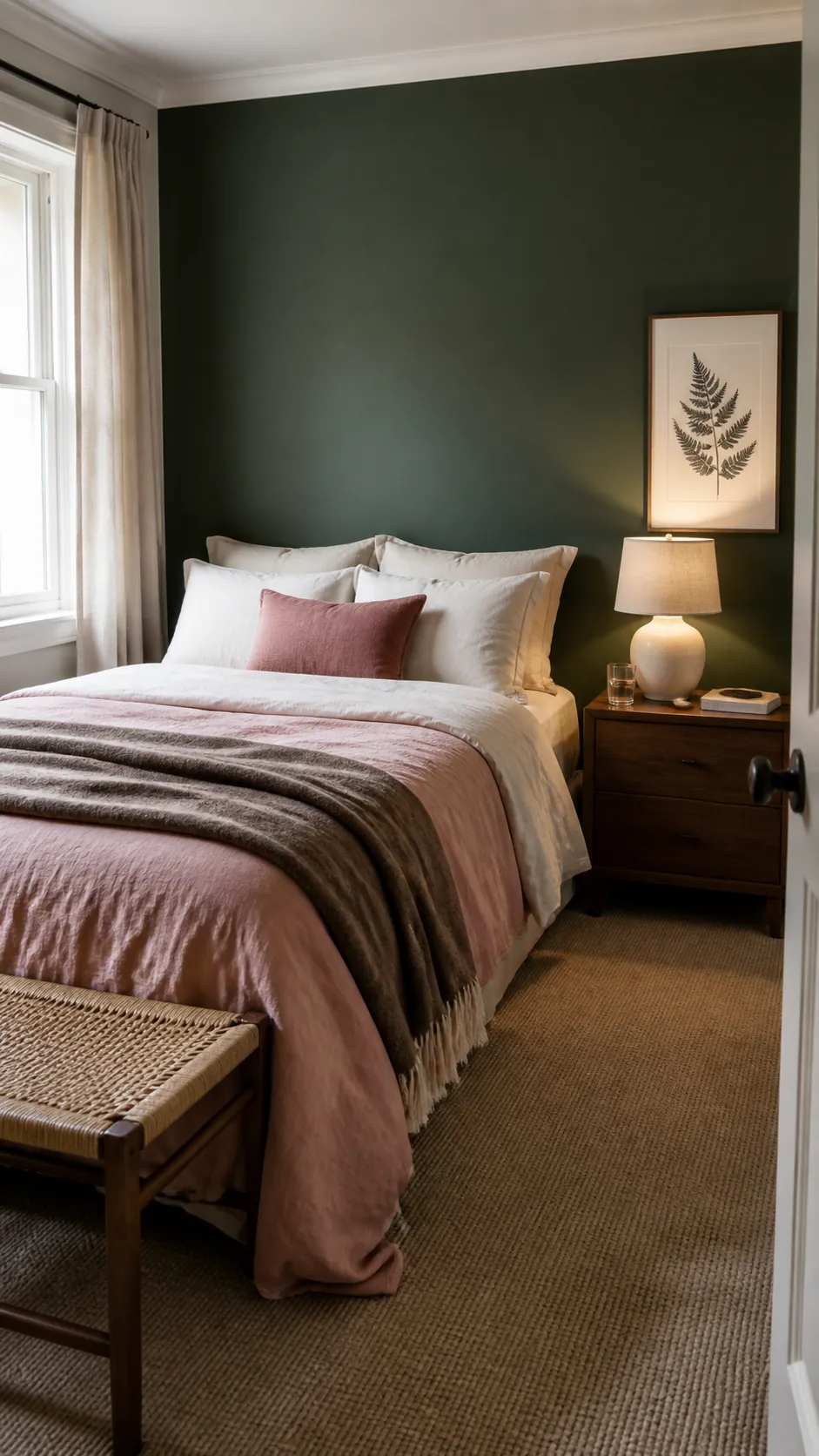
Pink and green sit in a naturally lively relationship, but dark green needs a pink with some earth in it. Clay pink, dusty rose, and muted salmon feel warmer and more adult than bubblegum shades. They are especially useful in a dark green bedroom color scheme, where softness matters more than sharp visual drama.
Use pink as fabric or a painted bedside detail before committing to another full wall. A quilt, upholstered chair, or pair of curtains is enough to change the room’s temperature. Add cream bedding and wood so the scheme does not become a two-color theme.
Ochre and Camel Add Controlled Warmth
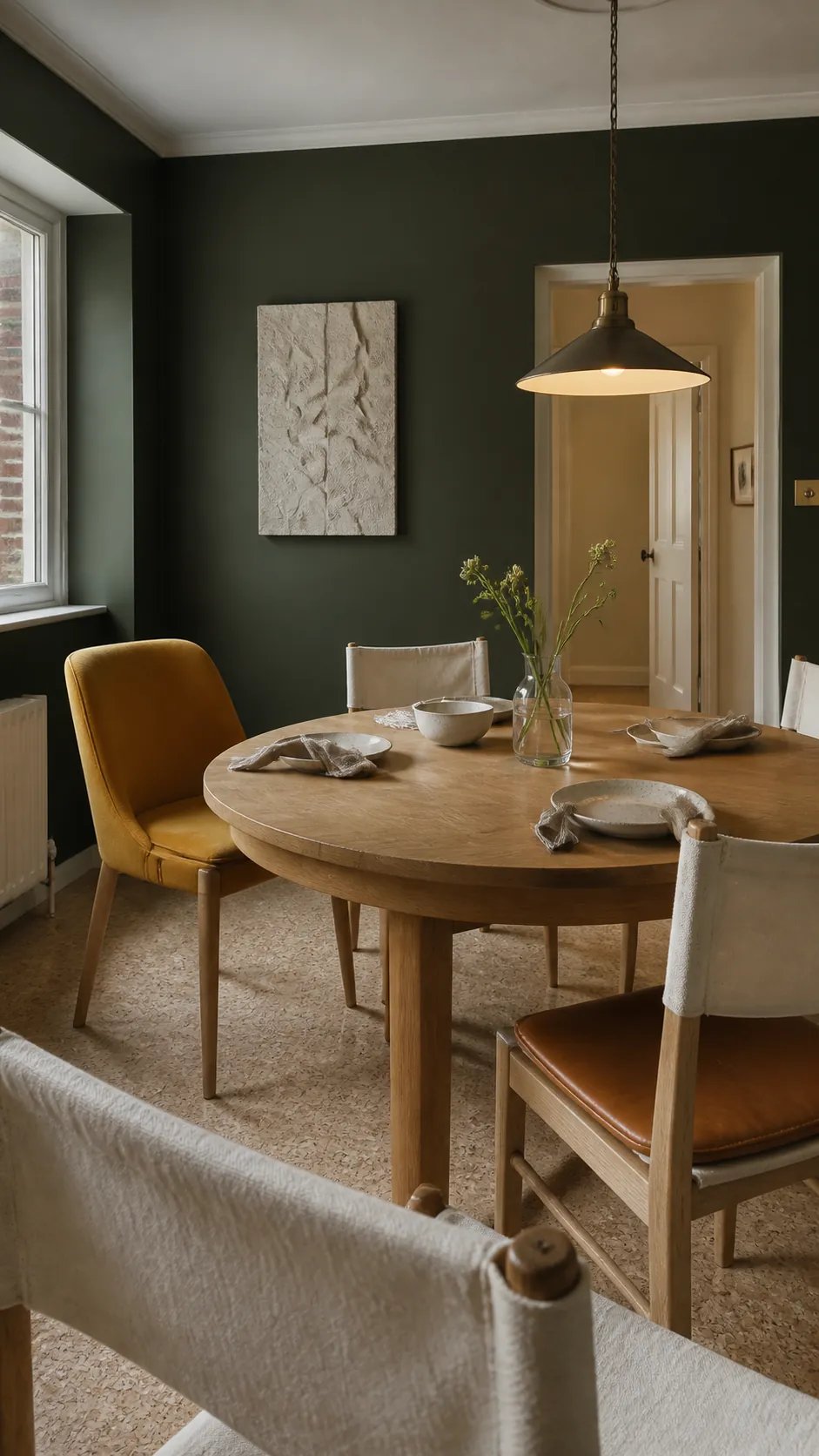
Ochre, camel, and tobacco leather make dark green feel warmer without competing with its depth. These colors are most convincing when they come from real materials such as wool, leather, rush, or pottery. A bright primary yellow can feel abrupt; a browned yellow is easier to live with.
Keep ochre to one focal piece and repeat camel in a smaller object. If both walls and furniture are dark, add a pale tablecloth or light flooring between them. That separation lets each color remain recognizable after sunset.
Muted Blue Creates a Calm Tonal Palette
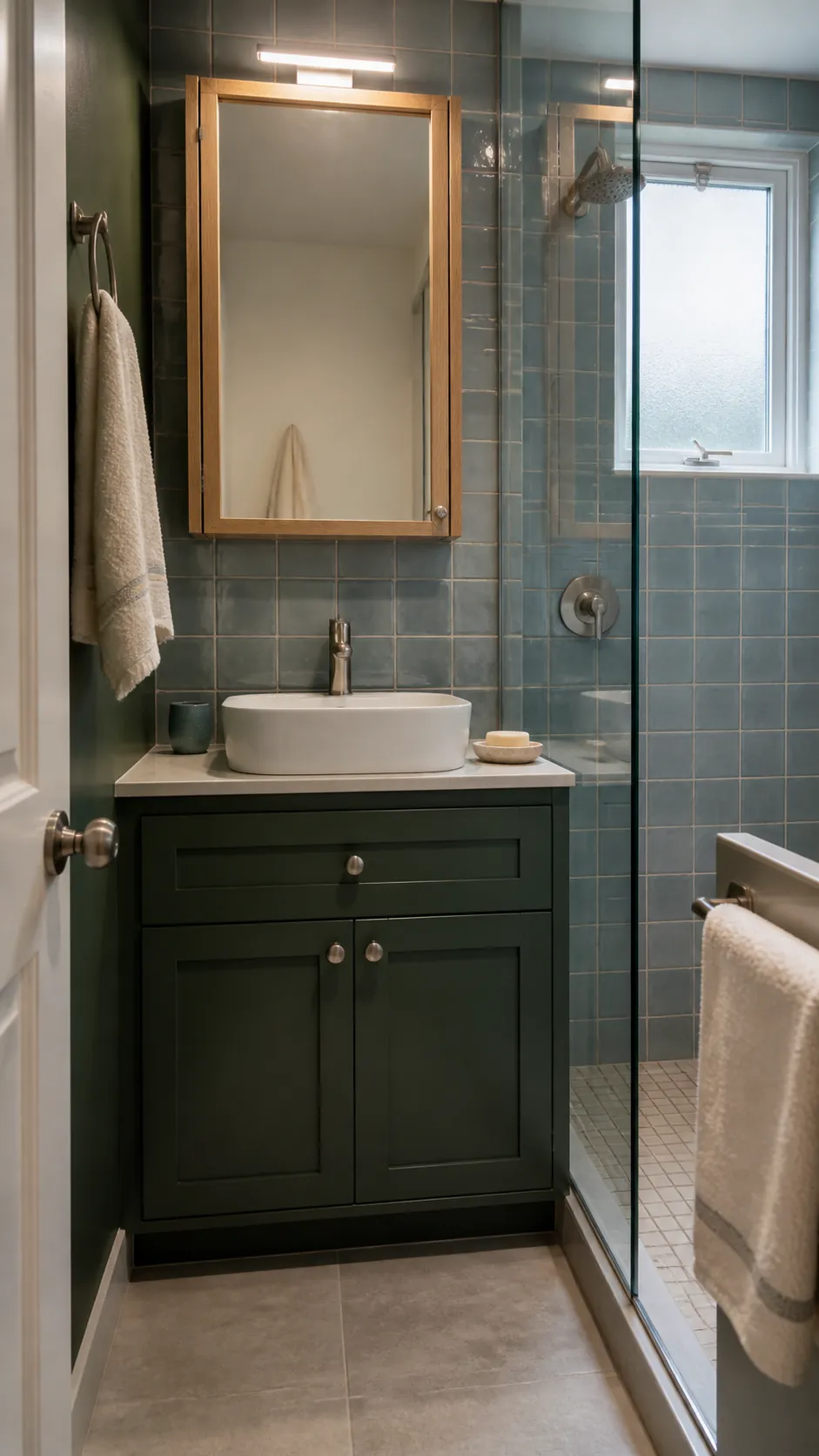
Slate, denim, and smoky blue sit comfortably beside dark green because both can carry gray undertones. A lighter blue provides contrast without the starkness of white, while navy produces a cocooning scheme in a bright room. Introduce a warm material so the combination does not feel chilly.
A patterned rug or textile containing both colors is an effective bridge. Match neither hue exactly; slight variation creates depth. In a bathroom or other hard-surfaced space, warm grout, oak, or aged metal can supply the missing softness.
Lighting Is Part of the Color Combination
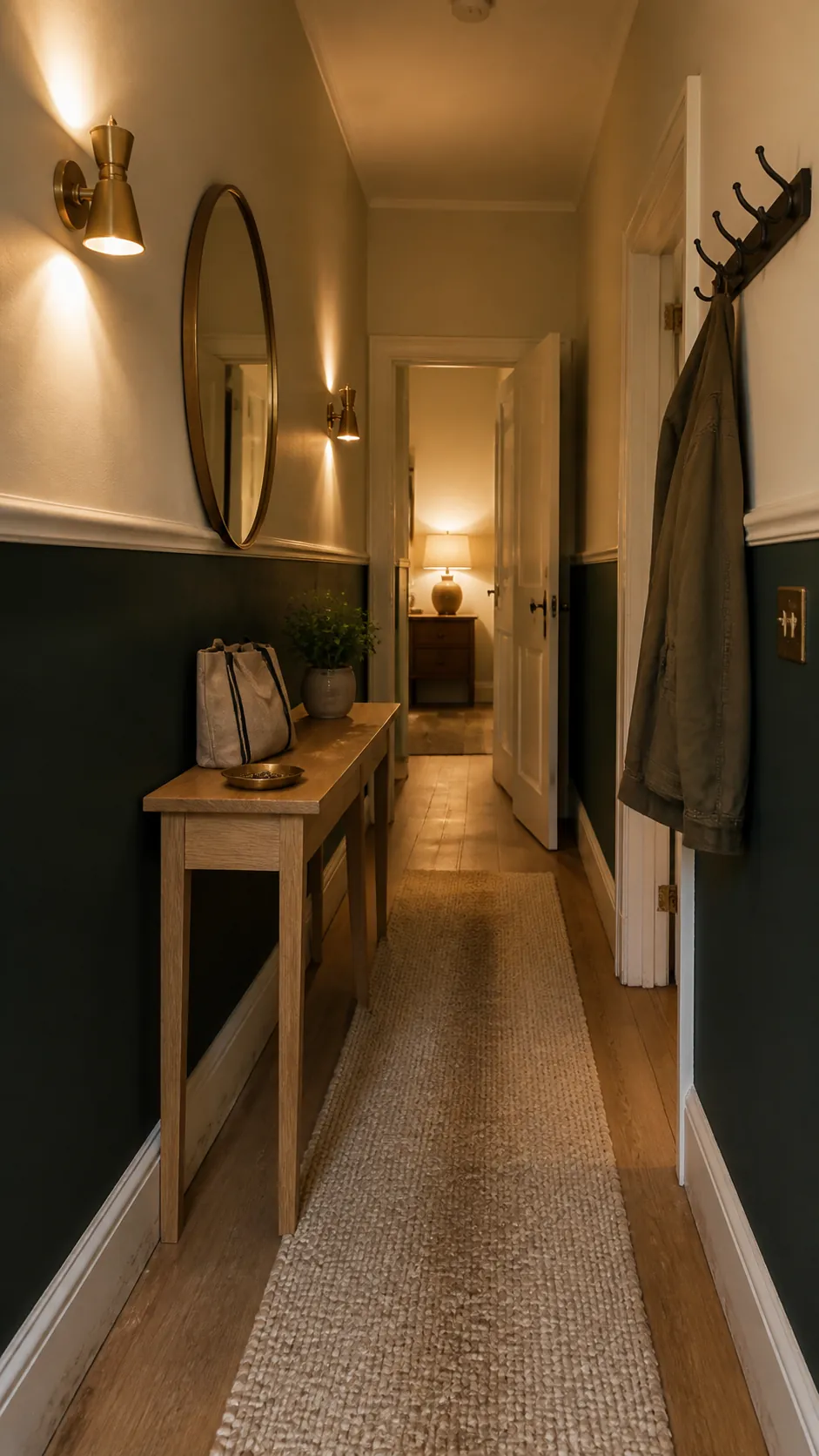
A dark green hallway can succeed with cream trim and brass or black details, but a single ceiling fixture rarely shows the color at its best. Layer wall sconces, a nearby lamp, or reflected light from a mirror so the green has highlights and shadows instead of one dull value. Use several moderate sources rather than one glaring bulb.
Test a large painted board through a full day before buying more paint. If the sample reads black at night, increase light levels or reduce the area of green; if it looks too saturated, choose an earthier version. Good dark green paint color combinations are not fixed recipes. They are palettes that still separate clearly under the room’s weakest light.