
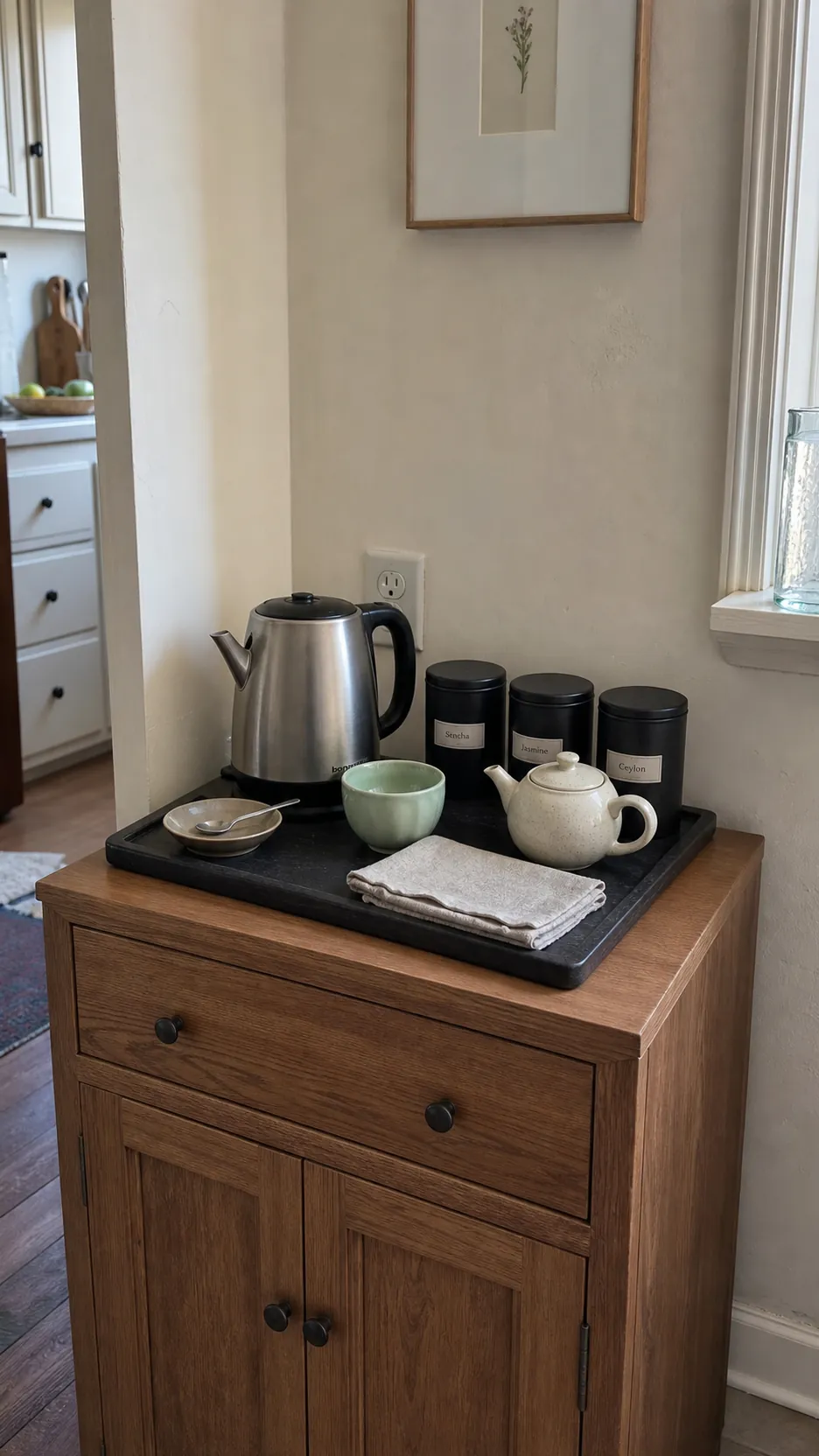
A beautiful tea corner is not made by displaying every cup, tin, and tool you own. It feels beautiful when the things you use are easy to reach, the work surface stays clear, and one or two personal details give the arrangement a sense of home.
The most useful rule is simple: keep the ritual visible and the inventory contained. That balance creates a cozy corner that supports daily tea instead of slowly becoming another cluttered counter.
Choose a Dry, Convenient Zone
Begin with the place, not the accessories. A tea station needs a stable surface, safe access to power if you use an electric kettle, and enough depth to set down a cup in front of the equipment. Keep it away from stove grease, strong sunlight, and the wettest edge of the sink. Heat, light, moisture, and cooking odors are poor companions for stored tea.
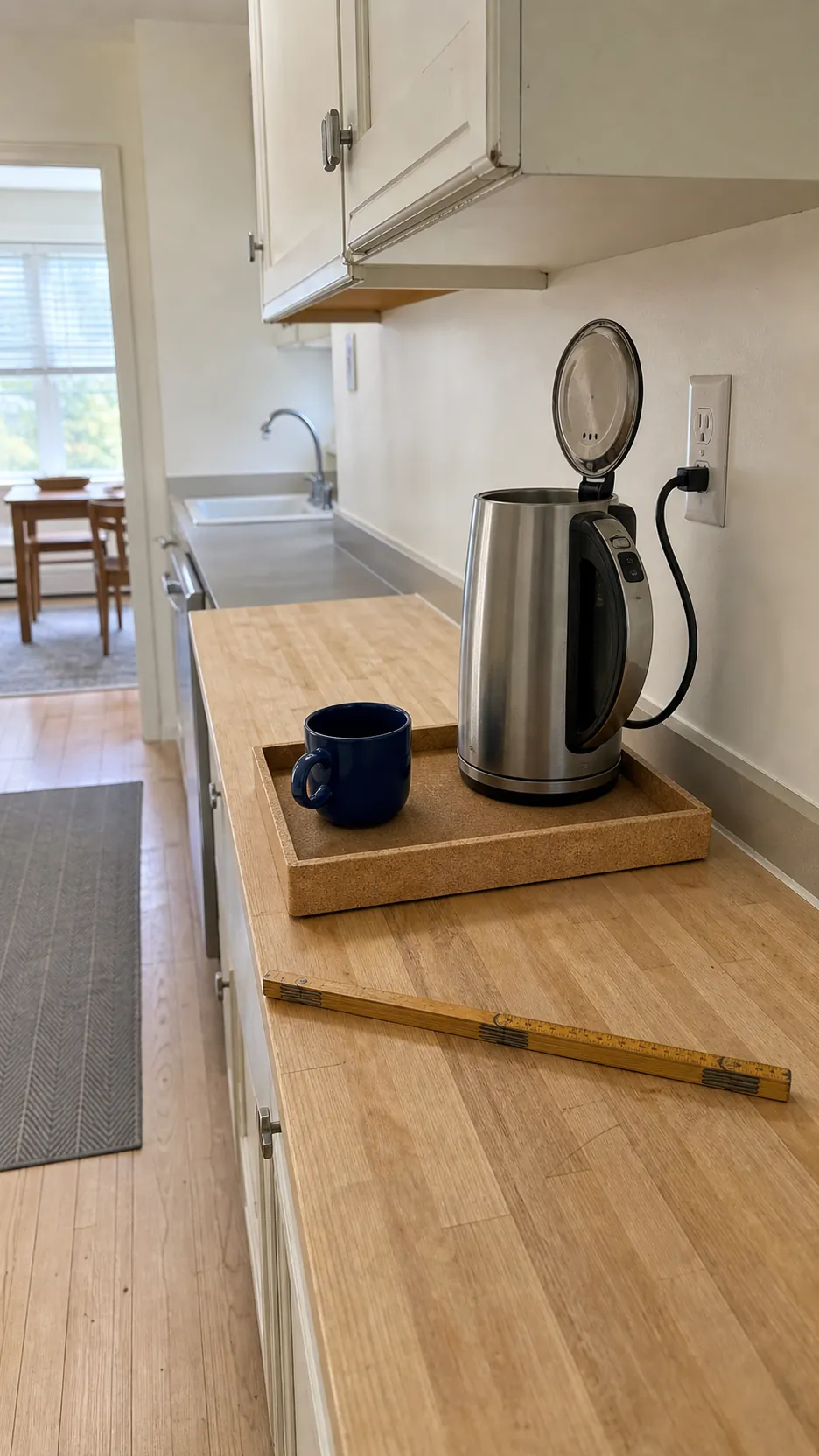
Measure your kettle with its lid open and cord connected. If a sideboard is too shallow, a kitchen cart or proper counter-depth cabinet is safer. Outside the kitchen, protect furniture with a waterproof tray and plan how you will fill and empty the kettle. A pretty location that makes brewing awkward will not stay pretty for long.
Put the Daily Ritual on One Tea Tray
A tray creates a visual boundary and makes crumbs, drips, and loose leaves easier to clean. Place only the daily essentials on it: kettle, favorite cup, infuser or teapot, spoon, and a small dish for used leaves. Keep clear space at the front for pouring and at the sides for handles.
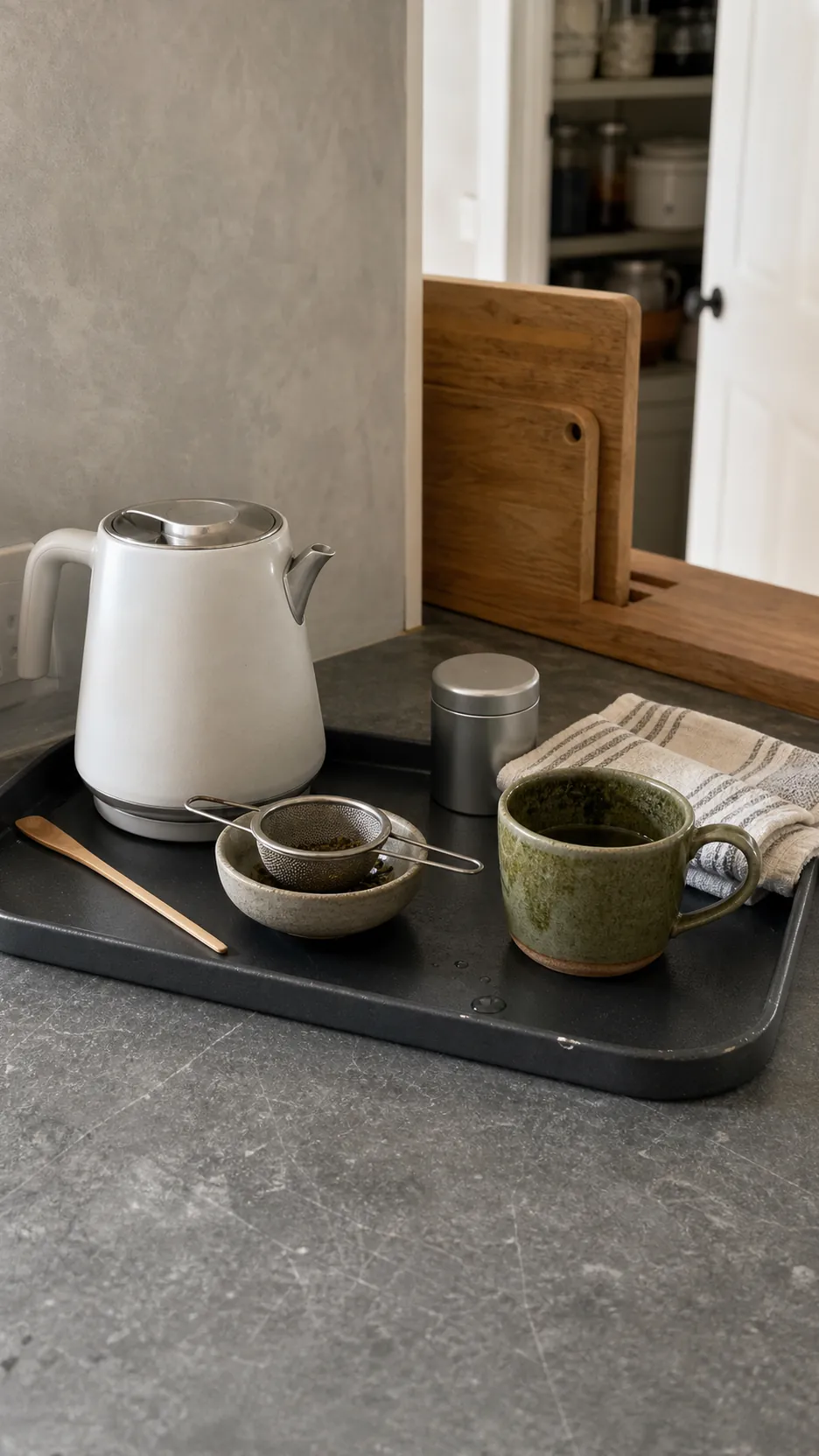
Match the tray to the surface rather than to an online trend. Wood softens a stone counter; enamel or metal can add definition to painted furniture. The best tea tray is wide enough for safe movement but small enough to preserve useful counter space.
Store the Collection and Display a Rotation
Tea stays fresher in opaque, well-closing containers away from humidity and direct light. Instead of decanting everything into matching glass jars, keep bulk tea and unopened packets in a drawer, cabinet, or lidded storage box. Label containers clearly enough that choosing tea does not become a search project.
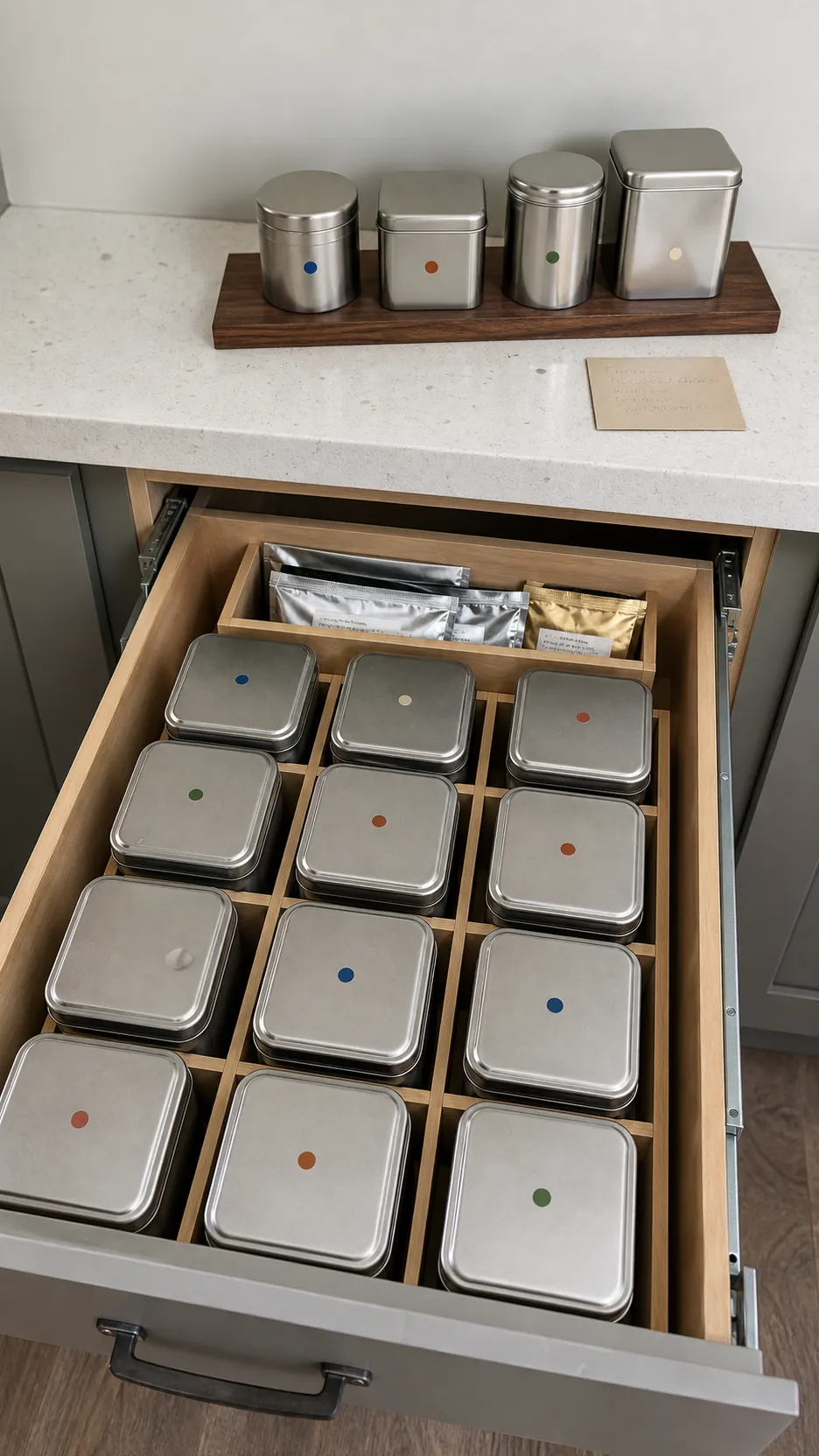
Bring out two to five teas for the week and rotate them as your mood changes. Group them by a cue you actually use—caffeine level, flavor, time of day, or brewing style. The display looks intentional because it is edited, not because every tin matches.
Use Vertical Space Without Crowding the Counter
A narrow shelf or two-tier riser can hold cups and small tins while leaving the pouring area open. Put frequently used, unbreakable items at the easiest height. Heavy kettles and water vessels belong on the main surface, not a delicate shelf. In a rental, a freestanding riser or peg rail may be more practical than drilling into the wall.
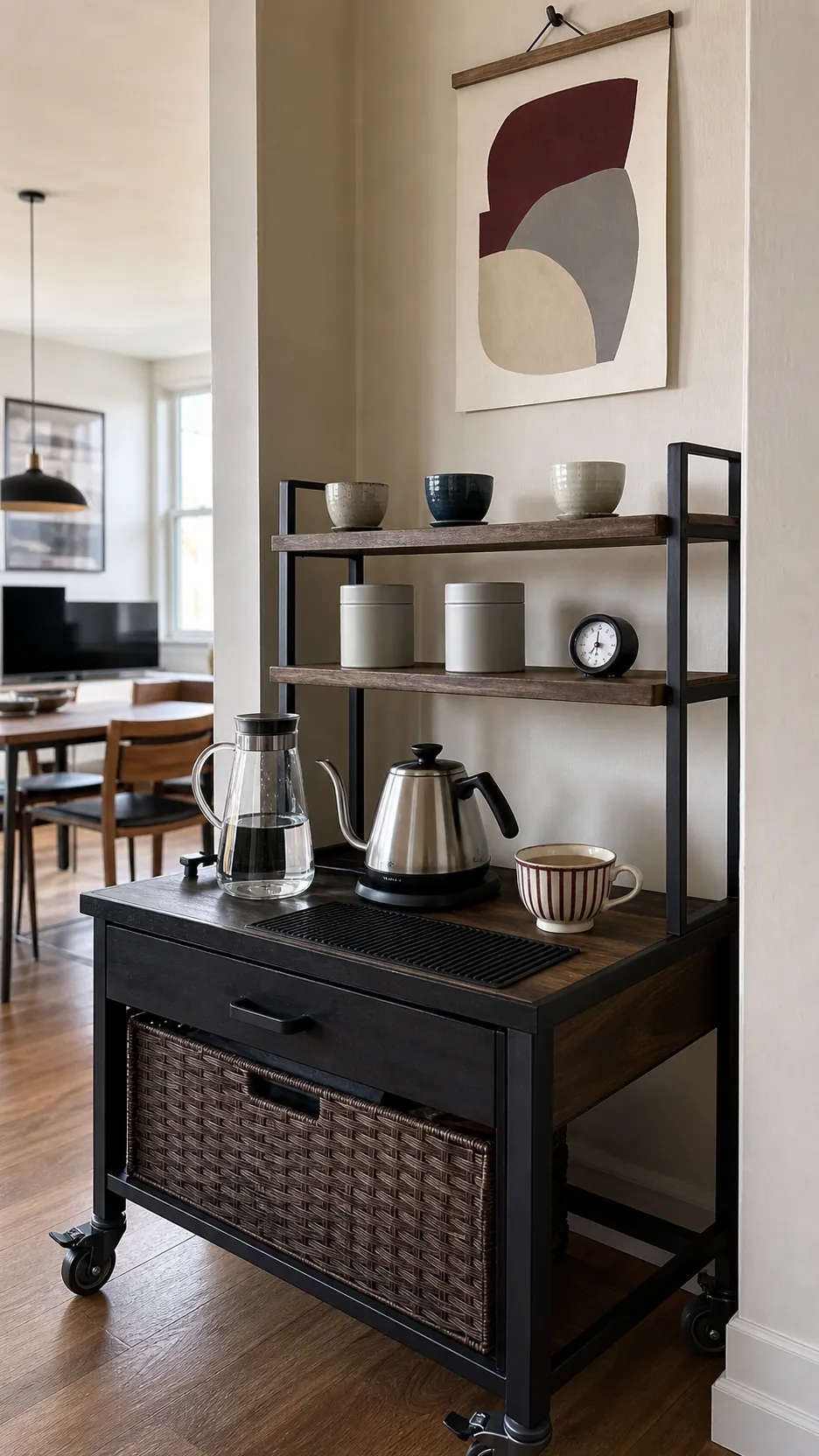
Leave gaps between groups. One vintage teacup, a small clock, or a framed recipe card can add character, but open space is part of the composition. If you must move three decorative objects every time you brew, they are working against the corner.
Add Warm Light and One Repeated Color
Good lighting makes even simple tea cup decor feel cared for. A small shaded lamp or under-shelf light can create a warm pool after dark, provided cords and fixtures stay away from water and heat. During the day, let natural light do most of the work without storing tea in direct sun.
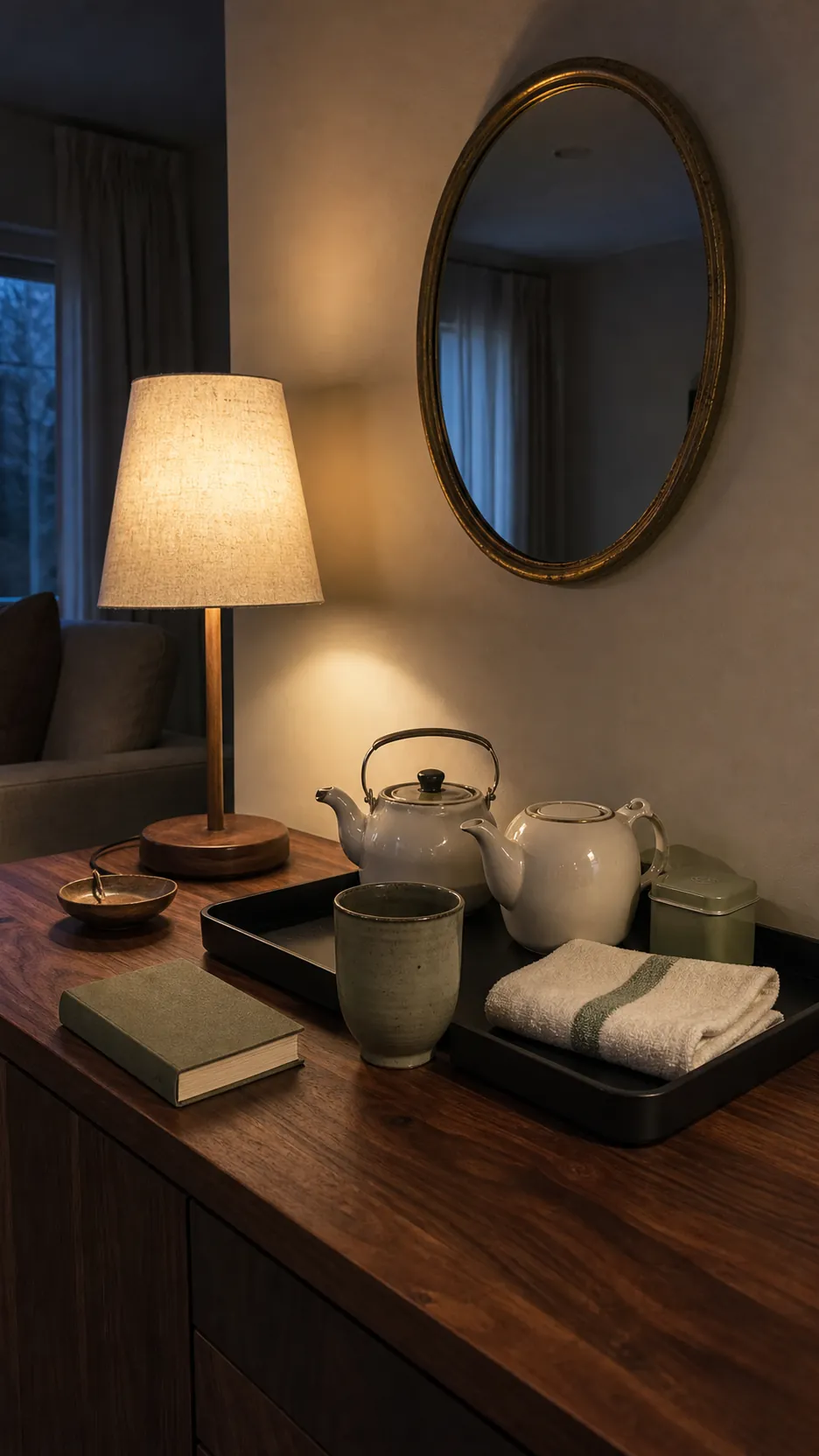
Repeat one accent color two or three times—perhaps in a cup, towel stripe, and small tin. This creates cohesion without requiring a matching set. Natural wood, linen, ceramic, and brushed metal already provide enough texture; the color simply helps the eye connect them.
Create a Two-Minute Reset
A tea corner stays beautiful when returning it to order is easier than leaving it messy. Give used leaves a dedicated dish, keep a small cloth nearby, and make one drawer or basket the obvious home for refills and occasional tools. Empty and dry wet items before closing them away.
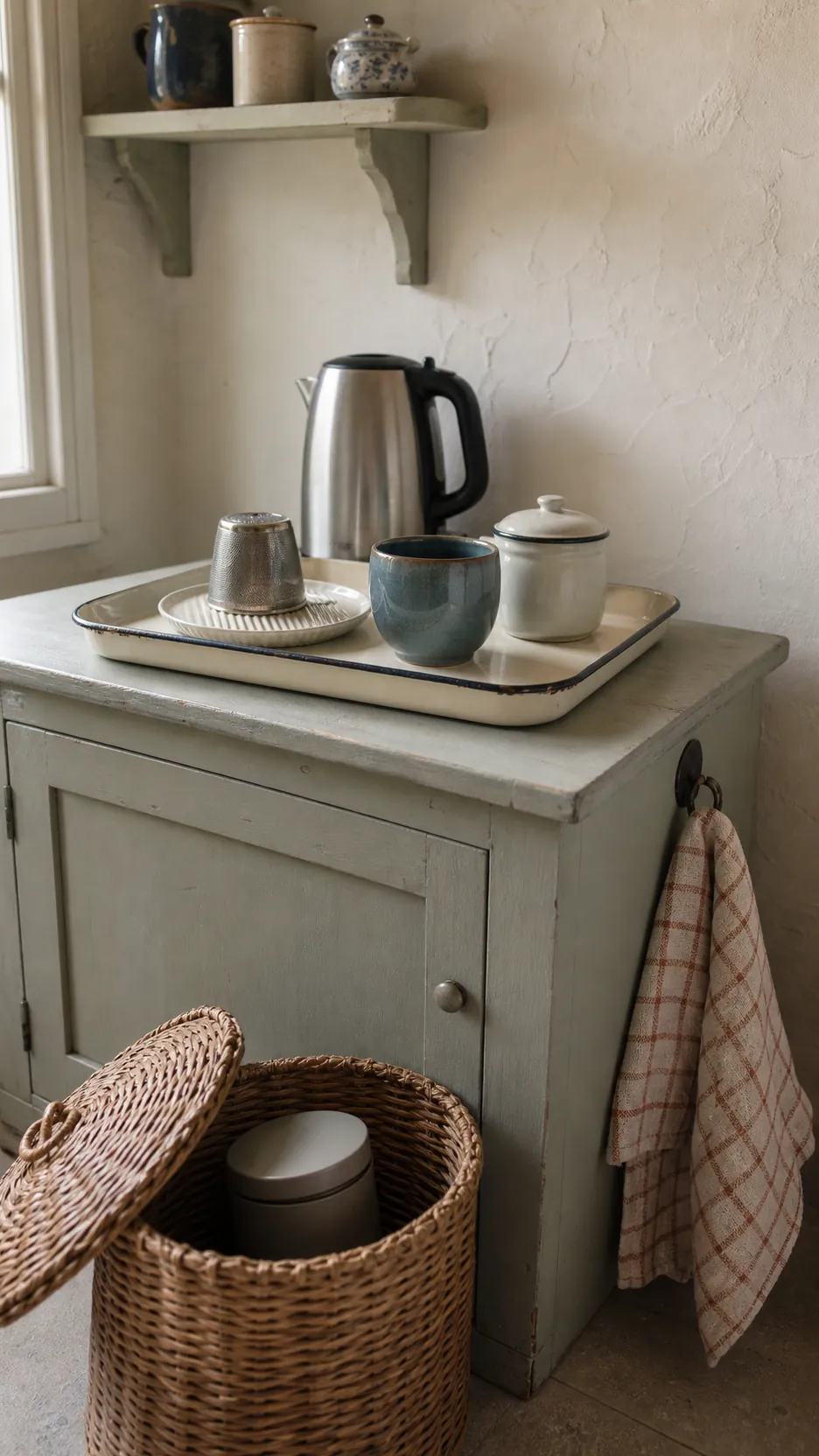
At the end of the day, wipe the tray, rinse the infuser, return extra tea to closed storage, and leave the cup ready for tomorrow. That small reset is the quiet engine behind pretty home decor. The corner feels peaceful because it supports slow living in practice, not just in appearance.