
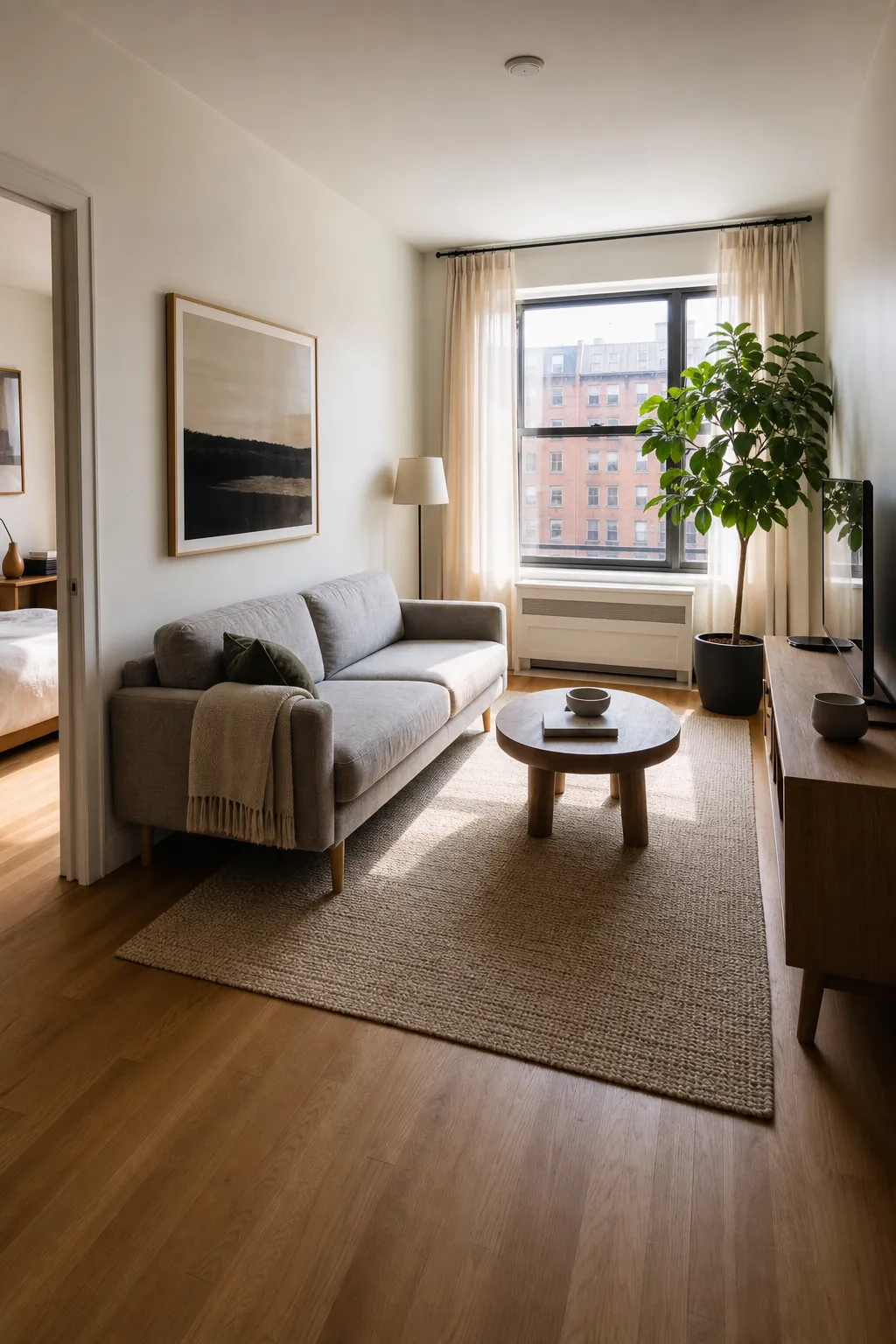
A small apartment usually starts feeling crowded before it is actually full. The problem is rarely one single chair, one plant shelf, or one basket by the door. It is the way everything competes for attention at once: the blocked window, the tight coffee table gap, the open bin that became a permanent drop zone, the decor lined up at eye level until the walls feel closer than they are.
The useful goal is not to erase your personality. A home feels less crowded when your eye can rest, your body can move, and your daily clutter has somewhere to disappear. That means a few layout decisions often matter more than buying more organizers.
Start With The View From The Door
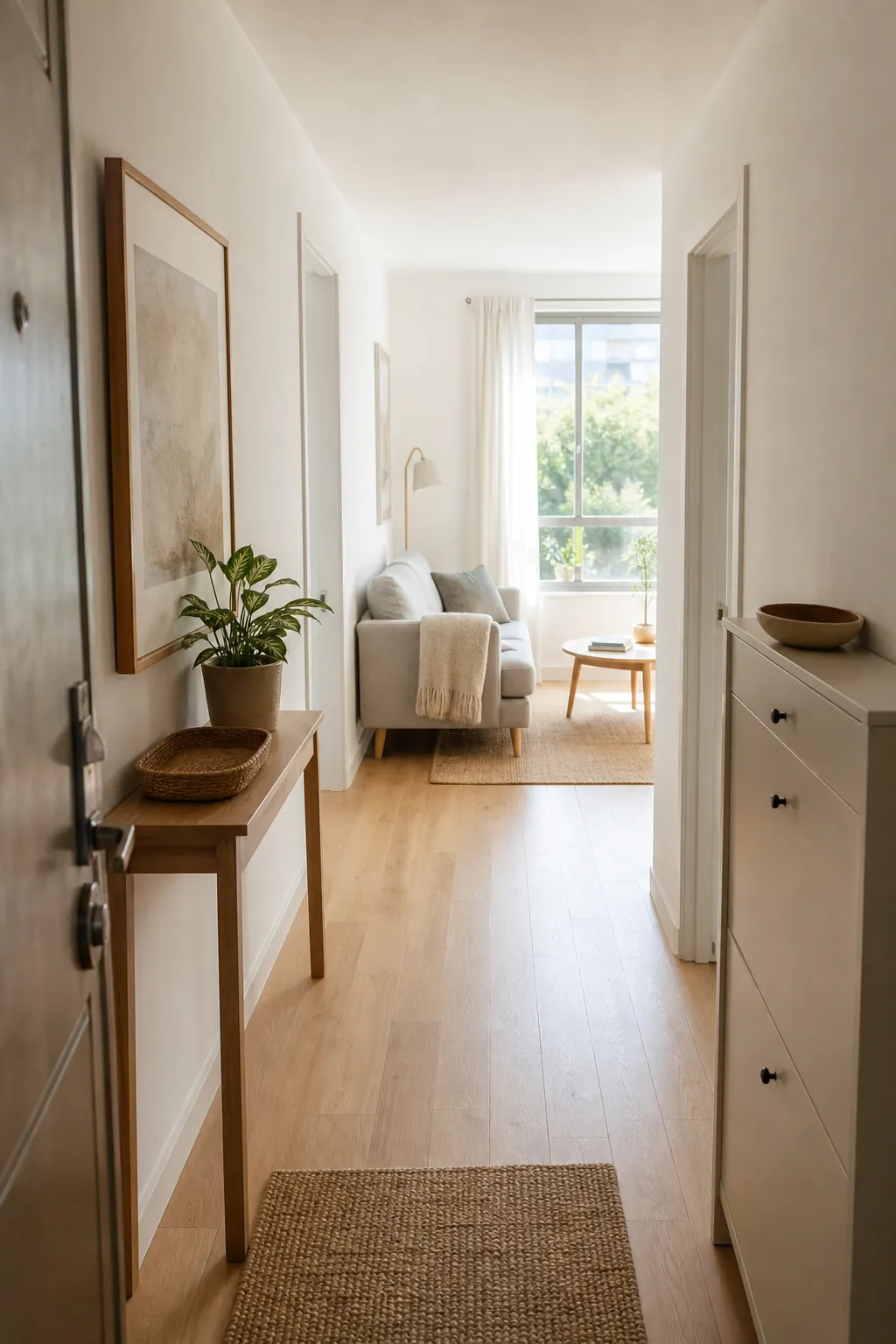
Stand at your front door and look into the apartment as if you were visiting for the first time. What does your eye hit first? A chair back? A laundry rack? The side of a tall bookcase? A window hidden behind plants? The first view sets the mood for the whole place.
In small apartments, the entrance view needs one calm destination. It can be a window, a sofa with a clear wall above it, a slim console, a plant in a corner, or a neatly made bed in a studio. If the first thing you see is a cluster of unrelated items, the apartment reads as crowded even when the floor is technically clear.
Move anything tall, bulky, or messy out of that first sightline if you can. If you cannot move it, soften it: add a closed-front basket, use matching boxes, lower the visual height, or turn the messiest side away from the entry.
Make One Walking Path Obvious
A room feels crowded when you have to negotiate with it. If you sidestep around a coffee table, squeeze past a dining chair, or move a storage bin every time you open a closet, the apartment is telling your body it is too full.
Choose one main path through each zone and protect it. The path does not need to be dramatic; it just needs to be obvious. In a living area, that might mean a cleaner route from the kitchen to the sofa and from the sofa to the window. In a studio, it might mean a clean strip from the door to the bed, then to the desk.
- Pull furniture an inch or two apart before assuming you need new pieces.
- Use a round or oval table where sharp corners keep catching your hip.
- Remove one occasional chair if it only works when nobody is walking.
- Keep the floor clear near doors, windows, and closet openings because those are the places where crowding is felt fastest.
If you are unsure, tape the ideal walking line on the floor for one day. Anything that crosses the line is not just “stuff”; it is friction.
Use Fewer, Larger Anchors
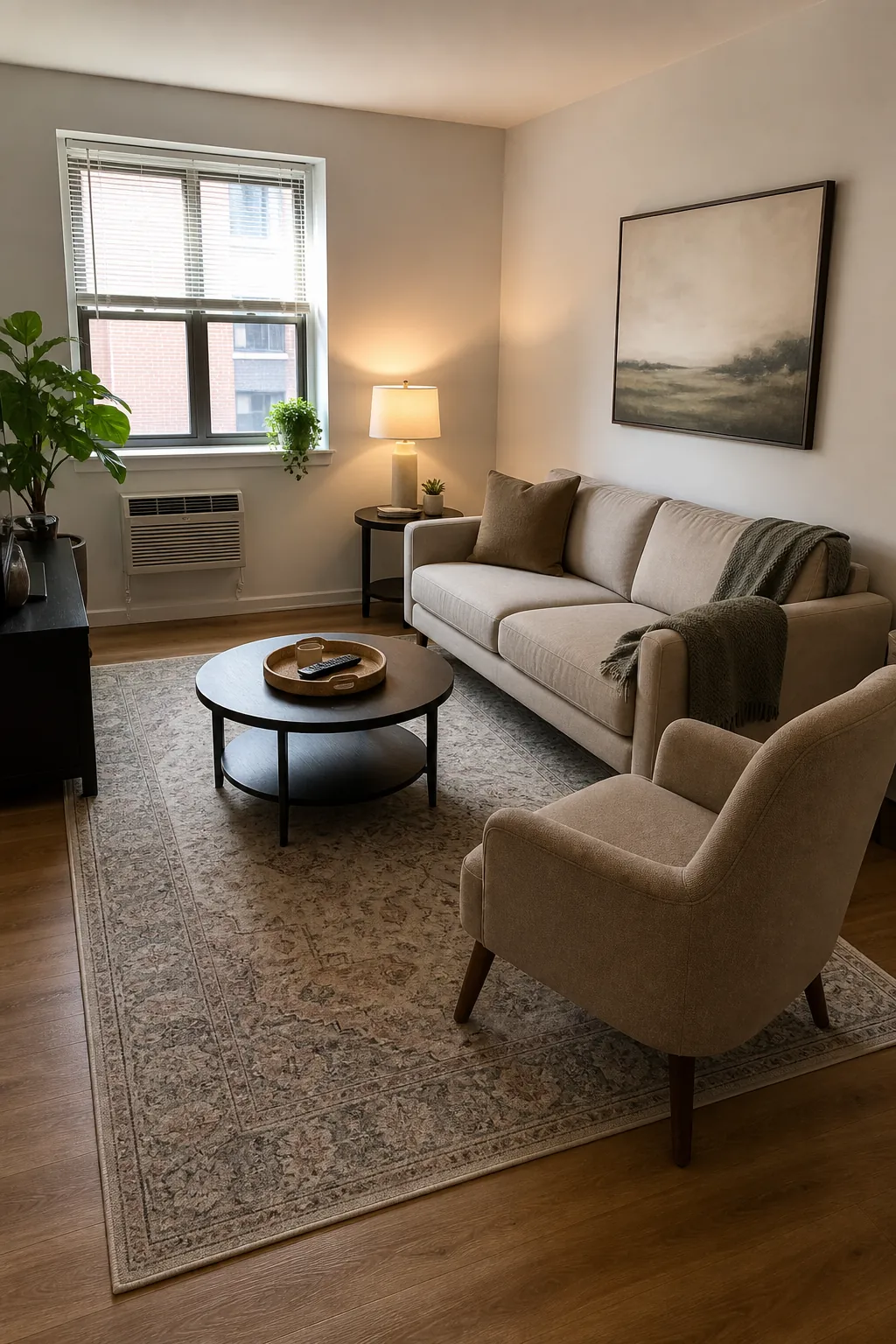
One of the sneakiest small-space mistakes is buying everything small. A tiny rug, tiny table, tiny art, tiny lamp, and tiny shelves can make a room feel like a collection of fragments. The apartment does not feel spacious; it feels nervous.
A few larger anchors can calm the room. A rug that reaches under the front legs of the sofa and chairs often makes a living area feel more generous than a small rug floating in the middle. One larger piece of art can look quieter than a dozen little frames. One proper storage cabinet can look cleaner than five exposed baskets.
The rule is simple: use scale to create order, not to cram in more. When the main pieces feel intentional, the room stops looking like it is made from leftovers.
Stop Decorating At The Same Height
Reddit design threads repeat this complaint in different words: the room is cute, but everything is happening at eye level. Hanging plants, shelves, art, string lights, tall cabinets, and lamps all gather in the same visual band. The ceiling feels lower because the eye keeps bumping into objects before it can travel.
Keep the personality, but vary the height. Let some walls breathe. Bring a few items down to table level. Move one plant to a floor stand and group smaller plants together instead of scattering them across every ledge. If you use open shelves, leave blank space on purpose.
Blank space is not wasted space in a small apartment. It is what lets the pieces you love actually show up.
Give Daily Clutter A Door
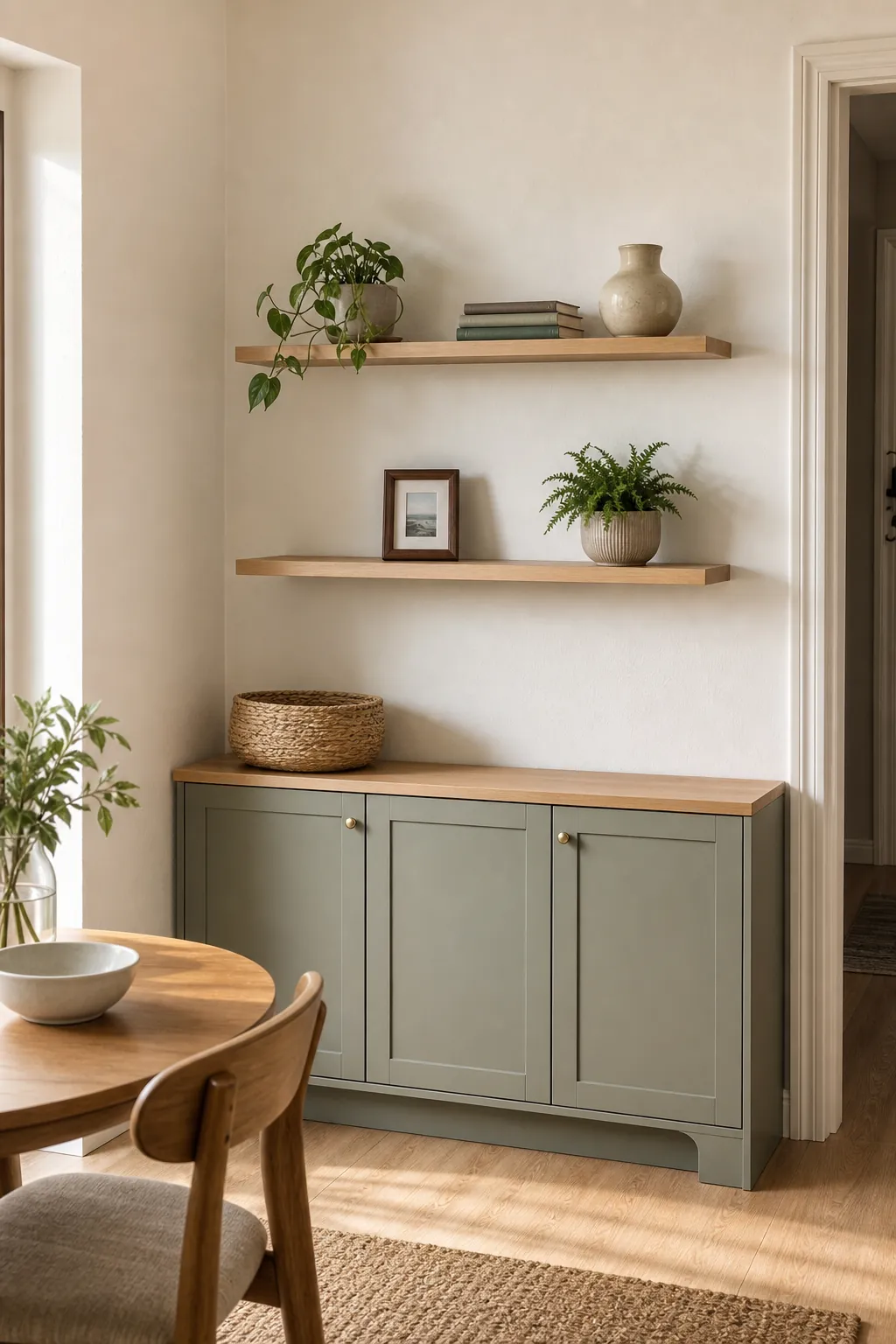
Open storage looks charming when it is styled for a photo and stressful when it holds real life. Chargers, mail, tote bags, pet supplies, vitamins, spare candles, and half-finished projects do not always need a perfect organizing system. They need a place to be out of sight.
Closed storage is not cheating. It is the difference between a home that works for daily use and a home that only looks tidy for ten minutes. A cabinet with doors, a storage ottoman, a bed drawer, a lidded entry basket, or a sofa table with drawers can remove dozens of tiny visual interruptions.
The test is practical: if an item is used often but looks messy in the open, give it the easiest closed home possible. Do not bury daily things in hard-to-reach boxes. That only creates a new pile somewhere else.
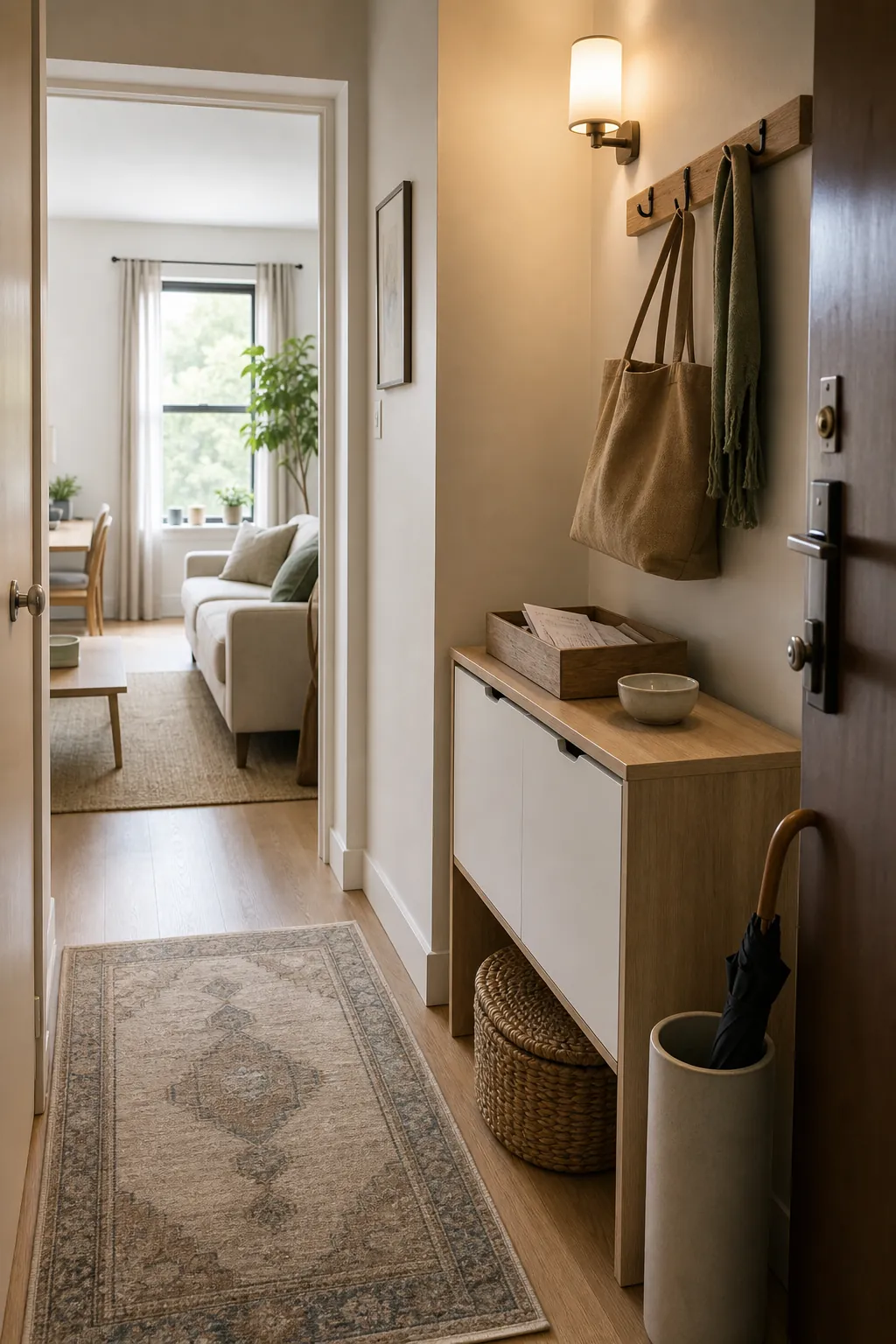
Let Furniture Show Some Floor
Heavy furniture that sits flat on the floor can make a small apartment feel blocked, especially when several pieces are dark, boxy, or pushed into every corner. You do not need all glass furniture or a room full of delicate legs, but you do need some air underneath the main pieces.
Look for places where the floor disappears: a solid sofa, a skirted chair, a chunky media console, a dresser, bins under the bed, and baskets beside the bed all stacked in one room. Replace or edit one of them first. A raised media console, a sofa on visible legs, a wall-mounted shelf, or under-bed drawers that fully tuck away can make the same square footage feel less stuffed.
Multifunctional furniture helps only when it replaces something. A storage ottoman that replaces a coffee table is useful. A storage ottoman added beside the coffee table is just another object.
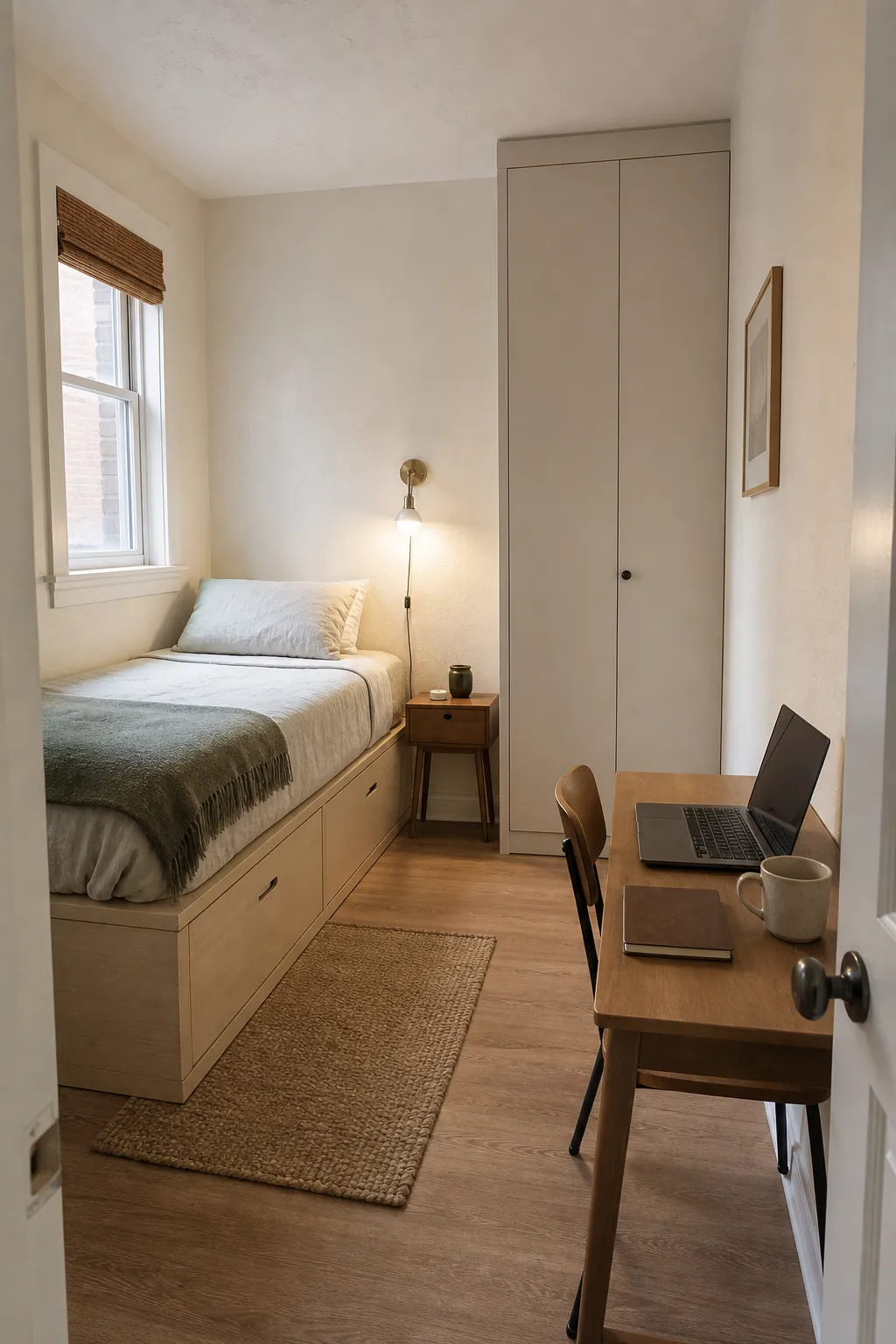
Fix The Light Before You Buy More Decor
Dim corners make a small apartment feel smaller at night. So do yellow bulbs that make white walls look tired, overhead lights that flatten the room, and heavy window treatments that steal daylight. Before buying more decor, improve the light you already have.
- Use warm white or soft neutral bulbs so the room feels bright without looking harsh.
- Layer at least two light sources in the main room: a floor lamp plus a table lamp, or a wall sconce plus a shaded lamp.
- Hang curtains higher and wider so fabric parks beside the window instead of covering the glass.
- Place a mirror where it reflects light or depth, not where it doubles the view of clutter.
Good lighting does not add square footage, but it does remove the cave feeling that makes every object look heavier.
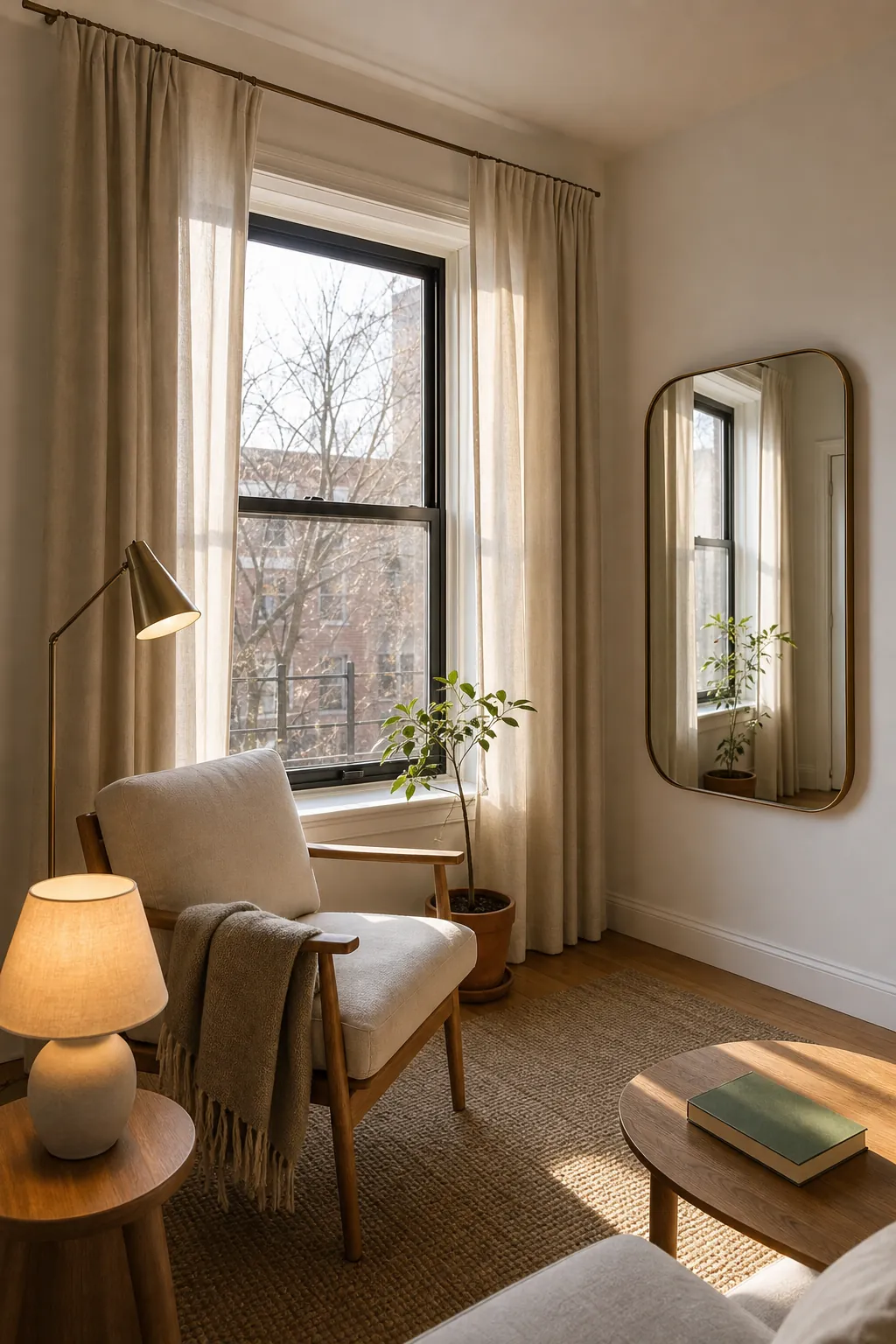
Edit The Surfaces People See First
You do not have to declutter the whole apartment in one dramatic weekend. Start with the surfaces that control the room’s mood: the entry table, coffee table, kitchen counter, bedside table, desk, and the shelf directly in your first sightline.
Clear each surface completely, then put back only what earns its spot. A lamp, tray, book, plant, or bowl can stay if it makes the surface easier to use or easier to look at. Everything else needs a home, a donation bag, or a reason to stay.
A useful standard is to leave about one third of each visible surface empty. It does not need to be exact. The point is to give your eyes enough quiet space to believe the room has capacity.
Use A One-Day Reset Plan
If your apartment feels crowded right now, do this in order. The sequence matters because layout and visibility problems often masquerade as storage problems.
- Take one photo from the front door and one from the main seat in the room.
- Remove anything blocking windows, doors, closet openings, or the main walking path.
- Clear the first surface you see when you enter.
- Group small decor instead of spreading it across every wall, shelf, and ledge.
- Choose one closed storage spot for daily clutter that keeps returning.
- Turn on lamps at night and check which corners still feel heavy.
- Take the same two photos again and decide what still feels loud.
This is faster than shopping and more honest than guessing. Photos make visual clutter obvious because they flatten the room the same way a guest’s first glance does.
Keep The Home, Lose The Crowding
The best small apartments are not empty. They are edited. They have a clear path, a few confident anchors, closed homes for the unpretty stuff, and enough blank space for the good things to breathe.
When a small apartment feels less crowded, you do not notice the square footage first. You notice that nothing is shouting for your attention.