
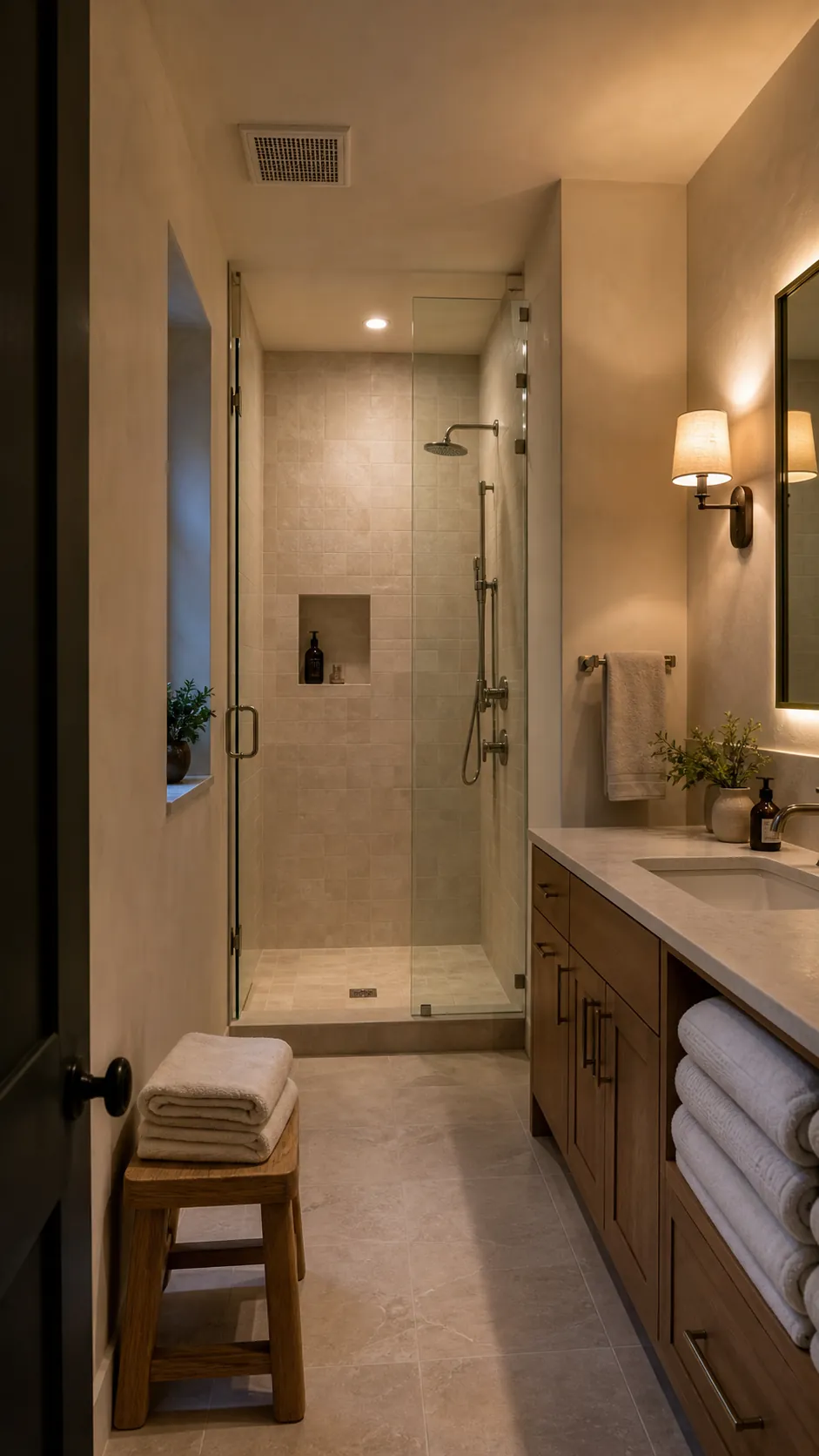
The “shower lamp” trend makes sense: one warm pool of light can turn a harsh bathroom into a calmer nightly ritual. The unsafe version, however, is exactly what the name suggests—a normal portable lamp placed where steam, splashes, wet hands, or a falling cord can reach it. A pretty glow is never worth bringing a dry-location product into a wet zone.
The safer way to copy the mood is to separate the look from the object. Use permanently installed, properly listed lighting in and over the shower; keep decorative portable or rechargeable lights in genuinely dry areas; and treat every manufacturer instruction and local electrical rule as a requirement, not a styling suggestion. When in doubt, ask a licensed electrician to assess the exact location.
Start With Wet, Damp, and Dry Zones
“Bathroom safe” is too vague. A fixture may tolerate humid air yet still be unsuitable for direct spray. Look for a recognized listing and the exact location rating on the product documentation. A light inside or directly over a shower generally needs to be listed for wet locations or specifically for shower use; a damp-location rating is not a substitute when water can splash or spray.
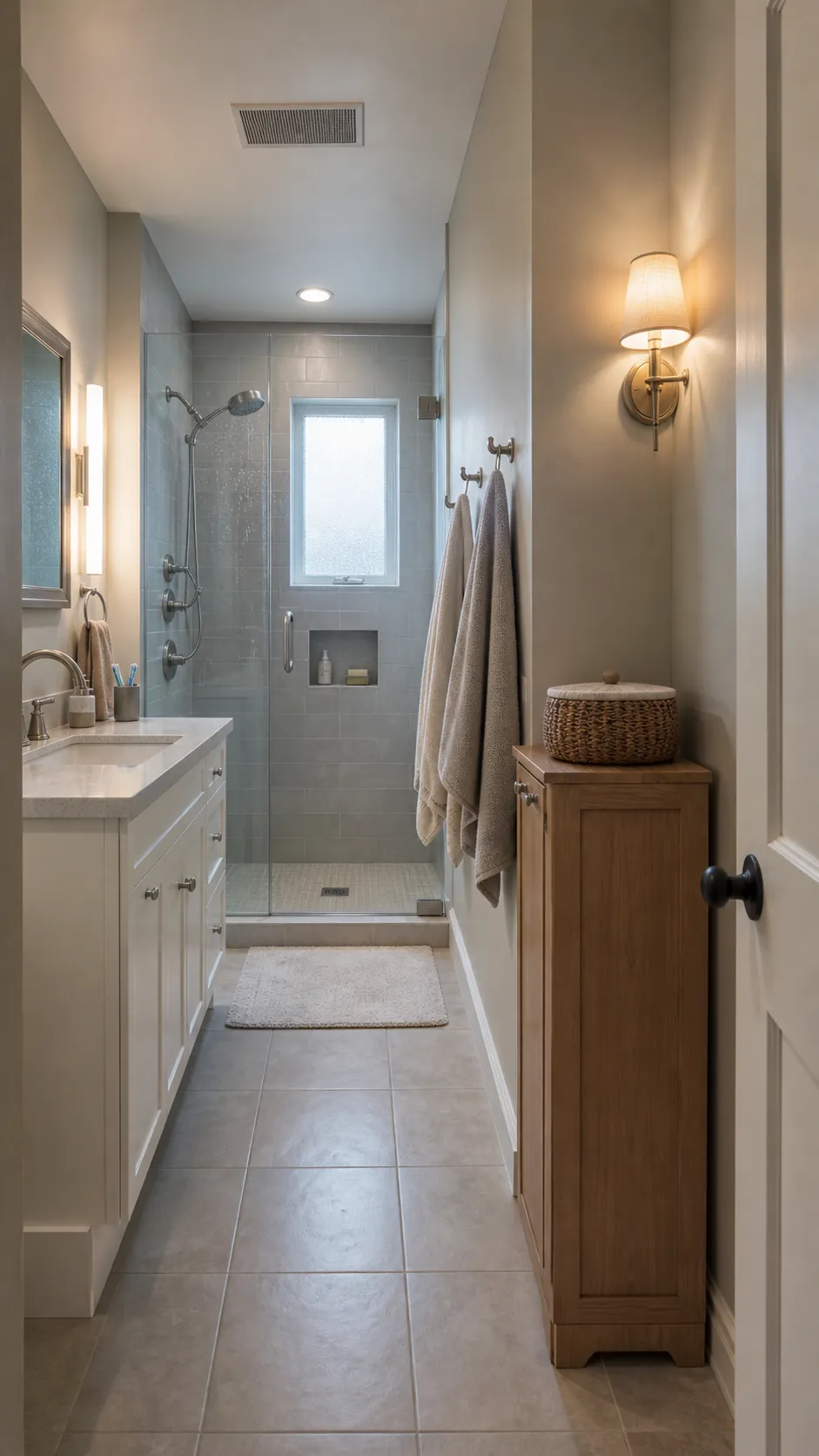
Ratings and permitted distances vary by country, product, ceiling height, shower design, and local code. Do not infer safety from a sealed-looking shade, a low-voltage label, or an online photo. Read the installation instructions, preserve required clearances, and use the fixture only in the location for which it is listed.
Use a Wet-Rated Recessed Light for the Actual Shower
A sealed recessed or canless LED designed for a shower is the cleanest way to create useful light without introducing a freestanding object. Choose a comfortable color temperature, good color rendering, and a diffuser that reduces glare. If it will be dimmed, confirm that the fixture, driver, and dimmer are compatible.
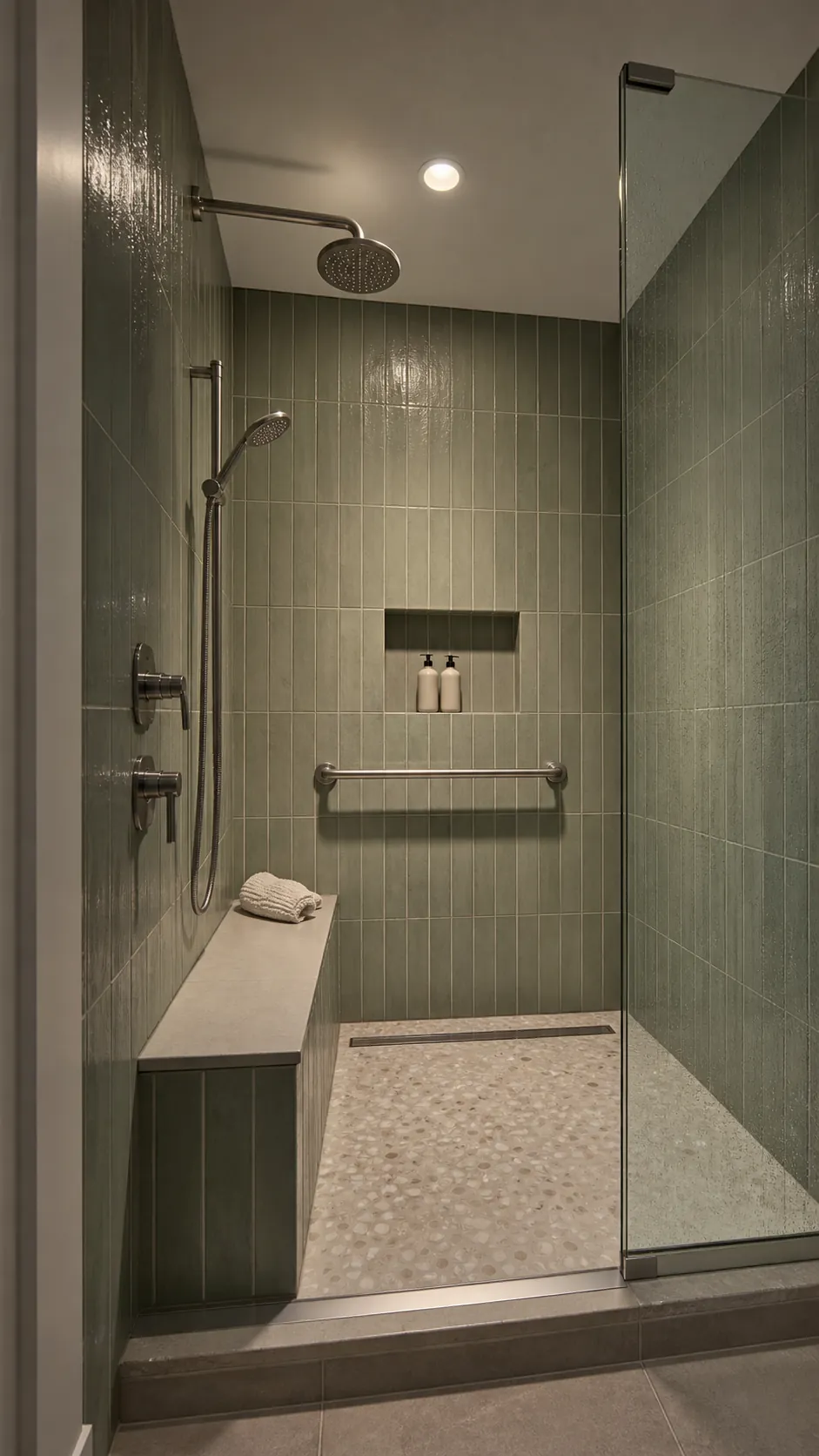
This is electrical work, not a decor hack. An electrician can verify the circuit protection, box or driver location, fixture listing, bonding and grounding requirements, ventilation conflicts, and local rules. Never cover a standard downlight with improvised plastic, caulk a product that was not designed to be sealed, or assume a replacement bulb upgrades an unsuitable housing.
Create a Spa Glow With Indirect Light Outside the Spray
Soft bathroom mood lighting usually looks better when the source is hidden. A properly specified LED system in an architectural cove, under a floating vanity, or behind a mirror can wash tile and plaster without shining into your eyes. The key is that every component—strip, channel, diffuser, driver, connector, and control—must be suitable for its installed environment.
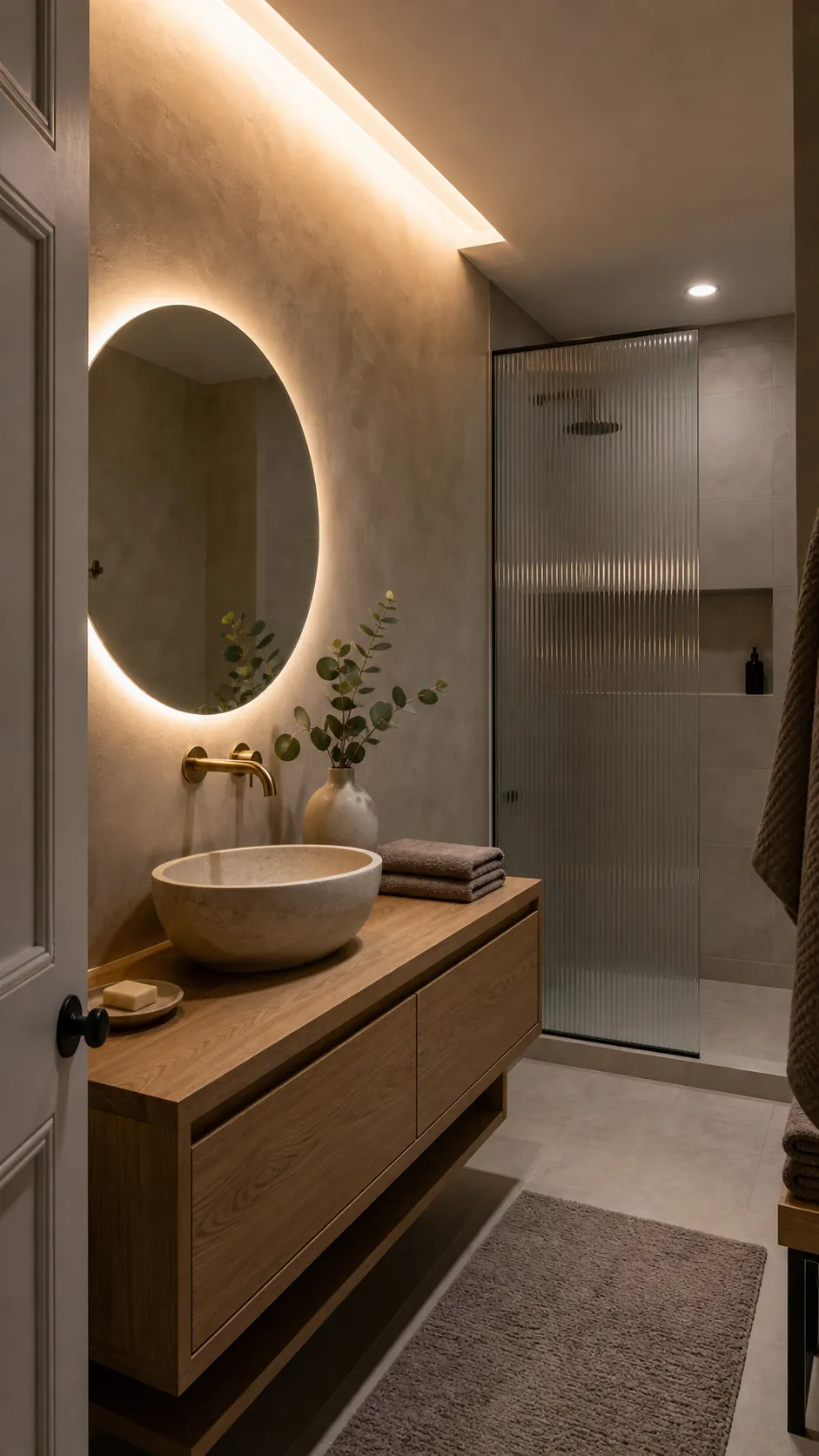
Warm white light around 2700K to 3000K often creates the cozy effect people want from a shower lamp, while a separate brighter task layer handles shaving, makeup, cleaning, and safe movement. Put the two layers on separate controls so you do not have to choose between atmosphere and visibility.
Try Rechargeable Sconces Only in a Truly Dry Area
Rechargeable wall sconces can be useful renter-friendly bathroom lighting when they stay well away from the tub, shower, sink splash, and condensation-heavy surfaces. Mount them according to the manufacturer’s instructions and never assume “cordless” means waterproof. If the documentation does not approve bathroom use or the specific exposure, choose another location.
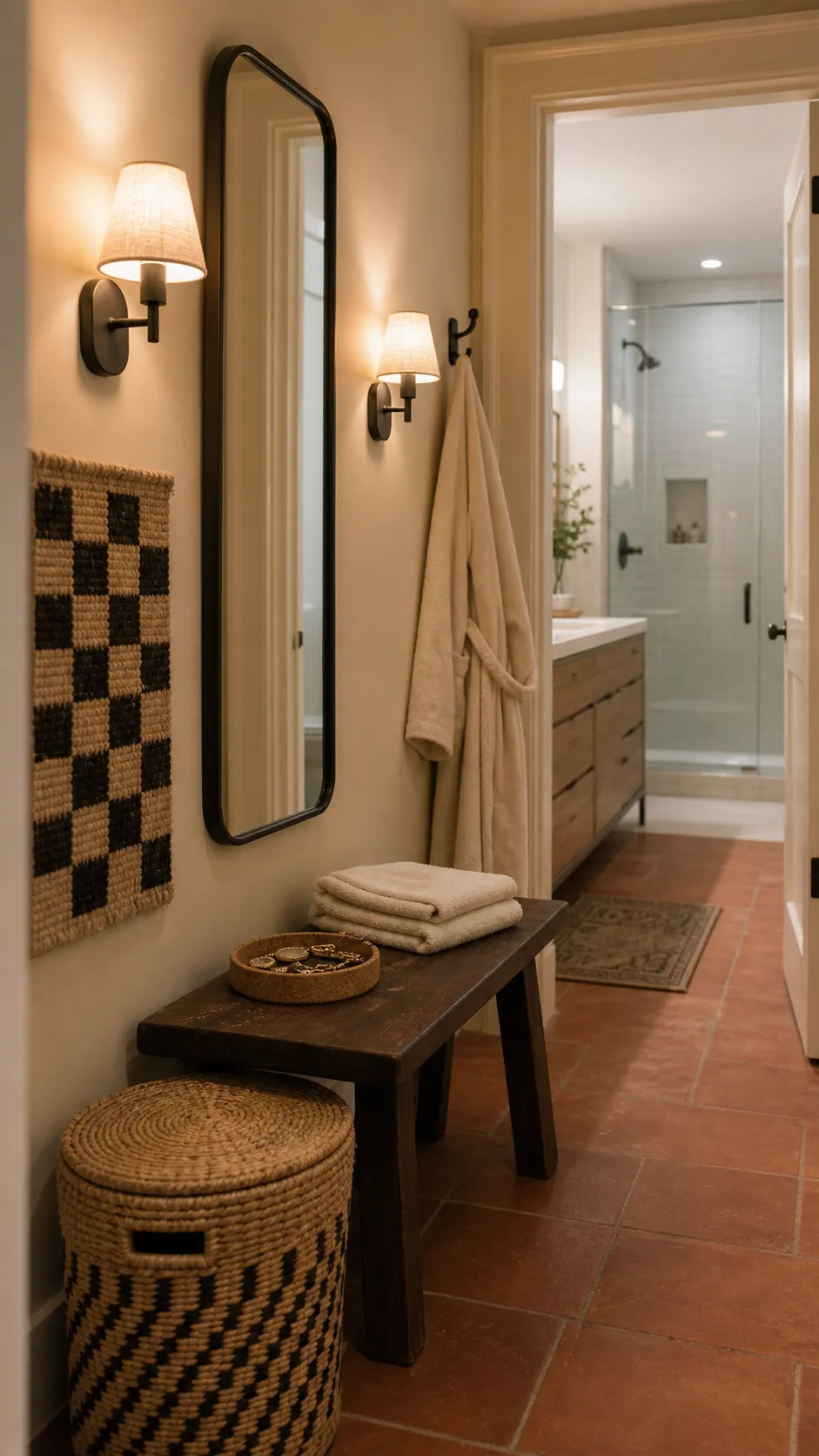
Recharge the light outside the bathroom on a dry surface, inspect it for swelling or damage, and keep its charging port closed when provided. A removable sconce near the door or on a dry vanity-side wall can give the room a lamp-like glow while leaving the shower zone to listed fixed fixtures.
Let a Dry-Zone Table Lamp Style the Room
In a large bathroom with a genuinely dry furniture zone, a small lamp can create the trend’s collected look—but only if the product, receptacle, cord path, and placement comply with local requirements and the lamp cannot be touched from the tub or shower. It should never sit on a tub ledge, toilet tank, shower niche, floor beside the enclosure, or a cramped sink counter.
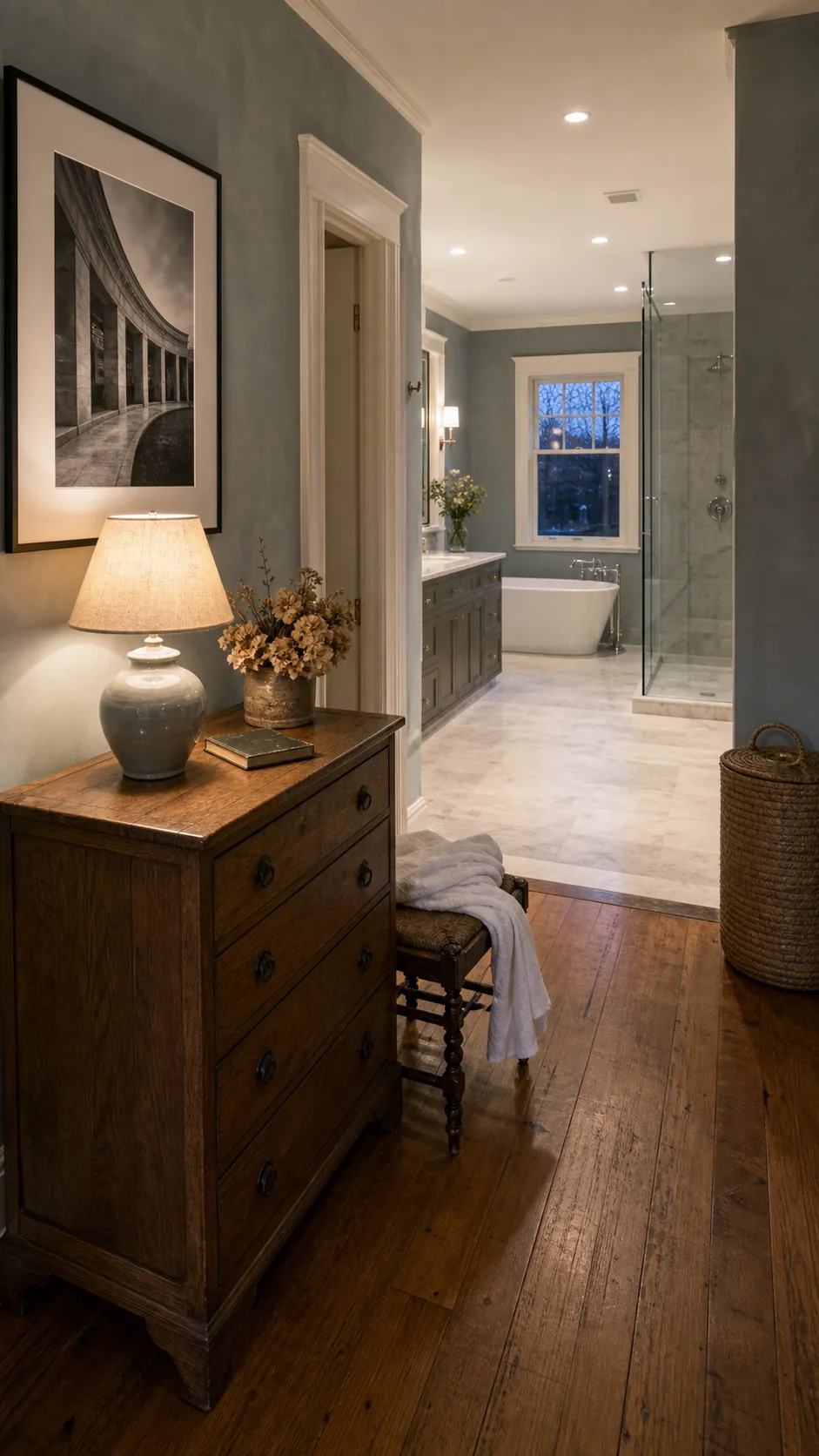
Use the lamp as an optional decorative layer, not the only illumination. Keep a clear, dry walking route and avoid extension cords. Small bathrooms generally do not have enough separation for this idea; a fixed sconce or indirect light is the better way to achieve the same warmth.
Make Small Bathrooms Cozy Without Making Them Dim
Darkness is not the same as mood. In a small bathroom, keep the shower and floor visibly illuminated, then reduce glare with frosted diffusers, shaded fixtures in approved locations, warm finishes, and separate dimming controls. A lit mirror can provide even task light while a wet-rated shower fixture gives safe visibility behind the curtain or glass.
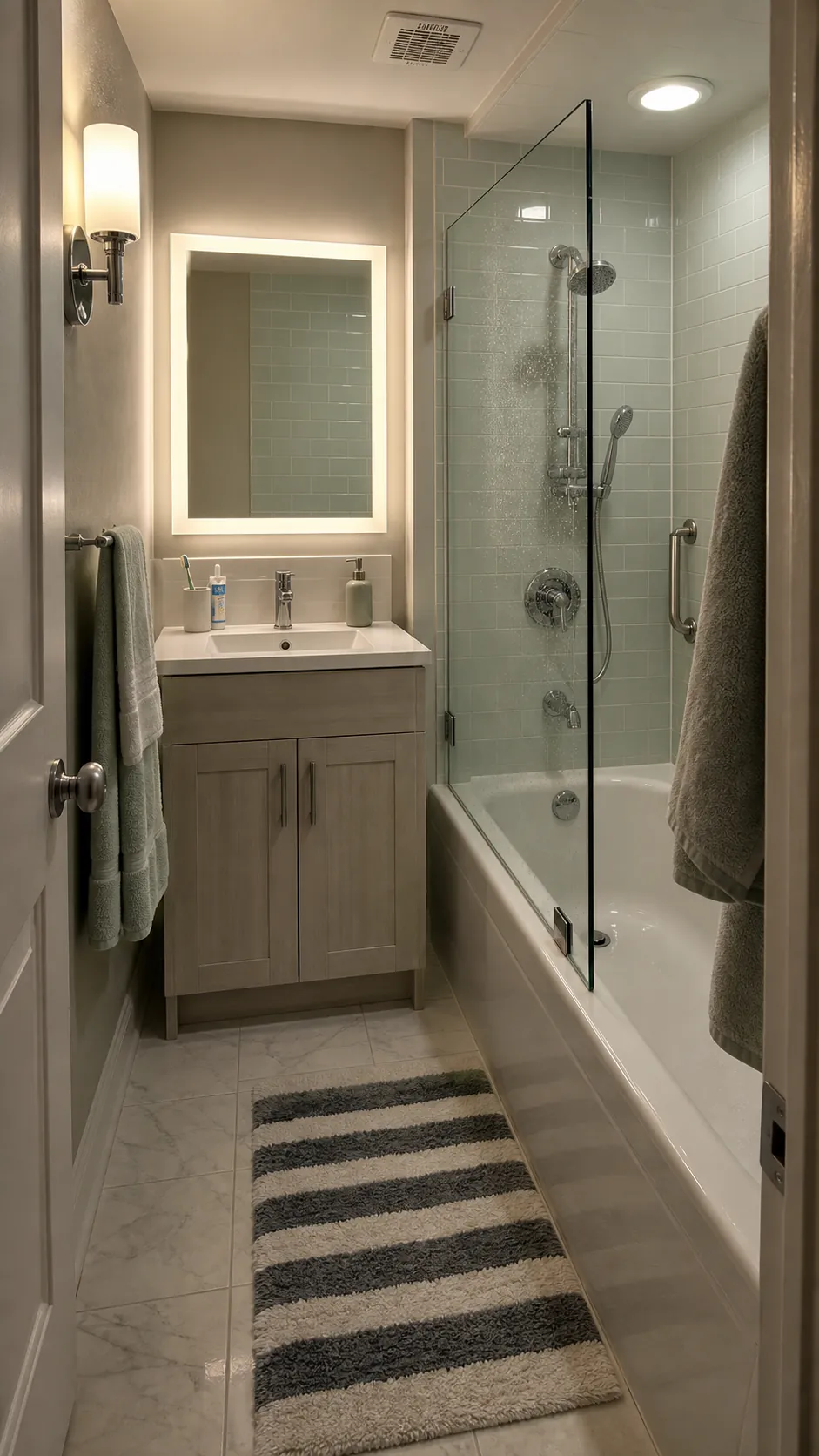
Reflect light from pale tile, a satin wall finish, and a large mirror instead of adding more portable objects. This makes the room feel softer while preserving the contrast needed to see water on the floor, steps, thresholds, and toiletries.
A Safe Shower-Lamp Look Comes From Layers
The best version of this trend is not a lamp in the shower. It is a lighting plan: a listed wet-location fixture where water can reach, useful task lighting at the mirror, and one warm atmospheric layer in an approved position. Confirm product markings and installation instructions, follow local code, and bring in a licensed electrician whenever wiring, wet zones, or clearances are uncertain.
If a light’s suitability is ambiguous, that ambiguity is the answer: do not use it there. Move the decorative idea to a dry zone and let purpose-built bathroom lighting create the glow where safety matters most.