
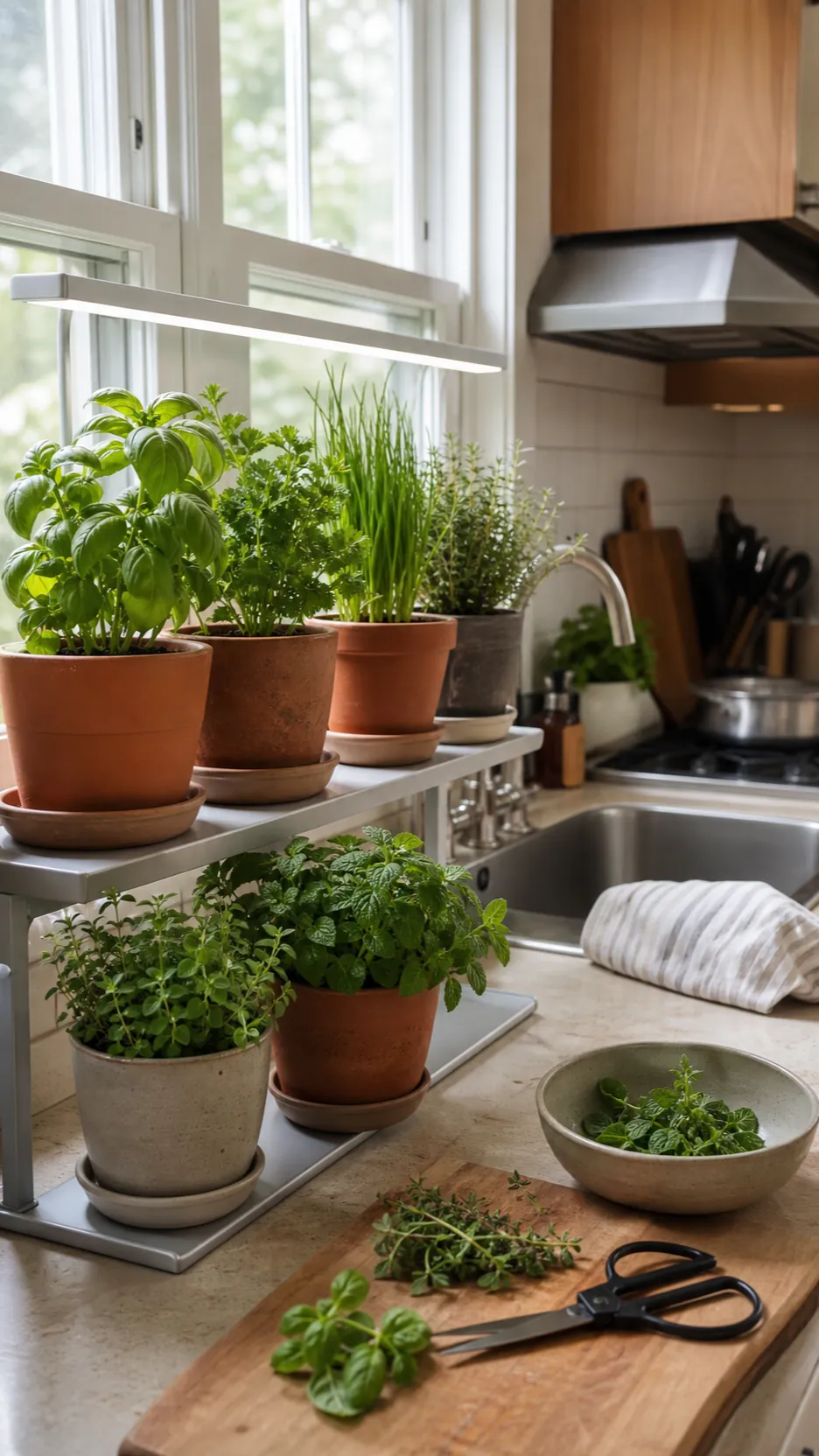
A kitchen herb garden indoor setup succeeds when it produces enough clean, flavorful growth to cook with—not when it simply keeps a few tiny plants alive on a windowsill. Basil that leans toward glass, rosemary sitting in wet soil, and mint swallowing a shared planter are not personal failures. They are signs that the layout does not match the plants.
The practical goal is a small rotation of herbs you use often, each in its own draining pot, close to good light but protected from cold glass, steam, grease, and countertop runoff.
Start with the meals you cook every week
Choose herbs by harvest demand. Chives, parsley, thyme, oregano, and mint can supply frequent small snips. Basil is useful but needs warmth, strong light, and enough leaf mass for the portions most recipes require. Cilantro is better treated as a succession crop: sow or replace it regularly rather than expecting one plant to produce forever.
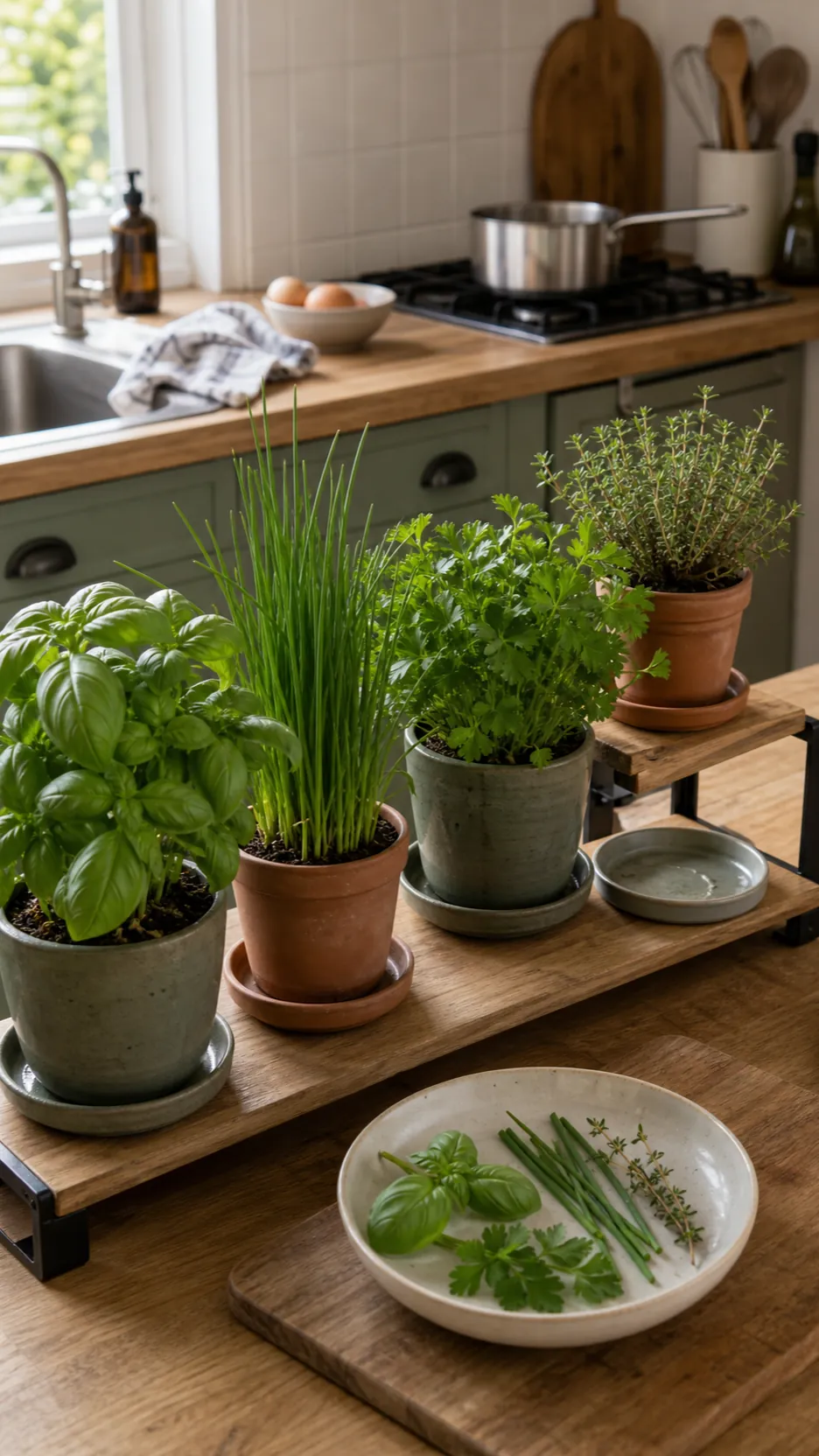
Begin with four plants tied to real meals: perhaps basil for pasta, chives for eggs, parsley for soups, and thyme for roasted vegetables. A focused garden is easier to light and inspect than ten novelty herbs. Add another plant only after you are harvesting from the first group.
Test the kitchen window through a full day
Light is the usual bottleneck. Track when direct sun actually touches the leaves. A south or west window may provide a strong base, but buildings, screens, roof overhangs, and winter sun angles change the result. If stems stretch and lean or new leaves stay small and pale, rotating the pot treats the shape—not the shortage.
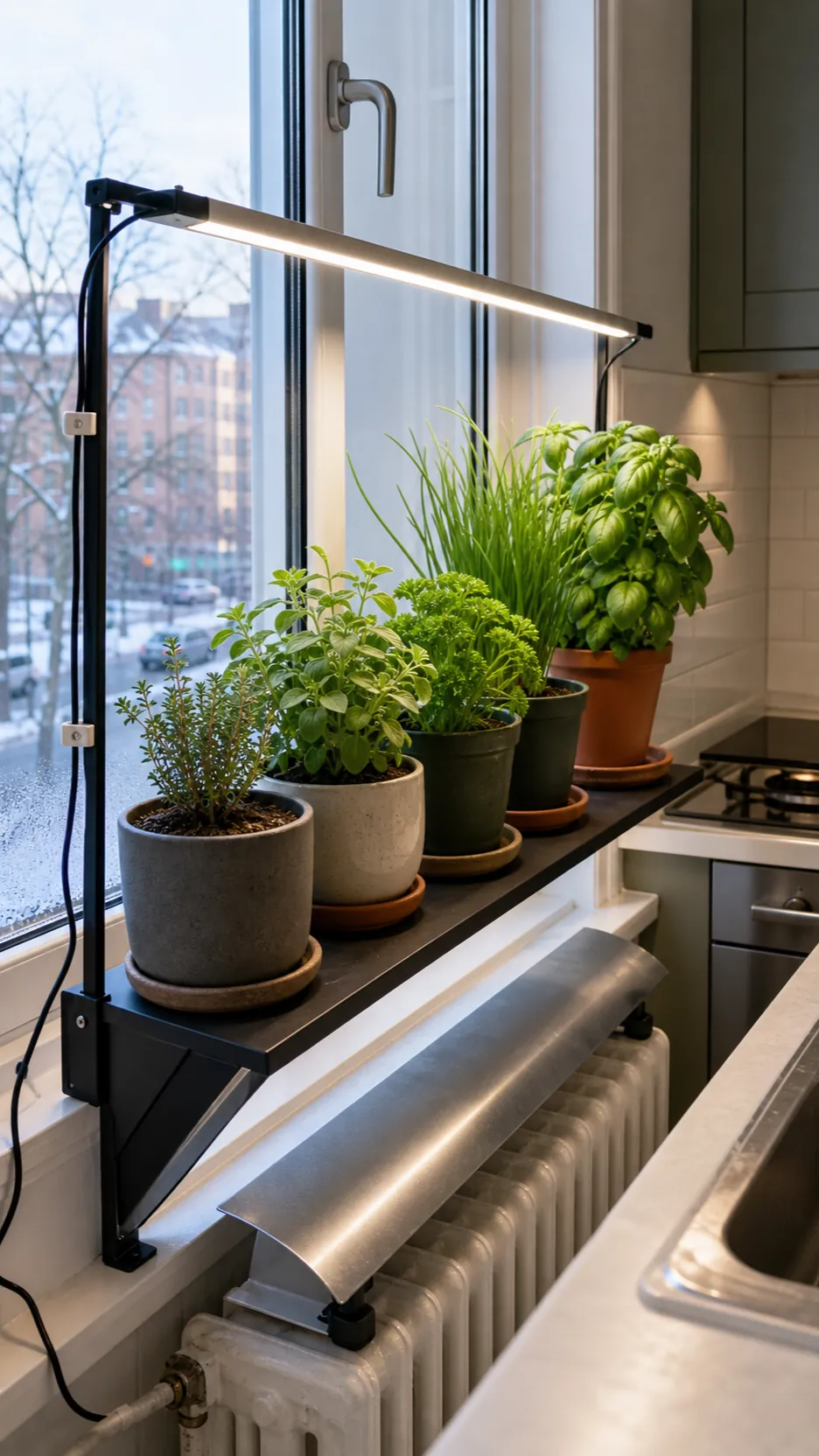
Add a balanced-white grow light on a timer when natural light is inadequate. Keep foliage from touching cold glass; basil can decline when nighttime temperatures at the window fall below what the room thermostat suggests. Also avoid hot radiators and forced-air vents that dry leaves and containers unevenly.
Protect the sill and give every pot drainage
Every herb pot needs a hole, well-draining soilless mix, and a waterproof tray. Unglazed clay saucers can transmit moisture to wood or stone, so use a nonporous liner beneath them. Water at the sink until excess flows freely, wait for dripping to stop, then return the pot. Empty any captured water promptly.
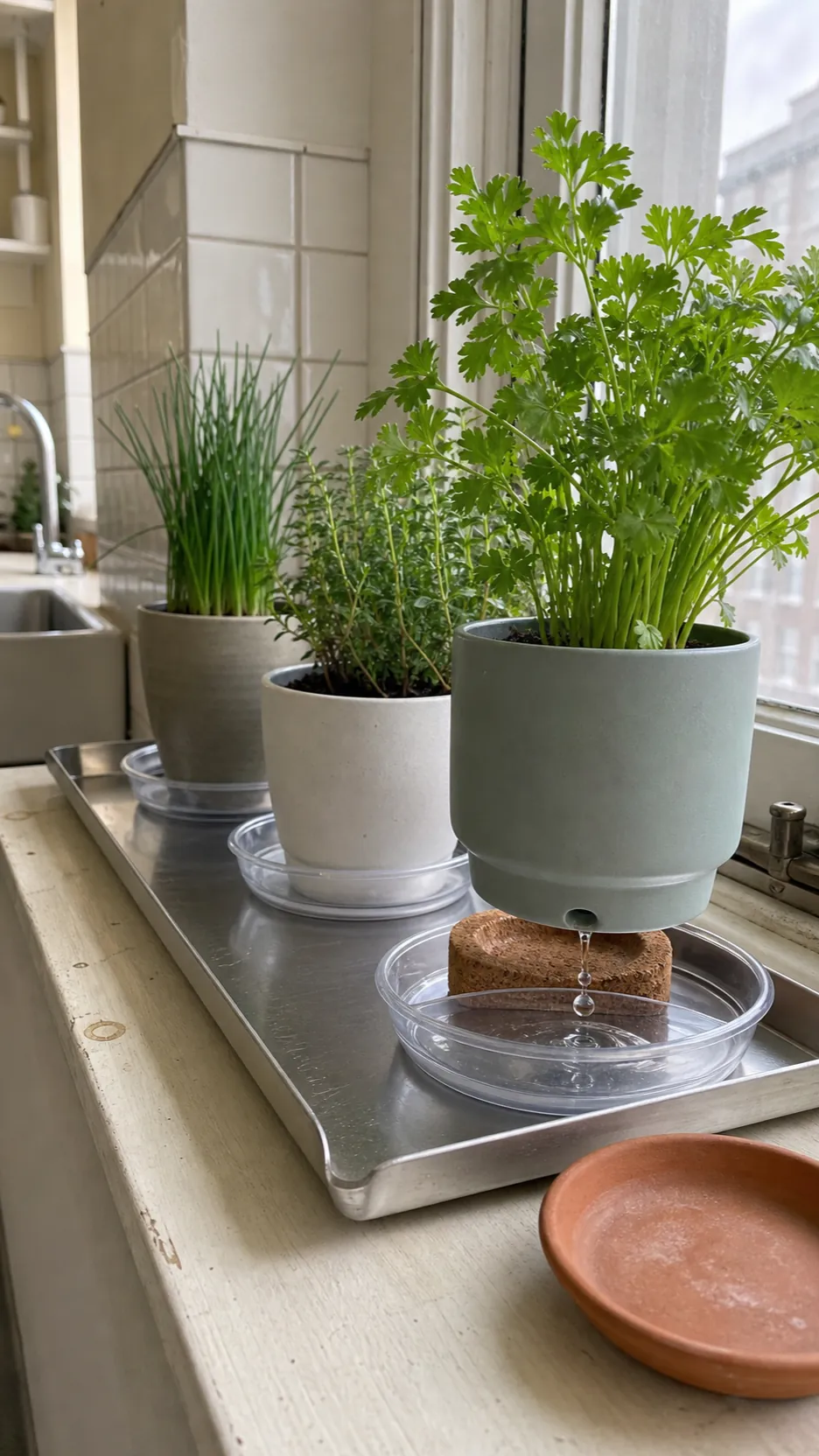
Keep basil and parsley more evenly moist while allowing thyme, oregano, sage, and rosemary to dry slightly. One long self-watering trough cannot make those preferences disappear. Separate pots also let you lift a plant to judge its weight and move a sick plant away immediately.
Give grocery-store herbs a reset
Supermarket basil is often many seedlings packed tightly for fast sale. It can exhaust water and root space quickly. Isolate new plants for observation, check leaf undersides and stem joints, remove decorative sleeves, and confirm drainage. If roots circle densely or emerge from holes, divide or repot into a modestly larger container with fresh mix.
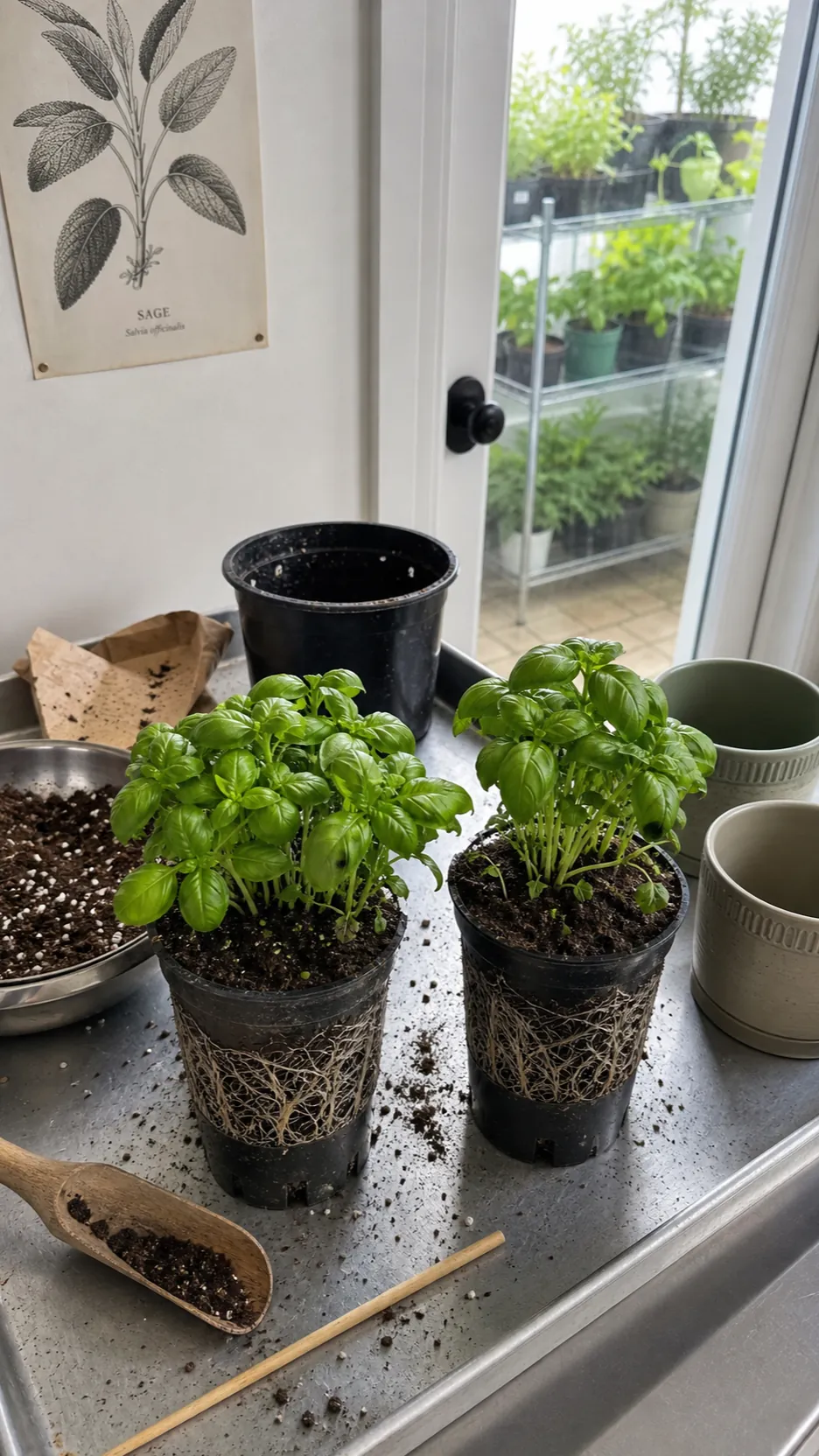
Do not place a new purchase beside established herbs on day one. Aphids, mites, whiteflies, thrips, and fungus gnats spread quickly in a tight kitchen grouping. Cultural controls—better light, correct watering, airflow, removal of damaged tissue, and isolation—should come before routine spraying on plants you plan to eat.
Create a clean harvest station
Place the garden close enough to use but outside the direct splash, steam, and grease zones around the sink and cooktop. Keep clean shears nearby. Cut leafy annuals just above a leaf pair to encourage branching, take only the top portion of woody perennials, and wash harvested leaves before cooking.
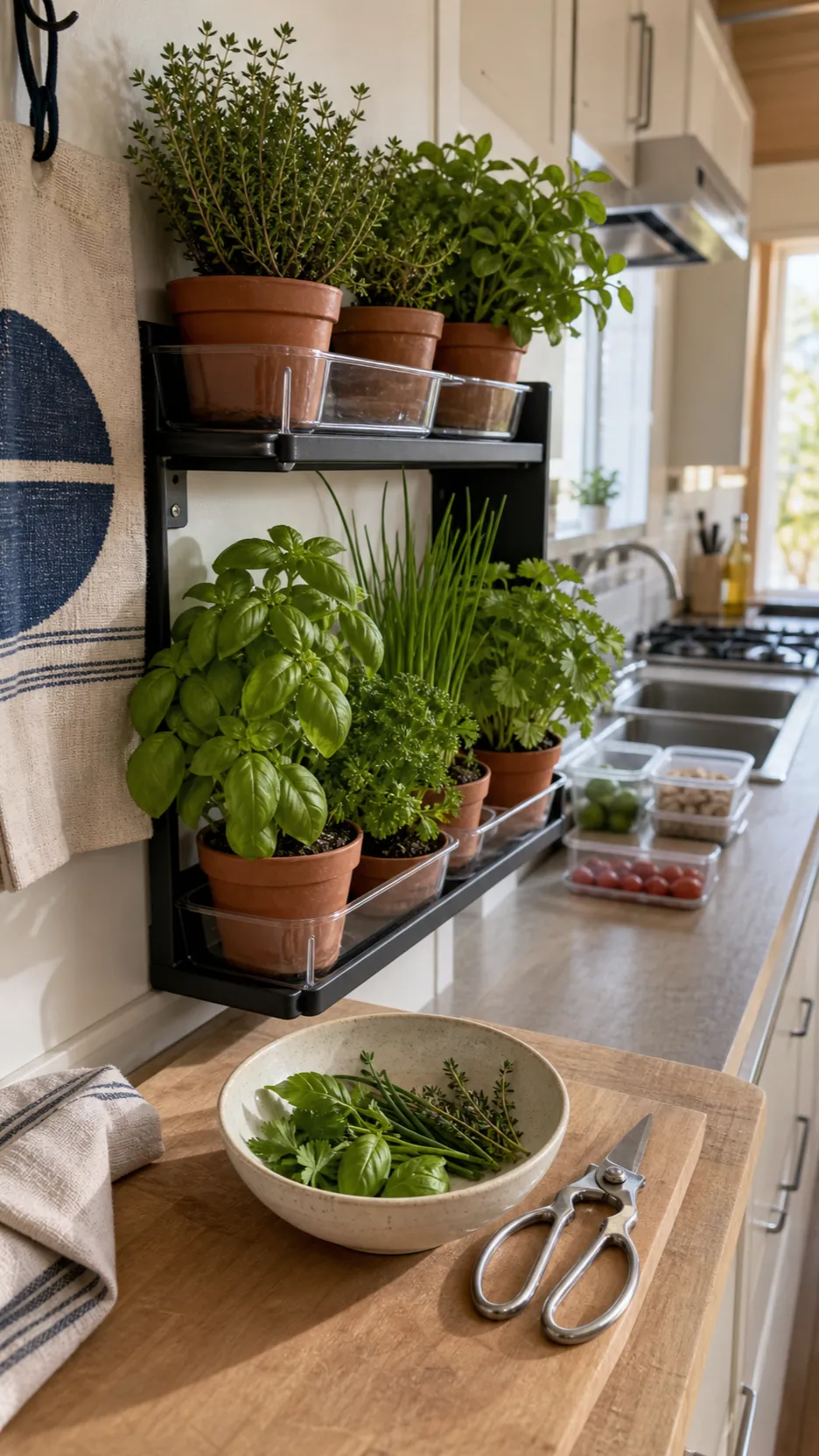
Frequent pinching keeps basil compact and delays flowering. Snip chives near the base. Harvest parsley from outer stems. For cilantro, sow small batches every few weeks if you use it often. That succession approach is more realistic than expecting one mature pot to meet every taco night.
Use a weekly kitchen care rhythm
Once a week, rotate pots, inspect leaf undersides, remove fallen material, wipe the sill or shelf, and check whether roots are escaping. Water based on each pot, not the calendar. Feed lightly during active growth; too much fertilizer can create soft growth with less concentrated aroma.
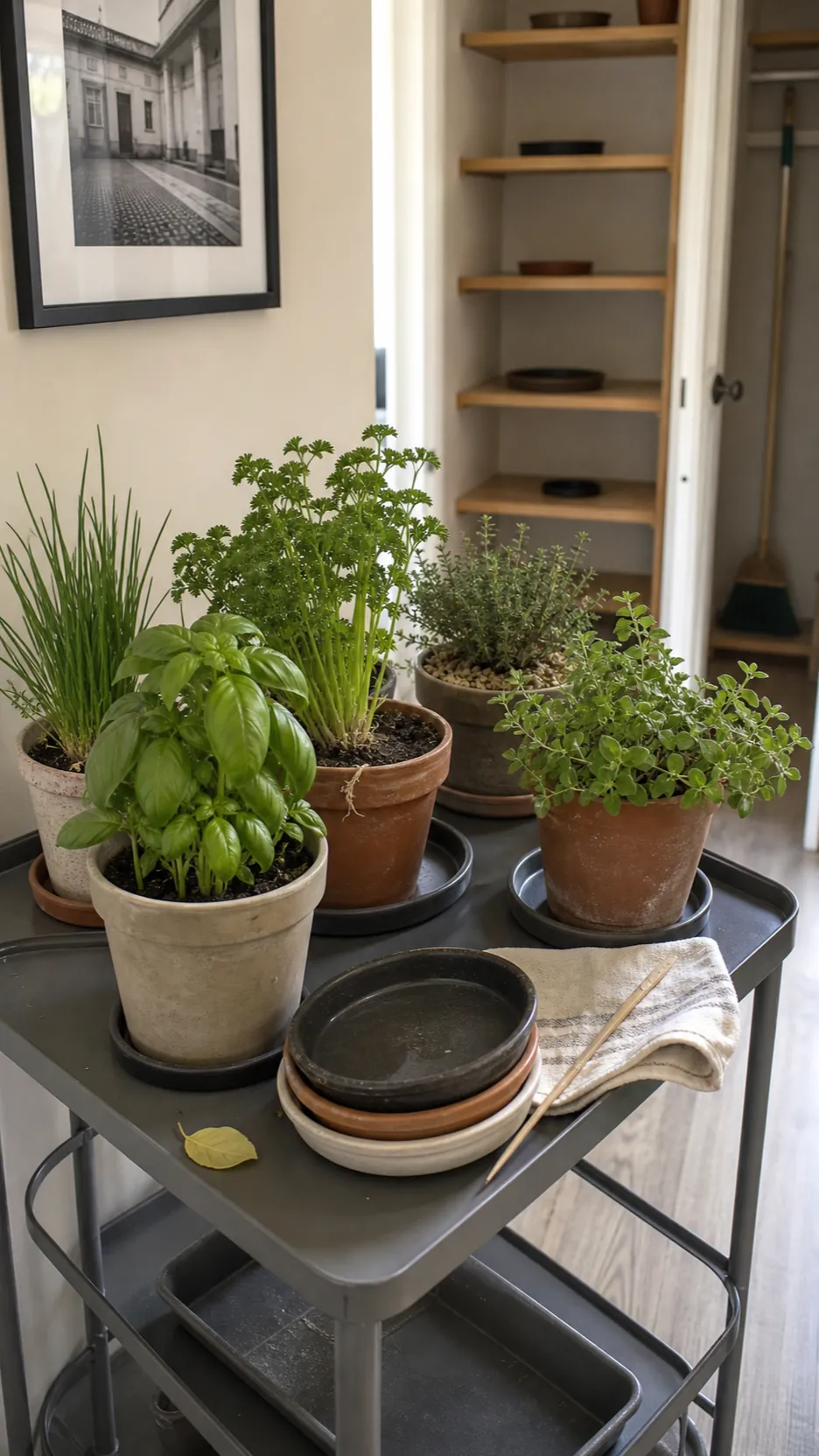
Replace annual herbs when they become woody, bolt, or stop producing useful leaves. Move perennial pots outdoors gradually during suitable weather if you can, then inspect them carefully before bringing them back in. A kitchen garden is a working pantry of living ingredients, not a permanent houseplant display.
A compact layout for a normal kitchen
- Four to six separate draining pots
- A waterproof tray or washable shelf near a bright window
- A neutral-white grow bar when daylight is insufficient
- Basil kept warm and away from cold glass
- Thyme and oregano allowed to dry slightly
- Clean shears and a small harvest bowl nearby
- A quarantine spot in another room for new plants
The best kitchen herb garden ideas make the right action obvious: you can see the soil, reach the leaves, carry each pot to the sink, and harvest before the plant becomes crowded. If the setup supports those habits, fresh herbs become part of dinner instead of another chore on the windowsill.