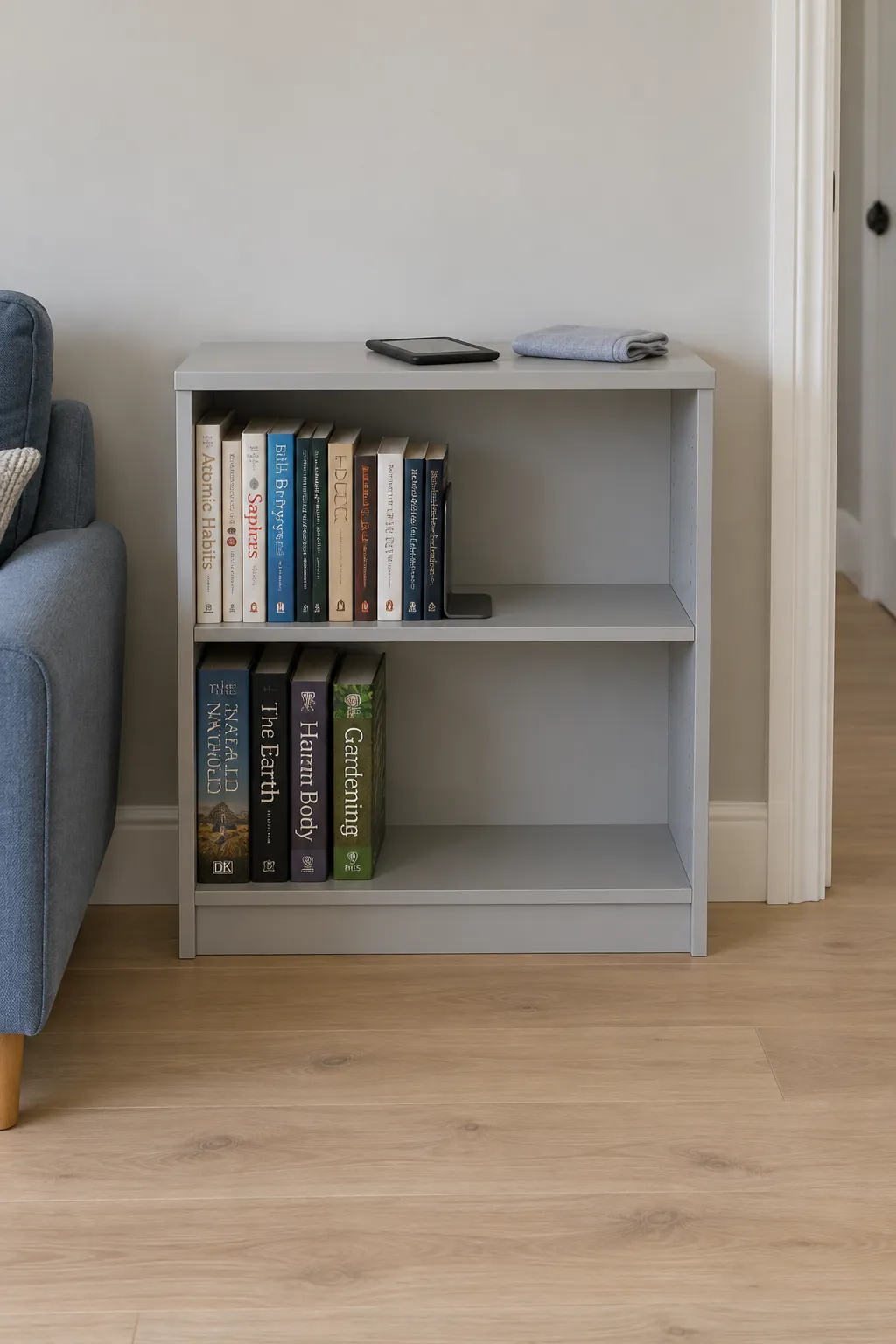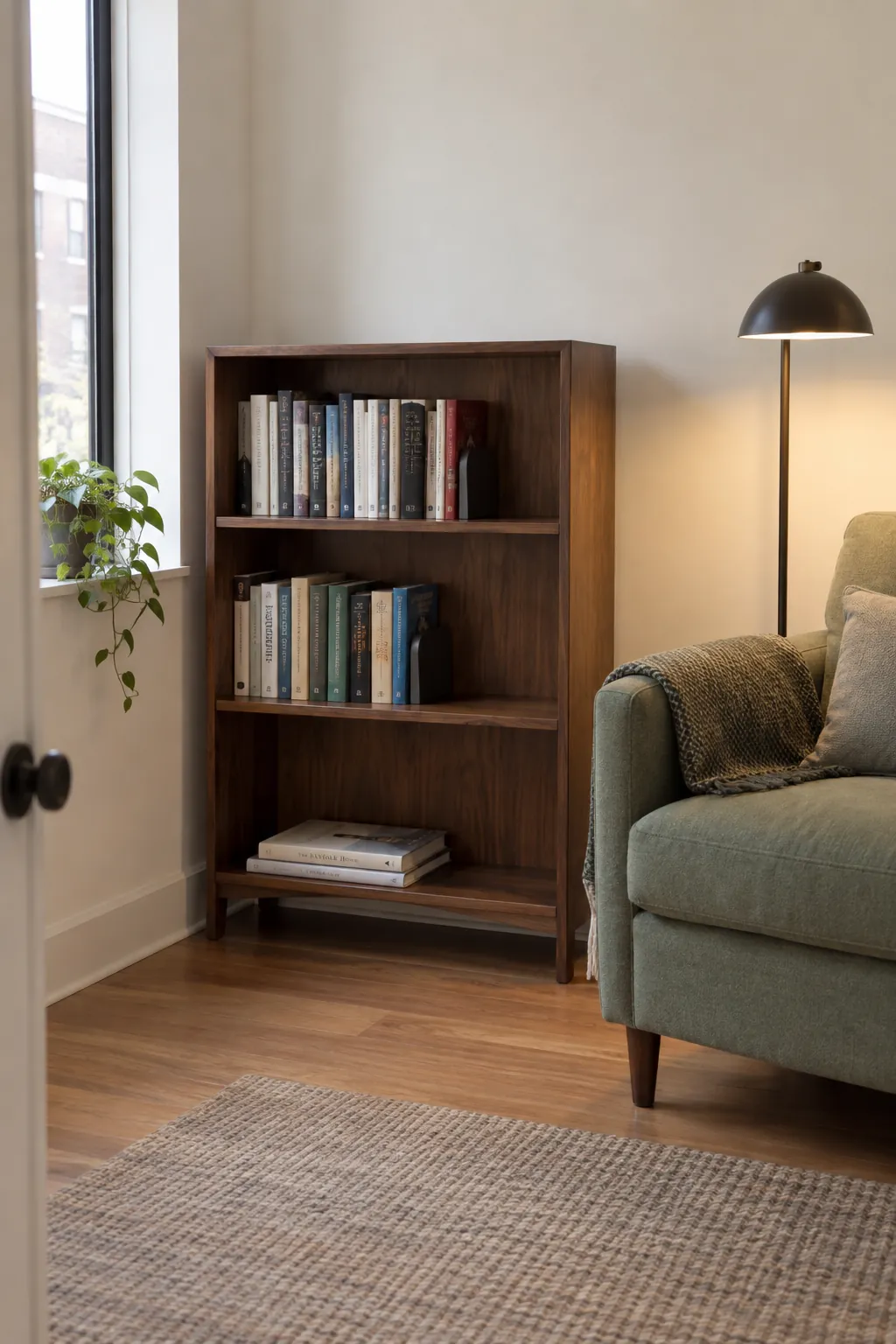
You can own only a few dozen books and still spend too long looking for one. The problem is often the arrangement: a favorite hidden behind taller volumes, a paperback trapped beneath a decorative stack, or a bedside pile with no limit. Give your books a clear home and an order that matches how you remember them.
Gather the collection before choosing storage
Bring together the books scattered across your desk, bedside table, living room, and bags. Separate borrowed books and current reading from the collection you intend to keep. Then identify duplicates or books you no longer want without treating every unread volume as something you must discard.
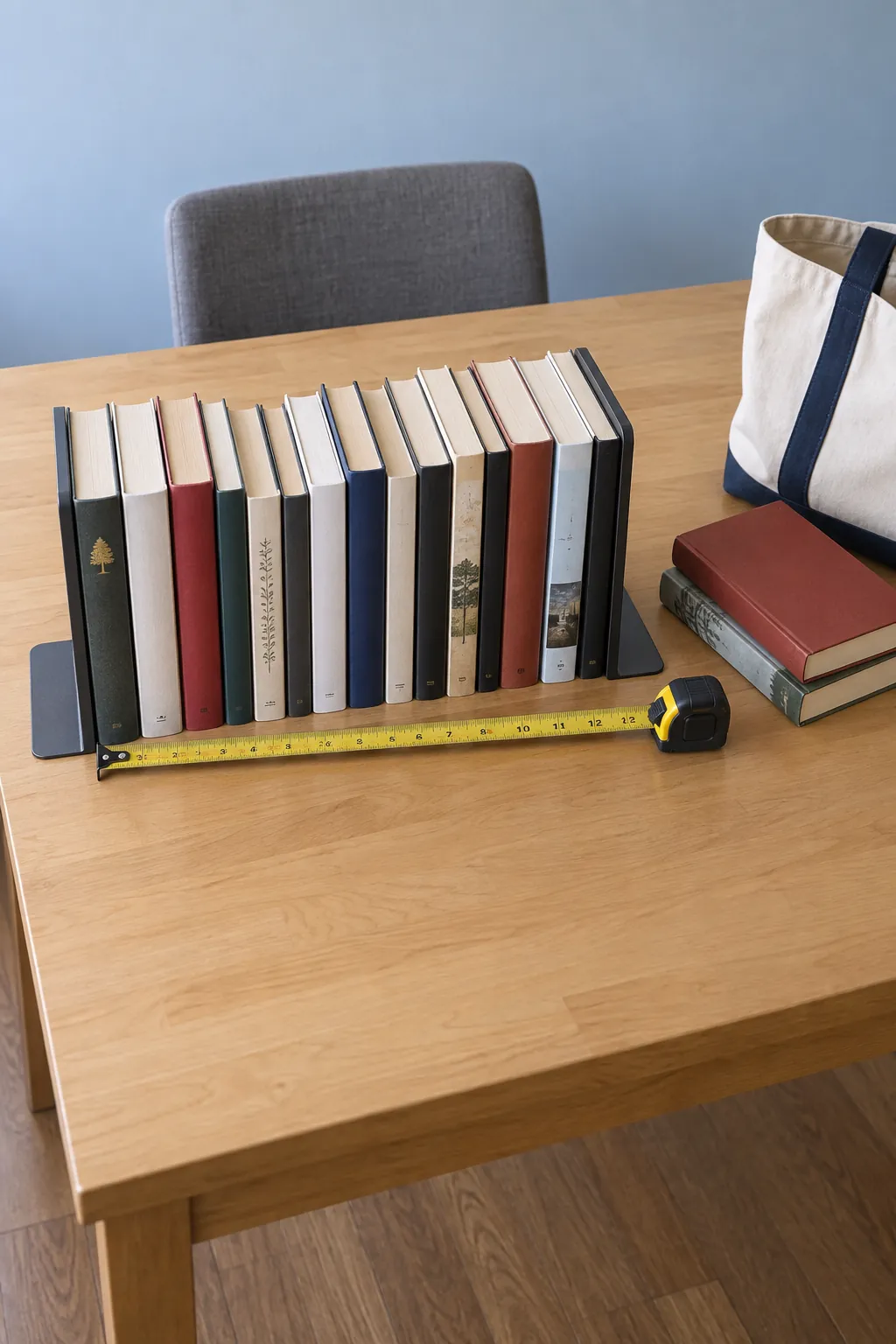
Measure the combined width of the books standing upright, along with the tallest height and deepest cover. These measurements give compact bookshelf ideas a useful constraint. Leave some spare width for easy removal and likely additions instead of buying a shelf that works only when every book is tightly wedged in place.
Pick an order you can remember
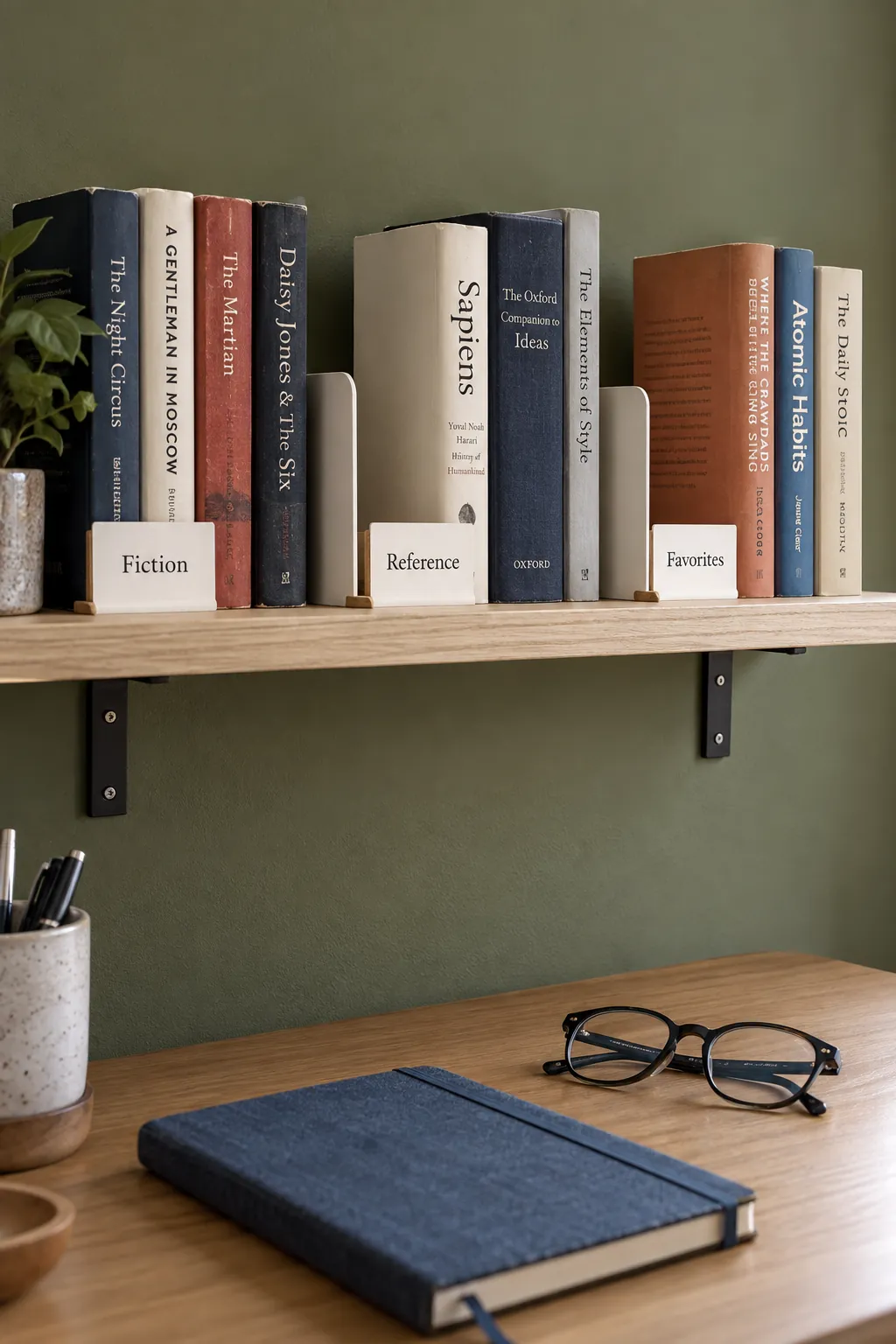
A small collection rarely needs a detailed cataloging system. Start with broad groups such as fiction, practical reference, and personal favorites, then sort within a group by author if that helps. Keep a series in reading order so the next volume is easy to find.
Books by color can work when you remember covers more readily than names, but it may separate related titles. Test the arrangement by finding several books without checking every spine. If another household member uses the collection, choose a rule they can understand too.
Fit the shelf to the books and the room
A short freestanding bookcase is often enough for small book storage, especially when its shelves adjust to different heights. Measure the available floor area and keep doors, vents, and walking routes clear. Tall narrow furniture needs appropriate anchoring, and every shelf must support the weight you plan to place on it.
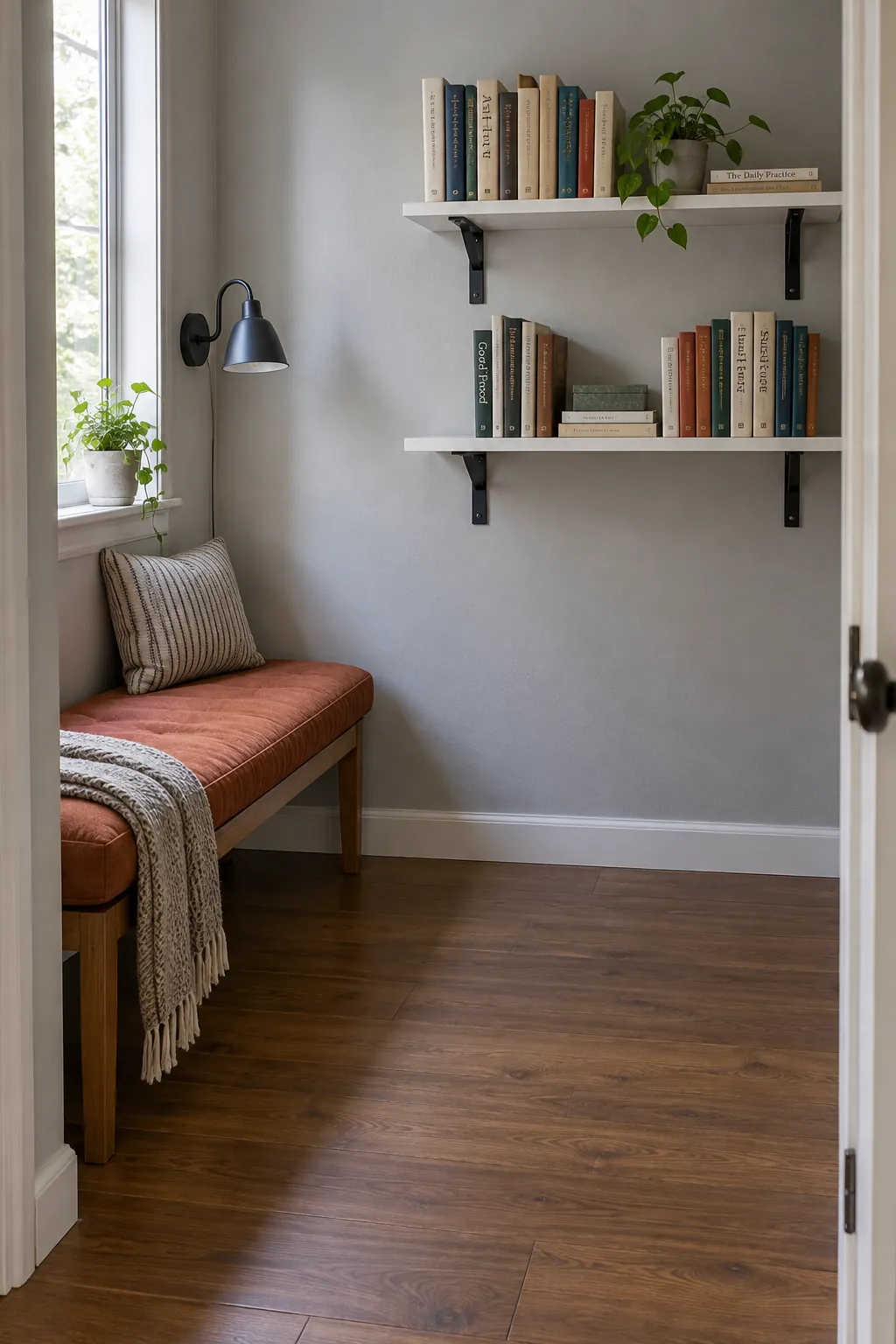
Floating book shelves can preserve floor space, but their brackets, fixings, and wall construction must be suitable for loaded books. Follow the manufacturer’s installation instructions and weight limits rather than estimating from the shelf’s appearance. In a rental, check drilling permission before choosing wall mounted storage.
Choose a dry indoor location away from direct sunlight, heaters, and likely splashes. A home library nook does not need an entire room; it needs a stable place where the books remain comfortable to reach and protected from routine damage.
Support short rows and give large books their own space
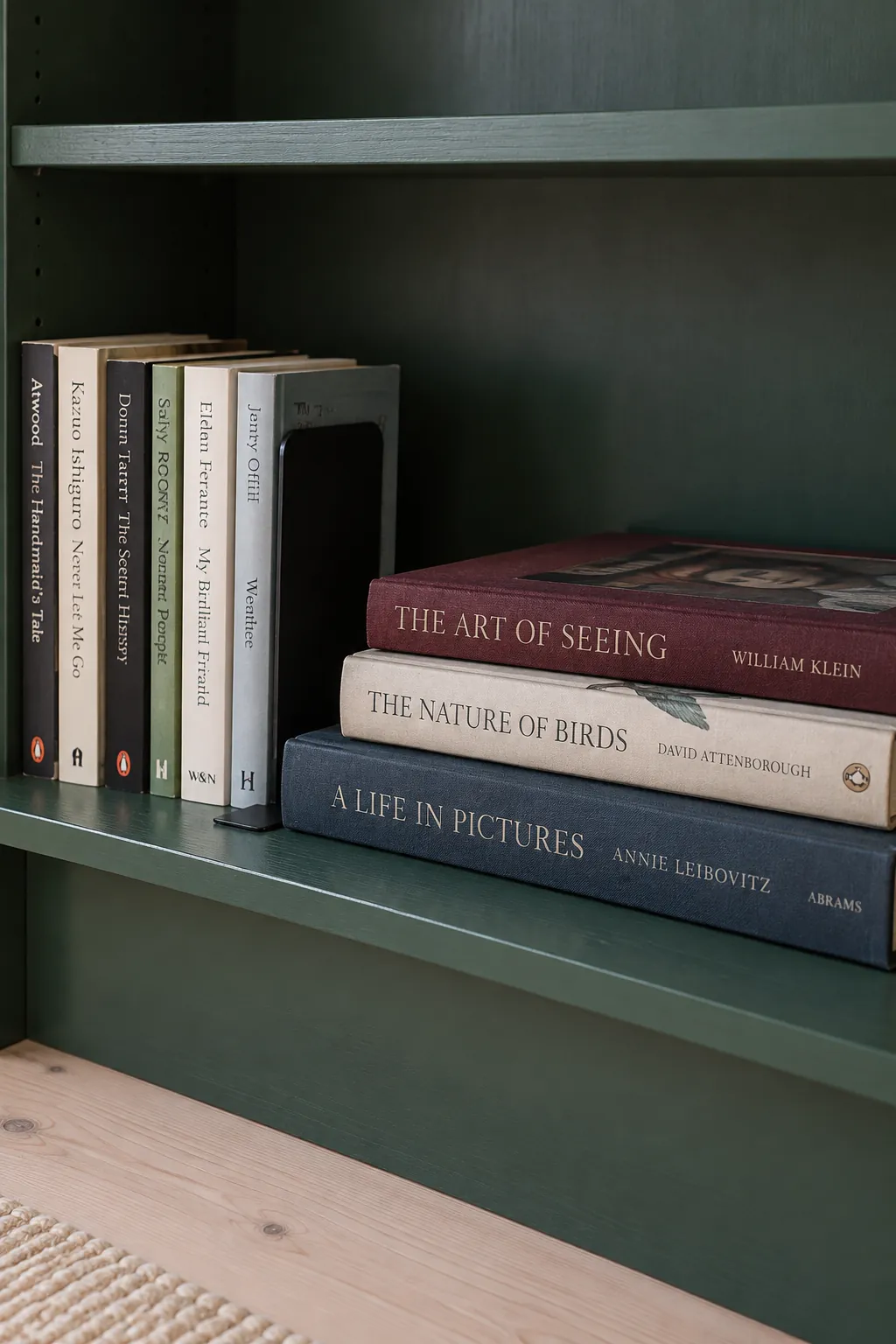
Use bookends to keep a short row upright without compressing the covers. Slide neighboring volumes gently aside when removing a book instead of tugging at the top of its spine. Avoid leaving a large gap that allows the whole row to lean sharply.
Store oversized books on a shelf that supports their full depth. A few large volumes can lie flat in a short stable stack when upright storage is unsuitable, but do not put a heavy stack on top of small paperbacks. Keep the books you use often out of the bottom of a pile.
Separate current reading from permanent storage
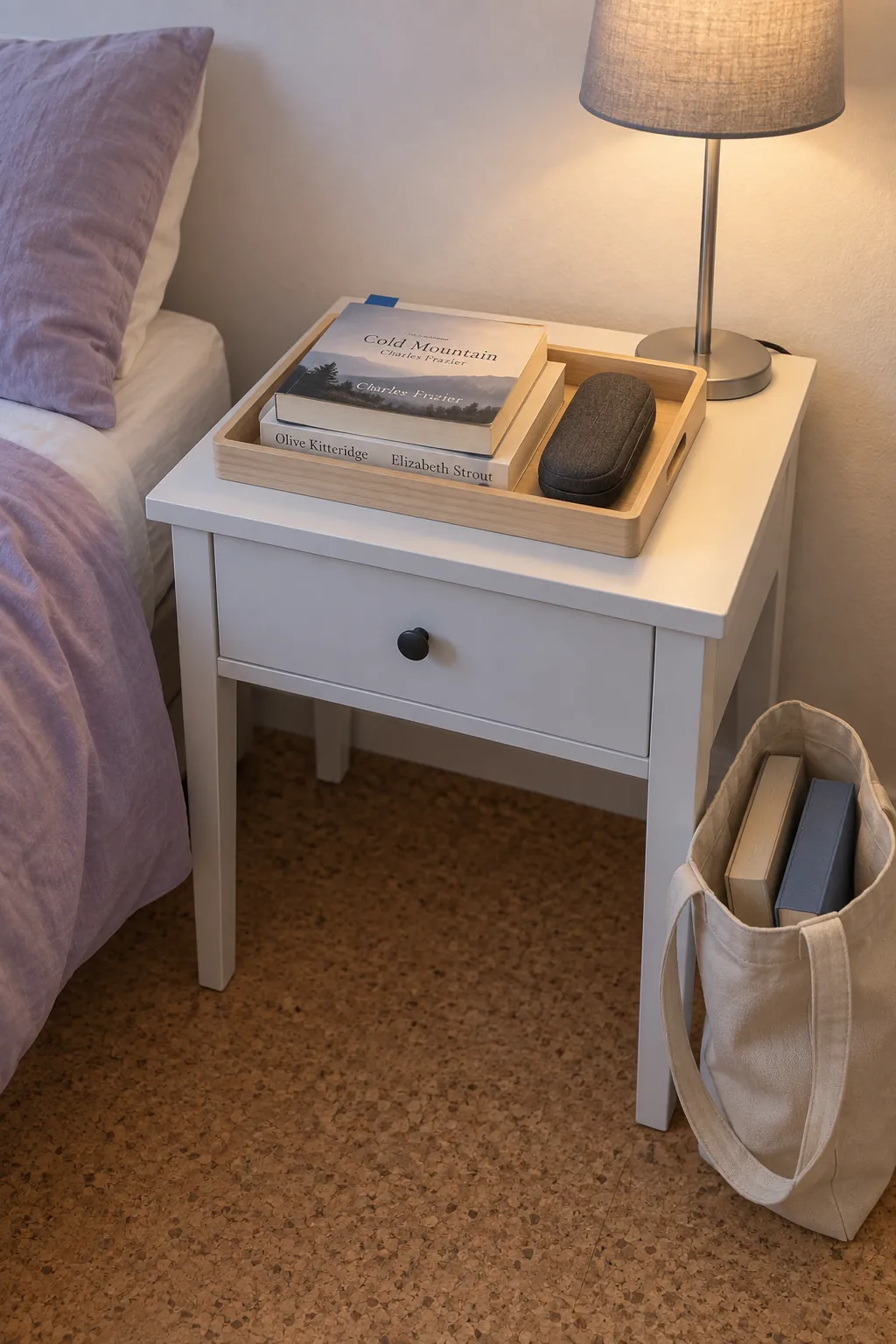
Give current reading one small tray, shelf section, or cart tier near the place you actually read. Choose a physical limit that suits your habits, such as the books that comfortably fit in that space. Return finished books to the main collection before adding another pile beside the chair.
For book cart organization, place heavier volumes on the lowest tier and keep a clear parking spot. A cart is useful when reading moves between rooms, but check its load limit and whether its wheels suit your flooring. Keep drinks on a separate stable surface to reduce the chance of splashing the books.
Borrowed books deserve a distinct return spot, such as a tote near your usual bag storage. A reminder in your calendar is more reliable for due dates than hoping the pile will catch your attention.
Leave room for the collection you actually use
When a shelf fills, review what belongs before adding another unit. Keep the titles you value, make a deliberate decision about books you are unlikely to revisit, and consider borrowing or digital editions for reading you do not need to own physically. A minimal book collection is a personal choice, not a requirement to reach someone else’s number.
Dust the shelf during your normal cleaning routine and check that bookends still support the changing row. If you repeatedly find books stacked in front of other books, adjust the available space or reduce the incoming pile. You should be able to choose something to read without unpacking the shelf first.