

A small kitchen usually does not fail because it is too small. It fails because the only useful counter turns into a parking lot for appliances, drying dishes, mail, spice jars, and the tools you meant to put away later. Then dinner starts with a negotiation: where can the cutting board go, where can the bowl sit, and where will the hot pan land?
The better goal is not a magazine-perfect kitchen. It is a kitchen where one clear meal prep space stays available when you actually need to cook. These small kitchen ideas focus on counter organization, storage, and cooking flow so daily cooking feels less like rearranging furniture and more like making food.
Start with one clear prep zone

The most useful meal prep space is rarely the largest counter. It is the counter that sits in the right place. In a compact kitchen, that usually means the stretch between the sink and the stove, or the closest surface to both. That spot handles the real sequence: wash, trim, chop, season, cook.
Treat that zone like a permanent working lane. Keep only the things that are active for the meal there: cutting board, knife, towel, scrap bowl, and ingredients. Everything else has to earn its place somewhere nearby but not directly on the board path. If you can set down a board and a mixing bowl without moving three unrelated objects first, the kitchen already works better.
- Store knives, towels, and salt within reach of the prep zone.
- Move decorative jars, extra mugs, and unopened groceries out of the working lane.
- Keep a small bowl for scraps nearby so peels do not spread across the counter.
Move appliances away from the main counter
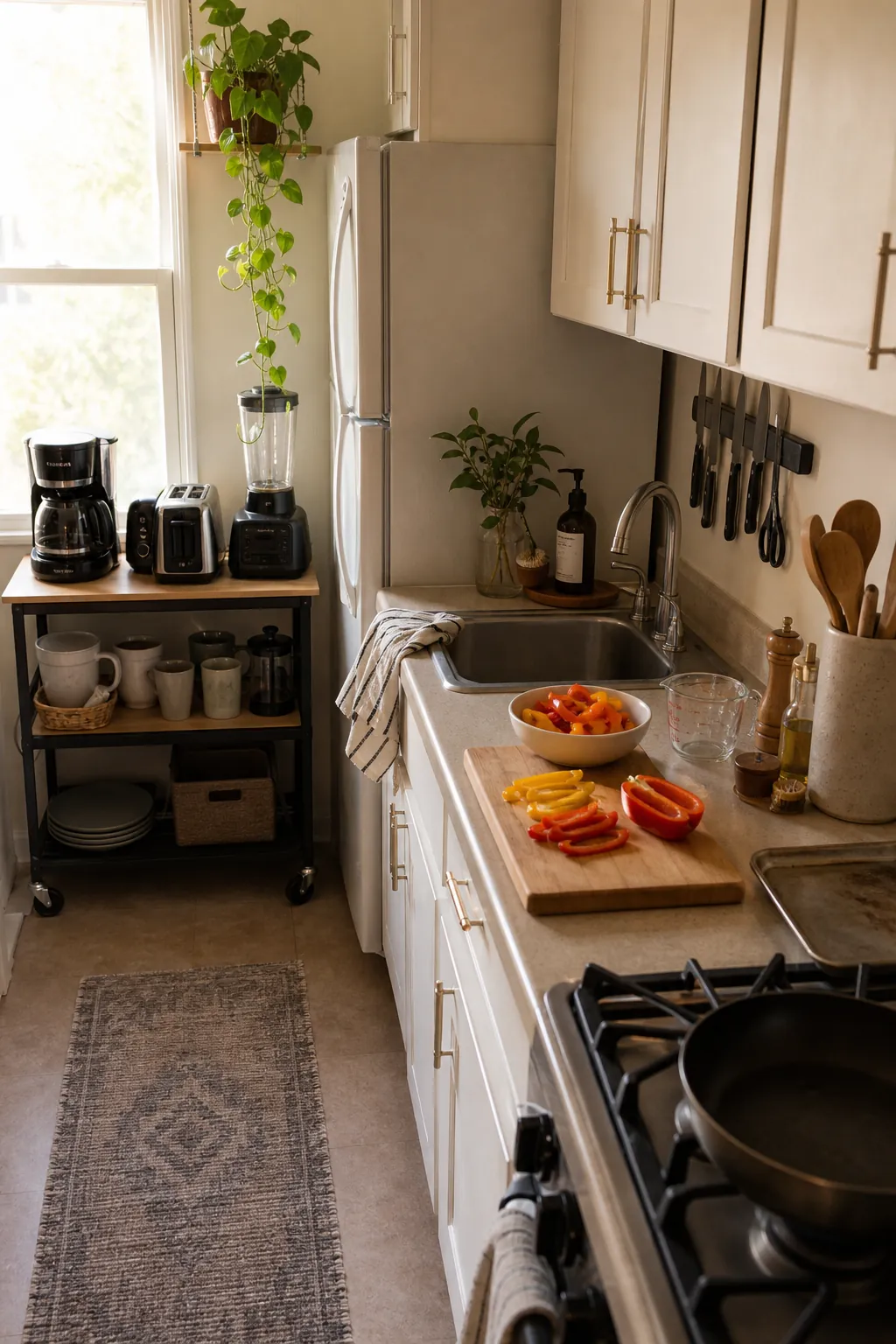
Appliances are the quiet counter thieves in a small kitchen. A toaster, coffee maker, blender, and air fryer can each look harmless alone. Together, they remove the only flat space wide enough for a board. The question is not whether you use them. The question is whether they need to live on the prime meal prep counter all day.
Group appliances by routine. Coffee gear can move to a narrow shelf, cart, or cabinet corner. Toasting can happen from a pull-out tray if outlet placement allows. Occasional appliances can live higher, lower, or outside the kitchen. The point is simple: the counter you need for cooking should not be reserved for machines that are idle most of the day.
Add a narrow staging surface

When the kitchen layout gives you almost no counter, a second surface can change the cooking flow. It does not need to be a full island. A shallow wall table, drop-leaf shelf, slim cart, or small butcher-block console can hold washed produce, lunch containers, a mixing bowl, or the sheet pan waiting to go into the oven.
This is not about adding furniture for looks. It is about giving meal prep a landing pad. In small-space cooking discussions, people often describe the same problem in different words: there is nowhere to put the next thing. A staging surface solves that. It separates active chopping from waiting ingredients, finished containers, and hot-pan landing space.
- Choose a surface shallow enough that it does not block the aisle.
- Use it for staging, not permanent clutter.
- Keep hooks or a small shelf nearby so the surface does not become storage by default.
Use vertical storage for the tools you reach for daily
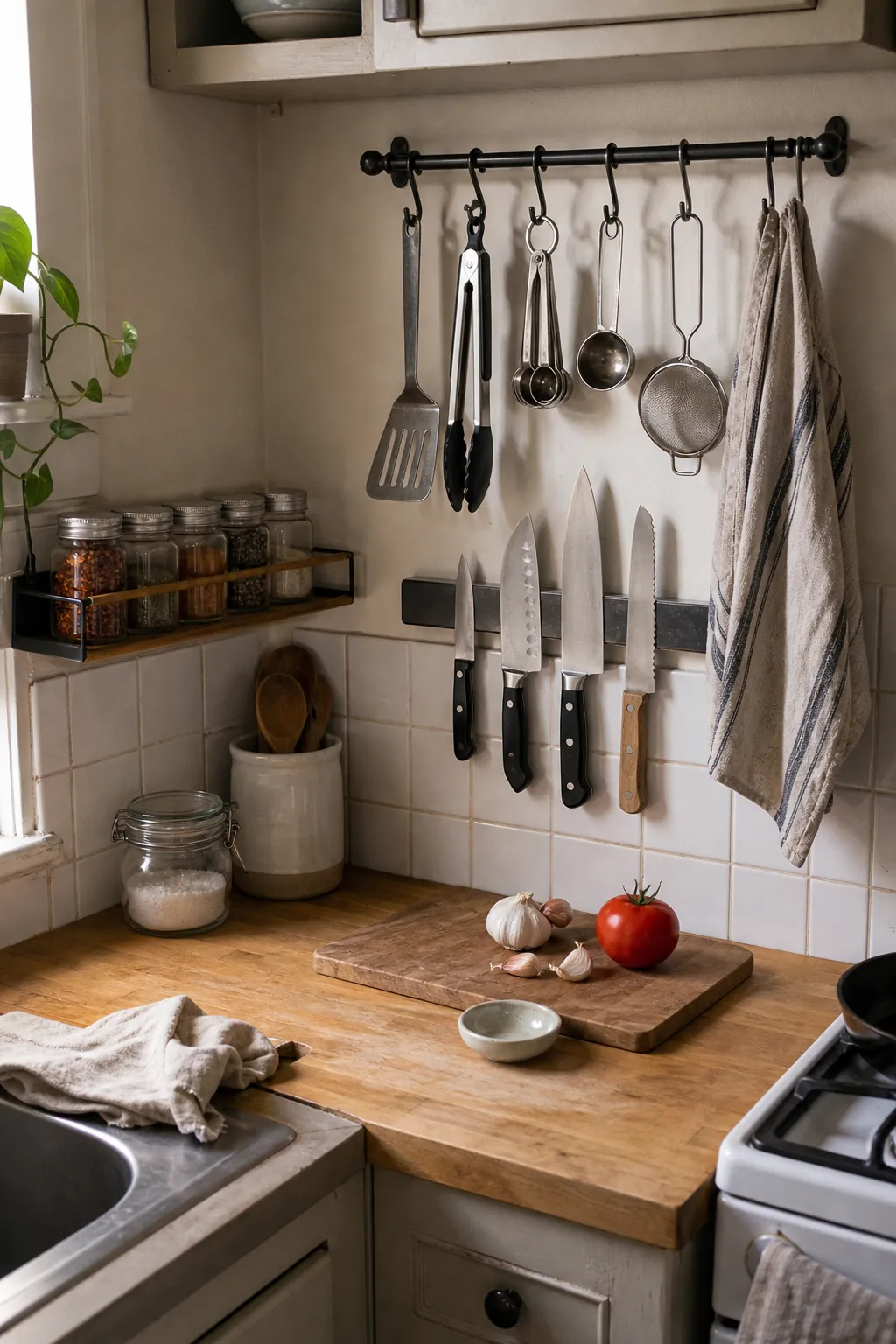
Kitchen storage gets more useful when it follows your hand movements. If you reach for tongs, measuring spoons, salt, and a knife every night, those items should be close to the prep zone. But close does not have to mean scattered across the counter. A rail, magnetic strip, small spice shelf, or inside-cabinet rack keeps the surface open while still keeping the tools available.
The common mistake is trying to store everything vertically. That turns the wall into visual noise and makes the kitchen feel busy. Store only the daily-use items where you can see them. Put specialty tools in drawers or bins. Good kitchen organization removes friction; it should not create a wall of decisions before you start cooking.
Stage ingredients in cooking order
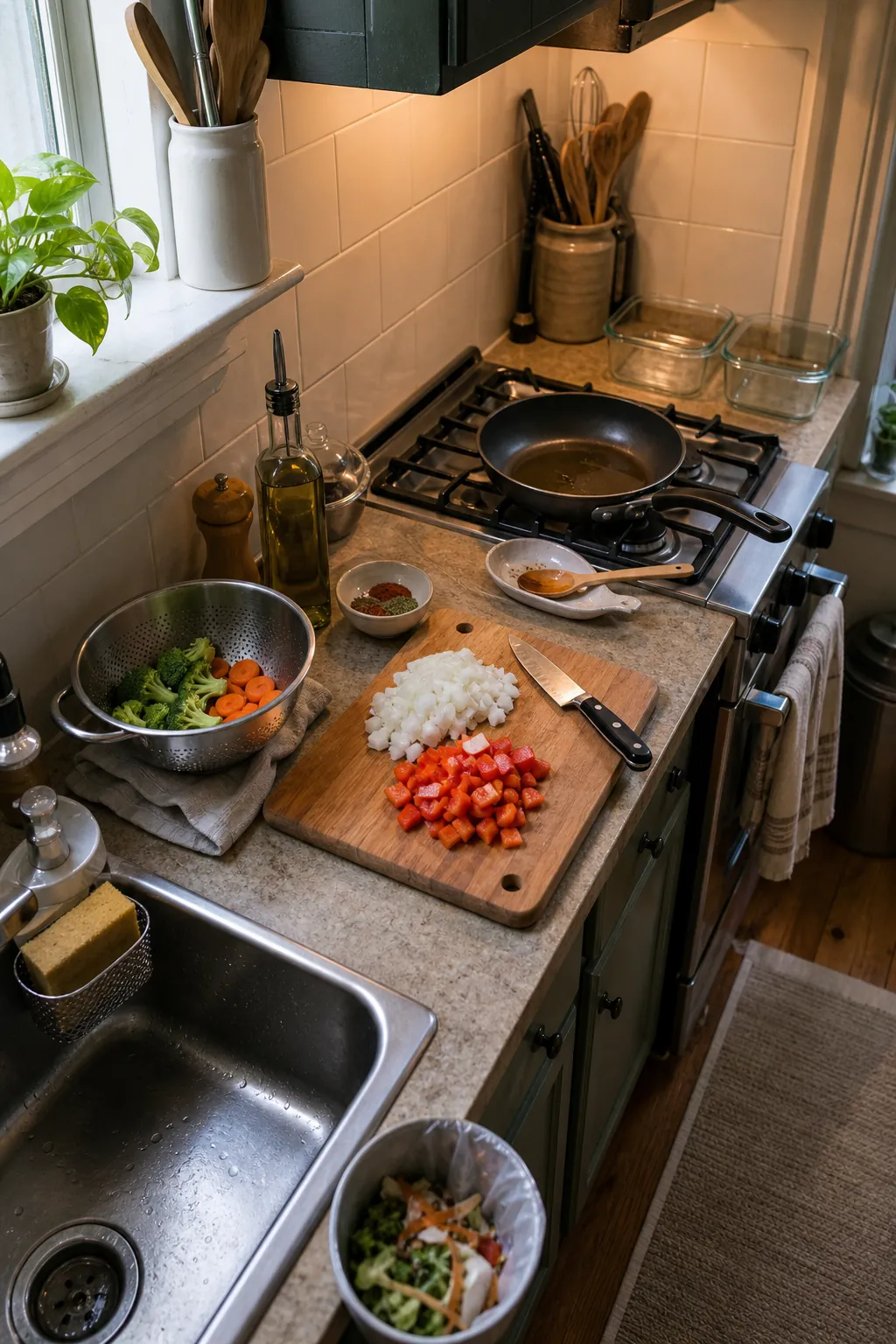
A compact kitchen punishes random movement. If the onion is behind the mixing bowl, the oil is across the room, and the containers are under a stack of pans, you spend more time shuffling than cooking. A better system is to set ingredients in the order they will move through the kitchen.
Start near the sink with rinsed produce. Move chopped ingredients toward the stove. Keep seasonings beside the board, not behind the pan. Put containers at the end of the line if you are prepping lunches or saving leftovers. This is a small version of restaurant mise en place, but it does not need to be fancy. The point is to make the next step obvious before your hands are messy.
Use temporary surfaces carefully
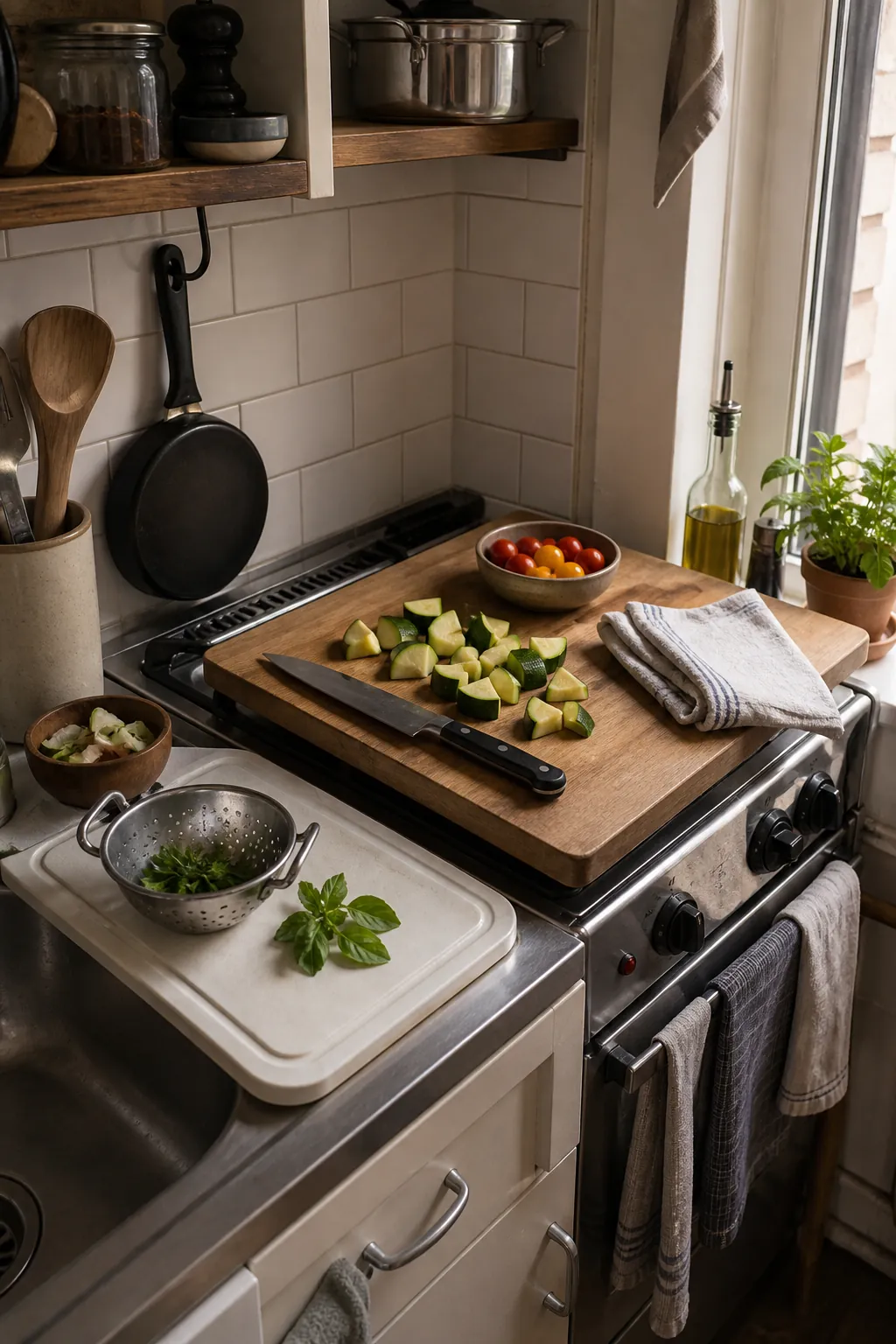
Stovetop boards, sink covers, and over-sink cutting boards can be genuinely helpful in a tiny kitchen. They turn dead space into a temporary work surface. They are especially useful when you need a place to chop vegetables before any burners are on, or when the sink is empty and the counter is full.
Use them with a practical rule: temporary surfaces are for prep, not multitasking. Do not use a board over active burners. Do not cover a sink you still need for rinsing. Do not let the board become a permanent storage shelf. The best small kitchen layout is flexible, but it still needs a safe sequence.
Store containers where leftovers actually happen
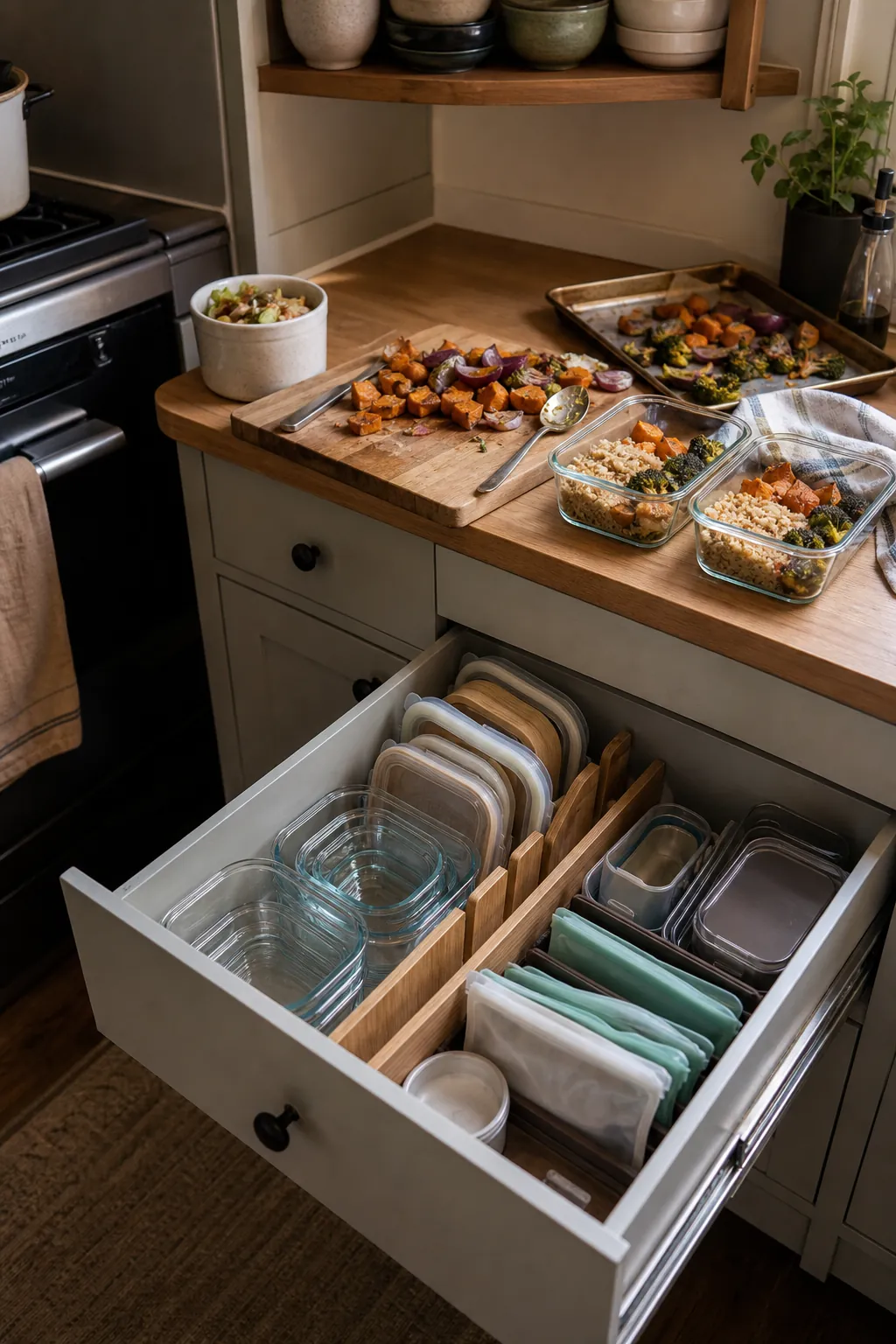
Meal prep does not end when the food is cooked. It ends when the leftovers are packed, the next lunch is ready, and the counter is clear again. If containers and lids live in different places, the final step becomes annoying enough that it gets delayed.
Store containers near the zone where you portion food. Keep lids upright instead of stacked in a mystery pile. Edit the set so lids actually match. A bamboo divider, simple bin, or lid rack can help, but the real win is location. Containers should live where the food lands, not where there happened to be an empty cabinet.
Choose compact tools that earn their space
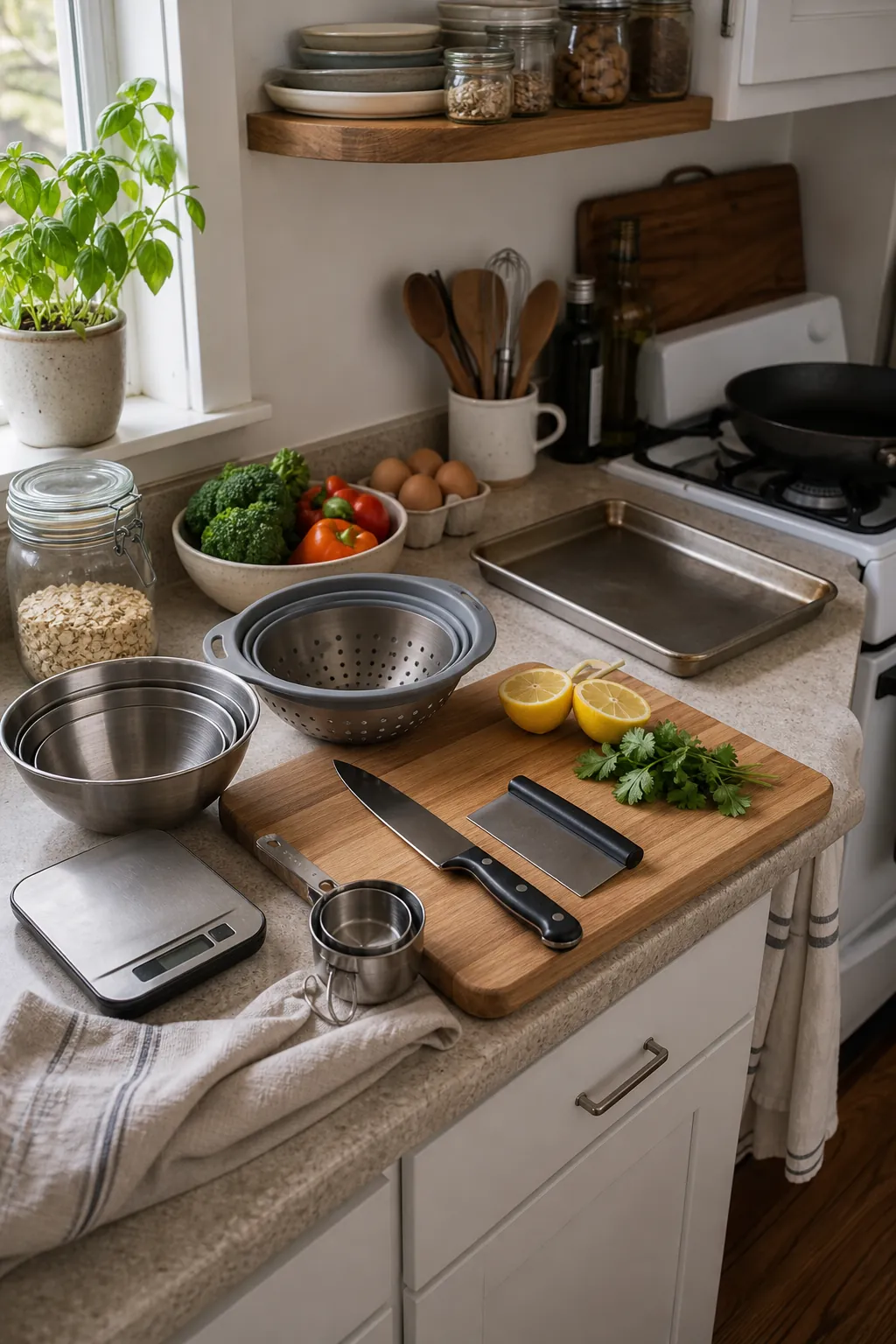
Small kitchens are not friendly to duplicate tools. Two half-useful gadgets take more space than one reliable tool. A compact cutting board, one good knife, nesting bowls, a half-sheet pan, a collapsible colander, and a bench scraper can handle a lot of daily cooking without taking over every drawer.
Before buying another organizer, ask what problem it solves during meal prep. Does it protect the clear counter? Does it reduce trips across the kitchen? Does it make cleanup faster? If not, it may be storage disguised as a solution. The most practical kitchen is not the one with the most helpers. It is the one where the next step has somewhere to happen.
The small-kitchen rule that matters most
A compact kitchen does not need to hold every task at once. It needs to let tasks move in order. Clear the prep zone, stage the waiting ingredients, keep daily tools close, and store containers where food actually gets packed. That sequence makes a small kitchen feel larger because the counter stops fighting you.
When dinner is easy to start, it is easier to cook at home. That is the practical test for every small kitchen idea: does it give meal prep a clear place to begin?