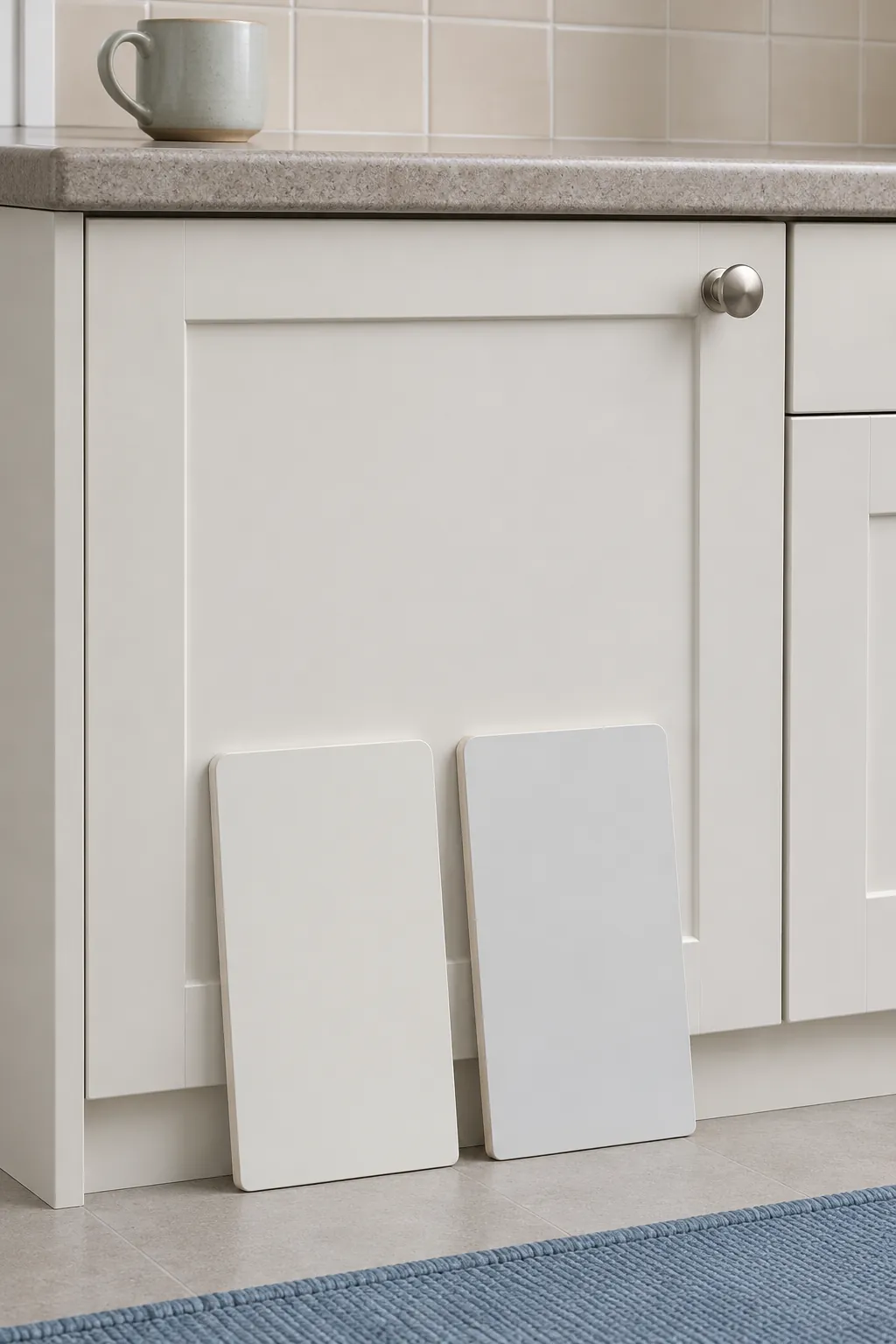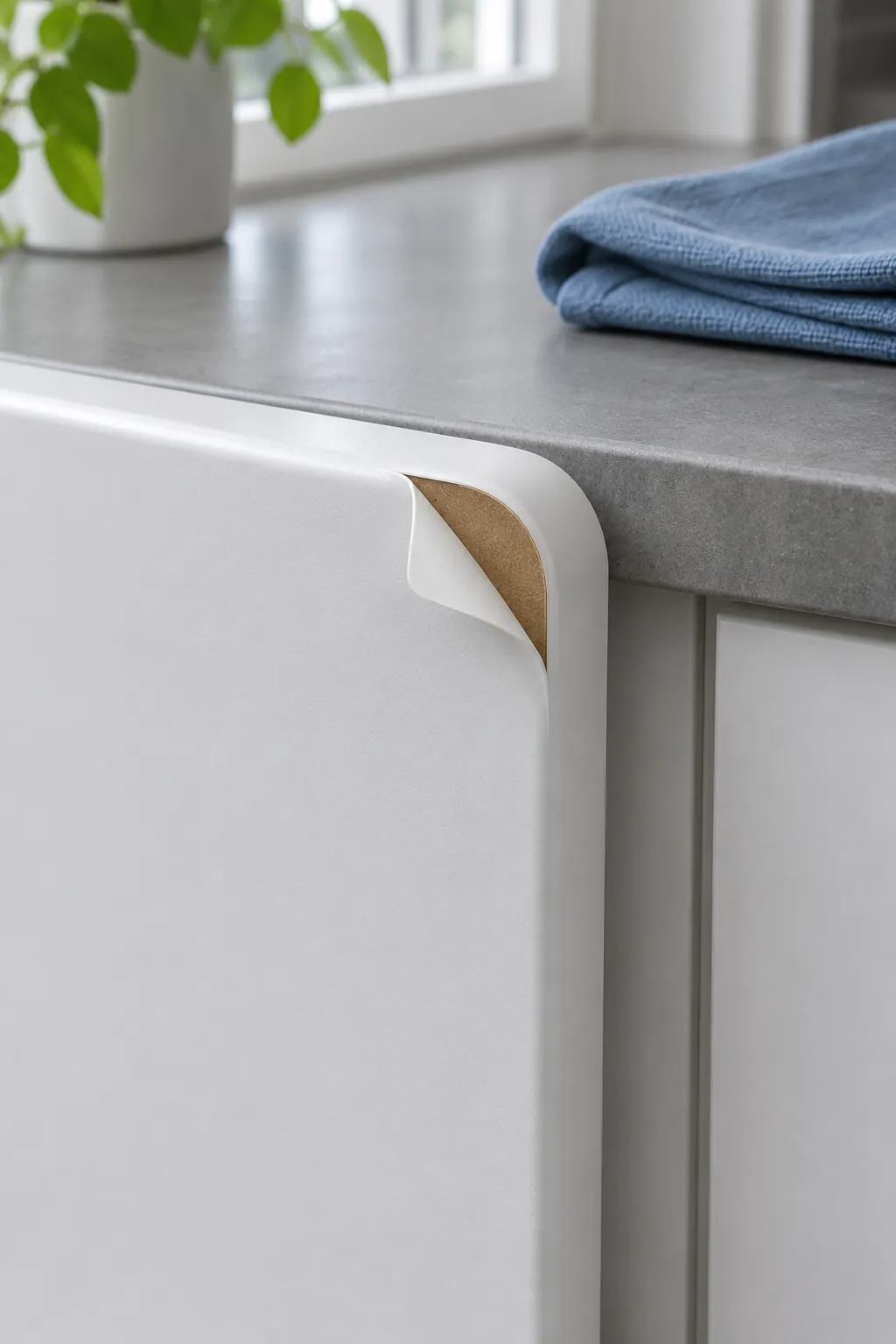
A white flap lifting at the corner of a kitchen door can look like peeling paint. If it bends as one smooth sheet and exposes a brown fiber core, you are probably looking at thermofoil. Press the flap gently back into place. The way it fits tells you whether a small glue repair is worth trying.
Identify the film before you choose a repair
Thermofoil is a thin vinyl film formed over a shaped panel, usually medium density fiberboard, or MDF. Look for film that wraps from the face around a rounded edge and ends on the back. Paint usually flakes or chips, while a separate edge band can lift at a seam without bringing the face layer with it. The cabinet maker or a spare door can help settle the question.
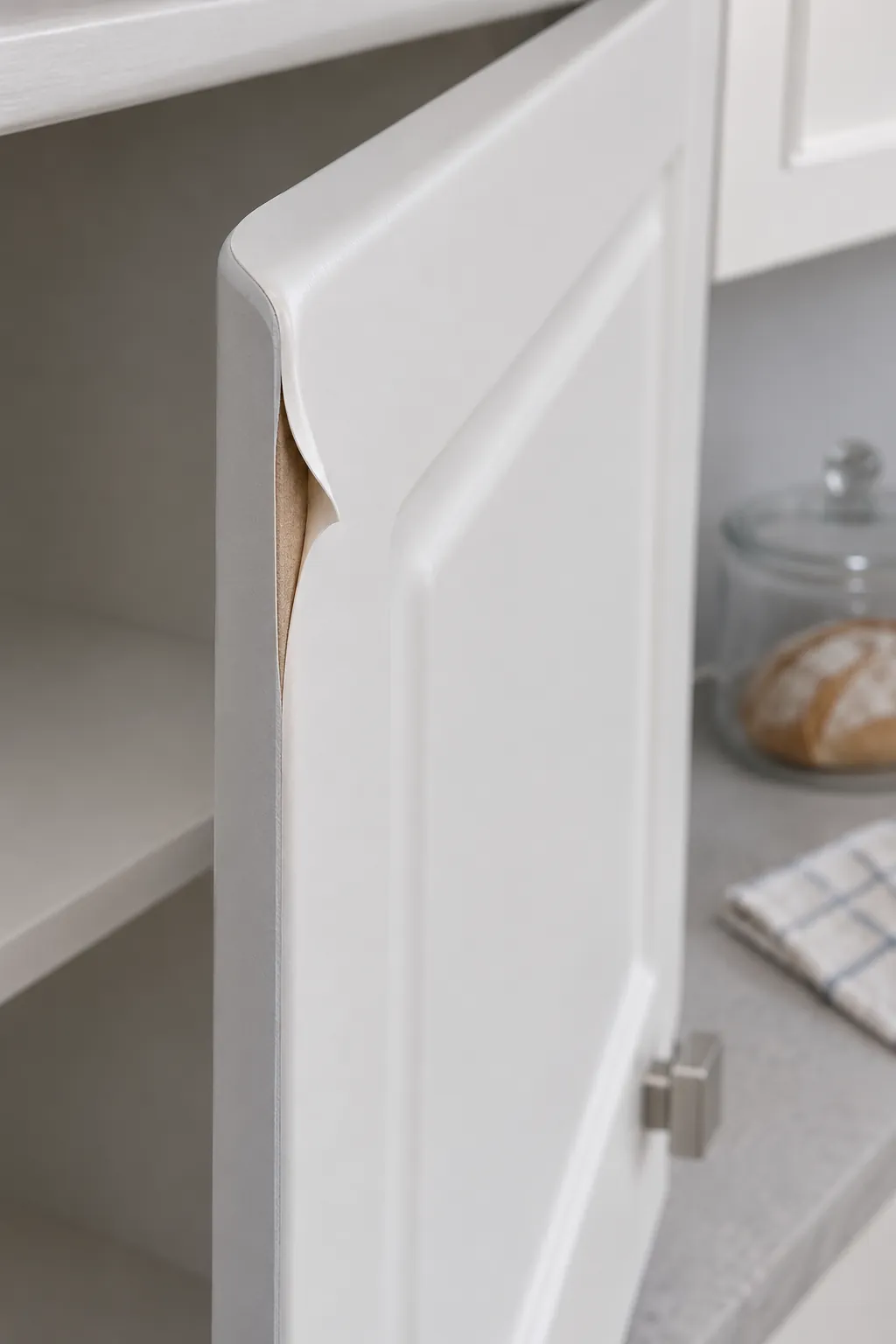
Check whether the loose film still fits
A short lifted edge is a good candidate for rebonding if the film lies flat when pressed and the MDF underneath is dry, firm, and flat. Stop if the film has shrunk, curled hard, or cracked. A swollen corner, soft core, or spreading blister points toward refinishing a sound door or replacing a damaged one.
Look for a heat or moisture source near the damage. Check for kettle steam, dishwasher vapor, or heat beside the range. Deal with the source before repairing the door.
Prepare the edge and choose a compatible adhesive
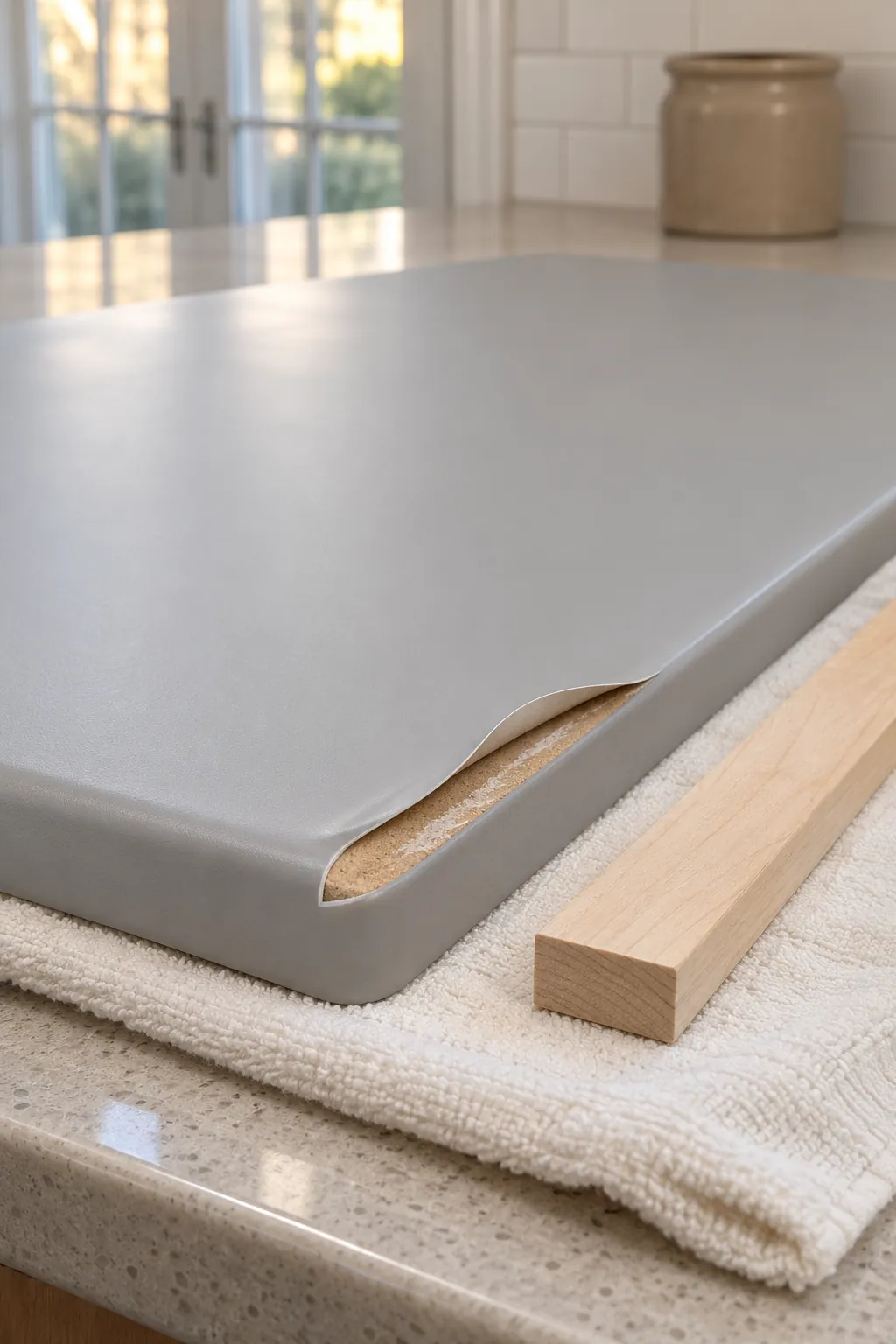
Take the door off and set it on a padded work surface. Remove loose dust and residue without tugging at the attached film. Keep water away from exposed MDF. Use an adhesive whose label lists compatibility with the specific vinyl and porous substrate, and follow its ventilation, surface preparation, and application instructions. Test in a hidden spot if practical.
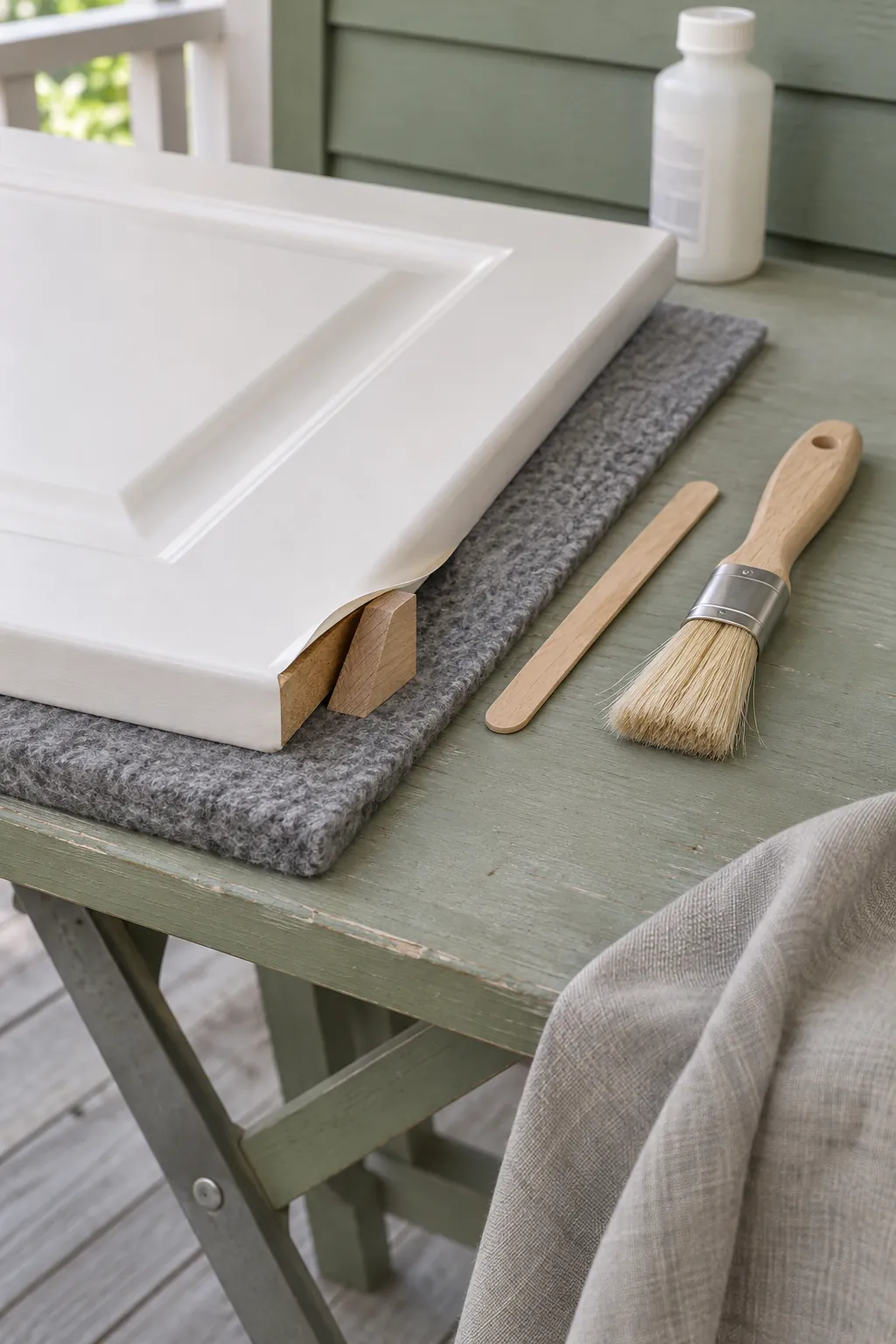
Press the flap down without damaging the finish
Dry fit the flap first. Apply the adhesive in the amount and to the surfaces specified on its label. A small applicator can help you reach the lifted edge without coating the finished face. Respect any required wait before joining the surfaces. Press evenly from the attached area toward the open edge so air can escape.
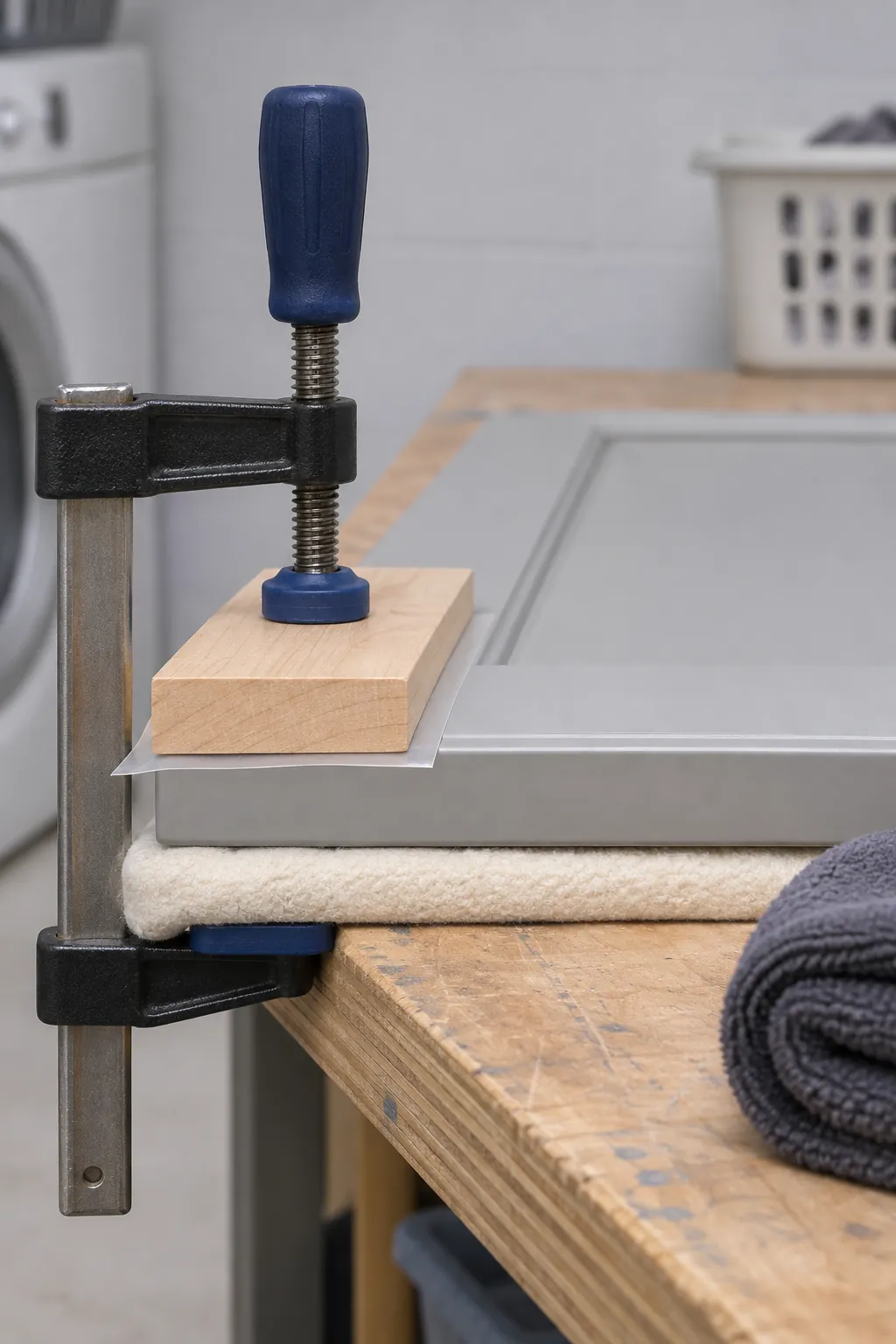
If the product calls for clamping, put a compatible release layer over the finish and spread the pressure with a flat padded block. On a shaped edge, use a block or pad that follows the curve. Leave the repair undisturbed for the full cure time, then check that the edge stays down without pressure.
Strip and refinish only if the core is sound
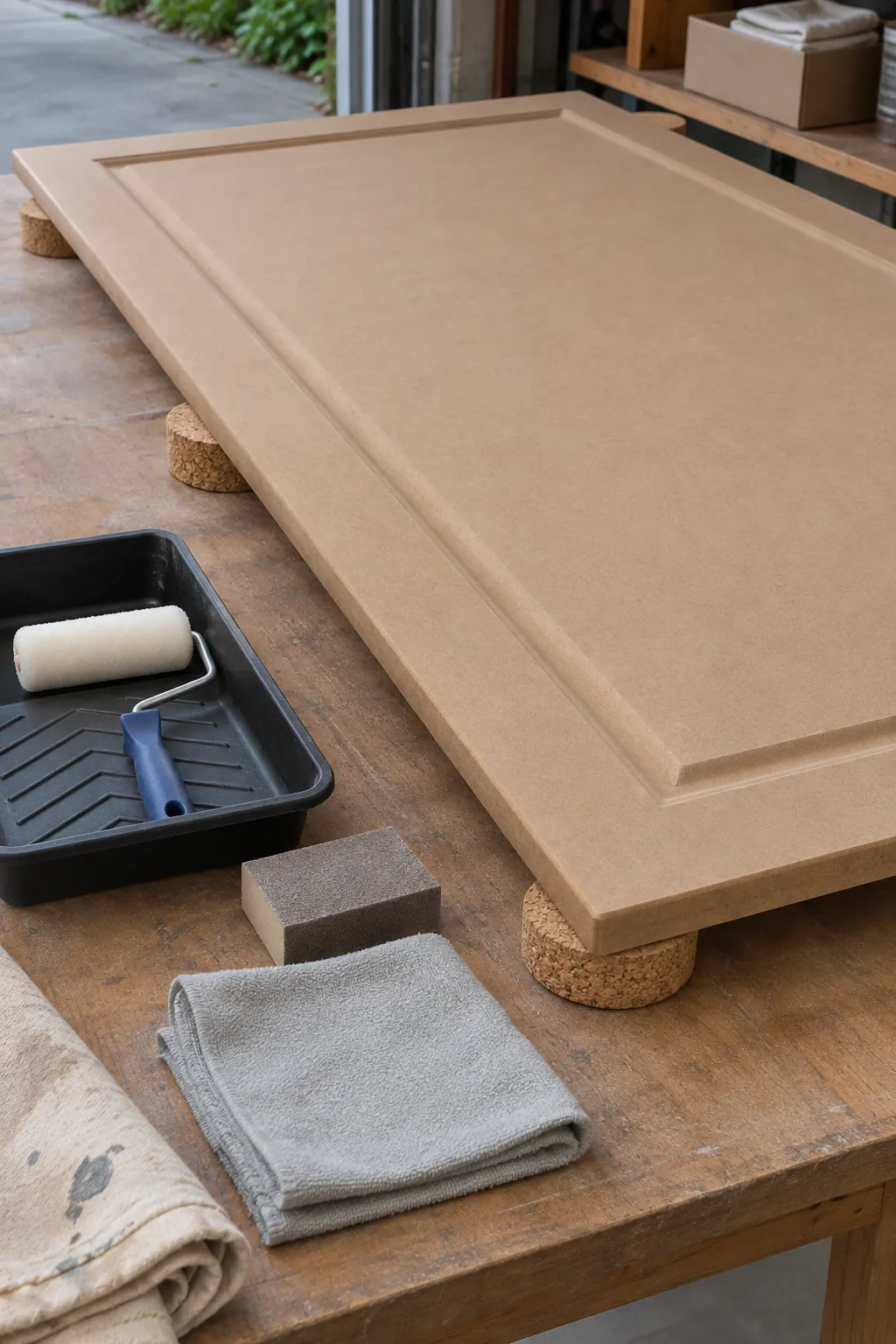
If the film is loose across much of the face but the MDF is still flat, you can consider refinishing the door. Try one door first. Remove the failing face film to a stable boundary, clean away adhesive as the finish system directs, and smooth the MDF without rounding off the edges. Control sanding dust and work with ventilation.
Use an MDF compatible primer that seals the exposed faces and porous edges, then apply a cabinet finish according to the product instructions. Keep any sound rear coating that the finish system can work with. Painting over a loose flap leaves the failing bond underneath, so it can peel again.
Replace damaged doors and protect the new finish
A swollen or crumbling core will not regain its shape when you glue the film down. For a replacement, measure the door, record the hinge cup position and overlay, and compare a sample in your kitchen light. An older white finish can look different from a new door even when both have the same color name. Keep steam away from the repaired cabinet and use only heat shields and clearances approved by the cabinet and appliance makers.