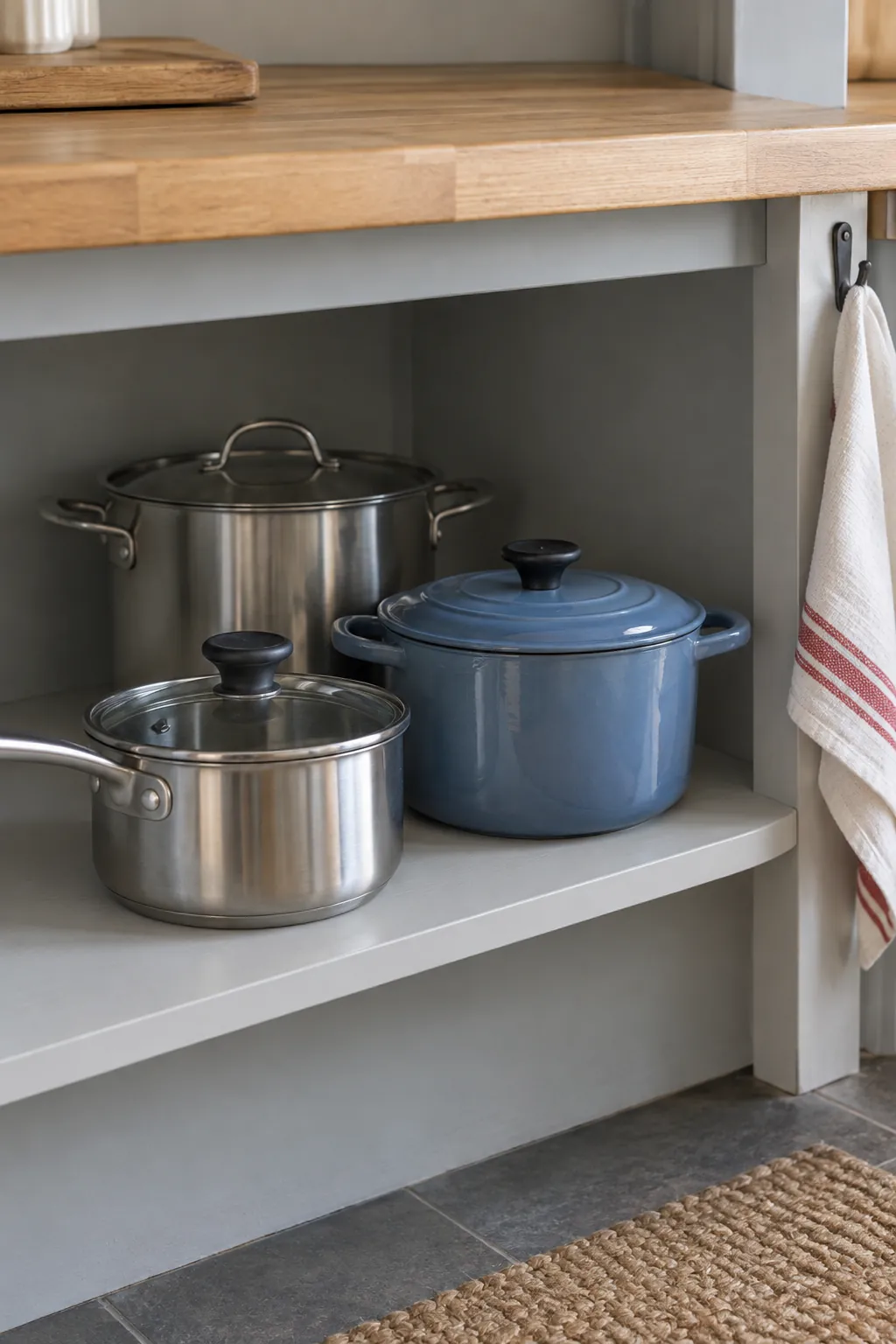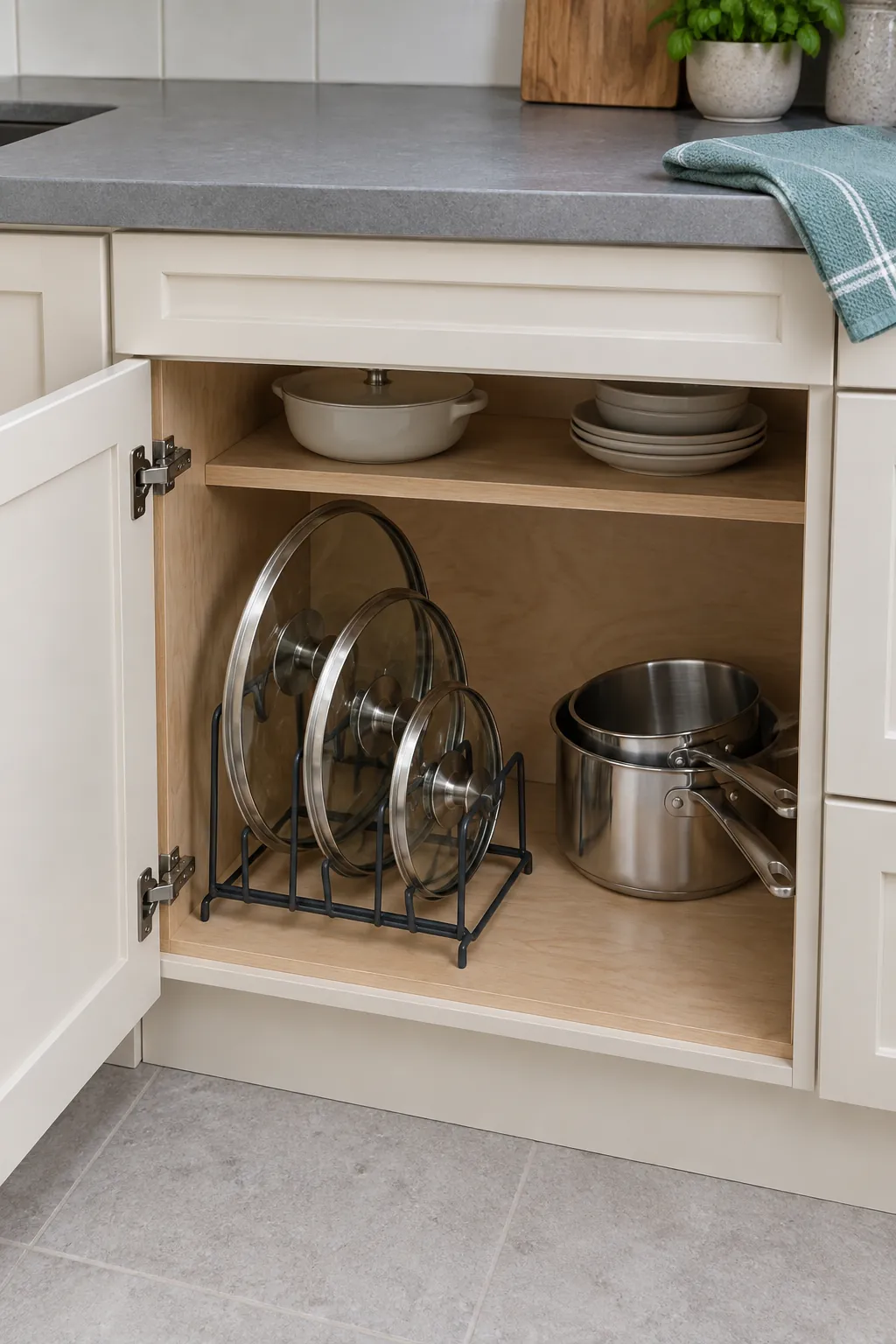
Opening a cabinet should not send a glass lid sliding toward your feet. The useful fix is to give each lid a stable place you can reach without lifting a pile of cookware. Start with the lids you use most, then choose storage that fits their handles as well as their rims.
Match the lids before measuring the space
A lid that nearly fits three pans can occupy more space than the one lid you actually use. Empty the storage area, match each lid to its cookware, and set aside anything cracked, badly damaged, or left without a useful partner. Check universal lids on the pans they are meant to cover instead of assuming their stepped rims fit everything.
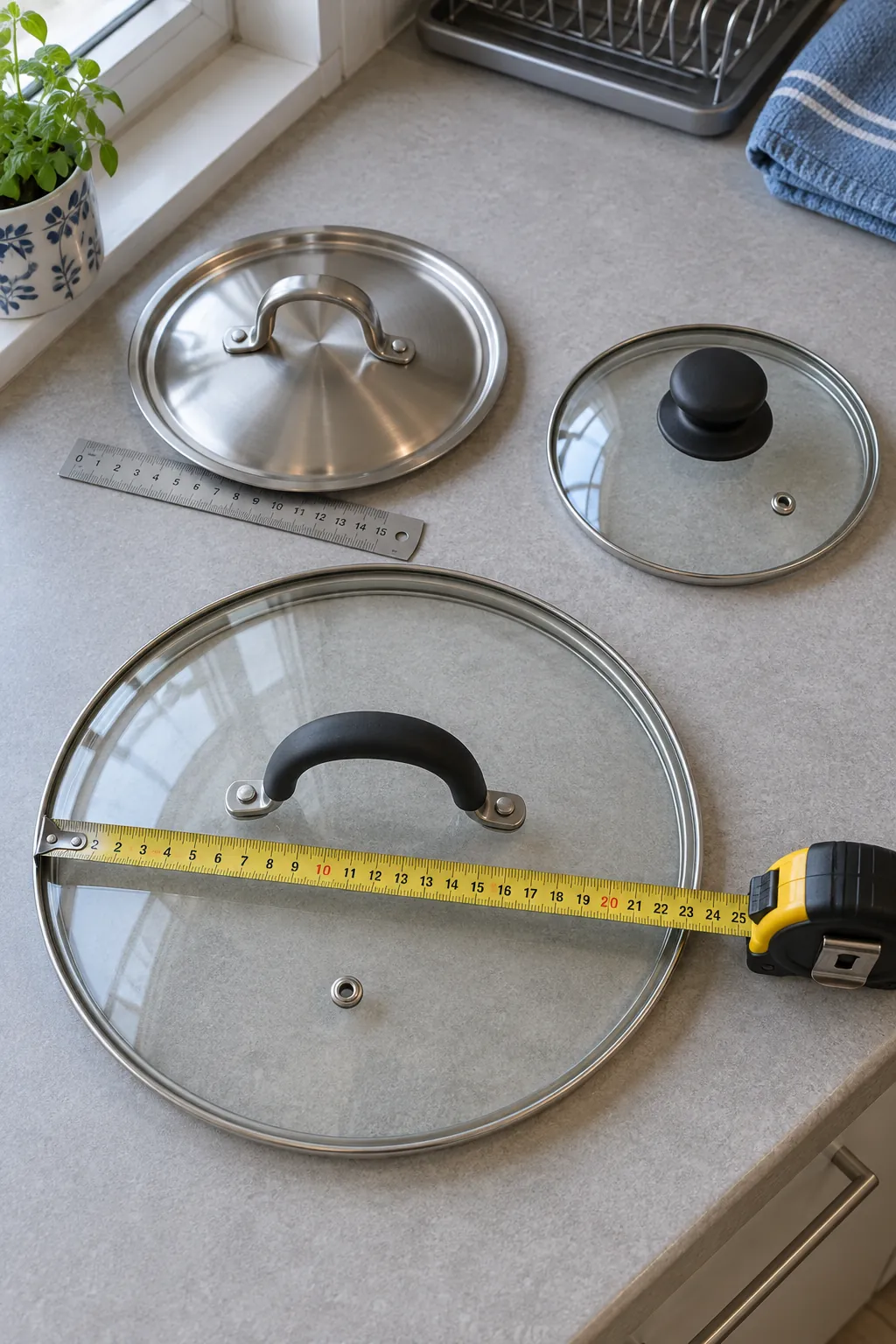
Measure the largest lid across its rim, then measure its depth including the knob or handle. Compare those dimensions with the cabinet opening, usable shelf depth, and clearance above a proposed organizer. Leave enough room to grip and lift the lid, since a rack that fits tightly can still be awkward to use.
Stand everyday lids in a cabinet organizer
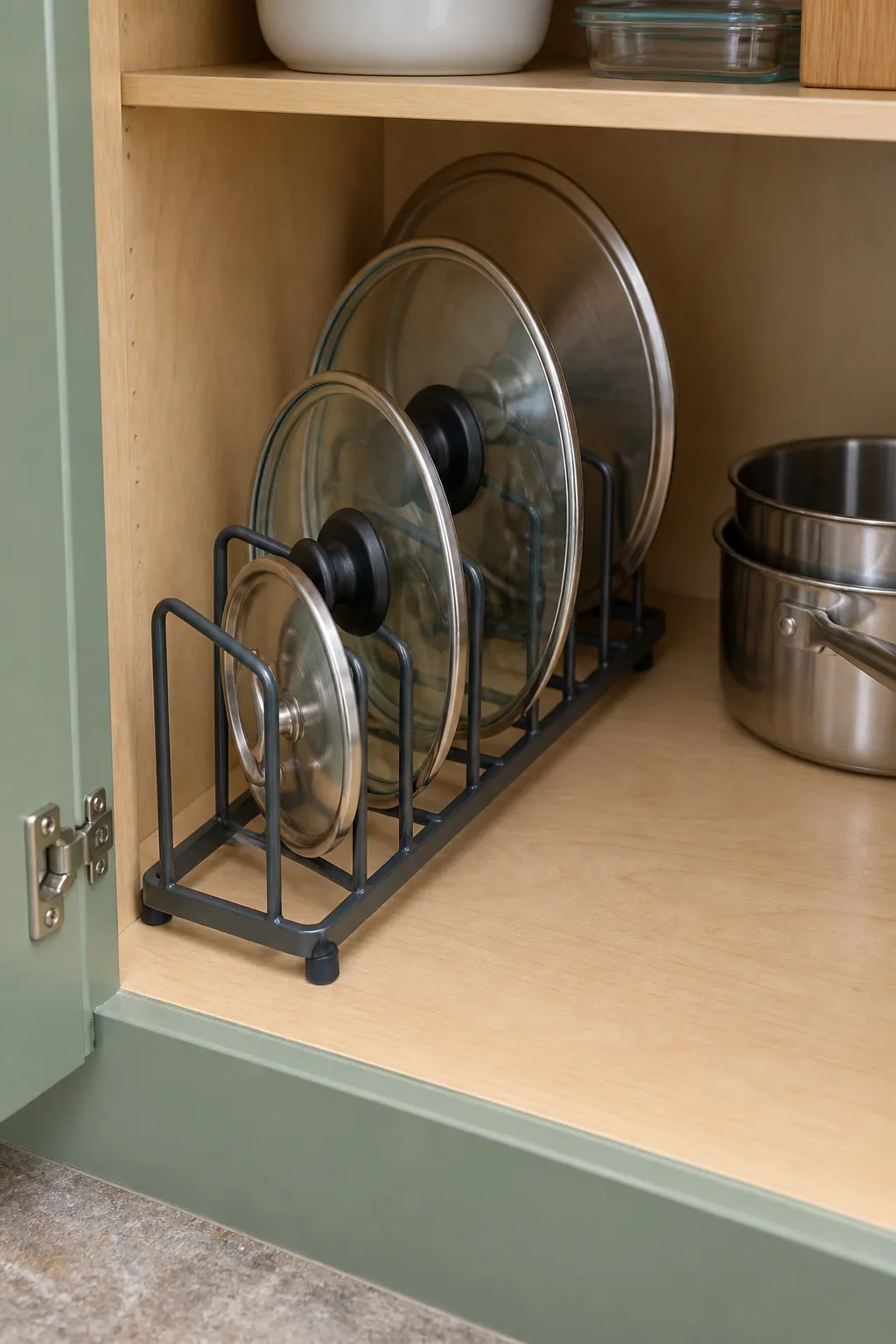
Vertical pot lid storage works well when a shelf has enough height and you can reach the slots from the front. Choose a pot lid organizer with a supported base and dividers that hold the rim without squeezing glass or catching a handle. Adjustable slots are useful when one domed lid needs much more room than the others.
Put the most frequently used lid in the easiest slot, even if that breaks a perfect size sequence. Keep the rack close to the cabinet opening and test removing a middle lid without disturbing its neighbors. A deep shelf does not become accessible just because everything stands upright.
A basic freestanding rack is also an easy rental option because it needs no holes. Check that the feet stay planted on your shelf surface; a lightweight organizer that tips with the largest lid needs a different position or a sturdier replacement.
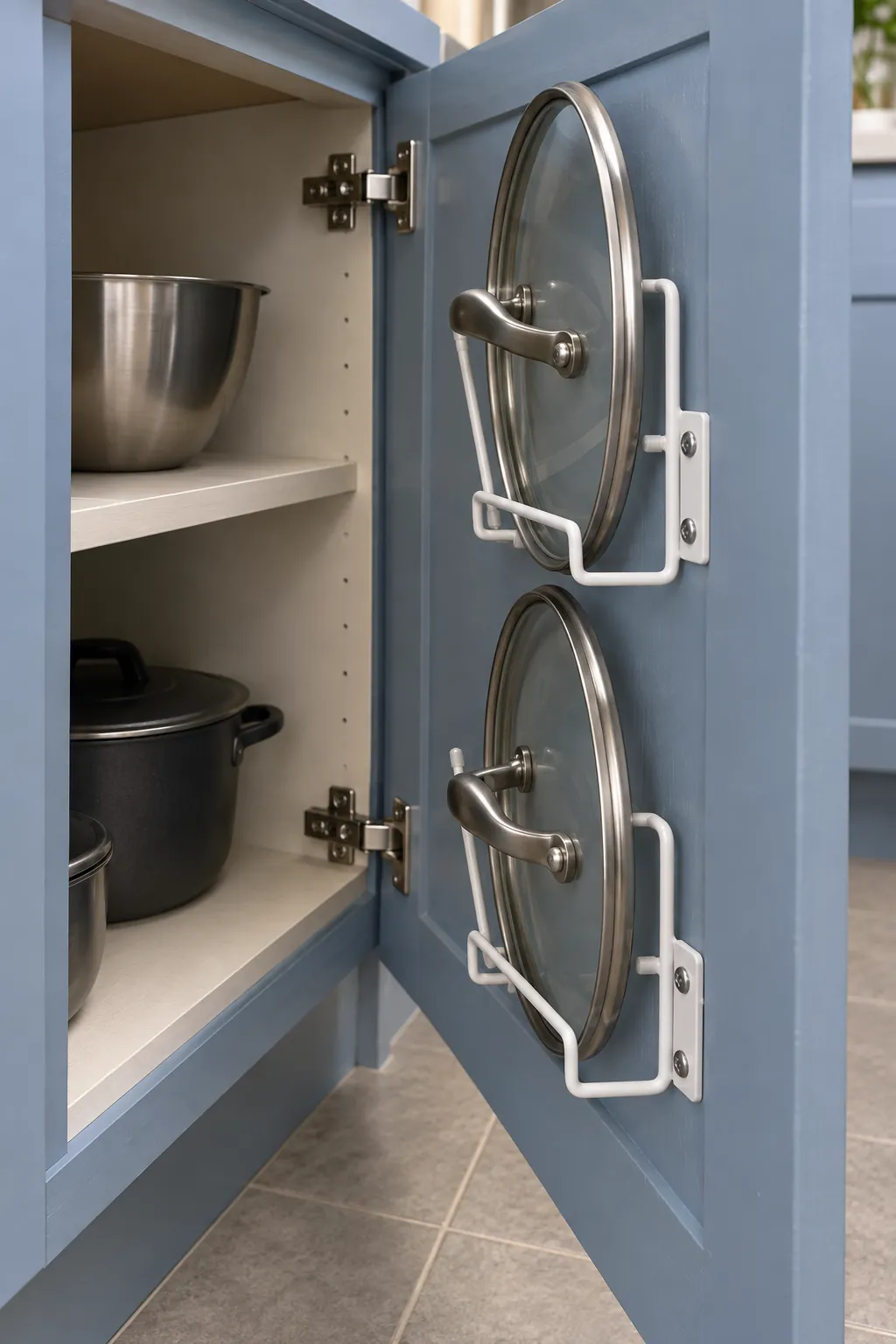
Check the entire swing before adding a door rack
A cabinet door lid rack uses space that might otherwise sit empty, but the closed door tells you whether that space really exists. Hold a lid at the proposed position and slowly move the door through its travel while checking shelves, cookware, hinges, and the cabinet frame. Account for the rack depth as well as the lid knob.
Follow the hardware maker’s mounting instructions and weight rating. Door panels vary in thickness, so screws must suit the actual door construction; do not guess at length or fasten into a thin center panel without suitable guidance. An over door design can avoid drilling, but its hooks must allow the door to close without rubbing. Adhesive holders are only appropriate where the product explicitly supports the lid weight and surface, including normal kitchen heat and moisture.
Give a deep drawer separate lid lanes
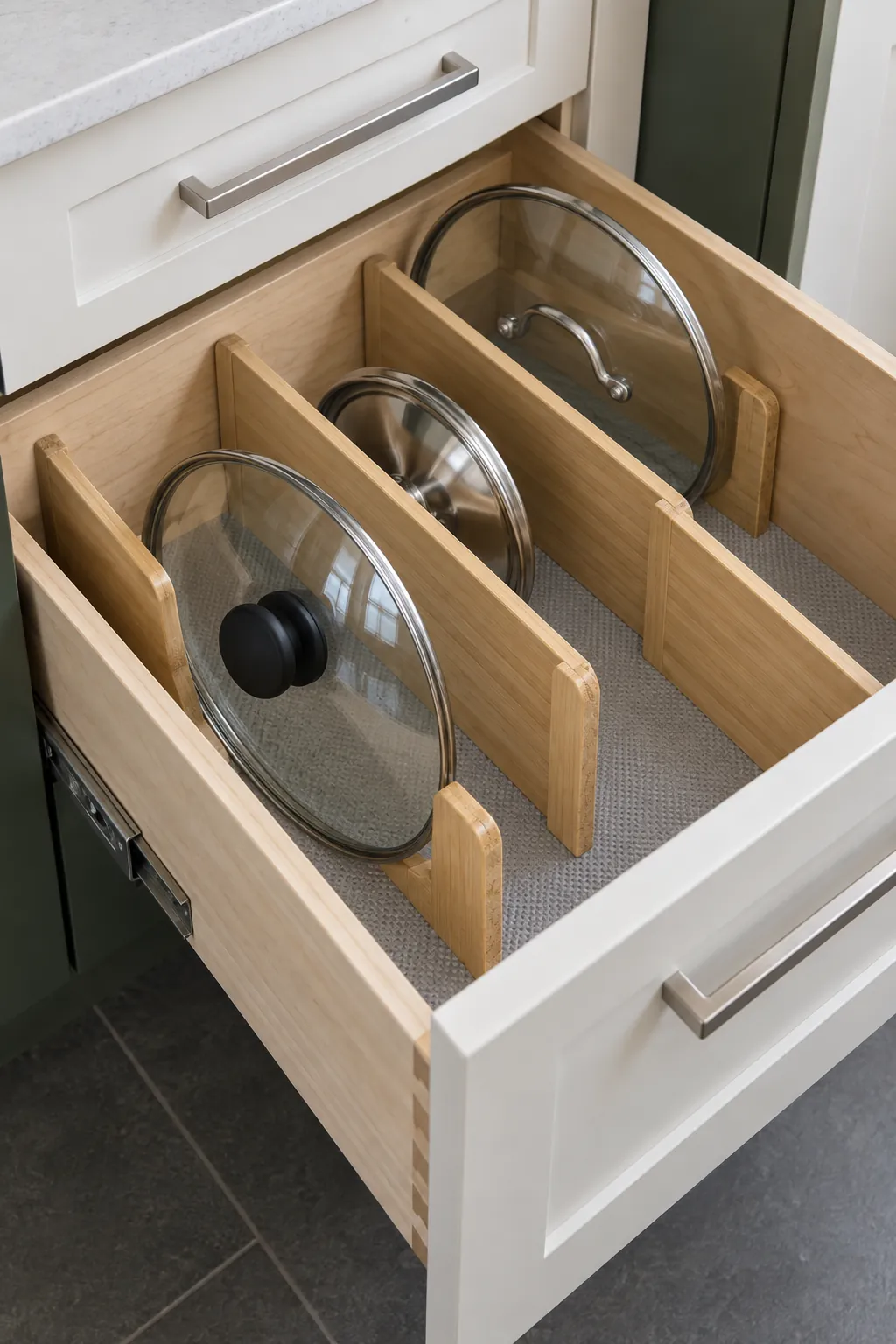
A drawer divider for lids keeps rims from sliding into a jumble each time the drawer moves. In a sufficiently deep drawer, position lids upright in individual compartments with their handles clear of the drawer above. Measure from the drawer bottom to the lowest obstruction, not just to the top of the drawer front.
For a shallow drawer, lay lids flat with space around their knobs instead of forcing them upright. Keep glass from striking neighboring cookware and avoid piling heavy pans on top. Test the loaded drawer slowly before deciding that the arrangement is finished.
Use a pull out when the cabinet is too deep
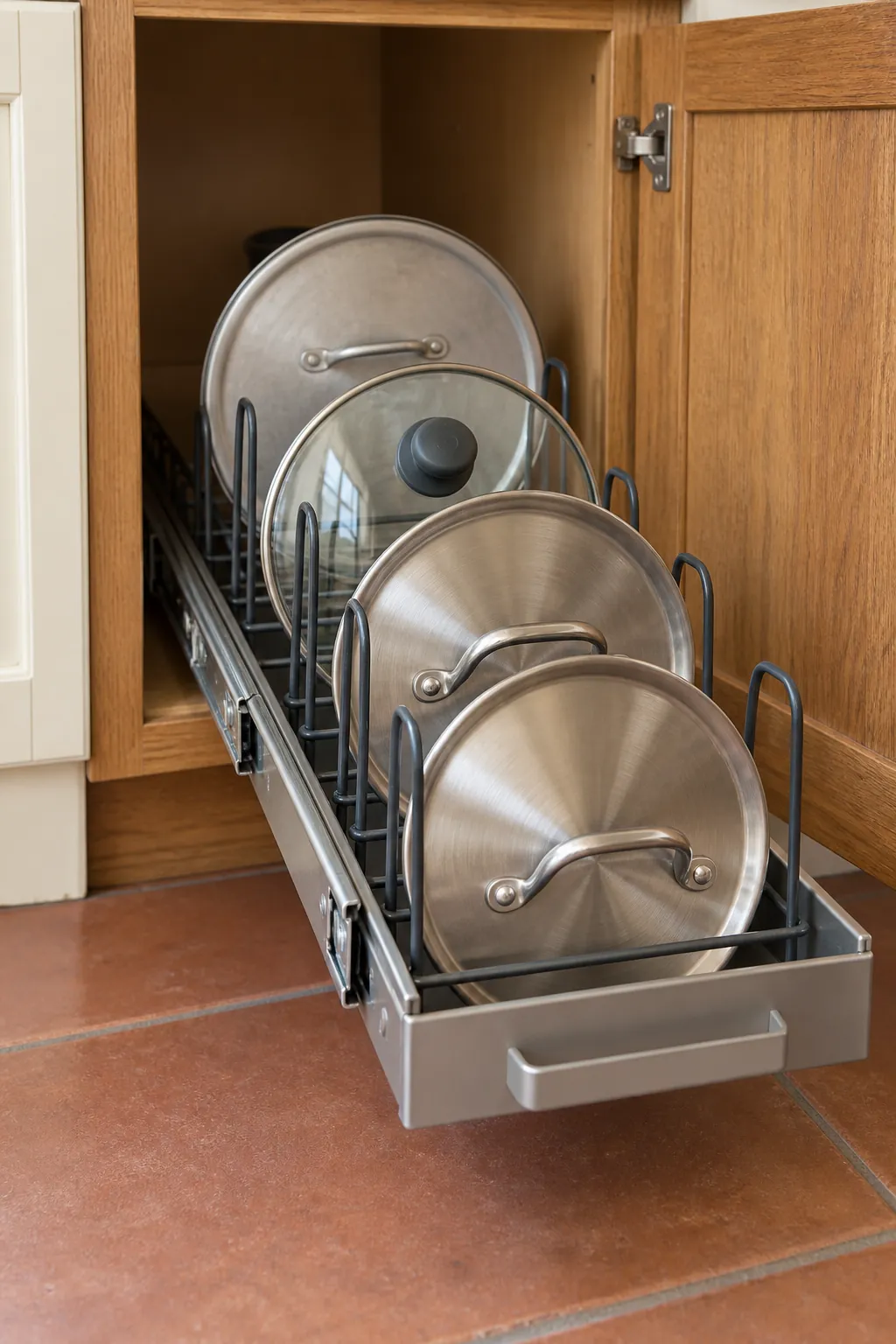
If the main problem is reaching the back, a pull out lid organizer can bring the stored lids toward you. Measure the clear opening between hinges and the cabinet frame before choosing hardware, and check whether the shelf or cabinet base can accept the required mounting. A tray that fits the interior may still be too wide to pass through the opening.
Choose a mechanism rated for the loaded contents and keep the weight within the manufacturer’s limit. Leave a clear path for handles so they cannot catch a neighboring pan as the tray moves. For a corner cabinet, verify the whole travel path rather than assuming a straight pull out will work.
This is a larger commitment than a loose rack. Try placing your existing organizer at the front first; if that solves access, you may not need moving hardware at all.
Keep the simplest system that survives dinner
Pan lid storage does not always need a separate product. If you have only a few pots and enough shelf height, keeping each lid on its matching pot may be the easiest arrangement. Inverting a suitable lid can reduce height, but check that it rests securely and does not press a vulnerable handle into a coated cooking surface. Nesting pots usually saves more space when their lids are stored separately.
A DIY lid holder needs the same stability checks as a purchased rack. A sturdy, washable file sorter may hold some dry, cool lids if its slots and base fit them securely, but avoid paperboard and sharp edges, and do not assume an office product can support heavy glass. Store only lids that have cooled and dried completely, and keep the daily set within easy reach.
After several dinners, check what you keep leaving on the counter. Move that lid’s home closer or widen its slot before buying another organizer. Kitchen cabinet organization is working when you can put the lid away as easily as you took it out.