
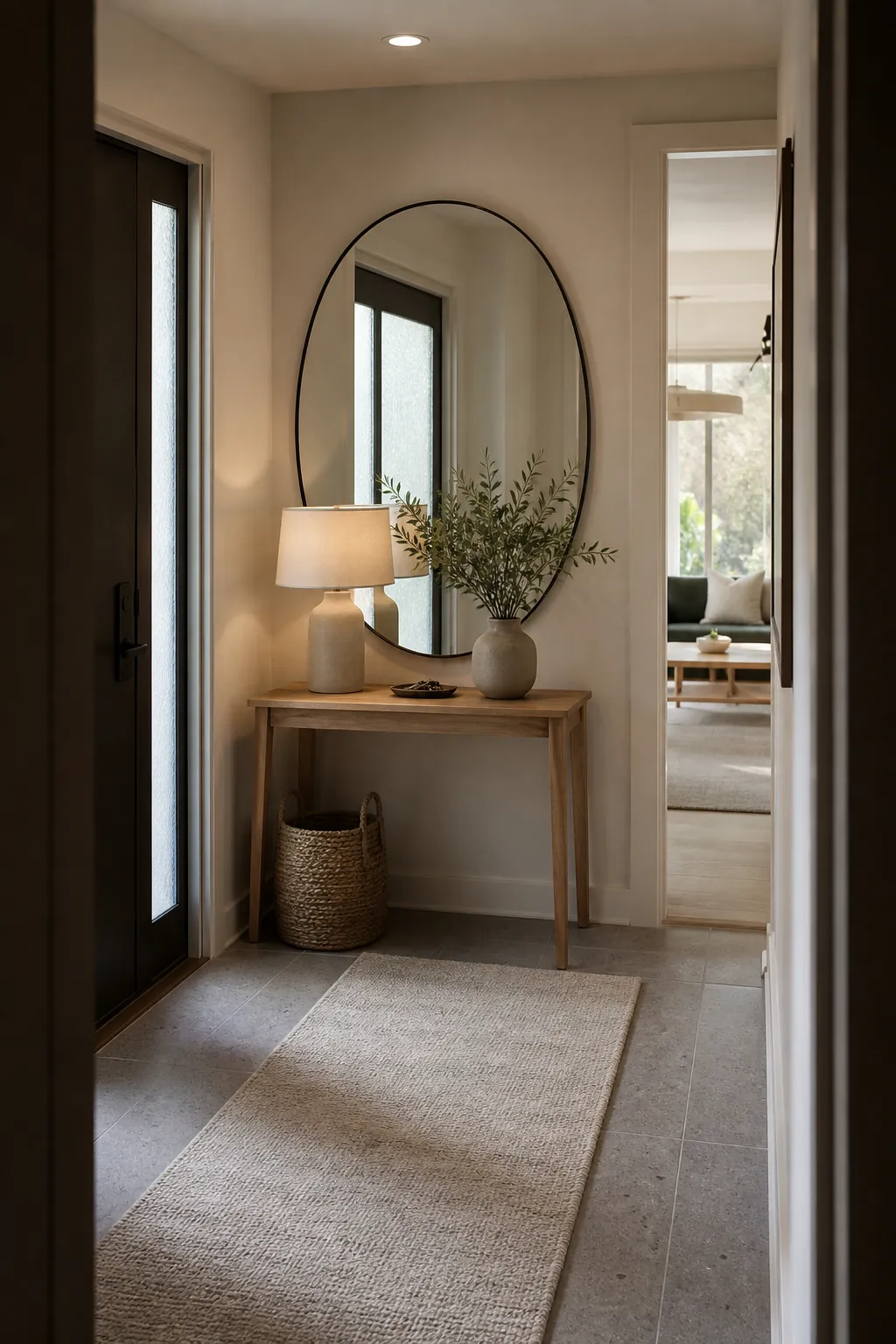
A mirror can make a dark entryway feel brighter, but it cannot create light. It can only redirect the daylight or artificial light already available. That is why buying a large mirror before studying the room often disappoints: the glass ends up reflecting a dark wall, a cluttered coat rack, or the glare of one bare bulb.
The useful approach is to treat the mirror and lighting as one system. Find the strongest light source, choose the reflection you want to repeat, then position the mirror where it sends brightness deeper into the foyer without producing glare.
Map the Light Before You Hang Anything
Check the entryway in the morning, afternoon, and after dark. Note whether useful light comes from a glazed door, a nearby room, a stairwell window, or only a ceiling fixture. Hold a small hand mirror at different points on the wall. When it catches a bright opening from the normal viewing position, you have found a productive zone.
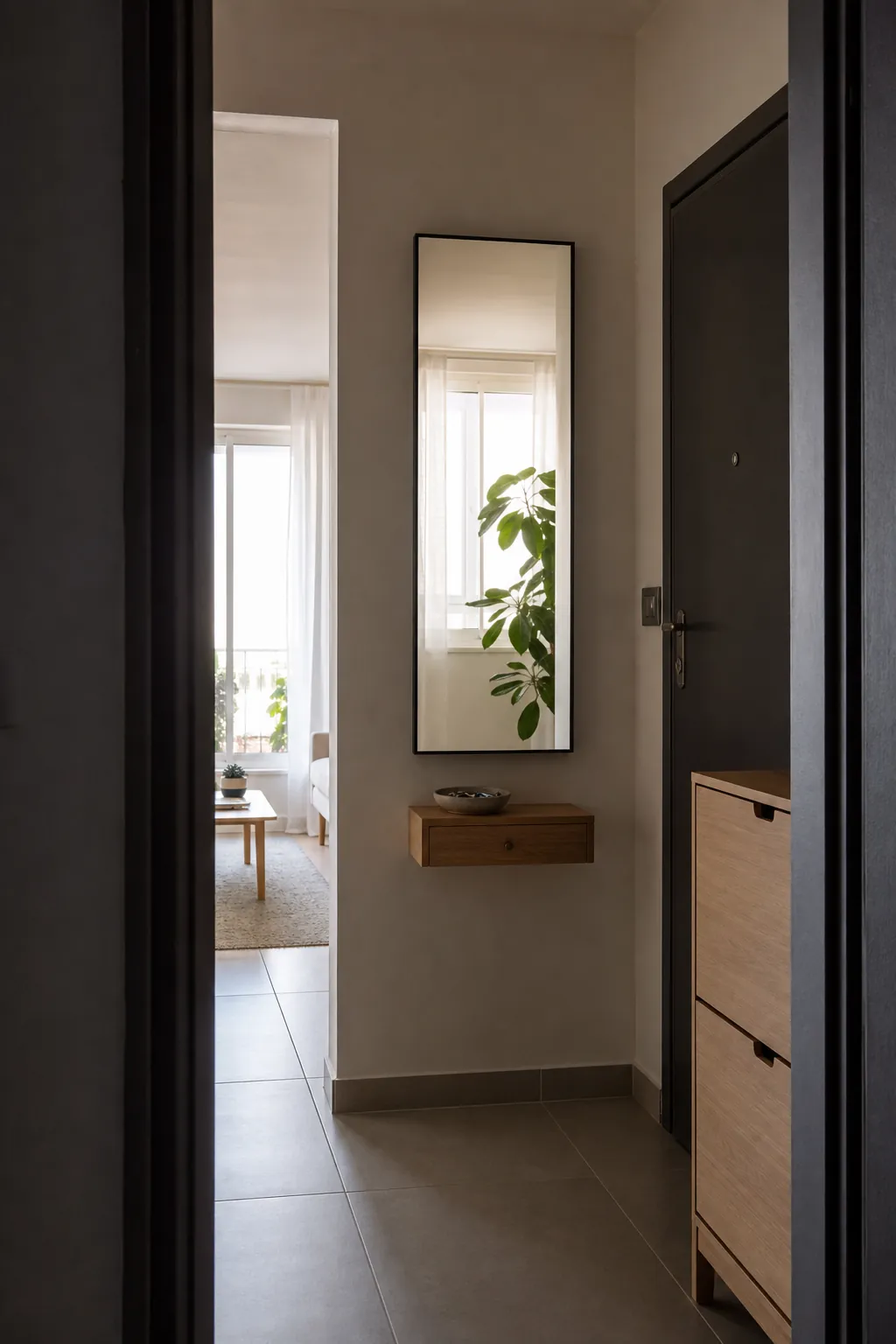
An adjacent wall often spreads light sideways more gently than a mirror directly opposite a sunny window. If the sun reaches the glass, check for concentrated glare from every route through the space. Indirect light is easier to live with and usually photographs less dramatically but feels better throughout the day.
Give the Mirror Better Light to Reflect
A windowless foyer needs lighting first. Replace a harsh single bulb with a diffusing semi-flush fixture, then add a lower source such as a shaded console lamp or a plug-in sconce. The ceiling light handles movement; the lower light softens faces and adds depth; the mirror repeats both.
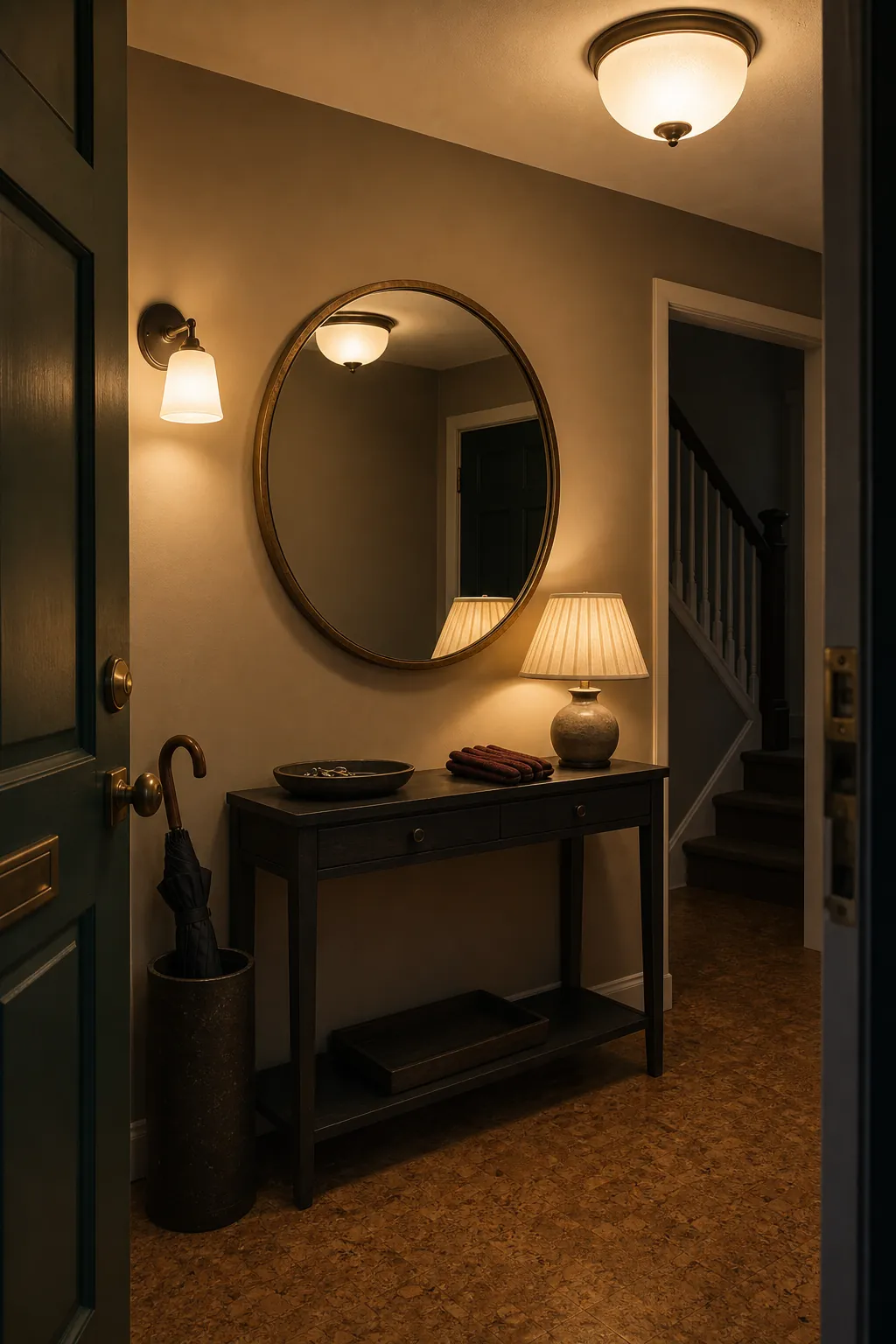
Use bulbs with compatible color temperatures so the reflection does not contain competing blue and orange pools. Choose brightness by lumens, use dimmers where possible, and keep bare bulbs out of the direct reflective angle.
Choose More Glass and Less Visual Weight
In a small dark entryway, a generous mirror usually works harder than several tiny mirrors. A slim frame or softly beveled edge preserves reflective area without adding a heavy outline. Round mirrors soften a corridor of doors and trim; tall rectangles visually lift a low or narrow wall.
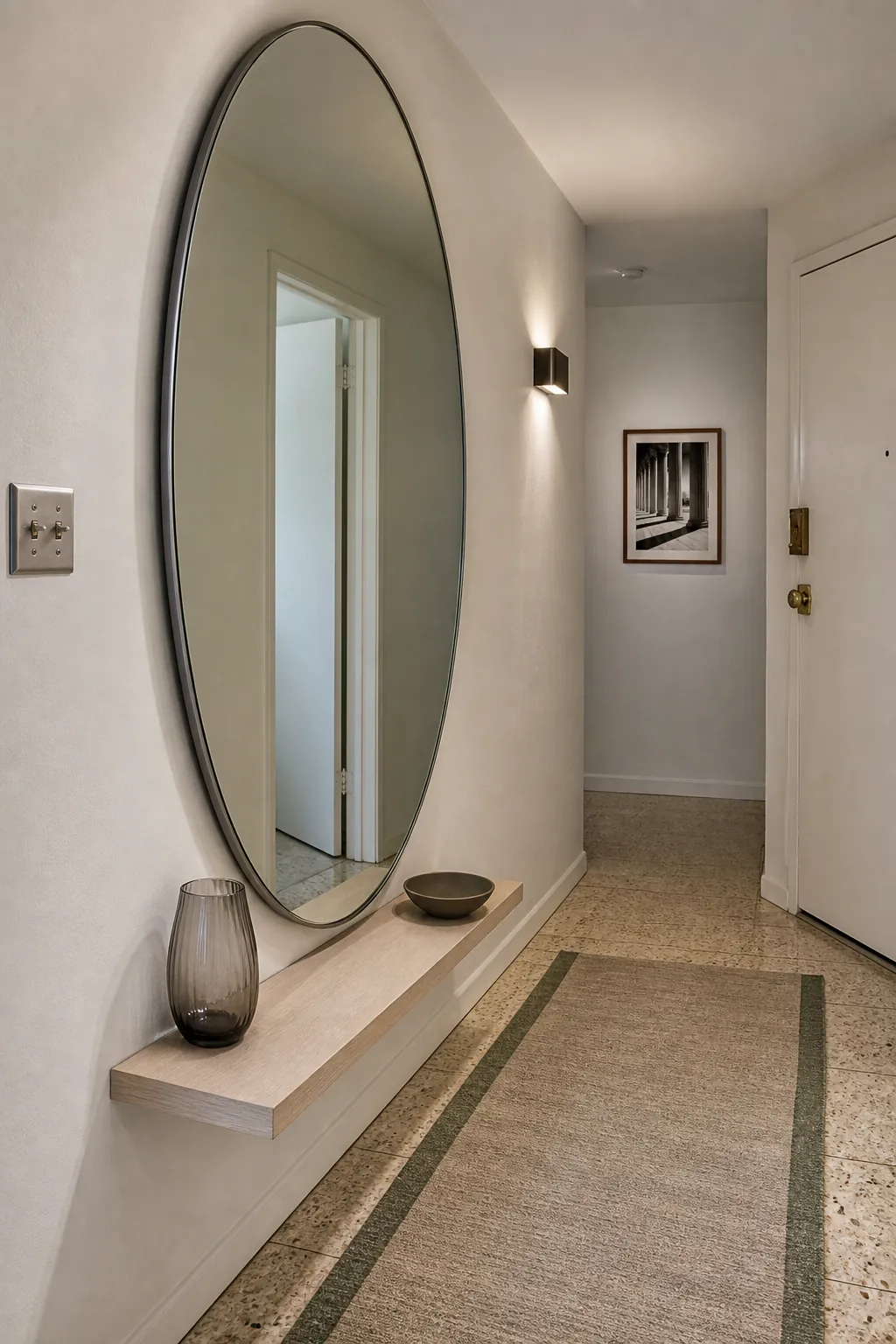
Scale the mirror to the wall or furniture below it so it looks intentional. Above a console, a useful starting point is roughly two-thirds to three-quarters of the console width. On an empty wall, tape the outline and view it from the door before committing.
Reflect a Bright Surface, Not More Clutter
The mirror doubles color and visual information as well as light. Aim it toward a pale wall, glazed door, tidy console, or leafy plant. Avoid reflecting open coat storage, an untidy kitchen counter, a dark closet, or another mirror unless that repeated view is genuinely desirable.
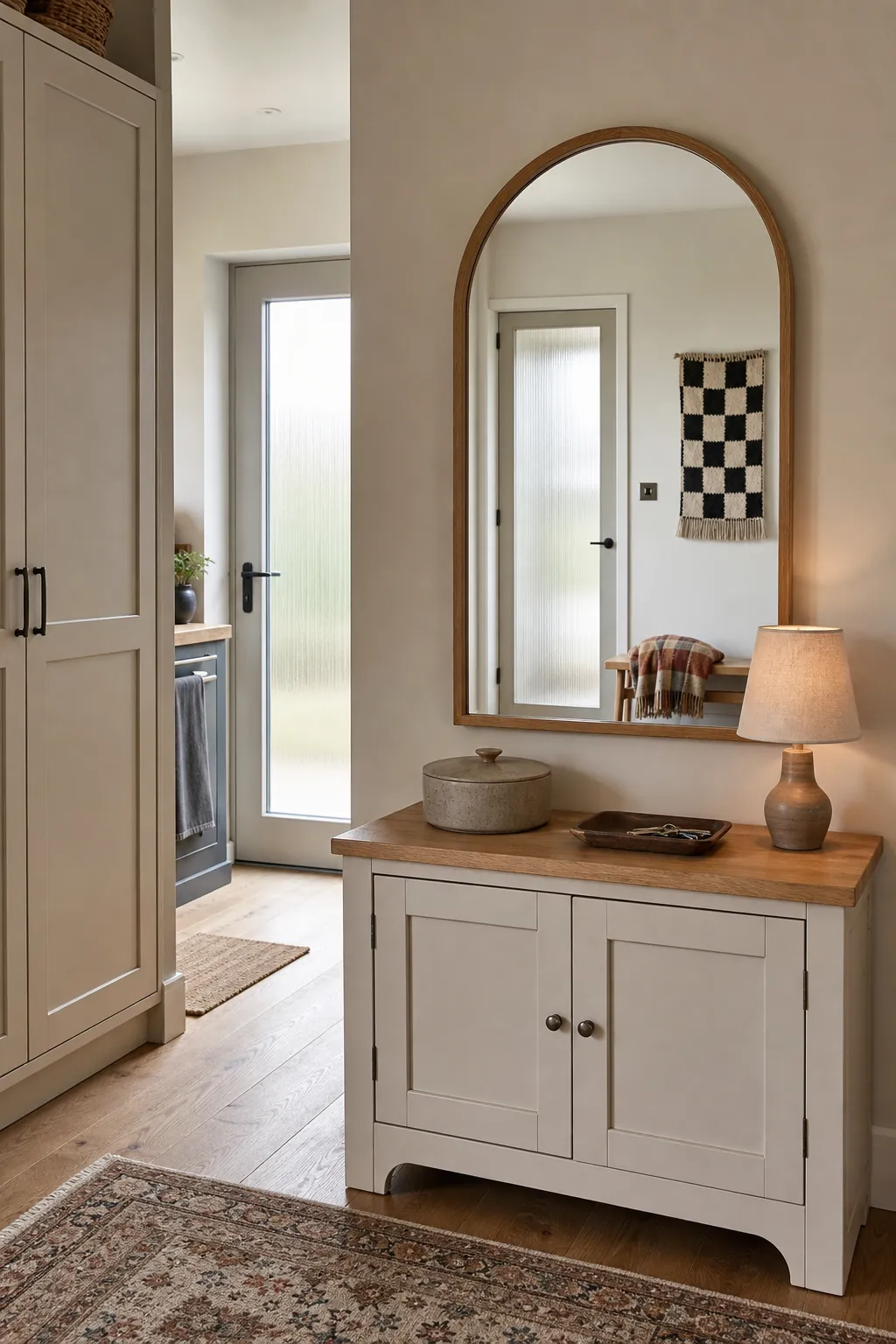
Clear the reflected sightline before adding more decor. A shallow cabinet with closed storage is often more effective than a fully styled open console because it removes the items that would otherwise appear twice.
Use Light Surfaces to Extend the Effect
Light wall paint, a pale runner, and a console with visible floor beneath it help the bounced light travel. This does not mean the entire entry must be white. Medium wood, charcoal hardware, and one saturated accent can give the room definition while the largest surfaces remain reflective.
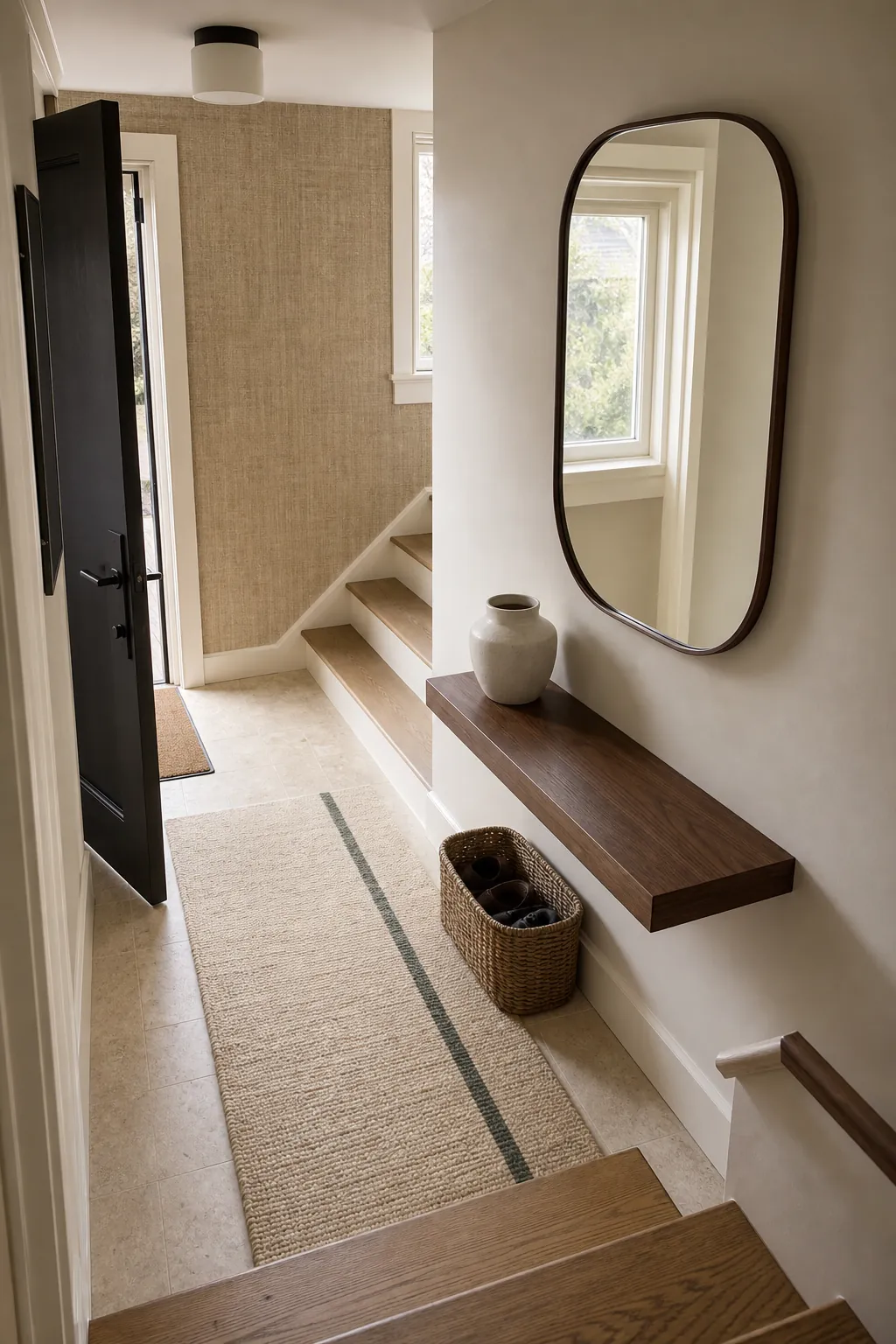
Gloss is not required. Soft eggshell paint, honed stone, woven wool, and matte ceramic can still catch subtle highlights without creating a shiny, clinical room. Clean the mirror and any glazed door regularly; a film on either surface visibly reduces clarity.
Test the Entryway After Sunset
A placement that works at noon may fail at night. Turn on the lights you actually use, enter from outside, and look from the adjoining room. If the mirror shows one piercing bulb or becomes a black rectangle, move the lower light or change its shade rather than adding a brighter bulb.
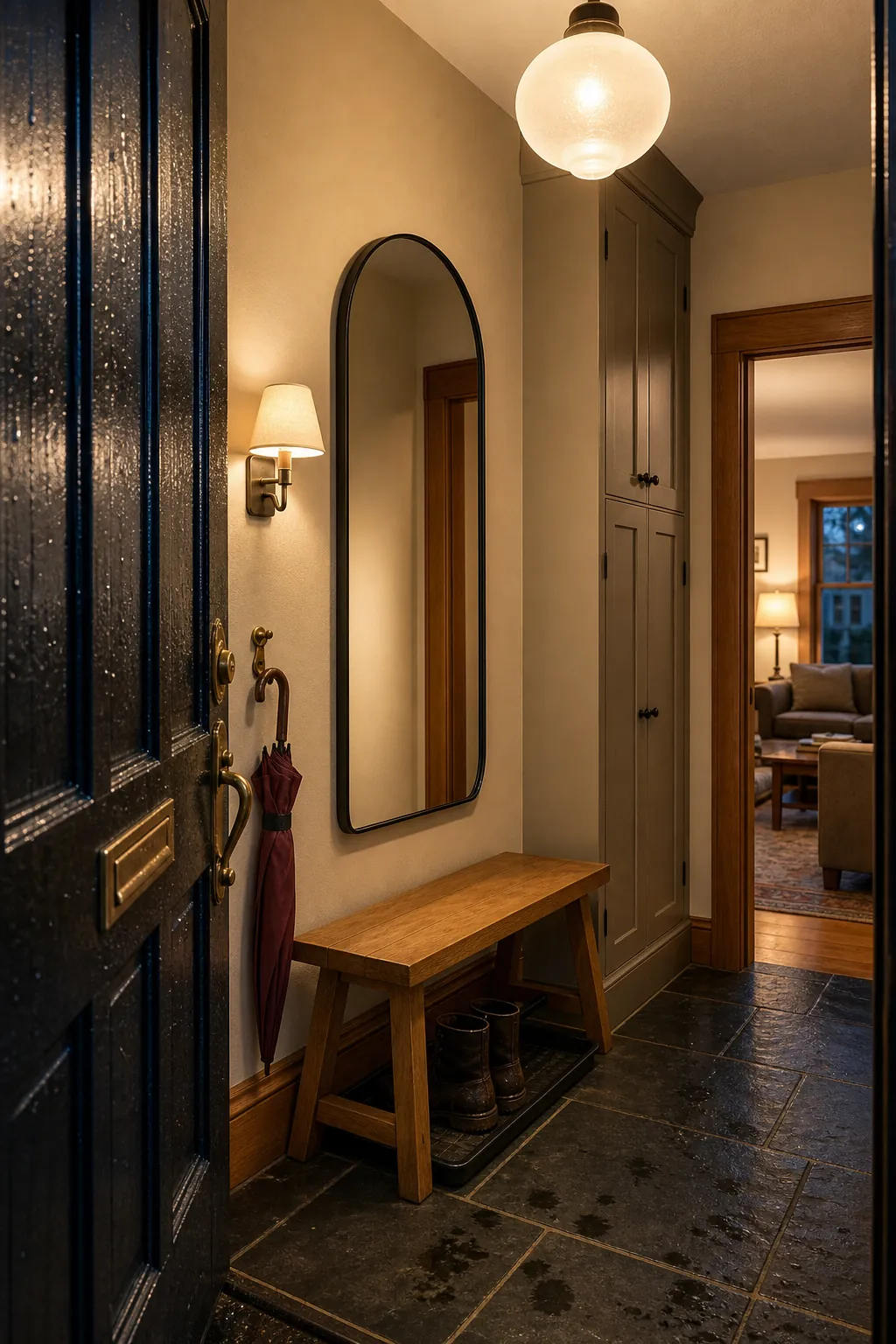
The best result is not a foyer that looks artificially bright. It is one with even illumination, a useful reflection, and enough contrast to feel welcoming. Start with light, use the mirror to multiply it, and edit the reflected view. That sequence solves more dark entryways than decoration alone.