
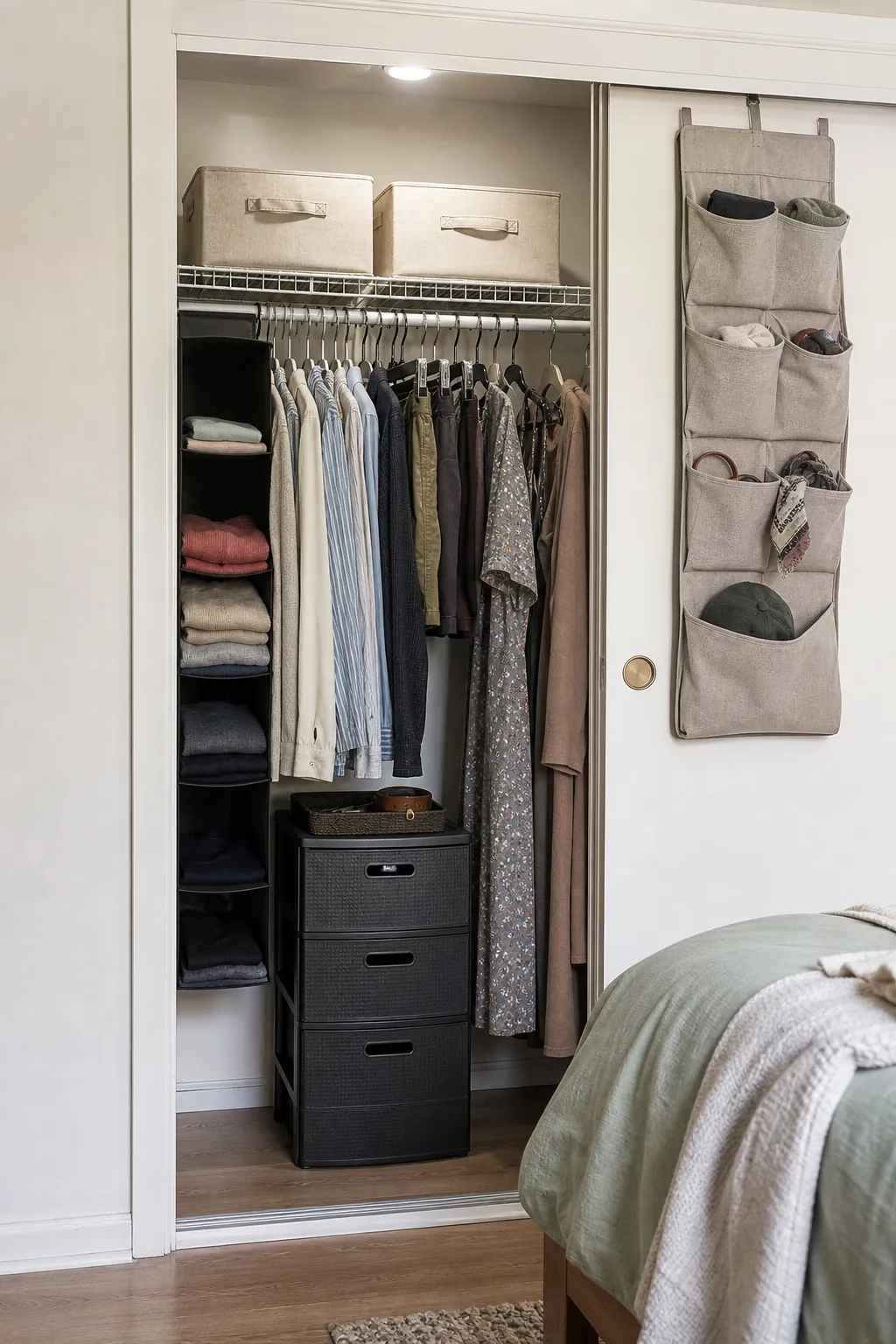
A small rental closet does not need to imitate a custom walk-in. It needs to make every category easy to see, reach, and return without drilling, damaging paint, or creating a move-out project. That changes the goal: instead of building permanent shelves, you create a removable storage layer around the rod, shelf, floor, and door you already have.
Real renters often describe the same failures: soft clothing stacks collapse, plastic drawers jam when overfilled, and organizers consume the clearance needed to open the closet. The most effective renter closet ideas solve those access problems first. More capacity is useful only when the system still works on laundry day.
Measure the Closet as Separate Zones
Measure the usable opening, not just the inside wall-to-wall width. Sliding doors hide part of a closet, and a wide drawer unit may fit inside but remain impossible to open. Record the shelf depth, rod height, floor width, and the drop beneath short and long garments. Then tape organizer footprints on the floor before buying anything.
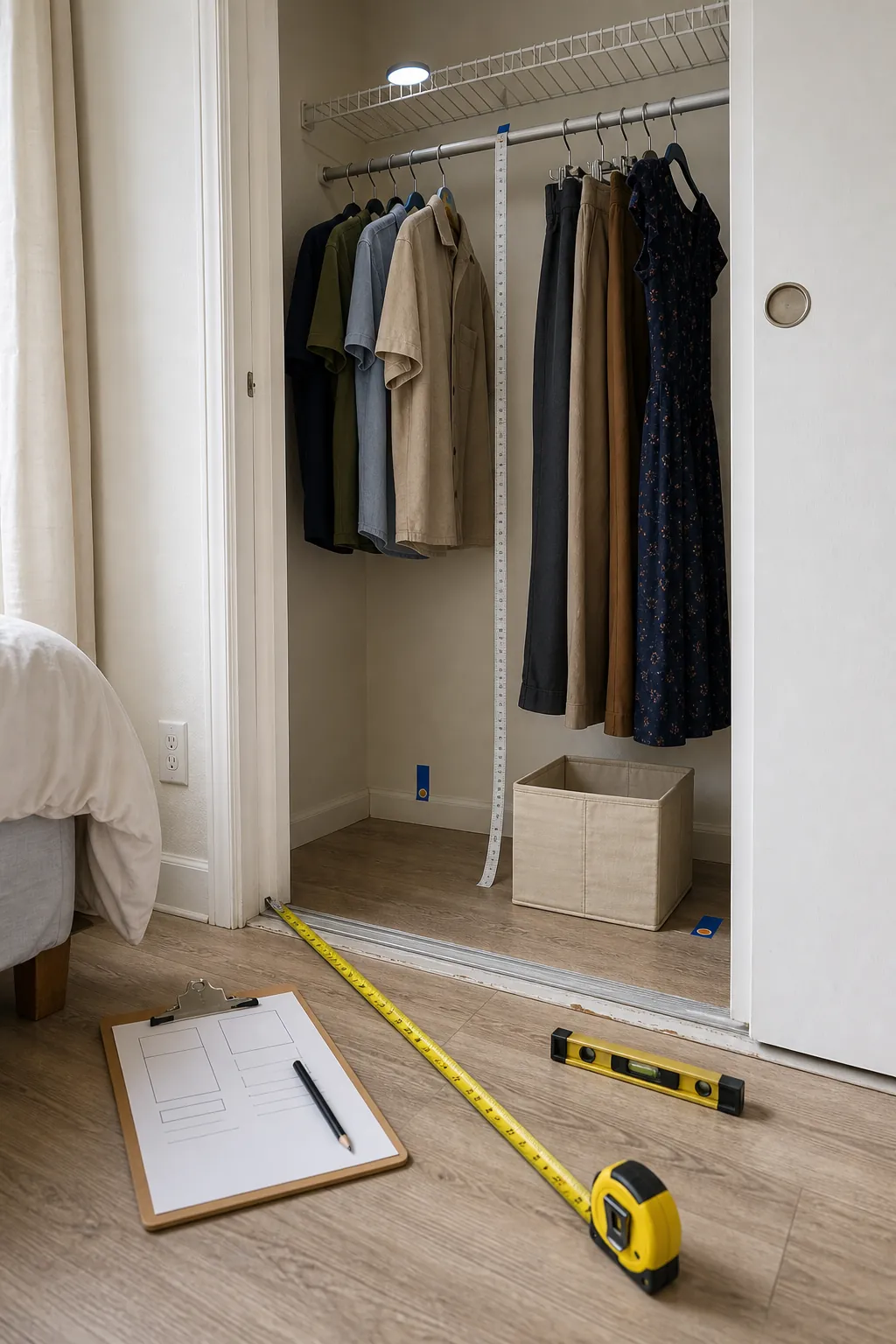
- Full-drop zone: dresses, long coats, and anything that must hang straight.
- Short-hang zone: shirts and jackets with useful space underneath.
- Shelf zone: lightweight bins that can be pulled out safely.
- Door zone: flat, lightweight accessories that will not block the handle.
Photograph the empty closet and save the measurements on your phone. Portable storage is only renter-friendly when it can be assembled inside the closet, pass through the door, and leave the original hardware untouched.
Double Only the Short-Hanging Space
A hanging rod extender can create a second tier for shirts, skirts, and folded trousers without adding wall brackets. The mistake is extending it across the entire closet. Keep a separate full-height section for dresses and coats, and check the original rod’s condition before adding weight.
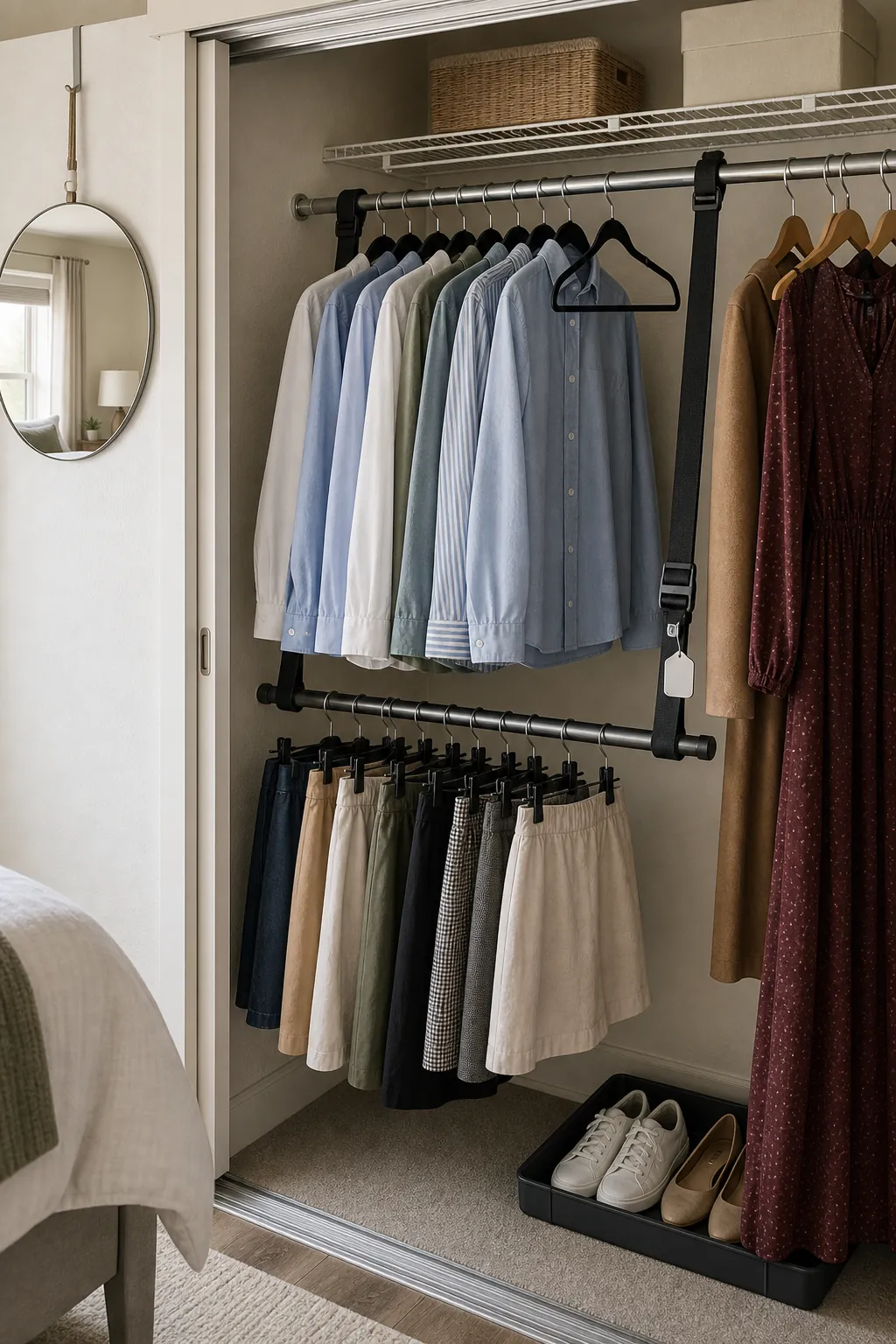
Place shorter tops above and lighter trousers below. Leave a few open hanger positions for clothes returning from the wash. A closet packed to its maximum on day one has no working capacity. Slim hangers can reduce bulk, but combining five heavy garments on one cascading hanger often makes access worse and overloads the rod.
Turn Open Shelves Into Removable Drawers
Soft workout clothes, pajamas, and knit tops do not stay in tidy horizontal piles because they have no boundaries. Use low-front bins that fit the shelf depth, then file fold clothing vertically. Each bin becomes a removable drawer: you can see every item and take one without lifting the stack above it.
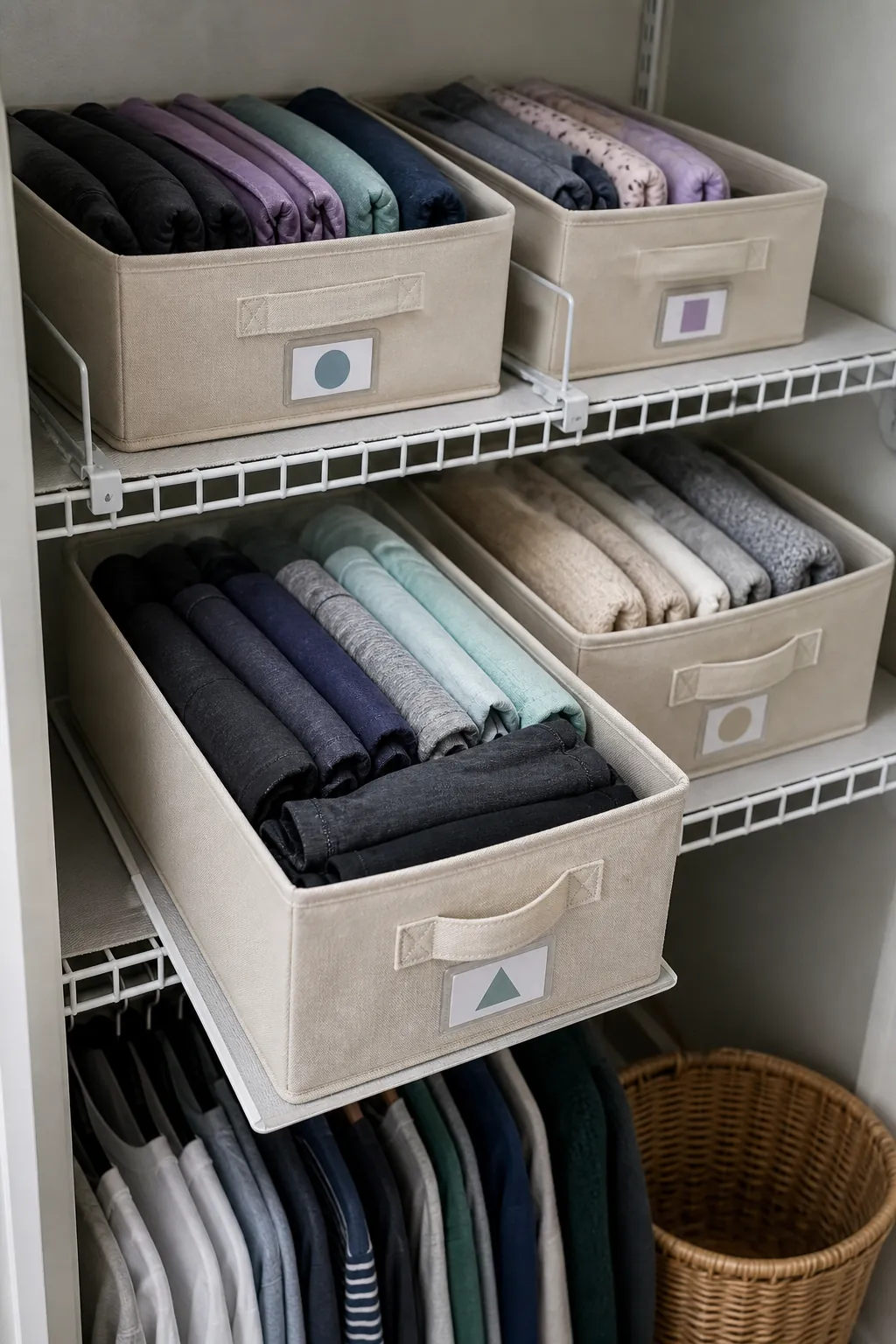
Add a removable liner over wire shelving so small items and flexible bin bases do not sag through gaps. Give each category one container and label the front. When a bin becomes difficult to close or return, edit that category rather than moving overflow into a mystery basket.
Fit a Freestanding Drawer Tower Under Shirts
If the bedroom cannot hold a dresser, a narrow drawer tower can sit beneath short garments. Choose a model with a rigid frame, adjustable feet, and drawers shallow enough to open through the closet doorway. Fabric drawers handle light clothes well; heavy stacks can make flexible drawers bow and drag.
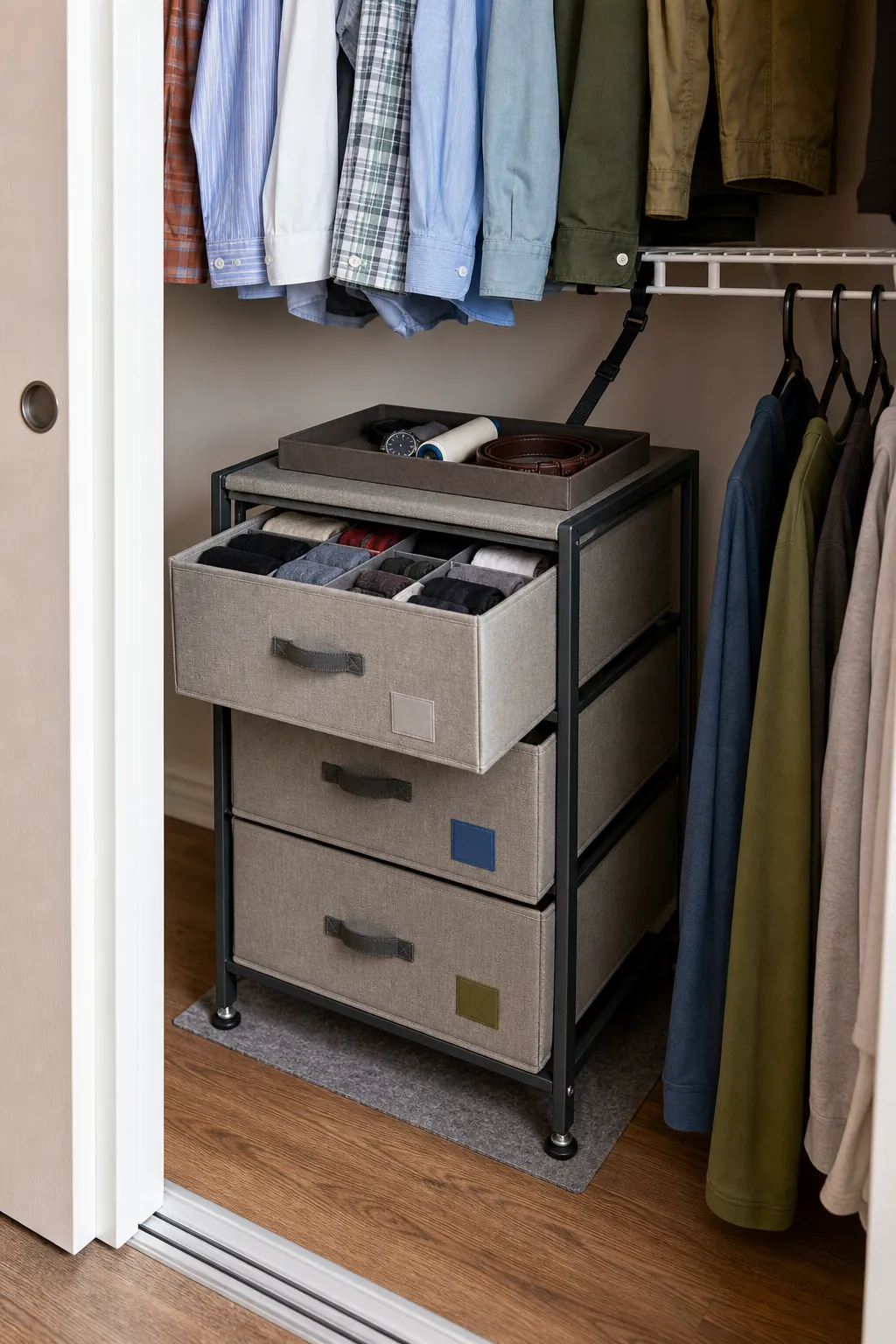
Build large units inside the closet if the doorway is narrow. Keep the door track and baseboard clear, and use a nonslip pad under the feet. Any tall freestanding unit still needs appropriate anti-tip restraint; ask the landlord about approved safety attachment options instead of assuming “no built-ins” means safety hardware is forbidden.
Move Accessories to the Back of the Door
Belts, scarves, hats, and small bags consume surprising shelf space. An over-door rail with hooks and shallow baskets gives them a visible home without adhesive. Protect the paint with felt pads and distribute weight across the rail. Reserve this zone for light items, not luggage or multiple heavy handbags.
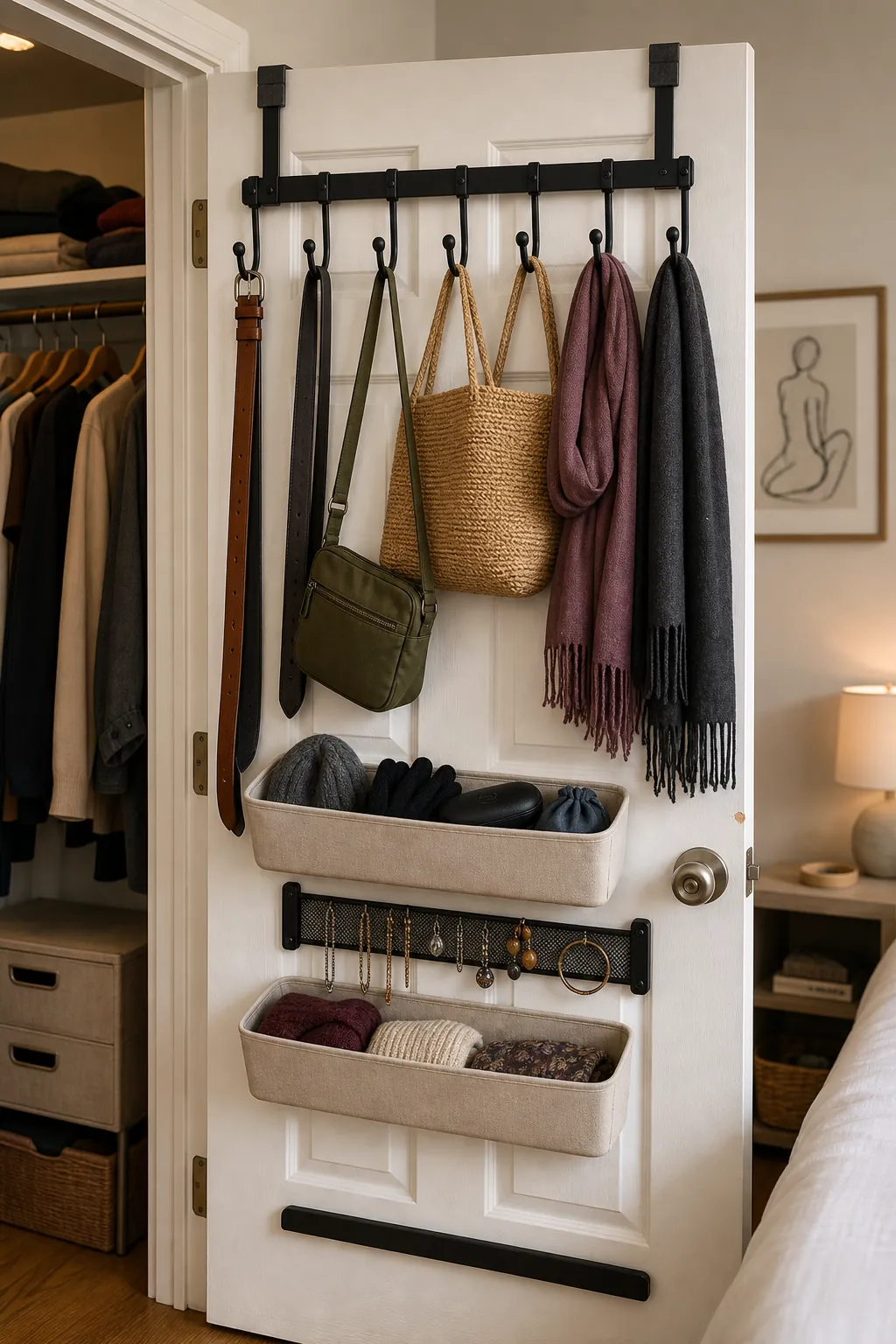
Test the loaded door slowly. Hooks must clear the jamb, baskets must stay above the floor, and straps must not cover the handle. Leave a few hooks empty so returning an accessory is a one-step action. If an organizer has to be rearranged every time you put something away, it is storage theater rather than a working system.
Use the Top Shelf for Lightweight Seasonal Storage
High shelves are best for light, infrequently used clothing: scarves, swimwear, special-occasion pieces, and off-season knits. Use breathable boxes with front handles and labels. Avoid placing heavy luggage overhead or allowing containers to overhang a wire shelf.
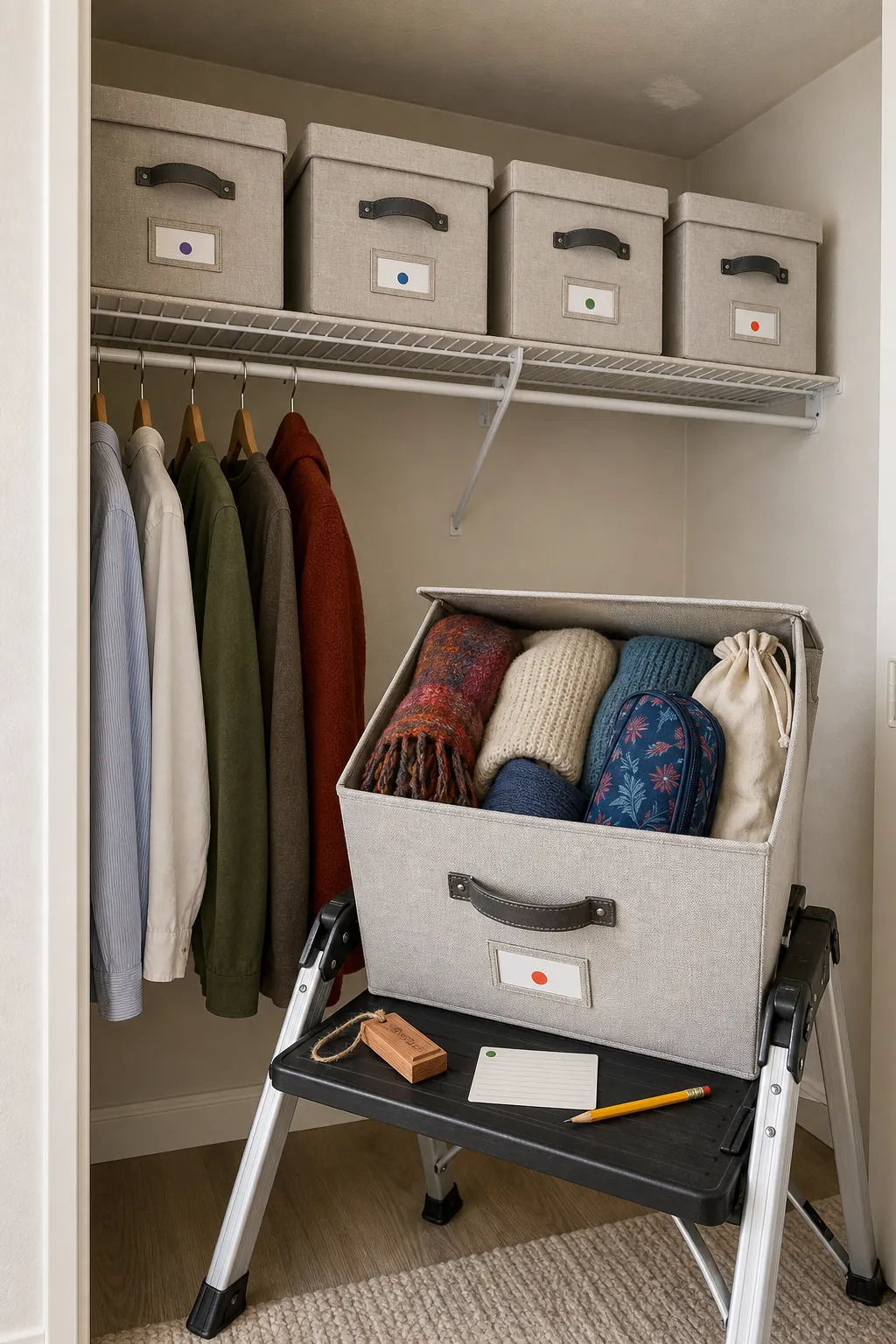
A rigid removable liner spreads the load across wire shelving. Keep handles facing forward and use a stable folding step stool rather than climbing on a chair. Seasonal storage also creates a natural capacity limit: if the category no longer fits its box, decide what deserves space before adding another container.
The strongest rental closet is not the one with the most products. It is the one that preserves the door opening, keeps each category bounded, and can move with you. Measure first, use reversible layers, and leave enough empty space for the system to function on an ordinary day.