
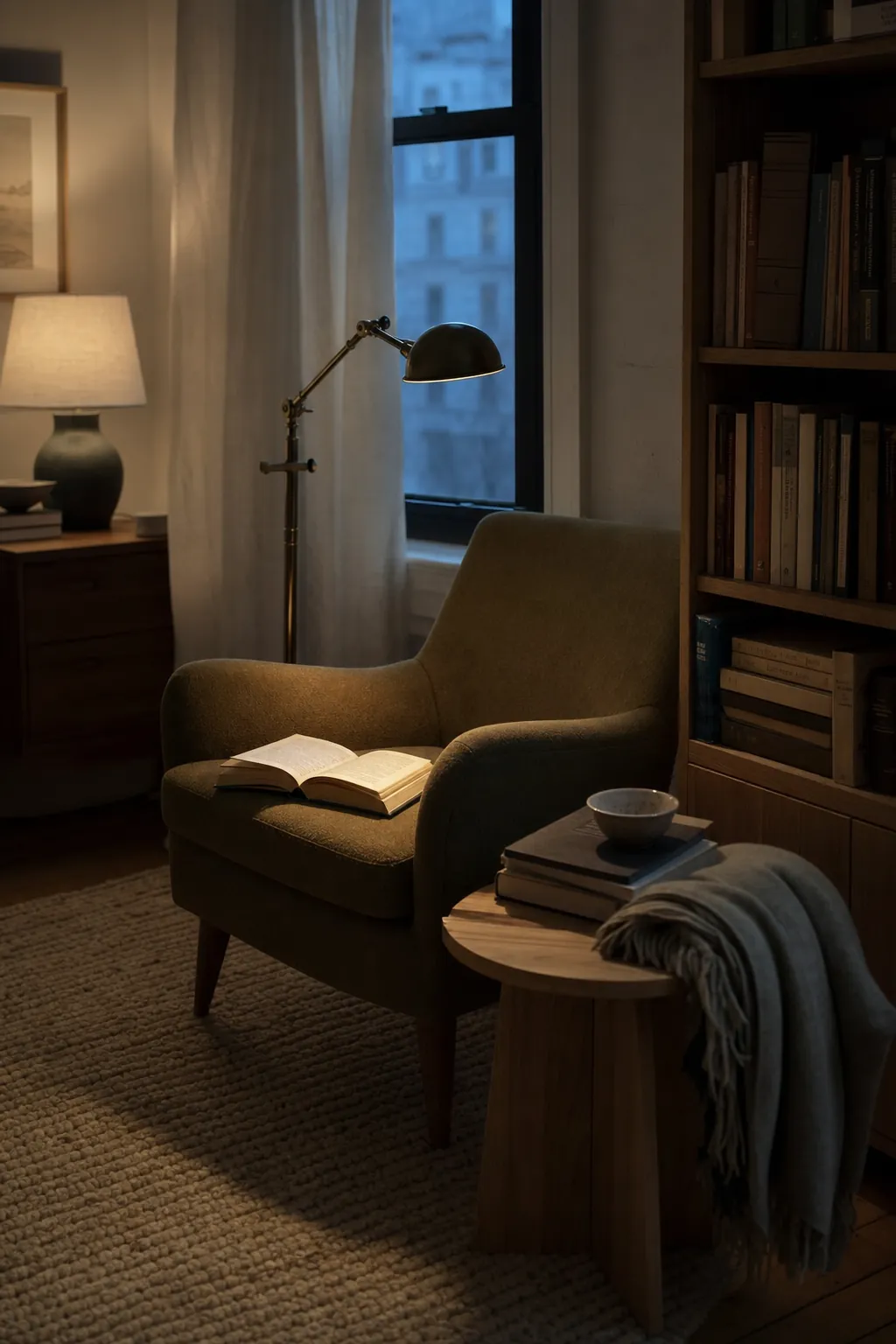
A reading nook can look beautifully cozy and still be frustrating after sunset. A tiny accent lamp makes the corner glow, but the page stays gray. A bright ceiling light fixes visibility, then flattens the mood you wanted in the first place.
The solution is to stop asking one light to do every job. A focused task light should make the book easy to read, while a softer second layer keeps the room from feeling harsh or cavernous. Once those jobs are separated, you can adjust the nook for paperbacks, illustrated books, dark walls, small spaces, and shared evenings.
Place the Reading Light Behind Your Shoulder
Start with the page, not the lamp style. Sit in your normal reading position and imagine a line from your eyes to the book. The bulb should stay outside that line. A floor lamp or swing-arm lamp placed slightly behind one shoulder can send light down across both pages without shining into your face.
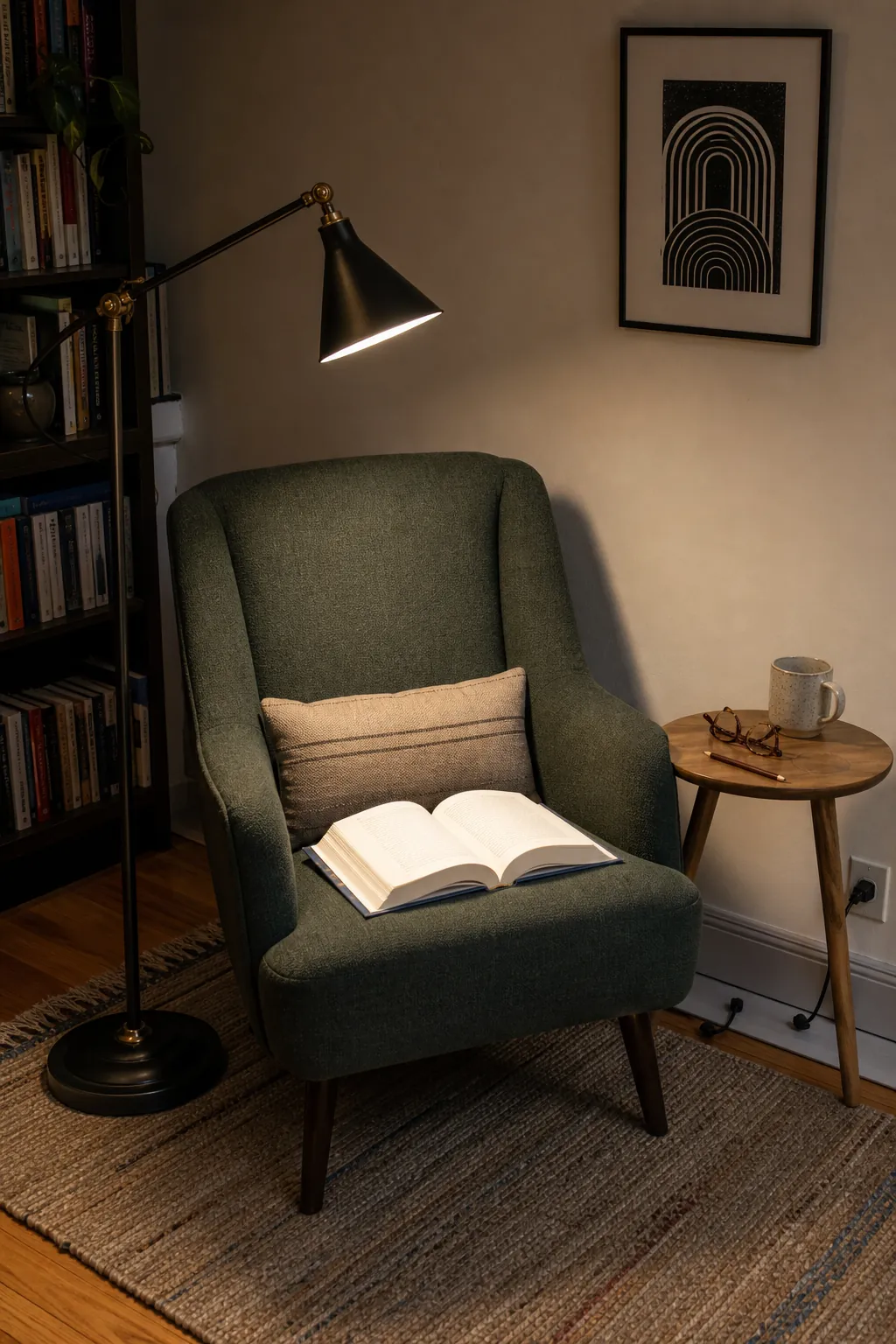
The shade should sit above seated eye level and aim at the center fold. If your hand casts a hard shadow across the text, move the lamp to the opposite shoulder or raise it. Left- and right-handed readers may prefer different sides. Correct placement often improves reading more than buying a brighter bulb.
Give Task Light and Ambient Light Separate Jobs
One capable lamp should illuminate the book. A second, dimmer source can lift the background so your eyes are not switching constantly between a bright page and a black room. That ambient source might be a shaded table lamp on a bookcase, a low wall-wash lamp, or a dimmable floor lamp pointed away from the chair.
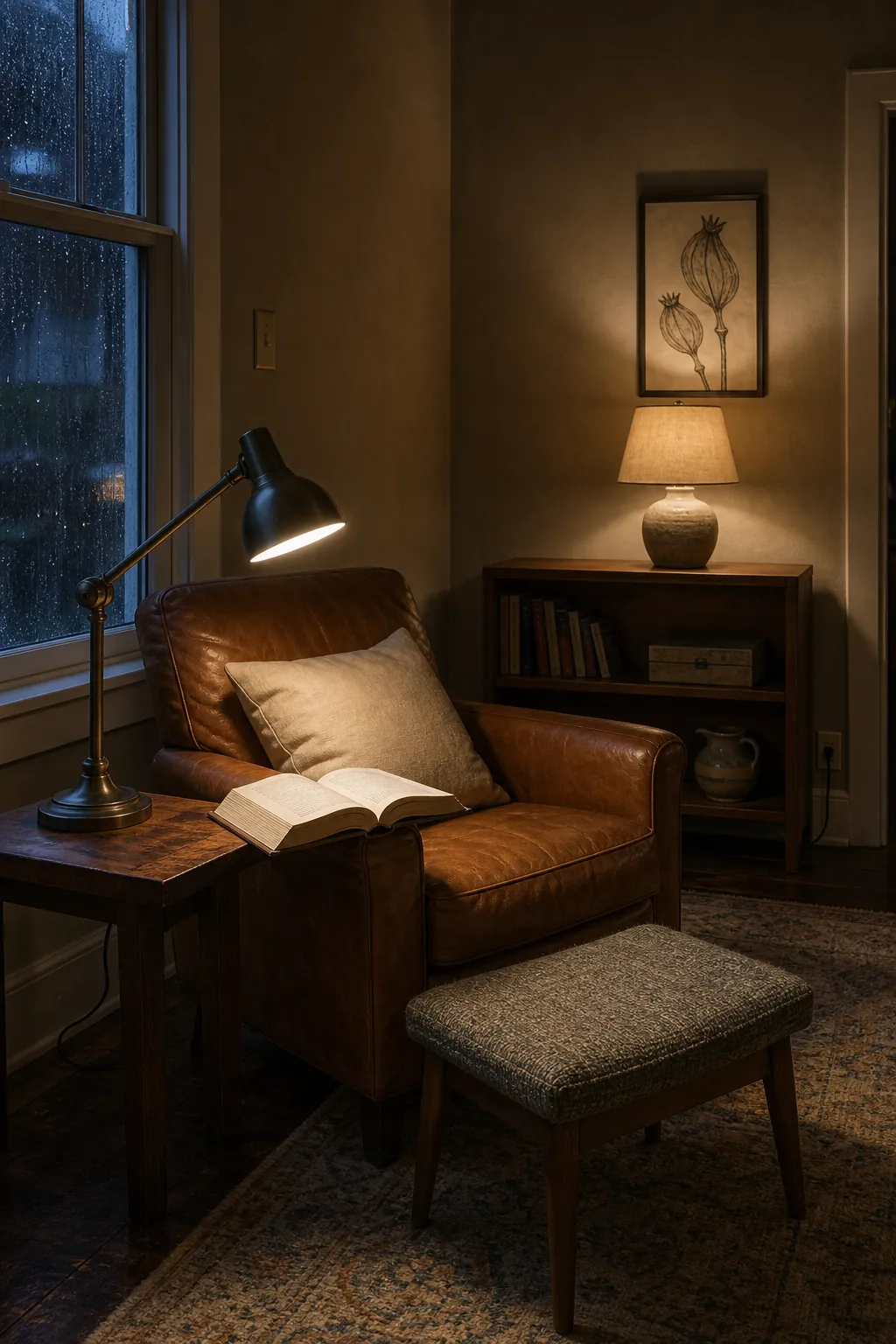
Keep the page as the brightest surface in the nook. The background lamp should be noticeably softer. Several small decorative lights at equal brightness can create visual clutter and multiple points of glare without producing a usable beam. Two well-placed layers usually feel calmer than five little lamps.
Use Pale Surfaces to Help Dark Corners
Deep paint, dark upholstery, and full bookshelves absorb light. That can make a cozy corner wonderfully cocooned, but it also means tiny mood lamps have very little surface to bounce from. Do not abandon the dark palette. Add one focused beam and one pale surface close to the book.
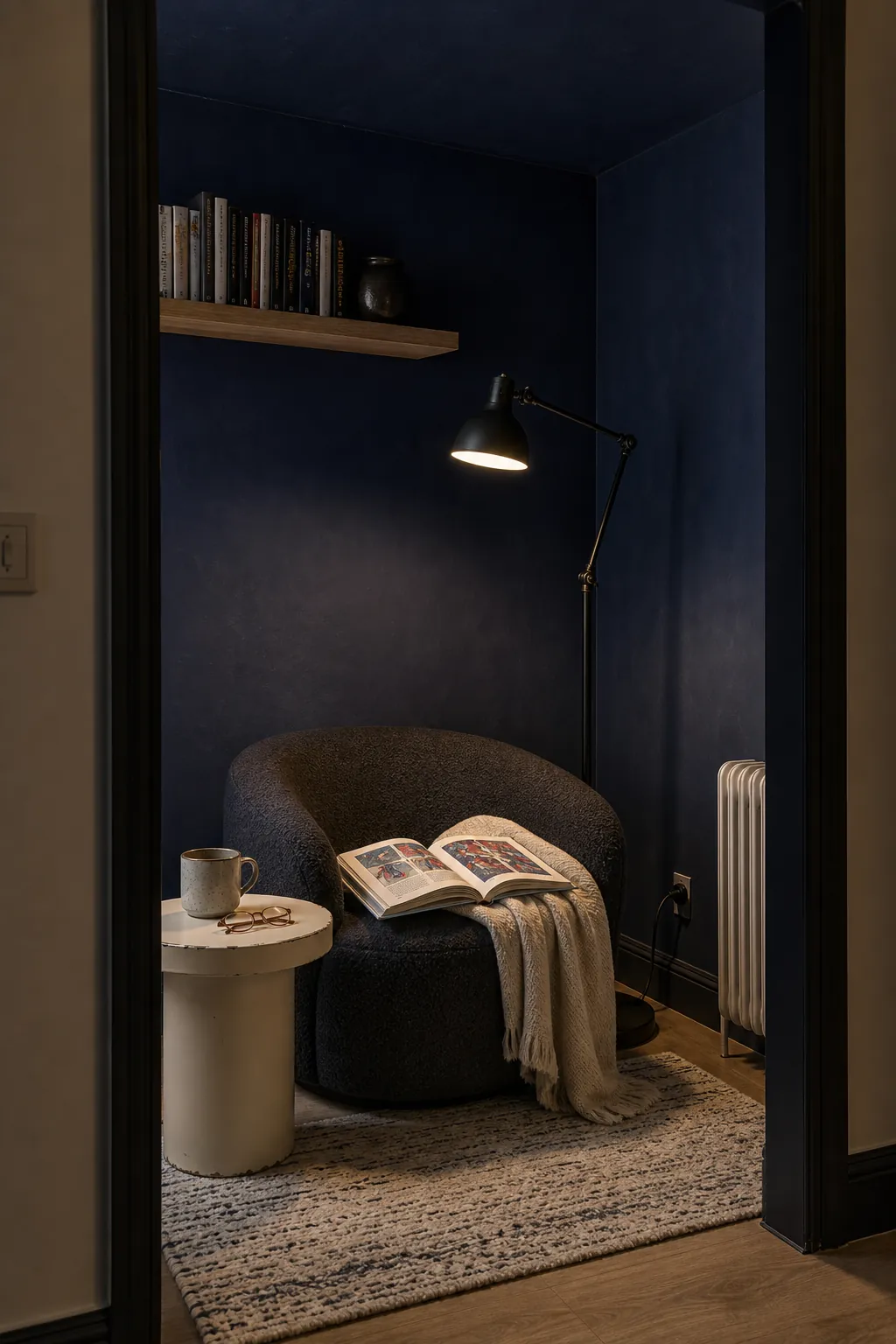
A cream side table, oatmeal throw, pale cushion, or lamp shade with a light interior can return a little illumination without changing the room’s identity. The effect should be subtle. You want enough reflected light to reveal texture around the chair, not enough to turn the alcove into an office.
Choose a Small-Space Lamp That Actually Fits
A narrow reading corner may not have room for a large floor-lamp base. A secure clamp lamp can work on a substantial bookshelf side, and a compact swing-arm table lamp can share a small side surface. For renters, plug-in sconces are another option when removable mounting hardware is appropriate for the wall.
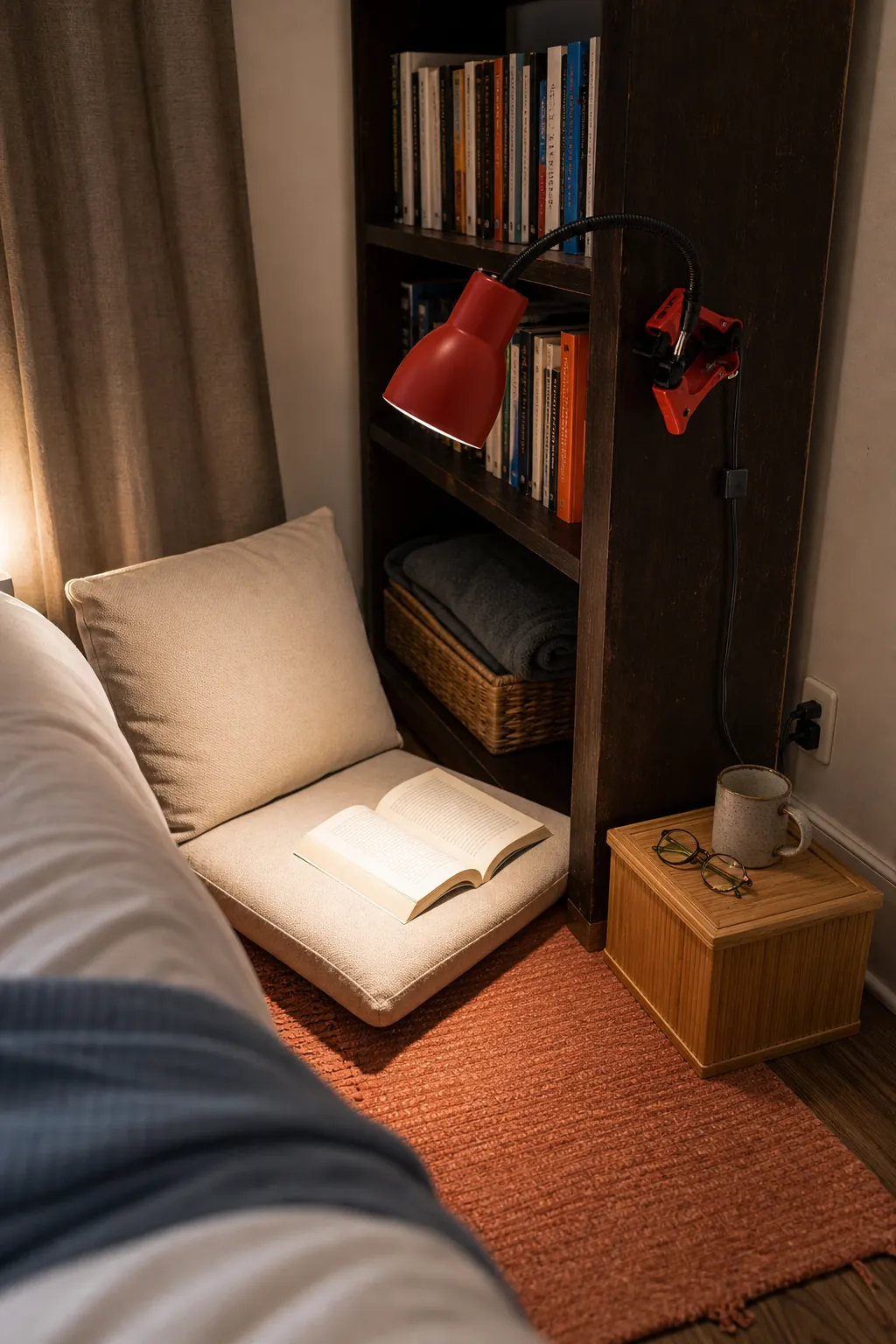
Check the mechanical details before the aesthetics. A clamp needs padded jaws and a strong structural surface. A swing arm needs a stable base. Every shade needs clearance from books, curtains, and blankets, even with a cool-running LED. Route the cord behind furniture and keep it out of the path between chair and door.
Control Brightness, Color, and Glare
For a softer evening mood, warm-white light around 2700K to 3000K is a useful starting range. The number alone does not guarantee comfort. An opaque shade prevents a direct view of the bulb, while good color rendering helps illustrations, textiles, and wood retain natural color instead of looking dull or strangely tinted.
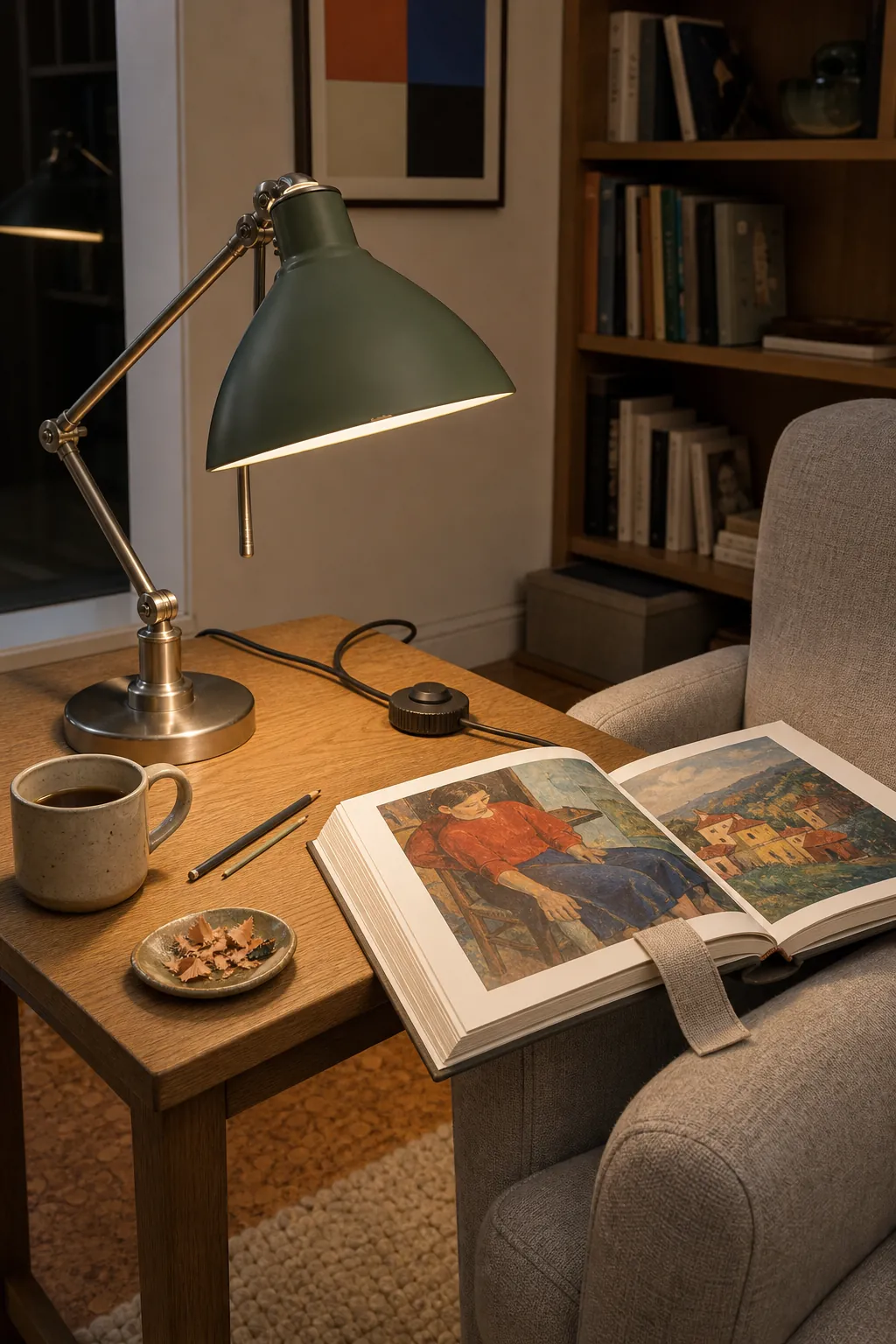
A dimmer lets the same lamp adapt as the sky changes and as your eyes tire. Set the lowest level that leaves the page comfortable, then add ambient light only if the surrounding contrast feels severe. Avoid bulbs that flicker at low settings, and make sure the bulb and dimmer are compatible.
Keep the Light Inside the Reading Zone
In a shared bedroom or open-plan room, the softest light is often the one that stays where it is needed. Turn the chair slightly away from the sleeping or television zone. Use a high back, deep shade, or narrow adjustable beam to limit spill. A faint floor-level nightlight can make movement safe without lighting the whole room.
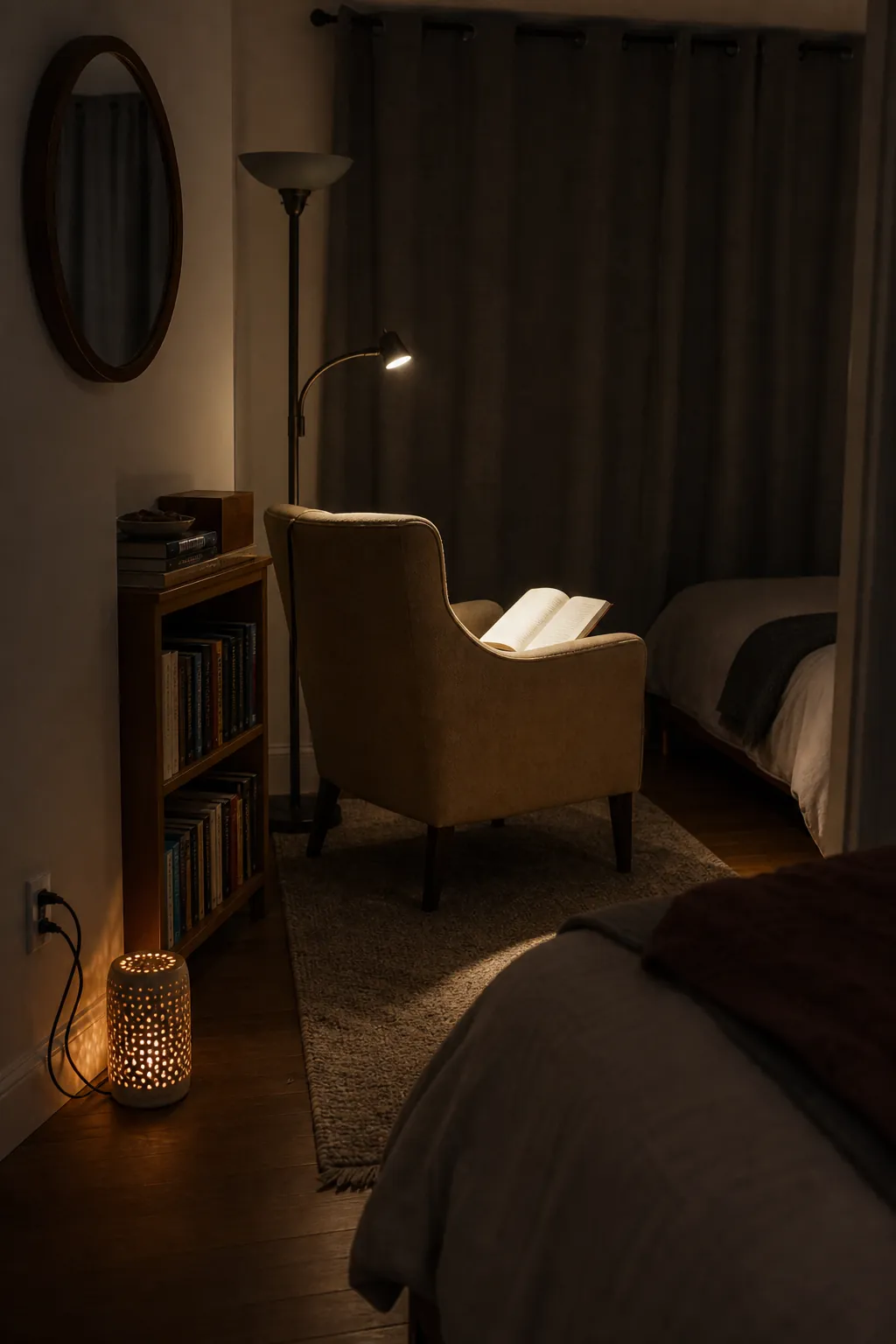
Use the same switching sequence each night: overhead light off, reading light on, background light reduced, book opened. That simple routine makes a cozy corner feel distinct from the rest of the day. The best reading nook lighting does not call attention to itself; it lets the room grow quiet while the page remains effortless to see.