
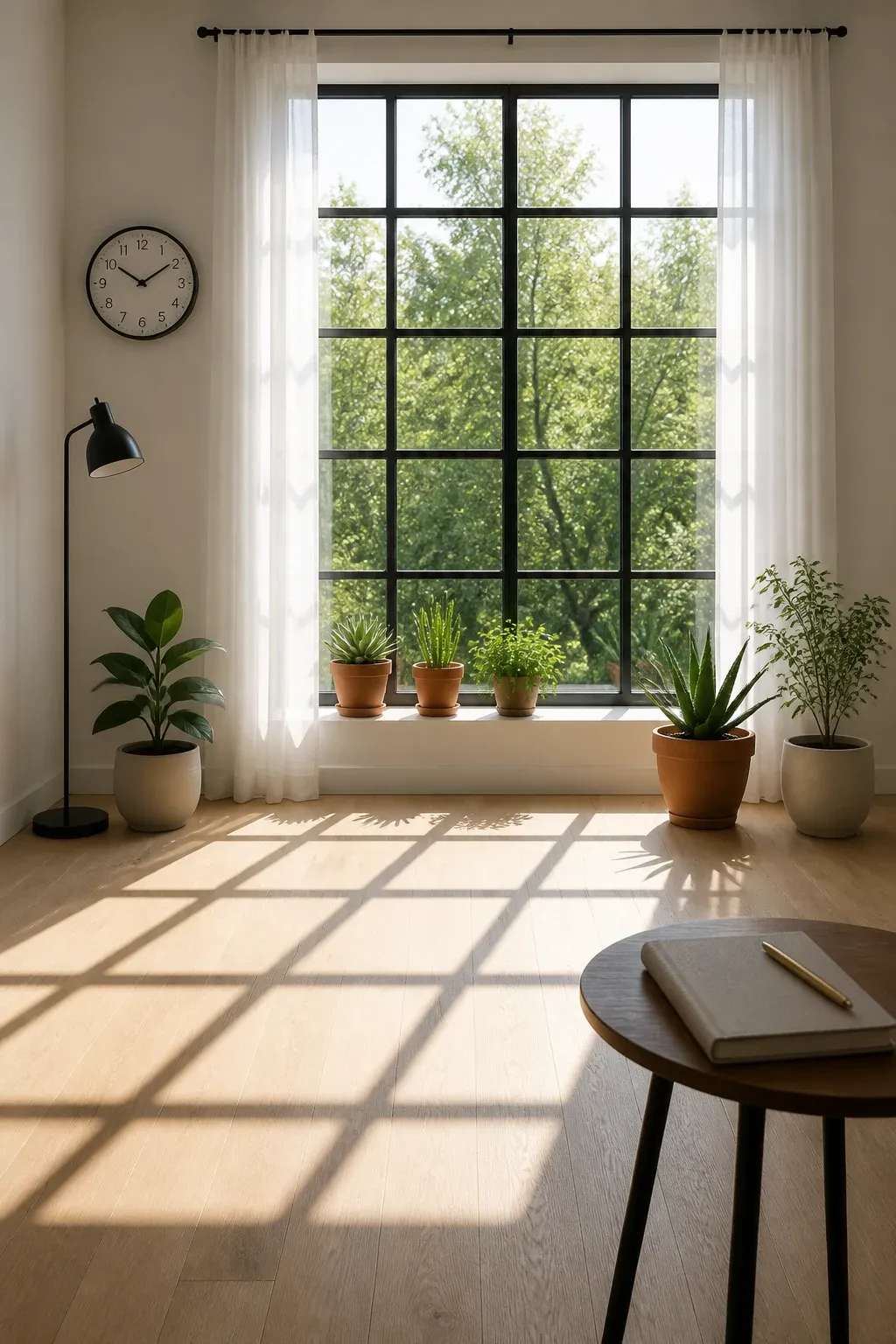
Turning a simple window into a cozy plant nook is one of the easiest ways to bring life into your home. It creates a quiet spot where you can drink your morning coffee or read a book surrounded by greenery. You don't need a massive sunroom to make this work; even a small corner with a single window can become a lush retreat.
This guide covers how to assess your light, choose the right plants, and pick furniture that makes the space feel cohesive. We will also look at how to use natural textures and varied heights to create a professional look without spending a fortune.
Understanding the Light in Your Space
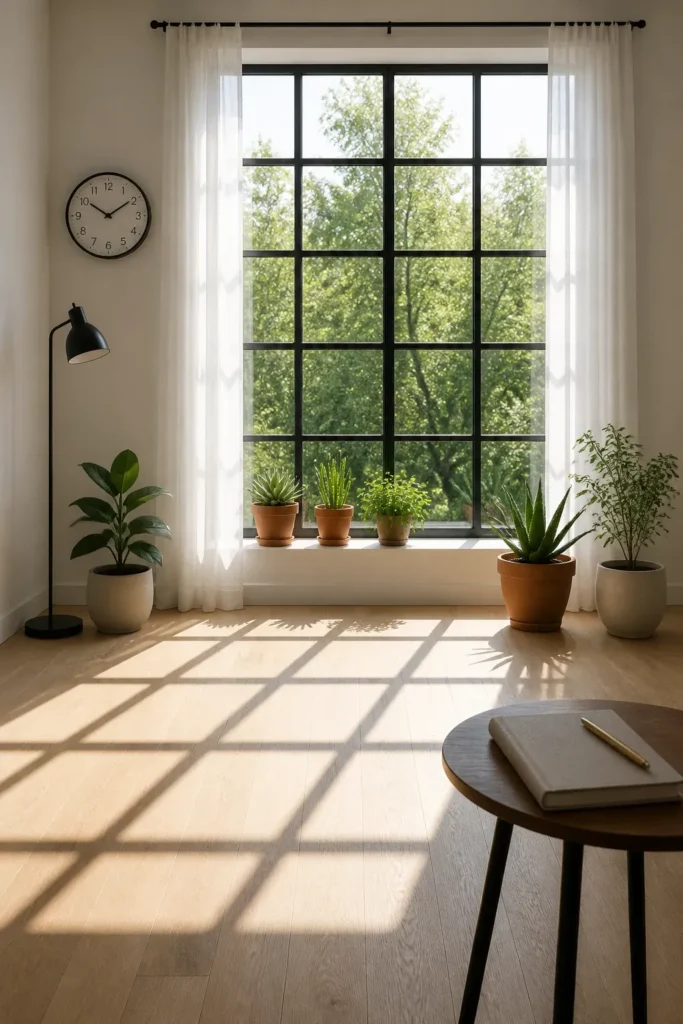
Before you buy any plants, you need to know what kind of light your window actually provides. South-facing windows usually get the most intense sun throughout the day, which is great for desert plants. North-facing windows offer much softer, consistent light that works well for foliage that burns easily. East and west windows provide a mix, with morning or afternoon sun respectively. Spend a day watching how the light moves across the floor. If the sun hits the spot directly for more than four hours, it is bright light. If it is just bright enough to read but the sun doesn't touch the leaves, it is medium or low light. Knowing this prevents you from accidentally killing plants that can't handle the heat.
Choosing Plants That Thrive in Window Light
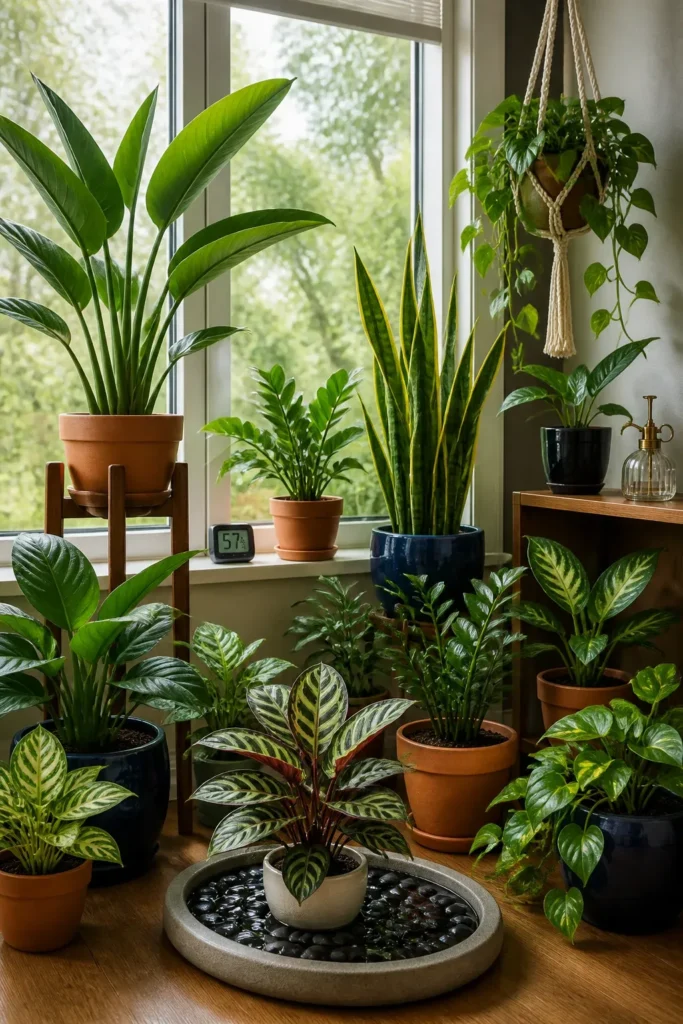
Once you know your light levels, pick plants that naturally grow in those conditions. For bright, sunny windows, succulents, cacti, and bird of paradise are solid choices. They can handle the heat and direct rays. If your window is shaded or faces north, look for snake plants, ZZ plants, or pothos. These are hardy and don't mind lower light levels. It is also smart to think about the humidity. Most indoor spaces are dry, so if you want tropical plants like ferns or calatheas, you might need to group them together or use a small tray of water nearby to keep the air moist.
Selecting Furniture for Your Indoor Greenery
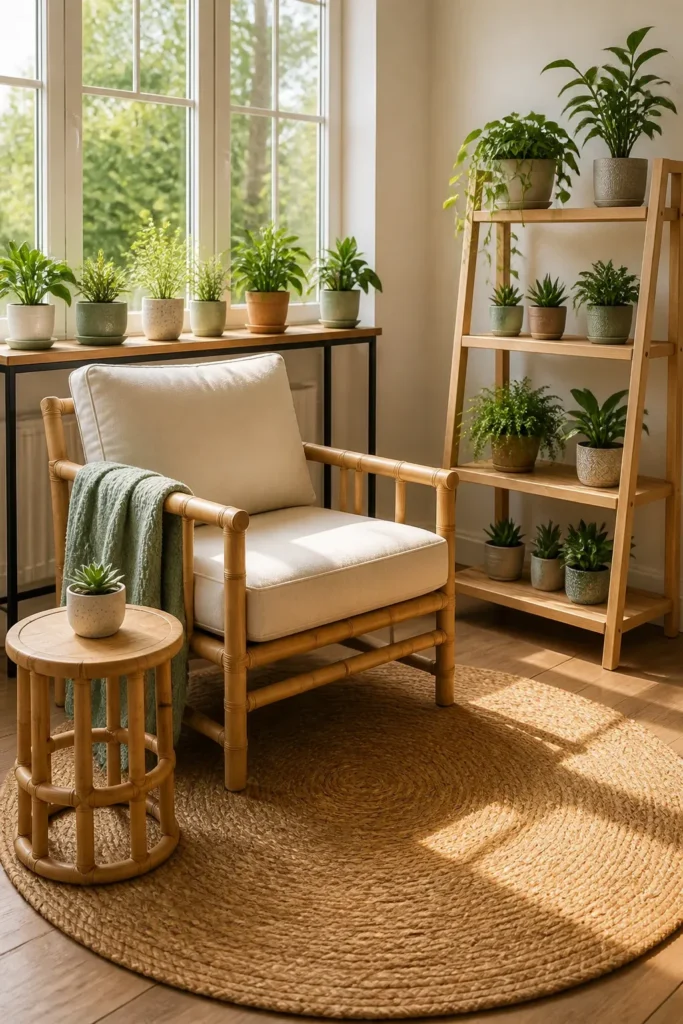
A good plant nook needs a place for you to sit and a place for the plants to live. A comfortable chair is the centerpiece. Choose something that fits the scale of the window so you don't block all the light. Bamboo chairs or small wooden benches work well because they feel light and airy. For the plants themselves, a sturdy side table or a multi-tiered shelf can maximize your vertical space. If you are short on floor room, consider a narrow console table that sits right against the windowsill. This keeps the walkway clear while giving you plenty of surface area for different pot sizes.
Adding Texture with Natural Materials and Textiles
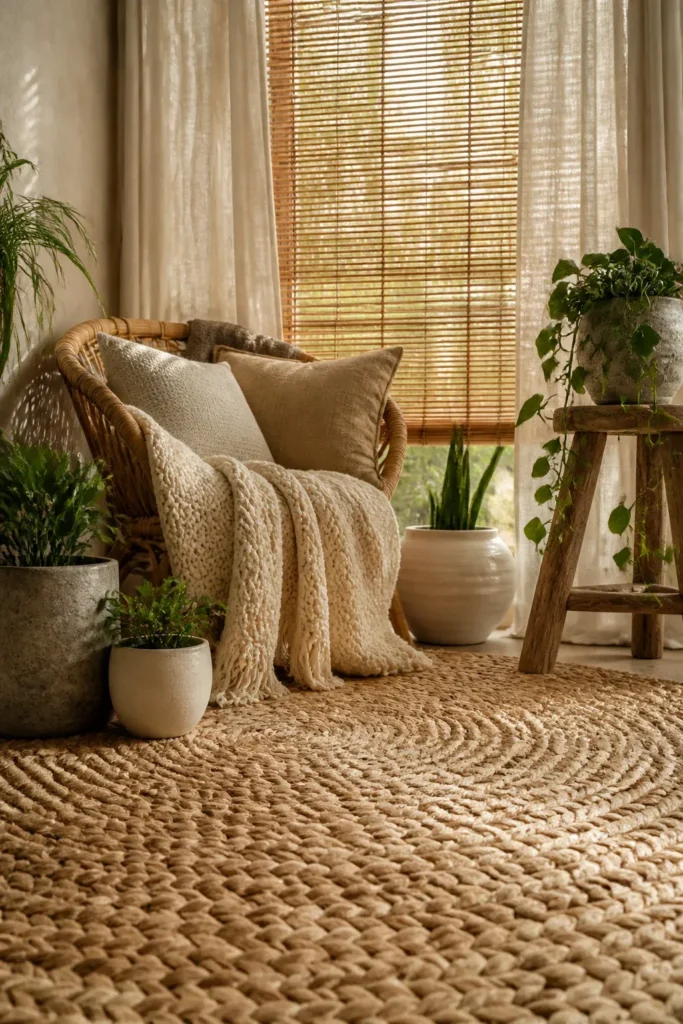
To make the nook feel like a part of your home rather than just a storage area for pots, bring in different textures. Use a woven rug made of jute or seagrass to define the area. Bamboo blinds or linen curtains can help you control the light while adding a soft, organic look. Throw a cotton blanket over your chair and add a couple of pillows. These fabrics absorb sound and make the corner feel much warmer. Mixing materials like wood, stone, and natural fibers creates a layered look that feels intentional and relaxed.
Arranging Pots and Stands for Visual Depth
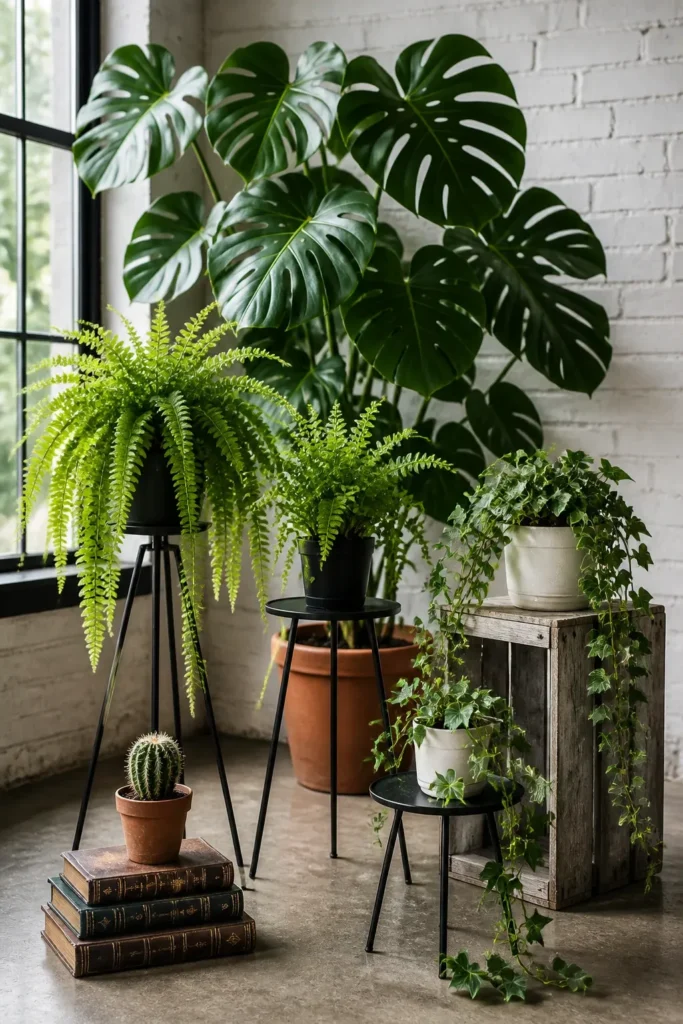
Avoid lining up all your plants in a straight row. This looks flat and uninteresting. Instead, use plant stands of different heights to create layers. Place larger, taller plants in the back or on the floor, and set smaller pots on tables or stools in front. You can even use old crates or sturdy books to lift pots up. Grouping plants in odd numbers, like threes or fives, usually looks better to the eye. Try to mix leaf shapes too; put a broad-leafed Monstera next to a wispy fern or a trailing ivy to create contrast and make the arrangement feel more natural.
Maintaining Your Indoor Garden Throughout the Year
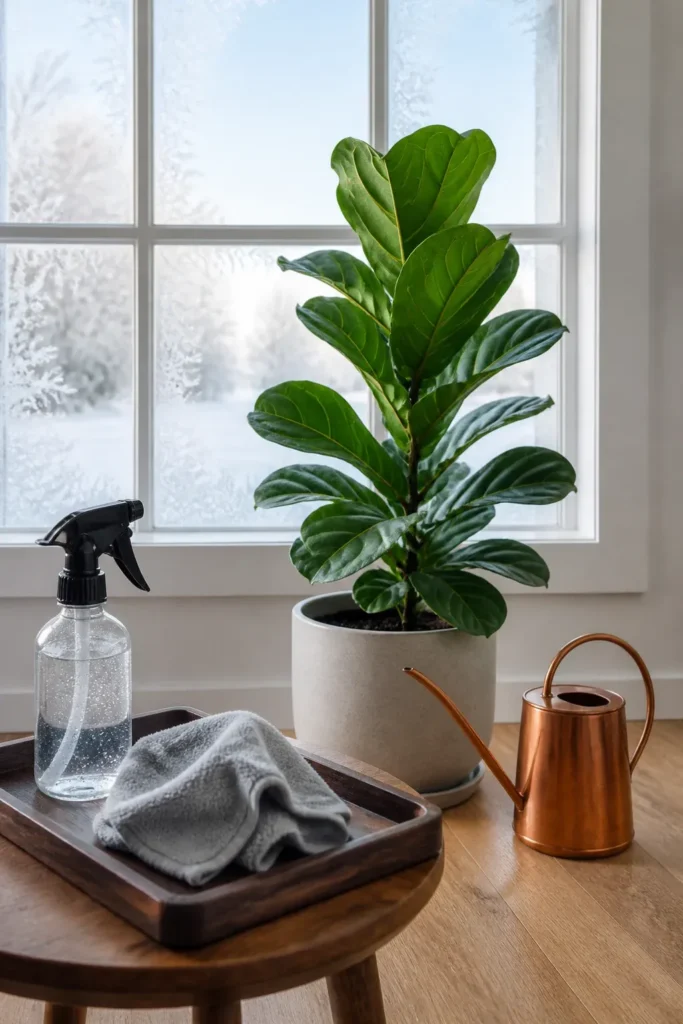
Your plant nook will change with the seasons. In the winter, the air near windows can get quite cold, so you may need to move sensitive plants a few inches back from the glass. Light levels also drop, meaning you should water less often since the plants aren't growing as fast. During the summer, keep an eye out for scorched leaves if the sun gets too intense. Dust the leaves regularly with a damp cloth so they can soak up as much light as possible. Rotating your pots every few weeks ensures the plants grow evenly instead of leaning toward the glass.
Setting up a window plant nook is a simple way to improve your daily environment and connect with nature indoors. By matching your plants to your light and adding comfortable, natural furniture, you create a space that is both functional and beautiful. Start with one or two hardy plants and a favorite chair, then let your collection grow as you get used to the light in your home.