
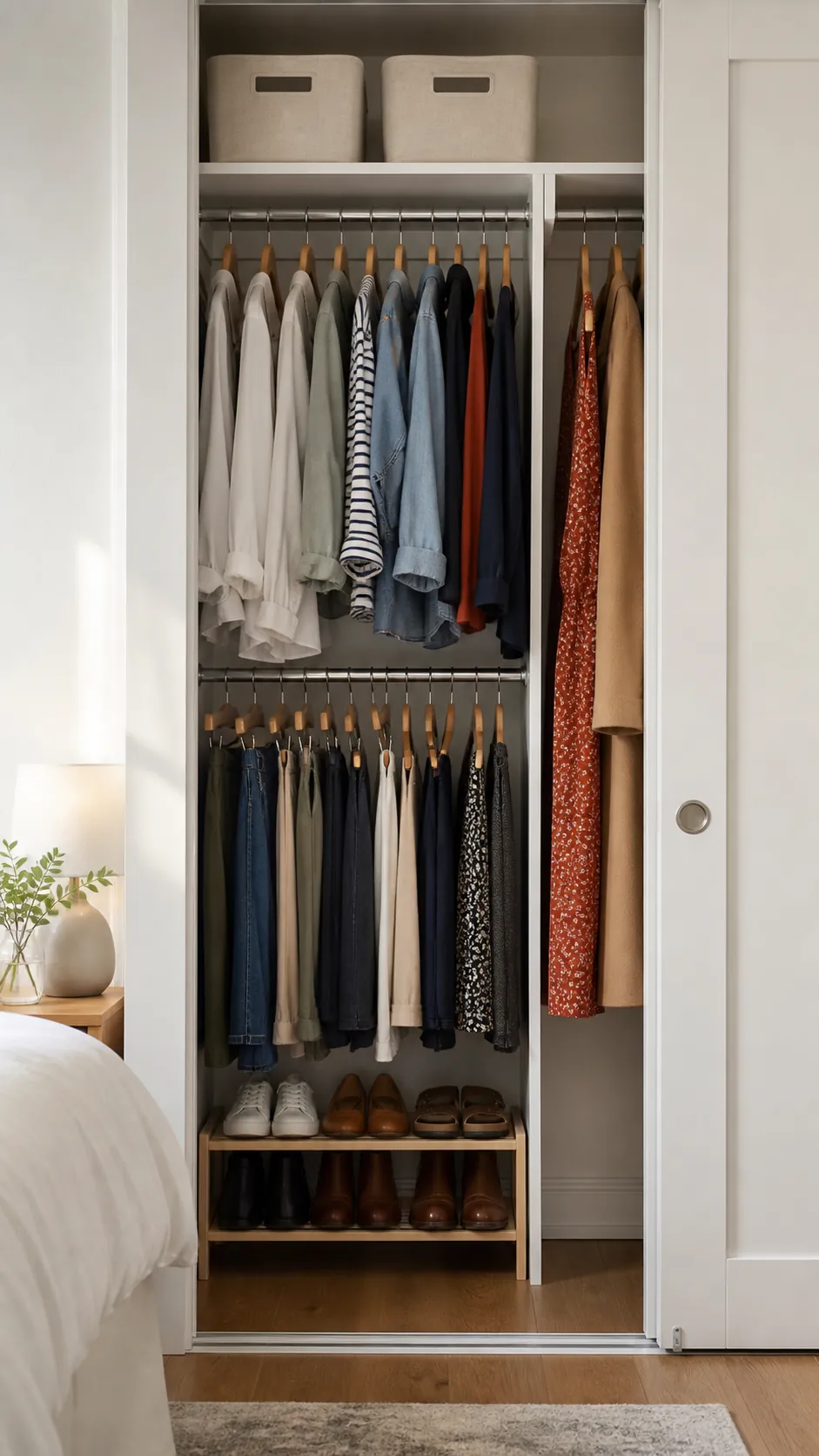
A second closet rod can create a surprising amount of hanging space, but only when it is placed around the clothes you actually own. Install it at a generic height and the result is often two crowded rails, wrinkled hems, an unusable shelf, and shoes buried under sleeves. The smartest small closet ideas with double hanging rods begin with a wardrobe audit, not a hardware purchase.
This guide shows how to turn one cramped reach-in closet into a useful two-level system while keeping room for dresses, shoes, bins, and the awkward realities of sliding doors or rental walls.
Audit the clothes before you divide the closet
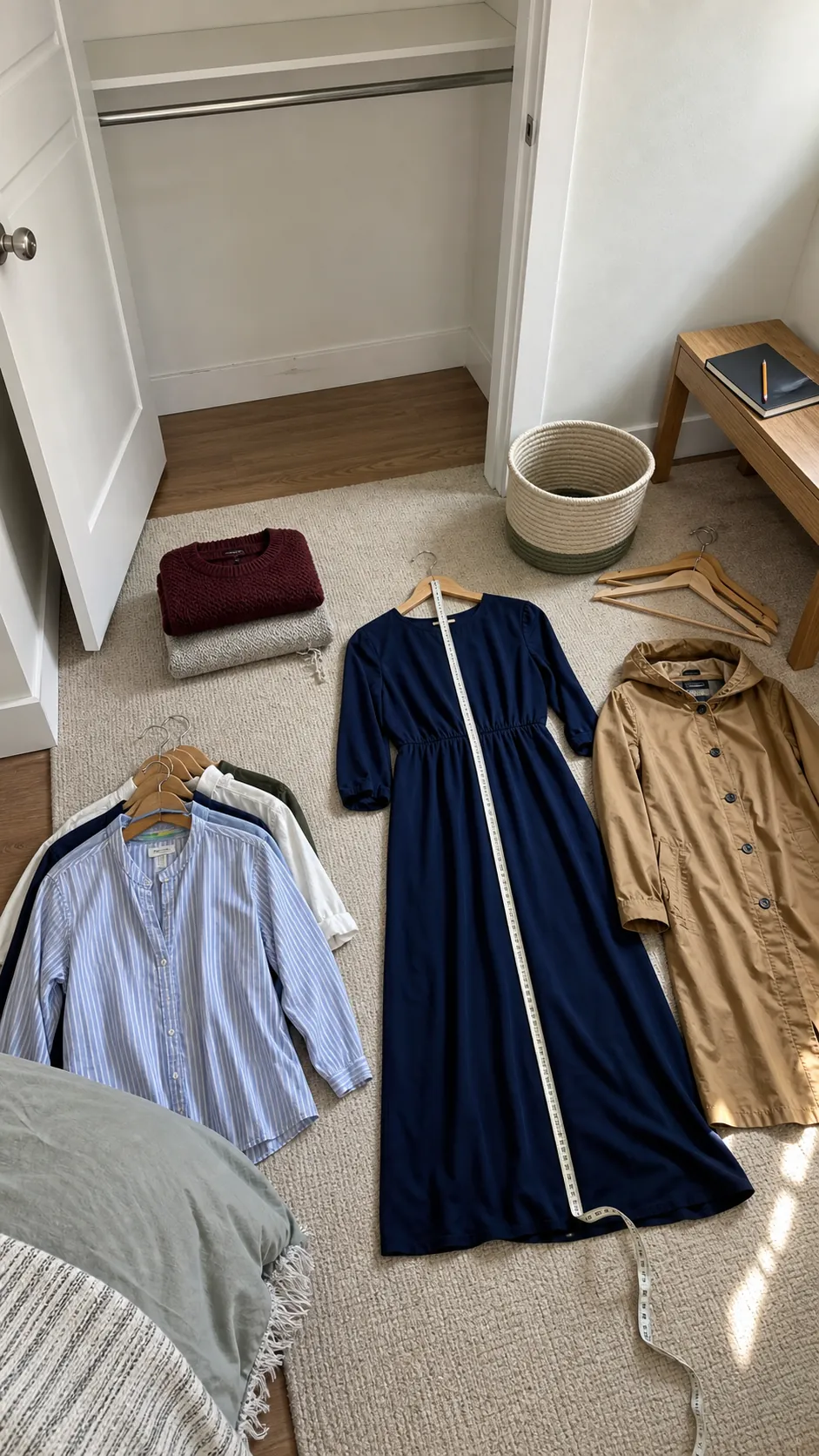
Emptying the closet feels like extra work, yet it prevents the most expensive mistake: designing for an imaginary wardrobe. Sort hanging clothes into short pieces, long pieces, foldable pieces, and rarely worn pieces. Shirts, blouses, folded trousers, short skirts, and many jackets usually fit double-hang zones. Maxi dresses, long coats, robes, and jumpsuits need uninterrupted drop space.
Measure the longest item in each group from the hanger hook to the hem. Then measure the total rod width each group occupies without crushing hangers together. The ratio of short to long clothing should determine the layout. If 80 percent of your wardrobe is short, devote most of the closet to double hanging and reserve one slim bay for long garments. If long clothing dominates, a full-width second rod will make the closet worse.
This is also the moment to remove stained, uncomfortable, or never-worn pieces. Double hanging rods increase capacity, but they cannot make an overfilled wardrobe easy to use.
Set rod heights from garment drop, not guesswork
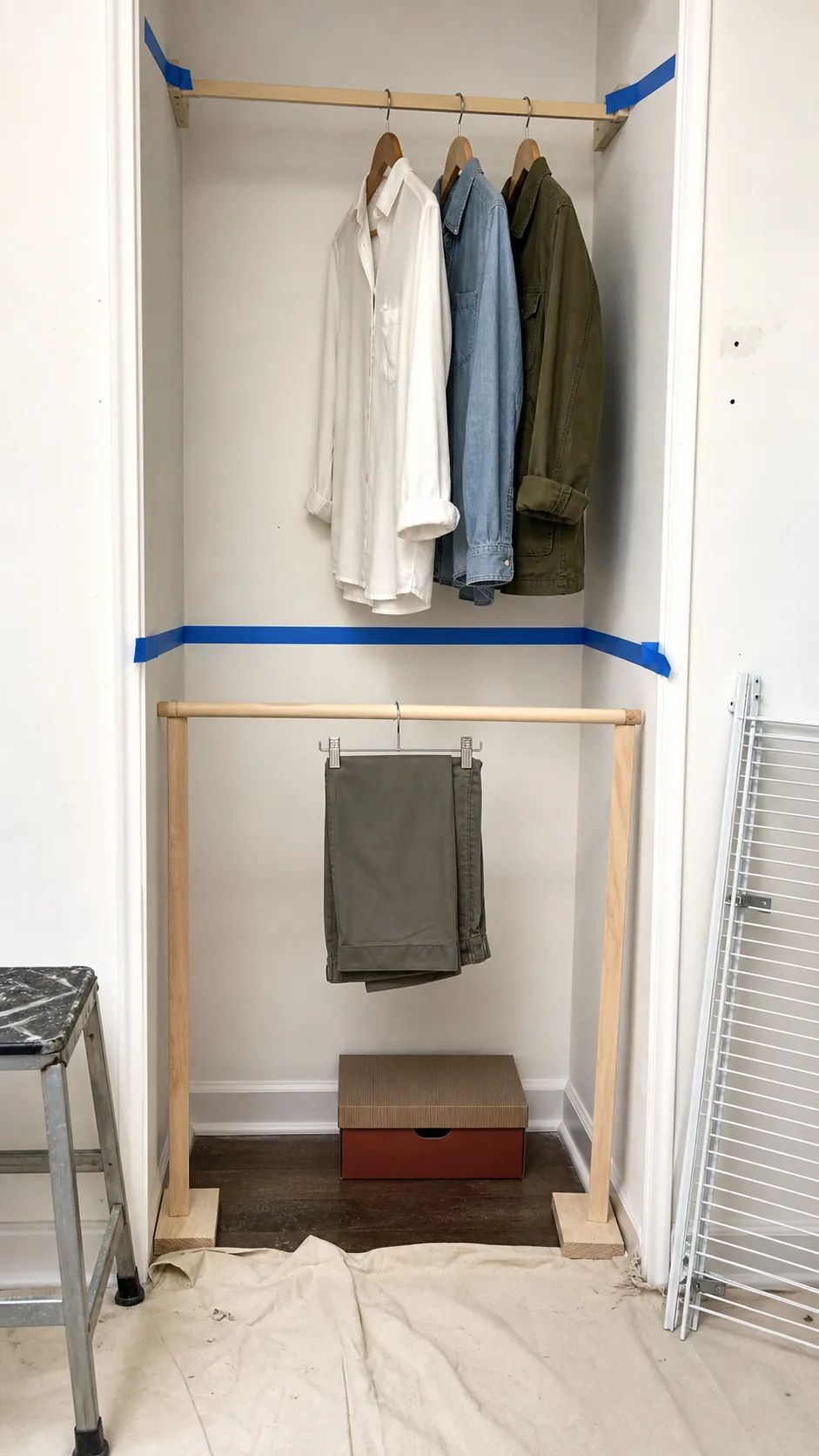
A common double-hang starting point is an upper rod around 80 to 84 inches from the floor and a lower rod around 40 to 42 inches. Treat those numbers as a test position, not a command. Ceiling height, shelf thickness, hanger style, user height, and the length of your clothes all change the useful spacing.
Mock up both rails with painter’s tape. Hang the longest short garment from a temporary hanger or hold it at the proposed upper height. Leave a little breathing room between its hem and the lower rod so fabric does not bunch. Repeat beneath the lower rail, allowing clearance above shoes, drawers, or the floor. Make sure the upper hangers will not collide with a shelf.
Depth matters too. In a shallow closet, standard hangers may scrape the doors or sit at an angle. Check the hanger shoulder against the closed door before drilling. With bypass sliding doors, test whether both rods remain reachable through each opening. A rod that doubles capacity but hides half the wardrobe is not a functional upgrade.
Keep one narrow long-hang zone
The most adaptable layout is rarely two full-width rods. A better closet system uses double hanging across the main section and keeps 12 to 24 inches of full-height space at one side. That narrow bay protects dresses and coats while leaving most of the wall available for shirts, pants, and skirts.
Place long garments at the side that is easiest to reveal when the door opens. With sliding doors, avoid putting the most-used category behind the fixed overlap in the center. If one end is awkward to reach, assign it to occasion wear or out-of-season clothing. Daily shirts and work trousers belong in the clearest opening.
Use the floor below the long-hang bay carefully. A low shoe tray can work beneath shorter dresses, but tall bins often crush hems and make garments flare outward. The open vertical line also makes a packed small closet feel calmer.
Use the shelf and floor as supporting zones
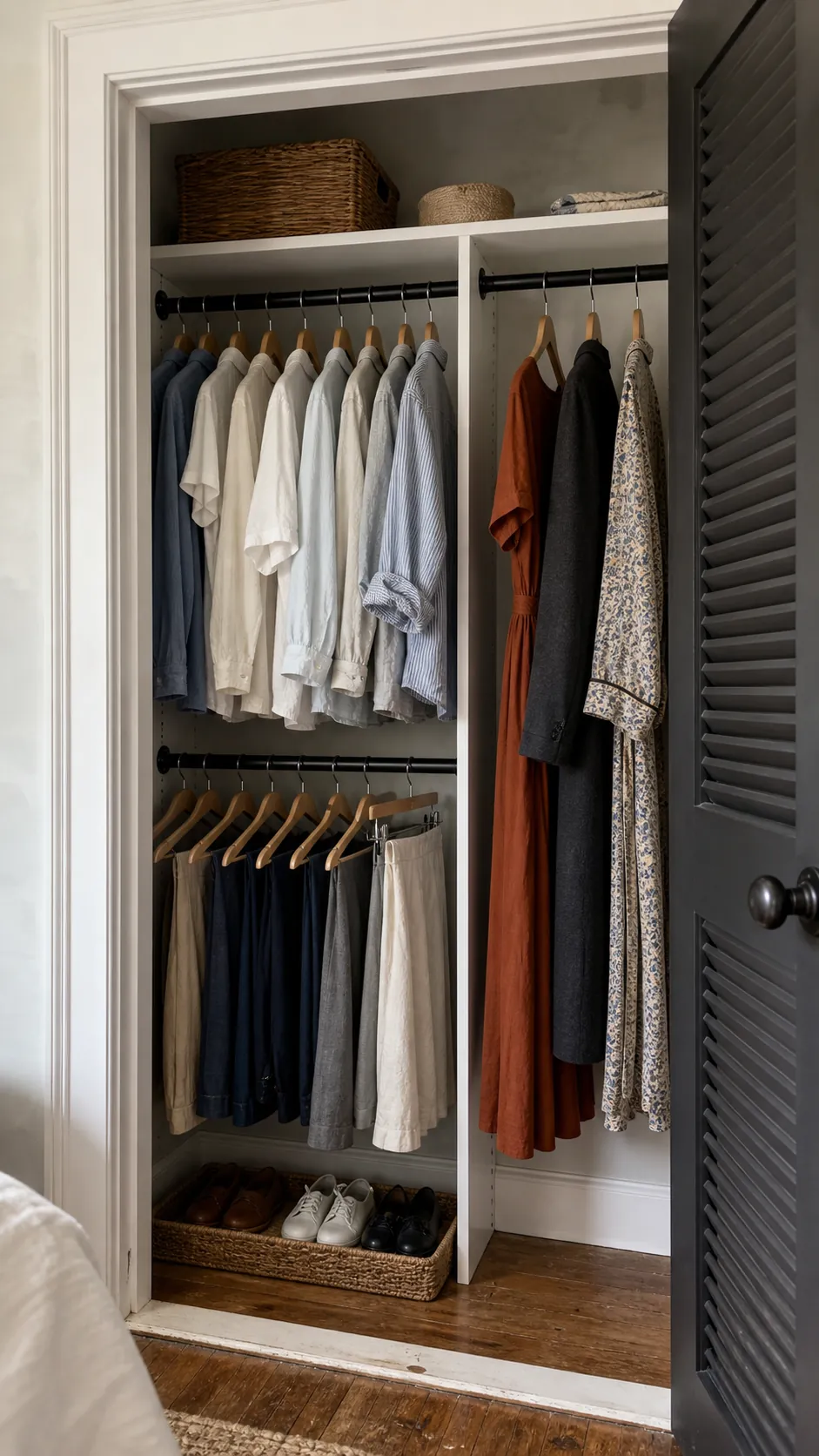
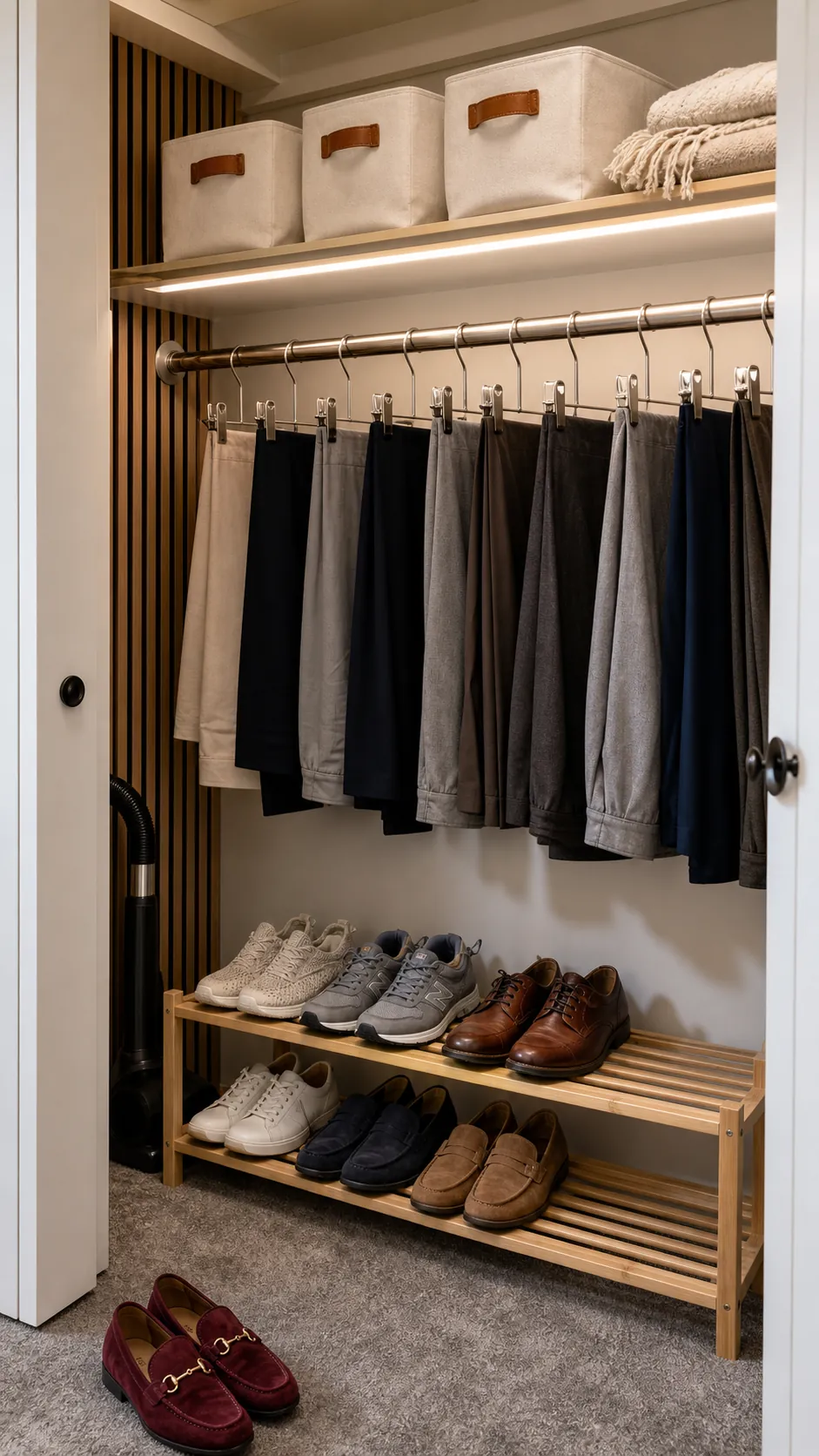
Once two rods handle everyday clothes storage, the shelf and floor should support the hanging system instead of competing with it. Put lightweight, low-frequency items on the top shelf: seasonal knits, spare linens, travel bags, or occasion accessories. Matching bins are useful only if they are shallow enough to pull down safely and labeled clearly.
Keep the floor visually open where possible. A slim shoe rack, two low baskets, or a compact drawer unit can occupy the space beneath the lower rod, provided hanging clothes clear it. Measure the usable height after garments are hung; do not buy drawers first and hope they fit.
- Top shelf: light, seasonal, and rarely needed items
- Upper rod: less-frequent shirts, jackets, or a partner’s category
- Lower rod: daily pieces that are easiest to reach
- Floor: shoes or contained small items with generous hem clearance
Choose renter-friendly hardware without accepting sag
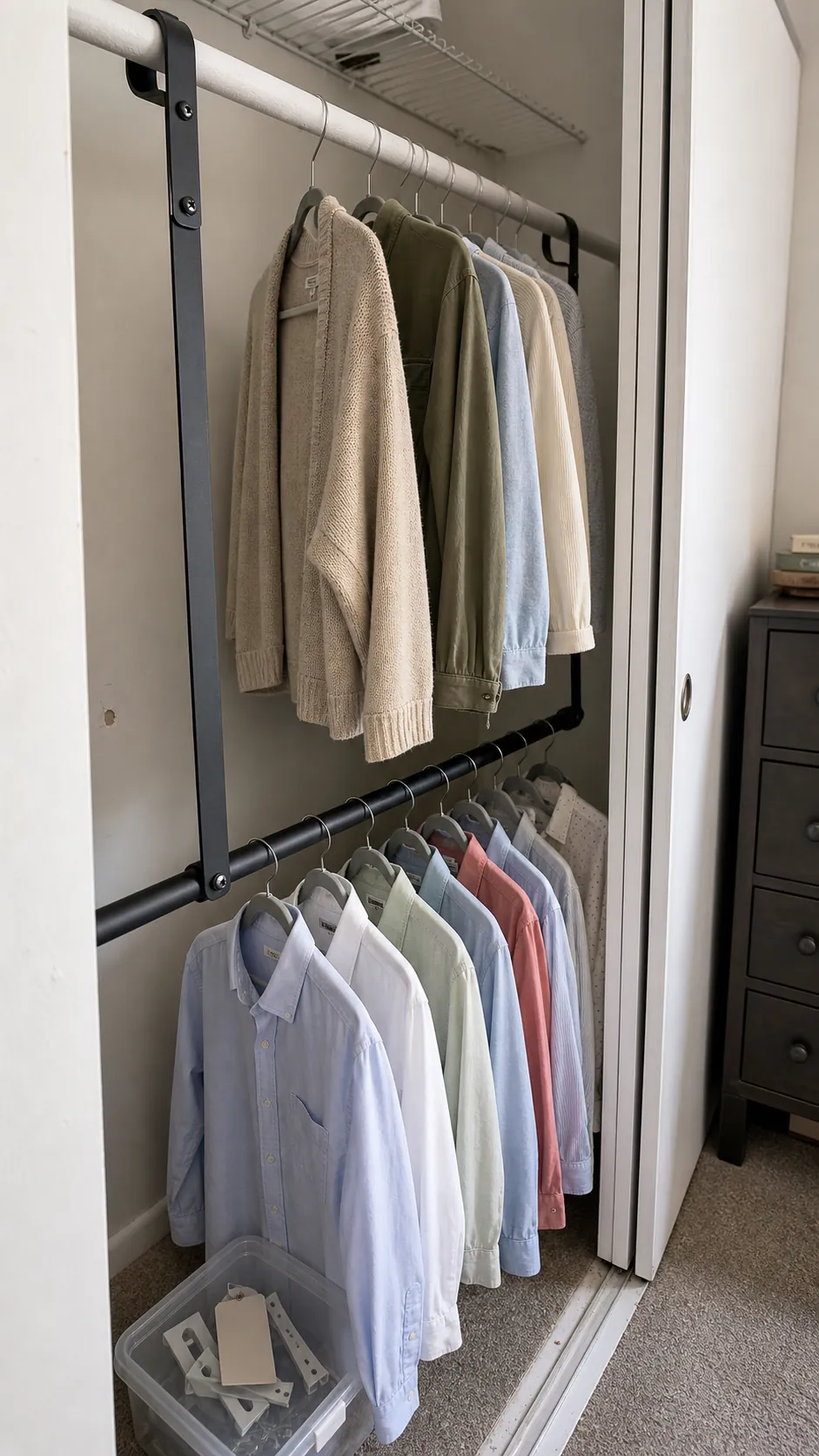
Renters can still gain a second tier. A hanging rod extender hooks over the existing rail and suspends a lower bar without wall holes. It is fast and reversible, although it reduces headroom and can swing if overloaded. A freestanding narrow garment frame may be steadier when the closet floor is level and deep enough.
A tension rod is suitable only for light garments when the manufacturer permits the span and load. It should never be trusted with a dense row of coats. For permanent rods, anchor brackets into studs or a properly secured backer and add center support across longer spans. Sagging is not merely unattractive; it steals clearance from the tier below and can pull hardware from the wall.
Save every removed shelf, bracket, and screw in a labeled bag so the original closet can be restored at move-out. Before any installation, confirm the lease rules rather than assuming small holes are allowed.
Make doubled hanging space easy to scan
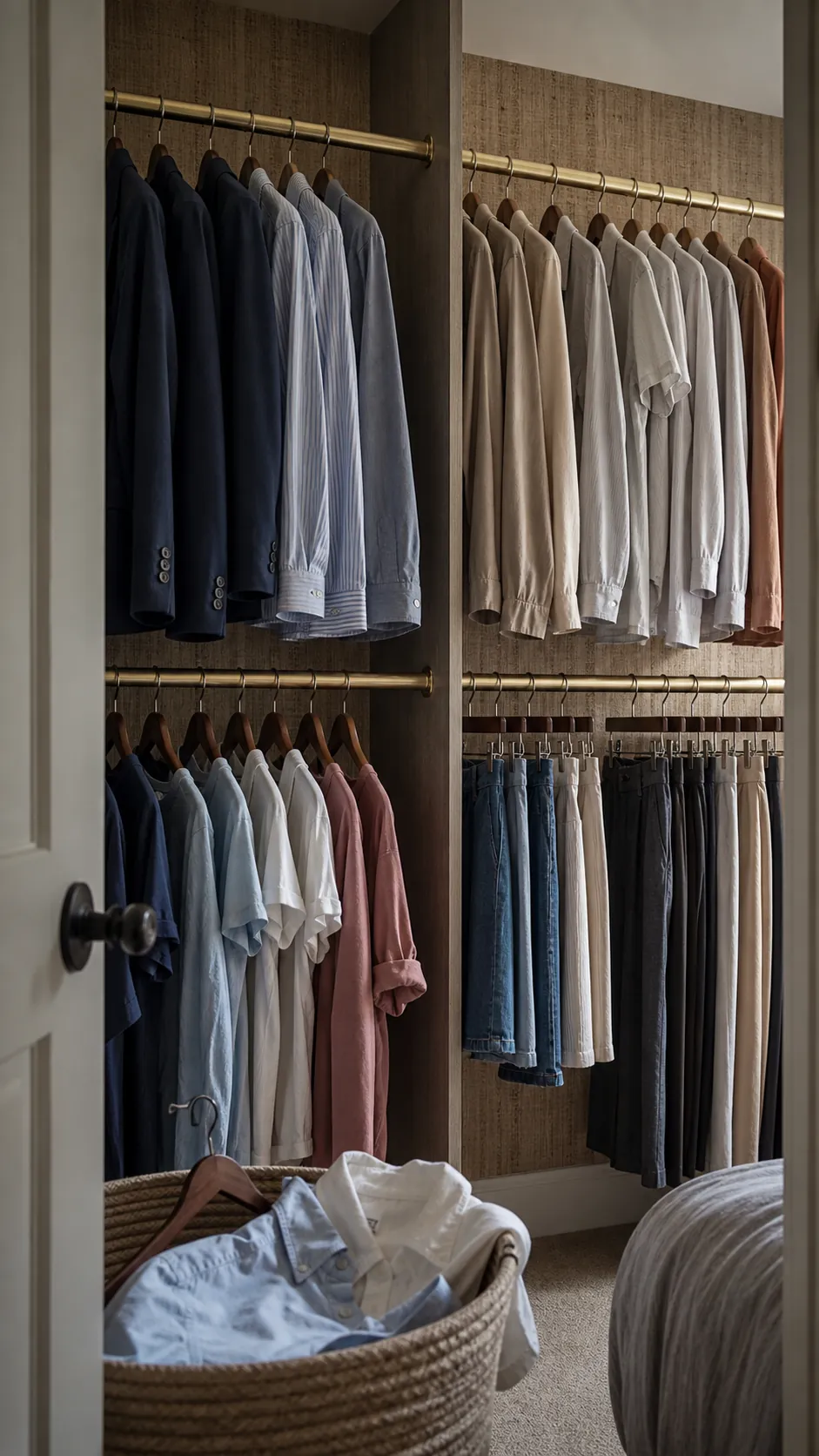
More hanging space helps only if you can find things. Use one hanger type to reduce visual noise and keep garments at a consistent height. Group by practical category first—work shirts, casual tops, trousers, skirts—then arrange each category from light to dark if that makes dressing faster.
Keep hanger spacing loose enough to slide one piece aside without moving ten others. Small gaps between categories act like invisible labels. Clip hangers can hold folded trousers or skirts without adding a deep stack on the shelf, while cascading hangers are best used sparingly because overloaded vertical chains conceal clothes.
Accessibility should follow frequency. Put weekly staples at hand level, occasional pieces above, and seasonal items in labeled shelf bins. If two people share the closet, divide by side or by rail instead of mixing every category. The best wardrobe organization system is the one that makes returning clean laundry almost automatic.
Let the layout follow your daily routine
A successful double-rod closet is not the one that holds the maximum number of hangers on installation day. It is the one that still works on laundry day. Leave a small amount of open rod for returning clothes, keep the hamper from blocking the doorway, and give every shelf bin a single clear job.
Live with the taped layout for a few days before making permanent holes. Reach for work clothes, put away a load of laundry, and open every door. If hems catch, the upper rail is too low or the lower rail is too high. If you avoid the top tier, move low-frequency pieces there instead of forcing daily use.
Double hanging rods are valuable because they turn unused vertical air into accessible storage. Protect that advantage by measuring real garments, reserving long-hang space, and assigning the easiest positions to the clothes you wear most.