A cramped dining area rarely needs more decoration. It needs one clear wall decision that respects chair clearance, seated eye level, and the width of the table. When those proportions work, even a modest apartment corner can feel finished without losing the breathing room that makes meals comfortable.
Use a Round Mirror to Borrow Daylight
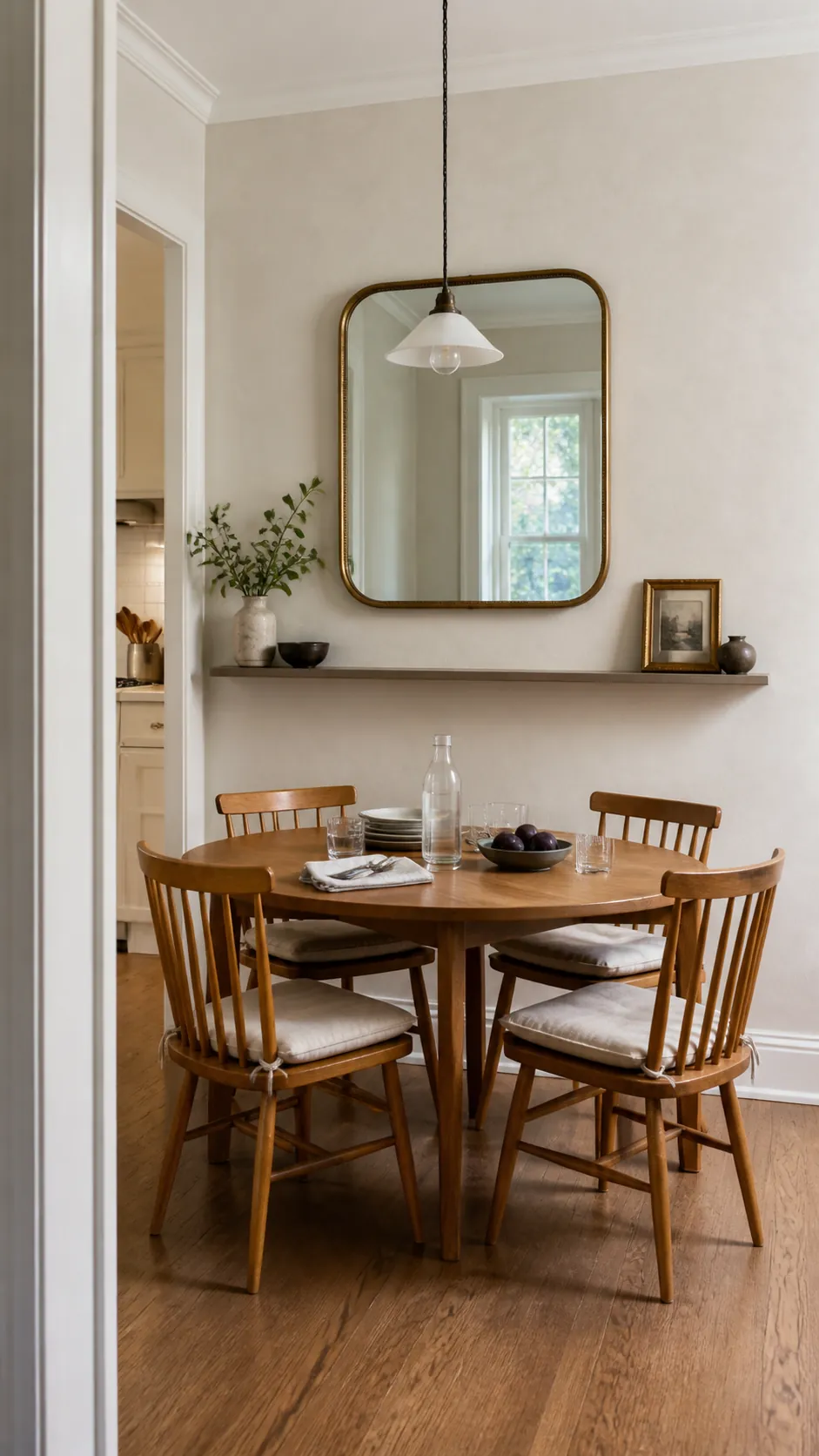
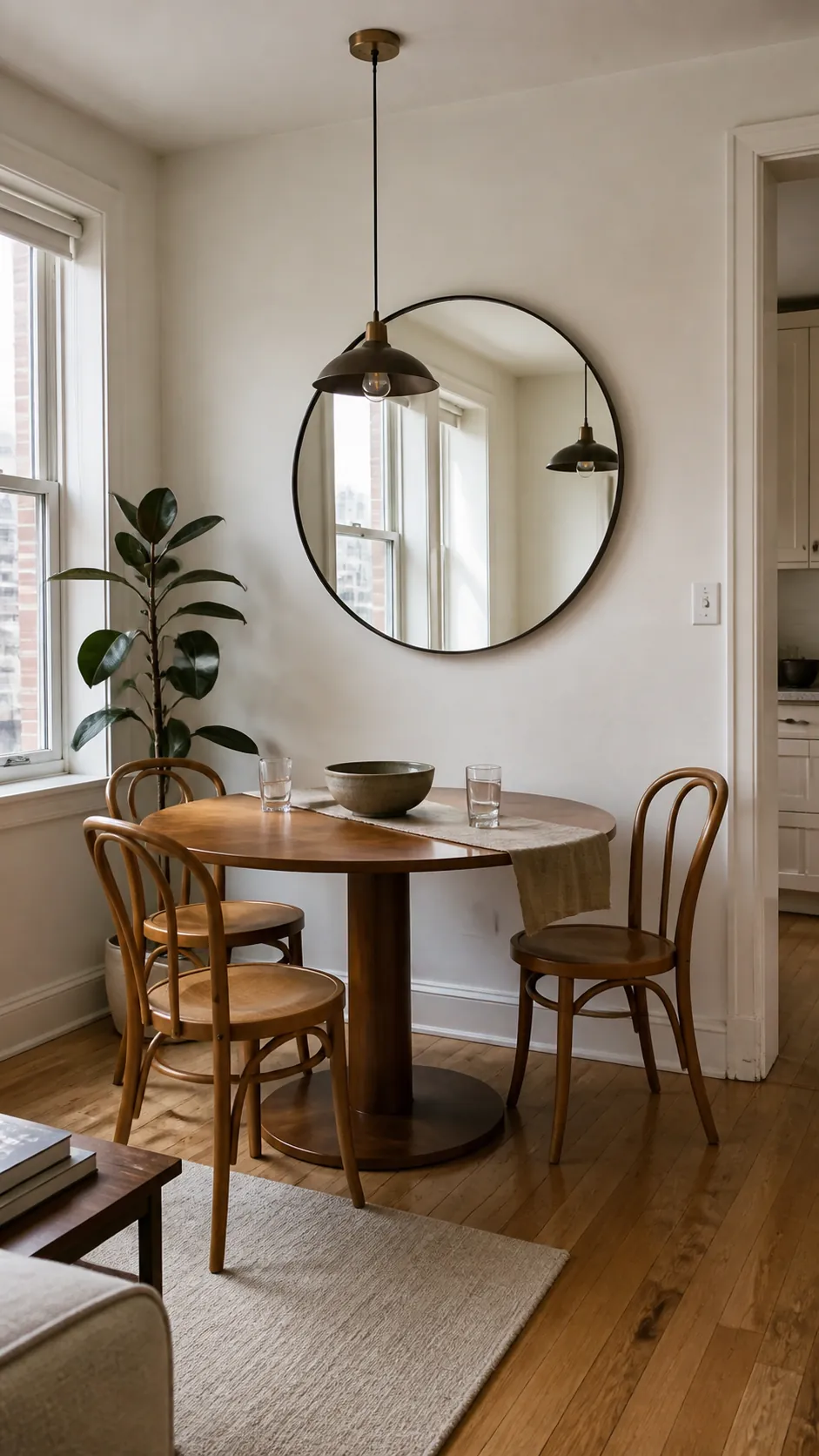
A round mirror softens the straight lines of a table, window, and doorway while reflecting light into the darkest side of the room. Center it over the table rather than across the whole wall, since the dining furniture is the visual anchor. A diameter close to two thirds of the visible table width usually looks deliberate without overpowering a tiny dining room.
Check the reflection before drilling. It should capture a window, pendant, or calm open space instead of a cluttered counter. Hang the lower edge above seated head height, then test the position from both the doorway and the chair before committing.
Hang a Flexible Gallery Rail
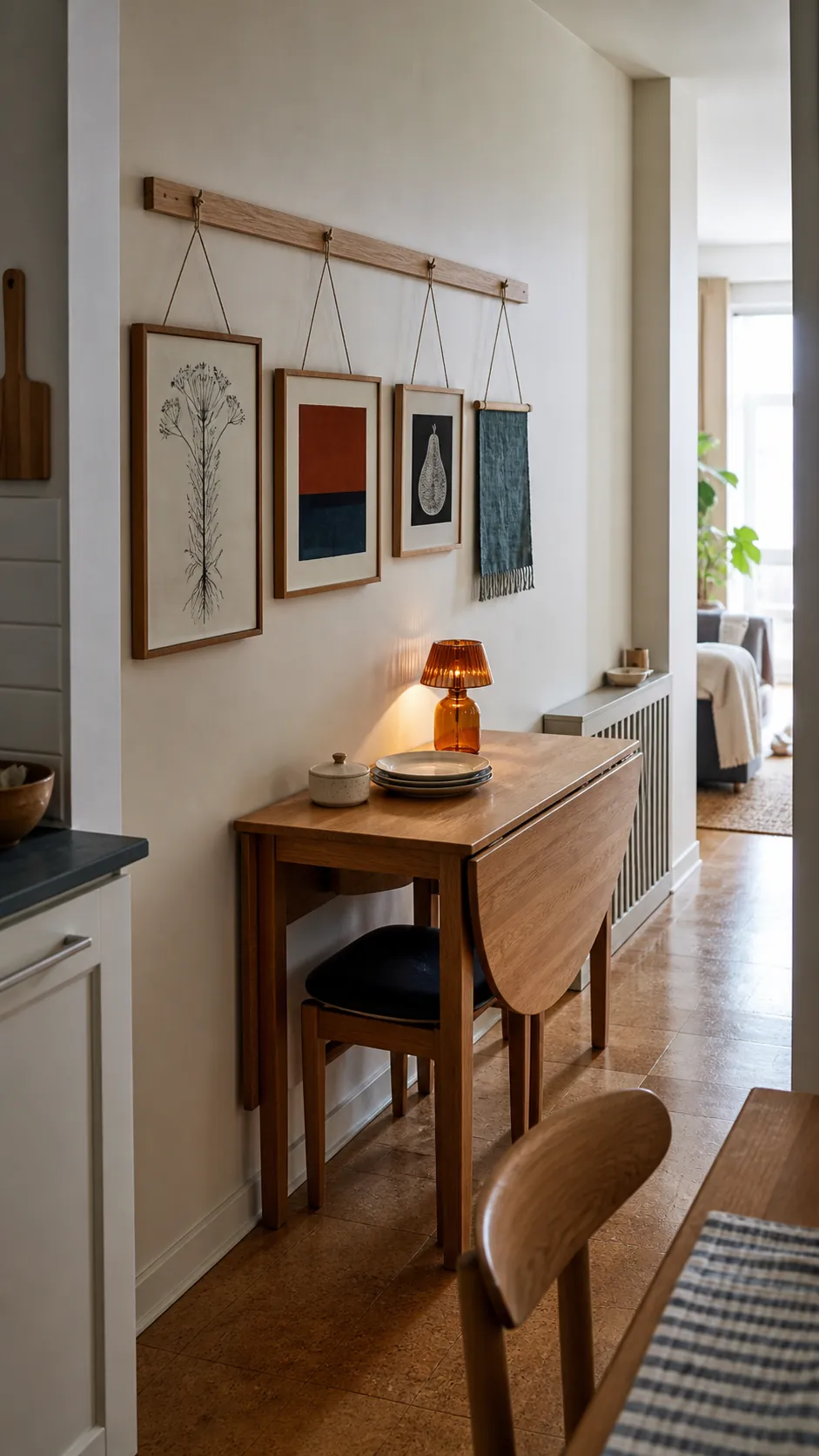
A single gallery rail gives small art, prints, and textiles a shared structure, so the wall reads as one composition instead of scattered clutter. It is especially useful in a rental because the rail limits wall fixings and moves easily to another room. Keep the display narrower than the table and leave visible space around its edges.
Mixing materials works better than forcing every frame to match. A small textile, a dark ink drawing, and one muted color print can feel collected while maintaining a restrained palette. Lightweight pieces also reduce strain on removable mounting systems and are safer above a busy dining surface.
Style One Slim Picture Ledge
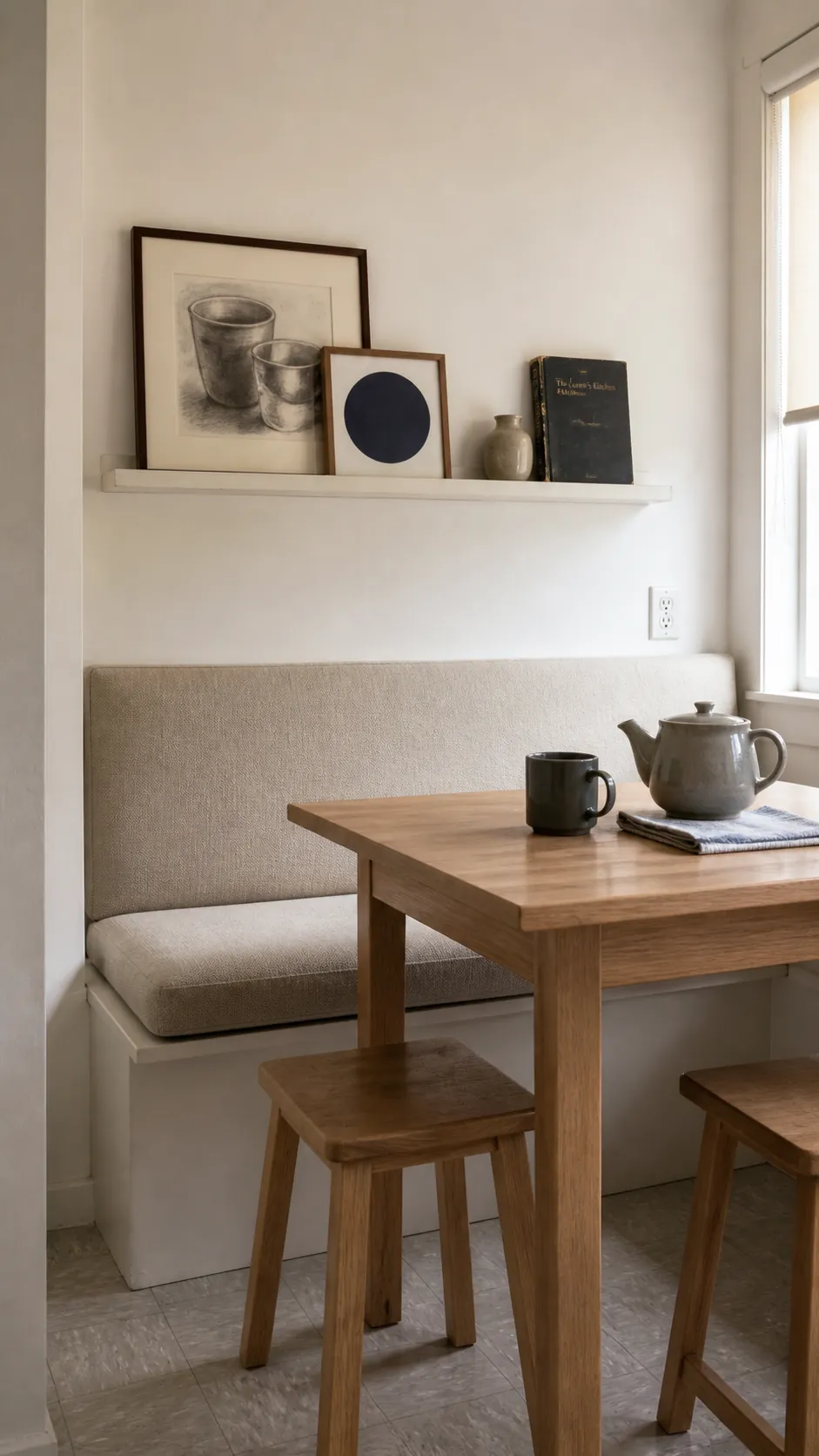
A shallow picture ledge offers flexibility without the visual weight of a full shelf. Three or four overlapping pieces are enough for a tiny breakfast nook, particularly when one taller frame establishes the height and smaller objects stay below it. Choose a ledge with a raised front lip and keep fragile objects away from the edge.
Depth matters more than width above a bench. A ledge around three inches deep holds frames while keeping shoulders and heads clear. Repeat two colors from the room in the artwork, then allow the remaining wall to stay quiet.
Define the Table With a Painted Shape
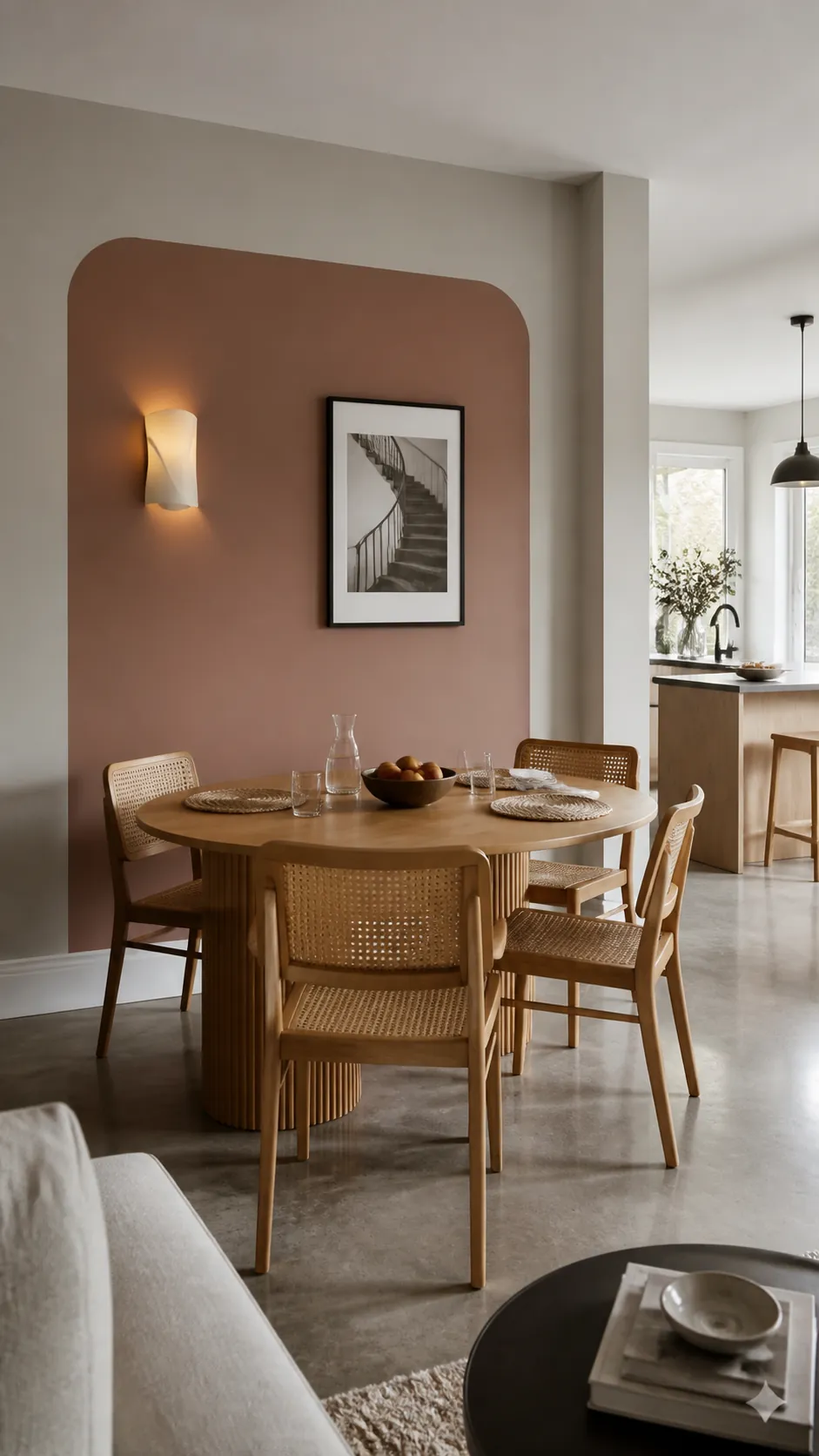
Paint can define a dining zone in an open room without adding any physical depth. Tie the painted field to the table width, extending it just beyond the furniture rather than covering an arbitrary section of wall. A soft clay, muted green, or dusty blue brings focus while remaining easy to live with.
Mark the table position first, then view the proposed outline from the main entry. Rounded corners or a simple rectangular field are easier to execute than a complicated mural and less likely to date quickly. One small sconce or print can sit inside the color block, but the paint itself should do most of the visual work.
Add Storage That Stays Close to the Wall
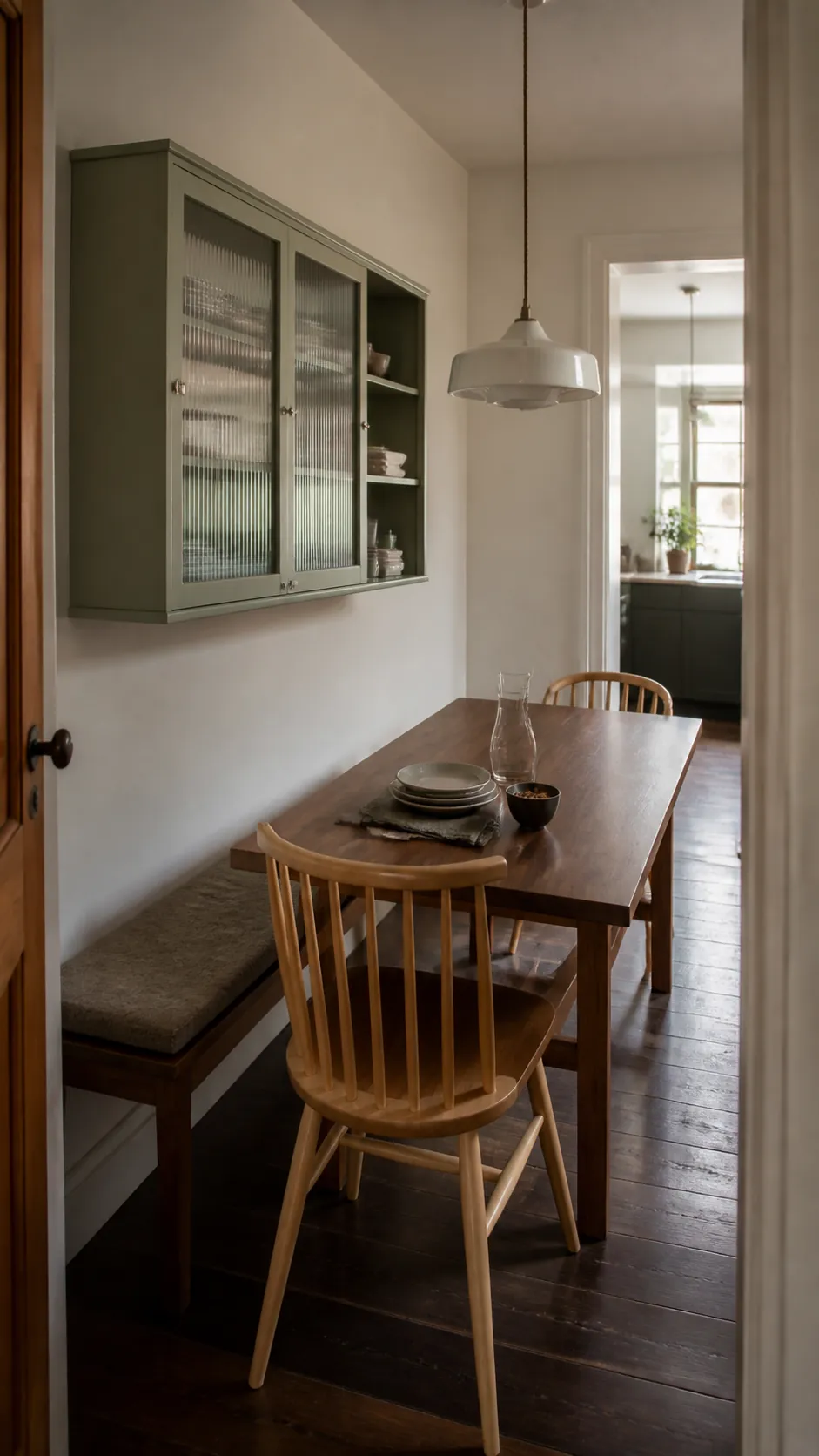
A shallow wall cabinet can hold napkins, serving dishes, and household papers when there is no space for a sideboard. Closed doors reduce visual noise, while sliding fronts avoid swinging into a chair or passage. Keep the cabinet depth modest and align it with the bench or table below.
Mounting height must work for both reach and safety. A seated diner should not be able to lean into the lower edge, yet the contents should remain accessible without a stool. Use fixings rated for the wall type and reserve the lightest objects for the highest shelf.
Let Wall Texture Work With a Sconce
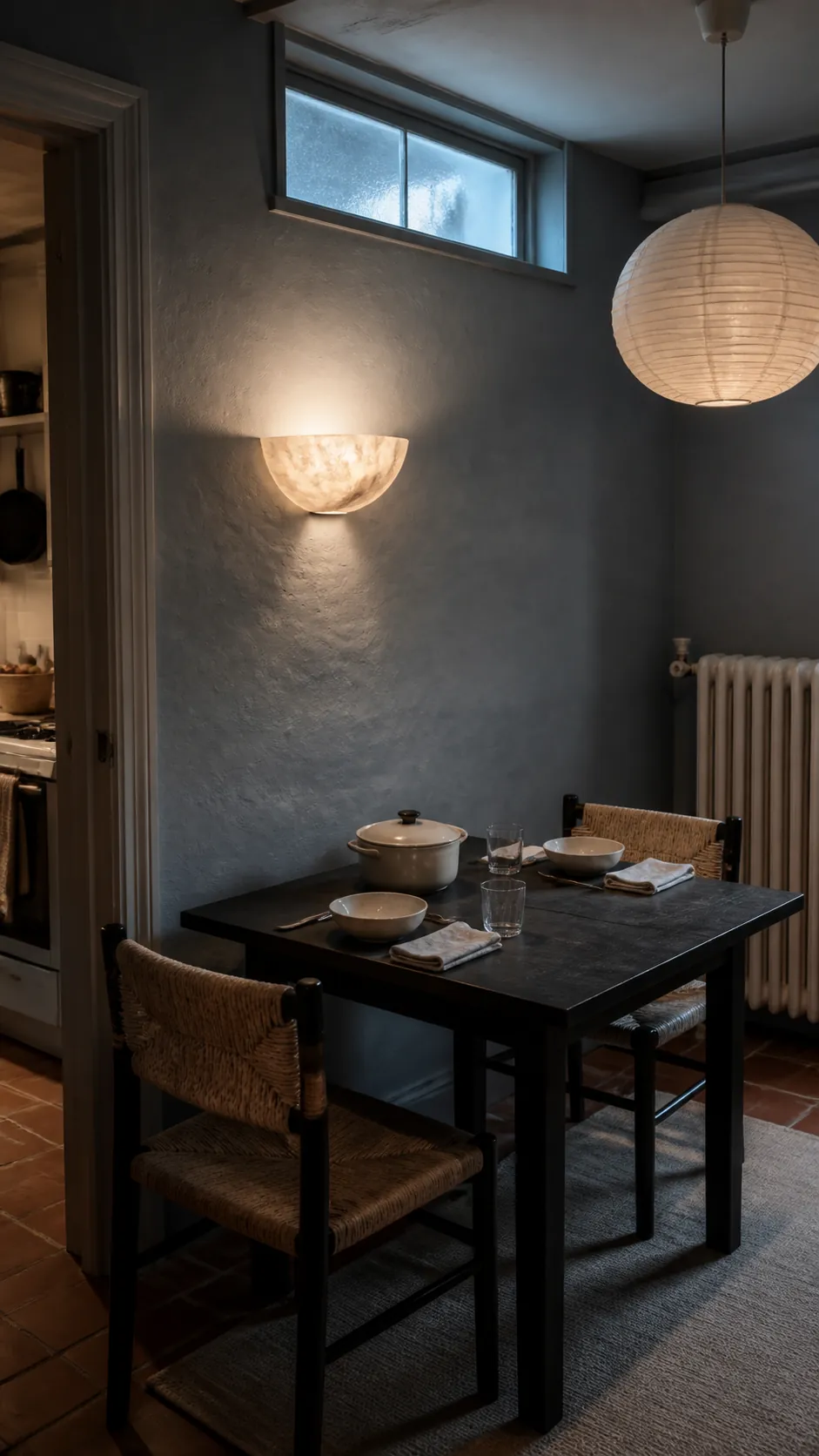
Subtle mineral plaster or limewash creates depth without projecting into the room. A compact sconce placed above seated eye level grazes the surface, revealing gentle variation that flat overhead lighting misses. This combination is useful in a dim corner where framed decor would feel crowded.
Choose a fixture with shielded light so diners do not face glare. The wall light should support the pendant rather than replace it, since meals still need even illumination across the tabletop. Sample the finish beside the fixture at night because texture and color can change dramatically under warm bulbs.
Build a Vertical Collection
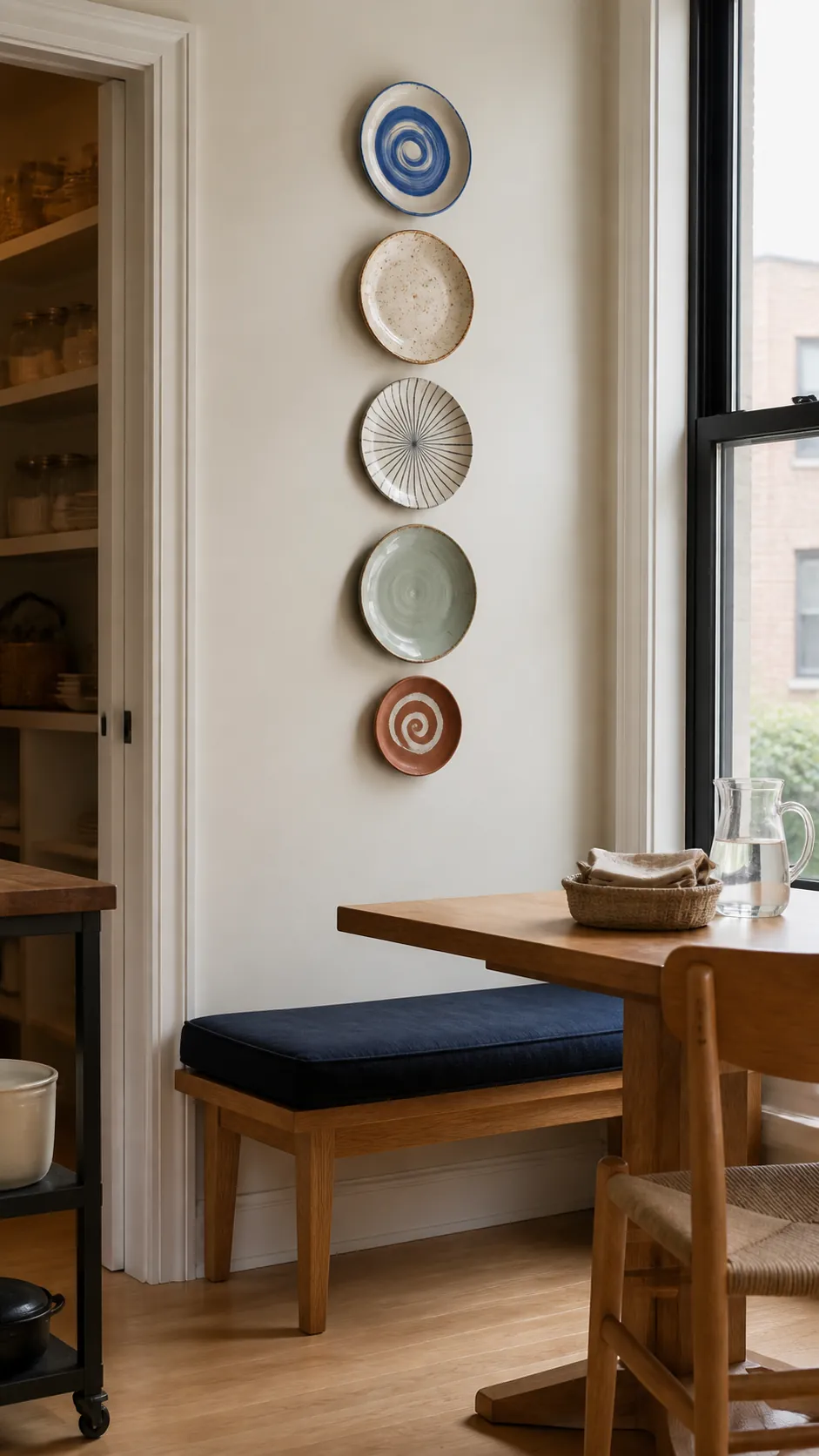
A short wall between a window and doorway often suits a vertical arrangement better than a wide picture. Five handmade plates, small woven pieces, or compact prints can guide the eye upward while leaving the table zone calm. Repeat one material or color family so the collection reads as intentional.
Lay the arrangement on the floor before mounting it, then vary gaps slightly rather than forcing a rigid grid. Keep the lowest object above seated head height and clear of a swinging door. Secure every piece with hardware designed for its weight, because dining walls experience frequent vibration and movement.